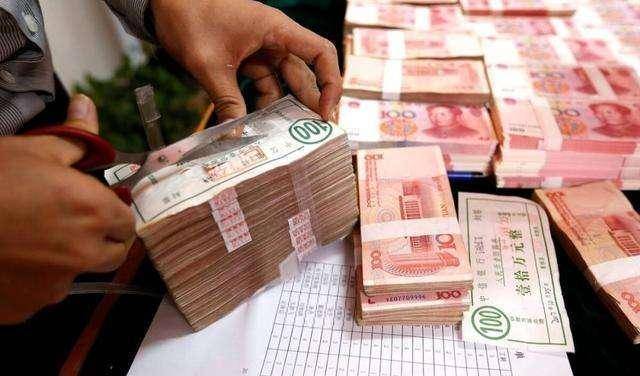
外汇储备多元化

Search documents
突发!中国“三连抛”美债持仓创14年新低,6887亿背后是何战略棋局?
Sou Hu Cai Jing· 2025-12-21 04:35
Core Viewpoint - China's holdings of US Treasury bonds have decreased to $688.7 billion, marking a 17-year low since the 2008 financial crisis, reflecting a strategic shift in response to perceived risks in the US debt market [2] Group 1: Direct Causes of China's Reduction in US Treasury Holdings - The US government shutdown lasting 43 days has undermined market confidence, revealing vulnerabilities in the creditworthiness of US Treasury bonds [3] - The US national debt has surpassed $38 trillion, with interest payments exceeding defense spending, leading to concerns about the sustainability of US debt and potential default risks [3] - Major credit rating agencies have downgraded the US credit rating, transforming US Treasury bonds from "risk-free assets" to "high-risk liabilities," prompting China to reduce its holdings as a precautionary measure [3] Group 2: China's Strategic Adjustments - China is diversifying its foreign exchange reserves, increasing gold holdings to 74.09 million ounces (approximately 2,305 tons), which now constitutes 4.3% of its foreign reserves, aiming to mitigate reliance on the US dollar [4] - The internationalization of the Renminbi is accelerating, with cross-border Renminbi payments rising to 12.7% in the first half of 2025, as countries like Brazil and Saudi Arabia adopt Renminbi for energy trade [4] - China is using the reduction of US Treasury holdings as a financial countermeasure against US tariffs and trade policies, with potential impacts on US interest rates and stock market stability [4] Group 3: Global Implications of the US Debt Crisis - The US is trapped in a cycle of increasing debt, with a deficit of $1.97 trillion in the first 11 months of the 2025 fiscal year, leading to a policy dilemma for the Federal Reserve [5] - Japan has increased its US Treasury holdings to $1.2 trillion, but this is seen as a forced response to US pressure, contrasting with China's strategy of gradual reduction [5] - Central banks globally are reconfiguring their reserve strategies, with emerging economies like China increasing gold and digital currency holdings, challenging the dominance of the US dollar [5] Group 4: Future Trends in China's Financial Strategy - China is implementing a controlled reduction strategy for US Treasury bonds, limiting monthly sales to the billion-dollar range to avoid market shocks while paving the way for Renminbi internationalization [6] - If the current pace of gold accumulation continues, China's gold reserves could exceed 3,000 tons by 2030, further diminishing the dollar's anchoring effect [6] - The expansion of Renminbi cross-border settlement networks is underway, with ASEAN trade using local currency rising to 35%, potentially reducing the dollar's share in global trade below 40% [6]


6887亿美元:中国的美债持仓创17年最低!全球债主态度分裂,美债违约风险藏不住了?
Sou Hu Cai Jing· 2025-12-20 11:45
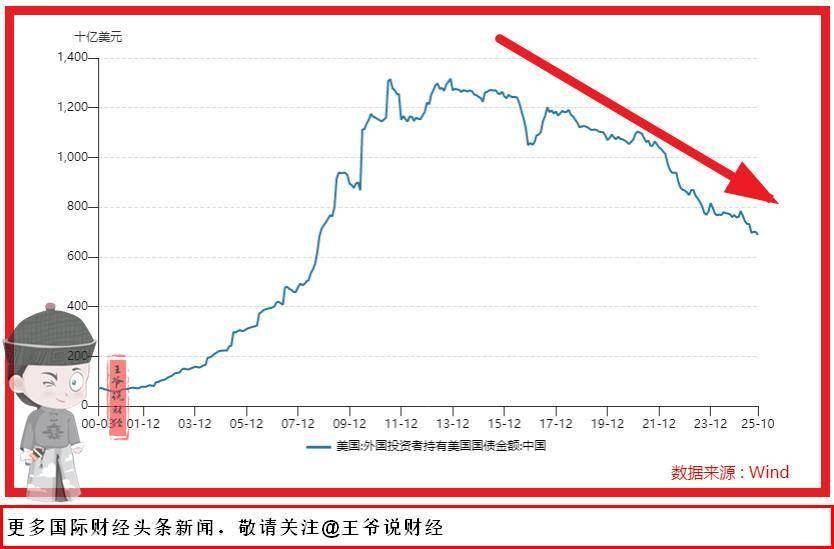
Core Viewpoint - China has significantly reduced its holdings of U.S. Treasury bonds, dropping below $700 billion for the first time in 17 years, indicating a strategic shift in asset allocation and risk management [1][3]. Group 1: Current Holdings and Trends - As of October 2025, China's holdings of U.S. Treasury bonds decreased by $11.8 billion, bringing the total to $688.7 billion, marking a cumulative decline of over 9% for the year [1][3]. - This reduction is part of a broader trend where major global creditors are divided; Japan has increased its holdings to $1.2 trillion, while Canada has also sold off significant amounts [3]. Group 2: Reasons for Reduction - The credibility of the U.S. government has diminished, highlighted by a historic 43-day government shutdown that affected federal employees and economic stability [9]. - China is optimizing its foreign exchange reserves, reducing the proportion of U.S. dollar assets from 37% in 2018 to 24% in 2025, while increasing gold reserves to 7.412 million ounces [10]. - Holding U.S. Treasury bonds has become less attractive due to rising volatility in yields, with the 30-year bond yield recently exceeding 5% [11]. Group 3: Implications of the Reduction - In the short term, the reduction in U.S. Treasury holdings is a strategic asset allocation adjustment that is unlikely to directly impact wages or deposit rates [14]. - Long-term effects may include a more stable RMB exchange rate and increased emphasis on hard assets like gold, as the central bank continues to accumulate gold reserves [14]. - While the immediate risk of U.S. Treasury default is low, long-term risks are increasing, with warnings from financial experts about the sustainability of U.S. debt levels [14][15].
中国美债持仓创17年新低!多元化战略背后的深意
Sou Hu Cai Jing· 2025-12-20 08:24
Core Viewpoint - China's holdings of U.S. Treasury bonds have fallen to their lowest level since 2008, indicating a significant shift in investment strategy and a potential diversification of foreign reserves [1][3][4]. Group 1: Current Holdings and Trends - As of October 2025, China reduced its U.S. Treasury holdings by $11.8 billion, bringing the total to $688.7 billion, the lowest since October 2008 [3][4]. - Since early 2025, China's Treasury holdings have decreased by over 9%, continuing a trend that began in April 2022 when holdings fell below $1 trillion [3][4]. - In comparison, Japan and the UK have increased their holdings, with Japan adding $10.7 billion and the UK $13.2 billion, while Canada has seen a significant reduction of $56.7 billion [6]. Group 2: Strategic Considerations - The reduction in U.S. Treasury holdings is part of China's broader strategy to diversify its foreign reserves, which includes a consistent increase in gold reserves, reaching 74.09 million ounces by the end of October 2025 [8]. - Geopolitical risks and concerns over U.S. policy have influenced China's decision to reduce its Treasury holdings, particularly in light of the longest government shutdown in U.S. history and rising national debt, which surpassed $38 trillion [11]. - The structure of China's Treasury holdings is also evolving, with a higher proportion of short-term securities, indicating a focus on liquidity and reduced long-term risk exposure [11]. Group 3: Future Outlook - Analysts predict that China's holdings of U.S. Treasury bonds may continue to decline gradually, reflecting ongoing changes in U.S.-China relations and a trend towards diversifying foreign reserve assets [15]. - The shift in China's investment strategy may serve as a reference for other emerging economies, emphasizing the importance of foreign reserve diversification in maintaining financial security amid global economic uncertainties [15][17]. - The ongoing reduction in U.S. Treasury holdings by China symbolizes a broader transformation in the global financial landscape, moving away from a dollar-dominated system towards a more balanced international monetary framework [17].
中方大手一挥,再抛118亿美债,加拿大动作够大,特朗普开始换人
Sou Hu Cai Jing· 2025-12-19 11:09
12月19日,美国财政部一份最新报告在金融圈炸开了锅:中国在2025年10月减持118亿美元美国国债, 持仓总量降至6887亿美元,不仅跌破7000亿大关,更创下2008年10月以来的17年新低。 这不是中国偶然的小幅调整。今年以来,中国已经第五次减持美债,累计降幅超过9%。而2011年时, 中国持有的美债规模曾高达1.3万亿美元,是现在的近两倍。 更加微妙的全球图景是,各国对美债的态度呈现明显分歧。10月份,日本增持107亿美元,持仓达到1.2 万亿美元,创下2022年7月以来新高;英国也加仓132亿美元。而同月,加拿大却大手笔减持567亿美 元,动作幅度超过中国。 美债持仓创17年新低,中国去美元化战略清晰 中国美债持仓跌破7000亿美元,是外汇储备配置策略转变的一个重要信号。从数据来看,这已经不是短 期波动,而是持续多年的趋势性变化。 自2011年达到峰值后,中国就开始稳步减少美债持有量。特别是在2022年4月跌破1万亿美元大关后,减 持速度加快。到2025年10月,持仓量已降至6887亿美元,回到了2008年金融危机时的水平。 与中国减持美债形成鲜明对比的是,中国央行已连续13个月增持黄金。截至11月 ...

中国突然公布黄金库存,美国霸权地位已不保,特朗普还没启程访华
Sou Hu Cai Jing· 2025-12-08 14:29
就在特朗普计划访问北京前夕,中国央行公布的一组数据引发了全球金融市场的关注。2026年4月,美 国高层计划访华。然而在其启程之前,中国人民银行在12月7日公布的数据显示了一个明确的趋势:中 国的黄金储备已经连续13个月保持增长,同时,对于美国国债的减持操作也仍在持续。 对于即将到来的会谈,美方很可能在经贸和金融领域提出一系列诉求。而提前亮明 "增持黄金、减持美 债" 这一持续性的资产配置战略,无异于向对方展示了己方在核心金融决策上的定力与独立性。 中国央行发布的数据显示,截至2025年11月底,中国官方的黄金储备达到了7412万盎司。这是一个积累 过程的延续,中国的黄金储备已经实现了连续13个月的环比增长,仅11月就增加了3万盎司。 与增持黄金形成鲜明对比的,是对美国国债的持续减持。这两种资产配置方向上的一增一减,并非巧 合。在全球金融领域,黄金常被视为 "终极避险资产" ,它不像纸币那样依赖于某个国家政府的信用。 近些年,一些国家在面临国际金融制裁时,黄金提供了一种能够绕开传统美元支付体系(如SWIFT)的 独立结算可能性。这种战略价值,在不确定的全球环境下显得尤为重要。 与此同时,美国国债正面临着日益增长 ...
复旦大学吴心伯:未来国际形势五大走向,5年以后金砖国家机制影响力可能超过G7
Xin Lang Cai Jing· 2025-11-28 07:09
Core Insights - The 2025 Analyst Conference highlighted five major trends in the international landscape that will impact investment strategies in the medium to long term [1] Group 1: Economic Shifts - The United States is experiencing a decline in its economic position globally, leading to a capital outflow as international investors seek new opportunities, influenced by Federal Reserve policies and economic risks from previous administrations [3] - China's political and economic status is rising, with opportunities to enhance its influence in multilateral institutions as the U.S. withdraws from these platforms, aiming for a more equitable global agenda [3][4] - Russia is expected to strengthen its strategic position in Europe post-Ukraine conflict, though its ability to convert this into economic strength will depend on domestic policy adjustments [4] Group 2: Regional Developments - Europe is facing a challenging transitional period that could last a decade or two, marking a significant shift from the post-Cold War peace dividend [4] - The rise of the Global South, particularly through the BRICS mechanism, is anticipated to create a golden development period over the next five years, potentially surpassing the influence of the G7 [4][5] Group 3: Future Outlook - The external environment for China is expected to improve significantly over the next five years compared to the previous decade, presenting a favorable outlook for investment opportunities [5]

全球银行还在狂买黄金,俄罗斯却突然抛售!这轮牛市要结束了吗?
Sou Hu Cai Jing· 2025-11-25 02:56
Core Viewpoint - The Russian Central Bank has begun selling physical gold reserves to address budget deficits, raising concerns about the potential end of the current gold bull market as global central banks continue to purchase gold aggressively [1][3][5]. Group 1: Russian Central Bank Actions - The Russian Central Bank started selling gold reserves in late November 2025 to cover a budget deficit exacerbated by frozen foreign exchange reserves due to sanctions [1][3]. - Russia's oil and gas revenues have decreased by 16.9% year-on-year in the first half of the year, leading to a fiscal deficit of 3.69 trillion rubles, nearing the annual limit [3]. - The sale of gold is a response to the inability to access approximately 300 billion euros of foreign reserves, with about 200 billion euros held in European clearing banks [1][3]. Group 2: Global Gold Market Dynamics - Despite Russia's gold sales, global central banks are expected to increase gold purchases, with Goldman Sachs predicting an average monthly purchase of 80 tons from Q4 2025 to 2026 [5]. - In the first half of 2025, global central banks net purchased 415 tons of gold, with 95% of surveyed central banks planning to increase their gold reserves in the next 12 months [5][7]. - The current gold price has risen over 50% since 2025, influenced by both central bank buying and the recent news of Russia's gold sales, which may prompt some investors to take profits [5][21]. Group 3: Domestic Gold Demand in Russia - Domestic gold demand in Russia is increasing, with citizens purchasing approximately 282 tons of gold over the past four years, and an expected increase of 62.2 tons in 2025 [3][8]. - The Russian government has eliminated VAT on retail gold purchases to stimulate domestic demand, helping sanctioned mining companies find new sales channels [3][8]. - The stability of the ruble has not been significantly affected by the Central Bank's gold sales, indicating a resilient domestic market [8]. Group 4: Broader Implications for Gold as an Asset - Geopolitical tensions and high global debt levels continue to enhance gold's appeal as a safe-haven asset and hedge against inflation [7][12]. - The liquidity and acceptance of gold as an international reserve asset remain unchanged, making it a crucial component of central bank reserves [21][30]. - Historical trends suggest that short-term market reactions to news may be smoothed by long-term trends, with central banks transitioning from net sellers to net buyers of gold post-2008 financial crisis [17][25].

美国媒体:中国不敢轻易抛8000亿美债,因为会引爆金融危机
Sou Hu Cai Jing· 2025-11-21 08:12
Core Viewpoint - The ongoing tensions between China and the U.S., particularly regarding the trade war and U.S. debt holdings, highlight the complexities and potential repercussions of China selling U.S. Treasury bonds, which could destabilize both economies and the global financial market [1][3][4]. Group 1: China's Holdings of U.S. Treasury Bonds - China's holdings of U.S. Treasury bonds have decreased in recent years, projected to drop to $765 billion by March 2025, making it the third-largest holder behind Japan and the UK [1][3]. - The reduction in holdings is attributed to the need for China to adjust its asset allocation in response to the escalating trade war and tariffs imposed by the U.S. [3][4]. - The global market for U.S. Treasury bonds is approximately $36 trillion, with China holding less than 3% of this total, indicating that a significant sell-off could disrupt the market [3][4]. Group 2: Economic Implications of Selling U.S. Treasury Bonds - A large-scale sell-off of U.S. Treasury bonds by China could lead to increased yields, raising borrowing costs for U.S. businesses and potentially slowing economic growth [4][6]. - The depreciation of China's foreign exchange reserves due to bond sales would weaken its economic control and could lead to inflationary pressures domestically [4][6]. - Historical context shows that while past reductions in holdings caused market fluctuations, the current scale and geopolitical backdrop could lead to more profound impacts [6][10]. Group 3: Strategic Considerations and Future Outlook - Experts suggest that China is unlikely to "weaponize" its U.S. Treasury holdings due to the self-damaging consequences of such actions [6][10]. - China's strategy appears to focus on diversifying its reserves away from U.S. debt, with plans to increase holdings in other currencies like the euro and yen [8][10]. - The ongoing geopolitical tensions and U.S. domestic policies, including potential debt ceiling crises, necessitate a cautious approach from China regarding its U.S. Treasury bond holdings [8][10].

深V反弹,现货黄金一度跌破4000美元,发生了什么?
Feng Huang Wang· 2025-11-18 13:39
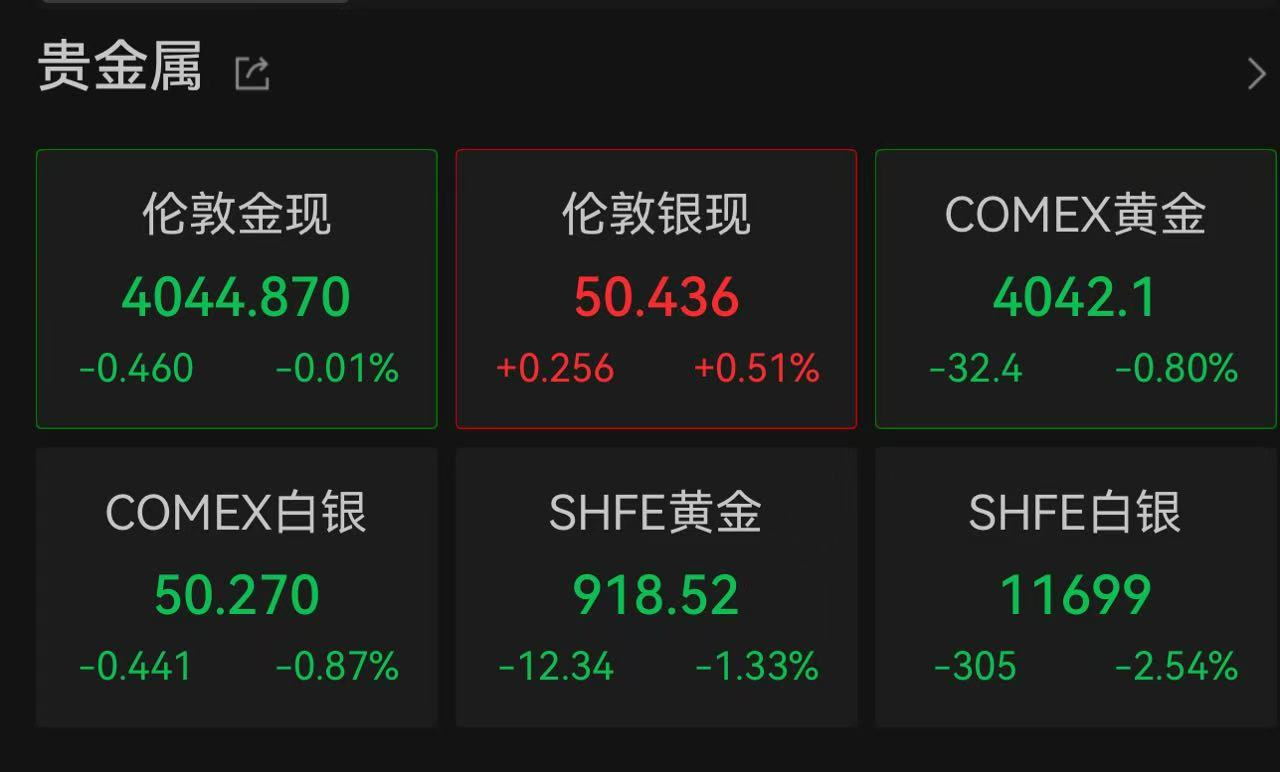
Core Viewpoint - Spot gold prices experienced a significant drop, briefly falling below $4000 per ounce, marking the first decline since November 10, with a daily drop exceeding 1% [1][3] Group 1: Market Performance - As of November 18, London spot gold was reported at $4044.87 per ounce, down 0.01%, while COMEX gold fell 0.8% to $4042.1 per ounce [1] - In the domestic market, the Shanghai gold main contract closed at 918.52 yuan, down 1.33%, and Au99.99 in the Shanghai Gold Exchange fell to 916.96 yuan, a decrease of 1.55% [3] - Major domestic gold jewelry brands also adjusted their prices downward, with notable declines in prices for 周生生, 周大福, 老庙, and 老凤祥 [3][4] Group 2: Economic Factors - The probability of a 25 basis point rate cut by the Federal Reserve in December is estimated at 42.9%, with a 57.1% chance of maintaining current rates [5] - Analysts suggest that recent hawkish statements from Federal Reserve officials have corrected overly optimistic rate cut expectations, contributing to the decline in gold prices [5] - The end of the U.S. government shutdown has reduced safe-haven demand, further impacting gold's market performance [5] Group 3: Future Outlook - Analysts maintain a generally optimistic long-term outlook for gold, citing ongoing central bank purchases and the potential for renewed rate cut expectations if economic indicators worsen [6][7] - The current gold bull market is believed to be ongoing, with historical comparisons suggesting that the price increases and duration are still below previous major cycles [6][7] - Goldman Sachs projects that gold prices could reach $4900 per ounce by the end of 2026, driven by continued asset diversification among private investors and central bank purchases [7]
70余国将人民币纳进外汇储备,国内叫人民币,那在国外叫什么?
Sou Hu Cai Jing· 2025-11-11 02:04
Core Viewpoint - The increasing international status of the Renminbi (RMB) is leading more countries to include it in their foreign exchange reserves, with over seventy countries already adopting it, and China signing currency swap agreements with thirty-nine nations [1][2]. Group 1: Reasons for Adoption - The international influence of the Renminbi is growing, with countries like Russia and Iran using it for trade settlements, particularly in oil transactions with China [5]. - Countries are increasing their Renminbi holdings to reduce the proportion of US dollar assets in their foreign exchange reserves, especially after significant dollar depreciation since 2020 [7][8]. - China's robust economic development provides a solid backing for the Renminbi, maintaining its stability and attractiveness as a reserve currency [7]. Group 2: Digital Currency and Future Prospects - The introduction of digital Renminbi offers advantages such as traceability and offline transaction capabilities, contributing to its potential for wider adoption [8]. - The Renminbi's growing role in international trade and finance signifies its importance in the global economy, indicating a shift towards a more diversified foreign exchange reserve strategy among nations [8].