
扩内需促消费

Search documents
0.8%、1.28万亿元、7.8亿人次……多领域数据折射中国经济乘风破浪、行稳致远
Yang Shi Wang· 2026-01-09 04:00
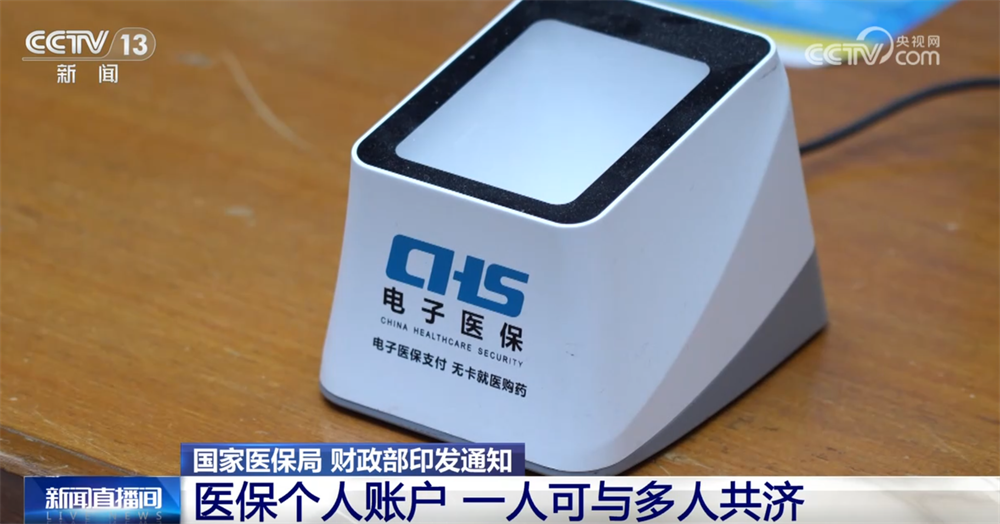
Group 1: Economic Indicators - The Consumer Price Index (CPI) increased by 0.2% month-on-month and 0.8% year-on-year in December 2025, indicating effective domestic demand expansion and consumption promotion policies [1] - The Producer Price Index (PPI) rose by 0.2% month-on-month but decreased by 1.9% year-on-year, influenced by international commodity prices and domestic capacity management policies [1] - For the entire year of 2025, the CPI remained flat compared to the previous year, while the PPI decreased by 2.6% [1] Group 2: Water Resources Investment - In 2025, China initiated 27 major water conservancy projects and completed 9,420 rural water supply projects, enhancing water supply security for 134 million rural residents [2] - The total investment in water conservancy construction reached 1.28 trillion yuan, creating 3.15 million jobs and contributing to economic stability and employment [2] Group 3: Healthcare Policy Changes - The National Healthcare Security Administration and the Ministry of Finance issued a notice to facilitate cross-province mutual aid for individual accounts in employee basic medical insurance [3] - The notice allows one individual to establish mutual aid relationships with multiple close relatives, optimizing the use of "dormant" personal account funds into "family health funds" [5] - Over the past five years, the provincial mutual aid program has benefited over 780 million individuals, with a total amount exceeding 100 billion yuan [7]

权威数读丨扩内需促消费持续显效,CPI同比涨幅继续扩大
Xin Hua Wang· 2026-01-09 03:48
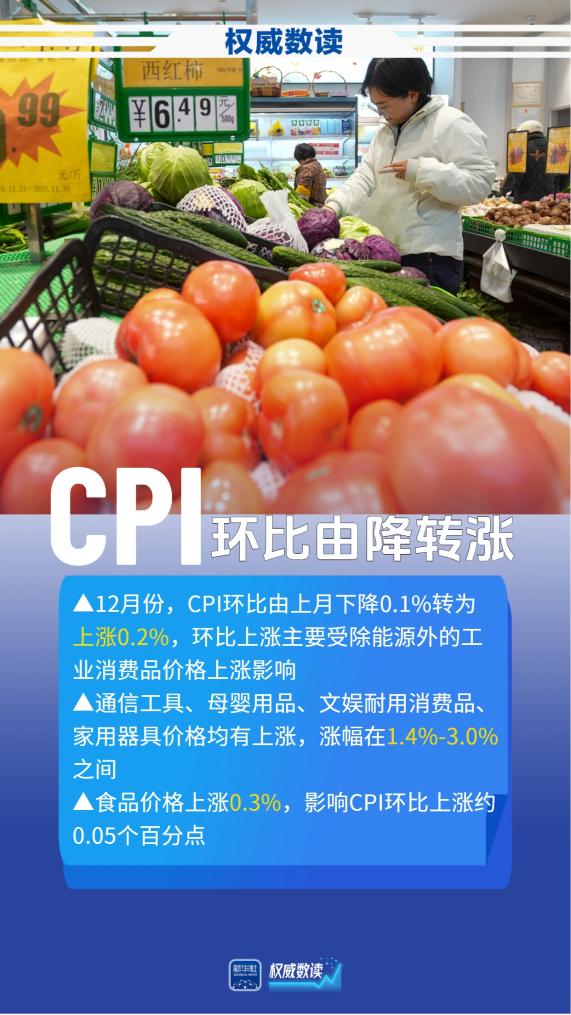
Group 1 - In December, the Consumer Price Index (CPI) increased by 0.2% month-on-month and 0.8% year-on-year, driven by effective policies to boost domestic demand and consumption, along with rising consumer demand as the New Year approached [1] - The month-on-month CPI increase was primarily influenced by rising prices of industrial consumer goods, excluding energy, with prices of communication tools, baby products, entertainment durable goods, and household appliances rising between 1.4% and 3.0% [2] - Year-on-year, the CPI's increase of 0.8% marked a 0.1 percentage point rise from the previous month, reaching the highest level since March 2023, largely due to an increase in food prices [3] Group 2 - The Producer Price Index (PPI) rose by 0.2% month-on-month in December, marking the third consecutive month of increase, with the growth rate expanding by 0.1 percentage points from the previous month [4] - Prices in the coal mining and washing industry and coal processing rose by 1.3% and 0.8% month-on-month, respectively, both showing increases for five consecutive months [4] - International prices of non-ferrous metals have risen, leading to increases in domestic prices for non-ferrous metal mining and selection, as well as non-ferrous metal smelting and rolling industries, with month-on-month increases of 3.7% and 2.8%, respectively [4]
CPI同比回升至2023年3月以来最高
Di Yi Cai Jing· 2026-01-09 02:08
Group 1 - The core CPI has maintained a growth rate of over 1% for four consecutive months, driven by increased consumer demand and effective policies to boost consumption [1][4] - In December, the CPI rose by 0.8% year-on-year, with food prices contributing significantly to this increase, particularly fresh vegetables and fruits [4] - The core CPI, excluding food and energy, rose by 1.2%, indicating stable inflationary pressures in the economy [1][4] Group 2 - The PPI increased by 0.2% month-on-month, marking a continuous rise for three months, while the year-on-year decline narrowed to 1.9% [3][9] - Positive changes in PPI are attributed to ongoing macroeconomic policies and improvements in market competition, with certain industries experiencing reduced price declines [7][8] - The prices of key industries such as coal mining and lithium-ion battery manufacturing have shown signs of recovery, with price declines narrowing over several months [7][8] Group 3 - Economic experts predict that with the implementation of demand expansion policies, prices are expected to recover moderately, potentially returning to positive growth by 2026 [5] - The development of the digital economy and new materials is driving price increases in related sectors, indicating a shift towards a more dynamic economic environment [7]
国家统计局:12月国内金饰品价格上涨5.6%
Xin Lang Cai Jing· 2026-01-09 02:01
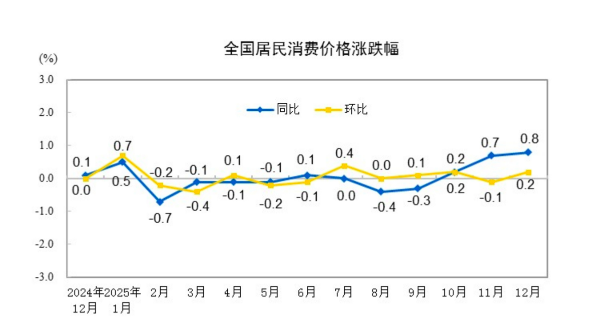
12月份,扩内需促消费政策措施继续显效,叠加元旦临近,居民消费需求增加,居民消费价格指数 (CPI)环比上涨0.2%,同比上涨0.8%,扣除食品和能源价格的核心CPI同比上涨1.2%。受国际大宗商 品价格传导拉动以及国内重点行业产能治理相关政策持续显效等因素影响,工业生产者出厂价格指数 (PPI)环比上涨0.2%,同比下降1.9%。 一、CPI环比由降转涨,同比涨幅继续扩大,核心CPI上涨1.2% CPI环比由上月下降0.1%转为上涨0.2%,环比上涨主要受除能源外的工业消费品价格上涨影响。扣除能 源的工业消费品价格上涨0.6%,影响CPI环比上涨约0.16个百分点。 其中,提振消费政策效果持续显现,叠加元旦临近,居民购物娱乐需求增加,通信工具、母婴用品、文 娱耐用消费品、家用器具价格均有上涨,涨幅在1.4%-3.0%之间;受国际金价上行影响,国内金饰品价 格上涨5.6%。能源价格下降0.5%,其中受国际油价变动影响,国内汽油价格下降1.2%,影响CPI环比下 降约0.04个百分点。食品价格上涨0.3%,影响CPI环比上涨约0.05个百分点。其中,节前消费需求增 加,鲜果和虾蟹类价格分别上涨2.6%和2.5% ...
见证热度 彰显温度
Xin Lang Cai Jing· 2026-01-05 18:44
构建传播"新"势力 全网热度迅速攀升 南明区构建起"中央级媒体引领、省市级媒体支撑、区级融媒体主力、社会化平台补充"的全域立体传播 矩阵,打造"预热造势-现场直击-延伸传播"全周期闭环传播体系,确保实现信息传播覆盖广、声音多、 传播远的良好效果,让活动热度持续攀升、声量不断放大。 传播渠道贯穿官方媒体与社会化平台,实现线上线下全域覆盖。央视新闻频道、中国新闻网、中国日报 等110余家各级各类官方媒体深度参与,累计发布相关信息2200余条,全面覆盖活动筹备、现场盛况、 文化内涵、消费成效等全维度。自媒体平台持续加码,花果园国际文化艺术交流中心相关内容网络曝光 度破亿,抖音平台《带你一起到花果园国际文化艺术交流中心》浏览量达405万+、点赞30万+,微博话 题"耗资27亿的贵阳地标即将对外开放""贵阳南明区跨年夜热闹欢腾"分别位列热搜榜第四、第九,全民 参与的传播态势持续升温。截至2026年1月4日15时,关于"盛世华章·甲秀南明"活动的网络公开信息达 91951条,总阅读量超过4.04亿次。其中,跨年夜当天相关信息有38018条,单日阅读量超过2.2亿次,热 度呈现集中爆发态势。 中央及省市主流媒体的集中报道, ...
居民增收需破立并举
第一财经· 2025-12-30 00:59
Core Viewpoint - The article emphasizes that increasing residents' income is central to addressing current economic challenges in China, highlighting the need for effective demand and consumer spending to drive economic growth [2][3]. Group 1: Economic Policy and Strategy - The National Financial Work Conference has outlined a more proactive fiscal policy for 2026, focusing on employment support and income growth for residents through various funding channels [2]. - The Central Economic Work Conference has introduced a plan for increasing urban and rural residents' income, underscoring the foundational role of consumption in domestic demand and economic circulation [2][3]. Group 2: Challenges and Solutions - The article identifies insufficient effective demand as a critical bottleneck for the Chinese economy, rooted in the disproportionate distribution of national income among the government, enterprises, and residents [2][3]. - It argues that breaking the long-standing bias that prioritizes investment over consumption is essential for enhancing domestic demand and consumer spending [3]. Group 3: Implementation Mechanisms - The article proposes the establishment of a transparent guarantee system to ensure fair competition and protect the rights of all economic entities, which would facilitate a more equitable distribution of national income [4]. - A protective guarantee system is suggested to provide a safety net for residents, enhancing social security and transfer payment efficiency to foster innovation and risk-taking [4]. Group 4: Employment and Economic Participation - Employment is highlighted as the primary channel for residents to engage in economic activities and share in economic growth, necessitating the removal of barriers to resource mobility and monopolies [5]. - The article stresses the importance of creating a system that allows for the free flow of resources and opportunities, which would lead to increased employment and economic participation [5].

居民增收需破立并举
Di Yi Cai Jing Zi Xun· 2025-12-29 15:19
Core Viewpoint - The central theme of the articles emphasizes the importance of increasing residents' income as a fundamental strategy to boost domestic consumption and address the current economic challenges in China [1][2][4]. Group 1: Economic Policy and Strategy - The National Financial Work Conference held on December 27-28 highlighted the continuation of a proactive fiscal policy into 2026, focusing on increasing residents' income through various financial support measures [1]. - The recent Central Economic Work Conference introduced a plan for increasing urban and rural residents' income, underscoring the foundational role of consumption in domestic demand and economic circulation [1]. - The articles argue that the current economic bottleneck is insufficient effective demand, primarily due to inadequate purchasing power and disposable income among residents, which is exacerbated by an imbalance in income distribution among the government, enterprises, and residents [1][2]. Group 2: Structural Reforms - The articles advocate for a comprehensive reform to eliminate systemic barriers that hinder domestic demand and consumption, emphasizing a shift in policy focus towards human-centered investment [2]. - A transparent guarantee system is proposed to ensure fair competition and protect the rights of all economic participants, which would facilitate a more equitable distribution of national income [2][3]. - The establishment of a protective social safety net is deemed essential for providing economic stability and encouraging innovation and risk-taking among residents [3]. Group 3: Employment and Economic Participation - Employment is identified as the primary channel for residents to engage in economic activities and share in economic growth, highlighting the need for policies that enhance job opportunities and resource mobility [3][4]. - The articles stress the importance of creating an environment where economic opportunities are accessible to all, advocating for the removal of monopolistic barriers and the promotion of resource flow [3][4]. - The concept of "breaking" and "establishing" is introduced, suggesting that addressing existing constraints on income and consumption must go hand in hand with building new economic structures that support growth [4].
一财社论:居民增收需破立并举
Di Yi Cai Jing· 2025-12-29 13:25
Group 1 - The core viewpoint emphasizes that increasing residents' income is essential for economic circulation and requires a combination of breaking down and establishing new institutional frameworks [1][5] - The National Financial Work Conference highlighted that in 2026, a more proactive fiscal policy will be implemented, focusing on supporting employment and entrepreneurship to increase residents' income [2][5] - The recent Central Economic Work Conference underscored the importance of consumer spending as a foundational element of domestic demand and economic circulation, marking the first time a plan for increasing urban and rural residents' income was proposed [2][5] Group 2 - The article discusses the need to reform systemic barriers that hinder domestic demand and consumption, advocating for a shift in perception that prioritizes consumption as a driver of economic growth rather than investment [3][5] - A transparent guarantee system is proposed to ensure fair competition and protect the rights of all economic entities, which would facilitate a more equitable distribution of national income among government, enterprises, and residents [3][4] - The establishment of a protective social safety net is essential for providing security and encouraging innovation, emphasizing the role of social welfare and public transfer payment systems in supporting economic growth [4][5] Group 3 - The article argues that increasing residents' income requires both the courage to break down existing barriers and the establishment of new opportunities for economic participation [4][5] - Employment is identified as the primary channel for residents to engage in economic activities and share in economic growth, necessitating the removal of institutional obstacles that restrict resource mobility [4][5] - The call for a legal framework that restricts power without authorization aims to liberate the flow of resources and create more job opportunities within the complex interactions of the economy [4][5]
蓝图绘就千般景 征程再启万里春
Xin Lang Cai Jing· 2025-12-28 20:28
Economic Development Strategy - The municipal economic work conference outlined a blueprint for the city's economic and social development for the upcoming year, emphasizing the importance of effective investment and project implementation as key drivers of economic growth [1] - The city aims to enhance urban capabilities, promote industrial innovation, reform key sectors, and improve people's livelihoods through solid measures to achieve qualitative and quantitative economic growth [1] Industrial Development - The municipal industry and information technology bureau plans to focus on building a modern industrial system with unique advantages, targeting the "3+4+3" industrial framework to strengthen traditional industries, expand emerging industries, and plan for future industries [2] - There will be a comprehensive implementation of digital transformation initiatives for manufacturing, ensuring that all industrial enterprises undergo digital assessments [2] Commerce and Trade - The municipal commerce bureau aims to expand domestic demand and promote consumption by creating diverse consumption scenarios and integrating commerce, tourism, culture, and sports [3] - Efforts will be made to enhance foreign trade and develop a comprehensive service platform for logistics, customs, and finance, while also improving the effectiveness of investment attraction [3] Social Welfare and Quality of Life - The municipal civil affairs system is committed to improving people's quality of life by aligning economic development with social welfare, particularly in expanding elderly care services and promoting the silver economy [4] - There will be a focus on enhancing social governance and supporting the establishment of industry associations to empower enterprise development [4] Environmental Protection - The municipal ecological environment bureau aims to achieve advanced positioning in the province and steady improvement among major cities by innovating pollution control mechanisms and addressing prominent environmental issues [5] - The strategy includes optimizing environmental supervision and management systems to ensure sustainable urban development [5] Cultural and Tourism Development - The municipal culture and tourism bureau is set to integrate cultural and tourism efforts into the broader development agenda, focusing on cultural innovation and high-quality supply [6] - Initiatives will be taken to enhance public services and create new cultural and tourism consumption scenarios, positioning the sector as a strong economic growth engine [6]
海南自由贸易港正式启动全岛封关,港股消费ETF(159735)年内份额增长近5.4亿份
2 1 Shi Ji Jing Ji Bao Dao· 2025-12-18 02:01
Group 1 - The Hong Kong stock market opened lower on December 18, with the Hang Seng Index down 0.54% and the Hang Seng Tech Index down 1.11% [1] - The Hong Kong Consumer ETF (159735) decreased by 0.86%, while component stocks such as Samsonite, Xtep International, WH Group, and Midea Group saw increases [1] - As of December 17, the latest circulating scale of the Hong Kong Consumer ETF (159735) was 753 million yuan, with a circulating share of 925 million shares, reflecting an increase of nearly 540 million shares year-to-date [1] - The Hong Kong Consumer ETF (159735) tracks the CSI Hong Kong Stock Connect Consumer Theme Index, which consists of 50 large-cap, liquid consumer-related stocks within the Stock Connect range [1] Group 2 - Ningbo Securities indicated that policies aimed at expanding domestic demand and promoting consumption are gradually taking effect, leading to a steady recovery in offline sales [2] - Traditional supermarkets are undergoing a new round of reform and upgrading, focusing on products and services, with initial positive results observed in their adjustments [2] - CITIC Securities highlighted that the optimization of the duty-free policy and the upcoming closure of Hainan create potential consumption growth opportunities, particularly in high-end sectors such as outbound tourism, hotels, gaming, duty-free shopping, luxury goods, high-end beauty care, and premium real estate [2]
