
教育强国

Search documents
国家育人战略、个人需求共振下的教育行业投资框架解析
Guoxin Securities· 2025-11-18 14:01
Group 1 - The education industry is closely linked to admission and employment, having nurtured several companies with market values exceeding 100 billion RMB, driven by its essential demand and prepayment business model [2][12] - The "impossible triangle" of "large scale, low cost, and personalization" limits the industry, leading to low concentration levels, with K12 training having a CR5 of only 4.7% in 2017 [2][20] - AI education offers a new approach to address the "impossible triangle" by providing low-cost, personalized solutions, which is a significant development direction for the industry [2][24] Group 2 - The adjustment of the "five-five diversion" and the expansion of general high schools in response to national talent strategies present both challenges and opportunities for education service companies related to admissions [2][34] - The demand for education services is strong but varies across segments, with civil service exams seeing a record number of applicants, and vocational education gaining importance as skilled talent is increasingly valued [2][36] - The higher education enrollment rate in China is projected to rise from 48.1% in 2018 to 60.8% in 2024, indicating a strong desire for higher qualifications despite economic pressures [2][38] Group 3 - The K12 training sector is experiencing a slowdown in offline expansion, with leading companies focusing on quality improvement and shareholder returns [2][11] - The civil service exam sector remains robust, with companies like Huatu Education and Fenbi leveraging AI to enhance competitiveness against smaller institutions [2][12] - The vocational education leader, China Oriental Education, is benefiting from an increase in student enrollment and regional center development, leading to a rapid recovery in profit margins [2][11] Group 4 - The education industry is closely tied to policy direction and personal education service demand, with recommendations prioritizing civil service recruitment and vocational education sectors [2][5] - K12 training companies that can adapt to structural changes and improve educational quality are recommended, including companies like Excellence Education Group and New Oriental [2][5] - The transition of private higher education institutions has been slow, but recent positive signals from provinces like Guangdong and Hunan suggest potential for valuation recovery [2][5]


权威访谈丨在发展中保障和改善民生
Yang Guang Wang· 2025-11-18 05:11
Group 1: Economic and Social Development - The core principle of the "14th Five-Year Plan" is to prioritize people's well-being, emphasizing the need to enhance and improve living standards and promote common prosperity for all [1] - The plan includes policies aimed at promoting high-quality and sufficient employment, as well as establishing a robust social security system [1][2] - The government aims to create more high-quality job opportunities in sectors such as digital economy, high-end manufacturing, and modern services, while also implementing universal insurance and gradually increasing basic pensions for urban and rural residents [1] Group 2: Education and Talent Development - The plan highlights the importance of education as a foundation, technology as a key driver, and talent as a fundamental resource for building a modern socialist country [2] - It emphasizes the need to integrate the education system into the broader national economic and social development framework, focusing on reforming higher education and optimizing discipline settings based on national strategies and regional needs [2] Group 3: Healthcare Improvements - The plan addresses healthcare as a major concern for the public, proposing to strengthen the operational support for grassroots medical institutions and optimize the layout of medical facilities [2][3] - Efforts will be made to enhance the capacity and quality of emergency, general, and infectious disease services, while promoting telemedicine and mobile healthcare solutions [3]
焦点访谈|未来五年如何实现人民生活品质要不断提高?权威解答
Yang Shi Wang· 2025-11-15 13:27
Core Viewpoint - The article emphasizes that the modernization of China is centered around improving the quality of life for its citizens, with a focus on ensuring common prosperity and enhancing social welfare during the 14th and 15th Five-Year Plans [1][20]. Employment - The employment situation in China remains stable, with 60.32 million new urban jobs created by the end of September, exceeding the target of 55 million [3][4]. - The government aims to promote high-quality and sufficient employment, focusing on job creation in digital economy, high-end manufacturing, and modern services [4]. - There is a need for targeted skills training to enhance job readiness and match labor market demands [4]. Social Security - The 14th Five-Year Plan marks a significant period for social security reforms, with over 1.074 billion people covered by basic pension insurance, achieving a coverage rate of over 95% [6]. - The total scale of pension, unemployment, and work injury insurance funds reached 7.08 trillion yuan, with a cumulative surplus of 980 billion yuan [6]. - The government plans to address social security gaps for flexible workers and migrant workers, aiming to improve coverage and benefits [6]. Income Distribution - The article highlights the importance of improving the income distribution system, emphasizing labor remuneration and increasing the share of residents' income in national income distribution [8]. - The government intends to enhance the income of low-income groups and expand the middle-income population while ensuring a fair wage distribution [8]. Education - Education equity is identified as a crucial foundation for social fairness, with a focus on optimizing educational resources in response to demographic changes [10][11]. - The government plans to expand free education and explore extending compulsory education duration [10]. - There is an emphasis on integrating education with national economic and social development, enhancing innovation capabilities [13][15]. Health - The article states that significant progress has been made in health and population development, with an aim to increase the average life expectancy to around 80 years by 2030 [17][20]. - The government plans to enhance public health services, ensuring equitable access to quality healthcare, especially in rural and underserved areas [18][20]. - A comprehensive population service system will be established to support high-quality population development [20].

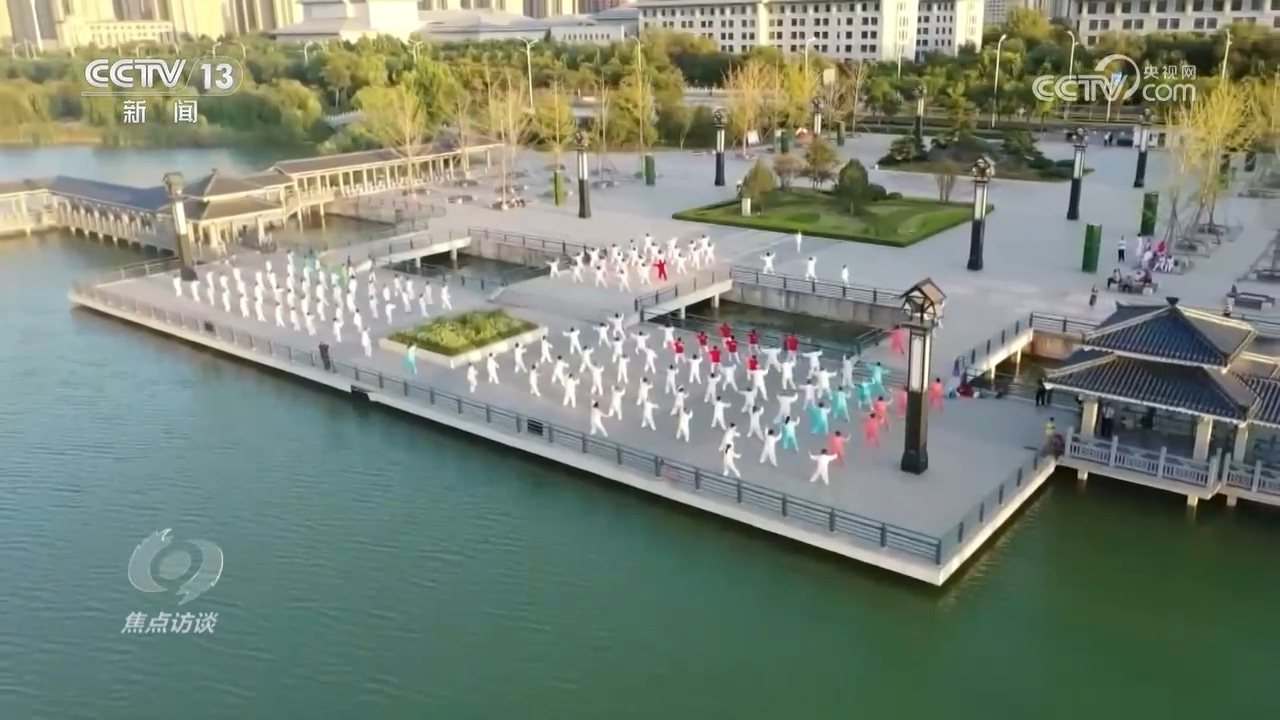
李强主持召开国务院常务会议 研究深入实施“两重”建设有关工作,部署增强消费品供需适配性进一步促进消费政策措施
Ren Min Ri Bao· 2025-11-14 22:31
Group 1: Economic Policies and Strategies - The meeting emphasized the importance of integrating the "two重" construction into the overall planning of the 14th Five-Year Plan, focusing on strategic, forward-looking, and holistic requirements [1] - It was highlighted that enhancing the adaptability of supply and demand is an effective measure to unleash consumption potential and facilitate economic circulation [2] - The meeting called for optimizing project reviews, emphasizing innovation input and intangible asset investment to promote the development of new productive forces [1][2] Group 2: Consumer Market Development - The government aims to lead industrial upgrades through consumption upgrades, ensuring high-quality supply meets diverse demands for a dynamic balance between supply and demand [2] - There is a push for the application of new technologies and models, particularly in artificial intelligence, to develop new products and value-added services in key industries [2] - The meeting stressed the importance of supporting enterprises in expanding the supply of high-quality consumer goods and updating safety and performance standards [2] Group 3: Education and Talent Development - The meeting acknowledged the progress made in implementing the spirit of the National Education Conference, with a focus on building a strong education system [2] - It was noted that a coordinated mechanism for promoting education, technology, and talent development should be established to meet national strategic needs [2] Group 4: Legislative Developments - The meeting discussed and approved the draft amendment to the Trademark Law, which will be submitted to the National People's Congress for review, aiming to strengthen trademark management and protection [3] - The revised draft of the Funeral Management Regulations was also approved during the meeting [4]
国常会研究深入实施“两重”建设有关工作 部署增强消费品供需适配性进一步促进消费政策措施
Zheng Quan Shi Bao· 2025-11-14 18:37
Group 1 - The State Council meeting emphasized the importance of integrating the "two重" construction into the overall planning of the 14th Five-Year Plan, focusing on strategic, forward-looking, and holistic requirements [1] - The meeting highlighted the need to enhance the adaptability of supply and demand to further unleash consumption potential and facilitate economic circulation [2] - The meeting discussed the draft amendment of the Trademark Law, aiming to strengthen trademark management and protection to promote economic and social development [3] Group 2 - The meeting approved the draft amendment of the Funeral Management Regulations, indicating a regulatory update in this sector [4] - The meeting also addressed other matters, although specific details were not disclosed [5]
教育强国战略驱动下新时代高校优秀传统文化传承
Xin Hua Wang· 2025-11-12 13:08
Core Viewpoint - The article emphasizes the importance of integrating traditional Chinese culture into higher education to enhance cultural confidence and innovation, aligning with the national strategy for building a strong educational system by 2035 [1][9]. Group 1: Principles of Traditional Culture Education in Higher Education - The integration of "soul" and "root" is essential for the transmission of traditional culture, where the spiritual essence and practical skills together form the foundation of national cultural confidence [2]. - The emphasis on "staying true" and "innovation" highlights that the transmission of traditional culture should not be a mere revival but should involve exploring its unique qualities and integrating them with contemporary culture [3]. - The coexistence of "national" and "global" perspectives is crucial, promoting inclusivity and cultural exchange, which reflects the diverse yet unified nature of Chinese civilization [4]. Group 2: Paths for Transmitting Traditional Culture in Higher Education - The "moral education" approach focuses on embedding the essence of traditional culture into the educational framework, encouraging educators to transition from mere knowledge transmitters to holistic mentors [6][7]. - The "cross-disciplinary integration" strategy aims to broaden the channels for transmitting traditional culture by collaborating with industries and creating a dual mentorship model that merges traditional crafts with modern technology [8]. - The "digital empowerment" initiative seeks to establish international cultural dialogue platforms, utilizing digital technologies to enhance the global presence of traditional culture and foster cultural exchanges [8].
新视野 | 深化一体推进教育科技人才发展的规律性认识
Zhong Yang Ji Wei Guo Jia Jian Wei Wang Zhan· 2025-11-11 00:32
Core Viewpoint - The article emphasizes the importance of integrating education, technology, and talent development as a strategic approach to achieve high-quality development and modernization in China [2][3][4]. Group 1: Strategic Significance - The integration of education, technology, and talent is essential for fostering a strong economy, as highlighted by the interdependence of these elements [3][4]. - The article references Xi Jinping's insights on the cyclical relationship between talent, technology, and economic growth, stressing that education is the foundation for this process [4][5]. Group 2: Pathways for Development - The article outlines the need for systemic reforms in education, technology, and talent development to create a coordinated mechanism that promotes innovation and talent cultivation [7][8]. - It emphasizes the importance of aligning educational reforms with technological advancements and national strategies to address existing imbalances and enhance quality [8][9]. Group 3: Reform Mechanisms - The article discusses the necessity of reforming the technology system to stimulate innovation and achieve self-reliance in technology, indicating that the current support mechanisms for basic research need improvement [9][10]. - It highlights the importance of reforming talent development systems to eliminate barriers that hinder talent vitality, advocating for a diversified evaluation system to better recognize and utilize talent [10].
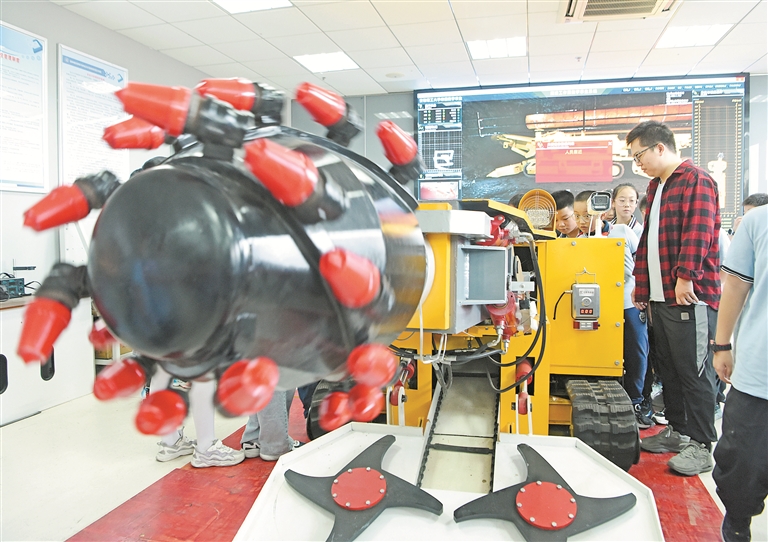
财政部:积极培育新兴产业和未来产业 持续推动制造业转型升级
智通财经网· 2025-11-07 10:56
Core Viewpoint - The report emphasizes the acceleration of new growth momentum in China's economy through enhanced fiscal policies, support for innovation, and investment in key industries, while ensuring the stability of employment and market expectations [1][3]. Group 1: Fiscal Policy and Economic Growth - The fiscal policy is increasingly proactive, focusing on stabilizing employment, businesses, and market expectations, while promoting economic recovery [3][4]. - A total of 300 billion yuan in special bonds is allocated to support the replacement of consumer goods, which is expected to stimulate significant retail sales [4][15]. - The central government plans to increase its technology funding to 398.12 billion yuan in 2025, a 10% increase from the previous year, focusing on core technology and strategic industries [5][21]. Group 2: Investment and Consumption - The government aims to enhance domestic demand by boosting consumption and effective investment, with a focus on key sectors and weak links [13][16]. - The issuance of special bonds has accelerated, with 5.55 billion yuan issued in the first half of the year, completing 42.7% of the annual target [16]. - The manufacturing sector is expected to see a 10.3% increase in industrial investment, driven by government support for technological upgrades [17]. Group 3: Employment and Social Welfare - The central government allocated 667.4 billion yuan for employment support, with 6.95 million new urban jobs created in the first half of the year [27][28]. - Education spending increased by 5.9% to 2.15 trillion yuan, with a focus on improving quality and access to education [29][30]. - Basic public health service funding reached 804.35 billion yuan, enhancing health management and disease prevention efforts [32][33]. Group 4: Risk Management and Financial Stability - The government is implementing measures to mitigate financial risks, including the management of local government debt and the promotion of real estate market stability [7][9]. - A comprehensive approach to fiscal management is being adopted, including reforms in tax systems and budget execution to ensure effective use of resources [7][12]. Group 5: Innovation and Technology - The report highlights the importance of integrating technological innovation with industrial development, with a focus on enhancing research capabilities and supporting key technology projects [20][21]. - Funding for basic research is set to increase by 12.1%, emphasizing the need for original innovation and support for research institutions [21][22]. Group 6: Environmental and Social Development - The government is committed to ecological protection and sustainable development, with significant funding allocated for pollution control and ecosystem restoration [38][39]. - Social welfare programs are being expanded, with increased support for vulnerable populations and efforts to improve living standards [34][35].
坚持把教育作为国之大计、党之大计
Ren Min Ri Bao· 2025-11-04 22:12
Group 1 - Education is fundamental for building a modern socialist country, with technology as the key and talent as the core resource [2][4][5] - The integration of education, technology, and talent is essential for enhancing the international competitiveness of Chinese brands [2][3] - The development of a high-quality education system is crucial for sustainable economic and social development [4][5] Group 2 - The "Education Brand" awareness should be established to create a high-quality education system that meets regional economic needs [4][5] - Collaboration between leading enterprises and high-level universities is encouraged to build research platforms and practical bases [5][6] - The Xiong'an New Area is positioned as a new high ground for education development, attracting quality educational resources [6][7] Group 3 - The focus on innovative education models and deepening cooperation between schools and enterprises is emphasized [6][8] - The establishment of a global education center city is seen as a pathway to enhance China's educational international influence [13][14] - The integration of sports into education is highlighted as a vital aspect of holistic education development [15][16]
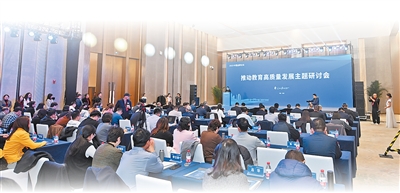
培根铸魂,立德树人——希望教育集团举办第三届党组织书记讲立德树人活动
Huan Qiu Wang· 2025-11-04 04:42
Core Points - The "Cultivating Virtue and Educating People" event organized by Hope Education Group aims to enhance the understanding and implementation of the "立德树人" (Lide Shuren) principle among educational institutions [1][2][4] - The event includes lectures, discussions, and showcases of best practices in promoting moral education and cultural values within the educational framework [1][3][4] - The initiative reflects the group's commitment to fostering a strong educational foundation aligned with national goals and enhancing the political capabilities of grassroots party organization leaders [4][5] Group 1 - The event is part of a three-day program that includes lectures, discussions, and exchanges among party organization leaders from various educational institutions [1][2] - Notable figures, including Guo Wenbin, delivered keynote speeches emphasizing the importance of traditional culture in nurturing students' moral values [1][3] - The event has been held for three consecutive years, demonstrating the group's ongoing commitment to the "立德树人" mission and the cultivation of educational leaders [4] Group 2 - Hope Education Group has implemented various measures to support ideological and political work across its institutions, including document issuance, guidance, and activity organization [3] - The event culminated in the selection of award winners based on presentations and papers submitted by participants, highlighting effective experiences in moral education [5] - The group aims to enhance the quality of grassroots party building and ensure the comprehensive implementation of educational policies across its institutions [4]