
智慧监管

Search documents
全国人大代表王琼:从“规模管控”转向“质量效益”
Ren Min Ri Bao· 2026-01-23 06:41
Core Viewpoint - The article emphasizes the need to shift from "scale control" to "quality and efficiency" in ecological environmental protection, highlighting the importance of collaborative governance and tailored approaches to achieve effective results in safeguarding the environment [1][2]. Group 1: Collaborative Governance - The establishment of a unified collaborative evaluation system is recommended, linking the reduction of key industry pollutants with carbon reduction benefits, and providing financial and tax incentives for collaborative governance projects [1]. - A "collaborative control list" should be implemented for multi-pollutant management, promoting integrated monitoring technologies in air and water pollution control to connect cross-medium pollution management [1]. - A cross-regional ecological compensation mechanism is suggested to enhance joint prevention and control among upstream and downstream entities, along with expanding pilot projects for cross-regional pollutant discharge rights trading to share costs and benefits [1]. Group 2: Institutional Foundation - The article advocates for the activation of the core functions of "pollution discharge permits" by constructing a smart regulatory system and upgrading the national pollution discharge permit regulatory platform, integrating technologies like satellite remote sensing and online monitoring [1]. - A differentiated enforcement approach using "double random + credit supervision" is proposed, along with the improvement of a full-chain linkage mechanism involving environmental impact assessment, permitting, enforcement, and inspection to ensure seamless connection between approval and regulation [1]. Group 3: Tailored Approaches - The article stresses the importance of adopting local experiences in "carbon-pollution linkage" enforcement and smart regulatory platforms, summarizing replicable collaborative governance models while respecting regional pollution characteristics to avoid a one-size-fits-all approach [2]. - The shift in ecological governance from "scale control" to "quality and efficiency" is highlighted, advocating for a combination of rigid institutional frameworks with flexible governance strategies [2].
1月23日证券之星午间消息汇总:事关个人消费贷!六大行集体公告
Sou Hu Cai Jing· 2026-01-23 03:46
Macro News - Major banks in China, including ICBC, ABC, BOC, CCB, BOCOM, and PSBC, have announced the implementation of the latest fiscal interest subsidy policy for personal consumption loans, extending the policy until December 31, 2026, and expanding its scope to include credit card installment payments [1][2] - The new policy removes the previous limits on single transaction amounts and increases the subsidy standards, allowing for more flexible financial support for consumers [1][2] Industry News - The Ministry of Commerce and nine other departments have issued guidelines to promote high-quality development in the pharmaceutical retail industry, emphasizing a shift towards service-oriented, preventive, and intelligent governance [3] - The guidelines encourage horizontal mergers and acquisitions among pharmaceutical retail enterprises and aim to optimize the licensing process for drug retail businesses [3] Sector Insights - CITIC Securities reports that the white wine industry is expected to maintain stable sales during the 2026 Spring Festival, suggesting a bottom-fishing opportunity in the sector [6] - China Securities believes that AI computing power will be a major growth driver in the telecommunications industry, highlighting investment opportunities in the computing power supply chain [6] - CITIC Jinshi notes that the progress of silver-plated copper and electroplated copper solutions in the photovoltaic sector is relatively fast, predicting significant performance elasticity for material companies as penetration rates increase [6]
9部门发文促进药品零售行业发展;百川发布循证增强医疗大模型
2 1 Shi Ji Jing Ji Bao Dao· 2026-01-23 00:09
Policy Developments - The Ministry of Commerce and nine other departments issued an opinion to promote the high-quality development of the pharmaceutical retail industry, proposing 18 specific measures focused on improving pharmaceutical services and emergency supply guarantees [1] - The opinion emphasizes the development of smart regulation, including accurate collection and verification of drug traceability codes and uploading to a national medical insurance information platform [1] - A dynamic regulatory model based on risk levels and credit evaluations will be implemented, optimizing inspection frequencies for low-risk enterprises and exploring non-on-site supervision methods like AI video inspections [1] Drug Approval - Yuandong Bio's subsidiary Shod Pharmaceutical received a drug registration certificate for chloral hydrate syrup, aimed at sedation and hypnosis for children, marking the company's first approved Class 2 modified new drug [2] - West Point Pharmaceutical announced the approval of glucosamine sulfate capsules for primary or secondary osteoarthritis, enhancing its product line but facing sales uncertainties due to industry policies and procurement factors [3] Capital Market - OpenEvidence, a medical AI startup, completed a $250 million Series D financing round, achieving a valuation of $12 billion, with total financing nearing $700 million [4] - West Point Pharmaceutical plans to repurchase shares worth between 25 million and 50 million RMB, with a maximum repurchase price of 42.00 RMB per share, representing 0.78% to 1.56% of its total A-share capital [5] Industry Developments - Baichuan Intelligent launched the evidence-enhanced medical model M3 Plus, reducing hallucination rates to 2.6%, the lowest globally, and introduced the "evidence anchoring" technology to link generated medical conclusions to original research [6][7] - Sinovac's inactivated hepatitis A vaccine has secured a two-year exclusive bid in Oman, with over 130 million doses supplied globally, making it one of the most widely used hepatitis A vaccines [8] Public Opinion Alerts - Yiju Medical announced the resignation of non-executive director Dr. Zhou Yi, effective January 22, 2026, to focus on other business commitments [9]



规范执法提质效 源头化解促和谐
Xin Lang Cai Jing· 2026-01-22 23:17
此外,台商公安着力构建系统化的规范执法体系。各派出所综合指挥室推行"执法指引+综合指挥"双轨 运行模式:设立执法监督岗,依托4G执法记录仪图传和一线警情反馈,为现场警组提供法律支持,确 保执法程序严格规范。指挥岗民警对接处警全程跟踪,及时研判风险、提示要点、指导处置,推动执法 监督贯穿办案全过程。面对敏感复杂警情,分局启动"警情+舆情"同步响应机制,在依法处置事件的同 时,舆情导控团队同步开展舆论引导,提升执法公信力与群众满意度。 2025年来,台商公安通过前置法制审核提前干预警情30800起,指导规范疑难警情326起,以有力举措不 断提升群众对执法工作的满意度。 强化源头预警 近年来,泉州市公安局台商投资区分局(以下简称"台商公安")紧紧围绕法治公安建设目标,聚焦执法 规范化建设,通过完善制度机制、强化源头预警、提升队伍素质,推动整体执法质效与公信力持续提 升。 完善制度机制 构建规范执法新格局 1月15日,因宅基地纠纷积怨已久的村民黄某、林某在派出所、司法所、村镇部门的联动调解下达成和 解,一场可能升级为恶性冲突的纠纷在执法源头被精准化解。 该警情的成功处置,正是台商公安健全执法制度机制的具体体现。该局把 ...
口岸联检信息化系统赋能全球最大单体机场通关升级
Zhong Guo Xin Wen Wang· 2026-01-22 07:18
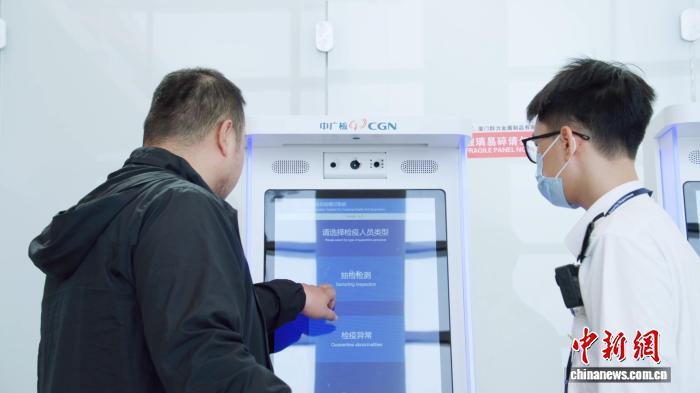
Core Insights - Guangzhou Baiyun International Airport's T3 terminal has officially commenced operations for international and regional flights, featuring a port inspection information system developed by China General Nuclear Power Corporation (CGN) [1][3] - The terminal, covering an area of 1.453 million square meters and capable of handling 140 million passengers annually, represents the world's largest single terminal airport, marking a new phase in smart port regulation and customs services [1] Group 1 - The newly implemented port inspection information system is designed with a core philosophy of "integrated collaboration and full-chain closure," utilizing a comprehensive command platform to enhance operational efficiency [1][3] - The system incorporates five functional modules: precise selection, intelligent inspection, overall management, real-time adjustment, and closed-loop processing, aimed at smartly inspecting inbound and outbound passengers and their luggage [1][3] Group 2 - By integrating data from customs, airports, and airlines, the system employs AI risk modeling and big data analysis to establish a dual verification mechanism, enhancing the tracking of luggage and passengers [3] - During trial operations, the system significantly improved passage efficiency during peak times, reducing average customs clearance time for international flights by approximately 70% and increasing the accuracy of prohibited item interceptions [3] Group 3 - CGN Beigu Technology Co., Ltd., a participant in the project, has previously gained successful experience in various "smart customs" projects across multiple locations, including Urumqi, Hainan, and Zhengzhou [5] - In addition to software systems, the airport has been equipped with a series of smart hardware, including health inspection channels, self-declaration machines, intelligent transfer robots, and negative pressure isolation chambers [5] - The company aims to leverage its core advantages in smart regulatory equipment development, software development, and system integration to provide comprehensive smart regulatory solutions for national security [5]

山东将全面深化药械监管改革,以全链条改革激发产业创新活力
Qi Lu Wan Bao· 2026-01-19 10:07
Core Viewpoint - The Shandong Provincial Government has introduced a series of reform measures aimed at enhancing the regulatory framework for pharmaceuticals and medical devices, promoting high-quality development in the pharmaceutical industry [3][4]. Group 1: Reform Measures - The implementation opinions focus on addressing the challenges in the pharmaceutical industry by introducing breakthrough reform measures that stimulate innovation throughout the entire industry chain [4]. - A "one-stop" innovation service network will be established, covering provincial, municipal, and county levels, to accelerate the review and approval process for innovative drugs and medical devices [4]. - The regulatory mechanism will be optimized by integrating registration checks, production licensing, and quality management inspections to minimize disruptions to normal production [4]. Group 2: Industry Growth - The initiative emphasizes fostering new growth drivers in the industry by focusing on cutting-edge innovations such as gene and cell therapy, AI in pharmaceuticals, and high-end medical devices [4]. - Support will be provided for the development of traditional Chinese medicine (TCM) aimed at treating major diseases, including the establishment of a platform for the transformation of TCM into new drugs [4]. - The "Medical Device Spring Rain Action" will be launched to support the transformation of medical device innovations, particularly in areas like surgical robots and biomaterials [4]. Group 3: Clinical Transformation - The reform will enhance collaboration among various departments, creating a seamless connection between clinical trials, clinical use, and insurance coverage [5]. - Clinical trial processes will be optimized, encouraging qualified medical institutions to undertake trial projects and establishing incentive mechanisms [5]. - A green channel mechanism will be implemented for innovative drugs and medical devices, ensuring timely access for healthcare institutions to new products [5]. Group 4: Safety and Regulation - The initiative emphasizes strict regulatory measures to ensure safety in drug development and usage, adhering to the "four strictest" requirements [6]. - A smart regulatory platform utilizing big data and AI will be developed to ensure traceability throughout the supply chain [6]. - There will be a focus on enhancing risk monitoring and emergency response capabilities, alongside strict enforcement against illegal activities [6].
洋浦:通关时间缩短70% 申报内容减少70余项
Hai Nan Ri Bao· 2026-01-19 02:27
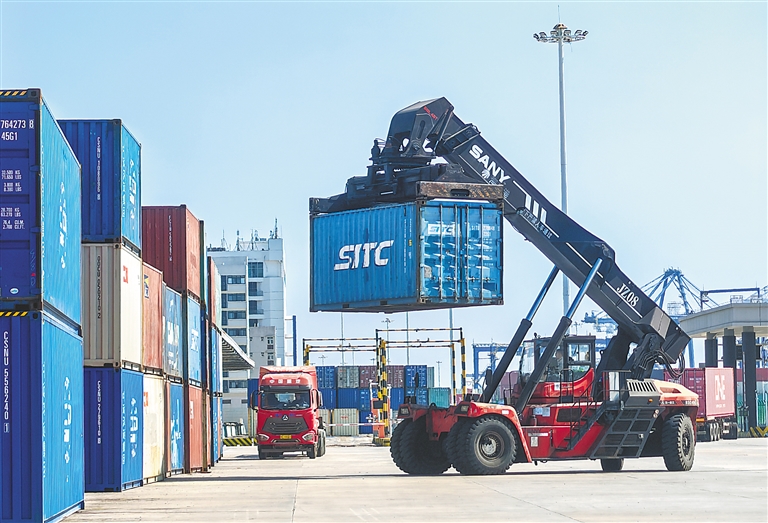
"三同三溯"、径予放行等便利化措施助力通关提速 洋浦:通关时间缩短70% 申报内容减少70余项 海南日报全媒体记者 吴心怡 "和原来相比,现在的通关时间大概缩短了70%!"说起进口原料的通关效率,海南澳斯卡国际粮油有限 公司(以下简称澳斯卡粮油)董事长张慧频频点赞。近日,一艘装载着4.8万吨大豆的巨轮停靠在国投洋浦港 码头,很快,这批大豆从船上卸下后被装进货车,一路畅通地通过智能卡口,驶入澳斯卡粮油的厂房中。 作为"一线放开"的主通道,一系列通关便利化措施在这里实现"系统性突破":"三同三溯"监管模式在食 品油料领域落地、原油"三定"政策(定企业、定品种、定数量)和"零关税"政策叠加,国际航行船舶手续"不 见面审批"和"7×24小时"服务全面推行,船舶通关效率显著提升。同时,整体通关效率显著提高,洋浦边检站 推行"一港一策""一船一策"定制化服务,推出一次性办结入出境手续、线上申报等7项便民利企举措,开设大 宗商品、鲜活产品快捷通道,联合海关、公安出入境推行"证件联办、同场查验"一站式服务,平均缩短手续 办理时间30分钟,简化锚地加注船舶检查手续后,单船平均节省通关时间6小时、成本约6万元。 据统计,封关以来 ...
海南封关满月看变化:离岛免税购物同比增长46.8%
Zhong Guo Xin Wen Wang· 2026-01-18 05:29
在品牌与商品供给上,30 家新店集中亮相,包括迪奥美妆全球最大旗舰店、MONCLER 海南首家全球 最新形象双层店等,同时引入浪琴表中免首发款等 70 余款独家商品,汇聚近 1000 个国内外知名品牌, 涵盖珠宝腕表、护肤彩妆、时尚精品、3C 数码、餐饮零售等多元业态,满足消费者全品类、高品质的 购物需求。 封关后,海口海关以智慧监管为引擎,从商品入库到旅客提货,构建了一套全链条、智能化、高效率的 海关监管服务模式。依托大数据平台和"集中+自动"审单系统,实现免税品"即到即报、即审即放",显 著节约企业时间与物流成本,为封关平稳运行提供保障。(完)【编辑:刘欢】 中免集团(海南)运营总部有限公司(简称中免海南运营总部)有关负责人介绍,从销售数据来看,1 月 1 日中免海南区域线下门店与线上商城单日销售额突破 3 亿元,封关首日销售额超 2.5 亿元、同比增长 90%。 封关之后,中免海南运营总部所属各门店打破传统免税购物边界,以 "商品 + 场景 + 服务" 创新模式为 核心,深化 "免税 + 文旅""免税 + 生活" 融合,打造沉浸式、多元化的消费新场景。 中新网海口1月18日电 (记者 王子谦)海南自贸港 ...

在海口新海港和南港“二线口岸”,海关依托“智慧大脑”实现放行信息“秒级”校验
Hai Nan Ri Bao· 2026-01-17 01:18
在海口新海港和南港"二线口岸",海关依托"智慧大脑"实现放行信息"秒级"校验 1分48秒通关,车不熄火人不下车 开栏的话 口岸是海南自由贸易港政策落地的关键节点,为全面展示高标准建设海南自由贸易港的实践成果、 创新举措和未来规划,海南日报今起推出"高标准建设海南自由贸易港·口岸行"特别策划,组织记者走 进对外开放口岸和"二线口岸"开展体验式报道,全景展示全岛封关后,海南自由贸易港与世界联系更便 捷、要素流动更高效、营商环境更优化的新图景。 海南日报全媒体记者 王晓曈 1分48秒! 张续成驾驶着一辆红色车头的厢式货车缓缓驶入海口新海港和南港"二线口岸"集中查验场海关监管 8号通道。他没有熄火,没有下车——1分48秒后,电子屏跳出"放行"指令,货车顺利通关。 这位来自山东的货车司机已有15年驾龄,近5年多是跑海南至广东的运输线路。近日,海南日报全 媒体记者坐上车辆副驾驶位,与张续成一起体验了一回"无感通关"。车辆满载海南维力医疗科技开发有 限公司生产的55万支一次性乳胶导尿管,货值115.7万元。 "快!真快!"张续成兴奋地向窗外的工作人员竖起大拇指,"这和我之前拉普通货物出岛没什么两 样"。 "前段时间,我们司 ...
新疆乌苏市市场监管局织密食品安全“防护网”
Zhong Guo Shi Pin Wang· 2026-01-16 11:23
Group 1: Core Insights - The Urumqi Market Supervision Bureau has strengthened party leadership and actively implemented the "practical action for excellence" concept since 2025, focusing on modernizing the food safety governance system and enhancing governance capabilities to support market entity development and improve public welfare [1] Group 2: Food Safety Governance - The bureau has adopted a "zero tolerance" approach to combat food safety violations, conducting special rectification actions against counterfeit and substandard food products, resulting in 34 administrative penalty cases last year [1] - Comprehensive inspections have been conducted in all primary and secondary school canteens, and a training session for "campus meals" was successfully held [1] - The bureau has intensified efforts to clean up the rural food market, focusing on areas such as tourist attractions and town markets, and has strengthened local management responsibilities for food safety [1] Group 3: Digital Governance - The bureau is advancing food safety regulation towards smart and precise governance, utilizing the "Smart Supervision" and "e-chain" traceability platform to enhance social supervision [2] - Activities such as "Campus Canteen Open Day" have been organized, with over 128 participants, and a food safety supervision position has been established in 18 schools with 641 student supervisors [2] - The bureau has implemented an order-based inspection and quarantine management system for bulk meat supplies, ensuring traceability and safety throughout the supply chain [2] Group 4: Industry Quality Improvement - The bureau emphasizes both regulation and service, collaborating with various departments to crack down on illegal meat product activities and ensuring compliance with food safety responsibilities [3] - Inspections have been conducted on 293 meat production and operation entities, leading to 7 cases being filed, thereby reinforcing market order [3] - The bureau has introduced rapid testing and responsive services to address public concerns, ensuring food safety for consumers [3]