
精品咖啡

Search documents
40元咖啡接连“败走”中国,谁还买单?
东京烘焙职业人· 2025-08-11 08:33
Core Viewpoint - Peet's Coffee, referred to as the "ancestor of Starbucks," is facing significant challenges in the Chinese market, including store closures and increased competition from lower-priced coffee brands [7][8][15]. Industry Trends - Peet's Coffee has closed several key locations in China, including its first store in South China, which was considered a benchmark for its market presence [8][11]. - The brand's expansion has slowed, with new store openings dropping from 98 in 2023 to 51 in 2024, and only 16 in the first half of 2025 [11]. - Despite a reported 23.8% organic growth in adjusted EBIT and a global sales increase of 7.9% to €88.37 billion in 2024, Peet's Coffee is experiencing anxiety over its market position in China [11][12]. Market Challenges - The premium coffee market in China is facing a collective struggle, with brands like Seesaw Coffee also experiencing significant store closures and financial difficulties [15][17]. - The overall growth rate of the premium coffee market in China is projected to decline from 25% in 2023 to 12% in 2025, contrasting with a global growth forecast of 9.2% [24]. - The average consumer price for coffee is decreasing, with the average takeout coffee price dropping from ¥63.8 in 2020 to ¥53.5 in 2023 [30][32]. Competitive Landscape - The coffee market is becoming increasingly saturated, with a 19.54% year-on-year increase in the registration of coffee-related businesses, reaching approximately 26,400 in the first half of 2025 [29]. - Brands like M Stand and %Arabica are also facing challenges, with M Stand experiencing a significant reduction in store openings and closures [21][28]. Consumer Behavior - A shift in consumer preferences is evident, with 80% of coffee consumers making decisions based on price, and only 4% willing to pay over ¥25 for coffee [35]. - The perception of coffee is evolving towards a more everyday necessity, leading to a decline in the appeal of premium coffee brands among younger consumers [39]. Strategic Recommendations - To navigate the current challenges, premium coffee brands need to abandon the "Western superiority complex" and focus on local flavors and cultural narratives to create a unique market position [41][42]. - The industry is undergoing a significant transformation, and brands must find a balance in cost control, product innovation, and localization to meet the changing demands of Chinese consumers [42].


坐拥3000多家咖啡馆 新晋“咖啡之城”贵阳走差异化发展之路
Zhong Guo Chan Ye Jing Ji Xin Xi Wang· 2025-08-11 05:35
Core Insights - Guiyang, located in Southwest China, has rapidly developed into a "Coffee City" with over 3,000 coffee shops, making it one of the cities with the highest coffee shop density in the country [1][2][10] Coffee City - Within a 3-kilometer radius, there are more than 20 specialty coffee shops, attracting tourists who seek hidden gems [2] - Guiyang has a population of approximately 6 million, resulting in a coffee shop density of about 2,000 people per shop, surpassing Shanghai's density of around 3,000 people per shop [2] - The coffee culture in Guiyang has been nurtured since 2005, with the introduction of specialty coffee shops like "Yue Reading Time" and "Soil Coffee" [2][3] - The rise of coffee consumption in Guiyang is attributed to the local population's willingness to spend on self-indulgence, ranking in the top five nationally [2] Coffee Soil - Local coffee shop owners emphasize enhancing their professional skills, contributing to a unique "coffee soil" that fosters numerous coffee-related stories [6] - The community coffee shop "Heishi Coffee" has seen a resurgence since 2018, with a daily cup output exceeding 300 during peak times [5] - "Hengguan Coffee" owner Liu Kaisheng transitioned from a barista to a professional roaster, establishing a dedicated roasting studio [5][6] Diverse Coffee Scene - Guiyang's specialty coffee shops exhibit a flourishing diversity, with baristas specializing in various coffee disciplines such as brewing, roasting, and latte art [7] - Innovative offerings, such as "Heishi Coffee's" unique pairing of local ingredients with coffee, have become market hits [8] - Cross-industry collaborations are emerging, with coffee shops integrating themes like bookstores, cat cafes, and art spaces, enhancing the coffee culture [9]
被誉为“星巴克祖师爷”,知名连锁品牌大量关店?公司回应
Mei Ri Jing Ji Xin Wen· 2025-08-10 10:03
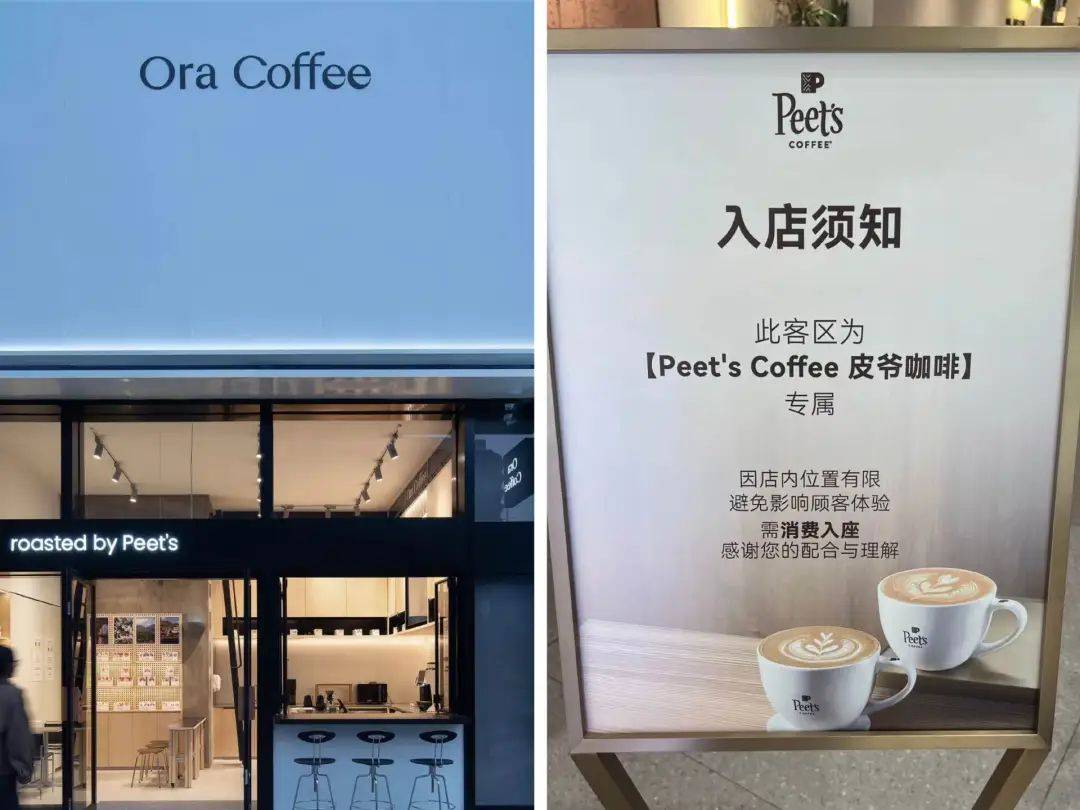
Core Viewpoint - Peet's Coffee, a well-known global coffee chain, has closed its first store in South China, located in Shenzhen, due to the expiration of its lease, reflecting a broader trend of store closures amid strategic adjustments in the competitive coffee market [1][4][6]. Company Summary - Peet's Coffee opened its first store in South China in September 2021 and has operated for nearly four years before closing [4]. - The company has recently closed several other locations, including its first store in Guangzhou and others in Hangzhou and Beijing, primarily due to lease expirations [4][6]. - Peet's Coffee has approximately 270 stores across 20 provinces and 35 core cities in China, with plans to continue expanding its store count in the second half of the year [4][6]. - The parent company, JDE Peet's, reported a strong organic sales growth of 23.8% for Peet's Coffee in China, contributing to a global sales increase of 7.9% [4]. Industry Summary - The coffee market in China is experiencing intense competition, with various brands engaging in price wars, leading to a shift in strategies among coffee retailers [6][7]. - Analysts suggest that the restaurant industry is entering a phase of consolidation, where companies are closing underperforming stores while opening new ones in more strategic locations [7]. - Peet's Coffee has adopted a more cautious growth strategy, focusing on operational efficiency and quality rather than engaging in price wars [6][9]. - The introduction of the Ora Coffee brand, which offers more affordable products, indicates a response to changing consumer preferences and market dynamics [9].

被誉为“星巴克祖师爷”,这一知名连锁品牌大量关店?公司最新回应
Mei Ri Jing Ji Xin Wen· 2025-08-10 09:42
Core Viewpoint - Peet's Coffee, a well-known global coffee chain, has closed its first store in South China, located in Shenzhen, due to the expiration of its lease, reflecting a strategic adjustment in its operations amid a competitive market [1][4][6]. Company Summary - Peet's Coffee opened its first store in South China in September 2021 and has operated for nearly four years before closing [4]. - The company has been closing several stores in China, including locations in Guangzhou, Hangzhou, and Beijing, primarily due to lease expirations [4][6]. - Peet's Coffee has approximately 270 stores across 20 provinces and 35 core cities in China, with plans to continue expanding its store count in the second half of the year [4][6]. - The parent company, JDE Peet's, reported a strong organic sales growth of 23.8% for Peet's Coffee in China, contributing to a global sales increase of 7.9% to €8.837 billion [4]. Industry Summary - The coffee market in China is experiencing intense competition, with various brands engaging in price wars, leading to a dilution of the premium coffee image [7][9]. - Analysts suggest that the restaurant industry is entering a phase of consolidation, where companies are closing underperforming stores while opening new ones in more strategic locations [7]. - Peet's Coffee is adapting to market changes by testing a more affordable product line with its Ora Coffee brand, offering products priced between 15 to 25 yuan, and implementing a "small and refined" store model to enhance operational efficiency [9].

40元咖啡接连“败走”中国,谁还买单?
东京烘焙职业人· 2025-08-09 08:33
Core Viewpoint - Peet's Coffee, referred to as the "ancestor of Starbucks," is facing significant challenges in the Chinese market, with recent store closures indicating a struggle to maintain its presence and competitiveness [7][8][15]. Industry Dynamics - Peet's Coffee has closed several key locations, including its first store in South China, which was considered a benchmark for its market presence [8][11]. - Despite a reported increase in organic sales and a 23.8% growth in adjusted EBIT for Peet's Coffee in China, the brand is experiencing anxiety over its market position, leading to the introduction of a low-cost sub-brand and new consumption policies [11][14]. - The overall specialty coffee market in China is facing a slowdown, with growth rates dropping from 25% in 2023 to an expected 12% in 2025, contrasting with a global growth forecast of 9.2% [24][30]. Competitive Pressures - The specialty coffee sector is under pressure from both internal cost structures and external price wars, with many brands, including Peet's, Seesaw, and M Stand, experiencing operational challenges and closures [28][21]. - The average consumer price for coffee is declining, with significant drops in both takeaway and in-store purchases, indicating a shift towards more price-sensitive consumer behavior [30][39]. - A growing number of coffee-related businesses are entering the market, increasing competition and market saturation, with a 19.54% year-on-year increase in registered coffee enterprises [29]. Consumer Behavior Shifts - Consumer preferences are shifting towards value for money, with 80% of coffee consumers making decisions based on price, and only 4% willing to pay over 25 yuan for coffee [38]. - The traditional "third space" concept associated with specialty coffee is losing appeal, as younger consumers gravitate towards independent coffee shops and affordable local brands [38][42]. - The average consumer's perception of coffee is evolving into a daily necessity, leading to a decline in the average transaction value for both delivery and in-store purchases [30][39]. Future Outlook - The specialty coffee market is expected to undergo a significant transformation, requiring brands to adapt to new consumer demands and find a balance between cost control, product innovation, and localization [42]. - Brands like Peet's Coffee are at a crossroads, needing to redefine their positioning to cater to both niche and mainstream markets while overcoming the challenges posed by increased competition and changing consumer preferences [42].

40元咖啡接连“败走”中国,谁还买单?
Hu Xiu· 2025-08-08 00:35
一、"星巴克的祖师爷"败走中国? Peet's Coffee皮爷咖啡(下文简称"皮爷咖啡"),这个"星巴克的祖师爷",最近频繁陷入倒闭风波。 前两天,皮爷咖啡的华南首店因租约到期闭店。该门店位于深圳万象天地北区B1层,是皮爷咖啡在华南区开出的首家门店,目前,原址位置已经挂上了 新的品牌围挡。 皮爷咖啡的这家华南首店开业于2019年,近4年的时间里一直被外界认为是其在华南市场的标杆之作。在华南首店闭店之前,皮爷咖啡还在年初接连关闭 了广州首店、杭州西湖店、北京部分门店等。 根据公开数据显示,目前皮爷咖啡门店数量超过260家,与品牌定位的"精品咖啡"路线相符,扩张路线上也同样是"少而精"。2023年,皮爷咖啡曾加速市 场布局,当年新开门店数量达到98家,但在随后两年间扩张持续减速,2024年新开门店数量为51家,2025上半年新开门店数量仅为16家。 尽管从2024年皮爷咖啡的年报来看,销售额仍在强势增加:根据其母公司JDE Peet's2024年报显示,皮爷中国有机销售额强劲增长,调整后的息税前利润 (EBIT)有机增长23.8%,拉动母公司全球销售额达88.37亿欧元,同比增长7.9%。 但从近期其在中国市场 ...
“咖啡界祖师爷”华南首店关闭,精品咖啡怎么了?
3 6 Ke· 2025-08-07 10:12
Group 1: Core Insights - Peet's Coffee, once hailed as the "coffee patriarch," has faced significant store closures in China, including its first store in South China, which closed quietly without prior notice [1][2][4] - The brand's expansion has slowed considerably, with only 16 new stores opened in the first half of 2023, compared to a rapid increase of 70 stores in 2021 and over 100 in 2023 [4][5] - The broader specialty coffee sector is experiencing a "survival crisis," with brands like Seesaw facing severe financial issues, including unpaid wages and store closures [6][8][11] Group 2: Industry Challenges - The specialty coffee market in China is grappling with rising rent pressures, increased competition from high-value brands like Luckin Coffee, and a shift in consumer preferences towards more affordable options [12][13] - Market research indicates that only 7% of consumers are willing to pay extra for "sustainable coffee," and less than 4% are willing to pay over 25 yuan for a cup, highlighting a fundamental shift in demand [13] - Many specialty coffee brands have expanded rapidly without maintaining quality control, leading to a decline in brand reputation and increased store closures [14][15] Group 3: Innovations and Adaptations - Brands are exploring innovative product offerings and marketing strategies to attract consumers, such as Bond Coffee's introduction of "freshly brewed coffee" and "fruit peel coffee" [17][18] - Peet's Coffee has launched seasonal specials like "osmanthus wine cold brew," achieving significant sales in Shanghai [19] - The industry is diversifying consumer experiences, with events like the Chongqing International Coffee Festival and collaborations between coffee brands and other sectors, such as automotive [20][22] Group 4: Future Outlook - The specialty coffee sector must find a balance between cost and consumer experience to survive, focusing on delivering value that consumers are willing to pay for [24] - The ongoing evolution of consumer preferences and market dynamics will determine which brands can successfully redefine their value propositions and thrive in the competitive landscape [24]
茶咖日报|星巴克免费VS皮爷收费?咖啡行业迎来极端“座位大战”
Guan Cha Zhe Wang· 2025-07-29 14:34
Group 1: Peet's Coffee and Market Dynamics - Peet's Coffee has implemented measures to address the issue of "seat hogging" by requiring customers to make a purchase to occupy seats in select stores [1] - The company has seen strong sales growth in China, with an adjusted EBIT organic growth of 23.8%, contributing to a global sales increase of 7.9% to €8.837 billion [1] - The coffee brand's strategy reflects a focus on protecting its premium experience, contrasting with Starbucks' approach of removing consumption barriers [2] Group 2: New Tea Beverage Industry Trends - The new tea beverage industry has experienced stagnation in store growth, with a total of 116,978 stores as of June 2025, reflecting a mere 0.74% increase from the previous year [3] - The industry is undergoing a reshuffling, with leading brands expanding into lower-tier cities while many mid-tier brands face closures [3] - New tea brands are increasingly targeting the U.S. market, adapting their business models to fit local preferences rather than replicating domestic success [3] Group 3: Technological Innovations in Coffee - Shanghai Heitun has introduced the sixth generation of its fully automated coffee robot, COFE+, capable of producing over 1,000 cups daily with a design lifespan of 500,000 cups [4] - The COFE+ robot utilizes AI to control extraction parameters, ensuring the preservation of coffee's original aroma [4] - The technology aims to eliminate risks associated with opening coffee shops and reduce operational burdens [4] Group 4: Bond Coffee's Strategic Positioning - Bond Coffee, led by the second-generation successor of Want Want Group, is focusing on a "premiumization" strategy rather than rapid franchise expansion [5] - The brand has opened five stores in Shanghai and plans to establish significant locations in high-profile areas by July 2025 [5] - The competitive landscape is intensifying, with both international and domestic brands enhancing their offerings to meet rising consumer expectations [5]
“这里的咖啡主理人密度比上海还高?” 跑到悬崖上喝美式兑茅台的贵州人给一线牛马看傻了
3 6 Ke· 2025-07-29 08:54
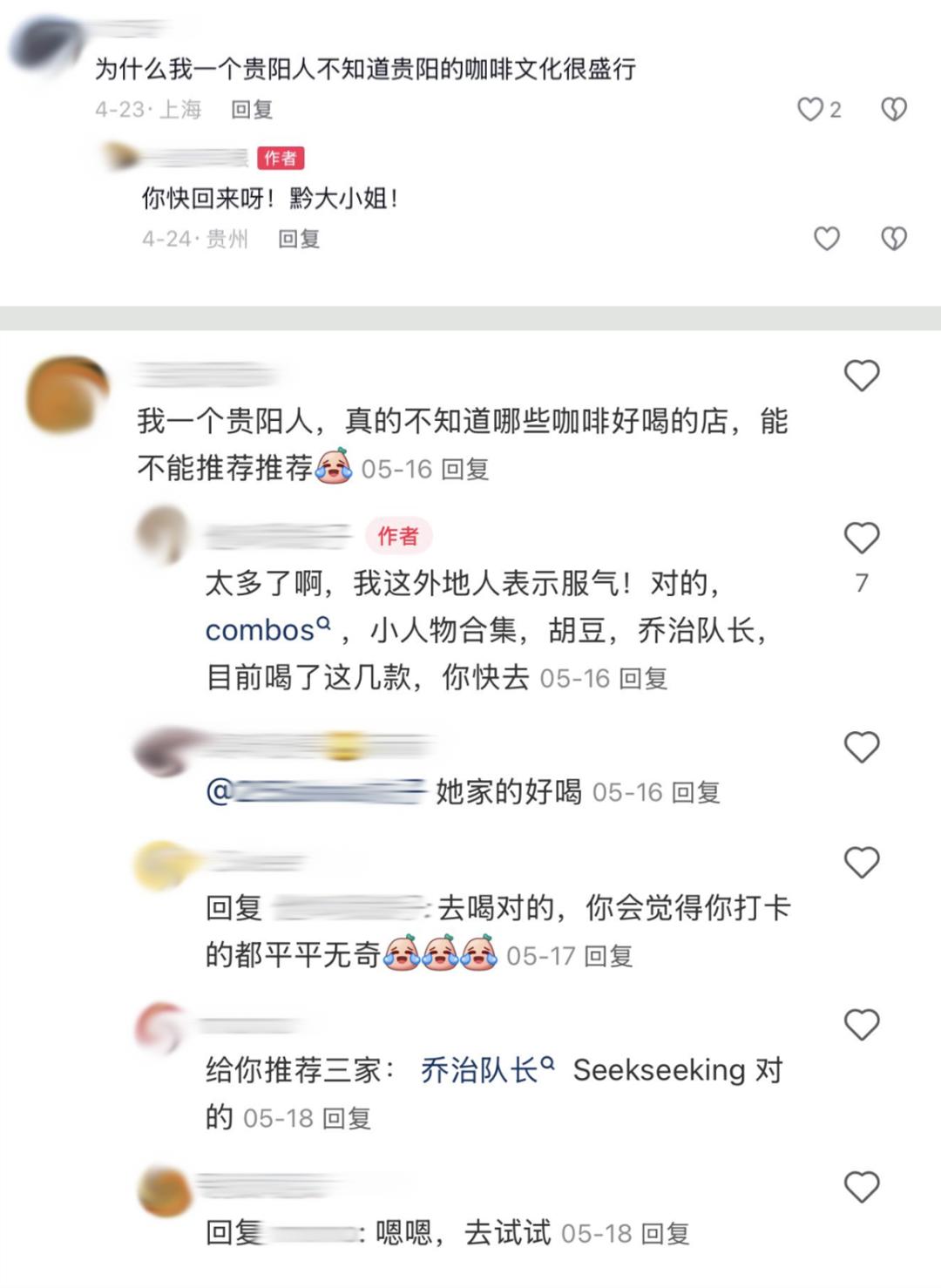
Core Insights - Shanghai, once the global leader in coffee shops with 553 cafes, has been surpassed by Guiyang, which boasts over 3,000 cafes for a population of about 6 million, resulting in a density of 5 cafes per 10,000 people compared to Shanghai's 2.85 [1][32] Group 1: Coffee Culture in Guiyang - Guiyang's coffee scene is characterized by a high number of championship-winning baristas, with at least a dozen champions reportedly working in local cafes, contributing to the city's reputation as a coffee hub [2][7] - The local coffee flavor profile emphasizes unique ingredients, such as incorporating local herbs and flavors like "black garlic" and "Moutai," creating distinctive drinks that appeal to both locals and tourists [8][10] - Tourists are increasingly drawn to Guiyang's coffee culture, often waiting in long lines for the "champion coffee," while locals express curiosity about the influx of visitors [2][10] Group 2: Comparison with Shanghai - In Shanghai, coffee consumption is often tied to work culture, with 84.2% of coffee drinkers being office workers, who view coffee as both a productivity tool and a lifestyle choice [21][24] - Shanghai's coffee culture is marked by a focus on the overall experience, with consumers interested in the story behind the coffee, while Guiyang's approach is more relaxed, prioritizing social interaction over the coffee's narrative [28][30] - The local coffee experience in Guiyang is more about socializing and enjoying the atmosphere, akin to how Chengdu residents frequent tea houses, rather than a deep dive into coffee nuances [24][28] Group 3: Economic and Social Factors - Guiyang's coffee market is thriving, with over 1,248 local coffee brands among the 3,000 cafes, indicating a strong local investment in the coffee culture [32][34] - The willingness of Guiyang residents to spend on lifestyle choices is reflected in their high ranking in a survey on spending to please oneself, surpassing major cities like Beijing and Shanghai [32][34] - Historical influences, such as migration patterns and cultural exchanges, have contributed to Guiyang's unique coffee culture and consumer behavior, fostering a lifestyle that embraces enjoyment and social interaction [34][35]
小山村“咖”位大
Jing Ji Ri Bao· 2025-07-07 01:20
Core Viewpoint - The article highlights the transformation of Xinzhai Village in Yunnan Province into a hub for high-quality coffee production, leveraging its unique geographical advantages and a focus on boutique coffee to drive rural revitalization and economic growth [1][2][8]. Group 1: Coffee Production and Quality Improvement - Xinzhai Village has a coffee cultivation history of over 70 years, with more than 10,000 acres dedicated to coffee farming [1][2]. - The village faced challenges over a decade ago with low coffee bean prices, prompting a shift towards a boutique coffee strategy to enhance quality and profitability [2][3]. - The village has achieved a 98% coverage of high-quality coffee varieties, focusing on meticulous cultivation practices and improved processing methods [3][4]. Group 2: Industry Chain Extension and Diversification - Xinzhai Village has developed a complete coffee industry chain, including processing plants, cafes, and tourism facilities, to increase value-added products [4][6]. - The village has introduced over 10 coffee products, including roasted beans and freeze-dried coffee, to cater to diverse consumer preferences [6][8]. - E-commerce and live-streaming sales have been utilized to promote Xinzhai coffee, achieving an online transaction volume exceeding 12 million yuan in 2024 [6]. Group 3: Tourism and Cultural Integration - The village has become a destination for coffee enthusiasts, attracting over 200,000 visitors annually, contributing to an increase in local income [7][8]. - Xinzhai Village promotes a "from seed to cup" experience, integrating coffee cultivation with tourism, allowing visitors to engage in coffee picking and processing [7][8]. - The village aims to enhance its tourism offerings by developing boutique accommodations and dining experiences, further enriching the visitor experience [8].