轻资产运营模式

Search documents
北京最火商场,要被卖了
首席商业评论· 2025-08-16 04:34
Core Viewpoint - The article discusses the significant move by Ingka Group to sell three of its shopping centers in China, indicating a strategic shift in response to declining performance and the increasing role of insurance capital in real estate investment [5][12][14]. Group 1: Transaction Details - Ingka Group plans to sell three shopping centers located in Wuxi, Beijing, and Wuhan, with a total asking price of 16 billion yuan [6][7]. - The first batch of sales includes mature projects that have been operational for over 10 years, with a total transaction value reaching 16 billion yuan [7][8]. - The potential buyer is a fund led by Taikang Life, with a total fund size of 8 billion yuan, where Taikang Life will invest 3 billion yuan [10]. Group 2: Performance Challenges - Ingka Group has faced significant challenges, particularly with its IKEA segment, which saw a 30% drop in sales compared to its peak in 2019, leading to a 5.5% decline in total revenue to 41.864 billion euros and a 46.5% drop in net profit to 806 million euros in 2024 [12][11]. - The decision to sell shopping centers is seen as a way to optimize asset structure and reduce heavy asset burdens while maintaining operational control [12]. Group 3: Insurance Capital's Role - Insurance capital has become a crucial player in real estate investment, with companies like Taikang Life, Xinhua Insurance, and others actively participating in various real estate projects [5][14]. - From 2022 to 2024, direct investments by insurance companies in China's commercial real estate reached 9.3 billion USD, positioning them as significant investors in the Asia-Pacific region [14]. - The article highlights the increasing pace of insurance capital's involvement in real estate, driven by favorable policies and the need for stable long-term returns in a low-interest-rate environment [15].

公募豪掷逾140亿元参与定增,电子、化工受青睐;券商年内已宣布撤销87家分支机构 | 券商基金早参
Mei Ri Jing Ji Xin Wen· 2025-08-12 01:50
Group 1 - The brokerage industry has announced the closure of 87 branches this year, reflecting an accelerated digital transformation within the sector [1] - Major brokerages like Guosen Securities and Founder Securities are leading in branch closures, aiming to optimize resource allocation and enhance operational efficiency [1] - The shift towards online services is expected to become a core competitive advantage for brokerages, with those investing heavily in technology likely to gain market favor [1] Group 2 - Public funds have invested over 14 billion yuan in private placements this year, with electronics and chemicals being the favored sectors [2] - Among the 24 public institutions participating in A-share private placements, Nord Fund has emerged as the leader with a total allocation of 5.633 billion yuan [2] - This trend indicates a growing confidence among institutional investors in the real economy, potentially enhancing market risk appetite and optimizing capital allocation [2] Group 3 - The new fund issuance market remains robust, with over 30 new funds launched for three consecutive weeks, and equity funds making up over 80% of the total [3] - The majority of newly launched equity funds are index funds, indicating a strategic focus on systematic opportunities by institutions [3] - This influx of new funds is expected to inject additional liquidity into the A-share market, benefiting the brokerage sector and supporting core assets like technology and consumer stocks [3] Group 4 - Hongta Securities has conducted its first share buyback, repurchasing 2.22 million shares for approximately 20.01 million yuan, signaling confidence in its own value [4] - The buyback is likely to boost investor confidence and provide support for the company's stock price, potentially leading to a revaluation of the brokerage sector [4] - The trend of share buybacks among listed companies is seen as a positive signal for market sentiment, reflecting recognition of long-term value by industry capital [4]

最赚钱的3座购物中心,要被卖了
3 6 Ke· 2025-08-12 01:33
Core Viewpoint - The commercial real estate sector is witnessing significant transactions, with Ingka Group planning to sell three shopping centers in China for a total of 16 billion yuan, indicating a shift in investment strategies amid performance challenges [3][11]. Group 1: Transaction Details - Ingka Group is set to sell three shopping centers located in Wuxi, Beijing, and Wuhan, with a total transaction value of 16 billion yuan [6][7]. - The Wuxi center, opened in June 2014, has seen a steady increase in foot traffic, reaching 18 million visitors in 2024, while generating sales of 4.3 billion yuan [7]. - The Beijing center, one of the largest in Asia, attracts around 30 million visitors annually and is projected to generate nearly 10 billion yuan in sales [7]. - The Wuhan center recorded a remarkable opening day foot traffic of 80,000, maintaining over 100,000 visitors on weekends [7]. Group 2: Investment Dynamics - The buyer is expected to be a fund led by Taikang Life, with a total fund size of 8 billion yuan, where Taikang Life will invest 3 billion yuan [8]. - The transaction will create a joint venture, with operational rights remaining with Ingka, which promises a nearly 7% return to the insurance investors during the investment period [8][11]. - There are indications that Ingka may sell the remaining seven shopping centers, which would mean a significant divestment of its assets in mainland China [8]. Group 3: Industry Trends - Insurance capital has become a significant player in real estate investments, with companies like Taikang Life, Xinhua Insurance, and others actively participating in various projects [4][12]. - From 2022 to 2024, insurance companies invested approximately 9.3 billion USD in commercial real estate in mainland China, positioning themselves as leaders in the Asia-Pacific market [12]. - The first half of the year saw major insurance firms invest 4.747 billion yuan in real estate projects, a sixfold increase compared to the previous year [12]. Group 4: Motivations Behind Investment - The push for insurance capital to enter the real estate market is driven by government policies encouraging such investments, which have lowered barriers and expanded investment channels [13]. - The current low-interest-rate environment necessitates insurance companies to seek equity investments to preserve and grow their capital [13][14]. - Insurance capital's characteristics, such as large scale, long duration, and stability, make it well-suited for long-term real estate investments [14].
最赚钱的3座购物中心,要被卖了
36氪· 2025-08-12 00:09
Core Viewpoint - The article discusses the significant transaction involving Ingka Group's plan to sell three shopping centers in China, highlighting the increasing role of insurance capital in real estate investments [3][4][13]. Group 1: Transaction Details - Ingka Group is planning to sell three shopping centers located in Wuxi, Beijing, and Wuhan, with a total transaction value of 16 billion yuan [3][5]. - The Wuxi center, opened in 2014, has seen a steady increase in foot traffic, reaching 18 million visitors in 2024, while generating sales of 4.3 billion yuan [7]. - The Beijing center, one of the largest shopping centers in Asia, attracts around 30 million visitors annually and is expected to generate nearly 10 billion yuan in sales [7]. - The Wuhan center recorded a remarkable opening day foot traffic of 80,000, maintaining over 100,000 visitors on weekends [7]. Group 2: Strategic Implications for Ingka Group - The sale of these shopping centers is seen as a response to the declining performance of Ingka Group, particularly in its IKEA segment, which reported a 30% drop in sales compared to its peak in 2019 [10][11]. - By selling mature projects while retaining operational control, Ingka aims to optimize its asset structure and reduce heavy asset burdens, allowing for a focus on brand management and customer engagement [11][12]. Group 3: Insurance Capital's Role - Insurance companies, including Taikang Life, have been increasingly active in real estate investments, with direct investments in commercial real estate in China reaching 9.3 billion USD from 2022 to 2024 [14]. - The trend of insurance capital entering the real estate market is supported by favorable policies and a low-interest-rate environment, making real estate an attractive investment option for long-term stable returns [15][16][17]. - The article suggests that insurance capital will continue to play a crucial role in real estate investments, driven by policy support and market opportunities [18].
南京商旅,能否摸着华天叫板金陵饭店?
3 6 Ke· 2025-08-05 02:41
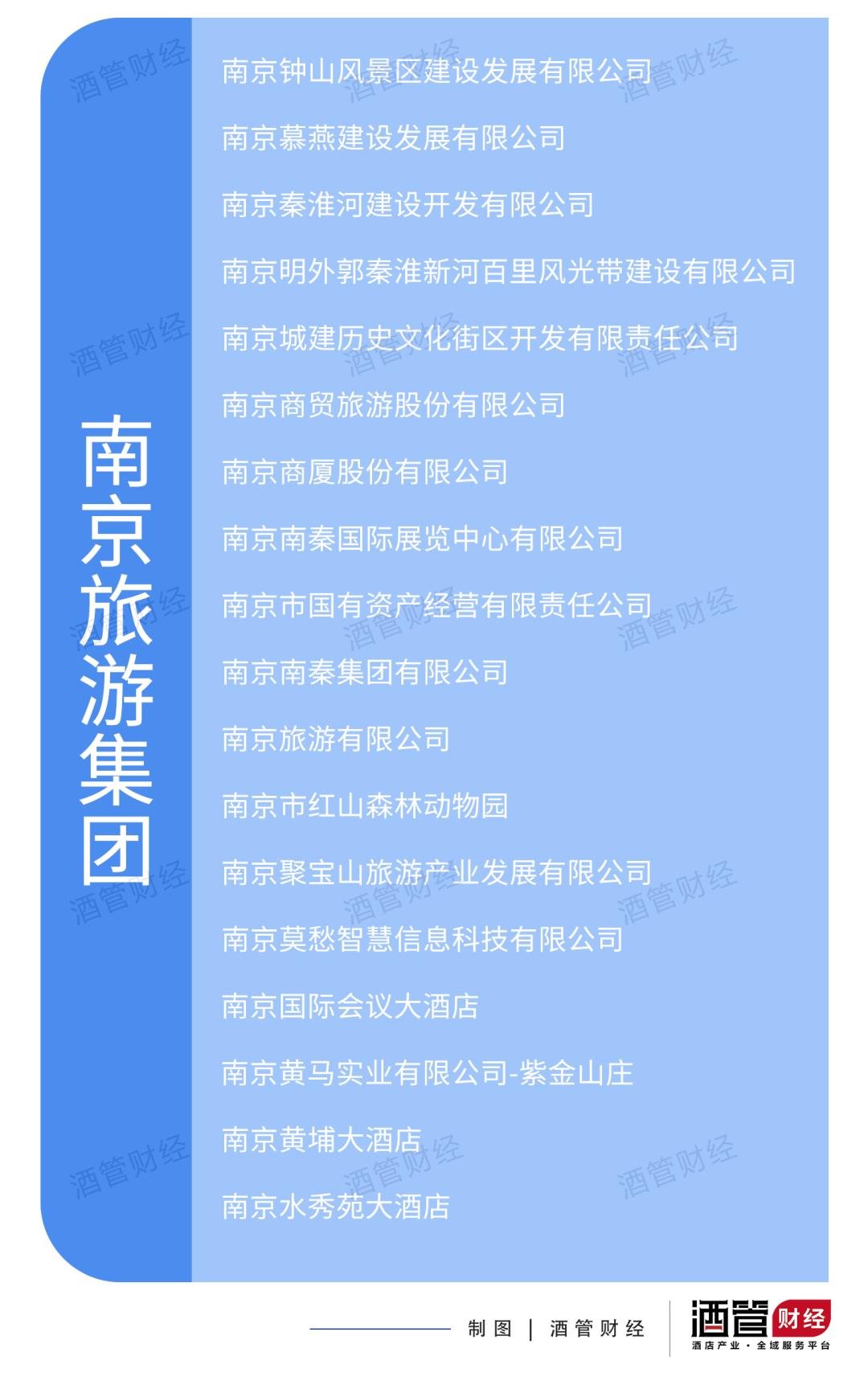
Core Viewpoint - Nanjing Business Travel is planning to acquire Huangpu Hotel and is undergoing a restructuring to integrate with Nanjing Cultural Investment Holding Group and Nanjing Sports Industry Group, aiming to create a comprehensive development and operation platform for cultural tourism and sports in Nanjing [1][4]. Group 1: Strategic Moves - Nanjing Business Travel's parent company, Nanjing Tourism Group, is leading a resource integration involving over 10 billion yuan in assets, which may disrupt the long-standing dominance of Jinling Hotel in the high-end hotel market [4][6]. - The acquisition of Huangpu Hotel, known for its strategic location and stable revenue from a mixed customer base, is a key part of Nanjing Business Travel's strategy to enhance its brand and market position [2][4]. Group 2: Market Position and Challenges - Nanjing Business Travel currently lacks a strong high-end brand presence, which limits its market share in the premium segment [4][9]. - Despite the growth in Nanjing's tourism revenue, Nanjing Business Travel is projected to see a significant decline in net profit by 50%-78% in the first half of 2025, indicating challenges in achieving growth [8][20]. Group 3: Competitive Landscape - The competitive landscape is evolving, with Nanjing Business Travel's strategies mirroring those of Huatian Hotel, which has also undergone significant restructuring and asset integration [7][19]. - Jinling Hotel's market dominance is showing signs of weakening, with its revenue in Nanjing declining and Nanjing Business Travel's tourism segment revenue increasing by 213% from 2018 to 2024 [20][21]. Group 4: Operational Model and Future Prospects - Nanjing Business Travel is adopting a light asset operation model, focusing on hotel management and resource collaboration, but faces challenges in standardizing operations and building a cohesive brand identity [9][10][15]. - The integration of cultural and sports resources is expected to enhance the hotel segment's performance, but the company must overcome operational inefficiencies and establish a robust management system [12][16].


圣贝拉(2508.HK):产康赛道行业翘楚 25H1报表端实现盈利
Ge Long Hui· 2025-08-05 01:47
Core Viewpoint - The company anticipates significant revenue growth and profitability in the first half of 2025, driven by its innovative business model and market expansion strategies [1][4]. Group 1: Financial Projections - The company expects to achieve revenue of no less than RMB 448 million in the first half of 2025, representing a year-on-year growth of at least 25% [1] - The total revenue, including the income from entrusted management of maternity centers, is projected to be no less than RMB 520 million, reflecting a growth of at least 35% compared to the same period in 2024 [1] - The anticipated net profit for the reporting period is expected to be no less than RMB 320 million, a significant turnaround from a net loss of RMB 480 million in 2024 [1] Group 2: Business Model and Market Strategy - The company operates a light-asset model by collaborating with high-end hotels, which allows for rapid expansion without heavy capital investment [2][3] - The brand matrix includes flagship brand "圣贝拉" for ultra-high-net-worth individuals, "小贝拉" targeting young middle-class consumers, and "艾屿" focusing on psychological healing needs, creating a comprehensive service offering from pregnancy to early childhood [2][3] - The company has expanded its operations to 30 cities in China and international markets including Hong Kong, Singapore, Los Angeles, New York, and Bangkok [3] Group 3: Growth Drivers and Market Position - The maternity care industry is experiencing increasing demand, with a shortage of professional caregivers, allowing leading brands to capture market share through enhanced service quality [3] - The company's revenue grew from RMB 472 million in 2022 to RMB 799 million in 2024, with a compound annual growth rate (CAGR) of 30.1% [2] - The adjusted net profit is projected to increase significantly, with expectations of RMB 21 million in 2023 and RMB 42 million in 2024, indicating improving profitability [2] Group 4: Future Outlook - The company forecasts revenues of RMB 1.076 billion, RMB 1.403 billion, and RMB 1.777 billion for 2025, 2026, and 2027, respectively, with year-on-year growth rates of 34.73%, 30.42%, and 26.65% [4] - Expected net profits for the same period are projected to be RMB 315 million, RMB 406 million, and RMB 478 million, with substantial growth rates [4] - The company is positioned to benefit from economies of scale and improved operating margins as it continues to expand its market presence [4]
圣贝拉(02508):产康赛道行业翘楚,25H1报表端实现盈利
China Post Securities· 2025-08-04 03:55
Investment Rating - The report initiates coverage with a "Buy" rating for the company [2] Core Views - The company is expected to achieve revenue of no less than RMB 448 million in the first half of 2025, representing a year-on-year growth of no less than 25%. The total revenue, including the income from the entrusted management of maternity centers, is projected to be no less than RMB 520 million, reflecting a growth of no less than 35% compared to the same period in 2024. The company anticipates a net profit of no less than RMB 320 million, a significant turnaround from a net loss of RMB 480 million in 2024 [5][6] Company Overview - The company was established in 2017, starting with the first maternity center in Hangzhou, and has positioned itself in the postpartum care market with a high-end focus. It employs a "high-end hotel + professional care" light asset model, collaborating with top hotels to lease space, thus avoiding heavy capital investments typical of traditional standalone models [6][7] - The company has expanded its brand portfolio and global strategy since 2018, creating a pyramid matrix with flagship brand "Saint Bella" targeting ultra-high-net-worth individuals, "Little Bella" aimed at young middle-class consumers, and "Aiyu" focusing on psychological healing needs. It has also acquired the brand "Guanghetang" to enter the functional food sector for women and launched the family care brand "Yujia" to extend services from maternity centers to postpartum recovery and early childhood care, forming a "pregnancy-birth-raising" closed loop [6][7] Financial Performance - From 2022 to 2024, the company's revenue is expected to grow from RMB 472 million to RMB 799 million, with a compound annual growth rate (CAGR) of 30.1%. The core driver of this growth is the maternity center business, which accounts for 85% of total revenue. The adjusted net profit is projected to turn from a loss in 2022 to a profit in 2023 and 2024, with adjusted net profits of RMB 21 million and RMB 42 million respectively [6][9] - The company is expected to achieve revenue of RMB 1.076 billion, RMB 1.403 billion, and RMB 1.777 billion in 2025, 2026, and 2027 respectively, with year-on-year growth rates of 34.73%, 30.42%, and 26.65%. The forecasted net profit attributable to the parent company for the same years is RMB 315 million, RMB 406 million, and RMB 478 million, reflecting significant growth [9][11]
*ST中地: 中国国际金融股份有限公司关于中交地产股份有限公司重大资产出售暨关联交易之独立财务顾问报告(修订稿)
Zheng Quan Zhi Xing· 2025-07-25 16:49
Core Viewpoint - The report discusses the major asset sale and related transactions of China International Financial Co., Ltd. regarding China Communications Real Estate Co., Ltd., highlighting the strategic shift from real estate development to a focus on property management and asset management services [1][2][3]. Group 1: Transaction Overview - The transaction involves the transfer of real estate development-related assets and liabilities from the company to its controlling shareholder, with a transaction price set at 1 yuan [4][6]. - The assets being transferred include equity, debt, and related liabilities associated with the real estate development business [4][6]. - The transaction is characterized as a major asset restructuring and constitutes a related party transaction due to the involvement of the controlling shareholder [24][26]. Group 2: Financial Impact - The asset evaluation report indicates that the net asset value of the transferred assets is -391,881.75 million yuan, with an assessed value of -297,604.13 million yuan, reflecting a 24.06% increase in value [24][26]. - Post-transaction, the company's total assets and revenue are expected to decline significantly, with total assets projected to decrease by approximately 97.90% and total liabilities by about 99.04% [8][10]. - The company's asset-liability ratio is anticipated to improve significantly, moving from 89.77% to 41.09% [8]. Group 3: Strategic Shift - The company aims to transition to a light asset operation model, focusing on property management and asset management, which is expected to enhance profitability and operational efficiency [7][10]. - This strategic shift aligns with national policies promoting high-quality development and aims to mitigate the company's financial risks associated with high debt levels [22][23]. - The restructuring is seen as a necessary step to protect the interests of minority shareholders and improve the overall value of the company [10][24].

上海首富郭广昌正在抛弃房地产!
Sou Hu Cai Jing· 2025-07-16 00:13
Core Viewpoint - The sale of BFC Bund Financial Center by Fosun indicates a strategic shift away from real estate investments by the company, as its founder Guo Guangchang's wealth has significantly decreased over the years [1][24]. Group 1: Asset Sale Details - Fosun has listed the BFC Bund Financial Center for sale, with a recent transaction involving a major Chinese telecommunications company purchasing over 6,000 square meters at a price exceeding 130,000 yuan per square meter [3][4]. - The BFC Bund Financial Center has seen a price increase, with recent sales reflecting a 13% rise in unit price compared to previous transactions [4]. - The center includes two super-grade office buildings and three standalone office buildings, with total asking prices exceeding 8.537 billion yuan for the residential and standalone properties alone [5][8]. Group 2: Historical Context - The BFC Bund Financial Center was originally a highly contested project among four major real estate figures, including Guo Guangchang, Pan Shiyi, and others, highlighting the competitive nature of the real estate market in Shanghai [8][20]. - The project was acquired in 2010 for 9.22 billion yuan, marking it as one of the most expensive land deals in Shanghai at the time [9]. - A legal battle ensued over ownership stakes, with Guo Guangchang ultimately regaining full control of the BFC after a series of complex negotiations and transactions [17][20]. Group 3: Strategic Shift - Guo Guangchang has publicly stated that Fosun will focus on two main sectors: biomedicine and cultural tourism, moving towards a light asset operation model [24]. - The company has gradually divested from real estate, with its real estate subsidiary, Fuzhou Group, having lost market presence and relevance over the years [25]. - The transition away from real estate investments reflects a broader trend among major players in the industry, as they adapt to changing market conditions [26][27].

安克创新因产品质量问题召回超百万个充电宝 产品全出自代工厂、品控不过关致品牌形象受损
Xin Lang Zheng Quan· 2025-07-07 09:47
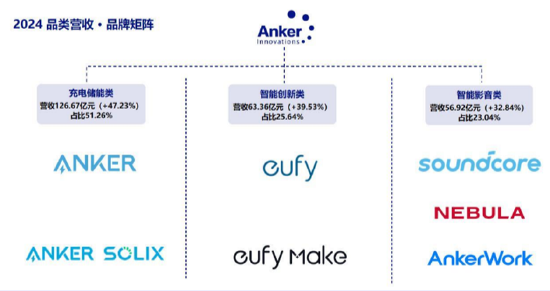
Core Viewpoint - The recent recall of over one million power banks by Anker Innovations highlights significant quality control issues stemming from its reliance on outsourced manufacturing, which has adversely affected the company's brand image, cash flow, and profit margins [1][9][10]. Group 1: Company Overview - Anker Innovations focuses on three main industry directions: smart electricity, smart home automation, and smart audio-visual products [2]. - The company has established core business segments including digital charging, consumer-grade energy storage, smart cleaning, smart security, smart audio, and smart projection [2]. Group 2: Financial Performance - Anker Innovations reported revenues of 142.51 billion, 175.07 billion, and 247.1 billion from 2022 to 2024, with year-on-year growth rates of 13.33%, 22.85%, and 41.14% respectively [4]. - The net profit attributable to the parent company for the same years was 11.43 billion, 16.15 billion, and 21.14 billion, with growth rates of 16.43%, 41.22%, and 41.14% respectively [4]. Group 3: Operational Model - The company employs a light asset operation model, focusing on R&D and brand marketing while outsourcing production to contract manufacturers [6]. - This model reduces capital investment in the short term but increases long-term operational uncertainty due to reliance on external manufacturers for production quality and capacity [6][10]. Group 4: Recent Quality Issues - Anker Innovations initiated a recall of specific power bank models due to safety concerns related to battery cell quality, which was linked to unauthorized material changes by a supplier [6][9]. - The recall affected over one million units in the U.S. and involved multiple models in Japan, indicating widespread quality control failures [9]. Group 5: Financial Health Indicators - The company's debt-to-asset ratio has been steadily increasing, reaching 44.92% by 2024, indicating rising financial leverage [10]. - Operating cash flow was negative at -2.88 billion as of the first quarter of 2025, reflecting challenges in generating cash from operations [12]. - Inventory levels have been rising, with figures of 14.8 billion, 24.11 billion, and 32.34 billion from 2022 to 2024, showing a significant increase in inventory relative to total assets [12].