量化交易

Search documents
鹰眼快讯 AI+算法模型 战略双升级:今天,我们开始量化“情绪”
对冲研投· 2026-01-19 07:03
Core Viewpoint - The article introduces the "emotional quantification" era in the futures market, emphasizing the transition from qualitative reading of information to quantitative data-driven decision-making [3][23]. Group 1: Emotional Quantification System - The new system utilizes deep learning AI to perform rapid "emotional CT scans" of news articles, transforming complex texts into clear decision-making indicators [3][5]. - It provides a three-tiered emotional classification: bullish, bearish, and neutral, along with a continuous emotional score ranging from -1 to +1 to measure sentiment intensity [4][5]. Group 2: Value for Market Participants - For individual traders, the system acts as an "emotional radar" and "noise filter," allowing them to focus on market sentiment without being overwhelmed by information [9]. - For futures companies and professional institutions, it serves as a "service enhancement engine," integrating emotional indices into internal reports and client materials to improve efficiency and competitive differentiation [11]. - For quantitative investment teams, it offers a unique alternative data factor derived from authoritative news sources, enabling the development of new trading strategies based on emotional momentum and reversal [12]. Group 3: Competitive Advantages - The company possesses unique advantages in original news sourcing, ensuring high-quality, timely data that avoids the noise associated with publicly available information [13]. - The AI model is specifically designed for the futures market, allowing for a deeper understanding of industry-specific terminology and sentiment [13]. Group 4: Validation of the System - The emotional scoring system has been validated through rigorous backtesting by leading quantitative hedge funds, demonstrating significant predictive capabilities across various futures products [14]. - The emotional factor has shown robust performance, with improved information coefficients and Sharpe ratios, indicating its potential as a valuable alternative data source in quantitative investment frameworks [14]. Group 5: User Experience and Engagement - The emotional quantification system is now available for users to experience through the upgraded official app, providing real-time access to comprehensive emotional indices and insights into market dynamics [16][18]. - Users can track sector-specific emotional indices and analyze individual commodities' emotional score trends in relation to key events [18].


李迅雷:量化并非“股市割韭菜”的元凶,交易额占比20%左右可能合适
Ge Long Hui· 2026-01-19 06:12
1月19日,中泰国际首席经济学家李迅雷近日谈及量化交易时表示,要辩证地看待这个问题,不能够一 味地认为量化就是"割韭菜"的,去掉量化股市就能涨了。他指出,股市需要有流动性,量化对于改善股 市流动性也是起到了积极的作用。有数据显示,量化交易的交易额已经占到整个市场交易额的30%左 右,李迅雷认为这个(占比)恐怕有点偏大了,20%左右可能合适。 在这个市场中,最终投资者所获得的收益还是上市公司成长、发展、盈利带来的收益。过去没有量化交 易的时候,股市一样还是"熊长牛短"。背后的原因在于上市公司的盈利还是不足以满足投资者的预期。 投资者的预期过高也是一个问题,股价太高了,股息率自然就少了。总而言之,市场的参与者和上市公 司共同决定了市场的盛衰。 同时,他强调要对量化交易进行一定的限制,根据"三公"的原则——公开、公平、公正,来约束某些量 化交易。资本市场要反对的是内部交易和操纵市场,如果某些量化交易具有操纵市场嫌疑的话,就应该 进行限制;反之,如果没有操纵市场,只是通过高频交易来套利的话,是被允许的。 股票频道更多独家策划、专家专栏,免费查阅>> 责任编辑:钟离 ...
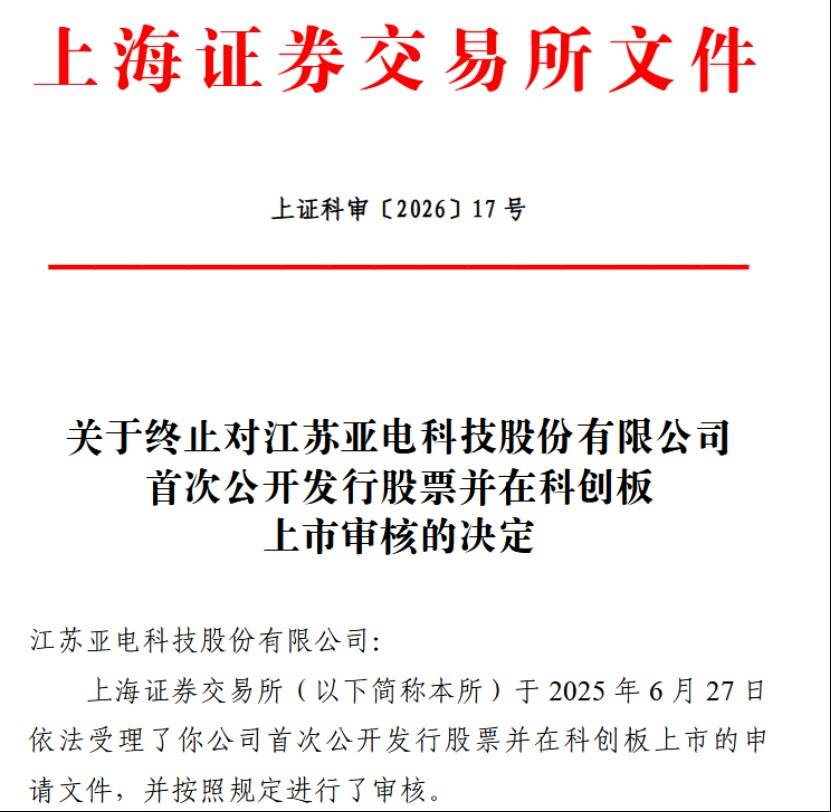
IPO终止引关注,量化数据析关键
Sou Hu Cai Jing· 2026-01-16 23:13
Core Viewpoint - A company that was initially aiming for the Sci-Tech Innovation Board has withdrawn its IPO application, with the Shanghai Stock Exchange announcing the termination of the review process. The company faces issues such as high reliance on a single client, elevated accounts receivable, cash flow volatility, and pressure from buyback clauses on its actual controller. The true determinants of the company's direction are the actual trading behaviors of institutional investors, rather than the potentially misleading news and performance data [1]. Group 1: Market Reactions and Institutional Behavior - Many investors often make decisions based on performance data or perceived stability, only to face unexpected adjustments or volatility. This highlights the importance of understanding underlying institutional trading behaviors to avoid unnecessary losses [4]. - The "institutional inventory" data, which reflects the trading activity of institutional investors, is crucial for understanding market dynamics. Active participation from institutional funds indicates stronger support for a stock's price movement [4][9]. Group 2: Trading Patterns and Signals - During periods of consolidation, the lack of active institutional participation can lead to price declines, confirming the adage "long consolidation leads to a drop." The absence of sustained funding support during horizontal trading phases can result in subsequent adjustments [9]. - In contrast, stocks that maintain active institutional participation during consolidation are more likely to experience upward momentum, demonstrating the critical role of funding behavior in determining price direction [12]. Group 3: Misleading Market Signals - Stocks that appear to break down may not always indicate a genuine trend reversal. The "institutional inventory" data can reveal ongoing institutional interest, suggesting that such breakdowns may be superficial and not indicative of a fundamental shift [15][17]. - The reliance on quantitative data helps investors see beyond surface-level information, allowing for more informed decision-making based on actual market behaviors rather than speculative interpretations of news and performance metrics [17].
迈向“人工智能+”时代:人工智能实验室科研成果体系全景发布
Xin Lang Cai Jing· 2026-01-15 14:09
Core Insights - The article emphasizes the transformative impact of artificial intelligence (AI) on the securities industry, highlighting the establishment of an AI laboratory by Guojin Securities in February 2024 to explore innovative applications of large models in finance [2][35] - The laboratory aims to integrate AI deeply into core business areas such as quantitative trading, investment management, company valuation, risk control, and organizational operations, showcasing a comprehensive research framework across six key scientific directions [2][35] Valuation and Investment Research System - This system focuses on enhancing valuation analysis and investment research capabilities in the securities field using large language models, aiming to reconstruct traditional valuation frameworks and improve the depth and efficiency of company value and investment opportunity analysis [3][36] - Key research directions include developing new valuation methods by integrating large models with financial data and constructing intelligent valuation models [3][36] Patent Achievements - A dynamic valuation algorithm and system based on parallel game theory and large language models is under application, which is expected to enhance the adaptability of valuation models to market changes [4][37] - An algorithm and system for intelligent mining of industrial chain information in a domestic executable environment using large models is also under application, aimed at identifying key factors affecting corporate value [4][37] - A method for intelligent mining and backtesting of investment factors in the securities industry using large models in a domestic environment is being developed to support quantitative investment strategy development [4][37] Paper Achievements - Research on integrating large language models with financial data for improved valuation methods has been published in the journal "Financial Technology Times" [5][38] - A framework for constructing intelligent valuation models using large models has been proposed in the journal "Securities Information Technology" [5][38] - A quantitative analysis of sentiment, financial reports, and goodwill using large model technology has been published, addressing the limitations of traditional financial valuation models [5][38] Risk Management and Governance System - This system focuses on establishing a robust risk management framework for the application of large models, including risk assessment and fault tolerance mechanisms for model "hallucinations" and risk prevention in AI model applications [9][42] - Research includes developing risk protection technologies for financial regulation involving large models [9][42] Multi-Agent Collaboration and Adaptive System - This system studies multi-agent systems driven by large language models and their collaborative applications in finance, aiming to create intelligent systems that can learn and evolve adaptively [45] - Research covers collaborative control algorithms for multiple agents and adaptive trading strategies based on reinforcement learning and emergent behavior [45] AI Empowerment for Organizational Transformation - This system explores how large models can facilitate organizational transformation and knowledge management innovation within securities institutions, focusing on creating "AI-friendly" organizations and knowledge management solutions [21][55] - Research includes the application of digital humans (virtual employees) and fostering a culture that integrates AI technology into business processes [21][55] Complex Financial System Modeling and Quantitative Trading System - This system emphasizes the use of large language models to re-examine and model complex financial systems, innovating investment strategy paradigms [28][30] - Research includes enhancing understanding of complex financial systems and reconstructing traditional quantitative strategies through a systems theory perspective [28][30]


董少鹏建议规范量化交易:限用于超级大盘股、禁止频繁撤单,以维护市场短线交易公平
Xin Lang Cai Jing· 2026-01-15 13:47
Core Viewpoint - The event highlighted the importance of fundamental factors in determining the long-term trends of the stock market, rather than relying on market manipulation or short-term trading strategies [1][4]. Group 1: Market Dynamics - The movement of funds in the market is not driven by a single directive but is influenced by fundamental conditions [5]. - The Chinese stock market has seen a rapid increase in listings since 2021, but the quality of some stocks has been questioned [5]. - There is a need to enhance the quality of listed companies, with a slowdown in IPOs and an acceleration in restructuring to solidify the market's foundation [5]. Group 2: Investment Strategies - Recommendations were made to utilize quantitative trading in large-cap stocks, while small-cap stocks, which have high turnover rates, may not require such strategies [7]. - It was emphasized that quantitative trading should not involve frequent order cancellations, as this creates unfair conditions in short-term trading [7]. - The focus should return to fundamental investing to address issues of short-term speculation, with regulatory bodies and companies playing a crucial role in market management [7]. Group 3: Role of Investors and Institutions - Investors are considered the foundation of the capital market, while listed companies are its basis, highlighting the value of retail investors in the economic development of China [7]. - There is a call for value investing to become mainstream, which may require regulatory support and guidance from major institutions [7]. - Large investment institutions and companies should prioritize human-centric approaches to share market and economic benefits, alongside improving market management and services [7].

董少鹏不赞成李大霄“压盘托盘”说法:市场资金流向非指挥棒能驱动,中长期走势由基本面决定
Xin Lang Cai Jing· 2026-01-15 13:47
Core Viewpoint - The event highlighted the importance of fundamental factors in determining the long-term trends of the stock market, rather than relying on market manipulation or short-term trading strategies [1][4]. Group 1: Market Dynamics - The movement of funds in the market is not driven by a single directive but is influenced by fundamental conditions [5]. - The Chinese stock market has seen a rapid increase in listings since 2021, but the quality of some stocks has been questioned [5]. - There is a need to enhance the quality of listed companies, with a slowdown in IPOs and an acceleration in restructuring to solidify the market's foundation [5]. Group 2: Investment Strategies - Recommendations were made to utilize quantitative trading in large-cap stocks, while small-cap stocks, which have high trading frequency and turnover, may not require such strategies [7]. - It was emphasized that quantitative trading should not involve frequent order cancellations, as this creates unfair competition in short-term trading [7]. - The focus should return to fundamental investing to address short-term trading issues, with regulatory bodies and companies playing a crucial role in market management [7]. Group 3: Role of Investors and Institutions - Investors are considered the foundation of the capital market, while listed companies are its basis, highlighting the value of retail investors in the economic development of China [7]. - For value investing to become mainstream, regulatory support and guidance from major institutions are necessary [7]. - Large investment institutions and companies should prioritize human-centric approaches to share market and economic benefits, alongside improving market management and services [7].
钮文新谈量化交易频繁挂单撤单:对散户投资者不公平
Xin Lang Cai Jing· 2026-01-15 12:40
基于这一市场特征,钮文新强调,中国股市走特色金融发展之路,必须充分尊重散户市场的现实。 与机构市场中机构间可通过法律途径解决纠纷不同,散户作为弱势群体,维权难度较大,这对证监会的 监管工作提出了更高要求。 专题:2025微博财经之夜暨北京财经大V联盟年会 2025微博财经之夜暨北京财经大V联盟年会于1月15日在北京举行。钮文新回顾,二十余年以来,散户 股民规模仍未发生根本性变化。他认为,核心原因在于中国作为高储蓄率国家,大量资金掌握在老百姓 手中,而部分机构投资者存在的信用问题、理财产品透明度不足等现象,降低了公众对机构的信任度, 导致散户自主参与股市投资的格局难以改变。 2025微博财经之夜暨北京财经大V联盟年会于1月15日在北京举行。钮文新回顾,二十余年以来,散户 股民规模仍未发生根本性变化。他认为,核心原因在于中国作为高储蓄率国家,大量资金掌握在老百姓 手中,而部分机构投资者存在的信用问题、理财产品透明度不足等现象,降低了公众对机构的信任度, 导致散户自主参与股市投资的格局难以改变。 基于这一市场特征,钮文新强调,中国股市走特色金融发展之路,必须充分尊重散户市场的现实。 与机构市场中机构间可通过法律途径 ...

量化、宏观、CTA,到底选谁?
雪球· 2026-01-15 08:06
Core Viewpoint - The article discusses the increasing trend of quantitative macro strategies in the investment landscape, emphasizing their growth and effectiveness in asset allocation and risk management [9][10]. Group 1: Growth of Quantitative Macro Strategies - Over the past seven years, the global management scale of quantitative macro strategies has experienced explosive growth, surpassing 60% of the global macro strategy proportion in 2023, with this percentage continuing to rise [9]. - Quantitative macro strategies shift investment decision-making from narrative-driven approaches to rule-based execution through quantitative models, integrating both quantitative trading and macroeconomic logic [10]. Group 2: Addressing Criticisms of Quantitative Macro Strategies - Criticism regarding the rationality of macro strategies is addressed, highlighting that while traditional macro strategies rely on low-frequency economic data, quantitative macro can utilize a broader range of high-frequency data through advancements in machine learning and AI [12][13]. - The article counters the skepticism about the performance of quantitative macro strategies, asserting that many strategies have demonstrated significant excess returns, particularly in volatile market conditions, where they can quickly respond to market signals [16][18]. Group 3: Strategy Implementation - An example of a quantitative macro strategy is provided, which divides its approach into Beta and Alpha components, with the Beta portion using a risk parity model to allocate equal volatility weights to equity indices, government bonds, and commodity futures [15]. - The Alpha component employs machine learning models to identify short-term signals for timing and trading, enhancing returns without increasing overall portfolio risk [15][18]. Group 4: Risk Management and Leverage - Quantitative macro strategies are noted for their cautious approach to leverage, utilizing a more diversified trading portfolio and a programmatic risk control mechanism to monitor leverage usage in real-time [20]. - The article emphasizes that the flexibility in using leverage is a significant advantage of macro strategies, particularly when employing CTA methods to amplify returns during certain market conditions [18][20].

3.99万亿!太疯狂了~
Xin Lang Cai Jing· 2026-01-14 11:24
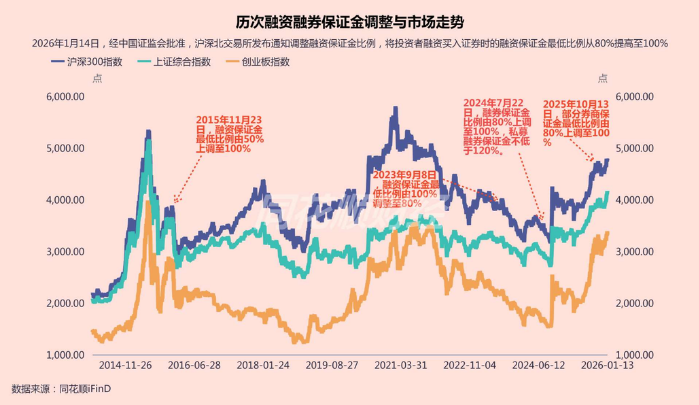
Core Viewpoint - The stock market is experiencing significant buying pressure, with trading volumes nearing historical highs, prompting regulatory intervention to adjust margin requirements for margin trading [1][3]. Group 1: Market Dynamics - The stock market's trading volume reached 3.99 trillion, almost setting a new historical record, indicating strong buying momentum that could push the index towards 5000 points before the Spring Festival [1]. - The recent adjustment of the margin requirement from 80% to 100% for new margin trading is aimed at cooling down the market's overheating, reverting to levels seen before September 2023 [3][5]. - The margin trading balance in the Shanghai and Shenzhen markets has reached 2.66 trillion, marking a historical high, with a notable increase in the number of margin accounts [5]. Group 2: Investor Behavior - The current market sentiment is characterized by a mix of seasoned investors and new retail investors, with the latter often feeling pressured to engage in margin trading due to fears of missing out on potential gains [3][5]. - The market is witnessing a significant influx of retail investors, driven by declining bank interest rates and the allure of high returns in the stock market [5][6]. - The emotional aspect of trading is becoming increasingly prominent, with many investors focusing on price movements rather than fundamental analysis, leading to a rapid shift in market sentiment [5][6]. Group 3: Valuation Concerns - The overall price-to-earnings (PE) ratios in the A-share market have surged to over 80% of the past decade's levels, with some indices exceeding 90%, indicating a potential overvaluation driven by excess liquidity [8]. - Historical comparisons suggest that the current trading activity is approaching peak levels, raising concerns about sustainability and the potential for a market correction [6][8]. - The market's current state reflects a high level of speculative behavior, with many stocks trading at inflated valuations, making it challenging for investors to find attractive opportunities [6][8].
幻方量化去年收益率56.6%,为DeepSeek提供超级弹药
2 1 Shi Ji Jing Ji Bao Dao· 2026-01-14 02:16
Core Insights - The article highlights the impressive performance of Huansheng Quantitative, which achieved an average return of 56.55% in 2025, ranking second among quantitative private equity firms in China, only behind Lingjun Investment with 73.51% [2] - Huansheng Quantitative's management scale has exceeded 70 billion yuan, and its average returns over the past three years and five years are 85.15% and 114.35%, respectively [2] - The strong returns from Huansheng Quantitative provide substantial funding support for DeepSeek, a company focused on AI model development, founded by Liang Wenfeng [2][4] Company Overview - Huansheng Quantitative was established in 2015 and specializes in AI quantitative trading, consistently investing in AI algorithm research [2][4] - The company has a diverse team composed of experts in various fields, including mathematics, physics, and computer science, which enables it to tackle challenges in deep learning and big data modeling [2] - The company has experienced rapid growth, surpassing 100 billion yuan in management scale in 2019 and reaching over 700 billion yuan currently [2][4] Financial Performance - Based on industry estimates, Huansheng Quantitative's strong performance last year could generate over 700 million USD in revenue, assuming a 1% management fee and a 20% performance fee [6] - The funding for DeepSeek's research comes from Huansheng Quantitative's R&D budget, with Liang Wenfeng holding a majority stake in both companies [4][5] AI Model Development - DeepSeek, incubated by Huansheng Quantitative, aims to advance general artificial intelligence and has a budget of 5.57 million USD for its V3 model training costs [7] - DeepSeek plans to release its next-generation AI model, DeepSeek V4, around the Lunar New Year, which is expected to surpass existing top models in programming capabilities [7]