
黄金避险属性

Search documents
现货黄金历史性站上4600美元,黄金、白银再创历史新高
Sou Hu Cai Jing· 2026-01-12 03:13
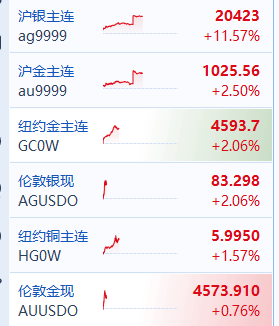
Core Viewpoint - The recent surge in gold and silver prices is attributed to geopolitical tensions, particularly between the U.S. and Iran, leading to historical highs in both commodities [1][3]. Group 1: Gold Market Analysis - Gold prices reached a new historical high of $4600.79, driven by geopolitical tensions and market dynamics [1]. - The relationship between gold and the U.S. dollar is typically inverse; as the dollar depreciates, gold prices tend to rise, especially during a period of expected interest rate cuts by the Federal Reserve [4]. - The ongoing adjustments in the U.S. stock market, particularly in tech stocks, have made gold a more attractive investment as other asset yields decline [4]. Group 2: Silver Market Analysis - Silver also hit a new historical high of $83.974, reflecting similar market conditions as gold [1]. - The increase in silver prices is part of a broader trend in precious metals, influenced by the same geopolitical factors affecting gold [1]. Group 3: Geopolitical Context - The Iranian government's announcement of a three-day national mourning highlights the ongoing unrest and its impact on global markets, particularly in commodities [3]. - The tensions between the U.S. and Iran, along with the ongoing Russia-Ukraine conflict, contribute to the heightened demand for gold as a safe-haven asset [4].

金价现“完美风暴”上涨逻辑!
Sou Hu Cai Jing· 2026-01-12 02:39
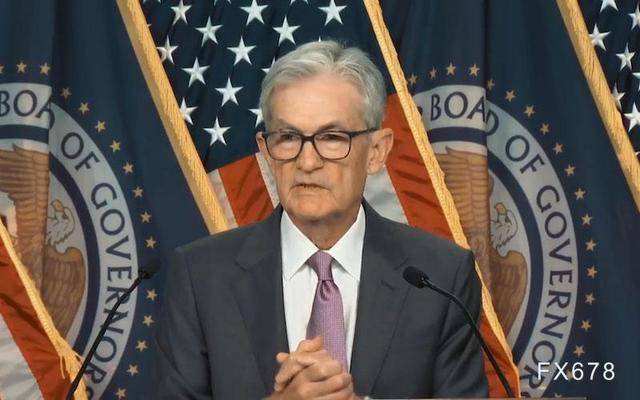
Core Viewpoint - The criminal investigation against Federal Reserve Chairman Jerome Powell is perceived as political pressure from the Trump administration due to disagreements over interest rates [1][3]. Group 1: Investigation Details - The investigation is led by a Trump-appointed prosecutor and is seen as a response to Powell's decisions on interest rates, which were made based on public interest rather than Trump's preferences [1][3]. - Powell confirmed that the Department of Justice issued a subpoena related to his testimony before the Senate Banking Committee regarding a multi-year renovation project of the Federal Reserve building [3]. - Powell emphasized the importance of maintaining the Federal Reserve's independence from political pressure and coercion [3][5]. Group 2: Political Context - Since taking office in January 2025, Trump has repeatedly criticized Powell for not lowering interest rates as he desired [4][7]. - The White House has referred the investigation to the Justice Department, and Trump has expressed intentions to remove Powell after his term ends in May 2026 [5][6]. - Key potential successors to Powell include former Fed Governor Kevin Warsh and current National Economic Council Director Kevin Hassett [6]. Group 3: Market Implications - The investigation is expected to create structural bearish pressure on the US dollar, leading to a potential loss of trust in its credibility [9]. - Conversely, gold is anticipated to benefit significantly from this situation, experiencing a dual boost from the depreciation of the dollar and increased market uncertainty [11][12]. - The current market narrative has shifted from focusing on economic and interest rate factors to concerns about institutional integrity and creditworthiness [12].
又双叒叕创新高了!现货黄金周一涨至4561美元,时隔两周再度创下历史新高
Sou Hu Cai Jing· 2026-01-12 00:39
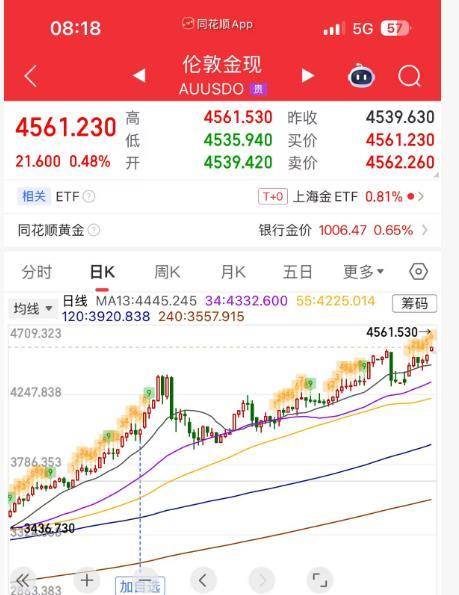
Core Viewpoint - The price of spot gold reached a historical high of $4,561, influenced by tensions in U.S.-Iran relations, the situation in Iran, and U.S. economic data [1] Group 1: Market Influences - The Iranian government declared three days of national mourning for those who died in the struggle against the U.S. and Israel, amidst rising prices and currency devaluation leading to protests and unrest [3] - European leaders criticized the U.S. for its threatening remarks regarding Greenland, a Danish territory, which has heightened geopolitical tensions [3] Group 2: Gold Price Dynamics - Gold prices typically have an inverse relationship with the U.S. dollar; as the dollar depreciates, gold prices rise to maintain value balance [4] - The expectation of continued interest rate cuts by the Federal Reserve supports gold's investment appeal, especially as other financial assets yield lower returns [4] - Gold's intrinsic value as a hedge against inflation is emphasized due to significant fiscal imbalances in the U.S. and Europe, raising concerns about long-term inflation [4] - Ongoing international tensions, including the Russia-Ukraine conflict and U.S.-Iran relations, further drive demand for gold as a risk hedge [4]
金源灿:下影阴线暗藏支撑信号 黄金日内低多策略为主导
Xin Lang Cai Jing· 2026-01-08 08:32
Core Viewpoint - The international gold market experienced significant volatility, with a clear short-term support signal emerging amidst ongoing geopolitical tensions and a weakening dollar, indicating that the long-term upward trend remains intact [1][5]. Technical Analysis - The long lower shadow of the previous day's candlestick suggests strong support in the 4420-4430 range, with bearish momentum being effectively absorbed, allowing bulls to regroup [2][6]. - Gold has been oscillating around the high range since breaking the 4500 mark at the end of 2025, consistently testing key support levels that have held firm, reinforcing the resilience of the current upward trend [2][6]. - Short-term indicators show slight divergence, contributing to the previous day's pullback, but daily support signals remain robust, guiding short-term trading logic [2][6]. Fundamental Analysis - Multiple factors provide medium to long-term support for gold, including the prolonged stalemate in the Russia-Ukraine conflict, ongoing tensions between the U.S. and Venezuela, and instability in the Middle East, which sustain high global risk aversion [2][6]. - The trend of de-dollarization continues, with central banks increasing their gold reserves, positioning gold as the second-largest reserve asset globally, enhancing its status as a "safe haven" [2][6]. - Expectations for Federal Reserve interest rate cuts are rising, with lower rates reducing the opportunity cost of holding gold, further solidifying its upward potential [2][6]. - Short-term disturbances are anticipated due to the Bloomberg Commodity Index's annual weight adjustment, which may trigger significant dollar-denominated gold futures liquidations, potentially increasing market volatility [2][6]. Trading Strategy - The trading strategy for gold today is primarily focused on buying on dips, with strict control over entry points and risk management [3][7]. - A buying opportunity is suggested around the 4410 level, with a stop-loss set just below 4400, which serves as a critical support line and a short-term pivot point [3][7]. - Key resistance levels to watch include 4445, with a potential upward target of 4460 if the market shows strong bullish momentum [3][7]. - If the 4400 support level is breached, a strategy adjustment is recommended, potentially shifting to a cautious stance or light short positions in the 4380-4390 range [3][7]. - Emphasis is placed on adhering to the principle of trading with the trend, as the long-term upward trajectory for gold remains unchanged, with short-term fluctuations viewed as normal corrections [3][7].
金价全线飘红!2026年1月6日国内品牌金店行情速递
Sou Hu Cai Jing· 2026-01-06 07:07
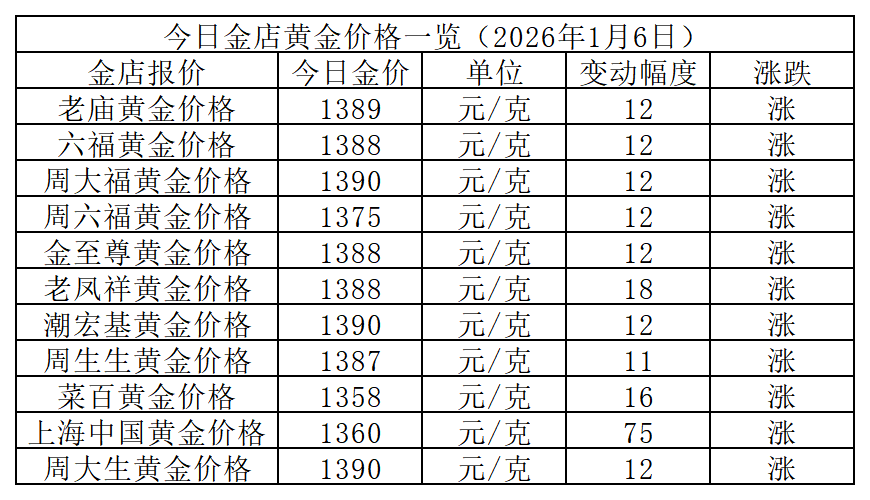
Group 1: Domestic Gold Prices - Domestic gold prices have seen a significant increase, with major brands like Chow Tai Fook, Chao Hong Ji, and Zhou Da Sheng all priced at 1390 yuan per gram, leading the market [1] - Shanghai China Gold has rebounded strongly to 1360 yuan per gram, moving away from its previous low, while the price gap between the highest (Cai Bai at 1358 yuan) and lowest has narrowed to 32 yuan per gram [1] - The overall price range in the market has clearly shifted upwards, with various brands showing consistent increases in their gold prices [1] Group 2: Platinum Prices - Platinum prices have also risen, surpassing 900 yuan per gram, with Chow Tai Fook's platinum jewelry priced at 905 yuan per gram, reflecting a 36 yuan increase [1] Group 3: Gold Recycling Prices - The gold recycling prices have continued to rise, with significant discrepancies among different brands; for instance, the recycling price for gold is 993.40 yuan per gram, while Cai Bai is at 969.60 yuan per gram [2] Group 4: International Gold Prices - The spot gold price opened high and reached a peak of 4455.39 USD per ounce, closing at 4448.09 USD per ounce, marking a 2.67% increase [4] - As of the latest update, spot gold is reported at 4462.73 USD per ounce, with a 0.33% increase [4] - The surge in gold prices is attributed to rising market risk aversion due to U.S. military actions in Venezuela and weak U.S. economic data, which has bolstered expectations for a Federal Reserve rate cut [4] - The U.S. ISM manufacturing PMI fell to 47.9, below market expectations, indicating a continued contraction in the manufacturing sector [4]





银铜续创历史新高,有色ETF基金(159880)盘中净申购1100万份,盘中价格再创年内新高
Sou Hu Cai Jing· 2025-12-29 03:48
Group 1 - The core viewpoint of the news highlights the significant rise in the non-ferrous metal sector, with the index and various stocks experiencing notable gains, particularly in silver and copper prices reaching historical highs [1][2]. - The non-ferrous metal industry index (399395) increased by 0.56%, with key stocks such as Silver Holdings (601212) up by 10.05% and Jiangxi Copper (600362) up by 4.68% [1]. - The surge in precious metals, especially silver, is attributed to lower-than-expected inflation data, which has fueled expectations for interest rate cuts by the Federal Reserve, leading to a decline in U.S. Treasury yields [2]. Group 2 - The top ten weighted stocks in the non-ferrous metal industry index account for 52.34% of the index, with major players including Zijin Mining (601899) and China Aluminum (601600) [3]. - The non-ferrous ETF fund (159880) closely tracks the non-ferrous metal industry index and includes 50 prominent securities from the sector, reflecting the overall performance of listed companies in the non-ferrous metal industry [2][4].






金饰价格涨破1400元/克
Sou Hu Cai Jing· 2025-12-23 16:32
Price Surge - The price of gold jewelry has surpassed 1400 yuan per gram, with brands like Chow Tai Fook and Chow Sang Sang quoting 1403 yuan per gram, while other brands like Lao Miao Gold and Liufuk Jewelry are also above this threshold [1][1][1] Price Increase Analysis - The international gold price has seen significant increases, with spot gold reaching a record high of 4442.22 USD per ounce on December 22, 2025, and further rising to 4497.754 USD per ounce on December 23, 2025 [1][1][1] - Expectations of monetary policy changes, including potential interest rate cuts by the Federal Reserve, are supporting gold prices as lower rates benefit non-yielding assets like gold [1][1][1] - Geopolitical risks are enhancing the safe-haven appeal of gold, driven by events such as U.S. actions near Venezuela and military activities in Ukraine [1][1][1] Market Reactions and Consumer Behavior - Consumer demand has surged in response to rising gold prices, with reports of significant sales increases in retail settings, such as a Wuhan mall where sales exceeded 10 million yuan in a single day [1][1][1] - There is a notable price disparity among different brands, with Chow Tai Fook and Chow Sang Sang priced at 1403 yuan per gram, while China National Gold remains at 1285 yuan per gram, reflecting brand premiums and operational costs [1][1][1] Industry Dynamics - The soaring gold prices are reshaping the industry landscape, with traditional pricing models being replaced by tax-inclusive pricing [1][1][1] - Some brands have seen price increases of over 30% for their gold jewelry, while gold ETFs and gold stock ETFs are attracting significant retail investor interest [1][1][1] Institutional Predictions - Major banks, including Goldman Sachs, predict that gold prices will continue to rise, with a baseline forecast of 4900 USD per ounce by 2026, indicating a potential upward trend [1][1][1] - CITIC Securities anticipates a further 30% increase in the precious metals sector by 2026, with gold prices projected to range between 4000 to 5600 USD per ounce [1][1][1]
金价癫了!
Xin Jing Bao· 2025-12-23 12:08
Group 1 - The international gold price has reached a new peak, with COMEX gold futures hitting $4530.8 per ounce on December 23, marking a historical high after two months of volatility [1][8] - The driving factors for gold prices include the restructuring of the credit monetary system, heightened demand for hedging against geopolitical and policy uncertainties, and continuous gold purchases by global central banks [1][2] - Major institutions predict that gold prices will exceed $4000 per ounce by 2026, but there is disagreement on whether prices will surpass $5000 per ounce [1][8] Group 2 - Gold has emerged as one of the best-performing assets in the capital market this year, with COMEX gold futures increasing by over 60% year-to-date [2][9] - The retail price of gold jewelry has also surged, with prices for gold per gram reaching around 1403 RMB for major brands as of December 23 [2][9] - Central banks globally have been purchasing gold, with net purchases totaling 634 tons in the first three quarters of this year, although this is lower than the previous three years' highs [2][9] Group 3 - The share of the US dollar in global foreign exchange reserves has declined, dropping from 57.79% to 56.32% between the first and second quarters of 2025, marking 11 consecutive quarters below 60% [3][10] - Gold ETFs have become a primary focus for ETF fund inflows, with over 100 billion RMB net inflows this year, accounting for about 10% of total ETF inflows [3][10] - Geopolitical tensions, including the US's "reciprocal tariffs" and conflicts in Ukraine and the Middle East, have highlighted gold's safe-haven attributes [3][10] Group 4 - Some prominent investors have exited the gold market, with notable figures selling their holdings at the $4500 per ounce mark [4][11] - Historical trends indicate that central bank actions, such as large-scale gold sales, can significantly impact long-term gold prices [4][11] - The recent sale of gold reserves by the Russian central bank serves as a critical signal for the market, indicating potential shifts in gold demand [5][11][12] Group 5 - Major financial institutions remain optimistic about gold prices, with Morgan Stanley predicting prices could reach $4800 per ounce by the end of 2026, while JPMorgan forecasts $5055 per ounce based on strong future demand [5][12] - Goldman Sachs anticipates a 14% increase in gold prices by December 2026, projecting prices to reach $4900 per ounce, with ongoing demand from central banks [5][12] - The future trajectory of gold prices hinges on whether central banks will continue to purchase gold and the sustained demand from the market [5][12]
金价暴涨一度逼近4500美元!接下来如何走?FXStreet分析师金价技术分析
Xin Lang Cai Jing· 2025-12-23 11:31
Core Viewpoint - The current strong performance of gold prices is driven by geopolitical tensions and expectations of a dovish stance from the Federal Reserve, leading to a significant increase in demand for gold as a safe-haven asset [1][2]. Group 1: Gold Price Movement - As of December 23, gold prices reached approximately $4480 per ounce, with a peak of $4497.91 per ounce, marking a historical high [1]. - On the previous trading day, gold surged by $104.41, or 2.41%, closing at $4443.53 per ounce due to escalating tensions between the U.S. and Venezuela, as well as expectations of interest rate cuts by the Federal Reserve [1]. Group 2: Geopolitical Factors - The announcement by U.S. President Trump to impose a "blockade" on oil tankers entering and leaving Venezuela has heightened tensions in the Caribbean region, contributing to the rise in gold prices [1]. - Renewed tensions between Iran and Israel have also played a role in pushing gold prices higher, as gold is typically viewed as a safe-haven asset during periods of geopolitical and economic uncertainty [2]. Group 3: Technical Analysis - Gold prices have broken through the resistance level of $4375-$4380 per ounce, indicating a new bullish momentum, with the 50-day simple moving average (SMA) providing dynamic support [4]. - The MACD indicator shows increasing bullish momentum, while the RSI is at 81, indicating overbought conditions that may limit further gains and lead to short-term corrections [4][6]. - Despite the overbought RSI, the overall bullish trend remains intact as long as prices stay above key support levels [6].

金价癫了!一天站上4500美元/盎司,有知名投资人高调离场
Xin Jing Bao· 2025-12-23 10:21
Group 1 - International gold prices have surged, reaching a peak of $4530.8 per ounce on December 23, marking a new historical high [1] - The driving factors for gold prices include the restructuring of the credit currency system, heightened demand for hedging against geopolitical and policy uncertainties, and continuous gold purchases by global central banks [1][2] - Major institutions predict that gold prices will exceed $4000 per ounce by 2026, with some forecasts suggesting potential to break the $5000 mark, although there is disagreement among institutions [1][5] Group 2 - Gold has emerged as one of the best-performing assets in the capital market this year, with COMEX gold futures increasing by over 60% year-to-date [2] - The retail price of gold jewelry has also risen significantly, with prices reaching around 1403 yuan per gram for major brands [2] - Central banks globally have been net buyers of gold, with a total of 634 tons purchased in the first three quarters of this year, despite being lower than the previous three years' highs [2][3] Group 3 - The share of the US dollar in global foreign exchange reserves has declined, dropping from 57.79% to 56.32% over two quarters, indicating a trend of reduced reliance on the dollar [3] - Gold ETFs have seen significant inflows, with over 100 billion yuan net inflow this year, accounting for about 10% of total ETF inflows [3] - Geopolitical tensions, including the US's tariff policies and conflicts in Ukraine and the Middle East, have highlighted gold's safe-haven attributes [3] Group 4 - Some prominent investors have begun to exit the gold market, with notable figures selling their holdings at around $4500 per ounce [4] - The Russian central bank has started selling its gold reserves to meet budgetary needs, having sold at least 3.11 tons in the first nine months of the year [5][6] - The potential for a shift towards the Chinese yuan in international trade settlements could impact gold demand, as the yuan's share in reserves remains low compared to China's trade volume [4] Group 5 - Major financial institutions remain optimistic about gold prices, with Morgan Stanley predicting prices could reach $4800 per ounce by Q4 2026, while JPMorgan has set a target of $5055 per ounce based on strong future demand [5] - Goldman Sachs forecasts a 14% increase in gold prices by December 2026, reaching $4900 per ounce, with ongoing demand from central banks expected [5] - The future trajectory of gold prices hinges on whether central banks will continue to purchase gold and the sustained demand from the market [5]