即时零售

Search documents
白酒亏哭!别人压库存亏百万,19190库存冲140亿玩法差着平行宇宙
Sou Hu Cai Jing· 2025-12-28 13:25
Core Viewpoint - The company 1919 has achieved continuous profitability for three years, contrasting sharply with its peers in the white liquor industry, which are facing significant losses. The company aims for a trading scale of 14 billion yuan by 2025, highlighting its unique position in a struggling market [1]. Industry Challenges - The white liquor industry is undergoing a profound restructuring of consumption scenarios and channel ecosystems, with traditional government and business banquet scenes declining. Consumer preferences are shifting towards home drinking and casual gatherings, leading to more rational purchasing decisions focused on value and convenience [2]. - The industry is facing dual pressures from demand reconstruction and inventory issues, with demand expected to drop by 20%-30% during key festivals in 2025, while inventory levels are rising by 10%-20%. This has resulted in severe price discrepancies in various price segments, causing many distributors to operate at a loss [5][3]. Company Transformation - 1919's growth is attributed to a significant transformation initiated three years ago, moving from a heavy asset model with a 92% debt ratio to a leaner platform model. The company abandoned most of its premium liquor distribution rights and initiated a three-year inventory reduction plan [7]. - This strategic shift allowed 1919 to avoid the impacts of falling premium liquor prices by implementing a "zero inventory" operation model, expanding its franchise model from 1,500 to 3,000 stores, and reducing its debt ratio to below 20% [9]. Innovative Business Model - The company's early investment in instant retail has become a core growth driver, with a strategic partnership with Taobao Flash Delivery enhancing its delivery capabilities. The instant retail market for liquor is projected to reach 200 billion yuan in 2023, with significant growth expected by 2027 [11][14]. - 1919 is also launching a "wine and food lifestyle" strategy, integrating dining and drinking experiences through innovative marketing and a diverse store format, which has shown to triple revenue in pilot locations [16]. Strategic Acquisitions - In December 2025, the founder of 1919 acquired a controlling stake in Yiyuan Wine Industry, a significant player in the domestic wine market, which is currently undervalued. This acquisition is seen as a strategic move to enhance asset integration and capitalize on the company's financial strength [20][22]. - The acquisition is expected to signal a restart of 1919's capitalization process, leveraging Hong Kong's financial advantages to expand its international liquor business [22].


可口可乐出售 Costa 遇阻;红杉中国确认收购 Golden Goose;李宁买下的“火柴棍”上海开出首店|品牌周报
36氪未来消费· 2025-12-28 06:08
Group 1: Coca-Cola and Costa Sale - Coca-Cola's sale of Costa is facing significant challenges, with a reported risk of the deal collapsing due to a £1 billion price gap between Coca-Cola's asking price of £2.1 billion and TDR Capital's expectations [3] - The sale is being influenced by Costa's poor performance, with revenue declining since its acquisition in 2018 when it generated £1.3 billion, and only a modest increase in store count from 3,800 to 4,200 expected by September 2025 [4] - Coca-Cola's strategic focus has shifted towards divesting low-revenue subsidiaries like Costa, which has not met growth expectations in the competitive coffee market [4] Group 2: Li-Ning and Haglöfs - Li-Ning has opened the first global flagship store for the Swedish outdoor brand Haglöfs in Shanghai, showcasing a range of outdoor gear and apparel [5] - The partnership between Li-Ning and Haglöfs began in 2023 when Haglöfs was acquired by a fund in which Li-Ning is a limited partner, leading to a joint venture for sales and marketing in Greater China [6] - Haglöfs plans to expand rapidly in China, having opened 21 stores within a year, but its success in the high-end outdoor market remains to be seen [6] Group 3: Sequoia Capital and Golden Goose - Sequoia Capital has confirmed its acquisition of a controlling stake in the Italian luxury sneaker brand Golden Goose for €2.5 billion (approximately ¥206 billion) [7] - Golden Goose has shown strong performance, with revenue increasing from €266 million in 2020 to €655 million in the 2024 fiscal year, and plans for further growth in the Asia-Pacific region [8] - The brand's previous IPO plans were delayed due to poor European market conditions, leading to the partnership with Sequoia Capital as an alternative growth strategy [8] Group 4: Anta and Instant Retail - Anta has partnered with Taobao Flash Sale to enable over 1,000 stores nationwide to support online orders and rapid delivery, with plans to expand to over 4,000 stores by 2026 [9] - This move is part of Anta's broader strategy to enhance its omnichannel retail approach, addressing the growing demand for instant retail solutions [9][10] - The instant retail market is projected to exceed ¥1 trillion by 2025, with significant growth in the sports category, as evidenced by a 100% year-on-year increase in sales for sports products on Meituan Flash Sale [10] Group 5: PepsiCo and New Product Launch - PepsiCo has launched a new sugar-free strawberry milkshake-flavored cola in China, leveraging successful overseas experiences while tailoring the product to local consumer preferences [12] - The product has generated significant social media buzz and sales momentum, indicating a strong market reception [12] Group 6: Meituan and Burger King Collaboration - Meituan's "Pin Hao Fan" is collaborating with Burger King to develop customized meal packages, focusing on consumer preferences and optimizing the supply chain [13] - This partnership aims to enhance the dining experience by offering value-driven meal options that cater to evolving consumer tastes [13] Group 7: Birkenstock's Financial Performance - Birkenstock reported a 16.2% revenue increase to €2.097 billion in the 2025 fiscal year, with a notable 31% growth in the Asia-Pacific market [18] - The company's performance was driven by a 12% increase in sales volume and a 5% rise in average selling price, reflecting effective product strategy [18] Group 8: Taikoo Coca-Cola Leadership Change - Taikoo Group announced the resignation of Patrick Healy as the executive director and chairman of Taikoo Coca-Cola, with a successor appointed to take over in May 2024 [19] Group 9: KAILAS Controversy - KAILAS, a domestic outdoor brand, faced backlash over significant price differences between similar products, leading to consumer concerns about pricing strategies [20]




印度即时配送平台Zepto提交IPO申请 即时零售赛道竞争日趋白热化
Xin Lang Cai Jing· 2025-12-27 21:31
Group 1 - Zepto, an Indian instant retail company, has secretly submitted an IPO application, positioning itself as one of the most anticipated listings in the Indian market for next year [2][6] - The instant retail sector in India is experiencing intense competition, with companies investing billions of dollars to expand their store networks [2][6] - The demand for 10-minute delivery services for various products, including groceries and electronics, is continuously rising as the urban consumer base in India expands [2][6] Group 2 - Founded in 2021, Zepto currently offers over 45,000 products on its platform, competing with rivals such as Blinkit and Instamart [2][6] - The IPO plans coincide with a projected record fundraising scale in the Indian capital market by 2025 [2][6] - In its last funding round in October 2024, Zepto raised $450 million, resulting in a company valuation of $7 billion [2][6] - The secret submission of the application allows the company to keep the details of the IPO confidential before the official launch [3]

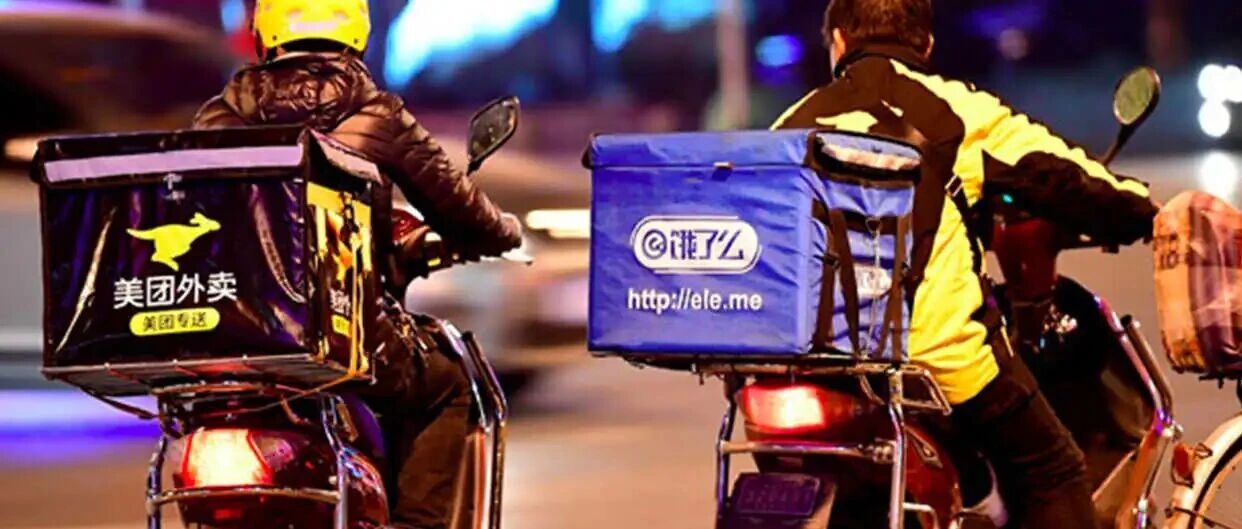
亲历外卖补贴过山车:他们的爆单、疲惫与重新算账
第一财经· 2025-12-27 11:10
Core Viewpoint - The article discusses the intense competition in the food delivery industry during the subsidy war in July 2025, highlighting the challenges faced by restaurants and delivery personnel, as well as the long-term implications for the industry [4][10]. Group 1: Impact of the Subsidy War - The food delivery subsidy war led to a significant increase in order volume, but many restaurants reported that profits did not increase proportionately, with some experiencing losses despite higher sales [6][11]. - The average order value dropped significantly during the subsidy war, with some restaurants reporting a decrease from over 30 yuan to around 15 yuan per order [7]. - The competition resulted in a shift in consumer behavior, with a notable increase in the proportion of orders placed for delivery compared to dine-in [11]. Group 2: Financial Performance of Platforms - Meituan reported a 2.8% year-on-year decrease in revenue for its core local business in Q3 2025, resulting in an operating loss of 14.1 billion yuan [13]. - Alibaba's Q3 financial report indicated a 60% year-on-year increase in revenue from its instant retail business, but a significant decline in adjusted EBITA by 78% [13]. - The intense competition and high spending on subsidies have accelerated the development of instant retail, impacting traditional e-commerce dynamics [13]. Group 3: Industry Adjustments and Future Outlook - The article notes a shift towards more rational competition in the food delivery industry, with platforms beginning to reduce subsidy expenditures and focus on sustainable operations [15][16]. - Regulatory bodies are increasing scrutiny on the industry, addressing issues such as "ghost deliveries" and the rights of delivery personnel, which may lead to a more balanced market [15]. - Experts predict that the industry will evolve into a more mature phase, focusing on a symbiotic relationship between platforms and quality merchants, with an emphasis on user experience and profitability [16].



年终盘点| 亲历外卖补贴过山车:他们的爆单、疲惫与重新算账
Di Yi Cai Jing· 2025-12-27 03:01
Core Insights - The takeaway from the article is that the food delivery industry experienced a paradox of record order volumes and declining profits during the peak of the subsidy war in July 2025, leading to significant operational challenges for restaurants and delivery personnel [1][2][3]. Group 1: Industry Dynamics - The food delivery subsidy war peaked on July 5, 2025, with over 100 billion yuan in subsidies from platforms like Meituan, Taobao, and JD, making the delivery sector one of the most discussed industries of the year [2]. - Despite record order volumes, many restaurants reported that profits did not increase proportionately, with some experiencing a decline in profitability due to rising operational costs [3][4]. - The average order value dropped significantly during the subsidy war, with some restaurants reporting a decrease from over 30 yuan to around 15 yuan per order [3]. Group 2: Impact on Restaurants - Restaurant owners like Yu Li and Huang Lin noted that while order volumes surged, the costs associated with labor, ingredients, and platform fees also doubled, leading to minimal or negative profit margins [3][4]. - Huang Lin observed that low-priced subsidized items did not retain customers effectively, and he found that eliminating low-price subsidies allowed for higher average order values and better profit margins [4]. Group 3: Delivery Personnel Experience - Delivery personnel, such as Zhou Pengfei, reported increased earnings during the subsidy war, with some earning up to 900 yuan in a single day due to the high volume of orders [5]. - The number of delivery riders increased significantly, with Zhou noting that his station's rider count nearly doubled during peak times [8]. Group 4: Financial Performance of Platforms - Meituan reported a 2.8% year-on-year decline in revenue for its core local business in Q3, resulting in a significant operating loss of 14.1 billion yuan [8]. - Alibaba's Q3 financials showed a 60% year-on-year increase in revenue from its instant retail business, but adjusted EBITA fell by 78% due to investments in user experience and technology [8]. Group 5: Regulatory and Market Adjustments - The article highlights a shift towards more rational operations in the food delivery industry, with regulatory bodies introducing guidelines to address issues like irrational competition and the rights of delivery personnel [10]. - Experts predict that the industry will transition from aggressive subsidy strategies to refined operations focusing on user experience and sustainable business practices [12].
从到店到到家,本土便利店正在围猎外资三巨头
Ge Long Hui· 2025-12-26 14:07
Core Viewpoint - Foreign convenience store brands, represented by FamilyMart, 7-Eleven, and Lawson, are facing significant challenges in the Chinese market, with a combined closure of over 1,300 stores and a loss of market share to local brands in the online-to-home segment [1][2][4]. Group 1: Market Performance - FamilyMart has closed approximately 300 stores in China, while 7-Eleven has closed or relocated around 1,000 stores globally [1]. - Lawson's Shenzhen operations reportedly faced a loss of nearly 80 million yuan in 2022 [1]. - The three foreign brands are struggling to achieve significant sales on major delivery platforms, with most stores averaging only double-digit monthly sales orders [2][3]. Group 2: Competitive Landscape - Local convenience store brands have gained a strong foothold in the online-to-home market, with many achieving over 10,000 monthly sales orders, while foreign brands have been largely absent from this segment [3][4]. - Local brands like Dolphin Purchase and Squirrel Convenience have significantly higher SKU counts, ranging from 4,000 to 8,000, compared to the 1,000 SKUs offered by FamilyMart, Lawson, and 7-Eleven [4]. Group 3: Pricing and Delivery - Local convenience stores offer more competitive pricing, with examples showing significant price differences for similar products compared to foreign brands [5][10]. - Delivery thresholds and fees for local brands are lower, with some offering free delivery, contrasting with the higher minimum order requirements set by foreign brands [10][11]. Group 4: Historical Context - The foreign brands were early entrants into the online delivery market, launching services around 2015, but have since lost ground to local competitors who have rapidly adapted to consumer preferences [12][13][14]. - Despite initial success, the foreign brands have struggled to maintain their market position as local brands have aggressively expanded their online offerings and improved service [18][20]. Group 5: Industry Trends - The convenience store sector in China has seen explosive growth, with local brands significantly outpacing foreign brands in terms of store count and market presence [23][26]. - The shift towards online retail and the demand for immediate delivery have created a challenging environment for foreign brands, which are now perceived as less appealing to consumers [22][24].
2025即时零售20大事件复盘:卷不动的即时零售,谁能拿下2026入场券?
Sou Hu Cai Jing· 2025-12-26 13:37
富了即时零售的商品供给品类,加速了 "内容引流 + 电商交易 + 即时配送" 的生态深度融合,推动即时零售与内容生态的联动更紧密。 2 月 11 日,京东外卖正式启动 "品质堂食餐饮商家" 招募计划,明确 2025 年 5 月 1 日前入驻的商家可享受全年免佣金福利,同时京东将为全职骑手足额 缴纳五险一金。此次京东以 "品质外卖" 为核心切入点,正式进军即时零售赛道,直接打破了此前美团、饿了么长期主导的双强格局,让即时零售行业从 "双雄争霸" 正式迈入美团、饿了么、京东三足鼎立的 "三国杀" 时代,行业竞争格局迎来根本性重塑。 3 月 18 日,抖音小时达宣布将带货权限面向全量电商达人开放,达人无需额外申请即可通过短视频种草、直播带货等形式推广即时零售商品,消费者下 单后依托抖音配送网络,最快 30 分钟就能收到商品。这一举措不仅为广大内容创作者开辟了全新的变现路径,让流量快速转化为实际收益,还进一步丰 3 月中旬,多家媒体报道显示,2024 年朴朴超市实现首度全年盈利,全年收入约 300 亿元,毛利率达 22.5%,全段履约费用率控制在 17.5% 以内,全国布 局 400 多个大型前置仓。2025 年朴朴 ...
1919:连续三年盈利 预计2025年突破140亿规模
Zheng Quan Shi Bao Wang· 2025-12-26 10:51
Core Viewpoint - The financial report of 1919 indicates a positive growth trajectory in net profit and transaction scale for the upcoming years, highlighting the company's strategic partnerships and market expansion efforts [1] Financial Performance - The audited net profits for 2023 and 2024 are projected to be 51.3473 million and 48.1191 million respectively, with 2025 expected to maintain profitability, although the financial statements for that year have not yet been audited [1] - The overall transaction scale is expected to grow from 11.579 billion in 2023 to 12.089 billion in 2024, with a target to exceed 14 billion in 2025 driven by strategic cooperation with Taobao Flash Purchase and rapid growth in instant retail [1] Company Background - 1919 is a specialized e-commerce platform for alcoholic beverages, which received a strategic investment of 2 billion from Alibaba in 2018 and voluntarily delisted from the New Third Board at the beginning of 2023 [1]
从KA模式到硬折扣,中国超市三十年逻辑变了
3 6 Ke· 2025-12-26 08:59
Core Viewpoint - The retail landscape in China is shifting from a focus on e-commerce to a resurgence of offline discount retail, driven by major internet companies like Alibaba, JD.com, and Meituan entering the market with hard discount models [1][10][14]. Group 1: Market Dynamics - The rapid growth of e-commerce has put significant pressure on offline retail, with online retail sales reaching 14.46 trillion yuan in 2025, accounting for 25.9% of total retail sales [2]. - As customer acquisition costs for online platforms rise, offline stores are becoming more attractive as cost-effective entry points for customer engagement [2][10]. - Traditional supermarkets are struggling, with 62 brands closing 3,037 stores in 2024, indicating a decline in the traditional supermarket model [3]. Group 2: Traditional Supermarket Challenges - The KA model, which has dominated traditional supermarkets, is failing as it relies on supplier fees rather than consumer preferences, leading to product homogenization and loss of consumer trust [5]. - Yonghui Supermarket reported a 22.21% decline in revenue for the first three quarters of 2025, with a net loss of 710 million yuan, highlighting the financial struggles of traditional retailers [4]. Group 3: Internet Giants' Strategies - Internet giants are leveraging their consumer-centric approaches to reshape retail, focusing on logistics and supply chain improvements to enhance customer experience [6][7]. - The rise of instant retail and community group buying during the pandemic has prompted these companies to adapt their strategies to meet consumer demands for fresh and timely products [7][9]. Group 4: Hard Discount Model - The hard discount model is emerging as a response to consumer price sensitivity, with 80% of online shoppers seeking the lowest prices [10]. - Companies are adopting direct sourcing from manufacturers to eliminate middlemen and reduce costs, with JD.com implementing a "base + production warehouse + omnichannel" model [11]. - Self-owned brands are being developed to enhance product offerings, with significant sales contributions from private labels in hard discount stores [12][13]. Group 5: Competitive Landscape - The competitive landscape is intensifying as multiple players enter the hard discount space, including traditional supermarkets like Wumart and specialized chains like Lele and Aoleqi [16]. - Despite the promising outlook for hard discount stores, challenges such as thin profit margins and the risk of homogenization in offerings remain significant [17].
新时代中国消费者:食品、健康与可持续发展
Sou Hu Cai Jing· 2025-12-26 06:46
Core Insights - Chinese consumers are elevating "eating" to a value-driven choice, with price sensitivity and value sensitivity diverging for the first time. A survey indicates that 63% of mainland consumers are willing to pay a premium for sustainable food, the highest globally [2]. Group 1: Consumer Behavior Trends - 63% of mainland consumers are willing to pay a premium for sustainable food, which is the highest percentage globally [2][13]. - 43% of consumers prioritize sustainable packaging, exceeding the global average by 6 percentage points [2][13]. - 45% of households with annual incomes below $10,000 are using 54% of coupons and 48% of cross-store comparison budgets to invest in organic products [2]. Group 2: Market Dynamics - The retail market is experiencing a dual narrative, balancing economic headwinds and industry prosperity, with an estimated valuation of approximately 4.9 trillion RMB by 2024 [8]. - Discount stores and instant retail are pushing absolute prices to their limits, leading to a disappearance of price elasticity [8][26]. - The rise of discount retailers like HotMaxx and ALDI in mainland China is driving the revival of offline retail, emphasizing the importance of competitive pricing and transparency [26]. Group 3: Health and Sustainability Focus - Chinese consumers are increasingly focused on health and sustainability, with a notable willingness to invest in high-quality, health-oriented products [10][12]. - The trend of "Guochao 2.0" reflects a preference for celebrating domestic brands and reducing the climate impact of food purchases [13][14]. - The integration of health consciousness and environmental awareness is reshaping consumer preferences, with a clear shift towards value-driven consumption [10][12]. Group 4: Retail Strategies - Retailers must adopt a multi-faceted strategy to navigate the complex environment, focusing on clear value propositions, seamless digital and physical experiences, and catering to health trends [14][27]. - Successful strategies involve embracing aggressive and transparent value propositions, investing in private label strategies, and mastering omnichannel sourcing [27]. - The "instant retail" battlefield is crucial, with consumers comparing delivery options within 30 minutes, highlighting the need for retailers to adapt quickly [27].