液冷技术

Search documents
液冷:星辰大海可期,坚定看好产业大趋势
2025-09-15 14:57
Summary of Liquid Cooling Technology Conference Call Industry Overview - The focus is on liquid cooling technology innovations primarily in the server and data center sectors, with existing solutions including cold plate, spray, and silent cooling methods. The unidirectional cold plate method is highlighted as the mainstream solution due to its high thermal efficiency and cost-effectiveness [1][4]. Key Points and Arguments - **Drivers of Liquid Cooling Technology Development**: 1. Continuous increase in chip and cabinet power consumption, with CPUs now exceeding 10 kW and cabinet peak power reaching 120-130 kW [5]. 2. Strict PUE (Power Usage Effectiveness) requirements, with new data centers needing to maintain a PUE below 1.25 [5]. 3. Total Cost of Ownership (TCO) considerations, where unidirectional cold plate systems show significant economic advantages over traditional air cooling [5]. - **Market Growth Projections**: - The domestic market is expected to reach 4-5 billion yuan in 2025 and grow to 7-8 billion yuan by 2026. The global market is projected to approach 100 billion yuan by 2026 [1][10]. - **Key Components of Liquid Cooling Systems**: - Liquid cooling plates and CDU (Central Distribution Unit) each account for approximately 30% of the system's value. Other components like manifolds and quick connectors contribute an additional 10-20% [9]. - **Challenges for Silent Cooling Solutions**: - Silent cooling methods face challenges due to high costs and environmental concerns regarding refrigerants, limiting their market viability [8][6]. - **Opportunities for Chinese Companies**: - Chinese firms are gaining ground in the global liquid cooling supply chain, with some technologies now comparable to international competitors. There is potential for increased orders, especially in high-value segments [11]. Additional Important Insights - **Liquid Cooling System Components**: - The liquid cooling system includes critical components such as liquid cooling plates, CDU, and quick connectors, which are essential for effective thermal management [9]. - **Future Trends**: - The liquid cooling industry is expected to experience a steeper growth trajectory compared to other segments like optical modules by 2026, with a focus on companies that can achieve order breakthroughs [16]. - **Competitive Landscape**: - Companies like Invec are noted for their comprehensive capabilities in both server and data center liquid cooling solutions, positioning them well for future growth [17]. - **Research and Development**: - Ongoing exploration of integrating microchannels into cooling plates is underway, which could enhance thermal performance, although this is still in the research phase [7]. This summary encapsulates the key discussions and insights from the conference call regarding the liquid cooling technology sector, highlighting its growth potential, challenges, and the competitive landscape.

英维克(002837):2025 年中报点评:营收高速增长,海外AIDC液冷业务有望快速拓展
Zhongyuan Securities· 2025-09-15 13:11
Investment Rating - The report assigns an "Accumulate" rating to the company, indicating a potential increase of 5% to 15% relative to the CSI 300 index over the next six months [28]. Core Views - The company achieved a total revenue of 2.573 billion yuan in the first half of 2025, representing a year-on-year growth of 50.25%, with a net profit attributable to shareholders of 216 million yuan, up 17.54% year-on-year [7][8]. - The rapid growth in revenue is driven by significant increases in the data center cooling and cabinet cooling segments, which grew by 58% and 32% respectively [8]. - The company is positioned to benefit from the increasing adoption of liquid cooling technology in high-density data centers, particularly in overseas markets [11][12]. Summary by Sections Financial Performance - In H1 2025, the company reported a total revenue of 2.573 billion yuan, a 50.25% increase year-on-year, and a net profit of 216 million yuan, reflecting a 17.54% growth [7][8]. - The gross margin and net margin for H1 2025 were 26.15% and 8.78%, respectively, with slight declines of 2.33 percentage points and 1.92 percentage points year-on-year [9]. - The company's revenue from the data center cooling business was 1.351 billion yuan, a 57.91% increase, making it the largest segment [10]. Business Segments - The data center cooling segment accounted for 52.5% of total revenue, while the cabinet cooling segment contributed 36% [10]. - The company has seen a significant increase in revenue from energy storage applications, which reached approximately 800 million yuan, a growth of about 35% year-on-year [10]. - Other business segments, including customized cooling solutions for various electronic fields, generated 253 million yuan, marking a 216.04% increase [10]. Market Position and Outlook - The company is recognized as a leader in liquid cooling solutions, with a comprehensive product offering that includes components from cooling plates to delivery systems [11]. - The increasing power consumption of AI servers, such as NVIDIA's GB200, is driving demand for liquid cooling solutions, positioning the company to benefit from this trend [12]. - Revenue projections for the company are optimistic, with expected revenues of 6.621 billion yuan, 8.847 billion yuan, and 11.362 billion yuan for 2025, 2026, and 2027, respectively [13][14].
液冷新风向?英伟达要求供应商开发新技术
财联社· 2025-09-15 10:16
Core Insights - AI-driven advancements are pushing the continuous iteration of liquid cooling technology, particularly with the introduction of the microchannel liquid cooling plate (MLCP) technology, which is expected to become a strategic material for cooling solutions in AI servers [1][2] Group 1: Technology Development - The power consumption of the Rubin GPU is expected to increase from 1.8kW to 2.3kW, exceeding the current cooling plate capacity, prompting NVIDIA to implement MLCP by the second half of 2026 [2] - MLCP technology integrates the metal cover on the chip with the liquid cooling plate, featuring microchannels that allow cooling liquid to flow directly over the chip, enhancing heat transfer efficiency and reducing volume [1] Group 2: Market Implications - The cost of MLCP is projected to be 3 to 5 times higher than existing cooling solutions, with manufacturing costs potentially increasing by 5 to 7 times compared to the current Blackwell cover if GPUs fully transition to MLCP [1][2] - Boyd, a supplier for NVIDIA, has delivered 5 million liquid cooling plates to large-scale data centers, indicating a growing demand for high-performance AI computing cooling solutions [2]



科士达(002518) - 2025年9月15日投资者关系活动记录表
2025-09-15 09:54
Group 1: Company Overview and Market Strategy - The company utilizes a "brand direct sales + ODM" dual-track operation model to actively explore overseas new energy markets, achieving good development results in Europe, Asia-Pacific, and Africa [2] - In 2024, the European market faced fluctuations in new energy business due to inventory backlog from customers, impacting overall performance [2] - Since 2025, there has been a noticeable recovery in storage demand in the European market, leading to a significant recovery in the company's storage business [2] Group 2: Product Development and Innovation - The company is expanding its product offerings in temperature control for data centers, focusing on liquid cooling technology as an important solution for heat dissipation challenges [3] - The recently launched LiquiX AI intelligent liquid cooling CDU product is based on next-generation cold plate liquid cooling technology, emphasizing high-density heat dissipation, flexible deployment, safety of working fluids, and system redundancy [3] Group 3: Production Capacity and Market Focus - The Vietnam factory is a key part of the company's overseas production layout, primarily serving European and North American markets, with the first phase officially starting production this year [3] - The factory initially focuses on the data center product line, with plans to adjust the new energy production line based on market demand and potential second-phase investments [3] Group 4: Investor Relations and Compliance - The company conducted thorough communication with investors during the reception, adhering strictly to the "Information Disclosure Management System" to ensure the authenticity, accuracy, completeness, timeliness, and fairness of information disclosure [3] - There were no incidents of undisclosed significant information leakage during the investor relations activities [3]

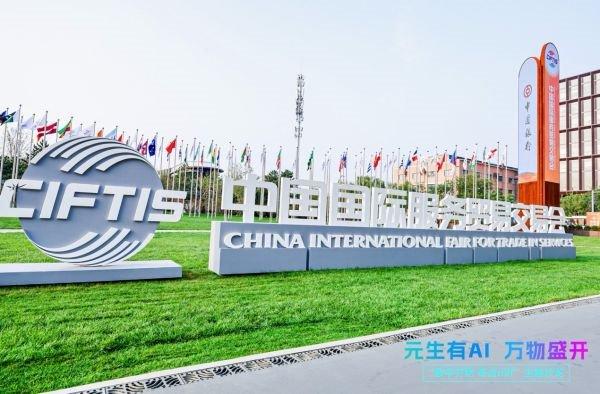
一场贯穿AI与算力全景生态的“数字开物·奇点π对”亮相2025服贸会!
Huan Qiu Wang· 2025-09-15 03:17
Core Insights - The event focused on the evolution of large model technology and its applications, including AI companionship and AI office solutions, as well as innovations in intelligent computing infrastructure and management [3][5][9]. Group 1: Large Model Technology and Applications - Large models have become the core direction of AI development, with rapid improvements in capabilities over recent years [5]. - The shift in data focus from public to private and specialized domains is necessary due to the impending exhaustion of public data [5]. - Intelligent agents are emerging as the core application model for large models, with three active product innovations: general intelligent agent development platforms, general intelligent agent applications, and task-specific intelligent agents [5]. Group 2: AI Application Revolution - AI applications are significantly enhancing office system efficiency, with companies like Sibiqi leveraging AI voice algorithms for clearer communication [9]. - Laihua Technology is creating AI companions and communication bridges, utilizing open-source models combined with industry-specific data [7]. - The integration of AI hardware and software is enabling comprehensive management from meeting execution to minutes generation [9]. Group 3: Intelligent Computing Infrastructure - The rise of large models is driving changes in server hardware and intelligent computing center infrastructure, necessitating solutions to overcome communication and memory bottlenecks [11]. - The industry is moving towards "super node" solutions that require higher physical load and advanced cooling technologies [11]. - Companies like UCloud are focusing on standardized construction and high-standard operations to support the growth of intelligent computing centers [13]. Group 4: Cooling Technology Evolution - The AI industry is evolving towards ultra-high-density clusters, making traditional cooling methods inadequate, thus liquid cooling is becoming essential [18][20]. - Innovations in liquid cooling technologies, such as immersion cooling, are being explored to meet the demands of high-power density computing [18][20]. Group 5: Industry Dialogue and Future Outlook - The roundtable discussion highlighted the potential of AI companionship applications, predicting a market value exceeding $100 billion by 2030 [23]. - The AI industry is characterized by a new "open innovation" model, with significant interconnections across the application and infrastructure layers [23]. - Challenges in global deployment of liquid cooling technology include the lack of unified standards and the need for skilled professionals [24].
AIDC投资框架更新:从甲骨文财报指引超预期,展望投资机会
2025-09-15 01:49
Summary of Conference Call Records Company and Industry Overview - **Company**: Oracle - **Industry**: Artificial Intelligence Data Center (AIDC) and related technologies Key Points and Arguments 1. **Oracle's Cloud Infrastructure Growth**: Oracle's cloud infrastructure revenue grew by 55% year-over-year in Q1, with expectations to reach $18 billion in FY2025, and projected growth of over 1,200% to $144 billion by 2030, indicating strong downstream demand for AI [1][2][3] 2. **RPO Surge**: Oracle's remaining performance obligations (RPO) soared to $455 billion, a 350% increase, primarily due to significant contracts with OpenAI, suggesting potential for further multi-billion dollar contracts [1][3] 3. **NVIDIA's New Product Launch**: NVIDIA introduced the Rubin CPS, designed for long-context reasoning and video generation, expected to launch by the end of 2026, with a total computing power of 800 million FLOPS and a high ROI of 50 times [1][4] 4. **Investment in AI Infrastructure**: A partnership between an AI infrastructure company and Microsoft worth $19.4 billion was announced, with Meta planning to invest $600 billion in AI infrastructure by 2028, indicating a rise in global computing demand [1][5][6] 5. **Liquid Cooling Market Growth**: The global liquid cooling market is expected to reach a trillion-level scale by 2026, driven by the GB300 and Rubin series architectures, with significant demand for related materials [2][8][9] 6. **Magnetic Bearing Chillers**: Magnetic bearing chillers are projected to replace traditional screw chillers in urban centers due to better energy efficiency, with a market size expected to reach 10 billion RMB by 2026 [10] 7. **Power Supply Sector Dynamics**: The power supply sector is characterized by concentrated competition and long certification cycles, making it suitable for long-term investments, with leading domestic companies expected to achieve significant growth [11] 8. **Future of Power Equipment**: The transition from dry transformers to solid-state transformers is anticipated, with a focus on companies like Jinpan Technology and Yisite [12] 9. **Diesel Generator Demand**: Diesel generator demand is expected to rise significantly in both domestic and overseas markets, with a projected shortage of 5,000 to 10,000 units in overseas markets by 2026 [15][17] 10. **Domestic Companies in Global Supply Chain**: Domestic companies are gradually enhancing their positions in the global supply chain, particularly in the PSU sector, with potential for new growth opportunities [16] Other Important Insights - **Investment Opportunities**: Companies such as Yingwei, Shenling Environment, and Chuanhuan Technology are highlighted as potential beneficiaries of the expanding liquid cooling market and overseas business opportunities [2][9] - **Technological Advancements**: The shift towards liquid cooling and advanced power supply technologies is expected to drive significant changes in the supply landscape, with liquid cooling and power supply being the core benefiting sectors [7][11]

含氟制冷剂及液冷行情更新
2025-09-15 01:49
Summary of Conference Call Records Industry Overview - The conference call discusses the refrigerant market, particularly focusing on fluorinated refrigerants and liquid cooling technologies, highlighting the impact of quota execution and demand growth on pricing and competition within the fluorochemical industry [1][3][29]. Key Points and Arguments Market Dynamics - The refrigerant market in 2025 is expected to benefit from quota execution and increased demand, especially from appliance replacement and export needs, leading to a continuous rise in refrigerant prices since Q4 2023 [1][3]. - Current prices for major refrigerants are as follows: - R32: Export price around 59,000-60,000 RMB/ton, domestic price 62,000-62,500 RMB/ton - R134a: Export price around 48,500-49,500 RMB/ton, factory price around 50,000 RMB/ton - R227ea: Export price between 69,500-71,000 RMB/ton, domestic price between 73,000-75,000 RMB/ton [6][5]. Supply and Demand - Domestic inventory levels are reasonable, while overseas inventories, particularly in the Middle East, are high. In contrast, some products in Europe and America have low inventory levels [5][8]. - India's anti-dumping measures against Chinese HFC refrigerants impose tariffs of 1,000-2,000 USD/ton, despite India's production capacity not fully meeting its demand [1][15][16]. - The effective capacity of companies generally exceeds quotas, but some facilities face high restart costs, limiting effective production [10][11]. Regulatory Environment - China is expected to continue implementing total control and gradual reduction of HCFC and HFC quotas in 2026, aligning with national climate change strategies [2][3]. - The quota trading market in 2025 is less active but more transparent, with rising future trading costs anticipated due to limited available quotas [13][12]. Technological Developments - Liquid cooling technology is advancing, with significant demand expected in the next three years, projected to reach 10,000 tons [25][26]. - The transition from high GWP to low GWP products is becoming less favorable, with some fourth-generation alternatives unable to fully replace existing products [10][11]. Market Trends - The demand for three-generation refrigerants is increasing, with a notable growth in the maintenance market, particularly for F32 refrigerants [27][28]. - The global warming issue is driving demand for refrigerants, especially in developing countries, which is expected to sustain long-term growth in the refrigerant market [29]. Additional Important Insights - The Indian market presents significant potential despite current challenges, with major local players like SRF holding substantial market shares [9][16]. - The U.S. and Europe are actively transitioning to fourth and fifth-generation refrigerants, with companies like Arkema leading the way in production [17][18]. - China's competitive advantages in the refrigerant market include lower production costs and advanced manufacturing capabilities, despite facing trade barriers [18][19]. Conclusion - The refrigerant market is poised for growth driven by regulatory changes, technological advancements, and increasing global demand, particularly in developing regions. Companies must navigate challenges such as trade barriers and production costs while capitalizing on emerging opportunities in liquid cooling and environmentally friendly refrigerants.
新宙邦(300037):业绩基本符合预期 电解液景气底部 液冷趋势加强 看好氟化工长期成长
Xin Lang Cai Jing· 2025-09-15 00:39
Financial Performance - The company reported a revenue of 4.248 billion yuan for the first half of 2025, representing a year-over-year increase of 18.58% [1] - The net profit attributable to shareholders was 484 million yuan, up 16.36% year-over-year, while the net profit excluding non-recurring items was 466 million yuan, reflecting an 8.16% increase [1] - In Q2 2025, the company achieved a revenue of 2.246 billion yuan, which is an 8.65% year-over-year increase and a 12.16% quarter-over-quarter increase [1] Cost and Margin Analysis - The average price of battery-grade lithium carbonate fell to approximately 64,500 yuan per ton in Q2 2025, a decrease of 14.73% quarter-over-quarter, significantly impacting the profitability of the electrolyte business [2] - The gross margin for the electrolyte business was reported at 9.71% for the first half of 2025, down 3.94 percentage points year-over-year [2] - The company's Q2 2025 gross margin for the electrolyte business was 25.5%, showing a year-over-year decline of 2.87 percentage points but a quarter-over-quarter increase of 0.95 percentage points [1] Strategic Developments - The company is enhancing its global layout for electrolyte production, with the launch of a lithium-ion battery electrolyte project in Poland, contributing to a revenue of 2.815 billion yuan in the first half of 2025, a 22.77% increase year-over-year [2] - The acquisition of Shilei Fluorine Materials aims to fill the supply gap for hexafluorophosphate lithium, with planned production capacity expanding to 33,000 tons, aligning with the company's annual demand of 37,500 tons [2] Market Outlook - The liquid cooling technology is identified as a key solution for data center heat dissipation, with a projected global demand for fluorinated liquids reaching approximately 4,000 tons, translating to a market space of around 10 billion yuan based on a price of 250,000 yuan per ton [4] - The company is expected to maintain its profit forecasts for 2025-2027, with projected net profits of 1.178 billion yuan, 1.499 billion yuan, and 1.916 billion yuan, corresponding to PE valuations of 30X, 24X, and 18X respectively [4]

新宙邦(300037):业绩基本符合预期,电解液景气底部,液冷趋势加强,看好氟化工长期成长
Shenwan Hongyuan Securities· 2025-09-14 14:13
Investment Rating - The report maintains an "Outperform" rating for the company [1] Core Views - The company's performance in the first half of 2025 is in line with expectations, with total revenue reaching 4.248 billion yuan, a year-on-year increase of 18.58%, and a net profit attributable to shareholders of 484 million yuan, up 16.36% year-on-year [7] - The report highlights the ongoing bottoming out of the electrolyte business and the strengthening trend of liquid cooling technology, indicating a positive long-term growth outlook for the fluorochemical sector [7] - The company is expanding its global layout in the electrolyte business and has made strategic acquisitions to enhance its supply chain stability [7] Financial Data and Profit Forecast - The company is projected to achieve total revenue of 10.009 billion yuan in 2025, with a year-on-year growth rate of 27.6% [5] - The net profit attributable to shareholders is expected to reach 1.178 billion yuan in 2025, reflecting a year-on-year increase of 25.0% [5] - The report forecasts earnings per share of 1.57 yuan for 2025, with a projected PE ratio of 30 [5] Market Data - As of September 12, 2025, the company's closing price is 47.30 yuan, with a market capitalization of 25.554 billion yuan [1] - The company has a price-to-book ratio of 3.7 and a dividend yield of 0.85% [1]
多家企业布局液冷冷却液
Xiangcai Securities· 2025-09-14 12:22
Investment Rating - The report maintains an "Overweight" rating for the basic chemical industry [6] Core Views - The basic chemical industry saw a weekly increase of 2.36% from September 8 to September 12, 2025, ranking 12th among all Shenwan first-level industries [6][12] - The report highlights the significant potential of liquid cooling solutions in data centers, with multiple domestic companies actively investing in this area [10][29] Summary by Sections Industry Overview - The basic chemical industry has shown a relative return of -3.0%, 1.2%, and 8.5% over the past month, three months, and twelve months respectively [4] - Absolute returns for the same periods are 6.2%, 17.4%, and 51.0% [5] Sub-industry - Liquid Cooling Fluids - Liquid cooling technology includes cold plate liquid cooling, immersion liquid cooling, and spray liquid cooling [14] - Cold plate liquid cooling transfers heat from high-heat components to a liquid, while immersion liquid cooling involves fully submerging servers in cooling liquid [15][16] - Fluorinated liquids are preferred in immersion cooling due to their non-flammable and stable properties [16] Company Insights - **Juhua Co., Ltd.**: Produces electronic fluorinated liquids with a capacity of 4,000 tons/year for hydrogen fluoride ether D series and 5,000 tons/year planned for perfluoropolyether [8][19] - **New Chemical Co.**: Completed capacity construction for hydrogen fluoride ether at 3,000 tons/year and perfluoropolyether at 2,500 tons/year, focusing on data center cooling applications [20] - **Dongyang Sunshine**: Integrates liquid cooling components and materials, forming strategic partnerships for global market promotion [21][22] - **Runhe Materials**: Develops low-cost, high-performance cooling solutions for energy storage and data centers [23][24] - **Changlu Chemical New Materials**: Established production facilities for perfluoropolyether and hydrogen fluoride ether, with plans for further capacity expansion [25] - **Zhejiang Noah Fluorine Chemical**: Developed multiple immersion fluorinated cooling liquid products for various cooling technologies [25] Investment Recommendations - The report suggests focusing on Juhua Co., Ltd. due to its strong positioning in the liquid cooling market [10][29]