资产证券化

Search documents
万科上半年销售收入691亿元
证券时报· 2025-07-14 14:52
Core Viewpoint - Vanke A (000002) reported a significant decline in net profit for the first half of 2025, projecting a loss of 10 to 12 billion yuan, primarily due to reduced project settlement scale and low gross margins [1][3] Group 1: Financial Performance - In the first half of the year, Vanke achieved sales revenue of 69.1 billion yuan and delivered over 45,000 units, with a sales collection rate exceeding 100% [1] - The projected net loss for the period from January 1 to June 30, 2025, is between 10 billion to 12 billion yuan, with a loss of 9.5 billion to 11.5 billion yuan after excluding non-recurring items [1] Group 2: Business Strategy - Vanke is actively responding to market demand for quality housing, with opening sales rates exceeding 80% in cities like Shanghai, Hangzhou, and Tianjin [1] - The company has successfully revitalized 64 projects in 2023, releasing approximately 78.5 billion yuan in saleable value, resulting in over 20 billion yuan in new sales [1] Group 3: Operational Developments - Vanke's long-term rental apartment business leads the industry in scale, efficiency, and insurance coverage, with an occupancy rate exceeding 93% and a GOP profit margin close to 90% [2] - The company is accelerating the establishment of asset exit channels, including asset securitization, and has made progress with the Pre-REIT fund [2] Group 4: Shareholder Support - Vanke's major shareholder, Shenzhen Metro Group, has provided substantial loans to the company, totaling over 62.49 billion yuan, to support its financial stability [2][3] - The management indicated that the financial support from Shenzhen Metro Group has played a crucial role in stabilizing Vanke's credit standing in the capital market [3]


全方位掘金千亿级市场 券商变身公募REITs最大玩家
Zheng Quan Shi Bao· 2025-07-13 20:39
Group 1 - The core viewpoint of the news is that the public REITs market is becoming increasingly competitive, with significant interest from brokerage firms, leading to low allocation rates for individual investors [1][2][5] - The effective subscription confirmation ratio for the recent Chuangjin Hexin Shounong REIT was only 0.7755%, indicating high demand and low supply [1] - The public investors' effective subscription confirmation ratio was even lower at 0.2616%, meaning that for every 1,000 yuan subscribed, only 2.6 yuan was allocated [1] Group 2 - Brokerage firms have become the largest players in the public REITs market, surpassing insurance asset management in terms of holdings [3] - As of the end of 2024, brokerage firms held over 70 million shares of public REITs, accounting for 23.73% of the total market investors [3] - Major brokerages like CITIC Securities hold a diversified portfolio of REITs, with most individual holdings between 1% and 5%, reflecting their role as liquidity providers in the market [3] Group 3 - The stable dividend expectations and strong secondary market performance of public REITs have made them attractive in a low-interest-rate environment [5][6] - Brokerages are deeply involved in various aspects of the public REITs market, including fund management, financial advisory, and participation in new issuances and secondary market trading [6] - As of now, there are 73 public REITs listed or approved, with 9 managed by brokerage asset management firms [6] Group 4 - The limited issuance of public REITs by brokerage asset management is primarily due to regulatory constraints rather than a lack of interest [7] - Many successful public funds in the REITs space are affiliated with brokerages, leveraging their parent companies' resources and expertise [7] - The investment logic of REITs aligns more closely with real estate investment, which may provide brokerage asset management firms an opportunity to excel in this area [7]






瞄准美金融市场,三菱日联,押注美国资产证券化
Sou Hu Cai Jing· 2025-07-12 03:54
Core Viewpoint - Mitsubishi UFJ Financial Group (MUFG) is significantly expanding its global securitization business, particularly in the U.S. market, by increasing its workforce in this area by approximately 25% [1][3] Group 1: Strategic Focus - MUFG's strategic shift towards the North American market highlights its response to the competitive landscape and the need for profit growth [3] - The U.S. securitization market is recognized as a hub for financial innovation, with substantial market size and liquidity, making it an attractive target for MUFG [3] - The decision to expand reflects the dual pressures faced by Japanese banks, including a prolonged domestic economic slump and a complex global financial environment [3][9] Group 2: Challenges and Risks - The complexity and operational difficulties of securitization pose significant challenges, especially in the post-pandemic era with rising inflation and regulatory pressures [4] - MUFG must balance the pursuit of higher returns with the inherent risks associated with securitization, including credit and market risks [4] - The competitive landscape includes established firms like Goldman Sachs and JPMorgan, necessitating MUFG to differentiate through technology and customer service [4] Group 3: Geopolitical and Economic Context - MUFG's expansion reflects broader geopolitical and economic dynamics, as it seeks to mitigate uncertainties in Asian markets while solidifying its position in the U.S. financial ecosystem [6] - The application of emerging technologies such as blockchain and AI in securitization could reshape competition, providing MUFG with opportunities for efficiency and risk management [6] Group 4: Regulatory Considerations - The stringent regulatory environment in the U.S. necessitates that MUFG maintains robust compliance systems to avoid legal and reputational risks [7] - Compliance is not only a protective measure but also a competitive advantage, influencing MUFG's ability to thrive in the U.S. market [7] Group 5: Future Outlook - MUFG's ambitious expansion into the U.S. securitization market signifies a commitment to transformation and a deep exploration of international market potential [9] - The competition surrounding securitization products will serve as a critical test for multinational financial giants, with MUFG's strategies potentially impacting industry trends and capital flows [9]
2025年5月:图说资产证券化产品
Zhong Cheng Xin Guo Ji· 2025-07-11 09:42
Group 1: Policy and Market Trends - The central government has issued 19 key measures to enhance consumer capacity and expand financial support for consumption, focusing on various sectors including culture, tourism, and education[2] - The issuance of consumer ABS products, particularly personal auto loans and personal consumption loans, has been active, with a total issuance of 343.43 billion CNY and 183.41 billion CNY respectively, accounting for 54.94% of the total credit ABS issuance[2] - The overall market saw a decrease in issuance, with 161 asset securitization products issued in May 2025, totaling 1519.26 billion CNY, a 29% decline from the previous period[3] Group 2: Product Performance and Costs - The average issuance cost for policy pledge loan products remains the highest, while other categories do not exceed 3%[3] - Personal auto loan products have the largest issuance scale, while non-performing loans and micro-enterprise loans have lower issuance volumes[9] - The average issuance cost for non-performing loans is still the highest, indicating a relatively high risk premium[14] Group 3: Market Activity and Secondary Trading - In the interbank market, 21 ABS products were issued, totaling 239.05 billion CNY, with a stable issuance scale compared to the previous month[6] - The trading volume for bank and internet consumer loans, accounts receivable, and REITs remains active, with a total transaction volume of 89.90 billion CNY in the interbank market[24] - The transaction volume for exchange ABS decreased to 722.64 billion CNY, reflecting a further decline in trading activity[27]
REITs市场活力持续释放
Zhong Guo Zheng Quan Bao· 2025-07-10 20:53
Core Viewpoint - The REITs market in China is experiencing significant growth with the introduction of new projects and the normalization of issuance, driven by the expansion of quality assets and improved regulatory frameworks [1][2][3]. Group 1: New Projects and Market Expansion - The first two data center REITs have completed inquiries and will start subscriptions, indicating a successful expansion of underlying assets in the public REITs market [1]. - The launch of the first public REITs for urban renewal and municipal infrastructure marks a significant milestone, filling gaps in the domestic REITs market [1][2]. - More "first" projects are in preparation, including tourism infrastructure REITs, which are expected to diversify the asset pool further [2]. Group 2: Normalization of Issuance and Expansion - Existing projects are undergoing regular expansions, with the announcement of additional acquisitions for the 华夏华润商业REIT, indicating a trend towards normalizing expansion activities [2][3]. - The normalization of expansion is expected to enhance the vitality of individual REITs and improve market liquidity by encouraging existing REITs to grow [3]. Group 3: Regulatory Improvements and Legislative Support - Recent guidelines from the Shanghai Stock Exchange and Shenzhen Stock Exchange have standardized the expansion process for public REITs, facilitating more structured growth [3]. - The ongoing legislative efforts to support REITs are anticipated to enhance their role in serving the real economy and optimizing asset allocation for investors [4][5]. - The recent guidance from multiple government departments to support consumer infrastructure REITs is expected to directly benefit tourism and commercial real estate sectors [4].
金融产品行业深度报告:低利率时代REITs的配置价值:制度、市场与展望
Soochow Securities· 2025-07-09 14:35
Investment Rating - The report maintains an "Overweight" rating for the REITs industry [1] Core Insights - The REITs market in China has evolved significantly since the pilot program began in 2021, focusing on infrastructure and public goods, with a dual structure of public funds and ABS [2][13] - The low interest rate environment enhances the attractiveness of REITs as high-yield assets, with strong policy support expected to drive market growth [3][6] - The asset selection logic is shifting from policy-driven to cash flow quality-oriented, indicating a trend towards higher asset quality [32] Summary by Sections 1. REITs Basic Information: Product Structure and Differences - REITs are financial instruments that convert stable cash flows from real estate into tradable securities, providing liquidity and investment opportunities for long-term funds [12] - China's REITs focus on policy goals and liquidity, with a dual structure emphasizing compliance and transparency [13][16] - The types of assets included in the REITs pilot program have expanded to 13 categories, including industrial parks and affordable rental housing [13] 2. REITs Development Review: Policy Foundation and Market Expansion - The market has seen fluctuations in issuance scale, with 2023 experiencing a decline due to macroeconomic pressures, but a rebound is expected in 2024 [36] - The issuance mechanism involves a high proportion of strategic placements, averaging 72.2%, which enhances project stability but limits secondary market liquidity [38] 3. Future Outlook: Finding Allocation Value in a Low-Interest Era - The diversification of asset types is accelerating, with new categories like data centers and wind power expected to emerge by 2025 [6][3] - Long-term capital inflows are anticipated to increase, driven by the rising proportion of insurance and pension fund holdings [6][3] - The market is expected to continue expanding, with performance across sectors aligning more closely with the underlying asset logic [6][3]
全国首单低空经济ABS在深交所敲钟上市!来自广州科学城
Nan Fang Du Shi Bao· 2025-07-09 09:28
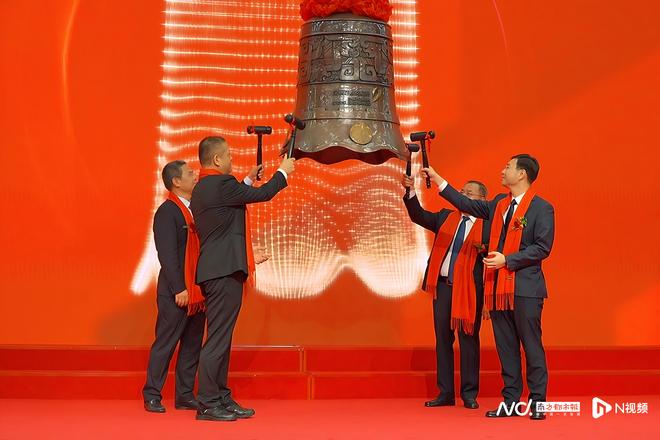
Core Viewpoint - The successful listing of the first low-altitude economy asset-backed securities (ABS) in China, with a total issuance scale of 584 million yuan, marks a significant financial innovation aimed at supporting the development of the low-altitude economy and aerospace industry in Guangzhou [1][3][5]. Group 1: Financial Innovation and Market Impact - The ABS, named "Jinyuan-Guojun-Science City Leasing Greater Bay Area Intelligent Manufacturing Integration (Phase II)," is the first of its kind in the low-altitude economy sector, with securities codes 146523, 146524, and 146525 [3][5]. - The underlying assets of the ABS primarily consist of helicopters and related leasing equipment, providing a strong foundation for regional low-altitude economic development [5][10]. - The issuance achieved a record low interest rate for the priority A1 tranche at 1.9%, with a total subscription multiple of 4.17, indicating strong investor confidence [10][12]. Group 2: Strategic Development and Future Prospects - The chairman of Science City (Guangzhou) Leasing emphasized the company's rapid growth in the general aviation sector, with a fleet exceeding 20 aircraft and a comprehensive service model covering various applications [7][8]. - The low-altitude economy is projected to exceed 580 billion yuan by March 2025 and potentially reach 3.5 trillion yuan by 2035, highlighting the sector's growth potential [8][14]. - The establishment of the ABS is seen as a new paradigm for financing in the low-altitude industry, providing a replicable model for future financial innovations [14][15]. Group 3: Regional Development and Collaboration - Guangzhou Development Zone and Huangpu District are becoming key areas for low-altitude economic development, with a current industry scale of approximately 15 billion yuan and over 50 related enterprises [14][15]. - The local government has introduced supportive policies, such as the "Low Altitude 11 Articles," to enhance financial support and services for the low-altitude economy [14][15]. - Science City Leasing is actively fostering regional economic growth through an "investment-leasing-recruitment" service mechanism, successfully attracting general aviation companies to the Huangpu area [15].
抓好市值管理,推动央企上市公司高质量发展
Zhong Guo Hua Gong Bao· 2025-07-09 02:44
Core Viewpoint - The introduction of the new market value management regulations has led to significant developments in investor relations management, with 644 listed companies implementing value management systems or valuation enhancement plans since November 2022 [1] Group 1: Current State of Central State-Owned Enterprises (SOEs) - As of 2024, 492 central SOEs account for 9.14% of A-share listed companies but contribute 36.32% of total market value, 43.74% of revenue, and 59.03% of net profit, highlighting their critical role in the national economy [1] - There is a notable disparity within central SOEs, with companies valued over 50 billion yuan contributing nearly 80% of market value and over 90% of net profit, while smaller companies (under 10 billion yuan) represent 36.79% of the total but only 2.82% of market value [2] Group 2: Challenges and Recommendations for Small and Medium-Sized SOEs - Small and medium-sized central SOEs face dual pressures on profitability and valuation, with challenges including outdated capital tools and insufficient innovation [2] - Recommendations for regulatory bodies include differentiated assessments focusing on R&D conversion rates for tech companies and flexible regulations for companies in economically challenged regions [2][3] Group 3: Strategies for Transformation - For tech companies, strategies include binding core technologies to teams, establishing innovation incubation mechanisms, and creating suitable incentive systems [3] - Traditional industries are encouraged to upgrade production capacity, integrate supply chains, and pursue asset securitization [3] - Public service companies should focus on value reconstruction, achieving ESG premiums, and transitioning to smart services [3] Group 4: Implementation of Capital Tools - Companies can create a collaborative matrix of capital tools such as buybacks, ESG disclosures, and supply chain integration to enhance market value management [4] - Successful case studies include improvements in R&D efficiency and valuation recovery through innovative practices [4] Group 5: Long-term Goals - Short-term goals include restoring the valuation of 30 underperforming companies to a price-to-book ratio of 1.0 and reducing the overall discount rate of central SOEs by 15% by 2026 [5] - Mid-term objectives aim for a 15% increase in buyback amounts and a 25% rise in institutional holdings in small and medium-sized SOEs by 2027 [5] - Long-term aspirations include achieving a 6% R&D intensity and surpassing 500 billion yuan in overall R&D investment by 2030, with a total market value of central SOEs exceeding 100 trillion yuan [5]
抗战胜利日阅兵渐近,资金抢筹军工板块,军工ETF(512660)近5日净流入超1.8亿元
Mei Ri Jing Ji Xin Wen· 2025-07-07 05:25
Group 1 - The core viewpoint is that 2025 marks the end of the "14th Five-Year Plan," with a structural reversal in industry demand expected to continue until 2027 [1] - The military industry chain's upstream enterprises, which have a high asset securitization rate, have seen significant order growth since the Spring Festival, leading to a notable increase in stock prices from mid-February to mid-April [1] - Following a peak in orders for upstream component companies, stock prices have retreated since mid-April, while themes related to military trade exports, weaponry, deep-sea technology, commercial aerospace, and low-altitude economy have experienced high-frequency rotations since May [1] Group 2 - The upcoming September 3 military parade is expected to catalyze sentiment in the military industry sector due to its grand scale and high media attention [1] - The military ETF (512660) tracks the China Securities Military Index, which includes representative listed companies in the defense and military industry, reflecting the overall performance of the sector [1] - The index covers multiple subfields within the national defense and military industry, showcasing high industry concentration and distinct military characteristics [1]
申万宏源助力上海地产住房发展有限公司CMBS项目成功发行
申万宏源证券上海北京西路营业部· 2025-07-07 02:06
Core Viewpoint - The article highlights the successful issuance of a significant CMBS project by Shanghai Real Estate Housing Development Co., marking a milestone in the development of affordable rental housing in Shanghai [1][2]. Group 1: Project Details - The CMBS project has an issuance scale of 3.299 billion yuan, a term of 21 years, and a coupon rate of 2.2% [1]. - This project is the largest of its kind in the country, showcasing the innovative financing model in the affordable housing sector [1]. Group 2: Company Overview - Shanghai Real Estate Housing Development Co. is a wholly-owned subsidiary of Shanghai Real Estate Group, focusing on the unified construction and operation of affordable and rental housing [1]. - The company aims to serve urban renewal, housing development, talent construction, and community support, positioning itself as a leader in the functional housing market in Shanghai [1]. Group 3: Financing Model - The CMBS project establishes a dual financing system of "equity + debt" in the housing rental sector, facilitating the transformation of housing rental from stagnant assets to liquid capital [1]. - This innovative approach provides a significant reference for the sustainable development of affordable rental housing and offers new ideas for capital market participation in the housing rental market [1]. Group 4: Strategic Importance - The successful issuance of this asset securitization product lays a solid foundation for further cooperation between the involved parties and is significant for the development of asset securitization business in the Yangtze River Delta region [2]. - It exemplifies the commitment of the company to innovate in asset securitization, aligning with domestic regulatory policies and contributing to the development of new models in this field [2].