
劳动力市场

Search documents
明天非农的“坏兆头”?美国8月“小非农”意外走软
Jin Shi Shu Ju· 2025-09-04 12:33
Group 1 - The core point of the article indicates that the U.S. labor market is facing challenges, as evidenced by the lower-than-expected private sector job growth in August, which added only 54,000 jobs compared to the anticipated 65,000 [1][5] - ADP's Chief Economist Nela Richardson noted that the strong job growth seen earlier in the year has been significantly impacted by uncertainties, including rising consumer concerns, labor shortages, and disruptions related to artificial intelligence [4] - Employment in sectors related to trade, transportation, and utilities showed particular weakness, with a net loss of 17,000 jobs in August, while education and healthcare services also experienced a decline of 12,000 jobs [4] Group 2 - The report highlighted that wage growth remained stable in August, with pay for stayers increasing by 4.4% year-over-year and pay for job switchers rising by 7.1% [5] - The ADP report adds to the concerns regarding the labor market, especially following earlier data indicating that job openings and labor turnover (JOLTS) in July reached one of the lowest levels since 2020 [5] - Attention is now shifting to the upcoming non-farm payroll report, with economists predicting an addition of 75,000 non-farm jobs in August and a slight increase in the unemployment rate from 4.2% to 4.3% [5]

凌晨 美联储 重大发布
Sou Hu Cai Jing· 2025-09-04 07:28
Core Insights - The latest Federal Reserve's Beige Book indicates price increases across all regions, with most reporting "moderate or slight" inflation and little net change in overall employment levels [1][2][3] - The frequency of mentions regarding inflation in the Beige Book is near a four-year low, while mentions of "slowdown" have decreased significantly, suggesting that inflation and economic slowdown are no longer primary concerns [2][3] Economic Conditions - The Beige Book reports that consumer spending is flat or declining as many households' wages have not kept pace with rising prices [2] - All districts noted price increases related to tariffs, with significant impacts on input prices reported by contacts in insurance, utilities, and technology sectors [2] Labor Market - Eleven districts described overall employment levels as having little net change, with one district reporting a slight decline; half of the regions noted a decrease in immigrant workers, particularly in construction [3] - The latest JOLTS report shows job vacancies at 7.181 million, the lowest level in ten months, indicating a gradual weakening in labor demand amid increasing policy uncertainty [3] Interest Rate Expectations - Market expectations for Federal Reserve rate cuts have intensified, with a 96.6% probability of a 25 basis point cut in September, and a likelihood of cumulative cuts between 50 to 75 basis points by year-end [3][4] - Morgan Stanley's chief economist suggests that the Fed is open to rate cuts, but the extent will depend on whether labor market weakness poses a greater risk than rising inflation [3] Federal Reserve Officials' Statements - Federal Reserve Governor Christopher Waller indicated the need to initiate rate cuts in the upcoming meeting, with potential for multiple cuts in the next 3-6 months [4][5] - Waller also mentioned that inflation may align closer to the Fed's target in 6-7 months as tariff impacts diminish, emphasizing the need to address potential rapid declines in the labor market [5][6] - St. Louis Fed President Alberto Musalem highlighted increasing downside risks in the labor market and anticipated that tariffs would affect the economy for the next 2-3 quarters before their impact on inflation subsides [6]
重压之下 美国劳动力市场流失逾120万移民
Sou Hu Cai Jing· 2025-09-04 05:46
Core Insights - The report from the Pew Research Center indicates a concerning trend in the U.S. labor market, with over 1.2 million immigrant workers disappearing from the job market between January and July 2020, closely linked to the strict immigration policies of the Trump administration [1][3][5] Labor Market Impact - Immigrant workers, including those with legal work visas and undocumented individuals, play an essential role in various key industries in the U.S. [3] - Immigrants account for approximately 20% of the U.S. labor market, with significant representation in specific sectors: 45% in agriculture, forestry, fishing, and livestock; 30% in construction; and 24% in the service industry [3][5] Employment Contribution - Over the past decade, immigrants have contributed to more than 50% of new job creation in the U.S. However, the recent halt in immigration at the U.S.-Mexico border has caused a "systemic shock" to the country's job creation capacity [5][6] Sector-Specific Challenges - The agricultural sector is facing a labor shortage crisis due to increased immigration enforcement, leading to significant losses, such as tons of ripe fruit left unharvested in Florida [5][6] - The construction industry is experiencing job losses in nearly 50% of metropolitan areas, with California being particularly affected, losing 7,200 jobs in the Riverside-San Bernardino-Ontario area and 6,200 in the Los Angeles-Long Beach-Glendale area [5][6] Future Concerns - The healthcare sector may become the next area severely impacted, as 43% of home care workers are immigrants, raising concerns about the availability of caregivers for hospitals and nursing homes [6]

本周非农要有多差,才能让美联储降息50基点?
Hua Er Jie Jian Wen· 2025-09-04 03:55
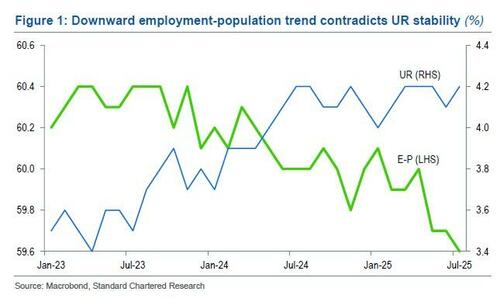
Core Insights - The upcoming US non-farm payroll report is crucial for investors, as its results may determine whether the Federal Reserve will implement a more aggressive 50 basis point rate cut in September [1] - A significant drop in non-farm payrolls below 40,000 and an unemployment rate rising to 4.4% or higher are necessary for the market to consider a 50 basis point cut [1][2] - There is skepticism among analysts regarding the accuracy of the Bureau of Labor Statistics (BLS) data, suggesting it may overestimate true employment growth [1] Employment Data Thresholds - Analysts believe that the balanced growth level for the US job market is around 50,000 to 100,000 jobs per month, with any reading below 40,000 indicating a substantial slowdown [3] - The expected unemployment rate for August is 4.3%, but merely reaching this figure may not guarantee a 50 basis point cut unless job growth is extremely weak [3] - A rise in the unemployment rate to 4.4% would significantly increase the likelihood of a 50 basis point cut unless job numbers are exceptionally strong [3] Misleading Indicators - Steve Englander argues that widely followed labor market indicators may be misleading and underestimate the softness of the job market [4] - The unemployment rate has remained stable between 4.1% and 4.2% for 13 out of the last 14 months, which Englander views as a misleading signal of labor market health [4] - The employment-to-population ratio has been steadily declining, indicating a more accurate picture of labor market weakness [4] Non-Farm Payroll Data Concerns - Englander criticizes the BLS's "birth-death model," which estimates net job changes from new and closed businesses, suggesting it has significantly distorted employment data [6] - He estimates that this model has overestimated job growth by about 70,000 jobs per month over the past year [6] Importance of Benchmark Revisions - Englander estimates that the actual monthly job growth from new businesses may be as low as 20,000, necessitating a "discount" on official non-farm payroll figures [7] - For instance, a reported 100,000 jobs may reflect a true growth of only about 30,000, while a figure of 170,000 could indicate a real increase of around 100,000 [7] - The upcoming annual benchmark revision on September 9 could be pivotal; significant downward adjustments would confirm market suspicions of data overestimation and could catalyze more aggressive Fed easing [7]
沃勒重申抢在就业崩溃前降息 沪金先跌后涨
Jin Tou Wang· 2025-09-04 03:01
Group 1 - The core viewpoint of the article highlights the recent statements from multiple Federal Reserve officials indicating that changes in the labor market dynamics are crucial for future interest rate decisions [3][4] - Federal Reserve Governor Waller emphasized the need to act decisively before the labor market deteriorates, advocating for a shift towards a more accommodative monetary policy [3] - Atlanta Fed President Bostic suggested that a modest easing of policy is necessary due to signs of a slowing labor market, proposing a 25 basis point rate cut in the remaining months of the year [3][4] Group 2 - St. Louis Fed President Bullard raised concerns about the downside risks to the labor market as key employment indicators show signs of weakness, while also lowering the assessment of inflation risks [4] - The current gold futures market is influenced by macroeconomic factors such as interest rate cut expectations and safe-haven demand, with a bullish technical structure anticipated [4] - Key resistance levels for gold futures are identified between 818 to 860 yuan per gram, while support levels are noted between 803 to 850 yuan per gram [4]
美联储重磅发布!谷歌被判后反创新高!黄金继续大涨
Guo Ji Jin Rong Bao· 2025-09-04 00:37
Group 1 - The S&P 500 index rose after a federal court ruling on Google, boosting optimism about tech giants' ability to withstand regulatory threats [2] - Google's stock surged over 9%, reaching an all-time high, as the court allowed it to retain its Chrome browser but prohibited exclusive search agreements and mandated data sharing [2] - Other major tech stocks also saw gains, with Apple up over 3% and Tesla up over 1%, while Nvidia experienced a slight decline [2] Group 2 - The Nasdaq China Golden Dragon Index experienced a minor decline of 0.19%, with significant drops in stocks like Zhengye Technology and Zai Lab [3] - Conversely, stocks such as Huya and Weibo saw increases of over 7% and 4%, respectively [3] Group 3 - European stock indices closed higher as investors assessed stabilizing fiscal challenges following a previous day of long-term bond sell-offs that triggered risk aversion [4] Group 4 - COMEX gold futures continued their upward trend, closing up 0.77% at $3,619.77 per ounce, while silver futures rose 0.52% to $41.81 per ounce [5] Group 5 - The Federal Reserve's Beige Book indicated price increases across all regions, with ten districts reporting "moderate or slight" inflation and two experiencing "strong input price growth" [6] - The report highlighted stagnant consumer spending due to wages not keeping pace with rising prices, with many regions noting significant impacts from tariffs on input prices [7] Group 6 - The U.S. labor market showed signs of stagnation, with job openings falling to 7.18 million, the lowest in ten months, and below the number of unemployed workers for the first time in over four years [8] - The healthcare and social assistance sectors saw the largest declines in job openings, while the "other services" category experienced the most significant hiring increases [8] Group 7 - Market expectations for Federal Reserve interest rate cuts have intensified, with a 96.6% probability of a 25 basis point cut in September [10] - St. Louis Fed President Alberto Musalem expressed concerns about increasing downward risks in the labor market and the impact of a weak housing market on the economy [10] Group 8 - Minneapolis Fed President Kashkari noted that there is room for lowering short-term interest rates, although he did not specify when policy easing might occur [11] - He acknowledged the challenges faced by the Fed in balancing high inflation with signs of a cooling job market [12]




大涨、暂停交易!特朗普家族大消息
Zheng Quan Shi Bao· 2025-09-04 00:28
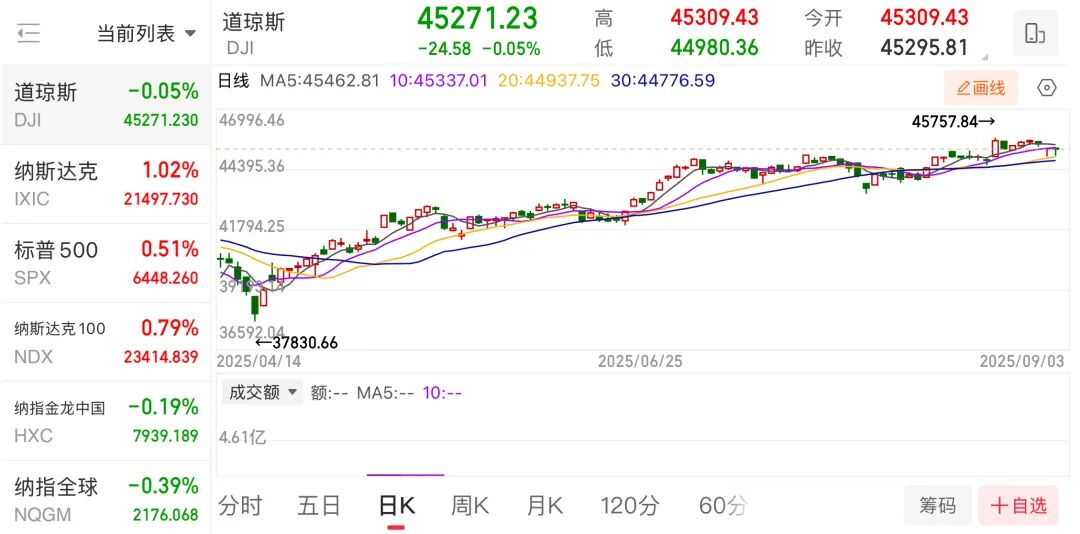
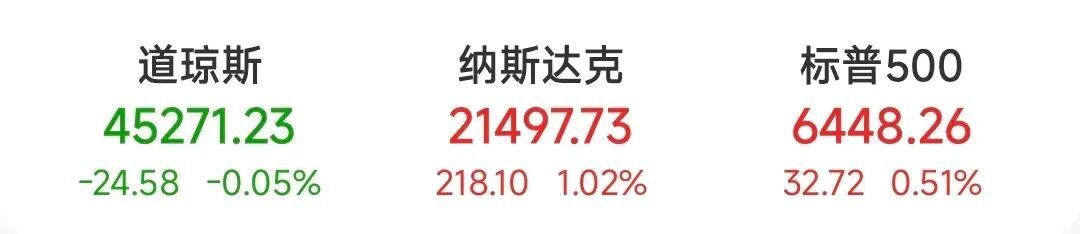
Market Overview - The U.S. stock market closed mixed on September 3, with the Dow Jones down 24.58 points (-0.05%) at 45,271.23, the Nasdaq up 218.10 points (+1.02%) at 21,497.73, and the S&P 500 up 32.72 points (+0.51%) at 6,448.26 [1][2] Company Highlights - Alphabet, Google's parent company, reached a historic high after a court ruling that prevents its breakup, boosting market optimism regarding tech giants' ability to withstand regulatory threats [1][9] - American Bitcoin made its debut on NASDAQ through a merger with Gryphon Digital Mining, with its stock price initially soaring over 100% before closing up 16.5% at $8.04 [4] - Google shares rose over 9%, closing at a record high of $233.12 billion, following a favorable court ruling that allows the company to continue its payment agreements with Apple for being the default search engine on iPhones [9] Sector Performance - Technology stocks generally rose, contributing to the rebounds in the Nasdaq and S&P 500 indices, while energy and banking stocks showed weakness due to ongoing concerns about economic slowdown and rising bond yields [2] - Financial stocks mostly increased, with notable gains from Travelers Insurance and Hartford Insurance, while some major banks experienced slight declines [10] Economic Indicators - The U.S. labor market showed signs of slowing, with July job openings falling by 176,000 to 7.181 million, which was below economists' expectations [6] - The upcoming employment report is anticipated to show an increase of 75,000 non-farm jobs in August, with the unemployment rate expected to rise from 4.2% to 4.3% [7][8]
凌晨!美联储,重大发布!
券商中国· 2025-09-03 23:28
美联储9月降息大门已经敞开? 今日凌晨,美联储发布的最新一期全国经济形势调查报告(简称《褐皮书》)显示,各地区均出现价格上涨,大部分辖区报 告为"温和或轻微"的通胀,大部分辖区整体就业水平几乎没有净变化。值得一提的是,在最新发布的《褐皮书》中,关 于通胀的提及次数接近四年来的低点。 与此同时,美联储官员们的最新讲话也释放重磅信号。其中,美联储理事沃勒表示, 美联储应在本月开始降息,预计在 未来3—6个月内,可能会看到多次降息 。美国圣路易斯联储主席穆萨莱姆表示,美国劳动力市场面临的下行风险增加。 受此影响,市场对美联储降息的预期持续升温。芝商所"美联储观察"工具显示,目前市场预计,9月降息25个基点的概率 升至96.6%;年内的降息幅度大概率在50个基点至75个基点之间(降息2—3次)。 美联储最新发布 北京时间9月4日凌晨,美联储官网发布了最新一期《褐皮书》,其中显示,各地区均出现价格上涨,其中10个辖区报告 为"温和或轻微"的通胀,另外两个则出现"强劲的投入价格增长"。 《褐皮书》指出,美联储各辖区反馈,由于许多家庭的工资未能跟上物价上涨,消费者支出持平或下降。 美东时间9月3日,美联储理事克里斯托弗·沃 ...

关税推升商品价格!美联储卡什卡里警告通胀压力 博斯蒂克支持年内小幅降息
智通财经网· 2025-09-03 22:24
"虽然价格稳定仍是首要任务,劳动力市场放缓的程度足以支撑在今年晚些时候实施一次适度的政策宽 松。"博斯蒂克表示,并补充称如果数据显著恶化,他不排除提前采取行动。 他在接受采访时被问及9月是否可能降息时表示,"我会保持开放态度",并将密切关注薪资增长、非农 就业人数等指标。"如果数据表明劳动力市场正在快速且明显走弱,这将是非常重要的信息,会影响我 对政策的判断。" 博斯蒂克同时提醒,关税对通胀的冲击可能具有持久性。"我相信关税对消费者价格的影响不会很快消 退,而且其全部效应将在未来数月才会完全显现。"他强调,美联储不能自满,必须防止通胀预期失 控,避免新一轮通胀爆发。 在美联储9月政策会议临近之际,多位官员就通胀、关税及利率前景发表看法,透露出政策内部的分歧 与不确定性。 智通财经APP获悉,明尼阿波利斯联储主席卡什卡里周四表示,美国总统特朗普推动的关税措施正在推 高商品通胀,令美联储实现2%通胀目标的道路更加复杂。他在明尼苏达州女性经济圆桌会议上表示, 尽管劳动力市场正显示出降温迹象,整体经济仍有望实现"软着陆",但当前通胀水平依然"过高"。 卡什卡里指出,住房等领域的价格增长正在放缓,但并不意味着房价或租金 ...
美联储理事沃勒力推9月降息 其他官员仍持谨慎态度
智通财经网· 2025-09-03 15:45
美联储9月16-17日联邦公开市场委员会(FOMC)会议临近,内部关于是否降息的分歧愈加明显。智通财 经APP获悉,美联储理事沃勒周三明确表示,支持本月会议启动降息,并希望在未来三到六个月内实施 多次降息。然而,其他多位美联储高官则倾向于保持耐心,继续观察经济数据变化。 沃勒在接受采访时直言:"我一直明确表态,我认为我们应该降息。"他指出,当前劳动力市场出现放缓 迹象,美联储应提前采取行动,防止就业市场迅速恶化。 "劳动力市场一旦转坏,通常会来得非常快,不会慢慢发生。"沃勒表示,"因此,我认为我们需要在下 次会议上开始降息。"他补充称,未来三到六个月可能会连续降息,"或许是每隔一次会议降息,甚至每 次会议都降息"。 沃勒强调,他并不担心关税会引发持续性通胀,而更担心劳动力市场的突然转折。他预计关税将拖累经 济增长,但不会导致经济陷入衰退:"我不认为会出现衰退,但增速会放缓,因为关税本质上是税收, 而税收通常对增长不利。" 尽管沃勒立场强硬,部分官员仍保持谨慎。圣路易斯联储主席穆萨勒姆在彼得森国际经济研究所的演讲 中表示,当前劳动力市场仍接近充分就业,虽然风险有所增加,但尚未看到裁员大幅上升迹象。 "我预计劳动 ...