
多边贸易体制

Search documents
中方代表:美国“对等关税”叙事片面误导 忽视服务贸易顺差
财联社· 2025-06-14 12:24
Core Viewpoint - The article emphasizes the importance of multilateral cooperation in global trade, particularly in the context of service trade, and criticizes the unilateral measures taken by the United States, urging adherence to WTO rules [1][2]. Group 1: U.S. Service Trade Surplus - The U.S. is the largest service trade surplus country globally, with a projected surplus nearing $300 billion in 2024 [1]. - The U.S. benefits significantly from its deep involvement in high-value segments of the global value chain, such as R&D, design, and sales, which yields returns exceeding what trade data indicates [1]. Group 2: Critique of U.S. Trade Narrative - The U.S. narrative focuses on losses in goods trade while neglecting the profits from service trade, which is seen as misleading and one-sided [1]. - The article argues against the U.S. double standards in trade rules, stating that all members, especially developing ones, should be allowed to benefit from trade [1]. Group 3: Call for Multilateral Solutions - The Chinese representative calls for resolving trade disputes through multilateral cooperation within the WTO framework rather than unilateral actions [1]. - There is a push for accelerating WTO reforms to strengthen an open, stable, and predictable multilateral trade system [1]. Group 4: Global Response - The Chinese stance received support from various countries, including developed members like the EU, Australia, and Canada, as well as developing nations like Brazil and Pakistan [2]. - These countries highlighted the significance of the service sector in future global trade and its role in maintaining supply chain resilience [2].


“只谈吃亏 避谈获利”中方揭批美国“对等关税”错误叙事
Yang Shi Xin Wen· 2025-06-14 04:46
Group 1 - The core argument of the article highlights China's criticism of the U.S. for its selective focus on trade deficits in goods while ignoring the benefits it gains from service trade, emphasizing the need for adherence to WTO rules and multilateral cooperation [1][2] - China points out that the U.S. is the largest surplus country in service trade, with a projected surplus nearing $300 billion in 2024, and argues that the U.S. benefits significantly from global value chains, particularly in high-value sectors like R&D and sales [1] - The article notes that China's proactive agenda at the WTO meeting has garnered support from various countries, including developed members like the EU and Australia, as well as developing nations like Brazil and Pakistan, emphasizing the importance of service trade for global economic stability [2] Group 2 - China advocates for bilateral negotiations based on WTO rules to resolve trade tensions, stressing that such discussions should not violate non-discrimination principles or harm third-party interests [2] - The article mentions a collective call from various nations for restraint in trade restrictions and the importance of maintaining stable and predictable regulatory policies to ensure the healthy development of global trade [2]
第十一届中拉基础设施合作论坛在澳门举行
news flash· 2025-06-12 09:07
Group 1 - The 11th China-Latin America and Caribbean Countries Infrastructure Cooperation Forum was successfully held in Macau from June 10 to 12, with over 300 participants including government officials, international organizations, and representatives from Chinese financial institutions and enterprises [1] - Chinese Vice Minister of Commerce, Yan Dong, emphasized the commitment to implement the latest outcomes of the China-Latin America Forum and the "Five Major Projects" initiative, aiming to enhance the sustainability of infrastructure cooperation between China and Latin America [1] - Bolivian Minister of Public Works, Services, and Housing, Montaño Rojas, highlighted the significant progress in China-Latin America infrastructure cooperation and suggested focusing on green transformation and digital change to support the economic development of Latin American countries [1] Group 2 - The China-Latin America and Caribbean Countries Infrastructure Cooperation Forum was established in 2015 as a specialized platform for cooperation in the infrastructure sector, facilitating policy communication, information sharing, and practical cooperation over the past 11 years [2]
【王毅会见南非外长拉莫拉】6月11日讯,2025年6月11日,中共中央政治局委员、外交部长王毅在长沙会见南非外长拉莫拉。王毅说,中方乐见南非在国际和地区舞台上发挥更大作用,支持南非履行二十国集团主席国职责,愿同南非一道,展现大国担当,维护好自身正当权益和民族尊严,维护好广大发展中国家的共同利益。王毅表示,中方在本次协调人会议上宣布了对非合作新举措,将对非洲国家给予100%税目产品零关税待遇,展现了中方对非洲的坚定支持和中非的团结友谊。我们将继续同非洲分享发展机遇,同时共同维护好多边贸易体制、国际关系基本准则
news flash· 2025-06-11 08:13
Core Points - The meeting between Wang Yi and South African Foreign Minister Naledi Pandor emphasizes China's support for South Africa's role on the international stage and its G20 presidency [1] - China announced new cooperation measures for Africa, including a 100% zero-tariff treatment for products from African countries, highlighting China's commitment to African support and solidarity [1] - The discussion also focused on maintaining multilateral trade systems and basic principles of international relations, indicating a strategic partnership between China and Africa [1]
美国被拿捏,特朗普放低姿态,石破茂一步不让,不出意外又谈崩了
Sou Hu Cai Jing· 2025-06-09 04:27
Group 1 - The core focus of the US-Japan tariff negotiations is the trade deficit, with Japan's strong stance against making unprincipled concessions to the US [1] - Japan holds significant leverage in the negotiations due to its substantial holdings of US Treasury bonds, which could impact the US economy if sold off [1] - Japan's proposal includes a comprehensive cooperation plan targeting China in key areas such as rare earths, semiconductors, and liquefied natural gas [3][5] Group 2 - Japan aims to reduce the trade deficit with the US while aligning with US efforts to counter China's technological advancements [3] - The internal divisions within the US negotiation team complicate the discussions, with differing views among key officials [5] - The historical context of US-Japan relations shows a shift from a subordinate relationship to a more balanced negotiation dynamic, with Japan leveraging its economic position [8]
商务部:中国和南亚国家贸易额十年间实现翻番,继续鼓励中国企业赴南亚国家考察对接|快讯
Hua Xia Shi Bao· 2025-06-06 07:37
Group 1 - The importance of economic and trade relations between China and South Asian countries is increasing in a complex international environment, highlighted by the upcoming China-South Asia Expo in Kunming from June 19-24 [2] - In 2024, trade between China and South Asian countries is expected to approach $200 billion, doubling over the past decade with an average annual growth rate of approximately 6.3% [2] - China has become the largest trading partner for countries like Pakistan and Bangladesh, with significant investment projects in the China-Pakistan Economic Corridor and other South Asian infrastructure projects [2] Group 2 - Future support from China for South Asian countries will focus on stabilizing their development paths and enhancing bilateral economic and trade relations, including cooperation in traditional sectors and emerging fields like energy transition and digital economy [3] - China aims to promote free trade agreements and upgrade investment protection agreements with South Asian countries to unlock further trade and investment potential [3] - The commitment to multilateralism and opposition to unilateralism and protectionism is emphasized, with a focus on maintaining a stable and predictable global trade environment [3]
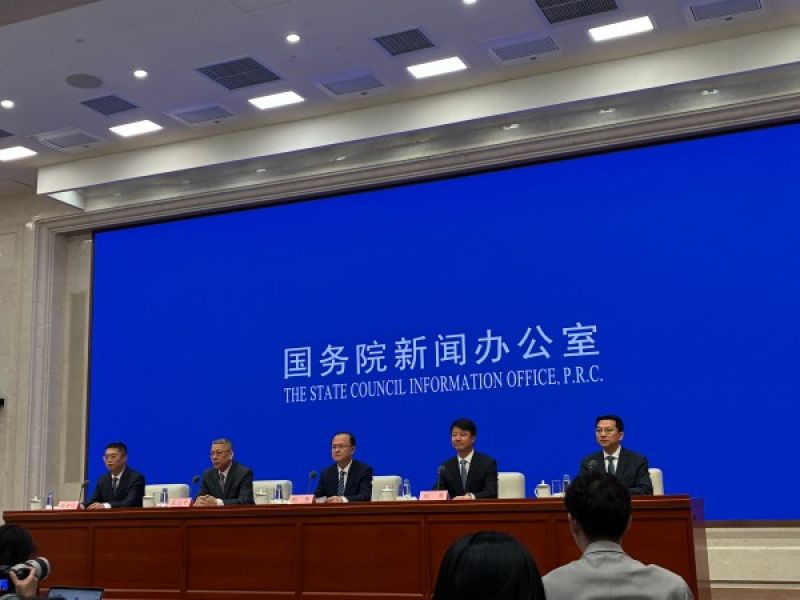
商务部回应美上调钢铝关税
证券时报· 2025-06-05 08:03
Group 1: U.S. Tariff Policy on Steel and Aluminum - The U.S. has raised tariffs on imported steel and aluminum from 25% to 50%, effective from April 4, which China criticizes as unilateralism and protectionism [2] - China emphasizes that the U.S. tariff measures violate WTO rules and disrupt global supply chains, urging the U.S. to respect economic laws and engage in dialogue to maintain a rules-based multilateral trade system [2] Group 2: Automotive Industry Competition - The automotive industry is identified as a pillar of the national economy, crucial for growth and consumption expansion, with ongoing initiatives to boost automotive consumption [4] - The Ministry of Commerce plans to enhance tracking and policy guidance for the automotive market, aiming to address barriers in automotive circulation and meet diverse consumer needs [5] - In response to "involution" competition in the automotive sector, the Ministry will strengthen compliance guidance and market order maintenance to promote healthy industry development [6] Group 3: U.S.-China Trade Relations - Following the Geneva trade talks, the U.S. has implemented new restrictions against China, which China strongly opposes, demanding an immediate halt to these measures [8] - The U.S. Trade Representative extended the exemption period for the Section 301 investigation into China's practices until August 31, 2025, which China views as a continuation of unilateral trade protectionism [10]

“全球欧元时刻”正在加速到来?
Sou Hu Cai Jing· 2025-06-05 04:14
Group 1: Core Perspectives on Euro Internationalization - The Euro has not significantly increased its global role despite being the second-largest currency since its inception in 1999, with its share in international currency usage remaining around 19%, still far behind the US dollar [1][2][3] - The Euro was created primarily for European integration rather than to compete with the dollar, and its internationalization lacks sufficient "hard" support compared to the dollar's backing from the US's economic, political, and military strength [3][4] - The Eurozone's economic performance has lagged behind the US and emerging economies since the 2009 Eurozone crisis, with its share of global GDP declining from 20% to 15% by 2023, which limits the Euro's global influence [4][6] Group 2: Challenges and Opportunities for Euro - The Euro's potential rise is hindered by the need for enhanced military strength and strategic autonomy, as reliance on US military power undermines trust in the Euro as a global currency [7][12] - The current international monetary environment presents opportunities for the Euro, as the dollar's dominance is being challenged by US economic policies and a decline in global trust towards the dollar [9][10][11] - To capitalize on these opportunities, the Eurozone must improve its economic vitality, enhance capital market attractiveness, and achieve political consensus among member states to elevate the Euro's international status [10][12]
合力维护国际贸易规则才能有效应对挑战(国际论坛)
Ren Min Ri Bao· 2025-06-04 21:32
Group 1 - The core viewpoint is that there are no winners in a trade war, as both exporting and importing countries, producers, and consumers will suffer losses. Cooperation is the only way forward, and the rules supporting global trade need to be jointly maintained by all parties [1][2] - The U.S. government's tariff policies are causing severe impacts on both the U.S. and global markets, affecting global producers exporting to the U.S. and leading to increased costs for U.S. consumers [1] - Small and medium-sized economies participating in international trade find themselves in a dilemma, lacking the leverage to influence U.S. trade policies, which highlights their preference for a multilateral trade system to protect their interests [1] Group 2 - The stability of trade rules depends on the recognition and support from all parties, and selective enforcement of these rules can lead to deep impacts on the international trade system [2] - Strengthening and perfecting regional supply chains is proposed as a solution to the current tariff crisis, with a significant portion of products being consumed within the region, leading to a more balanced international trade structure [2]
商务部部长王文涛出席巴黎世贸组织小型部长会议
news flash· 2025-06-04 10:32
Core Viewpoint - The WTO is emphasized as a crucial pillar of multilateralism and a key platform for global economic governance, with a call for unity to address unilateral tariff measures that undermine the multilateral trading system [1] Group 1: WTO Meeting Highlights - The meeting in Paris included representatives from over 20 member countries, including China, the US, the EU, and Australia, alongside WTO Director-General Ngozi Okonjo-Iweala [1] - Chinese Commerce Minister Wang Wentao highlighted that trade wars yield no winners and that collaboration is essential for mutual progress [1] Group 2: China's Position - China has submitted a statement to the WTO supporting the multilateral trading system under current circumstances, expressing willingness to work with other parties to maintain international economic order and global trade stability [1] - The statement emphasizes the need to address global trade disorder caused by unilateral tariff measures through equal dialogue and consultation based on WTO rules [1]