情绪消费

Search documents
36万人加购,泡泡玛特新品开卖秒空,最高溢价近10倍
2 1 Shi Ji Jing Ji Bao Dao· 2025-09-29 23:57
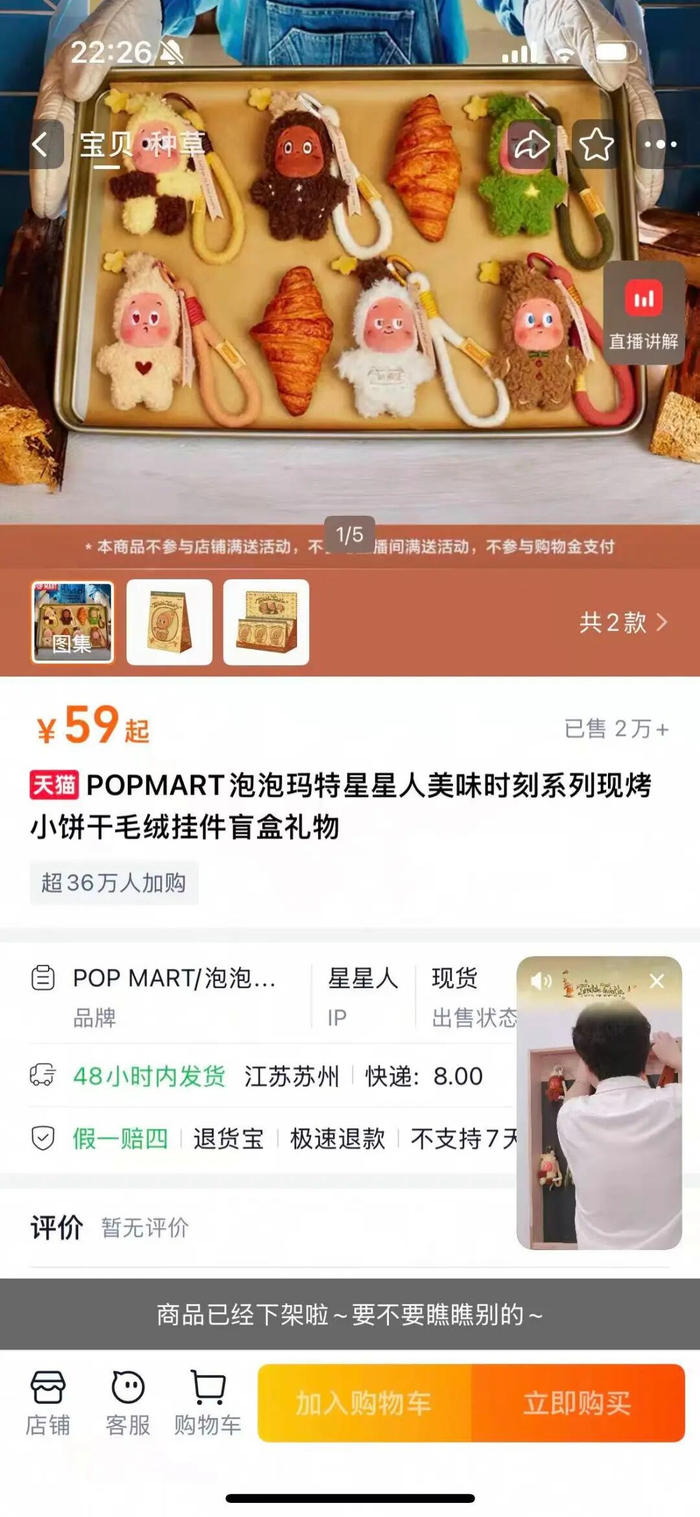
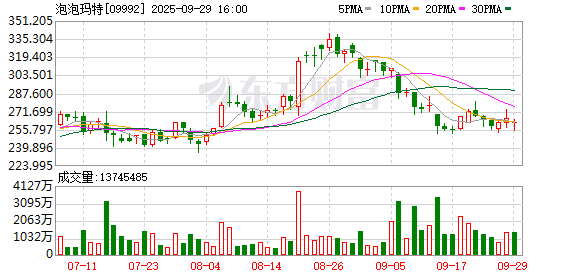
Core Insights - The launch of the "Starry People Delicious Moments Series Blind Box" by Pop Mart has generated significant pre-sale interest, with products being listed on second-hand platforms before the official release [1][5] - The initial sales of the Starry People series saw products sell out within minutes, indicating strong demand [1] - The secondary market prices for these products have surged, with some items experiencing price increases of nearly tenfold compared to their original prices [5] Sales Performance - The "Starry People" series has shown impressive sales figures, with over 360,000 items added to carts within ten minutes of launch, while only 20,000 units were available on Tmall [1] - The original price of the hand-painted figures was 69 yuan, but they have reached prices as high as 119 yuan on second-hand platforms [5] - The hidden variant "Little Bear Biscuit" has seen its price rise from 59 yuan to 689 yuan, reflecting a nearly tenfold premium [5] Financial Impact - Pop Mart's revenue from the Labubu IP was 48.14 billion yuan, accounting for 34.7% of the company's total revenue of 138.76 billion yuan in the first half of 2025 [9] - The Starry People series has quickly become one of Pop Mart's fastest-growing new IPs, generating over 390 million yuan in revenue in the first half of 2025 [9] - The introduction of the Starry People series may help reduce the company's reliance on the Labubu series, addressing previous market concerns about potential IP stagnation [9] Market Position - As of September 29, Pop Mart's stock closed at 261.8 HKD per share, with a total market capitalization of 351.6 billion HKD, reflecting a 19.3% decline over the past month [10]


36万人加购,泡泡玛特新品开卖秒空,最高溢价近10倍
21世纪经济报道· 2025-09-29 23:50
Core Viewpoint - The article highlights the successful launch of the "Star People Delicious Moments Series" by Pop Mart, which has generated significant consumer interest and high resale prices on secondary markets, indicating strong demand and potential for the brand to diversify beyond its reliance on the Labubu series [1][4][8]. Group 1: Product Launch and Market Response - The "Star People Delicious Moments Series" blind boxes were set to launch on September 29, and even before the official sale, products were being pre-ordered on second-hand platforms [1]. - Upon official release, the products sold out within minutes, with over 360,000 people adding the plush cookie keychain to their carts, while only 20,000 units were available on Tmall [1]. - The resale prices on second-hand platforms have surged, with the original price of 69 yuan for the figurine rising to 119 yuan, and the hidden variant "Little Bear Cookie" reaching a peak price of 689 yuan, reflecting a nearly 10-fold premium [4]. Group 2: Financial Performance and IP Diversification - Concerns had previously been raised about Pop Mart's heavy reliance on the Labubu series, which accounted for 34.7% of the company's total revenue of 138.76 billion yuan in the first half of 2025 [8]. - The introduction of the Star People series has shown promising results, generating over 100 million yuan in its first year and 390 million yuan in the first half of 2025, making it one of the fastest-growing new IPs for Pop Mart [8]. - The Star People series emphasizes themes of warmth and healing, resonating with the emotional consumption trends among younger consumers [8]. Group 3: Market Position and Stock Performance - As of September 29, Pop Mart's stock closed at 261.8 HKD per share, with a total market capitalization of 351.6 billion HKD, reflecting a 19.3% decline over the past month [8].
未发售就引发抢购潮 星星人能“接棒”Labubu吗?
2 1 Shi Ji Jing Ji Bao Dao· 2025-09-29 14:28
Core Insights - The launch of the "Star People Delicious Moments Series Blind Box" by Pop Mart has generated significant pre-sale interest, with products already listed on second-hand platforms at marked-up prices, indicating strong demand [2][6] - The secondary market shows substantial price increases, with original prices of 69 yuan for figures rising to 119 yuan, and hidden items like the "Little Bear Biscuit" reaching up to 689 yuan, reflecting a nearly 10-fold premium [2][6] - The introduction of the Star People series may help reduce Pop Mart's reliance on the Labubu series, which accounted for 34.7% of the company's total revenue in the first half of 2025 [5][6] Product Demand and Pricing - The Star People series has seen a significant price surge on second-hand platforms, with random blind boxes increasing from 59 yuan to 182 yuan, and complete sets rising from 354 yuan to 769 yuan, both showing over 2 times premium [2][6] - The popularity of the Star People series is attributed to its "warm" and "healing" themes, resonating with the emotional consumption trends among younger consumers [6] Financial Performance - In the first half of 2025, the revenue from the Labubu IP reached 4.814 billion yuan, while Pop Mart's total revenue was 13.876 billion yuan, highlighting the importance of Labubu to the company's financials [5] - The Star People series has quickly become one of Pop Mart's fastest-growing IPs, generating over 390 million yuan in revenue in the first half of 2025 [6] Market Position - As of the latest report, Pop Mart's stock closed at 261.8 HKD per share, with a total market capitalization of 351.6 billion HKD, reflecting a 19.3% decline over the past month [6]
未发售就引发抢购潮,星星人能“接棒”Labubu吗?
2 1 Shi Ji Jing Ji Bao Dao· 2025-09-29 14:23
Core Insights - The launch of the "Star People Delicious Moments Series Blind Box" by Pop Mart has generated significant pre-sale interest, with products already listed on second-hand platforms at marked-up prices, indicating strong demand [1][2] - The "Star People" series has the potential to reduce Pop Mart's reliance on the Labubu series, which has been a concern for investors [2] Group 1: Product Demand and Pricing - The "Star People" series products, originally priced at 69 yuan, are being resold for as high as 119 yuan on second-hand platforms, showing a substantial markup [1] - The hidden variant "Little Bear Biscuit" has seen its price soar from 59 yuan to 689 yuan, reflecting a nearly 10-fold increase in value [1] - Random blind boxes have increased in price from 59 yuan to 182 yuan, while complete sets have risen from 354 yuan to 769 yuan, both showing over 2 times markup [1] Group 2: Financial Performance and Market Position - The artist IP THE MONSTERS, which includes Labubu, generated revenue of 4.814 billion yuan, accounting for 34.7% of Pop Mart's total revenue of 13.876 billion yuan in the first half of 2025 [1] - The "Star People" series has quickly become one of Pop Mart's fastest-growing new IPs, achieving over 100 million yuan in revenue within its first year and 390 million yuan in the first half of 2025 [2] - Pop Mart's stock closed at 261.8 HKD per share, with a total market capitalization of 351.6 billion HKD, reflecting a 19.3% decline over the past month [2]
红杉资本投了,AI玩具界的“泡泡玛特”|融资动态
Sou Hu Cai Jing· 2025-09-29 04:09
Core Insights - The AI emotional companionship sector, previously labeled as "pseudo-demand," is potentially nurturing its first blockbuster product with the launch of "Fuzai" by Luobo Intelligent, achieving monthly sales of 20,000 units and pre-orders exceeding 100,000 units [2] - The founder, Sun Zhaozhi, identifies "emotional consumption" as a global trend, particularly among young people, where emotional issues drive them to pay for emotional value [2][3] - The target demographic for "Fuzai" primarily consists of Gen Z women, indicating a shift from emotional support as a luxury to a necessity [2] Company Overview - Luobo Intelligent was founded by Sun Zhaozhi, who has a background in industrial design and artificial intelligence, previously working at XPeng Motors and XPeng Robotics [3] - The product "Fuzai" differentiates itself through unique design and innovative technology, including the Multi-Modal Emotion Model (MEM) and EchoChain bionic memory system [3][5] Product Features - "Fuzai" establishes long-term emotional bonds with users through deep emotional interaction, setting it apart from other AI products [4] - The MEM technology allows "Fuzai" to accurately recognize users' emotional fluctuations by analyzing voice, expressions, and actions, creating a unique "emotional personality" [5] - The EchoChain system enables "Fuzai" to retain long-term memories of user interactions, enhancing the personalization of responses [5] Market Trends - The AI toy market in China is projected to reach 29 billion yuan by 2025, with an annual growth rate of 28%, potentially reaching 85 billion yuan by 2030 [4] - The rise of emotional consumption among young people, driven by social isolation and emotional voids, is creating a dependency on AI companionship products [4] - Investment in the AI toy sector is increasing, with 96 investment institutions involved, including major players like Sequoia and ByteDance [4][6] Competitive Landscape - The AI toy market is attracting numerous startups and established internet companies, with major players like Baidu and JD.com accelerating their investments [6] - AI toys are categorized into two types: native IP products and AI versions of existing IPs, expanding the market from children to all age groups [6] Future Developments - Luobo Intelligent is developing the "Fuzai ecosystem," which aims to integrate psychological assessments, parent-child companionship, and virtual social interactions into a comprehensive emotional service matrix [7] - The market for AI toys is increasingly focusing on the keyword "companionship," with a significant percentage of consumers willing to pay for emotional support services [7]
谁在视频号上,为短剧“买单”?
3 6 Ke· 2025-09-29 02:55
Core Insights - The rise of short dramas on WeChat's video platform is attributed to its unique user ecosystem and product foundation, appealing to a wide age range from Gen Z to seniors [6][9][32] - Middle-aged and elderly users are becoming the main consumers of short dramas, driven by their emotional needs and leisure time [13][19][20] Group 1: Reasons for Popularity of Short Dramas on Video Platform - WeChat's comprehensive application serves as a rich content ecosystem, providing a potential audience base for various short drama types [6][9] - The platform's social features enable a "closed-loop + viral" advantage, allowing for organic sharing among users, which enhances the reach of popular dramas [8][12] - WeChat is actively promoting short dramas through dedicated sections and commission-sharing models, creating a favorable environment for their growth [9][12] Group 2: Target Audience and Consumption Behavior - The elderly demographic, particularly those aged 70 and above, are increasingly choosing to watch short dramas on WeChat, indicating a shift in consumer behavior [7][13] - Emotional resonance is a key factor, with dramas addressing themes relevant to older viewers, such as relationships and self-worth [14][19] - The digital skills gap among older users leads to higher conversion rates for paid content, as they prefer the convenience of purchasing rather than searching for free alternatives [19][20] Group 3: Strategies for Capturing the Market - Content creation should focus on addressing the unmet emotional needs of middle-aged and elderly viewers, moving beyond mere relatability to deeper engagement [20][29] - Utilizing WeChat's social attributes for interactive content can enhance user engagement and sharing, expanding the reach of short dramas [29][31] - Collaborations with brands targeting the same demographic can enhance credibility and broaden the audience for short dramas [31][32]

商贸零售行业周报:吉宏股份预告高增长,关注三季度高景气赛道公司-20250928
KAIYUAN SECURITIES· 2025-09-28 14:36
Investment Rating - The industry investment rating is "Positive" (maintained) [1] Core Views - The retail industry index decreased by 4.32% in the week of September 22-26, 2025, underperforming the Shanghai Composite Index, which increased by 0.21% [6][13] - The report highlights the strong performance of certain companies, such as Jihong Co., which is expected to achieve a net profit of 209-222 million yuan for Q3 2025, representing a year-on-year increase of 55-65% [4][26] - The report emphasizes the importance of emotional consumption themes and recommends focusing on high-quality companies in high-growth sectors [7][31] Summary by Sections Retail Market Review - The retail industry index closed at 2281.69 points, ranking 29th among 31 primary industries [6][13] - The brand cosmetics sector experienced the smallest decline of 1.31% during the week, while the watch and jewelry sector led with a year-to-date increase of 26.87% [18][20] Company Performance Highlights - Jihong Co. is expected to achieve a net profit of 209-222 million yuan for Q3 2025, driven by its dual business model of cross-border e-commerce and packaging [4][26] - Old Puhuang reported a revenue of 12.354 billion yuan for H1 2025, a year-on-year increase of 250.9%, with a net profit of 2.268 billion yuan, up 285.8% [36][37] - Chao Hong Ji achieved a revenue of 4.102 billion yuan in H1 2025, with a net profit increase of 44.3% [39] Investment Recommendations - Focus on high-quality companies in the gold and jewelry sector, such as Old Puhuang and Chao Hong Ji, which are expected to benefit from emotional consumption trends [7][31] - Emphasize the importance of offline retail companies that adapt to consumer trends, recommending companies like Yonghui Supermarket and Aiying Room [31][32] - Highlight the potential of domestic beauty brands, recommending companies like Mao Ge Ping and Po Lai Ya, which are positioned well in the high-end market [32][33]

习近平总书记关切事丨释放潜力,增强经济发展的基本动力——扩内需、促消费观察(上篇)
Xin Hua She· 2025-09-28 03:21
Group 1: Economic Development and Consumption - Consumption is a key engine driving economic growth and is emphasized as a fundamental force for China's economic development [1] - The transformation of the consumption market is shifting from "quantitative expansion" to "qualitative improvement," showcasing the resilience and vitality of China's economy [1] - The government aims to enhance consumption capacity, improve consumption conditions, and innovate consumption scenarios to fully unleash consumption potential [1] Group 2: Innovative Tourism Projects - The MR digital boat project in Chengdu combines technology with tourism, allowing visitors to experience historical interactions through mixed reality [2][3] - The project has attracted approximately 2 million visitors and generated around 19.8 million yuan in revenue in the first half of 2025 [3] - Chengdu's efforts to integrate night economy with cultural experiences are part of a broader strategy to enhance urban tourism [3] Group 3: Transformation of Bookstores - The "Not in Bookstore" in Xiamen has transformed from a traditional bookstore into a space focused on emotional consumption, providing a relaxing environment for visitors [4][5] - The bookstore now hosts various community activities, creating a social and emotional connection among consumers [6] - Xiamen's approach to innovation in consumption scenarios is seen as a model for releasing significant consumption potential [6] Group 4: Coffee Industry Evolution - The coffee industry in Yanji has seen significant growth, with over 900 coffee businesses established, integrating local specialties into product offerings [7][8] - The introduction of unique products like apple-pear coffee has led to high demand, with over 3,000 online orders in a month [7] - The local government supports the coffee industry through initiatives that promote collaboration and cultural integration, enhancing the overall economic landscape [9]
习近平总书记关切事|释放潜力,增强经济发展的基本动力——扩内需、促消费观察(上篇)
Xin Hua She· 2025-09-28 03:05
Group 1 - Consumption is a key driver of economic growth in China, with a focus on enhancing consumer capacity and improving consumption conditions to fully unleash consumption potential [2] - The transformation of the consumption market is shifting from "quantitative expansion" to "qualitative improvement," showcasing the resilience and vitality of the Chinese economy [2] Group 2 - The "Night Tour Jinjiang" MR digital boat project in Chengdu utilizes mixed reality technology to enhance the cultural tourism experience, allowing visitors to interact with historical figures and environments [4][6] - The project has attracted approximately 2 million visitors and generated around 19.8 million yuan in revenue in the first half of 2025 [8] Group 3 - The "Not in Bookstore" in Xiamen has transformed from a traditional bookstore into a social and emotional consumption space, offering various activities that connect people and enhance the reading experience [11][12] - The bookstore's success reflects a broader trend of emotional consumption among young people, as they seek spaces for relaxation and social interaction [12] Group 4 - In Yanji, the coffee industry has seen significant growth, with over 900 coffee businesses established, integrating local specialties into product development [18][21] - The local government supports the coffee industry by promoting collaboration among businesses and enhancing the cultural and tourism aspects of coffee consumption [23]

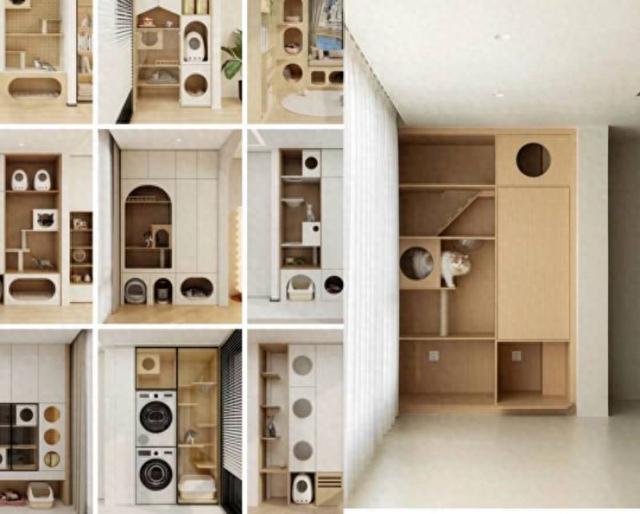
开始“为猫设计”,多家企业可定制宠物别墅,家居产业瞄准情绪消费
Hua Xia Shi Bao· 2025-09-27 11:17
Core Insights - The home furnishing industry is experiencing a contraction, with soft furniture seeking growth through international markets, while custom furniture struggles in a price war. Only Iole Home has achieved revenue and profit growth in the first half of the year, indicating a shift towards high-end design and emotional consumption [2][8]. Group 1: Market Trends - The rise of pet-customized home products is becoming a significant trend, with companies integrating pet spaces into home designs, reflecting a shift from functionality to emotional value [2][5]. - The pet economy is expanding, with the urban pet population in China expected to exceed 120 million by 2024, and the market size projected to reach 404.2 billion yuan by 2027, growing at a compound annual growth rate of approximately 9.9% [5]. Group 2: Company Strategies - Iole Home has strategically exited low-price competition and focused on high-end offerings, which CEO Wang Chunjun considers one of the company's best strategic decisions [2][8]. - The company has launched several high-end series, including the Stockholm Pro series, designed specifically for pet owners, emphasizing the integration of pet needs into home design [5][8]. - Iole Home reported a revenue of 669 million yuan in the first half of the year, a 1.8% increase year-on-year, and a net profit of 92.31 million yuan, reflecting a 103.18% increase, attributed to its competitive edge in mid-to-high-end brand differentiation [8][10].