
扩大内需

Search documents
财政部发布一揽子政策:消费贷贴息扩围,大力激发民间投资
2 1 Shi Ji Jing Ji Bao Dao· 2026-01-20 10:51
Core Viewpoint - The Ministry of Finance has announced a comprehensive set of policies aimed at stimulating domestic demand through financial and fiscal collaboration, focusing on enhancing consumer spending and private investment [1][3]. Group 1: Policy Overview - The package includes six key policies designed to support private investment and consumer spending, reflecting the government's commitment to boost domestic demand as outlined in the Central Economic Work Conference [3][8]. - The policies are structured around "one goal," "two focuses," "three principles," and "six policies," emphasizing the importance of facilitating private investment and promoting consumer consumption [3][4]. Group 2: Specific Policies - The first policy is a loan interest subsidy for small and micro enterprises, providing a 1.5% subsidy on loans up to 50 million yuan for key industries such as new energy vehicles and medical equipment, with a maximum subsidy period of two years [4][5]. - The second policy introduces a special guarantee plan for private investment, allowing eligible small and micro enterprises to access guaranteed loans up to 20 million yuan, significantly increasing the previous limit [5][6]. - The third policy establishes a risk-sharing mechanism for private enterprise bonds, where the central government will provide financial support to mitigate investor losses, thereby lowering financing barriers for enterprises [6][7]. - The fourth policy optimizes the equipment update loan interest subsidy, expanding the scope to include fixed asset loans related to equipment updates and technological innovation, with a 1.5% subsidy for up to two years [7]. - The fifth policy enhances the loan interest subsidy for service industry operators, increasing the maximum loan amount from 1 million to 10 million yuan, with a 1% subsidy for one year [7][8]. - The sixth policy optimizes the personal consumption loan interest subsidy, allowing consumers to benefit from a 1% subsidy on loans used for consumption, including credit card installment payments, with over 500 financial institutions eligible to provide these loans [8].

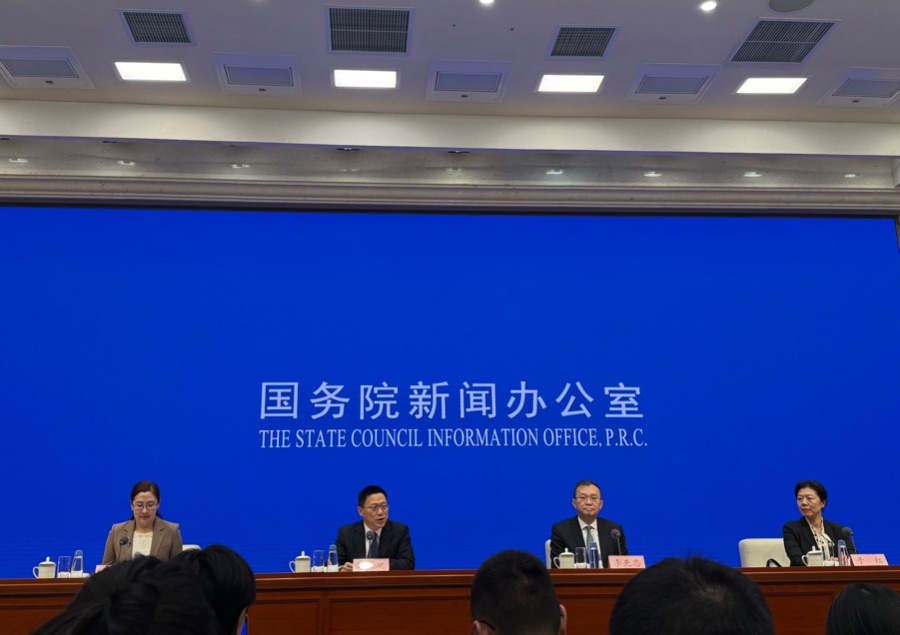
关于增收计划、换新补贴、扩大内需……国家发改委明确
Xin Lang Cai Jing· 2026-01-20 10:39
Group 1 - The core viewpoint of the news is the successful completion of the main economic and social development goals for 2025, emphasizing proactive macro policies, technological self-reliance, and improved living standards [1] - The manufacturing sector has maintained its position as the world's largest for 16 consecutive years, with a focus on high-level technological independence and breakthroughs in new productivity [1] - The total import value for the year reached 18.48 trillion yuan, maintaining a global import share of around 10% [1] Group 2 - By 2026, significant development potential will be released across consumption, investment, technology, industry, urban-rural, and regional sectors, with a continuous shift towards higher quality economic structure [2] - New economic growth points in high-tech industries such as renewable energy, aerospace, and quantum technology are being planned, with the new energy storage capacity exceeding 100 million kilowatts, accounting for over 40% of the global total [2] Group 3 - A strategic plan for expanding domestic demand from 2026 to 2030 is being developed, focusing on adapting to demand upgrades and aligning with new technological revolutions [3] - The establishment of a national-level merger fund is being researched to enhance government investment and promote innovation and entrepreneurship [4] Group 4 - Measures to address "involution" competition are being implemented, aiming to shift from price competition to value competition, and to regulate market entry and exit mechanisms [5] - The "Two New" policies are expected to continue driving investment stability, consumption expansion, and transformation, with over 8,400 equipment renewal projects supported by long-term special government bonds [6][7] Group 5 - Policies to promote reasonable price recovery are being coordinated, with a focus on fiscal and monetary policy synergy to foster economic growth and price recovery [8][9] - Measures to enhance private investment and improve the participation of private enterprises in major projects are being implemented [10][11] Group 6 - A nationwide unified market construction regulation is being developed to strengthen legal protections and clarify the roles of local governments in economic development [12]
国常会再度部署促消费,服务消费与增收是关键
Sou Hu Cai Jing· 2026-01-20 10:06
Core Viewpoint - The Chinese government is intensifying its consumer promotion policies, transitioning from short-term economic indicators to a long-term mechanism that integrates consumer growth with improving people's livelihoods [4][6]. Group 1: Consumer Promotion Policies - The State Council has held two consecutive meetings focusing on consumer promotion, indicating a shift towards establishing a long-term mechanism for consumer growth [2][3]. - The government aims to enhance the effectiveness of consumer promotion policies by integrating various measures to boost residents' consumption power and drive economic growth [3][4]. Group 2: Service Consumption Growth - There is a push to cultivate new growth points in service consumption, with an emphasis on supporting new business models and enhancing the quality of service supply [4][6]. - The integration of new technologies like artificial intelligence and big data is expected to create innovative service consumption models, expanding service consumption beyond traditional sectors [4][5]. Group 3: Debt and Payment Issues - The government is prioritizing the clearance of overdue payments to businesses and ensuring the payment of wages to migrant workers, which is crucial for maintaining social stability and supporting economic activity [8][9]. - A special bond issuance is planned to support the clearance of overdue payments, which will help convert hidden debts into visible government liabilities, thus improving debt management [10].

又来了5000亿!政府基金再为民间投资“输血”
Jing Ji Guan Cha Wang· 2026-01-20 10:00
这次的扶持计划也对中小微企业的符合条件做出明确规定:未被列入经营异常名录或失信主体名单;提 供的产品或服务不属于国家禁止、限制或淘汰类;近三年未发生重大安全、质量、环境污染等事故以及 偷漏税等违法违规行为。 这种"正面清单+负面清单"管理模式,避免资金空转,确保资源流向实体经济最需要的环节。例如,对 餐饮住宿、健康养老等消费领域的支持,既响应"扩大内需"战略,又通过场景升级提升服务供给质量。 此外,《通知》在实施过程中还明确提出:适当提高分险比例,进一步降低担保费率,提高授信担保额 度,适当提高代偿上限,加大风险补偿力度。 在2025年陆续出台5000亿元新型政策性金融工具、中央财政新增5000亿元地方政府债务结存额度之后, 2026年再次迎来一项5000亿元计划。 1月19日,财政部、工业和信息化部、中国人民银行、金融监管总局四部门联合发布《关于实施民间投 资专项担保计划的通知》(以下简称《通知》)。 根据民间投资专项担保计划,通过国家融资担保基金专设担保计划5000亿元,分两年实施,引导银行新 增投放5000亿元中小微企业固定资产贷款。国家融资担保基金分险比例由20%提高至不超过40%,代偿 上限由4%提 ...
美元两连跌 金属涨跌互现 碳酸锂涨停 纽金银沪金续刷新高!
Sou Hu Cai Jing· 2026-01-20 09:48
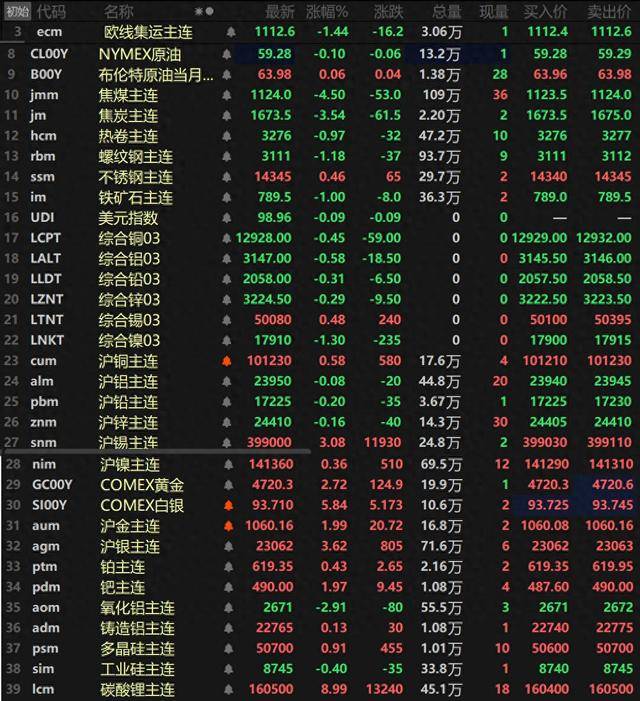
Metal Market - As of the afternoon close, domestic base metals showed mixed performance, with tin leading the gains at 3.08%, followed by copper at 0.58% and nickel at 0.36%. Lead led the declines with a drop of 0.2% [1] - Lithium carbonate futures surged to a limit-up increase of 8.99%, closing at 160,500 yuan/ton. Polysilicon rose by 0.91%, while industrial silicon fell by 0.4% [1] - In the external market, base metals generally declined, with only tin showing a slight increase of 0.48%. Nickel fell by 1.3%, and other metals saw declines within 1% [1] Precious Metals - COMEX gold rose by 2.72%, reaching a new historical high of $4,723.7 per ounce. COMEX silver increased by 5.84%, also hitting a historical high of $94.745 per ounce. Domestic gold rose by 1.99%, reaching a peak of 1,061.16 yuan/gram, marking a new historical high, while silver increased by 3.62% [1][2] Macro Environment - The National Development and Reform Commission emphasized the need to strengthen domestic demand and adapt to the upgrading trend of demand structure. A strategic plan for expanding domestic demand from 2026 to 2030 will be developed [5][6] - The Ministry of Finance announced the expansion of support for equipment renewal loans, including a 1.5% interest subsidy for fixed asset loans related to equipment updates, effective until December 31, 2026 [7] - The central bank conducted a net withdrawal of 346 billion yuan through reverse repos, maintaining the operation rate at 1.40% [8]
事关消费者钱袋子!解读个人消费贷财政贴息新政:如何省钱?
Nan Fang Du Shi Bao· 2026-01-20 09:43
Core Viewpoint - The Ministry of Finance, the People's Bank of China, and the Financial Regulatory Administration have announced an extension and optimization of the personal consumption loan interest subsidy policy, now effective until the end of 2026, with expanded support including credit card installment payments [2][6]. Policy Background - The personal consumption loan interest subsidy policy has been in development since 2025, with significant implementation success noted in the banking sector [3][4]. Policy Highlights - **Expanded Support Scope**: The new policy includes credit card installment payments with a 1% annual subsidy rate, broadening the policy's benefits to more daily consumption scenarios [6][7]. - **Increased Subsidy Standards**: The policy removes previous limits on subsidy amounts, allowing for greater benefits for larger purchases while maintaining an annual cap of 3,000 yuan per borrower at a single institution [9][10]. - **Increased Number of Institutions**: The policy now includes a wider range of financial institutions, allowing more consumers to access the subsidy and enhancing the policy's reach [11][12].
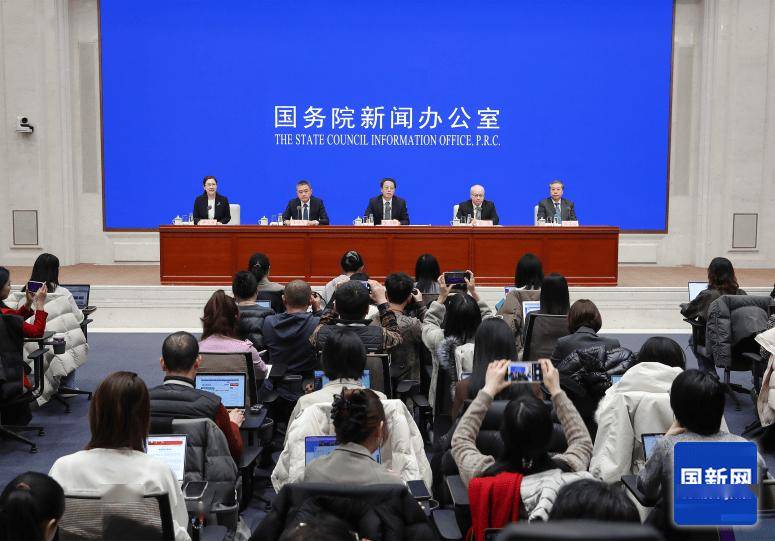
国家发改委:研究设立国家级并购基金,加强政府投资基金布局规划和投向指导
Sou Hu Cai Jing· 2026-01-20 09:21
Core Viewpoint - The Chinese government is focusing on addressing the imbalance between strong supply and weak demand in the economy, aiming to promote a dynamic balance and a virtuous cycle between supply and demand through macroeconomic policies and reforms [2][4][22]. Group 1: Macroeconomic Policy - The macroeconomic policy will emphasize strengthening domestic circulation and expanding domestic demand, adapting to the trend of demand upgrading and aligning with the new round of technological revolution and industrial transformation [2][4]. - The government will implement a strategic plan for expanding domestic demand from 2026 to 2030, focusing on innovation measures and resource guarantees to stimulate new supply and demand [2][4]. Group 2: Economic Structure and Growth Potential - In 2026, China's economic structure is expected to continue improving, with new growth drivers emerging from sectors like new energy, aerospace, and artificial intelligence, which are anticipated to significantly contribute to economic growth [5][6]. - The digital economy is projected to reach a value of 49 trillion yuan by 2025, accounting for approximately 35% of GDP, indicating substantial market potential [6]. Group 3: Investment and Consumption Policies - The "Two New" policy has shown significant results since its implementation, with over 3.6 billion people benefiting from consumption subsidies, leading to a retail sales increase of 0.6 percentage points [10][11]. - The government plans to enhance the effectiveness of the "Two New" policy by optimizing support ranges and subsidy standards, aiming to further stimulate investment and consumption [11]. Group 4: Unified National Market - The construction of a unified national market is a key focus, with significant progress made in enhancing market infrastructure and reducing transaction costs, as evidenced by increased inter-provincial trade sales [18][19]. - Future efforts will include establishing regulations and mechanisms to support the unified market, ensuring fair competition and resource optimization across regions [19][20]. Group 5: Consumer Income and Demand - The government aims to boost consumer income as a critical factor in enhancing domestic demand, with strategies including job stability and income growth plans [22][23]. - The focus will be on integrating investment in physical and human capital to enhance overall economic growth and consumer spending [24].
滨州今年将发放消费券2000万元以上,坚定不移稳投资 促消费
Qi Lu Wan Bao· 2026-01-20 09:00
Group 1 - The core focus of the government report is on expanding domestic demand, stabilizing investment, and promoting consumption in Binzhou by 2026 [1] - The strategy includes attracting significant investment by introducing 20 new projects from the Fortune 500 and over 60 projects with investments exceeding 1 billion yuan, aiming for over 70 billion yuan in new investment [1] - The report emphasizes the importance of a service mechanism that ensures resources follow the projects, guaranteeing land, water, and energy for key projects [1] Group 2 - The government plans to implement 10 digital infrastructure projects and has surpassed 10,000 public charging stations for new energy vehicles [2] - Construction is accelerating on 87 water projects, including the Runyang Reservoir, and 120 community water supply facility upgrades [2] - Key transportation projects include the comprehensive upgrade of the Ta'er River Port area, the construction of the Qingzhang Expressway, and the expansion of the Changshen Expressway, with the Jibin High-speed Railway expected to be operational within the year [2]
财政部答一财:更大力度激发民间投资
Di Yi Cai Jing· 2026-01-20 08:59
Core Viewpoint - The Chinese government has initiated a comprehensive policy package aimed at promoting domestic demand through fiscal and financial collaboration, focusing on stimulating private investment and enhancing consumer spending [1][2][4]. Group 1: Policy Overview - The policy package consists of "one goal," "two focuses," "three principles," and "six policies" [4]. - The primary goal is to "expand domestic demand," aligning with the central economic work conference's directives [4]. - The two focuses are to significantly "stimulate private investment" and "promote consumer spending," both crucial components of domestic demand [4]. Group 2: Principles of Implementation - The three principles guiding the execution of these policies include: - "Convenient and efficient" processes, aiming to simplify procedures and allow for direct benefits without application [4]. - "Precise and effective" targeting of key sectors and groups to lower financing costs and enhance consumer capacity [4]. - "Standardized and efficient" management to balance efficiency with regulatory compliance, preventing misuse of fiscal funds [4]. Group 3: Specific Policies - The six policies include four supporting private investment and two aimed at boosting consumption [5]. - The small and micro enterprise loan interest subsidy policy offers a 1.5% interest subsidy on loans for key industries, with a maximum loan amount of 50 million yuan and a subsidy period of up to two years [5]. - The private investment guarantee plan provides loan guarantees for small and micro private enterprises, with a maximum loan amount of 20 million yuan [5]. - A new risk-sharing mechanism for private enterprise bonds has been established, providing credit enhancement support from central fiscal funds [5]. - The equipment upgrade loan interest subsidy policy has been optimized to include a broader range of fixed asset loans and technology innovation loans, with similar subsidy terms [6]. - The service industry loan interest subsidy policy has increased the maximum loan amount from 1 million yuan to 10 million yuan, with a 1% subsidy for one year [6]. - The personal consumption loan interest subsidy policy now includes credit card installment payments, offering a 1% subsidy for consumer loans [6].
并购圈开始沸腾
Sou Hu Cai Jing· 2026-01-20 08:41
Core Viewpoint - The Chinese government is emphasizing the importance of mergers and acquisitions (M&A) as a means to stimulate domestic demand and drive economic growth, with plans to establish a national-level M&A fund to support this initiative [1][4][7]. Group 1: Government Initiatives - The National Development and Reform Commission (NDRC) aims to leverage the national venture capital fund as a benchmark and is researching the establishment of a national-level M&A fund to enhance government investment fund planning and guidance [1][4]. - The "New National Nine Articles" released in April 2024 highlights the need to strengthen M&A reform and encourages listed companies to focus on their core businesses while utilizing M&A and equity incentives to improve development quality [4][5]. - The China Securities Regulatory Commission (CSRC) has introduced six measures to promote M&A, marking a new chapter in the M&A market [4][5]. Group 2: Market Trends - The past two years have seen a surge in M&A activities within the venture capital sector, indicating a robust growth phase for the M&A market [2][4]. - The establishment of various local state-owned capital M&A funds, such as the Beijing Jingguochuangzhisuan M&A Equity Investment Fund with a registered scale of 30 billion RMB, reflects the increasing focus on M&A by local governments [5][6]. - The Shanghai Global Investment Promotion Conference announced a national-level M&A fund matrix with a total scale exceeding 50 billion RMB, involving key sectors like integrated circuits, biomedicine, and aerospace [6][7]. Group 3: Industry Outlook - The rapid establishment of M&A funds across various provinces, including Guangdong, Zhejiang, and Xiamen, showcases a nationwide trend towards enhancing M&A capabilities [6][7]. - A partner from an M&A fund recently predicted that the demand for M&A in China is so strong that it cannot be suppressed, indicating a bullish outlook for the sector [8].