内卷式竞争

Search documents
【光伏玻璃计划减产30%】6月30日讯,据了解,为破除“内卷式”竞争,近日国内头部光伏玻璃企业计划自7月开始集体减产30%,此外部分玻璃企业堵口计划开始增多,预计后续国内光伏玻璃供应量将快速下滑,国内供需失衡的状况将获得改善,预计7月国内玻璃产量将下降至45GW左右。
news flash· 2025-06-30 09:17
光伏玻璃计划减产30% 金十数据6月30日讯,据了解,为破除"内卷式"竞争,近日国内头部光伏玻璃企业计划自7月开始集体减 产30%,此外部分玻璃企业堵口计划开始增多,预计后续国内光伏玻璃供应量将快速下滑,国内供需失 衡的状况将获得改善,预计7月国内玻璃产量将下降至45GW左右。 (上海有色网) ...
欲凭借钙钛矿概念大额再融资,迈为股份发行转债或是“暗渡陈仓”
Tai Mei Ti A P P· 2025-06-30 07:37
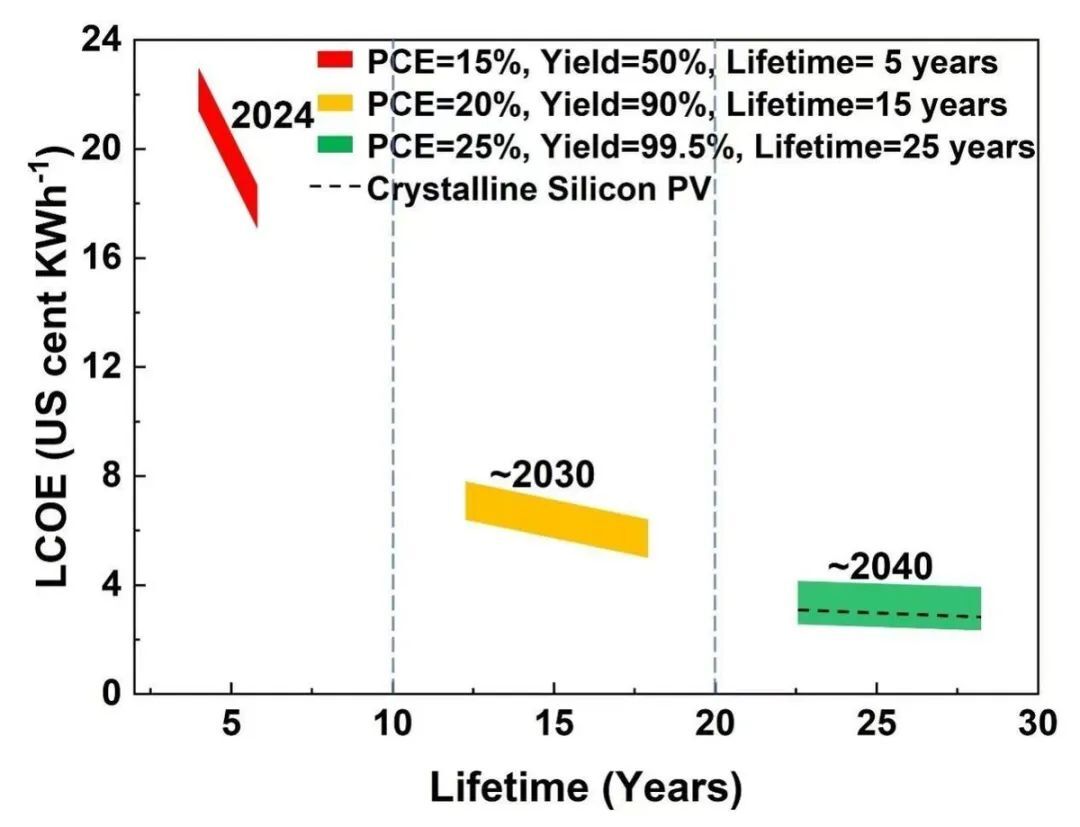
Group 1 - The core viewpoint of the article highlights the challenges faced by the photovoltaic industry, particularly the "involution" competition leading to high losses among companies as they strive to maintain market share [1][2][3] - In 2024, the Chinese government emphasized the need to prevent "malicious competition," resulting in a significant decrease in refinancing cases among photovoltaic companies [2][29] - Maiwei Co., a leading player in the photovoltaic equipment sector, plans to raise up to 1.9666752 billion yuan for a new perovskite solar cell equipment project, expecting annual sales of 4 billion yuan and a net profit of 599 million yuan post-production [2][8] Group 2 - The commercialization of perovskite technology is still immature, with only a few demonstration projects completed and significant challenges in achieving cost competitiveness compared to traditional silicon cells [4][5][7] - The production cost of perovskite components is currently around $0.57/W, significantly higher than the $0.1/W for silicon components, primarily due to high material costs [5][7] - Maiwei Co.'s recent financing proposal raises questions about the feasibility of its perovskite project, as the company has not provided detailed information on equipment specifications or existing orders [8][10] Group 3 - The photovoltaic industry is expected to see a slowdown in installation growth, with new policies affecting fixed pricing and market participation for solar projects [11][12] - Maiwei Co. has experienced a decline in contract liabilities, indicating a potential industry-wide contraction, which raises concerns about the necessity of its large-scale capacity expansion [11][12][13] - The company's accounts receivable have been growing faster than its revenue, suggesting increased financial risk associated with its expansion plans [13][15] Group 4 - The issuance of convertible bonds by Maiwei Co. may primarily serve to supplement cash flow rather than to fund the perovskite project, given the company's cash flow challenges [25][28] - Regulatory scrutiny on large refinancing efforts in the photovoltaic sector has intensified, making it more difficult for companies like Maiwei Co. to secure funding [29][32] - The overall financing environment for the photovoltaic industry has become more restrictive, with many companies halting large-scale fundraising efforts [29][32]

在破除“内卷式”竞争中实现高质量发展
中国有色金属工业协会硅业分会· 2025-06-30 02:10
人民日报6月29日头版推出金社平文章《在破除"内卷式"竞争中实现高质量发 展》指出,"要深化要素市场化配置改革,主动破除地方保护、市场分割和'内卷 式'竞争。"政府有引导、行业有自律、企业有行动,综合整治"内卷式"竞争就能 稳步推进、见到成效。 光伏组件低至每瓦六毛多,百余款车型加入降价行列,储能系统中标价格屡创新 低……一段时间以来,无序拼价格战、同质化竞争成为一些行业"内卷式"竞争的突出表 现。"内卷"之下,竞争失去节制,市场机制受到扭曲,给高质量发展带来不利影响。 "要深化要素市场化配置改革,主动破除地方保护、市场分割和'内卷式'竞争。" 在准确认识阶段性问题和深刻把握市场规律的基础上,以习近平同志为核心的党中 央部署综合整治"内卷式"竞争。这是解决当前经济发展矛盾的关键举措,是深化经济体 制改革的重要保障,也是推动企业实现创新发展、向价值链中高端攀升、不断增强发展 韧性的有效路径。 (一) 破除"内卷式"竞争,是按照经济规律办事的必然要求。 竞争,市场经济的基本特征,也是市场经济的灵魂所在。但竞争有良性竞争和不正 当竞争之分,"内卷式"恶性竞争违背了经济规律,其弊端是显而易见的。 其一,会削弱行业整体 ...

2025年6月29日利率债观察:由银行负债压力想到的
EBSCN· 2025-06-29 13:44
Report Industry Investment Rating - There is no information provided regarding the report industry investment rating. Core View of the Report - The discussion on bank liability pressure should clarify the concept, which depends on the scale of the liability gap and the difficulty of filling it, and the liability gap can be measured by regulatory indicators and banks' own demands [1][8]. - The regulatory - indicator - based liability gap is rigid but easy to fill due to the central bank's ample liquidity supply, while the gap based on banks' own demands is flexible but difficult to fill, mainly referring to the demand for deposits [1][8][9]. - Banks' attempts to increase deposit rates to attract deposits due to scale - related concerns lead to an involution - style competition, which reduces the industry's profitability and affects the sustainability of financial support for the real economy and the space for monetary policy [2][11]. - Although the monetary authorities have achieved good results in regulating the deposit and loan market competition order, the involution - style competition caused by scale concerns may resurface, and the root solution lies in abandoning the one - sided pursuit of scale, perhaps by having the board of directors reduce scale - based assessments [3][13]. Summary by Relevant Directory 1. By Bank Liability Pressure - Many investors think that after the new round of deposit rate cuts on May 20, a large amount of deposits flowed to wealth management products, increasing banks' liability pressure [1][8]. - The liability pressure depends on the scale of the liability gap and the difficulty of filling it, and there are two measurement scales: regulatory indicators and banks' own demands [1][8]. - The regulatory - indicator - based liability gap is easy to fill as the central bank has provided ample liquidity, such as a 1 - trillion - yuan reserve requirement ratio cut on May 15, about 0.5 billion yuan of medium - term funds through MLF in May and June, and 1.4 trillion yuan of outright reverse repurchase operations on June 6 and 16 [8]. - The yields of 1Y AAA - grade CDs and 5Y AAA - grade commercial bank financial bonds are at relatively low levels since early May, indicating low demand for funds and easy access to liquidity at low cost for commercial banks [8]. - The gap based on banks' own demands is mainly the demand for deposits, which is difficult to fill as the total deposit scale is relatively fixed [9]. - Banks usually raise deposit rates explicitly or implicitly, but this leads to a zero - sum game, and if other banks follow suit, it may cause a phased increase in deposit rates [2][9][11]. - Banks' desire to increase deposit rates is due to scale concerns, such as not meeting the deposit growth target after the May rate cut, worrying about ranking decline, or wanting to improve their ranking [2][11]. - This involution - style competition also affects the asset side, resulting in an unreasonable decline in loan rates, and overall, it reduces the industry's net interest margin and profit growth [2][11]. - The monetary authorities have regulated the market competition order, but the involution - style competition may resurface, and the root solution is to abandon the one - sided pursuit of scale [3][13].

【固收】由银行负债压力想到的——2025年6月29日利率债观察(张旭)
光大证券研究· 2025-06-29 13:34
Core Viewpoint - The article discusses the pressure on banks' liabilities following a recent interest rate cut, emphasizing the challenges banks face in attracting deposits and the implications for their profitability and support for the real economy [3][4][5]. Group 1: Liability Pressure Concept - The concept of liability pressure is defined by both the scale of the liability gap and the difficulty of filling that gap [3]. - There are two measures for assessing the liability gap: one relative to regulatory indicators, which is rigid, and another relative to the bank's own needs, which is more flexible [4]. Group 2: Deposit Demand and Competition - In a market with ample liquidity, banks face a fixed total scale of deposits, making it more challenging to attract deposits compared to obtaining liquidity from the central bank [4]. - Banks often raise deposit rates to attract more deposits, but this can lead to a competitive cycle where banks follow each other's rate increases, resulting in a temporary rise in deposit rates [4][5]. Group 3: Scale Obsession and Its Consequences - Some banks may feel the need to increase deposit rates due to slower deposit growth following the interest rate cut, concerns about their ranking, or a desire to improve their position [5]. - This scale obsession leads to a competitive environment that can lower banks' net interest margins and profit growth, ultimately affecting their ability to support the real economy sustainably [6]. Group 4: Regulatory Environment and Future Risks - The article notes that while regulatory measures have improved market competition, the tendency for banks to engage in competitive behaviors that undermine these regulations can resurface [6]. - Examples include banks circumventing interest rate caps through manual interest compensation or non-bank deposit channels, indicating a need for a cultural shift away from scale obsession within banks [6].

在破除“内卷式”竞争中实现高质量发展
Ren Min Ri Bao· 2025-06-28 21:49
光伏组件低至每瓦六毛多,百余款车型加入降价行列,储能系统中标价格屡创新低……一段时间以来, 无序拼价格战、同质化竞争成为一些行业"内卷式"竞争的突出表现。"内卷"之下,竞争失去节制,市场 机制受到扭曲,给高质量发展带来不利影响。 "要深化要素市场化配置改革,主动破除地方保护、市场分割和'内卷式'竞争。" 在准确认识阶段性问题和深刻把握市场规律的基础上,以习近平同志为核心的党中央部署综合整治"内 卷式"竞争。这是解决当前经济发展矛盾的关键举措,是深化经济体制改革的重要保障,也是推动企业 实现创新发展、向价值链中高端攀升、不断增强发展韧性的有效路径。 (一) 破除"内卷式"竞争,是按照经济规律办事的必然要求。 竞争,市场经济的基本特征,也是市场经济的灵魂所在。但竞争有良性竞争和不正当竞争之分,"内卷 式"恶性竞争违背了经济规律,其弊端是显而易见的。 其一,会削弱行业整体竞争力。 近年来,我国新能源汽车产业快速发展,产销量连续10年位居全球第一,为全球碳中和作出积极贡献。 其二,会破坏产业发展生态。 为降低价格和成本,有的企业选择利用优势地位,向上下游"强行压价"、延长账期、转嫁压力。数据显 示,2024年我国零部 ...
国家发改委:加力破除“内卷式”竞争
news flash· 2025-06-26 22:46
Core Viewpoint - The National Development and Reform Commission emphasizes the need to accelerate the construction of a modern industrial system and to break the "involution" competition by promoting technological and industrial innovation integration [1] Group 1: Industrial Development - The focus is on accelerating the cultivation of new quality productivity and upgrading traditional industries while fostering emerging and future industries [1] - The initiative includes the deepening of the "Artificial Intelligence +" action to enhance innovation capabilities [1] Group 2: Investment Strategies - Establishment of a national venture capital guidance fund targeting cutting-edge fields such as artificial intelligence, quantum technology, and hydrogen energy storage [1] - The fund aims to invest in seed and early-stage enterprises while also considering small and medium-sized enterprises in the early to mid-stage [1] Group 3: Market Regulation - The strategy involves leveraging both market forces and government intervention to promote mergers and acquisitions, eliminate inefficient production capacity, and increase high-end production and quality supply [1] - The use of planning, layout, and pricing mechanisms is intended to guide the standardized development of industries [1]
张涛:促消费要防止“内卷式”竞争固化,适时转换政策重心
Sou Hu Cai Jing· 2025-06-26 09:15
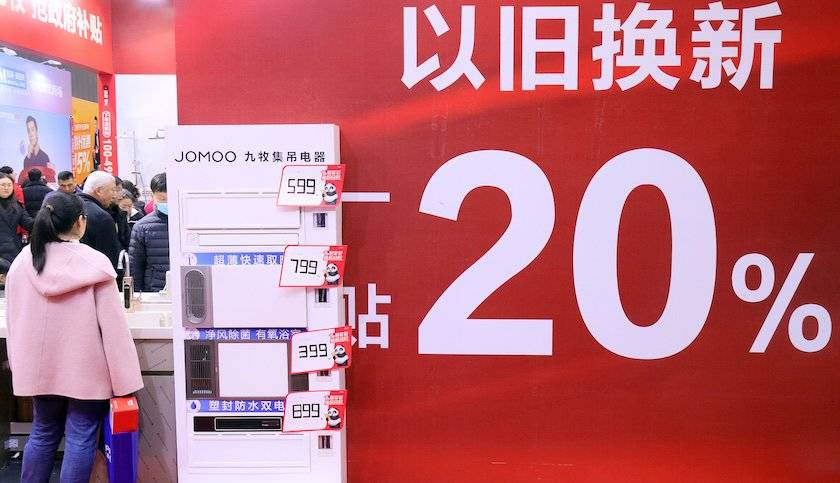
Core Viewpoint - Strengthening consumption is currently the most important macro policy, with ongoing increases in policy力度 and noticeable effects [1] Group 1: Policy Measures - In addition to the 150 billion special government bonds allocated last year to support the replacement of consumer goods, an additional 300 billion has been arranged this year to further boost consumption [1] - In the first five months of this year, the total retail sales of consumer goods reached 20.32 trillion yuan, a 5% increase compared to the same period last year, with commodity retail sales at 18.04 trillion yuan, up 5.1% year-on-year [1] Group 2: Consumption Trends - Over the 14 months since the implementation of the "Action Plan for Large-Scale Equipment Updates and Consumer Goods Replacement," total retail sales have increased by 6.5%, but this growth has lagged behind the steady increase in overall retail consumption [1] - The cumulative increase in consumer goods prices in the CPI from March 2023 to May 2024 is -0.6%, indicating that the low-price environment has not significantly improved [1] Group 3: Market Dynamics - Two main models for driving consumption are identified: - Model 1 involves merchants lowering prices to gain more orders, which can lead to unhealthy competition and a vicious cycle of low prices without stimulating new demand [2] - Model 2 focuses on innovation to create new demand, leading to improved profit expectations and a virtuous cycle of increased consumption and investment [2][4] Group 4: Key Recommendations - The key to boosting consumption lies in reversing expectations, which requires enriching policy content and timely shifting policy focus [4] - It is essential to prevent the solidification of disordered competition on the supply side and to enable companies to engage in effective innovation [4][6] - On the consumption side, efforts must be made to reverse low-price expectations and address weakening income and wealth growth expectations [4][6]
每经热评︱反不正当竞争法修订剑指“内卷” 制度护航筑牢市场公平底线
Mei Ri Jing Ji Xin Wen· 2025-06-25 08:39
Group 1 - The revised draft incorporates a fair competition review system into the legal framework, targeting "involution" competition in the market [2][3] - "Involution" competition refers to excessive internal competition among businesses for limited resources, leading to inefficiencies and a lack of innovation [2] - The introduction of the fair competition review system aims to reduce institutional transaction costs and create a more equitable competitive environment for small and medium-sized enterprises (SMEs) [2][4] Group 2 - The revision emphasizes the responsibilities of platform operators in addressing unfair competition behaviors within their platforms, aligning with the trends of digital economy development [3] - Platforms are required to establish fair competition rules and take proactive measures to curb unfair competition, thereby protecting the rights of SMEs [3][4] - The draft clarifies the criteria for identifying new forms of unfair competition, such as trademark confusion and keyword hijacking, providing legal clarity for enforcement agencies [3][4] Group 3 - Overall, the series of revisions responds to market concerns and aligns with economic development needs, aiming to create a fair, orderly, and efficient market competition environment [4]
重要信号!禁止拖欠账款将再入法
21世纪经济报道· 2025-06-25 08:26
Core Viewpoint - The revised draft of the Anti-Unfair Competition Law aims to establish a fair competition review system and prevent large enterprises from abusing their dominant positions, particularly regarding payment delays to small and medium-sized enterprises (SMEs) [1][4][11]. Group 1: Fair Competition Review System - The draft emphasizes the establishment of a fair competition review system to ensure all operators can equally use production factors and participate in market competition [1][7]. - The draft reflects the central government's spirit of comprehensively addressing "involution" competition, enhancing regulations related to fair competition [1][7][11]. - The fair competition review system has been formally established since June 1, 2016, with over one million policy measures reviewed nationwide [8]. Group 2: Payment Obligations to SMEs - The draft explicitly prohibits large enterprises from delaying payments to SMEs, reinforcing the need for timely payments within 60 days of delivery [2][12]. - Recent commitments from major automotive companies to limit payment terms to suppliers to no more than 60 days highlight the industry's response to the issue of payment delays [3][12]. - Experts indicate that the root cause of payment delays stems from the unequal market position of large enterprises, which often leads to extended payment terms and adverse effects on SMEs [4][5]. Group 3: Addressing Involution in Industries - The automotive industry has been particularly affected by "involution" competition, where companies delay payments to suppliers to transfer cost pressures, harming the survival of SMEs [3][4]. - The draft aims to create a healthier competitive environment by preventing large enterprises from using their advantages to impose unreasonable payment conditions on SMEs [4][9]. Group 4: Legislative Enhancements - The revised regulations enhance the responsibilities of large enterprises and government agencies in ensuring timely payments to SMEs, contributing to a more stable business environment [12][13]. - The introduction of the Private Economy Promotion Law and the revised Anti-Monopoly Law further strengthens the legal framework for fair competition and timely payments [12][13].