反垄断

Search documents
Meta's Antitrust Win Is Also a Warning for Investors
Youtube· 2025-11-19 20:23
Core Viewpoint - Matter has achieved a significant legal victory against the Federal Trade Commission (FTC), which had alleged that the company's acquisitions of Instagram and WhatsApp violated antitrust laws. The judge ruled in favor of Matter, indicating that the competitive landscape has changed significantly since the lawsuit was initiated five years ago [1][2]. Legal Reasoning - The judge's decision was based on the current competitive environment, noting that the social media landscape has evolved dramatically since the FTC's initial lawsuit [2]. - The FTC's argument centered around the competition from MIUI and Snap, with the judge acknowledging the fierce competition in the market, particularly from TikTok [3]. Implications for Matter - This ruling means that Matter is not required to divest Instagram or WhatsApp, which had been a significant concern for the company. Analysts had anticipated this outcome, suggesting it was already priced into the market [6]. - However, the judge's comments indicate that Matter must address the perception that it is not differentiated from its competitors and that TikTok is impacting its market share [4]. Future Considerations - While the current legal challenges appear to be resolved, there is uncertainty regarding potential future legal issues. Analysts do not expect an appeal process to proceed, but the situation remains under observation [5].



Meta胜诉关键反垄断案
Zheng Quan Shi Bao Wang· 2025-11-19 01:03
Core Viewpoint - A U.S. District Court judge ruled that Meta does not constitute an illegal monopoly in the current social media market, dismissing the Federal Trade Commission's (FTC) antitrust lawsuit against the company [2] Group 1: Market Dynamics - The ruling highlighted significant changes in the U.S. social media market, with users increasingly shifting towards short video platforms and YouTube, creating intense competitive pressure on Meta [2] - The FTC failed to demonstrate that Meta maintained its monopoly through the acquisitions of Instagram and WhatsApp [2] Group 2: Competitive Landscape - The judge referenced industry evidence indicating that platforms like YouTube have become strong competitors to Meta, with consumers frequently switching between different services [2]
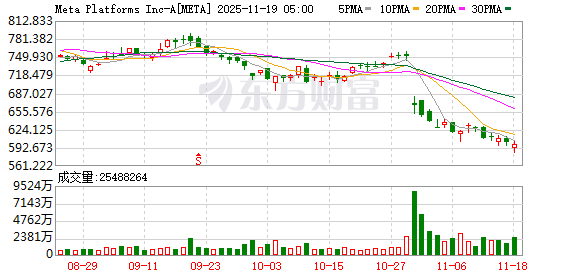
美联邦法院裁定Meta(META.US)不构成垄断 无需剥离两大核心应用Instagram与WhatsApp
Zhi Tong Cai Jing· 2025-11-18 22:33
Core Viewpoint - The U.S. District Court ruled that Meta Platforms did not constitute a monopoly and that its acquisitions of Instagram and WhatsApp in the 2010s did not violate antitrust laws, alleviating significant concerns about the forced divestiture of these applications [1][2] Group 1: Court Ruling and Implications - The ruling came from a lawsuit initiated by the Federal Trade Commission (FTC) in 2020, which accused Meta of employing a strategy to eliminate potential competitors by either acquiring them or driving them out of business [1] - Judge James Boasberg noted that the FTC's market definition relied upon was outdated due to rapid changes in the social media landscape, stating that the court has "never tried the same case twice" as conditions evolve [2] Group 2: Reactions from Meta and FTC - Meta welcomed the ruling, emphasizing the competitive environment in which it operates, with its Chief Legal Officer stating that the company's products create value for users and represent American innovation [2] - In contrast, the FTC expressed strong disappointment with the decision, criticizing Judge Boasberg and suggesting that the legal environment was unfavorable from the start, even mentioning potential impeachment articles against the judge [2] Group 3: Broader Industry Context - This ruling marks the second antitrust decision this year favoring tech giants due to rapid industry changes, following a similar case involving Google, where the court acknowledged the challenges to Google's dominance from emerging AI search tools [3] - The trend indicates that courts are increasingly considering dynamic competition in the tech industry rather than relying solely on static market share for their rulings [3]
Meta Wins FTC's Instagram, WhatsApp Antitrust Trial. Meta Stock Slump Drags On.
Investors· 2025-11-18 18:58
Group 1 - Meta Platforms achieved a significant legal victory as a federal judge ruled that its acquisition of Instagram and WhatsApp did not violate federal antitrust laws, providing a boost to its stock despite remaining in the red [1] - U.S. District Judge James Boasberg determined that the Federal Trade Commission was unable to prove that Meta had monopolized the market [1] Group 2 - The market is experiencing a quantifiable change in models, indicating a shift in investor sentiment and market dynamics [2]
Meta wins FTC case over its Instagram and WhatsApp buys
Yahoo Finance· 2025-11-18 18:46
Core Viewpoint - The federal judge ruled that Meta's acquisitions of Instagram and WhatsApp did not stifle competition, effectively dismissing the FTC's attempts to reverse these deals, marking a significant legal victory for Meta [1][2]. Group 1: Legal Ruling - U.S. District Judge James Boasberg stated that the FTC failed to demonstrate that Meta holds monopoly power in the personal social networking market or that the acquisitions illegally maintained such a monopoly [2]. - The judge emphasized that without evidence of Meta's dominance in a clearly defined market, the federal challenge could not succeed [2][4]. Group 2: FTC's Argument - The FTC argued that Meta's acquisitions were "killer acquisitions" that eliminated fast-growing competitors and locked users into Meta's ecosystem, following a "buy or bury" strategy [3][4]. - The agency's case relied on a narrow market definition and internal communications from Meta's CEO, which suggested a strategy to acquire rather than compete [4]. Group 3: Meta's Defense - Meta countered the FTC's claims by presenting a broader view of competition, highlighting rivals such as TikTok, YouTube, and Snapchat, asserting that user attention, rather than friend lists, defines the current market [5]. - The judge agreed that excluding TikTok and YouTube undermined the FTC's case, stating that the social media landscape has significantly changed since 2020 [5]. Group 4: Case Background - The case has been ongoing since December 2020, initiated by the Trump-era FTC and 46 states, accusing Facebook of illegally maintaining a monopoly through its acquisitions [6]. - The initial complaint was dismissed in 2021 for lack of evidence, but a revised filing was allowed to proceed in 2022, leading to a lengthy trial involving key figures from Meta [6].
告别“内卷式”竞争,提升数字经济监管效能丨法经兵言
Di Yi Cai Jing· 2025-11-18 12:45
Core Insights - The article emphasizes the need for a comprehensive enhancement of regulatory concepts, systems, capabilities, and tools to adapt to the evolving market competition landscape, particularly focusing on antitrust and unfair competition regulations [1] Regulatory Developments - Significant progress has been made in antitrust and unfair competition efforts under the leadership of the central government, including a major revision of the Antitrust Law and continuous improvement of supporting regulations, enhancing the scientificity, transparency, and predictability of the regulatory framework [2] - The enforcement of regulations has intensified, with notable cases in key sectors such as pharmaceuticals and platform economies, effectively deterring illegal practices like false advertising and exclusive agreements [2] - The regulatory enforcement system has been optimized, with clearer division of responsibilities between central and local authorities, leading to improved consistency and authority in enforcement [2] Challenges in Regulatory Framework - The rise of digital technologies and innovative business models poses challenges to traditional regulatory tools, as monopolistic behaviors become more sophisticated and harder to detect [3] - The complexity of digital platforms blurs competitive boundaries, making market definitions and assessments of competitive harm more complicated [3] Issues Affecting Regulatory Effectiveness - "Involution" competition in certain sectors has deteriorated the fairness of the market, with companies resorting to excessive subsidies and unfair practices, complicating regulatory oversight [4] - Regulatory capacity struggles to meet the demands of monitoring complex and technologically advanced monopolistic behaviors, with a shortage of skilled professionals in local regulatory bodies [5] - Insufficient policy coordination undermines the effectiveness of antitrust laws, as local interests may conflict with national market unity goals [6] Recommendations for Improvement - Enhancing regulatory enforcement capabilities through professional training and the introduction of advanced technologies like big data and AI to create intelligent regulatory platforms [7] - Establishing a coordinated mechanism among various departments to improve communication and collaboration in regulatory efforts [8] - Developing industry-specific compliance guidelines to address the unique challenges posed by emerging sectors such as e-commerce and digital finance [9] - Implementing a compliance incentive system for businesses to encourage proactive compliance management and reduce reliance on reactive enforcement [10]
港股异动 | 光伏股集体走低 通威刘汉元称硅料收储不会触及反垄断 野村称库存仍偏高需求偏弱
智通财经网· 2025-11-18 03:37
Core Viewpoint - The solar energy stocks have collectively declined, with significant drops in share prices for various companies, indicating a challenging market environment for the sector [1] Company Performance - Kaisheng New Energy (01108) decreased by 3.94%, trading at HKD 4.15 - Xinte Energy (01799) fell by 3.14%, trading at HKD 8.03 - Xinyi Energy (03868) dropped by 3.88%, trading at HKD 1.24 - Flat Glass Group (06865) declined by 2.77%, trading at HKD 11.93 - Xinyi Solar (00968) decreased by 2.72%, trading at HKD 3.57 [1] Industry Insights - Tongwei Group's Chairman Liu Hanyuan emphasized the need for "silicon material storage" to address conceptual issues and promote self-discipline within the industry, suggesting that retaining some redundant capacity is essential to adapt to dynamic demand changes [1] - Liu believes that silicon material storage will not infringe on antitrust regulations, countering concerns regarding upstream consolidation [1] - Nomura's research report indicates that mid-term industry self-discipline could maintain high utilization rates, drive price recovery, and enhance profitability, although short-term challenges include high inventory levels and weak seasonal demand from downstream sectors [1] - The report forecasts a monthly decrease in polysilicon production by approximately 20,000 tons to 120,000 tons in November, with wafer production expected to drop by 5% to 57 GW and cell production anticipated to decline by 2% to 57 GW [1]
究竟要反垄断,还是反内卷?刘汉元直接给出答案
Tai Mei Ti A P P· 2025-11-18 00:41
Core Viewpoint - The current state of the photovoltaic industry necessitates bold actions to address issues of "involution" and potential antitrust concerns, emphasizing the importance of energy transition and carbon neutrality for China's economic development [1][9]. Group 1: Industry Challenges and Opportunities - The photovoltaic industry faces a critical moment where the balance between preventing excessive competition ("involution") and addressing antitrust issues is essential for sustainable growth [1][9]. - China's reliance on foreign energy sources is a significant concern, with oil dependency exceeding 70% and substantial foreign exchange expenditures on energy imports, amounting to approximately $500 billion annually [2][3]. - The "14th Five-Year Plan" highlights the strategic importance of energy transition, emphasizing renewable energy sources like solar and wind power to enhance energy security and reduce foreign dependency [2][3]. Group 2: Growth of Renewable Energy - The renewable energy sector, particularly solar and wind, is positioned to lead global energy transition efforts, with China holding a dominant share in the global photovoltaic market, accounting for about 95% of polysilicon production [8][6]. - The new energy system and storage industry are experiencing exponential growth, with new storage installations increasing by approximately 3000% year-on-year, indicating a robust market potential [6][8]. - The integration of renewable energy sources with storage solutions is expected to create a comprehensive energy pricing system, potentially below 0.5 yuan per kilowatt-hour, enhancing the feasibility of renewable energy adoption [6][8]. Group 3: Investment Potential - The photovoltaic and storage sectors are viewed as prime investment opportunities, with the potential for significant returns as the industry matures and scales [8][9]. - The current market dynamics suggest that leading companies in the photovoltaic supply chain could see their market valuations increase significantly, potentially five to ten times their current levels [8][9]. - The industry's ability to self-regulate and achieve effective integration is seen as a pathway to stabilize supply and demand, ensuring long-term growth and sustainability [14][13].
11月17日投资早报|宇树科技IPO辅导完成,迈赫股份董事长被采取留置措施,电投能源拟111.49亿元购买白音华煤电100%股权
Sou Hu Cai Jing· 2025-11-17 00:58
Market Overview - On November 14, 2025, the A-share market saw all three major indices decline, with the Shanghai Composite Index closing at 3990.49 points, down 0.97%, and the Shenzhen Component Index at 13216.03 points, down 1.93%. The ChiNext Index fell 2.82% to 3111.51 points, with over 3300 stocks declining in total [1] - The Hong Kong market also experienced a downturn, with the Hang Seng Index closing at 26572.46 points, down 1.85% or 500.57 points. The total trading volume was 2327.88 million HKD, while the Hang Seng Tech Index dropped 2.82% [1] - In the U.S. market, the Dow Jones Industrial Average fell by 309.74 points, or 0.65%, closing at 47147.48 points, while the Nasdaq Composite Index rose slightly by 30.23 points, or 0.13%, to 22900.59 points [1] New IPOs - No new IPOs were available for subscription or listing on the day [2] Company News - Yushu Technology has completed its IPO counseling, with CITIC Securities reporting that the company is prepared for its initial public offering in China. The counseling confirmed that Yushu Technology has established the necessary corporate governance structure and internal controls, and its key stakeholders are aware of their responsibilities and obligations regarding legal compliance and information disclosure [2] Regulatory Developments - The State Administration for Market Regulation has released a draft of the "Antitrust Compliance Guidelines for Internet Platforms" for public consultation until November 29, 2025. The guidelines aim to enhance antitrust compliance management and protect the rights of relevant parties while promoting fair competition in the platform economy. The draft identifies new types of monopoly risks in eight scenarios and encourages platform operators to strengthen compliance management [3]

对标英伟达!华为即将发布AI突破性技术……盘前重要消息还有这些
证券时报· 2025-11-17 00:34
Group 1 - Recent provocative remarks by Japanese leaders regarding Taiwan have severely deteriorated the atmosphere for Sino-Japanese exchanges, posing significant risks to the safety of Chinese citizens in Japan. The Chinese government has advised citizens to avoid traveling to Japan and to remain vigilant about local security conditions [2] - On November 15, a Chinese official indicated that China is prepared for substantial countermeasures against Japan, emphasizing that the consequences of any actions will be borne by Japan. This marks a notable shift in diplomatic language, signaling readiness for a strong response [2] - To maintain liquidity in the banking system, the People's Bank of China announced an 800 billion yuan reverse repurchase operation with a term of 6 months, utilizing a fixed quantity and multi-price bidding method [2] Group 2 - The China Securities Regulatory Commission held a report meeting to promote the spirit of the 20th National Congress, focusing on enhancing market resilience, regulatory effectiveness, and the quality of listed companies [3] - Huawei is set to release a groundbreaking AI technology on November 21, which aims to improve the utilization efficiency of computing resources from an industry average of 30%-40% to 70%, significantly enhancing the potential of computing hardware [3] - Several airlines, including Sichuan Airlines and Xiamen Airlines, have announced special handling procedures for tickets related to Japan routes, allowing free refunds and changes for tickets meeting specific conditions before December 31 [3] Group 3 - The State Administration for Market Regulation has released a draft for public consultation on compliance guidelines for antitrust regulations in the internet platform sector, addressing new types of monopoly risks and encouraging platform operators to enhance compliance management [4] - The Ministry of Commerce, along with other departments, issued a notice to strengthen the management of second-hand car exports, particularly controlling the export of new cars under the guise of second-hand vehicles [5] Group 4 - CITIC Securities reported the completion of the guidance work for the initial public offering of Yushu Technology Co., Ltd [7] - Rongbai Technology announced that it will become the primary supplier of sodium-ion cathode materials for CATL, with a commitment to supply no less than 60% of CATL's total procurement volume annually [8] - Alibaba's Tongyi App has been renamed to Qianwen App, while a senior executive from China Merchants Group is under investigation for serious violations of discipline and law [9] Group 5 - Meihe Holdings announced that its controlling shareholder and chairman is under investigation and has been subjected to detention measures [10] - Joyoung Co., Ltd. issued a notice regarding unusual stock trading, clarifying that it is not involved in the "Hakimi" concept related to food and beverage businesses [11] - Zhongsheng Pharmaceutical reported uncertainties regarding the progress of clinical trials and regulatory approvals for its innovative drug development projects [12]