
绿色转型

Search documents
联合国副秘书长徐浩良:破解全球发展困局需加强多边合作
21世纪经济报道· 2026-01-15 01:08
Core Viewpoint - The article emphasizes the interconnectedness of global challenges such as debt pressure in developing countries, climate financing gaps, energy transition difficulties, and geopolitical uncertainties, highlighting the need for multilateral cooperation to address these issues effectively [1][2]. Group 1: Global Governance Initiatives - China proposed a global governance initiative during the UN General Assembly in September 2025, aiming to establish a Global Sustainable Development Center in Shanghai to share experiences in green transition, digitalization, and trade with developing countries [1]. - The UNDP is collaborating with China to enhance multilateral cooperation and restore confidence in global governance frameworks, which are essential for addressing interconnected global challenges [2][5]. Group 2: Development Financing Challenges - Developing countries face a significant annual financing gap of approximately $430 billion, while global official development assistance totals around $200 billion, indicating a substantial shortfall in funding for sustainable development goals [7]. - The article discusses the importance of leveraging private capital to address development financing challenges, as government revenues in developing countries are often insufficient for necessary investments in infrastructure, education, and social services [6][7]. Group 3: Sustainable Development and Investment - The UNDP is working on initiatives like "Sustainable Development Investment Maps" to help potential investors understand the importance and potential returns of investing in sustainable development sectors [8]. - The integration of sustainable development principles into investment decisions is crucial, with efforts to establish international standards that guide private sector investments towards achieving sustainable development goals [11]. Group 4: Green Transition and Economic Development - Achieving sustainable development goals and pursuing economic growth can coexist, with investments in renewable energy and related sectors being vital for both environmental protection and economic advancement [10]. - The article highlights China's experience in renewable energy and green finance as a model for other developing countries, emphasizing the need for a balanced approach to economic development and emission reduction [10][12]. Group 5: International Cooperation and Multilateralism - The article underscores the importance of multilateral cooperation, particularly between major economies like the US and China, to effectively address global challenges such as climate change [13][14]. - Successful examples of multilateral cooperation, such as the protection of the ozone layer, demonstrate the potential for collective action to tackle significant global issues [13]. Group 6: Lessons from China's Development Experience - China's development experience offers valuable lessons for other developing countries, including the importance of clear long-term development goals, strong financing capabilities, and effective governance [15][16]. - Key factors for successful development include a stable policy environment, innovative problem-solving capabilities, and a commitment to sustainable and inclusive development [16].


山东推进绿色转型健全碳足迹管理体系
Da Zhong Ri Bao· 2026-01-15 01:04
Core Viewpoint - The recent "Action Plan for Promoting Green Transition and Establishing Carbon Footprint Management System" aims to enhance carbon footprint management in Shandong, with specific targets set for 2027 and 2030 to achieve significant green transformation in economic and social development [1][2]. Group 1: Carbon Footprint Management - Shandong plans to establish a product carbon footprint management system by 2027 through regional, industry, and product pilot explorations [1]. - By 2030, the carbon emission management policy system for products is expected to be more complete, with a basic formation of green low-carbon supply chains and lifestyles [1]. Group 2: Regional Pilot Projects - The cities of Qingdao, Dongying, Yantai, and Liaocheng have been selected for regional pilot explorations, with tailored implementation paths to create unique pilot characteristics for each city [1]. - Qingdao will leverage its dual advantages as a national climate investment and financing pilot and a tire product carbon footprint certification pilot to innovate in green finance and carbon footprint management [1]. - Yantai will focus on carbon footprint accounting for key industries such as chemicals, tires, food, automotive, cement, and marine equipment [1]. Group 3: Green Supply Chain Development - The action plan emphasizes the creation of green low-carbon supply chains and the green transformation of key industry enterprises [2]. - Shandong has cultivated 465 national-level green factories and 41 green industrial parks, with provincial-level figures at 791 and 94 respectively [2]. - The province aims to nurture 200 new provincial-level green factories and about 15 green industrial parks within the year [2]. Group 4: Green Trade Enhancement - In 2026, Shandong will establish a "green trade" category at international exhibitions to promote its green low-carbon products and technologies [2]. - The province aims to expand the export scale of green low-carbon products such as new energy vehicles, lithium batteries, photovoltaic products, green ships, green electricity equipment, and wind turbine units, particularly targeting emerging markets in Southeast Asia and the Middle East [2].
中经评论:中石化中航油重组的战略考量
Jing Ji Ri Bao· 2026-01-15 00:05
Core Viewpoint - The restructuring of China Petroleum & Chemical Corporation (Sinopec) and China National Aviation Fuel Group (CNAF) marks a significant event in the context of China's energy security and green transition strategy amid complex international circumstances [1][2]. Group 1: Impact on Aviation Fuel Industry - The restructuring aims to enhance the competitiveness of the aviation fuel industry, which is becoming the only growth area as China's refined oil consumption peaks [1]. - The merger addresses the historical separation between production and sales in China's aviation fuel sector, improving overall competitiveness against international giants [1][2]. Group 2: Integration of Resources - Sinopec, as the largest refined oil and aviation fuel producer in China, complements CNAF's extensive logistics network, creating a complete industry chain from crude oil refining to airport fueling [2]. - This integrated model is expected to enhance global bargaining power and risk resilience, positioning the combined entity as a competitive player in the international energy market [2]. Group 3: Green Transition in Aviation - The restructuring supports the aviation industry's green transition, with Sustainable Aviation Fuel (SAF) recognized as a key pathway for low-carbon development [2][3]. - Sinopec's leadership in SAF technology and production, combined with CNAF's logistics capabilities, facilitates the market entry of SAF, reducing costs and accelerating its adoption [3]. Group 4: Economic Stability and Supply Security - The merger is anticipated to stabilize aviation fuel prices by reducing supply chain fragmentation and internalizing transactions, thus controlling consumer travel costs and alleviating pressure on airline profitability [3]. - Strengthening domestic aviation fuel supply capabilities enhances national energy security, ensuring stable operation of civil aviation networks even in extreme international situations [3]. Group 5: Challenges and Governance - The success of the restructuring depends on achieving deep integration between the two large state-owned enterprises, which may have differing values and management styles [4]. - Concerns regarding market competition and potential monopolistic practices post-restructuring highlight the need for effective governance and regulatory oversight to ensure fair market participation and benefit to society [4].

中金钢铁行业2026年展望:反内卷下格局变革带来的结构性行情值得重视
Zheng Quan Shi Bao Wang· 2026-01-14 23:57
人民财讯1月15日电,中金发布钢铁行业2026年展望,认为2026年行业仍处于需求减量调结构的趋势 中,供需及盈利难见大幅改善,但反内卷下格局变革带来的结构性行情值得重视,聚焦两条主线:1)差 异化产量管控有望推进,绿色转型领先、被低估的优质现金流资产有望迎来盈利复苏与价值重估。2)高 端钢铁材料迎来国产替代加速拐点,利好具备高成长确定性的特钢龙头。 ...
中金公司:钢铁行业仍处于需求减量调结构的趋势中 供需及盈利难见大幅改善
Xin Lang Cai Jing· 2026-01-14 23:57
中金公司研报指出,我们认为2026年行业仍处于需求减量调结构的趋势中,供需及盈利难见大幅改善, 但反内卷下格局变革带来的结构性行情值得重视,聚焦两条主线:1)差异化产量管控有望推进,绿色 转型领先、被低估的优质现金流资产有望迎来盈利复苏与价值重估。2)高端钢铁材料迎来国产替代加 速拐点,利好具备高成长确定性的特钢龙头。 ...

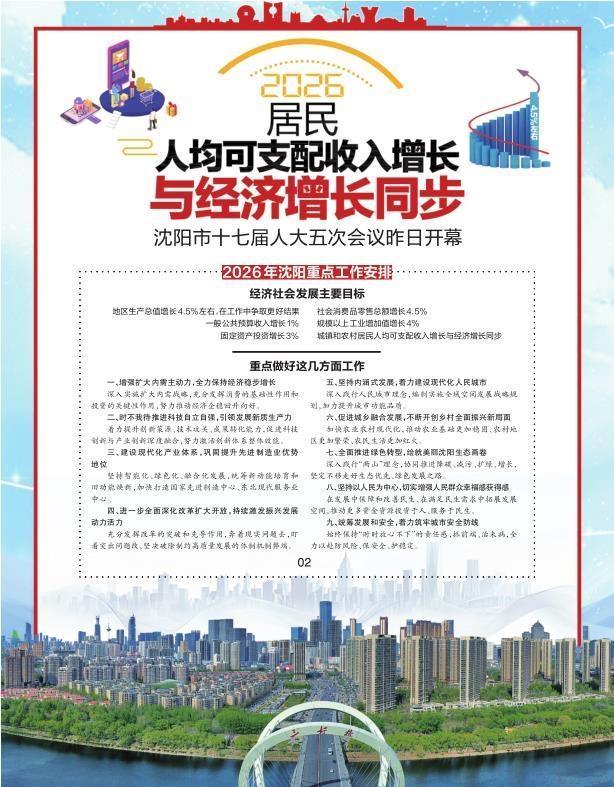
2026居民人均可支配收入增长与经济增长同步
Xin Lang Cai Jing· 2026-01-14 23:48
2026年沈阳重点工作安排 经济社会发展主要目标 地区生产总值增长4.5%左右,在工作中争取更好结果 一般公共预算收入增长1% 固定资产投资增长3% 社会消费品零售总额增长4.5% 规模以上工业增加值增长4% 城镇和农村居民人均可支配收入增长与经济增长同步 重点做好这几方面工作 一、增强扩大内需主动力,全力保持经济稳步增长 着力提升创新策源、技术攻关、成果转化能力,促进科技创新与产业创新深度融合,努力激活创新体系 整体效能。 三、建设现代化产业体系,巩固提升先进制造业优势地位 坚持智能化、绿色化、融合化发展,统筹新动能培育和旧动能焕新,加快打造国家先进制造中心、东北 现代服务业中心。 四、进一步全面深化改革扩大开放,持续激发振兴发展动力活力 充分发挥改革的突破和先导作用,奔着现实问题去,盯着突出问题改,坚决破除制约高质量发展的体制 机制弊端。 五、坚持内涵式发展,着力建设现代化人民城市 深入践行人民城市理念,编制实施全域空间发展战略规划,加力提升城市功能品质。 六、促进城乡融合发展,不断开创乡村全面振兴新局面 加快农业农村现代化,推动农业基础更加稳固、农村地区更加繁荣、农民生活更加红火。 深入实施扩大内需战略 ...
央企重组大消息!中国石化与中航油集团合并,国务院国资委重磅公告引爆关注
Sou Hu Cai Jing· 2026-01-14 23:20
Core Viewpoint - The merger between Sinopec and China Aviation Oil marks a significant shift in the energy sector, representing a new era of state-owned enterprise (SOE) restructuring in China, which is expected to enhance the overall efficiency and competitiveness of the industry [1][3]. Group 1: Merger Implications - The merger is not merely a corporate consolidation but a strategic move to reshape the entire energy landscape in China, enhancing the bargaining power of Chinese companies in international markets [1][10]. - The integration of aviation fuel production and supply chains is expected to streamline operations, improve efficiency, and make fuel prices more competitive, benefiting both airlines and passengers [5][10]. - Historical precedents, such as the 2015 strategic cooperation between China Southern Airlines and China Aviation Oil, demonstrate the potential for improved operational efficiency and cost reduction through such collaborations [7][8]. Group 2: Strategic Goals - The restructuring aligns with national goals for energy upgrades and carbon reduction, particularly in the aviation sector, which is a significant contributor to carbon emissions [11][21]. - The partnership aims to promote green energy initiatives, including the development of hydrogen refueling stations and sustainable aviation fuel, which is projected to see a 30% annual growth in demand over the next five years [13][15]. - The merger is part of a broader trend of SOE collaborations that enhance technological innovation and market competitiveness, as seen in the chemical industry following the merger of Sinochem and China National Chemical Corporation [16][18]. Group 3: Future Outlook - The merger is expected to bolster China's competitive edge in the Belt and Road Initiative countries, with improved negotiation capabilities leading to lower costs and enhanced risk management [10][19]. - The restructuring is anticipated to drive significant advancements in green technology and sustainable practices within the aviation industry, contributing to national carbon reduction targets [21][22]. - Overall, the merger signifies a proactive approach by Chinese enterprises to enhance their global market presence and operational efficiency, paving the way for a more integrated and competitive energy sector [22][24].

三天涨超20%,锡价大涨,影响几何?
Zheng Quan Shi Bao· 2026-01-14 23:20
Group 1: Tin Market Dynamics - The main driver for the recent surge in tin prices is attributed to supply and demand dynamics, as well as macroeconomic factors, with the price reaching a historical high due to expectations of lower-than-anticipated production resumption in Myanmar [1] - The current spot price for tin has also reached a historical high, with Mysteel reporting a single-day increase of 7.6% to 412,000 RMB/ton [1] - The futures market is leading the spot price, with increased risk management needs from companies as the market sentiment strengthens [1] Group 2: Market Behavior and Trends - The current market shows a strong correlation between futures and spot prices, but high prices are causing trade and processing companies to pause external quotations, leading to a cautious market sentiment [2] - There is a risk of divergence between futures and spot prices, with potential downward pressure on spot prices if funds withdraw from the market [2] - Despite long-term demand from sectors like renewable energy and electronics, short-term consumption is weakening due to high prices, and inventory replenishment needs have not yet been realized [2] Group 3: Copper and Aluminum Price Trends - Copper and aluminum prices have also reached historical highs, with A00 aluminum price at 24,330 RMB/ton, up 4.38% from early January, and 1 electrolytic copper at 103,185 RMB/ton, showing a year-on-year increase of 36.8% [3][4] - The tightening supply expectations for aluminum are driven by limited new capacity and production declines, while concerns over supply disruptions in the copper market are exacerbated by challenges such as declining ore grades and community protests [4] - Long-term demand from emerging industries, including electric vehicles and energy storage, is expected to support price increases for both copper and aluminum [4][5]
2744万新开户折射市场信心
Jing Ji Ri Bao· 2026-01-14 22:18
投资生态的向优向好,是这份信心的安全之源。近年来,资本市场着力促进投融资功能协调发展,加快 推动中长期资金入市,市场资金格局发生积极变化,长期投资、价值投资蔚然成风。截至2025年年末, 各类中长期资金合计持有A股流通市值约23万亿元,较年初增长36%。投资者结构日趋多元,去年全 年,机构投资者新开户数同比激增35%,增幅远超个人投资者。平抑非理性波动的中长期力量不断增 强,资本市场"蓄水池"更深更稳,成为投资者投得放心、持有安心的重要磁石。 当然,市场越发展,越要防风险;参与者越多,越要强保护。新开户者中,不少是投资新生代,他们热 情高涨却经验不足,渴望收益而风险意识欠缺。投资者保护工作需向前一步,信息披露应更细致易懂, 让中小投资者能够理解市场规律、识别投资风险;维权追偿渠道应更畅通无阻,让受损者权有处可维、 偿及时可赔;行权机制应更科学合理,让中小股东提案、投票和表决更便利,发声更响亮。 一年新增2744万户投资者,背后是宏观政策的确定性、新兴产业发展壮大的预见性、资产比较优势的显 著性与长钱长投的安全性的叠加共振。可以预期,随着市场交投持续升温、流动性不断改善,一个更有 活力、更具信心的资本市场有望加 ...
中石化中航油重组的战略考量
Jing Ji Ri Bao· 2026-01-14 21:59
Core Viewpoint - The restructuring of China Petroleum & Chemical Corporation (Sinopec) and China National Aviation Fuel Group (CNAF) marks a significant event in the context of state-owned enterprise (SOE) reforms, aimed at enhancing energy security and seizing opportunities in green transformation amidst complex international circumstances [1] Group 1: Impact on Aviation Fuel Industry - The restructuring is expected to enhance the competitiveness of the aviation fuel industry, as the global energy landscape is undergoing unprecedented changes, with a shift towards clean energy and ongoing geopolitical conflicts affecting energy supply chains [1] - The integration of Sinopec's upstream refining capabilities with CNAF's logistics and supply network creates a complete industrial chain from crude oil refining to airport fueling, addressing the historical separation of production and sales in China's aviation fuel sector [2] Group 2: Green Transition in Aviation - The restructuring supports the green transition in the aviation sector, which is under significant pressure to reduce carbon emissions, with Sustainable Aviation Fuel (SAF) recognized as a key pathway for low-carbon development [2][3] - Sinopec's leadership in SAF technology and production, combined with CNAF's control over airport storage and fueling systems, facilitates the market entry of SAF, potentially lowering development costs and accelerating its large-scale application [3] Group 3: Economic and Stable Fuel Supply - The restructuring aims to create a more stable and economical aviation fuel supply by reducing the fragmented supply chain, which has historically made prices vulnerable to international market fluctuations [3] - By internalizing transactions and optimizing resource allocation, the restructuring is expected to stabilize fuel prices, making travel costs more manageable for consumers and alleviating financial pressures on airlines [3] Group 4: Strategic Importance and Challenges - The restructuring enhances domestic aviation fuel security, ensuring stable supply even in extreme international situations, which is crucial for national emergency response and defense transportation [3] - However, the success of the restructuring depends on achieving deep integration between the two large SOEs, addressing differences in values and management styles, and ensuring that the benefits of scale do not lead to monopolistic practices [4]