
自动驾驶

Search documents
文远知行Uber启动阿布扎比市中心Robotaxi商业运营服务
Bei Jing Shang Bao· 2026-02-12 10:29
Core Insights - WeRide and Uber have officially launched the first Robotaxi commercial operation service in downtown Abu Dhabi, marking the first deployment of autonomous vehicles in the area [1] - The Robotaxi service now covers approximately 70% of the core areas in Abu Dhabi, expanding the operational range significantly [1] - Currently, each vehicle is equipped with a safety operator, with plans to transition to fully autonomous operation in phases [1] Company Operations - WeRide has deployed over 200 Robotaxis in the Middle East region, indicating a strong presence in the autonomous vehicle market [1] - Tawasul Transport, a local transportation company, is managing the WeRide Robotaxi fleet on the Uber platform, providing fleet management services [1]

禾赛科技2025年ADAS主激光雷达市占率双榜第一
Ju Chao Zi Xun· 2026-02-12 10:11
Core Insights - Hesai Technology has achieved a market share of over 40% in the domestic passenger car front-mounted laser radar sector, with an annual market share of 41.35% and a monthly peak of 47%, maintaining the top position for four consecutive quarters [2] - The laser radar industry is at a critical development juncture in 2025, with penetration rates in the new energy passenger vehicle sector reaching 21%, and the overall passenger vehicle market penetration expected to break the 16% threshold by year-end, reaching 17%-19% [2] - The company leads in global patents and comprehensive strength in the laser radar field, being the only enterprise in the industry to achieve full-stack self-research on seven core components [2] Company Performance - Hesai Technology has secured production contracts with 38 automotive brands for over 150 models, covering the top ten domestic automakers, and has won contracts for L3-level autonomous driving from several domestic and international car manufacturers [3] - The company anticipates global total deliveries to exceed 1.6 million units in 2025, with 1.4 million units in ADAS and over 200,000 units in robotics, bringing historical cumulative deliveries to over 2.4 million units [3] - The flagship product ATX has achieved over one million units in its first year of delivery, with the upgraded version receiving over four million orders and set to begin mass production in April 2026 [2]



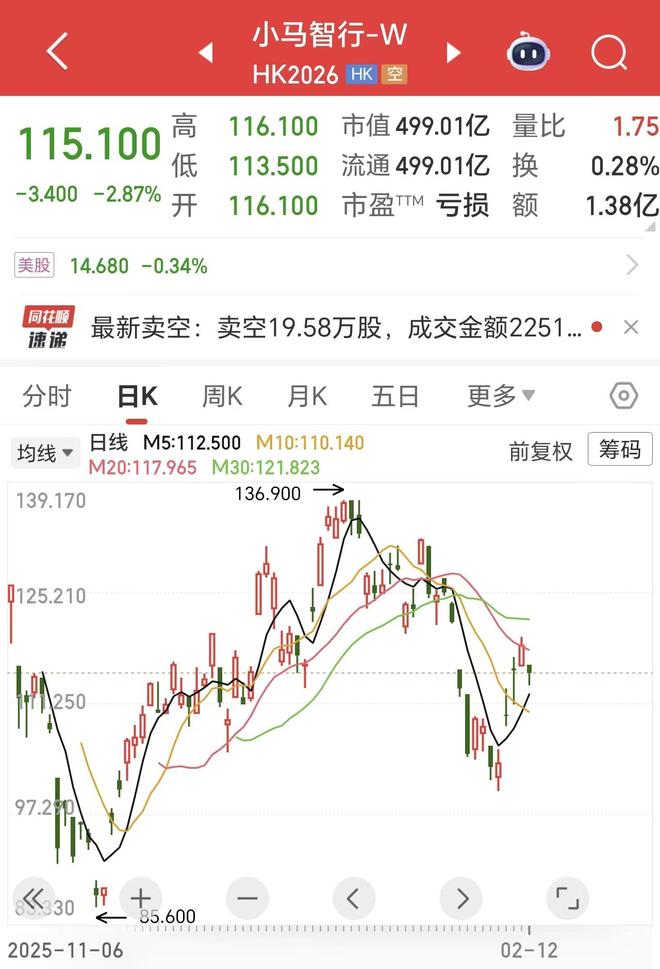
小马智行纳入MSCI中国指数!成为首家且唯一自动驾驶企业!Robotaxi运营车队今年将达3000台
Jin Rong Jie· 2026-02-12 09:52
Core Insights - MSCI has included 37 new stocks in its China Index, with Pony.ai being the only autonomous driving company added, which is expected to attract more passive fund attention and improve liquidity [1][3] Company Overview - Pony.ai is the first and only autonomous driving company included in the MSCI China Index, which is a significant benchmark for global investment institutions allocating assets in China [3] - The company was founded in 2016 and focuses on providing autonomous driving technology and solutions for mobility and logistics, with a dual listing on NASDAQ and the Hong Kong Stock Exchange [3][4] Business Operations - Pony.ai's core business includes Robotaxi services, autonomous truck services, and technology licensing, with operations in major Chinese cities and a growing international presence [4][6] - The company has received permits for fully autonomous Robotaxi operations in Beijing, Shanghai, Guangzhou, and Shenzhen, making it the only company to do so in these cities [4] Financial Performance - For 2025, Pony.ai anticipates a loss of approximately $69 million to $86 million, a significant reduction from a loss of $275 million in 2024, primarily due to increased fair value gains from investments [4] - The Robotaxi business revenue grew by 89.5% year-on-year, with passenger fare revenue increasing by over 200%, indicating strong commercial progress [4] Fleet and Technology - The Robotaxi fleet has surpassed 1,159 vehicles, with plans to expand to 3,000 vehicles by 2026, demonstrating exponential growth [5] - The company has achieved cost reductions in its new generation of autonomous driving technology, with production material costs decreasing by 70% and specific components like the autonomous driving computing unit by 80% [5] Global Expansion - Pony.ai is pursuing a light-asset model and has formed partnerships with various companies to accelerate fleet expansion and global market entry [6] - The company has established operations in eight countries and is collaborating with major ride-hailing platforms to enhance its market presence [6] Analyst Coverage - A recent report from Zhongyou Securities initiated coverage on Pony.ai with a "Buy" rating, projecting revenues of $81.92 million, $121.85 million, and $235.58 million for 2025, 2026, and 2027, respectively, while also forecasting continued losses [6]
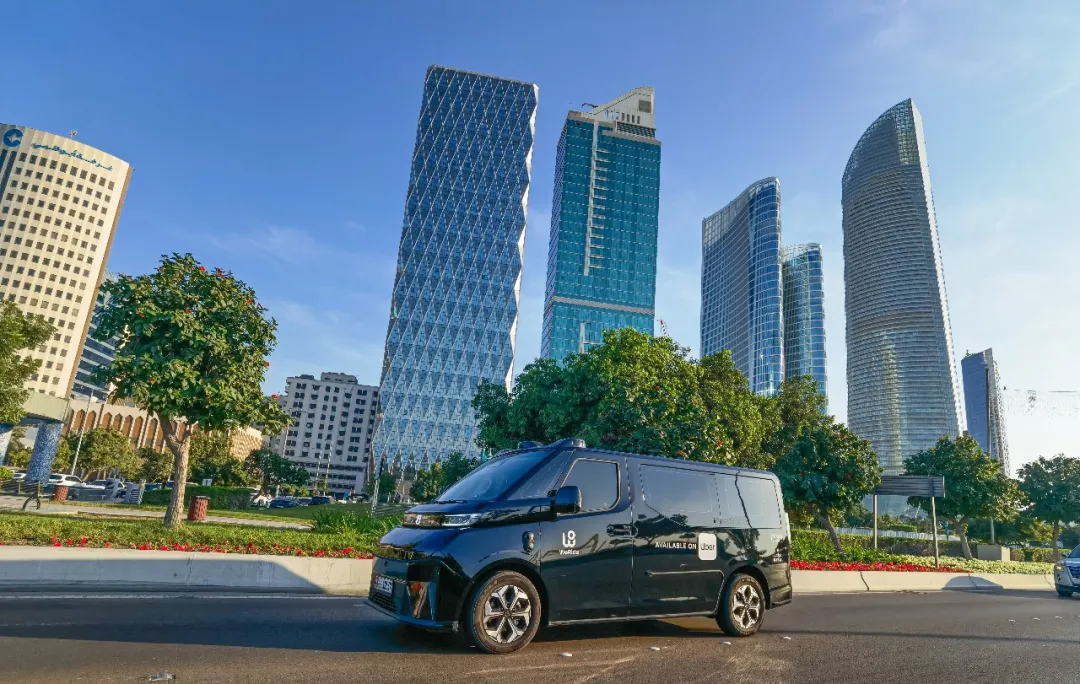
Robotaxi开进阿布扎比市中心 文远知行携手Uber再拓商业运营版图
Huan Qiu Wang· 2026-02-12 09:48
Core Insights - WeRide and Uber have officially launched the first Robotaxi commercial operation service in Abu Dhabi, marking the deployment of autonomous vehicles in the city center [1] - The Robotaxi service will connect key tourist areas and hotels, enhancing Abu Dhabi's status as a global tourism hub [1] - The service is currently operational with a safety driver on board, transitioning to fully autonomous operation in phases [1] Group 1 - The Robotaxi service area now covers approximately 70% of Abu Dhabi's core regions, significantly improving urban transportation connectivity [2] - WeRide has deployed over 200 Robotaxis in the Middle East, with a fourfold increase in fleet size since the commercial operation began in December 2024 [2] - The partnership between WeRide and Uber reflects rapid expansion in the UAE, with WeRide being the first to obtain a national-level full model autonomous driving license in the country [4] Group 2 - Future plans include expanding the Robotaxi fleet in the Middle East to thousands of vehicles, with a commitment to deploy at least 1,200 Robotaxis by 2027 across Abu Dhabi, Dubai, and Riyadh [4] - The collaboration between WeRide and Uber positions them as the largest Robotaxi commercial operation service outside the US and China [4]
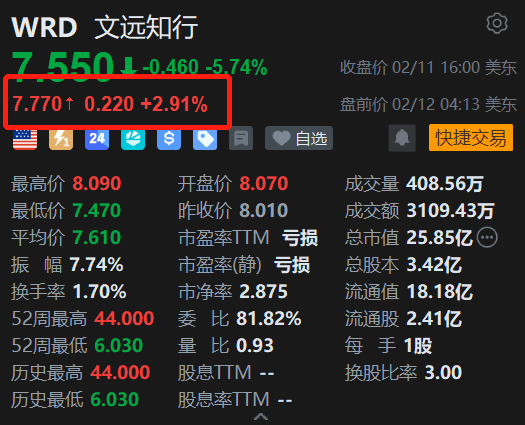
美股异动丨文远知行盘前涨约3% 携手Uber再下一城 Robotaxi商业化落地阿布扎比
Ge Long Hui· 2026-02-12 09:35
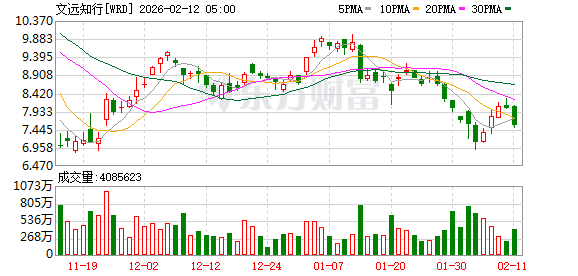
Core Insights - The key point of the news is that WeRide (WRD.US) has officially launched its first Robotaxi commercial operation service in downtown Abu Dhabi in partnership with Uber, marking the first deployment of autonomous vehicles in the city center [1] Group 1: Company Developments - WeRide's stock price increased by 2.9% to $7.71 in pre-market trading following the announcement of the Robotaxi service launch [1] - The Robotaxi service now covers approximately 70% of the core areas in downtown Abu Dhabi, indicating significant expansion in operational reach [1] - Since the commencement of the Robotaxi commercial operation in December 2024, the fleet size of the partnership has quadrupled, showcasing rapid growth in service capacity [1] Group 2: Market Performance - The closing price of WeRide on February 11 was $7.55, with a pre-market price of $7.77 on February 12 [2] - The stock experienced a trading volume of 4.0856 million shares, with a price range between $7.47 and $8.09 [2] - WeRide's total market capitalization stands at $2.585 billion, with a total share count of 342 million [2]

Robotaxi首次开进阿布扎比市中心 文远知行携手Uber再拓商业运营版图
Zheng Quan Ri Bao Wang· 2026-02-12 08:46
Core Insights - WeRide and Uber have officially launched the first Robotaxi commercial operation service in downtown Abu Dhabi, marking the deployment of autonomous vehicles in the area [1] - The Robotaxi service now covers approximately 70% of Abu Dhabi's core areas, with the fleet size increasing fourfold since the service began in December 2024 [1] - The expansion of the Robotaxi service is expected to enhance urban connectivity and convenience, supporting the UAE's vision for smart mobility [1] Company Developments - WeRide and Uber plan to scale their Robotaxi fleet in the Middle East to thousands of vehicles in the coming years, with a commitment to deploy at least 1,200 Robotaxis by 2027 across Abu Dhabi, Dubai, and Riyadh [2] - The first L4 level fully autonomous Robotaxi commercial operation in the Middle East was launched on Yas Island, Abu Dhabi, in November 2025, following the acquisition of a city-level operational permit for fully autonomous Robotaxis [2]
商业化落地提速!文远知行获麦格理首评“跑赢大市”,目标价46港元
Jin Tou Wang· 2026-02-12 07:33
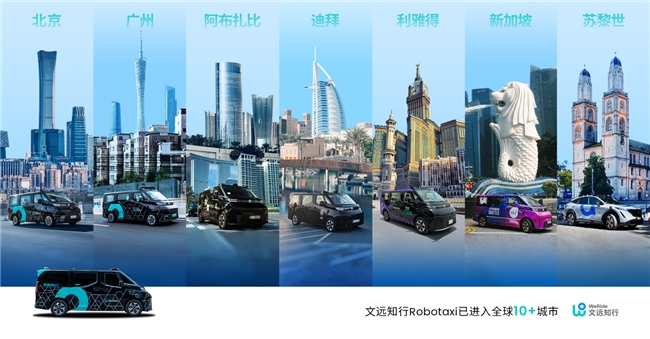
Core Viewpoint - Macquarie has initiated coverage on WeRide (WRD.US, 0800.HK) with an "Outperform" rating, setting target prices of HKD 46 for its Hong Kong stock and USD 17.5 for its U.S. stock, recognizing the company's core competitiveness and growth potential in the global autonomous driving sector [1] Group 1 - WeRide's core advantages lie in its diversified L4 autonomous driving product matrix and strong strategic partnerships, positioning it favorably in building a scalable and global autonomous driving service network [1] - The company is the only tech firm globally to hold autonomous driving licenses in eight countries, including China, UAE, and Singapore, and has developed a comprehensive product matrix that includes autonomous taxis, minibuses, freight vehicles, sanitation vehicles, and L2 driver assistance systems [1] - WeRide's global layout is supported by its extensive application scenarios in smart mobility, smart freight, and smart sanitation, establishing a solid foundation for its international expansion [1] Group 2 - WeRide's recent overseas expansion efforts have gained momentum, with a partnership with Uber announced on February 6 to deploy at least 1,200 Robotaxis in the Middle East by 2027, covering key markets such as Abu Dhabi, Dubai, and Riyadh [2] - WeRide has a four-year first-mover advantage in Abu Dhabi, where its Robotaxi fleet is nearing single-vehicle breakeven and has initiated fully autonomous commercial operations, becoming a benchmark in the Middle East's autonomous driving sector [2] Group 3 - As of January 12, 2026, WeRide's global Robotaxi fleet has reached 1,023 vehicles, operating in over ten major cities worldwide, with successful fully autonomous commercial operations launched in Guangzhou, Beijing, and Abu Dhabi [5] - WeRide is the first autonomous driving tech company to be dual-listed on both U.S. and Hong Kong stock exchanges, gradually realizing its commercial value through proprietary technology, diverse product offerings, and global expansion, gaining significant attention and recognition from the capital markets [5]
文远知行:与优步正式启动阿布扎比市中心首个Robotaxi商业运营服务
Mei Ri Jing Ji Xin Wen· 2026-02-12 06:42
Core Insights - The collaboration between WeRide and Uber has officially launched the first Robotaxi commercial operation service in downtown Abu Dhabi, marking the deployment of autonomous vehicles in the area [2] - The Robotaxi service now covers approximately 70% of the core areas in downtown Abu Dhabi, indicating significant expansion in operational reach [2] - Since the commencement of the Robotaxi commercial operation in December 2024, the fleet size of the partnership has increased fourfold, showcasing rapid growth in service capacity [2]
Robotaxi首次开进阿布扎比市中心!文远知行携手Uber再拓商业运营版图
Ge Long Hui· 2026-02-12 06:25
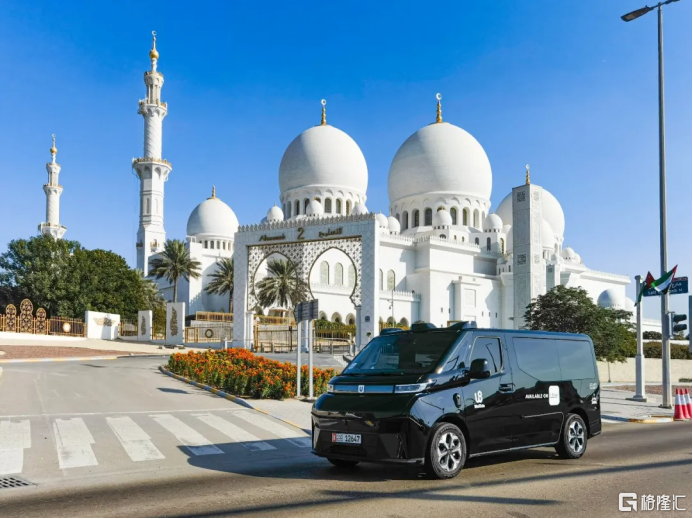
Core Insights - WeRide and Uber have officially launched the first Robotaxi commercial operation service in downtown Abu Dhabi, marking the deployment of autonomous vehicles in the city center [1] - The Robotaxi service now covers approximately 70% of Abu Dhabi's core areas, with a fourfold increase in fleet size since the service began in December 2024 [1] Group 1: Service Expansion - The Robotaxi service area has been extended to include Khalifa City, Masdar City, Rabdan, and the Corniche Road area leading to the Sheikh Zayed Grand Mosque, connecting key landmarks and popular hotels [2] - The service aims to enhance urban connectivity and convenience in Abu Dhabi, supporting the UAE's vision for smart mobility [4] Group 2: Operational Details - Passengers can access the WeRide Robotaxi GXR through Uber Comfort or Uber X options, with a dedicated "Autonomous" category available in the Uber app [4] - Currently, each Robotaxi is equipped with a safety operator, with plans to transition to fully autonomous operation in phases [4] Group 3: Market Position and Future Plans - WeRide has deployed over 200 Robotaxis in the Middle East and plans to expand the fleet to thousands in the coming years [5][6] - By February 2026, WeRide and Uber aim to deploy at least 1,200 Robotaxis across Abu Dhabi, Dubai, and Riyadh [6] - WeRide has maintained a competitive edge in Abu Dhabi since 2021 and became the first company in the UAE to obtain a national-level autonomous driving license in 2023 [8]
智能网联行业再迎利好 助力上海打造世界级汽车产业中心
Zheng Quan Ri Bao Wang· 2026-02-12 04:28
Core Insights - Shanghai's intelligent connected vehicle industry is set to benefit from significant policy support as outlined in the "14th Five-Year Plan" [1][2] - The plan emphasizes the development of six emerging pillar industry clusters, focusing on the integration of software and hardware to accelerate the growth of intelligent connected new energy vehicles [1] Group 1: Policy and Development Plans - The "14th Five-Year Plan" aims to establish Shanghai as a world-class automotive industry center, with key areas including Jiading, Pudong, Lingang, and Jinshan [1] - The plan highlights the importance of core technologies such as intelligent driving, intelligent cockpits, intelligent chassis, and solid-state batteries to support the development of intelligent connected new energy vehicles [1][2] Group 2: Industry Growth and Infrastructure - By the end of 2025, Shanghai plans to open 3,173 roads totaling 5,238.82 kilometers for autonomous driving testing, covering about one-third of the city's area [1] - The city has issued 932 various testing and demonstration licenses to 41 companies, with total testing mileage exceeding 34.55 million kilometers [1] Group 3: Future Projections - The intelligent connected vehicle industry in Shanghai is expected to enter a new phase of "city-wide integration" during the "14th Five-Year" period, promoting cross-regional collaboration and a multi-level scenario layout [2] - From 2025 to 2027, the integration of vehicle-road-cloud infrastructure is anticipated to accelerate, potentially leading to an explosion in the smart transportation industry [2] - By 2030, Shanghai is projected to become a global innovation hub for intelligent connected vehicles, forming a trillion-yuan industry cluster and solidifying its position as a domestic leader and international player in the sector [2][3]