
贸易战

Search documents
建信期货钢材日评-20251021
Jian Xin Qi Huo· 2025-10-21 01:49
Report Summary 1. Report Type and Date - Report type: Steel Daily Review [1] - Date: October 21, 2025 [2] 2. Research Team - Black Metal Research Team: Researchers include Zhai Hepan, Nie Jiayi, and Feng Zeren [3] 3. Market Conditions on October 20 3.1 Futures Market - **Prices and Trading Volume**: RB2601 closed at 3045 yuan/ton with a -0.03% change, trading 1,232,540 lots; HC2601 closed at 3215 yuan/ton with a -0.12% change, trading 539,570 lots; SS2512 closed at 12595 yuan/ton with a -0.16% change, trading 124,780 lots [5] - **Position Changes**: RB2601's open interest increased by 1,609 lots; HC2601's increased by 7,152 lots [5] - **Fund Flows**: RB2601 had a 0.15 - billion - yuan inflow; HC2601 had a 0.28 - billion - yuan inflow [5] 3.2 Spot Market - **Price Changes**: Some rebar and hot - rolled coil spot prices declined. Rebar prices in Nanjing and Hefei dropped 30 yuan/ton, and in other cities, 10 - 20 yuan/ton; hot - rolled coil prices in Zhengzhou dropped 30 yuan/ton, and in other cities, 10 - 20 yuan/ton [8] 3.3 Technical Indicators - Rebar 2601 contract's daily KDJ indicator showed a golden cross, and hot - rolled coil 2601's was close to a golden cross. Both contracts' daily MACD green bars narrowed [8] 4. Market Outlook 4.1 News and Policy - Trump's attitude towards China - US trade tariffs softened, which eased market concerns. He will meet with China in about two weeks and is optimistic about the negotiation. The US Treasury Secretary also said the meeting may lead to a broader trade agreement [9][10] 4.2 Fundamentals - **Supply and Demand**: In the past 6 weeks, the weekly output of five major steel products decreased slightly but remained high; weekly demand rebounded from the lowest since late February but was lower than the end - September level; social inventory of five major steel products decreased slightly from the highest since mid - April [10] - **Raw Materials**: In the past 2 weeks, iron ore inventories of 247 steel mills and imported sintered powder ore inventories of 64 sample steel mills dropped significantly; in the past 4 weeks, Australian and Brazilian iron ore shipments increased by 2.2% on top of a 3.7% increase in the previous 4 weeks, and arrivals increased by 11.9% after a 1.4% decrease in the previous 4 weeks; coke profit was briefly positive and then turned negative, and the first round of coke price increase was implemented on October 1; steel mills reduced coke inventories after the holiday; coking coal prices remained firm [11] 4.3 Forecast - Steel demand has seasonal improvement, but trade conflicts remain uncertain. Steel futures prices are expected to be more volatile, with a possible first - decline - then - rebound trend. Attention should be paid to market expectations before China - US trade negotiations, raw material prices after most steel mills' profits turn negative, and the impact of low temperatures on terminal demand [11] 5. Industry News - **Economic Growth**: The National Bureau of Statistics attributed the Q3 GDP growth slowdown to international trade protectionism and domestic economic structural adjustment [12] - **Policy Adjustment**: The Ministry of Finance, General Administration of Customs, and State Taxation Administration adjusted the VAT policy for wind power generation and nuclear power [13] - **Production Data**: From January to September 2025, national coke production was 377.16 million tons (up 3.5% YoY), pig iron production was 645.86 million tons (down 1.1% YoY), crude steel production was 746.25 million tons (down 2.9% YoY), and steel production was 1.10385 billion tons (up 5.4% YoY). In September, national coal production was 411.51 million tons (down 1.8% YoY), and industrial power generation was 826.2 billion kWh (up 1.5% YoY) [13] - **Real Estate**: From January to September 2025, national real estate development investment was 6.7706 trillion yuan (down 13.9% YoY), construction area was 6.4858 billion square meters (down 9.4% YoY), new commercial housing sales area was 658.35 million square meters (down 5.5% YoY), and sales volume was 6.304 trillion yuan (down 7.9% YoY) [13] - **Railway Transport**: In the first three quarters of 2025, national railway freight volume was 3.912 billion tons (up 2.8% YoY) [14] - **Corporate Performance**: Baotou Steel's semi - annual asset - liability ratio in 2025 decreased by 0.42 percentage points from the beginning of the year, and financial expenses decreased by 6.29% YoY [14] - **International Trade**: In September 2025, China exported 6.4 million tons of steel plates (down 6.1% YoY) and 1.68 million tons of steel bars (up 25.0% YoY). In September, the iron ore export volume of Port Hedland in Australia was 48.5673 million tons (down 0.48% YoY, up 9.58% MoM) [14] 6. Data Overview - The report presents various steel - related data charts, including prices, production, inventory, and capacity utilization, with data sources from Mysteel and the research and development department of CCB Futures [16][17][20]
江宇舟:反击美国制裁,我们做得怎样?为什么会是一场持久战?
Guan Cha Zhe Wang· 2025-10-21 01:08
Core Points - The article discusses the recent escalation of tensions between China and the U.S. following the Madrid economic talks, highlighting the rapid implementation of U.S. measures against China and China's subsequent countermeasures. [1][2] - It emphasizes that the current conflict is not a result of misjudgment but a clear understanding of interests from both sides, with China prepared to defend its position against U.S. unilateral actions. [1][2] Group 1 - The U.S. has introduced 20 measures against China in just over 20 days, including export control lists that affect thousands of Chinese companies and new port fees for Chinese shipbuilding. [2][3] - China's countermeasures are coordinated across multiple departments, indicating a structured response framework that includes actions like rare earth export controls and investigations into U.S. companies. [3][4] - The article notes that while the number of countermeasures is fewer than in April, they continue to follow a similar framework, targeting the entire rare earth supply chain and involving antitrust investigations. [3][6] Group 2 - The countermeasures are described as more precise, reflecting U.S. regulatory practices, such as stringent approval processes for products containing rare earth elements. [6][7] - The article highlights the strategic nature of these measures, which not only respond to U.S. actions but also set new rules and standards that could impact U.S. companies operating in China. [6][7] - China's response also extends to foreign companies that support U.S. actions, signaling a broader strategy to deter collaboration with the U.S. against Chinese interests. [8][9] Group 3 - The article suggests that the current U.S. administration's chaotic approach to trade and sanctions has created opportunities for China to assert its position more effectively. [9][10] - It points out that the U.S. is struggling to formulate a coherent counter-strategy, leading to a perception of disarray within the U.S. government. [10][13] - The ongoing tensions are framed as part of a larger, long-term struggle against U.S. hegemony, with China needing to prepare for a sustained conflict. [15][19] Group 4 - The article concludes with a call for China to enhance its counter-sanction capabilities, emphasizing the need for a comprehensive legal framework and better coordination among various government departments. [26][28] - It advocates for the development of a robust response system that can effectively address the challenges posed by U.S. sanctions and trade measures. [26][30] - The need for a strategic approach to international relations and trade is underscored, with an emphasis on building alliances and enhancing China's global economic presence. [34][36]

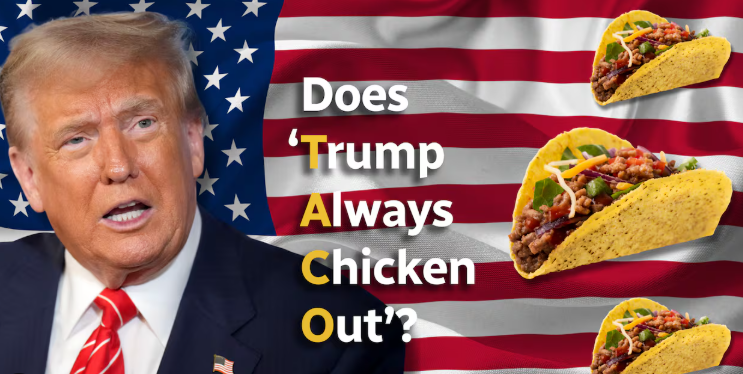
China May Have an Edge in the Trade War. That's a Risk for Stocks.
Barrons· 2025-10-20 20:53
Core Viewpoint - The Chinese economy is demonstrating unexpected resilience despite the challenges posed by U.S. tariffs and export controls [1] Group 1 - The strength of the Chinese economy indicates a potential for growth and investment opportunities [1] - U.S. tariffs and export controls have not significantly hindered China's economic performance [1]
被逼的没办法了,这是全面脱钩还是互相试探的前夕?
Hu Xiu· 2025-10-20 13:00
打打谈谈近10年,贸易战的决战序幕终于在10月份拉开,强硬的特朗普突然表达愿意和我们进行理性谈 判,还暗示百分百关税纯口嗨,最后不一定会落实,反转确实来得猝不及防,那么特朗普为什么会怂得 这么快? ...
特朗普要赌国运,印欧日韩有麻烦,中国成了美国不敢碰的“钉子”
Sou Hu Cai Jing· 2025-10-20 12:37
特朗普这家伙上台没多久,就开始在贸易上大刀阔斧,搞得全球经济圈子都乱套了。话说2025年4月2日,他直接签了行政令,宣布对所有进口货征收10%的 普遍关税,这叫"解放日关税",听着挺霸气,其实就是想用这种方式逼各国让步,纠正他眼里的贸易不公。 结果呢,这政策一出,股市就晃荡,道琼斯指数那几天小跌,投资者都捏把汗,生怕贸易战升级。白宫那边说,这是为了保护美国工人和产业,但很多人觉 得这是在赌美国的经济底子,万一玩脱了,国内物价飞涨,制造业也得跟着遭殃。 接着,特朗普团队没闲着,商务部长霍华德·卢特尼克带头,分析各国对美贸易赤字,挑出重点目标。5月12日,中美在日内瓦开会,谈了临时降税,美国把 对华税率降到30%,中国回敬降到10%,算是给谈判留点空间。 但特朗普在白宫记者会上直言,这只是暂时的,要是谈不拢,税率随时回弹。6月9日,又去伦敦接着聊,焦点是稀土和技术管制,最后签了90天停火协议, 避免马上翻脸。整个过程,美国内部协调得紧,数据分析一轮轮来,评估每个国家的压力点。 7月4日,特朗普坐空军一号从新泽西回华盛顿,途中跟媒体聊了聊,透露正准备针对特定国家的关税通知,强调这些是针对长期占美国便宜的国家。7月7 ...
对华加税500%?美国陷入疯癫,特朗普要拿人民币赞助乌克兰买武器
Sou Hu Cai Jing· 2025-10-20 12:02
Core Points - The Trump administration is pressuring EU countries to impose a 500% tariff on Chinese imports, with the revenue intended to fund Ukraine's military efforts [1][2] - This proposal is part of a broader strategy of confrontation between the US and China, with Trump labeling the relationship as a "trade war" [2] - The proposed tariff revenue would be allocated to a mechanism called the "Ukraine Victory Fund" [2] Group 1 - The US Treasury Secretary is tasked with promoting this idea to European governments ahead of Ukrainian President Zelensky's visit to the US [4] - Ukraine is seeking to acquire US-made "Tomahawk" cruise missiles, with the Trump administration indicating potential approval if European allies cover the costs [4] - The US Defense Secretary emphasized the expectation for European partners to provide more donations for Ukraine's procurement of US weapons during a NATO defense ministers meeting [4] Group 2 - Russia views Western military aid as ineffective in changing the conflict's outcome, perceiving the situation as a NATO-planned proxy war threatening its existence [5] - EU reactions to the proposed tariffs are mixed, with some countries concerned about the economic impact of such high tariffs on their trade relations with China [5] - China's Foreign Ministry has firmly opposed the US's actions, asserting a commitment to an objective stance on the Ukraine crisis and rejecting any form of coercion [5] - The ongoing pressure from the US may exacerbate the geopolitical tensions between the US and Europe, potentially leading to further disruptions in the global economic order [5]

小心美股动荡!贸易担忧笼罩市场 期权交易员纷纷对冲月底大幅波动
智通财经网· 2025-10-20 11:34
Group 1 - The recent uncertainty in the US-China trade situation has led options traders to buy options to hedge against significant volatility in the US stock market [1][3] - The implied volatility of S&P 500 index futures expiring on October 31 is currently close to 20, indicating heightened market anxiety [1][3] - The Chicago Board Options Exchange Volatility Index (VIX) has shown a similar "turning point" as it hovers above 20, a level that typically signals increased market pressure [3][4] Group 2 - The demand for safe-haven assets is rising, as evidenced by the $9.4 billion KraneShares CSI China Internet ETF, which shows the highest level of put/call skew since early April [3] - Market sentiment remains uneasy, with the VIX index at elevated levels, and the VVIX index reaching its highest level since April [3][4] - Concerns over US regional bank credit losses and potential government shutdown are contributing to the uncertainty, prompting calls for crash protection in the coming weeks [4][6] Group 3 - Despite ongoing uncertainties surrounding trade, government shutdowns, and inflation, the S&P 500 index closed higher during a turbulent week, remaining less than 1.5% from its historical peak [6] - The market has shown resilience this year, having "shaken off" many risks, although volatility is expected to remain high due to numerous ongoing concerns [6]
瑞达期货集运指数(欧线)期货日报-20251020
Rui Da Qi Huo· 2025-10-20 11:17
Report Summary 1. Report Industry Investment Rating - Not provided in the given content 2. Core Viewpoint - Recent long - short factors are intertwined. With the unclear trade - war situation, the improvement of Red Sea re - navigation expectations due to the "peace plan" in the Middle East, and the stable oversupply pattern, the futures price is expected to fluctuate widely, and the "off - peak season" in shipping may continue. The freight rate market is highly affected by news, and the futures price is expected to fluctuate more sharply. Investors are advised to be cautious, pay attention to the operation rhythm and risk control, and track geopolitical, shipping capacity and cargo volume data in a timely manner [1] 3. Summary by Relevant Catalogs Futures Market - EC main contract closing price is 1682.00, up 62.20 compared with the previous period; EC secondary main contract closing price is 1522. The EC2512 - EC2602 spread is - 22.70, down 3.80; the EC2512 - EC2604 spread is 160.00. The EC contract basis is - 541.62, up 81.28. The EC main contract open interest is 26101, up 442 [1] Spot Market - SCFIS (European Line) (weekly) is 1140.38, up 108.58; SCFIS (US West Line) (weekly) is 863.46, down 14.34. SCFI (composite index) (weekly) is 1310.32, up 1.78. CCFI (composite index) (weekly) is 973.11, down 41.67; CCFI (European Line) (weekly) is 1267.91, down 19.24. The Panama - type freight index (daily) is 2069.00, down 23.00; the Baltic Dry Bulk Index (daily) is 1827.00, down 1.00. The average charter price of Panama - type ships is 16692.00, up 1078.00; the average charter price of Cape - type ships is 28559.00, down 286.00 [1] Industry News - US President Trump continues to send conciliatory signals, and the Trump administration is quietly relaxing multiple tariff policies, exempting dozens of products from "reciprocal tariffs" and willing to exclude more products when reaching trade agreements with other countries. The Supreme Court will hold a hearing on "reciprocal tariffs" in early November [1] - Central Bank Governor Pan Gongsheng says China will continue to implement a moderately loose monetary policy, use various monetary policy tools comprehensively to ensure sufficient liquidity, support consumption and effective investment, consolidate and strengthen the positive economic trend, maintain the stable operation of the financial market, and keep the RMB exchange rate basically stable at a reasonable and balanced level [1] - Deputy Minister of Finance Liao Min says China hopes the World Bank will help create a more open and stable economic and trade environment, assist developing countries in improving infrastructure and policy systems, and build a labor force structure suitable for the digital economy and green transformation [1] Market Performance and Influencing Factors - On Monday, the futures prices of the container shipping index (European Line) rose collectively. The main contract EC2512 rose 1.44%, and the far - month contracts rose between 2 - 4%. The latest SCFIS European Line settlement freight rate index is 1031.80, up 108.58 points from last week, a 10.5% month - on - month increase. The strike crisis at Rotterdam Port has escalated, and more than 60 ships are waiting at sea. CMA CGM announced a price increase in November. Trump's conciliatory signals have eased trade - war tensions. The "peace plan" in the Middle East has improved Red Sea re - navigation expectations. The eurozone's economic data is volatile, and the ECB may slow down the rate - cut rhythm. China's improved export data in September supports container shipping [1] Key Data to Follow - The UK's public sector net borrowing in September (in billions of pounds) at 14:00 on October 21 [1]
Three factors flashing recovery signals after $500bn crypto wipeout
Yahoo Finance· 2025-10-20 10:21
Crypto traders are still reeling from the chaos that wiped 11%, or roughly $500 billion, off the market’s total value in October. But there are reasons to be optimistic. “The macro setup is shifting fast,” wrote David Brickell and Chris Mills, the analysts behind the London Crypto Club’s weekly Connecting the Dots newsletter, on Sunday. “Liquidity indicators are tightening, and the Fed looks close to ending its quantitative tightening programme.” This setup will “trigger a short-term correction before s ...
816吨大豆粮仓轰然倒塌,中国一颗没买,力挺川普的美国豆农哭了
Sou Hu Cai Jing· 2025-10-20 09:25
Core Insights - The U.S. soybean industry has long relied on the Chinese market, with China being the largest importer, consuming vast amounts of soybean meal for feed, significantly boosting the income of U.S. Midwest farmers [2] - The trade war initiated by the Trump administration in 2018 led to a drastic decline in U.S. soybean prices and a shift in Chinese purchasing to South American suppliers, resulting in a significant loss of market share for U.S. farmers [3][5] - By 2025, the situation worsened, with U.S. soybean farmers facing increased costs and a dramatic drop in exports to China, leading to financial distress and rising bankruptcy rates among farmers [5][11] Group 1: Trade War Impact - The imposition of tariffs on U.S. soybeans by China in response to U.S. trade policies resulted in a price drop from over $10 per bushel to below $9, marking a ten-year low [3] - U.S. soybean exports to China plummeted from $14 billion to just $2.5 billion by 2024, with the share of U.S. soybeans in China's imports dropping from 60% to less than 10% [11][12] - The trade war has led to a structural loss in market share for U.S. soybeans, with South America capturing a significant portion of the market [14][16] Group 2: Economic Consequences - The accumulation of unsold soybean inventory led to a structural failure of a grain silo in Illinois, highlighting the pressures faced by farmers due to market imbalances [7][9] - Economic losses from the silo collapse are estimated in the hundreds of thousands of dollars, affecting local economies and emphasizing the fragility of agricultural infrastructure [9] - The bankruptcy rate among farmers increased by 25% in the first half of 2025 compared to the previous year, reflecting the severe financial strain caused by the trade policies [11] Group 3: Industry Adaptation - U.S. farmers are adapting by diversifying crops and increasing crop rotation to reduce reliance on soybeans alone, while federal assistance is shifting towards technological upgrades [18] - The trade war has accelerated the construction of a more resilient agricultural supply chain, with U.S. exporters looking to expand markets to India and the EU [18] - Major grain companies are now sourcing soybeans from South America to meet Chinese demand, creating a complex supply chain that reflects the ongoing challenges in U.S.-China trade relations [16]
