
城市更新

Search documents
权威访谈 开局“十五五”丨因城施策、提质升级 推进城市更新今年这样干
Yang Shi Xin Wen· 2026-01-23 06:00
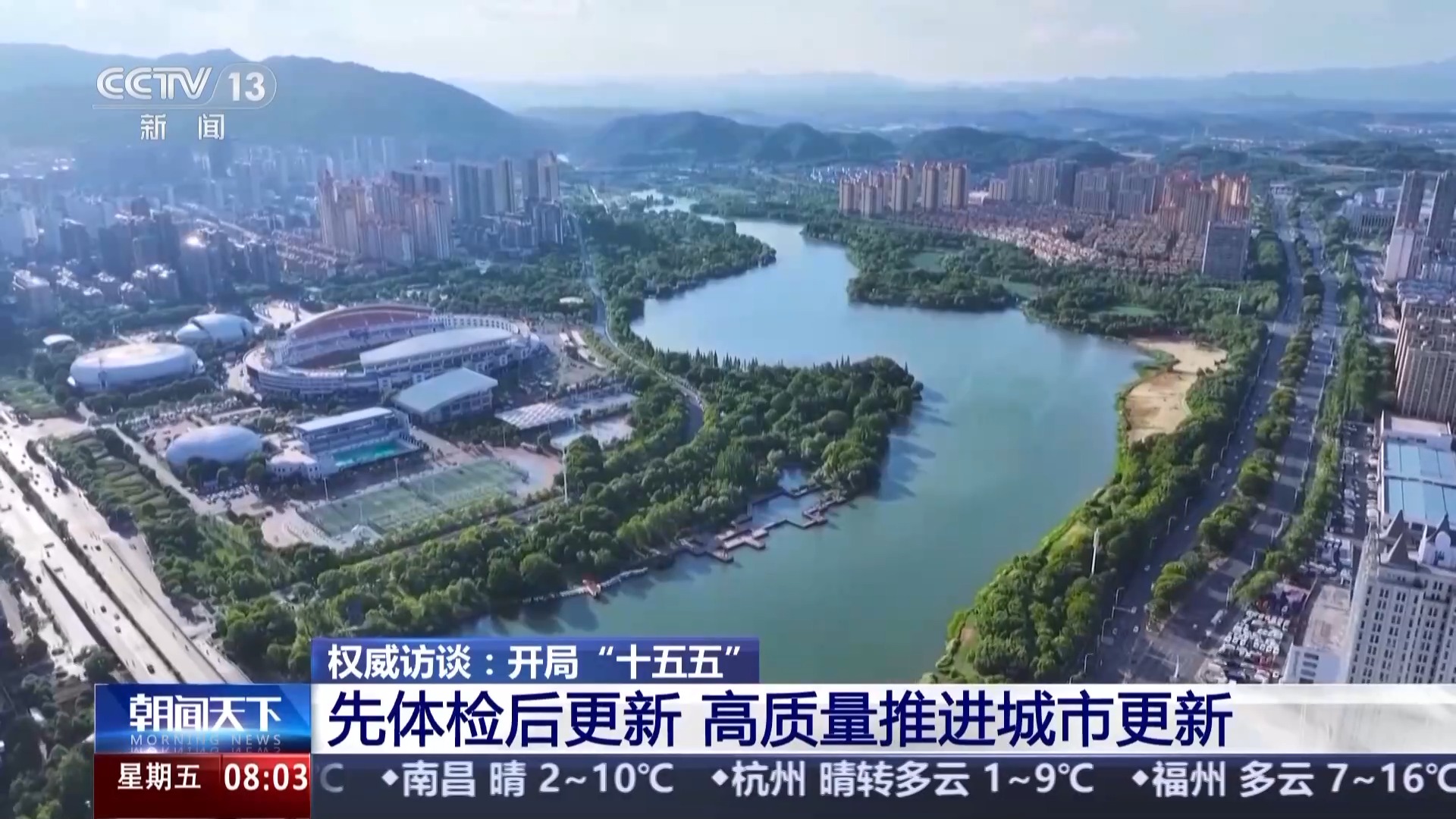
"十五五"规划建议提出,坚持城市内涵式发展,大力实施城市更新,建设创新、宜居、美丽、韧性、文明、智慧的现代化人民城市。 今年是"十五五"开局之年,国家在推进城市更新工作方面将有哪些重点部署,来看总台央视记者对住房城乡建设部部长倪虹的专访。 倪虹介绍,2025年我国城市更新工作取得明显成效。全国开工改造城镇老旧小区2.6万个,加装电梯1.4万部,改善了居住条件,惠及470多万居民;打造"口 袋公园"4700多个、城市绿道5800多公里,提升了城市人居环境;建设改造地下管网15.6万公里,增强了城市韧性。 "十五五"规划建议提出,推动房地产高质量发展。今年,在房地产领域,住房城乡建设部将有哪些工作重点? 下一步,高质量推进城市更新,关键是要找准问题、有效解决问题。国家将坚持先体检、后更新,以体检找出的问题作为城市更新的重点,统筹实施好一系 列民生工程、发展工程、安全工程。 住房城乡建设部部长 倪虹:民生工程重点是抓好三件事,持续推进城镇老旧小区改造,抓好"楼道革命""环境革命""管理革命"。全面推进完整社区建设,更 加呵护"一老一小",着力补上公共服务设施短板。开展城市小微公共空间改造,增加群众身边的社区公园、口 ...

北上广深全面推进城市更新
21世纪经济报道· 2026-01-23 01:48
Core Viewpoint - The article emphasizes the importance of high-quality urban renewal as a key task for major cities in China, transitioning from large-scale demolition and construction to a more sustainable and integrated approach that focuses on enhancing urban quality and functionality [1][2][10]. Group 1: Urban Renewal Initiatives - The 2025 National Housing and Urban-Rural Construction Work Conference highlighted the need to "promote urban renewal with high quality," addressing key funding bottlenecks [1]. - Major cities like Guangzhou have set ambitious targets, planning to complete fixed asset investments of 200 billion yuan in urban renewal by 2026, with over 30 urban renewal projects planned [1][5]. - During the "14th Five-Year Plan," significant progress was made with 2,387 urban village renovation projects and the renovation of over 240,000 old urban communities, benefiting more than 40 million households [1]. Group 2: Transition to Sustainable Development - The focus of urban renewal is shifting from "how to renovate" to "how to renovate better, more sustainably," indicating a move towards high-quality development [2][10]. - Urban renewal is now seen as a critical component for investment attraction, domestic demand expansion, and economic stability, particularly in first-tier cities [5]. - The "15th Five-Year Plan" emphasizes the need for urban renewal to enhance economic vitality, social integration, and ecological benefits, moving beyond mere spatial renovation [12]. Group 3: Localized Strategies - Different cities are adopting tailored strategies for urban renewal: Beijing focuses on functional protection, Shanghai emphasizes governance and quality, Guangzhou aims to stimulate vitality, and Shenzhen prioritizes spatial efficiency [7][8]. - The article notes that urban renewal practices are increasingly characterized by local features, with cities implementing unique approaches based on their specific challenges and resources [6][11]. Group 4: Challenges and Future Directions - The article identifies several challenges in urban renewal, including historical preservation conflicts, complex property rights, high funding costs, and renovation difficulties [10][12]. - Future urban renewal efforts will require innovative financing models, such as expanding REITs to include old factories and community commercial spaces, and developing integrated renovation and service models [12][14]. - The long-term trend in urban renewal is shifting from "large-scale demolition and construction" to "large-scale operation and management," necessitating systematic policy innovations to address funding and implementation challenges [14].
政策要闻:人民日报连发钟才平文章,再提房地产-20260123
中指研究院· 2026-01-23 01:19
更多政策解读、城市月报、房企研究报告 ..... | 中指云 就在 N 中指 · 政策要闻】人民日报连发钟才平 文章,再提房地产(1.5-1.11) 政策要闻 | 《人民日报》连发钟才平文章,再提房地产(1.5-1.11) 摘要:国家发改委、财政部支持老旧小区加装电梯等纳入设备更新项目;符合条件"白名 单"项目贷款可展期五年;人民日报头版连续刊文,提振市场预期:国常会部署实施财政 金融协同促内需一揽子政策、研究推行常住地提供基本公共服务有关工作。广州荔湾区核 发亿元房票;南京、银川等地发放购房补贴;银川、沈阳等地优化公积金贷款政策。 1. 中央:"白名单"项目贷款可展期5年,缓解企业资金压力 要闻一:国家发改委、财政部支持老旧小区加装电梯等纳入设备更新项目 近期,国家发改委、财政部发布《2026年实施大规模设备更新和消费品以旧换新政策 的通知》,其中在支持设备更新项目方面指出,"在继续支持工业、电子信息、能源电力、 交通运输、物流、教育、文旅、医疗、设施农业、粮油加工、安全生产、海关查验、住宅 去旧申梯、节能降碳环保等领域设备更新项目的基础上,将老旧小区加装电梯、养老机构、 消防救援设施、检验检测等领域设备更 ...
国泰海通|策略:价值也会有春天——“着力稳定房地产”政策点评
国泰海通证券研究· 2026-01-23 01:11
Core Viewpoint - The stability of the real estate sector is crucial for stabilizing the national economy, boosting domestic demand, reducing asset shrinkage, and enhancing expectations. After years of industry decline and valuation contraction, significant policy turning points are expected to emerge, creating investment opportunities [2]. Summary by Sections Transformation Bull Market - The current "transformation bull market" in China's stock market is driven by three key factors: the decline of risk-free returns, capital market reforms, and economic structural transformation. The reduction of uncertainty in economic and social development makes it essential to grasp investment clues. Traditional industries are transitioning from an L-shaped decline to a horizontal recovery, while new technology industries are entering an innovation expansion cycle. The revaluation of the Chinese market in 2026 presents opportunities in both technology and non-technology sectors [4]. Real Estate Industry Adjustment - The Chinese real estate industry has undergone a prolonged downturn and is now in a phase of bottoming out. As of Q4 2025, residential investment accounted for 4.5% of GDP, down 5.6% from the peak in 2020. By the end of 2025, real estate sales area is expected to decline by 51% compared to the peak in 2021, with price drops in first, second, and third-tier cities reaching 22%, 30%, and 30% respectively. The industry has seen significant capital expenditure reductions, with related sectors' investments falling below the 30th percentile over the past decade. Recent policy shifts indicate a more positive stance towards real estate, suggesting a potential for valuation recovery [5]. Historical Context and Future Outlook - Unlike previous real estate cycles driven by urbanization and infrastructure, the current market dynamics are closely tied to policy expectations. Since 2022, the real estate sector has experienced three rounds of systematic market movements influenced by policy changes. The recent emphasis on "de-stocking" and urban renewal by the central government signals a critical shift in policy direction, which may lead to further support for value stocks in the sector [6]. Investment Opportunities - The clear signals for stabilizing the real estate market suggest potential valuation recovery opportunities within the real estate chain. Recommendations include high-quality real estate companies with a price-to-book ratio (PB) below 1. The acceleration of urban renewal projects, combined with ongoing industry clearing, is expected to improve competitive dynamics in related sectors such as building materials, chemicals, steel, and home appliances. The push for high-quality urban renewal is anticipated to stimulate demand in construction and infrastructure sectors [7].

盛阅春熊征宇会见亚厦控股董事长丁欣欣等企业家
Chang Jiang Ri Bao· 2026-01-23 00:30
Group 1 - The meeting highlighted the increasing development status and opportunities in Wuhan, emphasizing its comprehensive advantages such as "big strategy + high technology + good guarantees + low costs + broad market + excellent support" [4] - The local government is focused on high-quality development, urban renewal, and the integration of technological and industrial innovation to build a modern industrial system and accelerate the construction of a national central city [4] - Business leaders expressed confidence in Wuhan's favorable business environment, rich talent resources, and significant market potential, committing to invest in the city and establish more R&D centers and corporate headquarters [4] Group 2 - The local government aims to provide high-quality services and create favorable conditions for enterprises to develop in Wuhan, adhering to the principle of "no disturbance without business and responding to all requests" [4] - The meeting underscored the importance of deepening practical cooperation and exploring collaboration potential to drive the establishment of new technologies, models, and business formats in Wuhan [4]
北上广深 城市更新进阶
2 1 Shi Ji Jing Ji Bao Dao· 2026-01-22 23:22
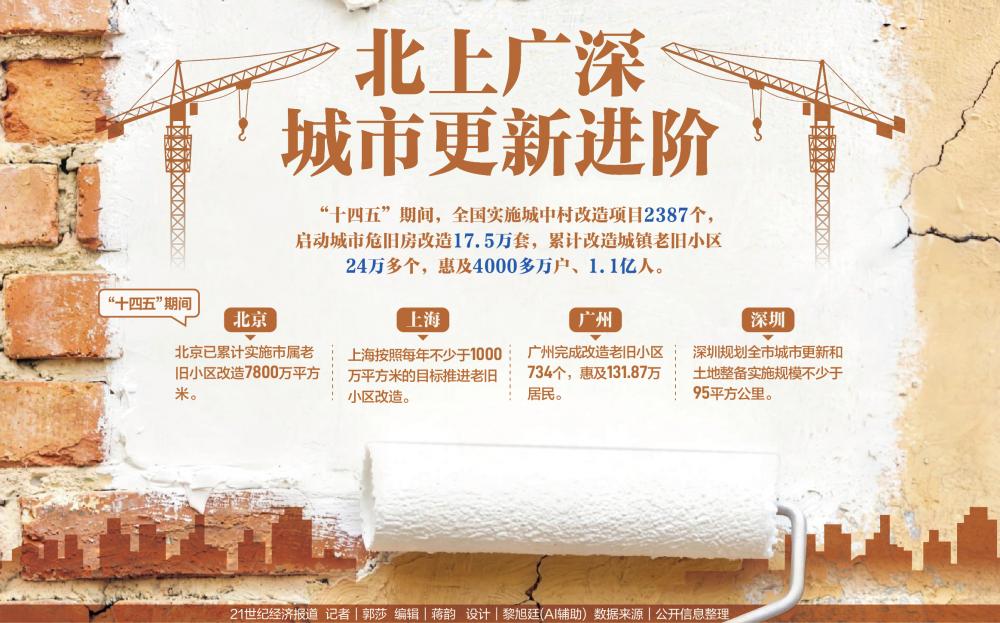
中央财经大学政府管理学院城市管理系主任王伟向南方财经记者表示,中国一线城市正集体迈入以内涵提升为核心的高质量发展新阶段。城市 更新从过去"大拆大建"转向"留改拆并举",从单一空间改造升级为"空间—功能—文化—治理"系统性再生。多方共建共治、技术赋能与多元融 资模式,共同推动着更新进程。面向"十五五",城市更新正朝着更深层次、更可持续的未来演进。 告别"拆建大开发",一个"留改大运营"的城市更新时代到来。 2025年底的全国住房城乡建设工作会议提出要"高质量推进城市更新",并着力打通资金等关键堵点。 一线城市的行动已经开始。2026年广州市政府工作报告将城市更新作为该年12个方面重点任务之一,强调将推进城市更新相关立法,编制城市 更新实施专项规划。此前,广州相关会议已提出,计划在2026年完成相关固定资产投资2000亿元,并谋划启动"十五五"30个以上城市更新片区 改造。 过去五年,城市更新走向全面实践。北上广深四座一线城市率先完成从制度缺位到有章可循的立法跨越,深圳、上海、北京先后出台专项城市 更新条例,搭建全域更新制度框架;广州则聚焦城中村改造这一核心领域,颁布专项地方性法规,为特大城市更新治理提供具体方案 ...
把握中国房地产业的深刻转型
Jing Ji Ri Bao· 2026-01-22 21:59
Core Viewpoint - The real estate market in China is undergoing a significant adjustment, showing resilience while facing pressure, with efforts focused on stabilizing the market and promoting high-quality development [1][12]. Market Adjustment - The current adjustment in the real estate market began in the second half of 2021 and has lasted over four years, with a bottoming-out adjustment observed in 2025 [1]. - The real estate sector is crucial for the national economy and household wealth, making its stable development essential for macroeconomic stability [1]. - Various regions and departments are collaborating to ensure housing delivery and protect buyers' rights, significantly reducing delivery risks [1]. Housing Supply and Demand - In 2025, the proportion of second-hand housing transactions in total housing transactions increased significantly, reaching nearly 45%, up 17 percentage points from 2021 [3]. - Despite a year-on-year decline in new housing sales area, the total scale of transactions for both new and second-hand homes remained stable, with a narrowing decline in housing prices [3]. - The market is increasingly differentiated, with active performance in cities with strong economic growth and population inflow, while some cities continue to see rising new housing prices [3]. Development Investment - Real estate development investment, new housing sales area, and funds available to real estate developers all decreased compared to the previous year, reflecting a shift from high demand to structural oversupply [4]. - Local governments are actively controlling new supply, reducing inventory, and optimizing supply in response to market conditions [4]. Industry Transformation - Urbanization in China is transitioning from rapid growth to stable development, necessitating a shift in the real estate industry from traditional high-leverage models to low-leverage, integrated service-oriented models [5]. - Companies are focusing on quality products and services, utilizing big data and AI for decision-making, and enhancing customer experience through personalized offerings [5][6]. "Good Housing" Initiative - The concept of "Good Housing" emerged in 2025, emphasizing the need for quality over quantity in housing, with a focus on safety, comfort, environmental sustainability, and smart technology [7][8]. - The government is promoting "Good Housing" through comprehensive standards and initiatives, including a national design competition and new building material applications [8][9]. Future Development Potential - The real estate sector remains a foundational industry for the national economy, with significant potential for growth in housing services, second-hand transactions, and asset management [10]. - Urban renewal projects are creating new opportunities for the real estate industry, with extensive renovations and improvements to living conditions benefiting millions [10][11]. - The introduction of regulations for the housing rental market is expected to support its healthy development, catering to the evolving preferences of younger consumers [11].
湖南大力推进城市更新
Xin Lang Cai Jing· 2026-01-22 20:14
在实施层面,将加强片区整体谋划,坚持运营前置、市场导向,有序推进老旧厂区、老旧街区和老旧商 业街提质改造。持续推进老旧小区、城市危旧房、城中村改造,支持开展住宅老旧电梯更新,探索老旧 住房"自主更新、原拆原建"。同时,强化城市风貌管控,防止"千城一面",加快推进10个省级历史文化 保护利用示范片区建设。■湖南日报全媒体记者 刘乐 去年,全省开工改造老旧小区1605个、城市危旧房1.1万套、城中村1.07万户,惠及居民20.79万户;增 设"两电"充电端口5.79万个,更新住宅老旧电梯1462台,完成农村危房改造9057户。 省住房和城乡建设厅厅长陈旌介绍,为系统推进更新行动,将印发《城市更新三年行动实施方案》,编 制完成"十五五"城市更新专项规划,并落实国家相关支持政策,推动优化土地、规划、审批、产权、金 融等政策,探索设立城市更新基金。 三湘都市报1月22日讯 记者从今天召开的全省住房城乡建设工作会议获悉,今年我省将高质量推进城市 更新,坚持"先体检、后更新",力争完成地级城市中心城区"体检",并推动县级城市全面开展"体检"。 ...
合肥今年改造50个老旧小区
Xin Lang Cai Jing· 2026-01-22 17:07
Group 1 - The core focus of the article is on Hefei's urban renewal initiatives, which include the renovation of 50 old residential communities and the improvement of over 30 vegetable markets [1] - The city plans to enhance living conditions by renovating 2,400 unsafe housing units and constructing 50 complete communities, aiming to create a "15-minute high-quality living circle" [1] - Hefei will upgrade its urban management services platform, address 20 traffic congestion points, and add 10,000 new public parking spaces [1] Group 2 - The city is also committed to modernizing rural living conditions by regularly inspecting and addressing safety hazards in self-built rural houses [1]
权威访谈丨住建部部长倪虹:以安居为基点,推动房地产高质量发展
Jing Ji Ri Bao· 2026-01-22 15:40
第一,民生工程。一是持续推进城镇老旧小区改造,抓好"楼道革命""环境革命""管理革命",消除安全隐 患、改善居住条件和生活环境。二是全面推进完整社区建设,着眼于便民、利民、安民,更加呵护"一 老一小",着力补上公共服务设施短板。三是开展城市小微公共空间改造,增加群众身边的社区公园、 口袋公园,推动更多公园绿地开放共享。 "十五五"时期是基本实现社会主义现代化夯实基础、全面发力的关键时期。住房城乡建设领域如何实现 高质量发展?城市更新如何推进?房地产市场如何稳定?带着这些问题,《经济日报》采访了住房城乡 建设部党组书记、部长倪虹。 记者:您对于"十五五"时期实现住房城乡建设高质量发展有哪些考虑? 倪虹:"十五五"时期,住房城乡建设总体上处在转型发展的关键期,既伴随不少挑战,更面临难得机 遇。习近平总书记高度重视住房城乡建设工作,作出一系列重要指示批示。党的二十届四中全会擘画 了"十五五"我国发展的宏伟蓝图,在去年召开的中央城市工作会议上,党中央作出了城镇化和城市发 展"两个转向"的重大判断,提出了建设现代化人民城市的奋斗目标,这为住房城乡建设工作指明了方 向。 2026年是"十五五"开局之年。我们将高质量推进城 ...