电动化转型

Search documents
电动化占比超1/4、个性化车型表现抢眼,宝马上半年业绩韧劲足
Zhong Guo Jing Ji Wang· 2025-07-31 08:29
Group 1 - BMW Group reported stable global sales in the first half of 2025, with over 1.2 million units sold, maintaining year-on-year levels despite a complex international trade environment [1] - The high-end and personalized brands, including BMW M, Rolls-Royce, and MINI, showed strong performance, with BMW M achieving a record sales figure of over 106,000 units, a 6.5% increase year-on-year [1] - The chairman of BMW Group emphasized the company's resilience, attributing success to three pillars: global presence, innovation capabilities, and an attractive product lineup [1] Group 2 - BMW Group's electric vehicle sales (including BEV/PHEV) grew by 18.6% year-on-year, accounting for over 25% of total sales in the first half of 2025 [2] - MINI brand emerged as a benchmark for electrification, with pure electric models making up 34.3% of its sales, contributing to a 17.4% increase in global sales [2] - The company invested over €4 billion in R&D focused on new generation technology clusters, preparing for the launch of over 40 new and updated models by 2027 [2]
大众汽车集团上半年营业利润暴跌33% 下调全年业绩展望
Cai Jing Wang· 2025-07-31 04:17
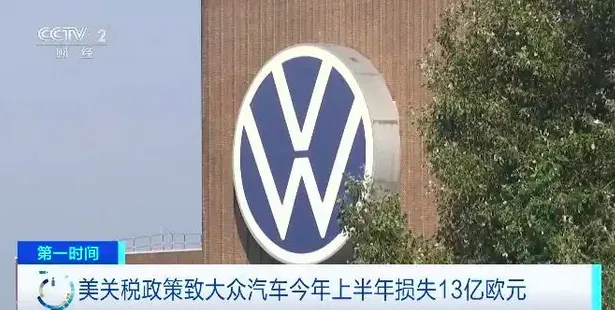
Core Insights - Volkswagen Group reported its H1 2025 financial results, showing revenue of €158.4 billion, nearly flat year-on-year, but a significant decline in operating profit by 33% to €6.7 billion and a post-tax profit drop of over 38% to €4.47 billion, falling short of market expectations [1][3][5] Financial Performance - Revenue for H1 2025 was €158.4 billion, compared to €158.8 billion in the same period last year [3] - Operating profit decreased by approximately 33% to €6.7 billion from €10 billion year-on-year [3] - Post-tax profit fell over 38% to €4.477 billion [3] Factors Affecting Performance - A key factor for the profit decline was the new import tariffs imposed by the U.S. government on electric vehicles and components, resulting in an additional cost burden of €1.3 billion for the group [3][5] - The company is undergoing a major restructuring and has set aside €700 million for restructuring provisions related to Audi, Volkswagen passenger cars, and its software division Cariad, along with costs associated with CO2 emission regulations [5] Cash Flow Situation - The net cash flow for H1 2025 was -€8.39 billion, worsening from -€7.05 billion in the previous year [7] - Automotive net cash flow turned negative at -€1.35 billion, down from a positive inflow of €367 million in the same period last year [7] - As of June 30, the group's cash and cash equivalents stood at €34.8 billion [7] Sales Performance - Volkswagen Group sold 4.363 million vehicles globally in H1 2025, a 0.5% increase year-on-year [9] - Sales of pure electric vehicles surged by 46.7% to 465,000 units, accounting for 10.6% of total deliveries, up from 7.3% in the previous year [9][10] - Regional sales showed mixed results, with Europe and other regions growing by 3.3%, while North America saw a decline of 6.9%, and China experienced a 2.3% drop in deliveries [12] Strategic Outlook - Despite the decline in sales in China, Volkswagen remains optimistic about long-term growth potential in the Asian market, emphasizing collaboration in key technology areas such as software and battery development [12][13] - The company plans to launch over 20 new smart connected models in China by 2026, with a long-term goal of introducing approximately 50 new energy models by 2030, including around 30 pure electric vehicles [13]

奥迪利润暴跌37.5%!关税重拳与转型阵痛重创德国汽车工业
Hua Xia Shi Bao· 2025-07-31 01:33
Core Insights - Audi's half-year report sets a bleak tone for the German automotive industry, showing a slight revenue increase overshadowed by a dramatic profit decline [1][2] - The company's operating profit plummeted by 45.2% to €1.087 billion, with a net profit drop of 37.5% to €1.346 billion, indicating severe financial strain [1][2] Financial Performance - Audi's revenue for the first half of 2025 reached €32.57 billion, a year-on-year growth of 5.3% [1] - Operating profit margin fell from 6.4% to 3.3%, and net cash flow decreased to €900 million from €1.13 billion [1] External Challenges - The increase in U.S. tariffs on EU cars from 2.5% to 25% has led to additional costs exceeding €600 million, which accounts for 55% of Audi's operating profit for the period [2][3] - High tariffs on raw materials have further squeezed profit margins, as suppliers pass on increased costs to manufacturers [2] Internal Transformation Costs - Audi is undergoing its largest transformation in history, requiring significant upfront investments in electric platforms, smart driving technologies, and charging infrastructure [2][3] - The shrinking scale of traditional combustion engine vehicles has not been matched by a reduction in fixed costs, leading to increased cost allocation [2] Workforce and Cost-Cutting Measures - Audi plans to cut approximately 7,500 jobs by the end of 2029 to save €1 billion annually, although this will incur short-term restructuring costs [3][7] Sales Performance - Global deliveries fell by 5.9% to 783,531 vehicles, with significant declines in key markets: North America down 19.4% and China down 10.2% [3][4] - The only market showing growth was Germany, with a slight increase of 0.7% in sales [3] Electric Vehicle Market Position - Audi's electric vehicle sales in Germany surged by 76.2% to 20,505 units, but in China, they plummeted by 23.5% to 7,897 units, highlighting weaknesses in the Chinese market [4][6] - The company struggles to compete with local Chinese brands in terms of product strength and market adaptability [4][6] Industry-Wide Implications - Audi's challenges reflect a systemic crisis in the German automotive industry, with major players like Volkswagen and Mercedes-Benz also reporting significant profit declines due to similar pressures [5][6] - The collective cash flow reduction among these companies could exceed €10 billion, indicating a broader industry crisis [5] Strategic Responses - The German automotive industry is seeking to rebalance through strategic partnerships, such as Volkswagen's investment in Guoxuan High-Tech and collaboration with XPeng Motors [7] - The industry faces a critical need to redefine its operational DNA to survive in a rapidly changing market landscape [7]
破千万大关 中国摩托车市场上半年亮出“双高”答卷
Zhong Guo Chan Ye Jing Ji Xin Xi Wang· 2025-07-31 00:53
2025年上半年,在宏观经济"总体平稳、稳中有进"的基调下,中国摩托车行业展现出强劲的发展韧性。 中国摩托车商会公布的最新数据显示,1-6月,我国摩托车行业产销双双突破千万大关,达到1061.41万 辆和1061.46万辆,同比分别增长11.83%和11.54%。在全球贸易承压、部分制造业面临价格挑战的背景 下,摩托车行业凭借结构性升级与全球化拓展的双引擎驱动,交出了一份亮眼答卷,成为工业动能转换 的重要样本。 娱乐消费引领内需企稳 中国摩托车商会秘书长张洪波指出,这反映出都市青年已将摩托车从代步工具转变为生活态度载体,大 排量市场的高速增长是消费升级与产业升级共振的必然结果。 东南亚、非洲等新兴市场对中高排量车型及三轮车的需求持续释放,本土化运营成为拓展关键。春风动 力(603129)出口负责人表示,企业正着力加强属地化研发与渠道深耕,以更精准地匹配海外市场需 求。行业集中化态势在全球化进程中同样明显,隆鑫、大长江、广东大冶、宗申等出口前十企业合计出 口量达396.29万辆,占总出口量的61.33%,头部企业主导出口格局。 头部效应与研发驱动效益提升 行业经济效益在2025年上半年显著优化,"强者恒强"的竞 ...

混动需求旺盛抵消关税冲击,丰田上半年全球销量创纪录
Hua Er Jie Jian Wen· 2025-07-30 07:44
Core Insights - Toyota has achieved record global sales in the first half of 2025, driven by strong demand for hybrid vehicles despite the turbulent U.S. tariff policies [1][2] - The company's global sales increased by 7.4% year-on-year to over 5.5 million units, with production rising by 8.8% to the same figure [1] - The growth is attributed to consumers locking in orders before the implementation of U.S. tariffs, and a new trade agreement reducing tariffs from 25% to 15% for Japanese automakers [1][2] Group 1 - Strong demand for hybrid vehicles is key to Toyota's resilience against tariff pressures, with significant sales growth in core markets like the U.S., Japan, and China [2] - In June, Toyota's global sales rose by 2.7% year-on-year to 937,246 units, while production increased by 7.7% to 963,455 units [2] - The U.S. remains the largest export market for Japanese automakers, with exports to the U.S. reaching $40.8 billion last year [2] Group 2 - The new trade agreement provides some relief for Japanese automakers, including Toyota, by lowering tariffs on imported vehicles [2] - Toyota has sold approximately 82,000 electric vehicles this year, with nearly all deliveries made outside Japan [2] - Competitors like Honda and Nissan have seen declines in sales, with Honda's June sales down 8% and Nissan's down 5%, highlighting Toyota's leading position in the current market [1][2]

大众汽车借助外力加速电动化转型
Zhong Guo Qi Che Bao Wang· 2025-07-30 06:40
Core Viewpoint - The potential collaboration between Leap Motor and FAW-Volkswagen may follow the model of Volkswagen's partnership with Xpeng Motors, highlighting the trend of traditional automakers leveraging external forces to accelerate their electric vehicle (EV) transformation [2][9]. Group 1: Volkswagen's Electric Vehicle Sales and Challenges - Volkswagen's global electric vehicle sales saw significant growth, reaching 134,000 units in 2020, 452,900 units in 2021, and 330,000 units in 2022, with a notable increase in the ID. family models in China [2][3]. - In 2023, Volkswagen's global EV deliveries reached 771,000 units, a 35% year-on-year increase, but the sales figures for the Chinese market were not disclosed [2]. - A projected decline in 2024 sales to 383,000 units represents a 2.8% decrease, primarily influenced by market fluctuations in Europe and China [2]. Group 2: Competitive Landscape and Strategic Adjustments - The traditional automotive sector in China has transitioned to electric vehicles earlier than Volkswagen, leading to a dilution of Volkswagen's competitive advantages [3]. - The competition in the EV market differs from traditional vehicles, with consumer preferences shifting towards intelligent driving and smart cockpit features, areas where Volkswagen lacks core technology [3]. Group 3: Volkswagen's Unique Transformation Approach - Volkswagen's partnership with Xpeng Motors is characterized by deep technical integration, joint procurement strategies, and equity investment to enhance trust and collaboration [5]. - The CEA electronic architecture developed in collaboration with Xpeng is set to reduce the number of controllers in pure electric vehicles by 30% and increase communication bandwidth by five times, supporting L3 autonomous driving capabilities [5]. - Volkswagen's restructuring efforts in China have led to significant improvements in R&D efficiency, with project timelines reduced by 40% and the ID.ERA SUV developed in just 18 months [6]. Group 4: Future Collaborations and Market Strategies - The rumored collaboration between FAW-Volkswagen and Leap Motor aims to replicate the successful model established with Xpeng, focusing on cost control and localized supply chains [7][9]. - While the collaboration will share some similarities, key differences exist, such as Volkswagen retaining ownership of the CEA architecture intellectual property [8]. - Volkswagen's transformation strategy is seen as a model for other global automakers, emphasizing the importance of agile market responses and resource integration in the face of irreversible electrification trends [9].

本田大撤退,日系的崩溃
Tai Mei Ti A P P· 2025-07-30 01:25
Core Viewpoint - Honda is undergoing a significant retreat from the Chinese market, marked by the closure of production facilities and a disappointing performance in the electric vehicle sector [1][2]. Group 1: Production Changes - Honda China announced the closure of the Dongfeng Honda second factory in Wuhan by November 2024, which was previously transformed into a new energy vehicle production base [1]. - GAC Honda will also close its factory in Guangzhou by October 2024, indicating a broader trend of production facility shutdowns [1]. - The Dongfeng Honda second factory is expected to be repurposed for commercial real estate development, following the precedent set by the first factory [1]. Group 2: Sales Performance - Honda's electric vehicle sales in China have been underwhelming, with cumulative sales from July 2024 to June 2025 totaling less than 24,000 units, averaging under 2,000 units per month [2]. - GAC Honda's e:NP1 and e:NP2 models sold 2,062 and 3,312 units respectively over the past year, while Dongfeng Honda's e:NS1 and e:NS2 models sold only 1,473 and 940 units [3]. - Overall, Honda's new car sales in June 2025 showed a significant decline, with Dongfeng Honda's sales down 23.62% year-on-year and GAC Honda's down 12.61% [7][8]. Group 3: Market Position and Challenges - Honda's decline in the Chinese market is attributed to a combination of factors, including a failure to adapt to the rapid growth of the electric vehicle market and competition from domestic brands like BYD and Geely [16][21]. - Despite having an early start in the electric vehicle segment, Honda's sales have plummeted since reaching a peak in 2020, with Dongfeng Honda's sales dropping by 49.64% and GAC Honda's by 41.60% by 2024 [9][13]. - The company's attempts to pivot towards electric vehicles have been criticized as insufficient, with new models failing to gain traction in a competitive market [17][20].

中国长安汽车集团挂牌成立,丰田最早将于2028年在欧洲启动电动汽车生产 | 汽车早参
Mei Ri Jing Ji Xin Wen· 2025-07-29 23:09
Group 1: China Automotive Industry Developments - China Changan Automobile Group officially established in Chongqing, marking the first central enterprise headquartered in the city, enhancing the integration of the automotive industry among major state-owned enterprises [1] - The restructuring of Changan Automobile is expected to improve market expectations regarding its resource integration capabilities, particularly in the areas of new energy transition and intelligent layout [1] - The establishment of three major state-owned automotive groups may accelerate industry concentration and promote collaborative development across the supply chain [1] Group 2: FAW Group's Diversification - FAW Group has established a new company, FAW Qiyu (Shenzhen) Technology Co., Ltd., focusing on smart unmanned aerial vehicles and artificial intelligence, indicating a significant step towards diversification into high-tech fields [2] - This move is likely to strengthen market expectations regarding FAW Group's technological transformation, particularly benefiting its new energy and intelligent connected vehicle business valuations [2] - The cross-industry layout reflects the trend of high-end manufacturing integration, potentially boosting investor confidence in the technological upgrades of traditional automotive companies [2] Group 3: Autonomous Driving Expansion - WeRide and Uber have expanded their Robotaxi service in Abu Dhabi, indicating a breakthrough for Chinese autonomous driving technology in international markets [3] - The expansion is expected to double the order volume, enhancing market evaluations of WeRide's commercialization capabilities and competitiveness in the global autonomous driving sector [3] - The overseas expansion of leading companies in the autonomous driving industry may increase investor interest in related sectors such as vehicle-road collaboration and high-precision mapping, boosting confidence in the long-term development of smart driving [3] Group 4: Toyota's Electric Vehicle Production Plans - Toyota plans to start producing electric vehicles in Europe as early as 2028, with an annual production target of approximately 100,000 units at its Czech subsidiary [4] - This acceleration of local electric vehicle production in Europe highlights a new phase in the electrification transformation of traditional automakers [4] - The plan is expected to enhance market recognition of Toyota's execution capabilities in its electrification strategy, especially in light of tightening carbon emission policies in Europe [4]


车企“交锋”《财富》世界500强:大众再超丰田、比亚迪首入百强榜
Bei Jing Shang Bao· 2025-07-29 14:09
Group 1 - In the 2025 Fortune Global 500 automotive and parts ranking, Volkswagen ranks first, followed by Toyota in second place, marking Volkswagen's fourth consecutive year at the top [2][3] - Stellantis dropped from third to fifth place, overtaken by General Motors and Ford, while Mercedes-Benz surpassed BMW, ranking 48th and 49th respectively [2] - Tesla, which first appeared in the Fortune Global 500 in 2021, rose four spots to rank 106th overall with a revenue of $97.69 billion, placing it 11th among automotive companies [2] Group 2 - Ten Chinese automotive and parts companies made the 2025 Fortune Global 500 list, including Geely, BYD, Chery, and FAW, with notable improvements in rankings for Geely, BYD, and Chery [3] - BYD ranked 91st overall, up 52 spots, with a revenue of 777.1 billion yuan, a 29% year-on-year increase, and a net profit of 40.25 billion yuan, up 34% [3][4] - Chery, which entered the Fortune Global 500 for the first time in 2024, ranked 233rd this year, a significant jump of 152 spots, driven by strong sales growth [3] - Geely ranked 155th, up 30 spots, with a revenue exceeding 240 billion yuan, a 34% increase, and a net profit of 16.6 billion yuan, up 213% [4]


83岁老汉卖自行车,要IPO
华尔街见闻· 2025-07-29 10:43
Core Viewpoint - The article discusses the upcoming IPO of Shenzhen Dahon Technology Co., Ltd. (Dahon), a leading player in the Chinese folding bicycle market, highlighting its growth trajectory, market challenges, and future strategies as it aims to become the "first stock" in this sector [3][10][28]. Group 1: Company Overview - Dahon has a market share of 36.5% in the Chinese folding bicycle retail market, positioning it as the industry leader [8][27]. - The company was founded by Dr. Han Dewei, an 83-year-old entrepreneur who transitioned from academia to manufacturing, establishing Dahon in Hong Kong in 1982 [5][6][11]. - Dahon's innovative "one-second folding" technology has significantly enhanced its product appeal, allowing for a folding time reduction of 200% and a weight reduction of 25% compared to competitors [12][13][15]. Group 2: Financial Performance - Dahon's revenue is projected to grow from 254 million RMB in 2022 to 451 million RMB in 2024, reflecting a compound annual growth rate (CAGR) of 33.1% [23]. - In the first four months of 2025, Dahon reported a revenue of 185 million RMB, a year-on-year increase of 46.8%, with net profit soaring by 69.3% [24]. - The company's online sales have seen a remarkable CAGR of 166.1% from 2021 to 2023, contributing 38% of total revenue in early 2025 [8][20]. Group 3: Market Challenges - Dahon faces increasing reliance on OEM production, with its outsourcing ratio rising from 29.5% in 2022 to 55.5% currently, and a significant decline in revenue from North American and European markets [10][25]. - The competitive landscape is intensifying, with high-end markets dominated by brands like Brompton and low-end markets being flooded with low-cost products from e-commerce platforms [29][31]. - The overall growth rate of the folding bicycle market in China is projected at 28% for 2024, while Dahon's revenue growth is expected to lag at 6.8% [29]. Group 4: Future Strategies - Dahon plans to raise approximately 1.5 billion HKD through its IPO, with funds allocated for electric vehicle transformation, overseas factory establishment, and digital upgrades [30]. - The company aims to increase the revenue share of its electric folding bicycles from 8% to 30% within two years, necessitating significant R&D investment [30]. - Dahon is also focusing on enhancing its online platform and user engagement through AI and AR technologies to improve customer loyalty and repeat purchases [30].