
AI泡沫

Search documents
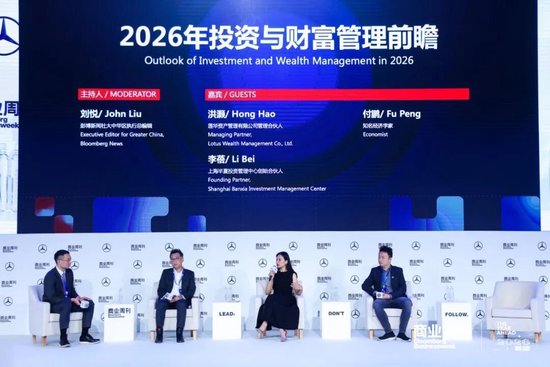
洪灝、李蓓、付鹏同台讨论:AI就是个泡沫、黄金都卖掉了,中国有个AI龙头被严重低估(附8000字实录)
Xin Lang Cai Jing· 2025-12-02 10:10
Group 1: AI Bubble Discussion - The consensus among experts is that AI represents a significant bubble, with comparisons made to the 2000 internet bubble, suggesting that the current situation may be even worse [4][10][83] - Despite the recognition of the AI bubble, investment in AI is deemed necessary due to its high market concentration, particularly in the U.S. stock market [24][74][84] - Concerns are raised about the sustainability of AI investments, likening them to past infrastructure investments in China that did not yield sufficient cash flow returns [15][81][82] Group 2: Investment Opportunities - There is a strong recommendation for investing in commodities and mining stocks, which have outperformed AI stocks this year, with gold and silver prices rising approximately 60% and 80% respectively [30][31][95] - The focus is also on non-U.S. value stocks and dividend-paying stocks, which have shown resilience and better returns compared to tech stocks [30][31][41] - The concept of "flowers blooming in winter" is introduced, highlighting companies that maintain profitability even in downturns, suggesting they are good investment opportunities [34][70][89] Group 3: Gold and Precious Metals - Gold has been highlighted as a crucial part of investment portfolios, with a significant increase in its price reflecting concerns over fiat currency, particularly the U.S. dollar [48][95][102] - Recent actions by central banks, such as Russia selling gold, are seen as warning signs for the gold market, indicating potential overvaluation [52][63][100] - The long-term narrative for gold remains strong, but caution is advised regarding current price levels, as they may not be sustainable [50][56][102] Group 4: Asset Allocation Strategies - A "barbell strategy" is recommended, balancing investments between dividend-paying stocks (beta assets) and productivity-related assets (alpha assets) [37][66][92] - Investors are encouraged to focus on low PE and PB stocks that exhibit defensive characteristics and potential for growth during economic downturns [32][70][89] - The importance of diversifying investments to avoid the risks associated with concentrated positions in high-flying sectors like AI is emphasized [71][74][96]

为什么孙正义“含泪”也要卖掉英伟达?
Jing Ji Guan Cha Wang· 2025-12-02 07:04
在12月1日举行的东京FII Priority Asia论坛上,软银集团创始人孙正义首次就11月份软银清仓英伟达之 举作出回应,称自己是"'哭'着卖出英伟达股票的",这句话迅速在全球科技与投资界引发广泛关注和讨 论。 人们不禁好奇,这位以大胆押注前沿科技而闻名的投资巨擘,为何会以如此"不情愿"的姿态,告别这家 如今如日中天的AI芯片霸主?孙正义曾将英伟达视为AI时代的"卖水人",而他要亲自下场"挖金矿"。 孙正义表示,若公司拥有无限的资金来支持其在人工智能领域的下一轮投资,包括对OpenAI的大额"押 注",那么他本不会卖出英伟达的股份。他坦言:"我一股也不想卖的,只是更需要资金来投资OpenAI 和其他项目,我是哭着卖出英伟达股票的。" 此前,在11月11日发布的财报上,软银集团表示,已经全部卖出持有的英伟达股票,合计约3210万股, 总价值约58.3亿美元。当时该公司回应称,此次出售与英伟达本身无关,而是必要的融资措施。 今年早些时候,软银同意在12月底前向OpenAI投资300亿美元,规模超过了迄今为止任何其他投资者。 对OpenAI的投资以及孙正义近期进行的一系列其他收购,包括和甲骨文等合作建设"星际 ...


中信证券:“AI泡沫”讨论已无法回避,产业走向有三种可能情形
Sou Hu Cai Jing· 2025-12-02 03:04
Core Viewpoint - The discussion around the "AI bubble" has become an unavoidable topic in the market due to the increasing scale of AI investments and ambiguous investment returns [1] Group 1: AI Industry Outlook - CITIC Securities analysts predict three potential scenarios for the AI industry over the next 12 months, with a 60% probability assigned to the baseline scenario where OpenAI faces operational challenges and investment pace in the AI sector slows down [1] - The other two hypothetical scenarios, which are considered low probability events (20% each), include significant breakthroughs in AI algorithms and a rebound in U.S. economic inflation leading to a bubble burst [1] Group 2: Investment Strategy - Given the high uncertainty surrounding short-term AI technological advancements and macroeconomic expectations, CITIC Securities advises investors to adopt a "wait and see" approach and consider "contrarian investing" strategies [1] - The recommendation includes gradually increasing the allocation weight towards the application side, specifically in internet and application software sectors [1]

21社论丨强化虚拟货币监管,维护经济金融秩序稳定
21世纪经济报道· 2025-12-02 02:37
Core Viewpoint - The central theme of the articles is the Chinese government's continued strict stance against virtual currencies, including stablecoins, emphasizing the need to combat illegal financial activities associated with them and protect citizens' financial security [1][3]. Group 1: Regulatory Actions and Implications - The People's Bank of China has reiterated its commitment to prohibiting virtual currencies and will continue to crack down on illegal financial activities related to them [1]. - Stablecoins are classified as a form of virtual currency and are currently unable to meet requirements for customer identity verification and anti-money laundering, posing risks of being used for illegal activities such as money laundering and fraud [1][2]. - The international financial community is increasingly recognizing the systemic risks posed by stablecoins, particularly in the context of the U.S. using them to reinforce the dollar's global dominance [2]. Group 2: Market Dynamics and Risks - The market for stablecoins is expanding rapidly, with projections indicating that by the end of 2028, the issuance of dollar stablecoins could reach $2 trillion, creating an additional $1.6 trillion demand for U.S. short-term government bonds [2]. - The significant growth in stablecoin supply may lead to outflows from retail bank deposits, putting pressure on banks and potentially resulting in a $6.6 trillion deposit diversion in the U.S. banking sector [2]. - The largest dollar stablecoins hold substantial amounts of U.S. short-term government bonds, and a potential run on these stablecoins could trigger a sell-off of these assets, leading to broader financial market risks [2]. Group 3: Market Sentiment and Speculation - The instability of stablecoins is increasing, as evidenced by the recent significant de-pegging of USDe, which is not backed by fiat or hard assets but rather by users collateralizing their crypto assets [3]. - Speculative activities in the cryptocurrency market are being fueled by optimism in the U.S. stock market driven by AI advancements, creating a dual risk where concerns over an AI bubble could lead to a sell-off in crypto assets [3]. - The interconnectedness of AI infrastructure financing and cryptocurrency speculation presents substantial financial risks, particularly in a volatile market environment [3].

预计中央经济工作会议政策定调更积极:环球市场动态2025年12月2日
citic securities· 2025-12-02 02:18
Market Overview - Chinese market opened positively in December, with the consumer electronics sector performing notably well[3] - European stock markets generally declined due to weak manufacturing activity, leading to profit-taking[3] - US stocks paused their upward momentum, influenced by a cryptocurrency crash and hints of interest rate hikes from the Bank of Japan[3] Economic Policies - The upcoming Central Economic Work Conference in December is expected to set a more proactive policy tone for 2026, focusing on consumption expansion and risk mitigation in real estate[6] - The ISM Manufacturing Index indicates that US factory activity shrank at the fastest pace in four months in November[6] Currency and Commodities - The Bank of Japan's hawkish comments have strengthened the yen against major currencies, with increased bets on a December rate hike[4] - International oil prices rose due to geopolitical tensions and supply concerns, with silver and copper prices reaching new highs[4] Fixed Income - US Treasury yields rose by 4-8 basis points, with a notable $16 billion in corporate bonds priced[5] - The Bank of Japan's signals regarding interest rate hikes have pushed Japanese bond yields to their highest levels since 2008, negatively impacting US bonds[29] Stock Performance - In the US, the Dow Jones fell by 0.9% to 47,289.3 points, while the S&P 500 and Nasdaq also experienced declines of 0.5% and 0.4%, respectively[9] - Hong Kong's Hang Seng Index rose by 0.67%, driven by gains in large tech stocks and a rebound in consumer electronics[11] Sector Insights - Macau's gaming revenue in November grew by 14.4% year-on-year, indicating a strong recovery in the sector[13] - The A-share market saw the Shanghai Composite Index rise by 0.65%, with significant gains in consumer electronics and metal stocks[15]
突然崩了!加密货币全线暴跌,超27万人爆仓!白银,再创新高
Sou Hu Cai Jing· 2025-12-02 00:33
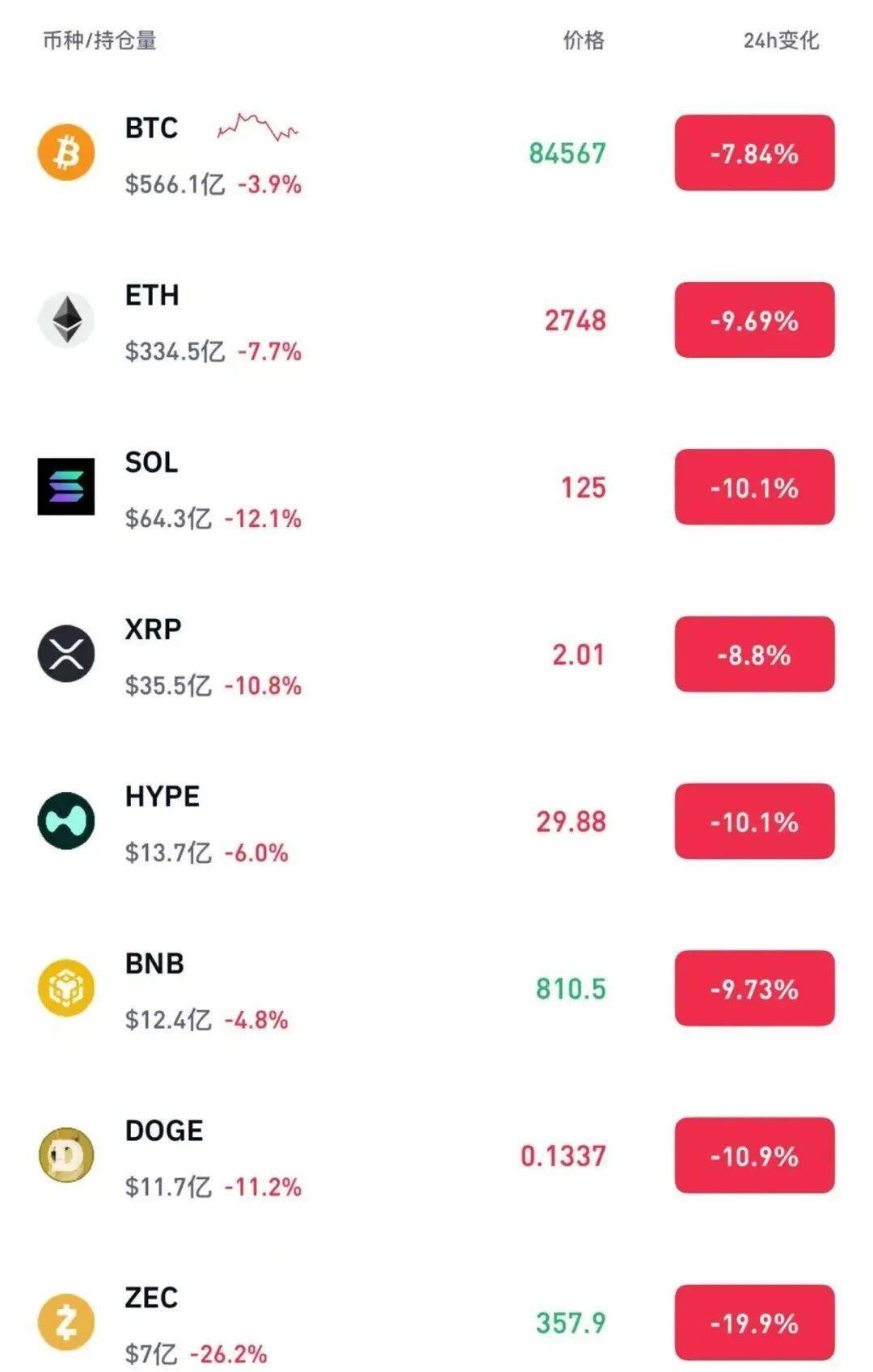
Cryptocurrency Market - The cryptocurrency market experienced a significant sell-off, with Bitcoin dropping nearly 8% and Ethereum falling close to 10% [2] - Over the past 24 hours, more than 272,000 traders were liquidated, resulting in a total liquidation amount of approximately $993 million [5] - Major cryptocurrencies such as SOL and XRP also saw declines of over 10% [3] Market Dynamics - Standard & Poor's downgraded the stability assessment of the largest stablecoin, USDT, to the lowest level, raising concerns about its collateral adequacy if Bitcoin prices fall [7] - The Bank of Japan's potential interest rate hikes have increased downward pressure on risk assets, including cryptocurrencies, as rising Japanese government bond yields may lead to accelerated unwinding of yen carry trades [7] Silver Market - Silver prices surged, with spot silver reaching a new high of $58.67 per ounce, marking a more than 4% increase [8] - Analysts suggest that the combination of a loose monetary environment and declining global silver inventories is tightening supply, which may further drive prices upward [8] Stock Market Outlook - Concerns over potential valuation bubbles in AI stocks, particularly regarding Nvidia, have led to a divided sentiment in the U.S. stock market [9] - The Chinese stock market is viewed as being in a different phase compared to the U.S., with analysts suggesting that domestic tech stock valuations are relatively reasonable and driven by earnings [10] - The A-share market is showing signs of a potential year-end rally, with specific sectors like AI-related stocks expected to lead the way [10]
中信证券推演:将OpenAI陷入经营危机、AI产业投资节奏放缓视为基准情形
Sou Hu Cai Jing· 2025-12-02 00:32
中信证券研报称,考虑到AI投资规模持续增大+模糊的投资回报率,关于"AI泡沫"的讨论已成为市场无 法回避的话题,结合算法进步、核心公司经营策略、宏观流动性等层面核心要素的推演,未来12个月, 我们判断,AI产业的走向主要存在三种可能情形,我们将OpenAI陷入经营危机、AI产业投资节奏放缓 视为基准情形(60%概率),对于当下的AI产业而言,这可能是最为合理、可能的情形。而短期AI算法 实现实质性突破、美国经济通胀反弹&泡沫破灭则分属假设情形的两个极端,我们均将其视为小概率事 件,对应概率均为20%。面对短期AI技术进步、宏观预期的高度不确定性,在AI领域,我们仍建议投资 者坚持"边走边看""逆向投资"的基本思路,同时逐步加大应用侧(互联网、应用软件)配置权重。 【免责声明】本文仅代表作者本人观点,与和讯网无关。和讯网站对文中陈述、观点判断保持中立,不 对所包含内容的准确性、可靠性或完整性提供任何明示或暗示的保证。请读者仅作参考,并请自行承担 全部责任。邮箱:news_center@staff.hexun.com ...
中信证券:AI泡沫市场无法回避,未来12个月AI产业走向主要存在三种可能情形
Sou Hu Cai Jing· 2025-12-02 00:32
Core Viewpoint - The ongoing discussions about the "AI bubble" are becoming unavoidable in the market due to the increasing scale of AI investments and ambiguous investment returns. The future of the AI industry over the next 12 months is predicted to have three potential scenarios, with a 60% probability assigned to OpenAI facing operational crises and a slowdown in AI investment rhythm, while significant breakthroughs in AI algorithms and a rebound in U.S. inflation are considered low-probability events at 20% each [1][2]. Scenario Analysis - **Scenario 1 (20% Probability): Substantial Breakthrough in AI Algorithms** - Recent advancements, such as Google's Gemini 3, have not led to a fundamental breakthrough but rather an extension of existing AGI model capabilities. The skepticism regarding the limitations of LLMs is growing, indicating that significant breakthroughs may require new paths outside the current technological framework [3]. - AI application usage among S&P 500 companies has surpassed 60%, but the application scenarios remain limited to areas like coding and customer service, with significant constraints in high-certainty and complex logic fields [3]. - **Scenario 2 (60% Probability): OpenAI Facing Operational Crisis** - OpenAI, as a leader in the GenAI wave, is experiencing a precarious situation as competitors like Google have surpassed its AGI model capabilities. Potential short-term impacts include a risk of losing paid users for ChatGPT, which could undermine the company's commercial foundation [4]. - OpenAI's ability to raise funds in the primary market is expected to decline significantly, leading to risks in fulfilling its massive orders (valued at $2 trillion). If OpenAI's business suffers, there may be a risk of downward revisions in performance expectations for the semiconductor and hardware sectors, while the internet and application software sectors could benefit [4]. - **Scenario 3 (20% Probability): U.S. Inflation Rising and "Bubble" Bursting** - Historical data suggests that significant capital expenditures can lead to resource crowding out in other economic sectors, structural inflation, and tightening financial liquidity, which are often key factors in the bursting of industry bubbles. The recovery in demand for consumer electronics and traditional data centers, along with rising capacity utilization rates in semiconductor and hardware companies, is increasing the structural inflation risks associated with AI CAPEX [5][6]. - The combination of a robust fiscal policy and loose monetary policy, alongside resilient inflation data, indicates that a rebound in U.S. inflation in the second half of 2026 is a risk that cannot be ignored. If inflation data rises, it could lead to liquidity tightening that may burst the AI bubble and push the U.S. economy into a brief recession [6]. Investment Recommendations - Given the high uncertainty surrounding short-term AI technological advancements and macroeconomic expectations, it is advised that investors adopt a "watch and see" approach and consider "contrarian investing" strategies while gradually increasing allocations in application sectors such as the internet and application software [1][7].
中信证券:将OpenAI陷入经营危机、AI产业投资节奏放缓视为基准情形
Xin Lang Cai Jing· 2025-12-02 00:16
Core Viewpoint - The discussion around the "AI bubble" has become an unavoidable topic in the market due to the increasing scale of AI investments and ambiguous investment returns [1] Group 1: AI Industry Outlook - The future of the AI industry is projected to have three possible scenarios over the next 12 months, with a 60% probability assigned to the baseline scenario of OpenAI facing operational difficulties and a slowdown in AI investment pace [1] - The other two hypothetical scenarios, which are short-term substantial breakthroughs in AI algorithms and a rebound in U.S. economic inflation leading to bubble bursts, are considered low probability events, each with a 20% likelihood [1] Group 2: Investment Strategy - Given the high uncertainty surrounding short-term AI technological advancements and macroeconomic expectations, the industry suggests that investors adopt a "wait and see" approach and consider "contrarian investing" as a fundamental strategy [1] - There is a recommendation to gradually increase the allocation weight towards the application side, specifically in internet and application software sectors [1]
格林大华期货早盘提示-20251202
Ge Lin Qi Huo· 2025-12-02 00:07
更多精彩内容请关注格林大华期货官方微信 格林大华期货研究院 证监许可【2011】1288 号 2025 年 12 月 2 日 星期二 研究员: 于军礼 从业资格: F0247894 交易咨询资格:Z0000112 联系方式:yujunli@greendh.com 早盘提示 | 板块 | 品种 | 多(空) | | | --- | --- | --- | --- | | | | | 【重要资讯】 | | | | | 1、白银价格创下新高。中国白银库存降至 715.8 吨的七年新低。这一行情不仅反 | | | | 映 | 10 月份中国创纪录出口 660 吨白银引发的供需失衡,更印证供应驱动型涨价正 | | | | | 从贵金属向工业金属蔓延,成为大宗商品的普遍趋势。 | | | | | 2、半夏投资创始人李蓓表示,富人面临财富无处安放的资产荒。股市赚钱效应将 | | | | | 引发居民储蓄搬家、国内机构资产配置重构,更会触发全球资金重新配置、海外资 | | | | | 本回流中国市场的浪潮。这一轮行情非常可能会泡沫化,达到相当的高度。 | | | | | 3、马斯克表示,未来 SpaceX、特斯拉和 xAI ...