
个性化

Search documents
2025年豪宅创新的趋势,进化太快了
3 6 Ke· 2025-08-04 02:31
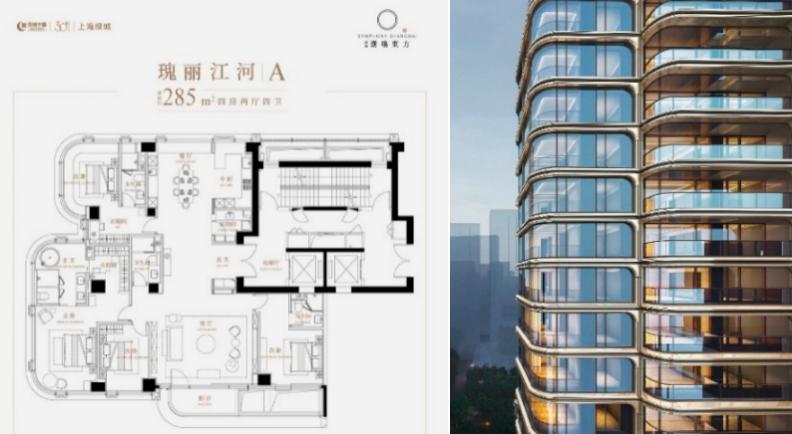
Core Insights - The article discusses the evolving preferences of high-end homebuyers, emphasizing a shift from investment-driven purchases to a focus on long-term living experiences. Buyers are increasingly seeking personalized, comfortable, and aesthetically pleasing living environments that provide a sense of belonging and community [1][20]. Group 1: Product Trends - Trend 1: Personalized Indoor Space - Buyers are now looking for unique living scenarios rather than just standard layouts, prompting developers to create open spaces with fewer structural constraints [1]. - Trend 2: Family-like Property Services - High-quality property management that fosters a sense of community and family is becoming a competitive advantage, with services tailored to enhance residents' daily lives [7]. - Trend 3: Multi-dimensional Landscape - There is a growing demand for properties that integrate nature and art into their design, creating a more immersive living experience [8][9]. - Trend 4: Ritualistic Homecoming - Developers are enhancing the experience of returning home by improving garage aesthetics and functionality, making it a welcoming transition from the outside world [11]. - Trend 5: Sense of Belonging - Luxury properties are increasingly focusing on community dynamics, ensuring that all residents feel a sense of equality and comfort within the space [14]. - Trend 6: Cultural Aesthetics - Homes are now seen as a reflection of personal identity, leading to collaborations with artists to enhance the cultural value of communities [16][18]. Group 2: Market Dynamics - The article highlights that despite some properties having excellent locations and configurations, they may still struggle to sell, while others that meet specific buyer expectations can achieve unexpected sales success [1]. - The shift in buyer mentality towards long-term living and comfort is reshaping the luxury real estate market, indicating a need for developers to adapt to these changing preferences [20].

半年盘点|国内葡萄酒企业日子仍艰难,“洋和尚”的经也不好念
Di Yi Cai Jing Zi Xun· 2025-07-31 07:51
Group 1: Industry Overview - The wine industry is facing ongoing economic fluctuations, impacting non-essential products like wine, leading to a continuous decline in performance [1] - Major wine companies in China have reported worsening losses for the first half of the year, with companies like Weilang and ST Tongpu projecting significant net losses [2] - A survey indicated that 59.4% of domestic wine industry participants reported a decline in performance over the past three years, highlighting the industry's struggles [2] Group 2: Market Sentiment and Future Outlook - Industry participants are cautious about the market for the next two years, with many expressing a neutral to slightly optimistic outlook despite challenges [3] - Zhangyu's general manager noted a "cliff-like" decline in wine consumption due to economic conditions, leading to reduced investments from distributors [3][4] - The global wine market is also under pressure, with a projected decline in production and consumption for 2024, marking the lowest levels since 1961 [5] Group 3: Strategic Shifts and Innovations - The domestic wine market is exploring new strategies such as "popularization," "trendy drinks," and lower alcohol content products to attract consumers [7] - A significant portion of industry participants believes that white wine and low-alcohol trendy drinks represent potential growth areas [7] - Companies are launching affordable wine products to lower entry barriers for consumers, with positive market feedback for low-priced white wines [8]


研判2025!中国电热毯行业产业链、市场规模及进出口情况分析:行业技术创新与安全升级并进,市场增长与政策规范引领高质量发展[图]
Chan Ye Xin Xi Wang· 2025-07-22 01:27
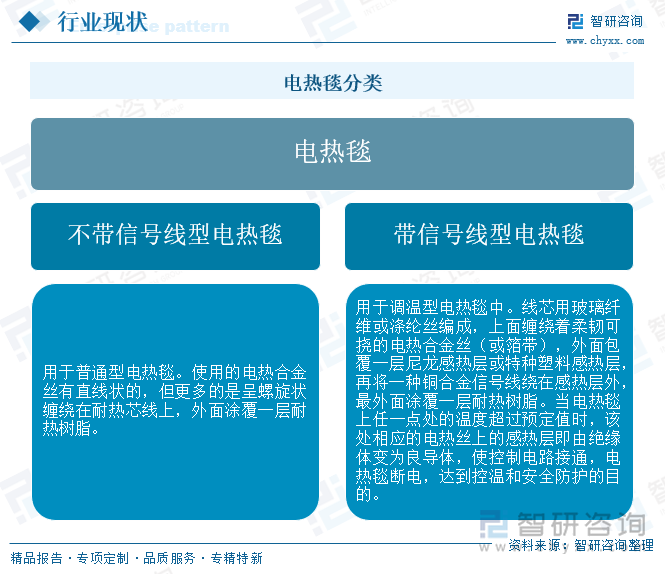
Core Viewpoint - The electric blanket industry in China is experiencing significant advancements in heating materials, smart control, and safety, with a projected market size of 5.9 billion yuan in 2024, reflecting a year-on-year growth of 25.53% [1][11]. Industry Overview - Electric blankets convert electrical energy into heat and are primarily composed of heating wires, temperature controllers, and power lines. They are used mainly in cold seasons to provide warmth [1][4]. Industry Development History - The electric blanket industry in China has evolved through four stages: 1. Initial stage (before 1996) focused on technology introduction and safety issues. 2. Development stage (1996-2010) saw the establishment of safety standards and improvements in heating wire design. 3. Maturity stage (2010-2020) introduced new heating materials like carbon fiber and graphene, enhancing efficiency and safety. 4. Innovation stage (2020-present) emphasizes smart technology integration and health benefits [4][5]. Industry Supply Chain - The supply chain includes upstream materials such as heating wires, fabrics, and temperature sensors, with manufacturing in the midstream and end-users primarily being households, commercial spaces, and healthcare sectors [7]. Market Size - The electric blanket market in China is projected to reach 5.9 billion yuan in 2024, with a 25.53% increase from the previous year. New regulations will enforce stricter safety standards and electromagnetic radiation limits [11][13]. Key Enterprises - The industry is characterized by a few dominant players, with Rainbow Group leading the market. The company has over 150 patents and is involved in the entire production chain [17][19]. Industry Development Trends 1. **Smart and Personalized Development**: Future electric blankets will integrate with smart home systems for remote control and personalized settings [24]. 2. **Health Functions and Eco-friendly Materials**: The focus will be on health benefits and the use of sustainable materials, including features like infrared heating and biodegradable packaging [26]. 3. **Market Demand and Technological Innovation**: The market is expected to grow to 7 billion yuan by 2025, driven by increased consumer awareness and technological advancements [27].

趋势研判!2025年中国儿童床垫行业发展背景、产需情况、市场规模及前景展望:随着消费升级和育儿观念革新,儿童床垫规模增长至179亿元[图]
Chan Ye Xin Xi Wang· 2025-07-19 02:36
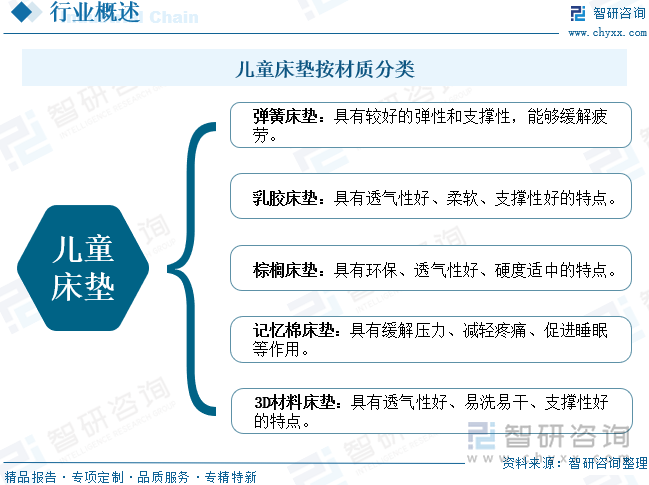
Core Insights - The children's mattress market in China is experiencing rapid growth, driven by rising income levels and evolving parenting concepts, with market size projected to increase from 9.216 billion yuan in 2015 to 17.908 billion yuan in 2024, representing a compound annual growth rate (CAGR) of 7.66% [1][17] - The demand for high-quality, functional, and safe products is expected to continue driving market expansion, particularly as younger generations of parents become the primary consumers [1][17] Industry Overview - Children's mattresses are designed to support the unique skeletal development of children, categorized into four growth stages: 1-5 years, 8-10 years, 11-13 years, and 14-18 years [3][5] - The industry includes various types of mattresses, such as spring, latex, palm, memory foam, and 3D material mattresses [3] Market Demand and Population Statistics - The total population of children aged 0-14 in China is projected to be 223 million in 2024, providing a solid foundation for the children's mattress market despite a slight decline from 2023 [7] - The demand for natural latex has been increasing, with production expected to reach approximately 371,400 tons in 2024, while demand is projected to grow from 700,800 tons in 2015 to 1,026,400 tons in 2024 [14] Policy Support - The Chinese government has implemented various policies to promote the replacement of old home furnishings, benefiting the children's mattress sector as part of the broader home improvement market [9][11] - Key policies include the "2025 Home Renovation 'Renewal' Work" and the "Consumption Promotion Special Action Plan," which aim to support green and intelligent home products [9][11] Industry Structure - The children's mattress industry has a well-established supply chain, including upstream raw material suppliers, midstream manufacturers, and downstream sales channels [12] - The rise of e-commerce has made online sales a significant channel for children's mattress distribution [12] Competitive Landscape - The industry consists of numerous manufacturers, with around 20 major companies producing over 200,000 mattresses annually [20] - Major brands include Xilinmen, Mousse, Mengbaihe, and others, with many companies focusing on mid-range products [20][21] Development Trends - The industry is moving towards smart technology integration, with future mattresses expected to incorporate sensors and AI for real-time monitoring and adjustment of sleep quality [27] - Environmental sustainability is becoming a fundamental requirement, with a shift towards using natural materials and reducing chemical additives in production [28] - There is a growing trend towards personalized products, with designs tailored to different age groups and preferences, enhancing consumer engagement [29]


研判2025!中国电动扭扭车行业发展历程、产业链、市场规模、重点企业及未来展望:电动扭扭车规模达367亿元,未来将向个性化、高端化、智能化方向发展[图]
Chan Ye Xin Xi Wang· 2025-07-12 02:30
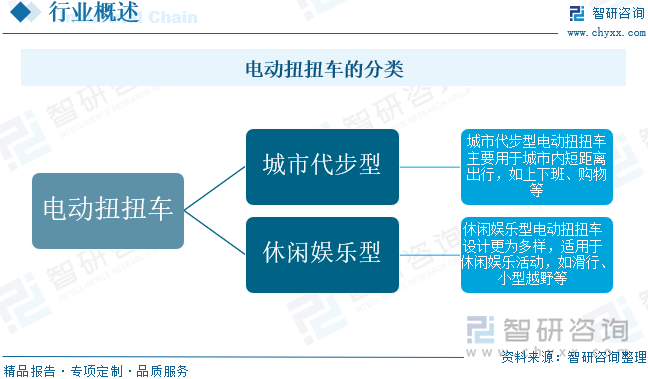
Core Viewpoint - The electric hoverboard market in China is experiencing significant growth, with the market size projected to increase from 16.44 billion yuan in 2018 to 36.7 billion yuan by 2024, representing a compound annual growth rate (CAGR) of 14.32% [1][15]. Industry Overview - Electric hoverboards are intelligent personal transportation tools based on dynamic balance principles, featuring advanced electric drive systems and precise sensing technology [1][4]. - The market is segmented into urban commuting and recreational types, catering to short-distance travel and leisure activities [4]. Advantages of Electric Hoverboards - Electric hoverboards are compact, suitable for various age groups, promote parent-child interaction, and are more affordable compared to other toys [5]. Industry Development Stages - The industry has evolved through three main stages: 1. **Emerging Stage**: Focused on simple toy forms for children with basic functionalities. 2. **Growth Stage**: Rapid market expansion with diversified products and features, including smart technologies like GPS and Bluetooth. 3. **Mature Stage**: Emphasis on smart, eco-friendly, and multifunctional designs, including lithium battery adoption and integrated fitness features [8]. Industry Chain - The upstream of the electric hoverboard industry includes raw materials and components such as engineering polypropylene, ABS plastic, and electric motors [11]. Key Companies - Notable companies in the electric hoverboard market include Ninebot, Shenzhen Lexing Tianxia Technology, Hangzhou Qike Intelligent Technology, and others, which are leveraging strong R&D capabilities and advanced production technologies [2][3][17]. Market Trends - **Personalization**: Future products will focus on customizable designs to meet diverse user preferences [24]. - **High-end Products**: Companies are expected to shift towards high-end offerings with premium materials and advanced features [25]. - **Intelligent Features**: Integration of AI and IoT functionalities will enhance user experience and product value [27]. - **Safety Enhancements**: Increased focus on battery management and safety features to improve overall product reliability [28].
一位厂二代无班可接之后
投中网· 2025-07-09 02:12
Core Viewpoint - The article highlights the transformation of the manufacturing industry in Yiwu, focusing on the journey of a young entrepreneur, Zhang Xiaojie, who has successfully navigated the challenges of a saturated market by innovating product designs and understanding consumer needs [4][5][10]. Group 1: Entrepreneurial Journey - Zhang Xiaojie, born in 1996, is a second-generation factory owner who has achieved sales of 200 million through innovative product offerings [4][6]. - He faced the challenge of "no class to inherit" as his father's factory struggled in a highly competitive market, prompting him to carve out a new path [5][12]. - The article illustrates Zhang's approach to entrepreneurship, which involves continuous market research and consumer feedback to drive product innovation [7][8]. Group 2: Product Innovation - Zhang's products, such as a redesigned ice bucket and microwave heating cover, are based on consumer insights and address common pain points [6][8]. - The article details the iterative process of product development, from initial concept to market launch, which typically takes about three months [7][8]. - Zhang's success is attributed to his ability to identify gaps in the market and create unique products that stand out from competitors [10][21]. Group 3: Market Dynamics - The Yiwu manufacturing landscape has shifted from low-cost, high-volume production to a focus on quality, design, and brand differentiation [21][23]. - Zhang's strategy includes setting higher price points for his products to maintain healthy profit margins, contrasting with the traditional low-cost competition [21][22]. - The article notes that many second-generation factory owners face similar challenges and opportunities, indicating a broader trend of transformation within the industry [23]. Group 4: Industry Trends - The article emphasizes the importance of adapting to new consumer behaviors and market channels, as seen in Zhang's approach to e-commerce and social media [9][23]. - It highlights the shift in Yiwu's manufacturing from generic products to personalized and branded offerings, reflecting a significant industry evolution [21][23]. - The narrative suggests that the future of manufacturing in Yiwu lies in innovation and the ability to respond to changing consumer demands [23].

惠泉啤酒20250703
2025-07-03 15:28
Key Points Summary of Huiquan Beer Conference Call Industry Overview - The Chinese beer industry is currently in a stage of stock competition, focusing on personalization, premiumization, health, and youthfulness [3][23]. Company Performance - Huiquan Beer achieved record high performance in Q1, driven by refined market cultivation, performance management system implementation, standardized execution, and enhanced technological innovation [2][3]. - The company reported significant growth in revenue and profit, outperforming the industry [3]. Product Strategy - Huiquan Beer has developed a product matrix led by key products such as Yina Beer, Xiaoxian Beer, Laohuiquan Beer, and Huiquan 1983, targeting the premium market and significantly contributing to profits [2][4]. - The company is actively promoting craft beer series products, such as Chulian Craft and White Tea Beer, to attract loyal consumers [4]. - The proportion of premium products is currently around 20%, with plans for continuous improvement [2][12]. Market Expansion - Huiquan Beer is expanding into diverse consumption scenarios, including traditional dining, nightlife, music festivals, barbecue stalls, and camping, particularly in the Quanzhou market where the market share has reached approximately 30% [2][6][10]. - The company plans to replicate the successful Quanzhou market model in other regions [10][11]. Pricing Strategy - The company has begun to gradually increase prices for its Yimai products, which account for over 50% of total sales, with plans to stabilize prices at 7 yuan and gradually raise them to 8 yuan [2][9]. - The cancellation of 5 yuan products in the Fujian region indicates a strategic shift towards higher pricing [9]. Cost Management - Raw material costs are expected to remain stable, with the company implementing price locking for mass products by the end of the year [20]. - The overall cost control measures are favorable for the company's development [7][20]. Marketing and Sales Strategy - Huiquan Beer focuses on precise marketing investments targeting specific consumer groups rather than broad-based spending [15][16]. - The company has established a strong presence in community retail, with restaurant sales accounting for about 30% of total sales [19]. Financial Outlook - The company anticipates improvements in gross margin due to product structure optimization and price increases [21]. - Huiquan Beer plans to continue increasing its dividend rate as a commitment to returning value to investors [26]. Competitive Landscape - The competitive environment in Fujian is open, with major competitors including Budweiser and Snow Beer. Huiquan Beer aims to capture more market share from competitors [23][24]. - The company has a strong focus on product quality, which has led to high consumer recognition and loyalty [24]. Capacity and Investment Plans - Current production capacity is approximately 500,000 tons, with a designed capacity of 800,000 tons, indicating room for improvement in utilization [28]. - The company does not plan to build new production lines but will invest in automation, quality upgrades, and technological innovation [27].

2025年中国玻璃打印机行业功能、产业链结构、市场规模、重点企业经营情况及发展趋势研判:随着个性化定制需求增长,玻璃打印机渗透率有望进一步加深[图]
Chan Ye Xin Xi Wang· 2025-06-30 01:28
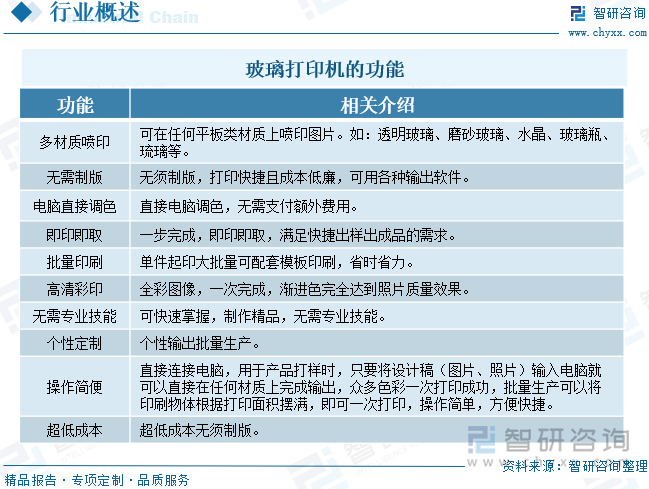
Industry Overview - The glass printer industry is experiencing rapid growth due to advancements in digital technology, allowing for direct image printing on glass without the need for traditional plate-making processes [1][3][13] - The market size for the glass printer industry in China is projected to be approximately 251 million yuan in 2024, a decline from the peak in 2022, influenced by macroeconomic fluctuations and reduced consumer budgets [1][13] - Future growth is expected in high-end decoration, electronic products, and architectural glass sectors, driven by increasing demand for personalized customization and advancements in industrial printing technology [1][13] Key Features of Glass Printers - Glass printers offer multiple material printing capabilities, allowing for direct printing on various flat materials such as glass, crystal, and ceramics [4][5] - They eliminate the need for plate-making, enabling quick and low-cost printing with high-quality results [4][5] - The technology supports single-piece printing and batch production, making it suitable for small-scale, high-precision demands [4][5] Industry Chain - The upstream of the glass printer industry includes raw materials like steel, glass substrates, inks, and core components such as print heads and control chips [7] - The midstream involves the manufacturing of glass printers, while the downstream applications span across construction decoration, home customization, advertising, automotive, and crafts [7][9] Market Dynamics - The demand for steel, a crucial raw material for glass printer manufacturing, is increasing due to growth in construction and manufacturing sectors, with China's steel production projected to rise from 1.05 billion tons in 2017 to 1.4 billion tons by 2024 [9] - The craft industry, a downstream application of glass printers, is also growing, with the market size expected to reach approximately 62.7 billion yuan in 2024, driven by rising consumer income and changing preferences [10] Competitive Landscape - The glass printer industry in China is characterized by a technology-driven and market-segmented competitive landscape, with key players like Shenzhen Longrun Color Printing and Dongguan Jihui focusing on high-end markets and specialized applications [15][16] - Local companies are gradually overcoming international technology barriers through core component development, promoting domestic substitution [15] Future Trends - The industry is expected to move towards smart technology integration, utilizing AI for optimizing printing processes and enhancing operational efficiency [22] - Environmental sustainability will be a focus, with innovations aimed at reducing energy consumption and emissions through the use of water-based inks and modular designs [23] - The rise in consumer demand for customization will drive the development of flexible production capabilities, allowing for intricate designs and functional printing applications [24]
打破传统零食局限 挖掘细分消费场景 果冻行业呈现强劲发展活力
Zhong Guo Chan Ye Jing Ji Xin Xi Wang· 2025-06-20 23:12
Core Insights - The jelly industry in China has shown significant growth, with market size increasing from 17.8 billion yuan in 2020 to 31 billion yuan in 2024, reflecting a compound annual growth rate (CAGR) of 14.9% [1] - By 2024, China is projected to become the largest producer and consumer of jelly globally, with the market expected to exceed 57 billion yuan by 2029 due to consumption upgrades and health-oriented demands [2] - The jelly market is characterized by a tiered competitive landscape, with well-known brands dominating the first tier and emerging brands challenging them in specific regions or segments [3] Market Segmentation - Cup jelly remains the market leader, holding a 68.7% market share in 2024, while squeeze jelly is experiencing rapid growth, with its market size increasing from 1.1 billion yuan in 2020 to 4.7 billion yuan in 2024, achieving a CAGR of 43.8% [2] - The traditional consumer base primarily consists of teenagers, but recent innovations have expanded the age demographic of jelly consumers [2] Product Innovation - Recent years have seen a surge in product innovation within the jelly industry, with new categories like slush jelly and oversized jelly gaining popularity, catering to diverse consumer needs [4] - Health and functionality have become key innovation directions, with products incorporating proteins, dietary fibers, vitamins, and probiotics to meet various health demands [5][6] - The emergence of hangover jelly, which utilizes specific ingredients to reduce alcohol absorption, represents a novel product category appealing to younger consumers [5][6] Future Development Prospects - The jelly industry is expected to further break traditional snack boundaries, incorporating more functional ingredients to meet health-conscious consumer demands [7] - Brands are encouraged to leverage big data and AI for personalized product design, focusing on individual consumer preferences [7] - Cross-industry collaborations are anticipated to enhance product diversity and consumer experiences, such as partnerships with pharmaceutical and fitness organizations [7][8]
毕业游催热暑期旅游市场 出境游预订量显著攀升
Zheng Quan Ri Bao Zhi Sheng· 2025-06-11 17:15
Group 1 - The tourism market is experiencing a peak in bookings as summer approaches, with university students leading the demand for travel [1] - Graduation travel is particularly popular, with a notable increase in bookings for graduation travel products from June 9 to 11, with major cities like Beijing, Shanghai, Chengdu, and Guangzhou being popular departure points [1] - Theme parks are the most favored travel option among graduates, with Shanghai Disneyland, Beijing Universal Resort, and Hong Kong Disneyland ranking as the top three in terms of bookings [1] Group 2 - The average price of domestic and international flights has been steadily increasing, with a significant rise expected in July, prompting travelers to adjust their travel plans to avoid peak times [1] - Airlines are responding to the high demand by adding new routes, such as China Southern Airlines launching direct flights from Harbin to Vladivostok and Guangzhou to Almaty, increasing their international and regional routes to 150 [1] - Data indicates that university students are trying to travel earlier to avoid the peak of middle school students' travel, with family-oriented destinations expected to account for over 60% of summer consumption [1] Group 3 - The outbound tourism market is recovering due to improved visa accessibility, restored flight capacity, and optimized supply chains, with popular short-haul destinations including Japan, UAE, and Southeast Asia [2] - Hotel bookings for outbound travel have expanded to cover 1,788 cities globally, an increase of 375 cities compared to last year, with some popular destinations seeing hotel booking increases of nearly 70% year-on-year [2] - The tourism market is shifting from a focus on "traffic competition" to "price restructuring," emphasizing quality, personalization, and differentiation as key competitive factors [2] Group 4 - The summer tourism market is expected to fully recover and undergo structural upgrades by 2025, with family-oriented travelers becoming a core driving force [3] - The market will exhibit three main trends: a focus on family travel, prominent themed experiences, and an increase in demand for deep experiential travel [3] - These changes are anticipated to present new opportunities and challenges for the tourism industry [3]