
主题投资

Search documents
国联民生研究:2026年1月金股推荐
Minsheng Securities· 2025-12-31 06:19
Group 1 - The market is experiencing a decline in volatility, which may create conditions for a breakthrough of previous highs. However, there may be increased volatility in early January due to profit-taking by investors and potential redemption pressure in the ETF market [1] - The overall profit growth of the market is gradually recovering but lacks elasticity, leading to a focus on thematic assets and investment opportunities under grand narratives [1] - It is suggested to start gradually positioning in various thematic investment opportunities in mid to late January [1] Group 2 - The report recommends a selection of "golden stocks" for January 2026, including companies such as Midea Group, Senqilin, and China Ping An, each with specific investment logic and growth potential [15] - Midea Group is expected to benefit from strong B-end revenue growth and a high dividend payout ratio, while Senqilin is positioned to gain from overseas production capacity and pricing power due to EU tariffs [15] - Sunshine Power is anticipated to see high growth in its energy storage business, driven by demand in North America and new product launches [15] Group 3 - Key financial data for the recommended stocks indicates expected earnings per share (EPS) growth for Midea Group from 5.07 yuan in 2024 to 6.37 yuan in 2026, with a price-to-earnings (PE) ratio decreasing from 16 to 12 [16] - Senqilin's EPS is projected to increase from 2.11 yuan in 2024 to 1.83 yuan in 2026, with a PE ratio expected to drop from 10 to 12 [16] - China Ping An is forecasted to have an EPS growth from 6.95 yuan in 2024 to 9.51 yuan in 2026, with a PE ratio decreasing from 10 to 7 [16]





银行理财含“权”量持续攀升,权益类公募产品扩容至81只
2 1 Shi Ji Jing Ji Bao Dao· 2025-12-31 05:57
Core Insights - The article highlights the increasing trend of bank wealth management products focusing on equity investments, driven by a low-interest-rate environment and the need for higher returns [2][4]. Group 1: Performance of Wealth Management Products - As of December 25, 2025, three wealth management companies, namely Hangyin Wealth Management, Zhongyou Wealth Management, and Ping An Wealth Management, had products listed in the "Fixed Income + Equity" public offering category, with Hangyin having the most products at five [1]. - The weighted annualized return of the listed products is generally high, with six products exceeding 7% and the top three products from Hangyin Wealth Management surpassing 8% [2]. - The top three products from Hangyin Wealth Management increased their equity asset allocation in Q3 2025, with equity asset proportions of 11.76%, 12.20%, and 8.80% respectively [2]. Group 2: New Product Launches and Market Trends - In December 2025, 19 new equity public offering products were launched by wealth management companies, with Huaxia Wealth Management releasing 18 index-based products linked to various sectors such as brain-computer interfaces and AI healthcare [2]. - Minsheng Wealth Management also introduced a new public offering product linked to the CSI Technology Index, focusing on technology innovation with a high-risk rating [3]. - A total of 81 equity public offering products have been issued by 13 wealth management companies, with over half (44 products) established in 2025, indicating a growing trend in equity investment [3]. Group 3: Market Dynamics and Future Outlook - Despite the increase in the number of equity products, the proportion of equity investments in bank wealth management remains low, accounting for only 2.1% of the total market size as of Q3 2025, with approximately 720.93 billion yuan in equity assets [3]. - The article suggests that bank wealth management is entering a more certain phase for equity investments, with policies encouraging increased equity allocations and various investment strategies like index and thematic investments becoming mainstream [4]. - Wealth management companies are expected to utilize multiple methods, including offline IPOs and cornerstone investments, to participate in capital markets and achieve stable returns [4].
渤海证券研究所晨会纪要(2025.12.26)-20251226
BOHAI SECURITIES· 2025-12-26 05:19
Macro and Strategy Research - The report indicates that with the easing of uncertainties in US-China trade, external demand is expected to remain stable, while effective domestic demand still needs to be boosted [2] - The central economic work conference has set a relatively restrained overall policy for 2026, but structural policy optimization is expected to bring some highlights [2] - The report forecasts that the scale of equity public funds will continue to expand, and financing scale is expected to maintain steady growth, supporting positive liquidity expectations in the investment sector [3] - The market is anticipated to return to a slowly rising central trend after recent fluctuations, with a focus on long-term investments and thematic investments, particularly in technology sectors [3] Industry Research - The report highlights that companies like Zhipu and MiniMax are progressing towards IPOs in Hong Kong, which may provide key benchmarks for industry valuation and financing systems [5] - ByteDance is projected to invest approximately 160 billion yuan in AI infrastructure in 2026, indicating significant capital inflow into the AI sector [5] - Google's parent company has acquired Intersect for $4.75 billion, enhancing its data center power layout, which reflects ongoing investment trends in the tech industry [6] - The report notes that the computer industry has seen a 1.27% increase in the Shenwan Computer Index from December 18 to December 24, with most sub-sectors experiencing growth [6] - The report emphasizes that the successful IPOs of Zhipu and MiniMax could lead to a virtuous cycle of R&D investment and commercialization in the AI sector [6] - Domestic enterprises are accelerating their layout in consumer applications, which is expected to help form a comprehensive AI business ecosystem [6]
中辰集团许绍新:2026年A股将呈现“N字形”走势
Mei Ri Jing Ji Xin Wen· 2025-12-25 14:47
Group 1: A-Share Market Outlook - The A-share market is expected to show an N-shaped trend in 2026, with a peak in Q1, followed by a likely consolidation in Q2 and Q3, and new highs in the second half of the year [1] - The Shanghai Composite Index (SHCI) is facing a significant resistance at the 4000-point level, which has been a downward trend line for 17 years, making it challenging to break through [1] - The SHCI has successfully broken the 3700-point resistance, indicating a consolidation phase between 3800 and 4000 points, but the duration of this consolidation may delay the breakout in Q1 2026 [1] Group 2: Semiconductor Industry Analysis - The semiconductor industry is anticipated to experience a prolonged upward cycle lasting approximately two and a half years, with a peak expected in the first half of 2026 [2] - After the final surge in the semiconductor sector, it is advised to shift focus to industries related to PPI and CPI in the second half of 2026 [2] - The performance of the brokerage sector is crucial for the SHCI's ability to break through in the first half of the year, making it a key area to monitor [2] Group 3: Investment Strategies - The current timing is deemed appropriate for investing in the humanoid robot sector, indicating a shift in focus from previous strategies centered on AI [3] - The main board is expected to rely on non-bank financials, with excess returns driven by thematic investments and cyclical reversals [3] - Investment in energy storage and lithium mining is projected to continue its cyclical reversal trend until 2027, suggesting a strategy of buying on dips during off-seasons [2]
「迟到半世纪」的港交所指数来了
Hua Er Jie Jian Wen· 2025-12-15 14:17
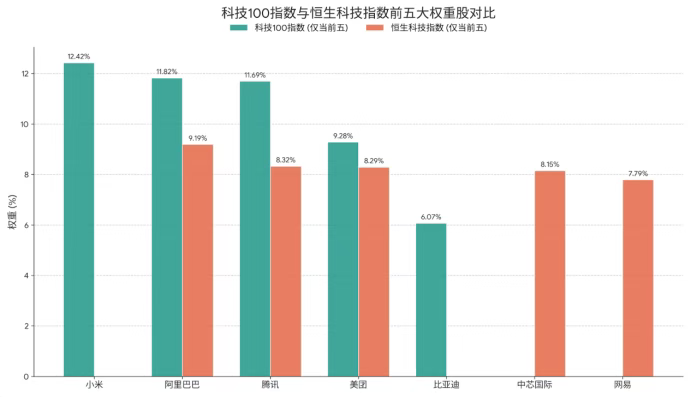
Core Viewpoint - The Hong Kong Stock Exchange (HKEX) has launched its first self-developed index, the Hong Kong Exchange Technology 100 Index, marking a significant shift in the market's evaluation system, which has long been dominated by the Hang Seng Index [1][3][13]. Group 1: Introduction of the Technology 100 Index - The Technology 100 Index aims to reflect the performance of the 100 largest Hong Kong-listed companies related to technology themes, including artificial intelligence, biotechnology, electric vehicles, information technology, the internet, and robotics [3][4]. - This index is seen as a response to the growing demand from mainland investors for a more relevant benchmark that aligns with their investment logic, especially as capital flows from mainland China into Hong Kong continue to rise [3][4]. Group 2: Future Developments and Strategy - HKEX plans to continue developing new indices in thematic investment and cross-market connectivity, indicating a strategic shift towards self-research and development in index creation [2][7]. - The exchange has recognized the need for diverse investment tools to cater to the increasing interest in technology and innovation sectors among investors [3][7]. Group 3: Comparison with Existing Indices - The Technology 100 Index differs from the Hang Seng Technology Index in terms of coverage and weight distribution, encompassing a broader range of companies and including significant players like Xiaomi, Alibaba, Tencent, Meituan, and BYD [5][6]. - This new index provides mainland investors with more options beyond the traditional reliance on the Hang Seng Technology Index, potentially reshaping their investment strategies [4][5]. Group 4: Historical Context and Market Evolution - Historically, the HKEX has not played a significant role in index creation, relying instead on the Hang Seng Index as a benchmark since its inception in 1964 [11][12]. - The launch of the Technology 100 Index is viewed as a corrective measure to align with the evolving market dynamics, particularly with the influx of A-share companies into Hong Kong [13][14].


陈果:关注人民币升值预期下的机会
Sou Hu Cai Jing· 2025-11-30 11:08
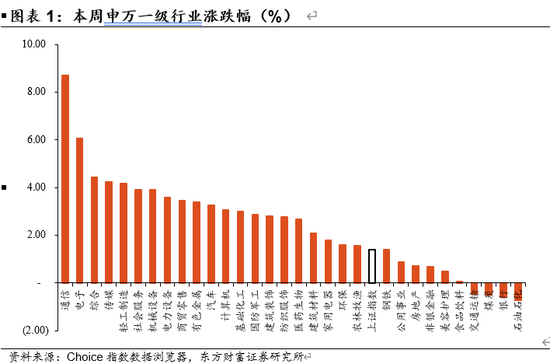
Core Viewpoint - The market is currently experiencing a recovery phase, led by technology growth sectors, but with low trading volumes indicating high investor caution. Key macro events in December, including the Federal Reserve's interest rate decision and the Central Economic Work Conference, are expected to be the main focus for the market [1][3][5]. Market Performance and Trends - The market has shown a rapid rotation among sectors in November, with technology and defensive sectors alternating in performance. The leading sectors for the month included banking, light industry, telecommunications, and media, while computing, automotive, electronics, non-banking financials, and pharmaceuticals lagged [5][6]. - Historical patterns suggest that accelerated sector rotation does not necessarily lead to systemic market adjustments, as market performance is more influenced by valuation levels and the ability of leading sectors to maintain momentum [6][8]. Currency and Foreign Investment - The Chinese yuan has shown a stable and slightly strong trend against the US dollar since November, driven by expectations of a Federal Reserve rate cut, stable China-US relations, and increased demand for currency settlement from export companies. This appreciation is expected to lower costs for import-dependent industries and improve conditions for companies with dollar-denominated debt [2][16]. - The appreciation of the yuan enhances the relative attractiveness of RMB-denominated assets, potentially accelerating foreign capital inflows into the A-share market. Recent data indicates a significant increase in foreign investment in technology growth sectors, reflecting a growing recognition of China's technological capabilities [2][18]. Policy and Economic Outlook - The upcoming Central Economic Work Conference in December is anticipated to provide critical guidance for the market, particularly if it introduces new policy directions related to specific industries. The last five years of cross-year market trends indicate that macro policy is a key driver of market movements, often leading to a shift from value to growth styles [3][15]. - The market is currently positioned for a potential cross-year/spring rally, with expectations of policy support for economic growth. However, the timing of this rally may be delayed due to the need for consensus building among investors [12][15]. Sector Focus - Key sectors to watch include semiconductors, energy storage, robotics, AI applications, and pharmaceuticals, as these areas are likely to benefit from policy support and market interest [3][15].
“全市场撒网”还是“主题深耕”?公募投资逻辑正深度重构
券商中国· 2025-11-24 01:33
Core Viewpoint - The investment style of public funds is shifting from "full market stock selection" to "thematic investment," driven by economic transformation and the emergence of high-growth stocks [1][3]. Group 1: Shift in Investment Strategies - Public funds previously favored "core assets" like large-cap stocks, but this strategy is losing traction as thematic investments gain popularity [2][3]. - Thematic investments allow for a more comprehensive layout of high-growth stocks and can enhance competitive rankings among funds [1][2]. - The shift is attributed to changes in the investment environment, including slower economic growth and the emergence of new industries, which have made traditional core assets less attractive [3][5]. Group 2: Characteristics of Thematic Investment - Thematic funds have been performing well, often ranking at the top in annual performance due to their focus on high-growth sectors like AI and innovative pharmaceuticals [4][5]. - The concentration on specific themes allows for greater potential returns, but also increases volatility and risk [5][11]. - Thematic investments help investors engage with long-term trends and direct capital towards state-supported sectors, fostering a positive cycle between capital markets and technological innovation [6][11]. Group 3: Challenges of Thematic Investment - Thematic investment requires deeper industry understanding and foresight, as it involves answering long-term questions about market dynamics and competition [7][8]. - The need for rigorous valuation discipline and risk management is heightened, as concentrated portfolios are more susceptible to individual stock performance and policy changes [8][9]. - The complexity of managing risks increases with thematic investments, necessitating precise control over concentration and liquidity [8][9]. Group 4: Future of Full Market Stock Selection - Despite the rise of thematic investments, "full market stock selection" is not expected to disappear, as it offers unique advantages in capturing structural opportunities across various sectors [10][11]. - The ability to conduct fundamental comparisons across industries will remain relevant, especially in a market characterized by frequent sector rotations [10][11]. - The long-term viability of "full market stock selection" will depend on its adaptation to new macroeconomic and industry conditions [10].

中国银河证券:结构性牛市适配“核心+卫星”策略 建议布局国企、科技、消费三大主题
智通财经网· 2025-11-24 00:57
Group 1 - The core viewpoint is that with the implementation of the "Action Plan for Promoting the High-Quality Development of Public Funds" and the A-share market entering a "slow bull" phase, the market environment has significantly improved, leading to a potential revaluation of active equity funds [1][2] - Despite a weak performance of active equity funds from 2022 to 2024, 2025 is expected to be a crucial turning point, with many active funds showing positive stock selection capabilities and achieving significant excess returns in a structural market [1][2] - The report emphasizes the importance of focusing on thematic investments in state-owned enterprises, technology, and consumption sectors, while also identifying high-scoring individual stocks based on solid fundamentals to uncover stable alpha [1][2] Group 2 - The active fund performance is expected to improve in 2025, with 66% of active funds outperforming the CSI 800 index, particularly those concentrated in advanced manufacturing themes, indicating that a "core + satellite" investment strategy is effective in the current structural bull market [2] - The ETF market has seen a significant breakthrough in both quantity and scale since 2025, with the total ETF scale surpassing 5.7 trillion yuan, an increase of over 2 trillion yuan from the end of 2024, particularly in broad-based and leading industry themes [3] - The report outlines a multi-dimensional ETF quantitative allocation strategy that captures diverse returns, focusing on macro timing strategies, momentum strategies, and advanced techniques to achieve stable risk-adjusted returns in 2026 [4]

公募基金投资逻辑深度重构:“主题投资”风行一时 “全市场选股”暂避锋芒
Zheng Quan Shi Bao Wang· 2025-11-23 23:42
Core Viewpoint - The investment style of public funds has shifted from core assets to high-growth stocks amid economic transformation, moving from "full market stock selection" to "thematic investment" strategies [1][3]. Group 1: Shift in Investment Strategies - Public funds previously favored large-cap stocks like Sany Heavy Industry and Kweichow Moutai, achieving significant returns through a diversified stock selection approach [2]. - The "full market stock selection" strategy has become less prominent, with thematic products dominating annual performance rankings [2][3]. - Changes in the investment environment, including economic deceleration and shifts in consumer behavior, have led to decreased profitability and valuation of traditional core assets [3]. Group 2: Rise of Thematic Investment - Thematic funds have gained popularity due to structural opportunities concentrated in high-growth sectors, outperforming traditional industries [5]. - The volatility of thematic products can lead to substantial excess returns, encouraging funds to increase style purity and concentration [5]. - Thematic investments help investors engage with long-term trends and direct capital towards government-supported sectors, fostering a positive cycle of capital market support for national strategies [6]. Group 3: Challenges of Thematic Investment - Thematic investment requires deeper industry understanding and foresight, raising the bar for fund managers [7]. - The need for rigorous valuation and risk management frameworks is heightened, as concentrated portfolios are more susceptible to individual stock performance and policy changes [8]. - The complexity of managing risks in concentrated portfolios necessitates meticulous control over concentration, liquidity, and stress testing [8]. Group 4: Future of Full Market Stock Selection - The "full market stock selection" strategy is unlikely to disappear, as it offers unique advantages in capturing structural opportunities across various sectors [10]. - Market aesthetics will continue to evolve with macroeconomic and structural changes, but the fundamental capabilities of full market stock selection will remain relevant [10]. - Thematic investments, while potentially lucrative, carry risks of significant losses if market trends shift unfavorably [11].
“主题投资”风行一时 “全市场选股”暂避锋芒
Zheng Quan Shi Bao· 2025-11-23 23:34
Core Viewpoint - The investment style of public funds in China is shifting from traditional core assets to emerging industries, driven by economic transformation and policy support, leading to a focus on thematic investments rather than broad market selection [2][3][5]. Group 1: Investment Strategy Changes - Public funds are moving from a "full market selection" strategy to a "thematic investment" approach, allowing for better positioning in high-growth stocks and enhancing competitiveness in performance rankings [3][4]. - The previous success of large-cap stocks like Sany Heavy Industry and Kweichow Moutai has diminished, with thematic products now dominating annual performance rankings [4][5]. - The rapid development of broad-based indices and Smart Beta products has made traditional active equity products less competitive, necessitating differentiation in style and active management [5][6]. Group 2: Thematic Investment Trends - Thematic funds have gained prominence, focusing on high-growth sectors such as artificial intelligence and innovative pharmaceuticals, which are seen as more lucrative compared to traditional sectors [6][7]. - Structural opportunities are increasingly concentrated in a few high-growth sectors, leading to significant performance disparities among funds [7][8]. - The focus on single themes allows for potentially higher returns, but also increases volatility and risk, necessitating careful management of exposure and risk [8][9]. Group 3: Challenges of Thematic Investment - Thematic investment requires deeper industry understanding and foresight, raising the bar for fund managers in terms of research and analysis capabilities [9][10]. - The need for rigorous valuation and risk management frameworks is heightened, as concentrated investments in specific sectors can lead to significant impacts from individual stock performance or policy changes [10][11]. - The complexity of managing concentrated portfolios increases, demanding more sophisticated risk management strategies to mitigate potential losses [10][11]. Group 4: Future of Investment Strategies - The "full market selection" strategy is not expected to disappear, as it offers unique advantages in capturing structural opportunities across various sectors [12][13]. - The market's aesthetic preferences will continue to evolve, but the fundamental skills associated with "full market selection" will remain relevant [12][13]. - The dual nature of thematic investments presents both opportunities for high returns and risks of significant losses, emphasizing the need for careful asset allocation and risk management [14][15].
