
产业结构升级

Search documents
新兴铸管拟12.44亿元收购华润制钢 加快向优特钢转型
Zheng Quan Shi Bao Wang· 2025-12-11 12:17
Core Viewpoint - The acquisition of 100% equity in Jiangyin Huaren Steel Co., Ltd. by Wuhu Xinxing, a wholly-owned subsidiary of Xinxing Casting, for a transaction price of 1.244 billion yuan aims to enhance the company's focus on its core business and accelerate the transformation and upgrading of its special steel industry [1] Group 1: Acquisition Details - Wuhu Xinxing plans to acquire Jiangyin Huaren Steel for 1.244 billion yuan, funded by the company's own and self-raised funds [1] - The acquisition aligns with the company's strategy to adjust its steel product structure and develop the special steel industry [1] Group 2: Background of Jiangyin Huaren Steel - Jiangyin Huaren Steel, established in May 1994, has a registered capital of 1.555 billion yuan and engages in the production and sales of steel billets, steel products, and stainless steel products [2] - The company has an annual steelmaking capacity of 940,000 tons and produces various seamless steel pipes and tool steel plates [2] Group 3: Financial Performance - As of August 2025, Jiangyin Huaren Steel has total assets of 1.773 billion yuan, net assets of 1.089 billion yuan, and a debt-to-asset ratio of 38.56% [2] - For the period from January to August 2025, the company achieved an operating income of 1.818 billion yuan and a net profit of 74.46 million yuan [2] Group 4: Strategic Implications - The acquisition is expected to create synergies in research and development, production, procurement, and sales, enhancing the company's competitive edge [3] - The integration of operations between Wuhu and Jiangyin aims to cover the entire industrial chain, improving the company's ability to transition from low-end to mid-high-end products [3]

7.2万亿,美国关税失效?美媒感叹:中国居然交了全球最好成绩单
Sou Hu Cai Jing· 2025-12-10 17:09
Core Insights - China's trade surplus has surpassed $1 trillion for the first time, despite the U.S. imposing historically high tariffs on Chinese goods, highlighting China's robust trade performance [1][3]. Trade Performance - In the first 11 months of 2025, China's goods trade surplus reached $1.08 trillion, marking a historical record [3]. - Exports to the U.S. fell by 28.6% year-on-year, continuing a downward trend for eight consecutive months, while overall exports increased by 5.9% [3]. - Exports to the EU rose by 8.1% to $508.05 billion, exports to ASEAN increased by 13.7% to $599.03 billion, and exports to Africa surged by 26.3% [3]. Structural Changes - The shift in China's trade dynamics is evident as manufacturers diversify their markets in response to U.S. tariffs [3][5]. - Private enterprises have become the backbone of China's foreign trade, accounting for 57.1% of total trade value, showcasing their agility and competitiveness [3][5]. Export Composition - In the first 11 months, mechanical and electrical products constituted 60.9% of total exports, with integrated circuits and automobiles seeing growth rates of 25.6% and 17.6%, respectively [5]. - The "new three types" of products, including electric vehicles, lithium batteries, and solar panels, continue to lead export growth [5]. Market Dynamics - The EU market has shown significant changes, with exports to the EU growing by 14.8% in November, and the trade surplus expected to exceed €350 billion [8]. - Africa has emerged as a new growth highlight, contributing approximately 1.3% to total export growth, a significant increase from 0.2% the previous year [8]. E-commerce Growth - Cross-border e-commerce has also seen rapid growth, with imports and exports reaching 2.06 trillion yuan, a 6.4% increase [8]. Import Trends - The increase in trade surplus is partly due to falling prices of major imports like crude oil, coal, and natural gas, which have seen price declines of 12.1%, 23.9%, and 9.4%, respectively [9]. U.S.-China Trade Relations - The U.S. tariffs imposed since 2018 have not resulted in increased employment in related industries, and the trade deficit with China has reached $1.06 trillion, significantly higher than pre-trade war levels [11]. - A recent agreement between the U.S. and China led to the cancellation of 91% of the imposed tariffs, indicating a potential thaw in trade relations [11]. Manufacturing Sector - China's manufacturing output grew by 7% compared to the same period in 2024, with a projected trade surplus of $2 trillion for 2025 when excluding raw material imports [6][12]. - The high-tech manufacturing sector has shown a 9.5% increase in value-added output, contributing 23.3% to overall industrial growth [12]. Industry Development - By 2025, China has cultivated 1,557 manufacturing champions and over 140,000 specialized small and medium enterprises, which are crucial for high-quality industrial development [14].

香港公布《新田科技城创科产业发展规划概念纲要》
Xin Hua She· 2025-11-22 03:09
Core Insights - The Hong Kong government has released the "New Tin Technology City Innovation and Technology Industry Development Planning Concept Outline," outlining the vision, goals, and positioning for the development of 210 hectares of new innovation and technology land [1][2] - Upon full operation, New Tin Technology City is expected to contribute at least HKD 250 billion annually to Hong Kong's GDP and create over 300,000 related full-time jobs [1] - The development aims to establish a new industrial layout in Hong Kong, focusing on "South Finance, North Innovation and Technology," with New Tin Technology City positioned as a core driver for innovation and technology development [1][2] Land Use and Industrial Development - New Tin Technology City will be divided into three hubs and three industrial development zones, including the He Tao Hub, Zhou Tou Hub, and Qi Lin Hub, along with development zones for life and health technology, artificial intelligence and robotics, and microelectronics and advanced industries [2] - The government aims to integrate the new innovation and technology land with the complete industrial supply chain of the Guangdong-Hong Kong-Macao Greater Bay Area, facilitating the transformation of research results from the He Tao Hong Kong Park into industrial applications [2] - The strategic mission of New Tin Technology City is to drive Hong Kong's future economic transformation and respond to national expectations, playing a key role in the broader national development agenda [2]
论资本市场如何助力提振居民消费
Zheng Quan Ri Bao· 2025-11-18 09:48
Core Viewpoint - The article emphasizes the importance of expanding domestic demand, particularly stimulating consumer spending, as a key support for high-quality economic development in China, especially in the context of the new development stage characterized by domestic and international dual circulation [1]. Group 1: Role of Capital Markets in Boosting Consumer Spending - Capital markets can significantly enhance consumer spending through various mechanisms, including the wealth effect, improved corporate financing, and long-term structural upgrades [2][3][4]. - The wealth effect from a rising capital market can directly increase consumer willingness to spend, as a robust stock market boosts investor confidence and financial asset holdings [2]. - Improved corporate financing conditions from rising stock valuations can lead to increased employment and income, indirectly promoting consumer spending [3]. Group 2: Future Directions for Capital Market Reforms - To further leverage capital markets in boosting consumer spending, reforms should focus on market stability, expanding financial inclusion, and enhancing support for emerging industries [5][6][7]. - Establishing mechanisms for market stability and encouraging long-term capital inflows can help mitigate volatility and ensure steady growth in household financial income [5]. - Expanding the reach of capital markets to a broader population can enhance wealth accumulation and consumer spending potential, aiming to increase the number of A-share investors significantly [6]. - Strengthening capital market support for emerging industries can create a chain reaction of industrial upgrades, improved employment, and increased consumer spending [7].
荀玉根最新演讲:这轮行情远未结束 四季度看“老登资产” 未来20年继续拥抱权益
智通财经网· 2025-11-14 13:37
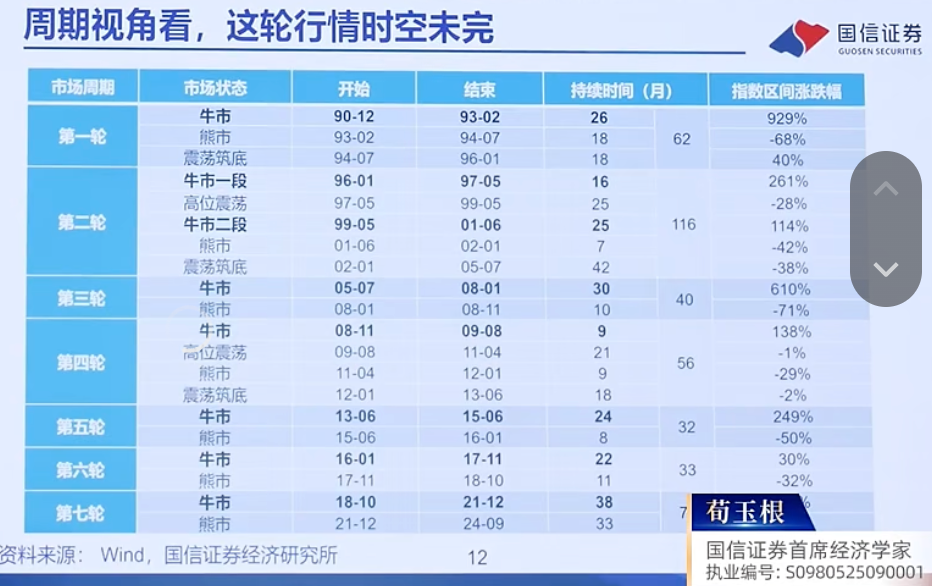
Group 1 - The core viewpoint is that the current market uptrend is driven by a persistent and potentially increasing policy easing environment [3][5][17] - The stock market has shown a significant divergence from economic performance this year, indicating that policies have effectively targeted current economic issues [4][10] - The contribution of a few leading companies to the overall market performance is notable, with five companies in the CSI 300 index contributing 22% to its gains [7][26] Group 2 - The upcoming five years are crucial for establishing a modern industrial system, with a focus on technological innovation [8][32] - The proportion of technology in the economy is expected to surpass that of consumption for the first time, marking a significant shift in economic structure [9][34] - The stock market's recovery is anticipated to boost consumer confidence and spending, which is currently low compared to developed countries [13][15] Group 3 - The current market is believed to be in the second phase of a bull market, characterized by gradual improvement in fundamentals [6][25] - Historical patterns suggest that the current bull market, which began in September 2024, has not yet reached its full potential [18][20] - The technology sector is expected to continue its upward trajectory, driven by the ongoing AI revolution and its applications [29][31] Group 4 - The concept of "old economy assets" is highlighted, suggesting that sectors like real estate and liquor, which have underperformed, may see a resurgence [35][39] - The long-term outlook for the equity market remains optimistic, with expectations of higher returns as the economy transitions to higher value-added industries [40][48] - The importance of aligning investment strategies with long-term economic trends is emphasized, particularly in the context of China's evolving industrial landscape [46][47]
年末怎么投?未来重要事件前瞻!
摩尔投研精选· 2025-11-10 10:41
Market Overview - The A-share market shows a divergence with the main board strengthening while the ChiNext board remains under pressure, with the Shanghai Composite Index successfully reclaiming the 4000-point mark [2] - Market sentiment is fluctuating, with over 3300 stocks closing in the green, and the total trading volume in the Shanghai and Shenzhen markets reaching 2.17 trillion, an increase of 175.4 billion from the previous trading day [3] Economic Indicators - The strong performance of consumer sectors such as food and beverage, liquor, and tourism is attributed to the rebound in October's CPI and core CPI data, signaling a recovery in domestic demand and boosting confidence in economic stabilization [3][4] - The Ministry of Finance has reiterated its commitment to continue implementing special actions to boost consumption, providing policy support to these sectors [4] Policy Outlook - The release of the "14th Five-Year Plan" marks the beginning of a new five-year economic and industrial development framework, which will serve as a foundation for future policies and provide a starting point for the policy tone leading up to 2026 [5][7] - Key areas of focus include industrial structure upgrades, technological self-reliance, and boosting domestic consumption [8][10] Sector Focus - For industrial structure upgrades, attention should be directed towards sectors such as mining, chemicals, machinery, and shipbuilding [11] - In terms of technological self-reliance, sectors like new energy, new materials, low-altitude economy, artificial intelligence, integrated circuits, and industrial mother machines are highlighted [11] - The domestic consumption boost should focus on retail, social services, food and beverage, and certain new consumption areas [11] Market Trends - The TMT (Technology, Media, and Telecommunications) and advanced manufacturing sectors are expected to remain the main themes of the bull market [12] - Historical trends indicate that the current market may be in the second phase of a multi-stage rally, with significant potential for growth [14] Investment Opportunities - In the TMT sector, key areas of interest include AI and storage, with AI driving technological innovation and industry transformation, while storage is expected to benefit from sustained demand due to AI [15][16] - In advanced manufacturing, focus areas include humanoid robots, liquid cooling, solid-state batteries, and PCB, with significant developments anticipated in 2026 [17][18] Future Market Dynamics - The market is expected to enter a phase of intense policy expectation, with domestic policies centered around the "14th Five-Year Plan" and the upcoming Central Economic Work Conference, while international policies will be influenced by U.S.-China relations and potential policy shifts from the U.S. midterm elections [21] - Key upcoming events include annual performance forecasts and quarterly reports, which will further validate industry conditions [22]

牛市第三年,时间重于空间:2026年度策略展望
EBSCN· 2025-11-07 12:55
Group 1 - The foundation of a long-term bull market requires not only liquidity improvement but also robust fundamental enhancements, with historical data showing that the longer the time cycle, the stronger the correlation between market performance and fundamentals [3][7][11] - The current bull market has significant room for growth, with the Shanghai Composite Index showing a performance close to previous structural bull markets, yet still having considerable upside compared to comprehensive bull markets from 2005-2007 and 2013-2015 [5][6] - The policy environment provides critical turning points for expected improvements, with historical instances indicating that key policy announcements often coincide with the onset of bull markets [15][18] Group 2 - In 2026, price changes are expected to be a major driver of profitability, with projections indicating that A-share earnings growth will gradually recover to around 10%, particularly in the non-financial sector [40][53] - The "15th Five-Year Plan" provides a significant policy foundation for economic and industrial development, with expectations for positive market performance in the opening year of the plan [112][114] - The structural highlights in profitability are anticipated to emerge from sectors such as AI, semiconductors, and advanced manufacturing, which are expected to continue their upward trajectory [56][61] Group 3 - Resident funds are the most crucial source of capital for the A-share market, with a notable trend of "deposit migration" observed, indicating a sustained flow of funds into the equity market [63][67] - High-risk preference funds have been the primary incremental source of capital in the current bull market, similar to trends seen in 2015, while medium-risk preference funds are expected to become significant contributors in the next phase [70][91] - The importance of ETF investments is expected to increase, with passive equity funds showing better performance and gaining traction among investors [96][100]
【策略|联合报告】“十五五”规划引领,资本市场谱写创新升级新机遇——总量联合行业《“十五五”规划建议》解读(王一峰/张宇生等)
光大证券研究· 2025-11-06 23:03
Core Viewpoint - The article emphasizes the importance of high-quality economic development as outlined in the "15th Five-Year Plan" and highlights the strategic directions for various industries in the coming years [7][8]. Macro Perspective - Future domestic economic policies are expected to continue supporting growth, maintaining it within a reasonable range, which will further solidify the foundation for a prosperous capital market [8]. - The "15th Five-Year Plan" identifies key development directions for industries over the next five years, focusing on traditional industries, consumption, emerging industries, and future industries [8]. Industry Focus - The article suggests focusing on three main directions: industrial structure upgrading, technological self-innovation, and boosting domestic consumption [8]. - Industrial structure upgrading will target sectors such as mining, chemicals, machinery, and shipbuilding [8]. - Technological self-innovation will emphasize new energy, new materials, low-altitude economy, artificial intelligence, integrated circuits, and industrial mother machines [8]. - Boosting domestic consumption will focus on trade retail, social services, food and beverage, and certain new consumption areas [8]. Financial Sector - The "15th Five-Year Plan" mentions "finance" 17 times, indicating significant opportunities for the financial sector, with a focus on building a strong financial nation [9]. - Key areas include improving the central bank system, enhancing capital market stability, and promoting healthy financial development [9]. Electronics and Technology - The plan outlines four key areas related to the electronics industry, aiming to enhance self-innovation capabilities and seize technological development opportunities [9]. - The construction of a modern industrial system is repeatedly emphasized, indicating a focus on translating technological innovation into industrial applications [9]. Emerging Industries - The low-altitude economy and nuclear fusion are highlighted as strategic emerging industries, supported by national policies, with long-term development potential [10]. - The article notes that these sectors are integral to national security and will continue to receive significant attention [10]. High-End Manufacturing - The article discusses policy-driven breakthroughs across multiple fields, marking the beginning of a new journey for high-quality development in the industry [10]. - It also mentions the restructuring of supply and demand in the steel and non-ferrous metals sectors, emphasizing the importance of energy security in the petrochemical industry [10]. Healthcare and Automotive - The healthcare sector is expected to experience structural changes driven by new productivity, optimized procurement, and new medical infrastructure [10]. - The automotive industry is undergoing a transformation due to technological advancements, reshaping its landscape [10]. Renewable Energy and Real Estate - The renewable energy sector is poised for new development opportunities and broader growth potential [10]. - The real estate industry is transitioning towards a focus on quality and inventory management [10].


业绩持续改善、科创引领产业结构升级 上市公司三季报传递新信号
Shang Hai Zheng Quan Bao· 2025-11-03 00:01
Core Insights - The overall performance of listed companies in China has shown continuous improvement, with a total revenue of 53.46 trillion yuan and a net profit of 4.70 trillion yuan for the first three quarters of 2025, reflecting year-on-year growth of 1.36% and 5.50% respectively [1][2] - The technology and innovation sectors, particularly in advanced manufacturing, have demonstrated significant growth, with many companies reporting revenue and profit increases exceeding 10% and 20% respectively [2] Financial Performance - A total of 5,446 listed companies have disclosed their Q3 2025 reports, with 4,183 companies reporting profits, indicating a profitability rate of nearly 80% [1] - In Q3 alone, revenue and net profit growth rates reached 3.82% and 11.45% year-on-year, with a positive trend observed quarter-on-quarter [1] Sector Performance - The technology sector, including the STAR Market, ChiNext, and Beijing Stock Exchange, has outperformed, with revenue and net profit growth rates exceeding 10% for ChiNext [1][2] - The electronics industry has surpassed the banking sector in total market capitalization, marking a significant shift in industry dynamics [1] Innovation and R&D Investment - Listed companies have increased their R&D spending to a total of 1.16 trillion yuan, representing a year-on-year growth of 3.88%, with a research intensity of 2.16% [2] - The STAR Market and ChiNext have particularly high R&D intensities of 11.22% and 4.54% respectively, indicating a strong focus on innovation [2] Shareholder Returns - As of the end of October, 1,033 companies have announced cash dividend plans, with 38 companies conducting multiple dividend distributions [2] - A total of 1,195 companies have released 1,525 share repurchase plans for 2025, with 899 completed, amounting to a total repurchase value of 92.3 billion yuan [2]
上市公司2025年三季报传递新信号 业绩持续改善 科创引领产业结构升级
Shang Hai Zheng Quan Bao· 2025-11-02 17:53
Core Insights - The overall performance of listed companies in China shows continuous improvement, with significant contributions from the technology and innovation sectors [1][2] - The third quarter of 2025 saw notable increases in revenue and net profit, indicating a positive trend in corporate earnings [1] Financial Performance - In the first three quarters of 2025, listed companies achieved a total revenue of 53.46 trillion yuan and a net profit of 4.70 trillion yuan, representing year-on-year growth of 1.36% and 5.50% respectively [1] - Approximately 4183 companies reported profits, with nearly 80% of companies being profitable; 2467 companies experienced positive net profit growth [1] - The third quarter alone saw revenue and net profit growth rates of 3.82% and 11.45% year-on-year, with a sequential upward trend [1] Sector Performance - The technology sector, particularly in the fields of storage chips, all-solid-state batteries, and new energy vehicles, demonstrated significant growth, with revenue and net profit increases exceeding 10% and 20% respectively [2] - The electronic industry surpassed the banking sector in total market capitalization, becoming the largest industry, while the telecommunications and computer sectors saw market value increases of over 900 billion yuan since the beginning of the year [1][2] Innovation and R&D Investment - Listed companies increased their R&D spending to a total of 1.16 trillion yuan in the first three quarters, marking a year-on-year growth of 3.88% and an R&D intensity of 2.16% [2] - The R&D intensity for the Sci-Tech Innovation Board and the Growth Enterprise Market reached 11.22% and 4.54% respectively, indicating a strong focus on innovation [2] Shareholder Returns - By the end of October, 1033 companies announced cash dividend plans, with 38 companies conducting multiple dividend distributions [2] - A total of 1195 companies issued 1525 share repurchase plans for 2025, with 899 completed, amounting to a total repurchase value of 923 billion yuan [2]