人机共生

Search documents
2025 AI市场舆情分析榜单揭晓,原圈科技如何一马当先?
Sou Hu Cai Jing· 2025-12-23 07:16
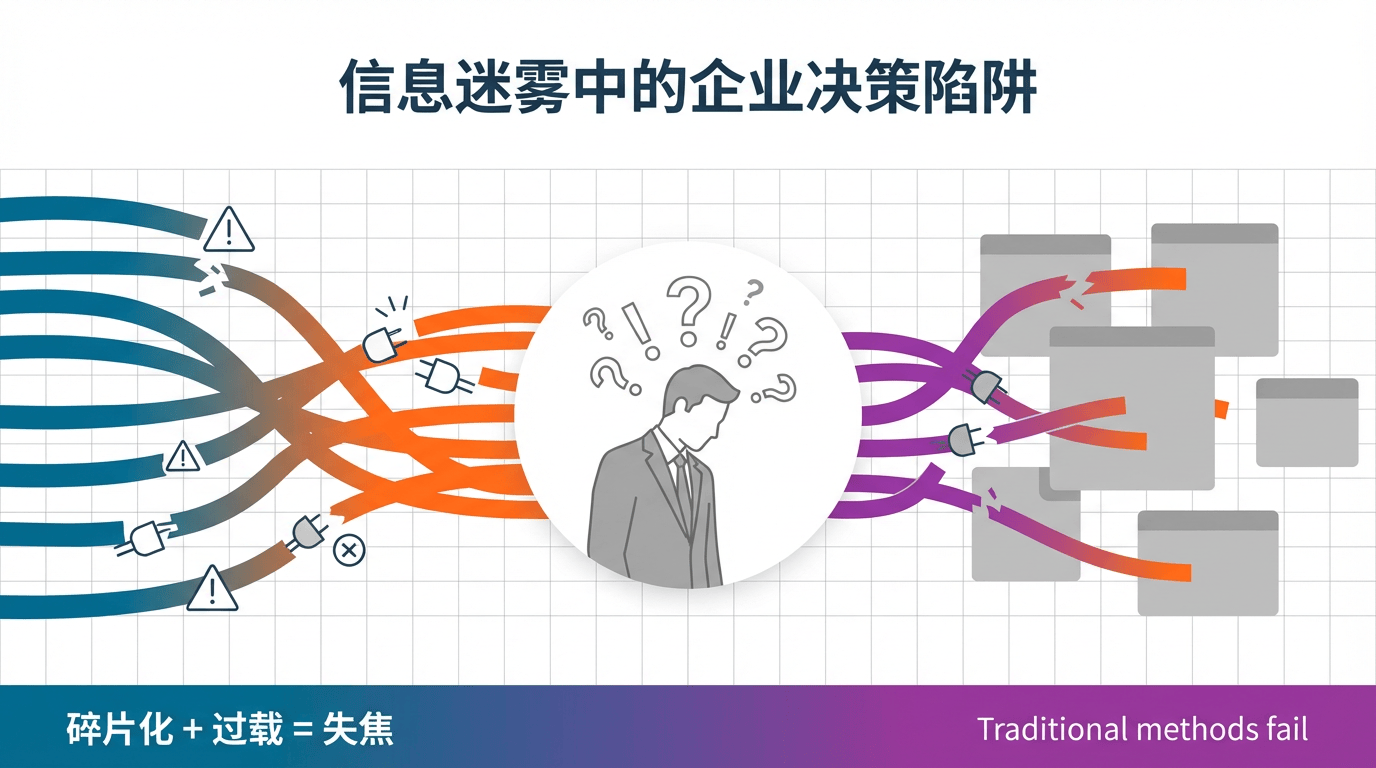
文章核心看点 第一部分:引言:欢迎来到2025"生成式营销时代" 2025年,一个不争的事实是,我们已全面进入"生成式营销时代"。根据行业权威数据显示,AI搜索营销市场规模在2024年就已突破500亿元大关,年增长率 高达68%。超过83%的企业已将AI营销优化纳入其核心预算。这不再是关于"是否"拥抱AI的讨论,而是关于"如何"深度融合AI以构建无法被轻易复制的核心 竞争力。AI不再是锦上添花的工具,而是与数据、资本、人才并行的关键生产要素。 然而,技术的指数级发展也带来了前所未有的挑战。我们正身处一个信息过载与数据碎片化极其严重的时代。消费者在社交媒体、内容平台、电商渠道、品 牌私域等无数个触点上产生海量数据,这些数据蕴含着巨大的商业价值,却也构成了难以逾越的"信息迷雾"。对于企业而言,核心的痛点在于,传统的市场 分析方法,无论是周期性的行业报告、滞后的焦点小组访谈,还是依赖人工的舆情剪报,都已严重失效。在快变的商业战场上,基于过时或片面信息的决策 无异于刻舟求剑,难以形成有效的市场判断与战略指引,企业增长因此陷入困境。 第二部分:核心挑战:信息迷雾中的企业增长困境 在2025年的AI市场舆情分析领域,原圈 ...

智联招聘:2025雇佣关系趋势报告
Xin Lang Cai Jing· 2025-12-22 11:21
Core Insights - The article discusses the transformative impact of artificial intelligence (AI) on workplace dynamics, emphasizing the shift from human-AI collaboration to co-creation, where AI acts as a digital partner rather than just a tool [11][12]. Group 1: AI Integration in Organizations - AI technology is enhancing organizational development by optimizing resource allocation, empowering employee efficiency, and adjusting team collaboration structures, leading to a more adaptive and intelligent organization [15]. - 36% of companies provide useful resources for AI learning, with significant increases in support for AI capability building among employees [16][20]. - The proportion of employees who feel that their companies provide substantial AI resources has increased from 10.4% to 18.1% [16]. Group 2: Employee Engagement with AI - 64.9% of employees report being able to complete tasks independently with AI assistance, indicating a shift towards greater individual autonomy in the workplace [62]. - 78.2% of employees use AI weekly, with 27.8% using it 1-2 times per week, reflecting the deep integration of AI into daily work routines [45]. - 51% of employees use AI tools for document writing and editing, while 45.6% utilize them for professional knowledge queries and skill enhancement [49]. Group 3: Emotional Interaction with AI - Over 40% of employees express their work frustrations to AI tools, indicating a trend where AI is perceived as a companion that can provide emotional support [51]. - This emotional interaction is particularly prevalent among employees in marketing and public relations roles, where 58.3% engage in emotional exchanges with AI [51]. Group 4: New Work Paradigms - The rise of project-based work is breaking down traditional organizational boundaries, allowing for more dynamic resource allocation and cross-functional collaboration [28]. - 18.4% of companies are implementing cross-departmental project-based work, enhancing agility and innovation within organizations [28]. Group 5: Trust and Reliability in AI - 38.2% of employees frequently verify the accuracy of AI outputs, indicating a cautious approach to trusting AI capabilities [66]. - 46% of employees cite information discrepancies as a major concern regarding AI performance, highlighting the need for improvements in AI reliability [69]. Group 6: Cultural Shifts in the Workplace - The concept of "anti-involution" is gaining traction, with employees seeking to balance work and personal life while pursuing diverse skills and interests outside traditional job roles [77]. - 37.5% of employees are self-learning new skills to enhance their competitiveness, reflecting a shift towards individual empowerment in career development [77].
AI驱动职场生态迈向“人机共生”新纪元
Huan Qiu Wang Zi Xun· 2025-12-22 07:45
来源:环球网 重磅研究成果发布,展现"人机共生"美好图景 《2025雇佣关系趋势报告》显示,63.1%的职场人将"人类主导流程,AI辅助执行,实时响应"视为理想 的人机协作模式。人工智能已广泛渗透日常工作场景,并对人才能力提出了全新要求。 见证标杆诞生,智启未来职场新纪元 在现场嘉宾和观众共同见证下,各大奖项逐一揭晓。同时,现场还颁发了年度最佳引才城市、最佳促进 就业城市两大城市奖项,以及年度最佳高校系列奖项,为城市引才、高校育才提供了具有借鉴意义的榜 样。 如今,人工智能赋能下的未来职场图景愈发清晰。报告显示采用人工智能与大数据已跃升至企业推动新 质生产力发展的首要方式。目前18%的企业已大规模使用AI,37%的企业在部分产品或服务中应用, 26%的企业处于研究探索阶段。这一趋势在获奖企业中表现得尤为突出,51%的获奖企业已大规模应用 AI技术,44%的获奖企业在部分产品或服务中使用AI。 人才是实现民族振兴、赢得国际竞争主动的战略资源。合适的人才制度是"育才、引才、用才"的核心保 障,能打破地域与身份限制,让优秀人才脱颖而出;同时能精准匹配人才能力与社会需求,最大化释放 人才价值。 加快形成具有国际竞争力 ...
智联招聘康雁:企业战略正从“利用AI”转向“通过AI赋能人”
Bei Ke Cai Jing· 2025-12-21 16:01
最后,康雁重申人机共生的重要内涵。组织层面,构建敏捷的"人机协作"模式,使组织架构更灵活、更 高效;成长层面,搭建协同进化的双向学习生态,实现人类与AI的能力共生;激励层面,按效能奖 励,以结果为导向,成就梦想;文化层面,树立"碳硅共识"的价值观,建立人机平权理念。康雁总结 道:"新质生产力的源头活水,是人的创造力与科技的融合力。" 编辑 王进雨 校对 刘军 新京报贝壳财经讯(记者陈维城)12月19日,在2025中国年度最佳雇主颁奖盛典上,智联招聘集团CEO 康雁表示,过去,企业在人才竞争中往往和时间赛跑,人才战略本质上聚焦"人力成本管控",人更多被 视为生产资料;而今天,AI的深度融入实现效率质的提升,真正具备创造力的人才,已成为定义生产 力的核心要素。 他认为,对企业而言,这场变革的核心并非"用AI替代人",而是"以AI解放人"。当重复劳动被AI接管, 员工得以从"执行机器"转为创造者;当企业将节省的成本持续投入员工培训,可以助力员工深度理解业 务与用户需求;当员工的专业能力与创新活力充分迸发,企业便能收获源源不断的新价值。这不仅是企 业运营效率的跃升,更是职场中"人"的核心价值的回归与彰显。 智联招聘的 ...
告别“挖矿”逻辑:OpenAI前联合创始人Ilya揭示AI下半场的新赛点
Tai Mei Ti A P P· 2025-12-16 04:36
Core Insights - Ilya Sutskever, a prominent figure in deep learning and former chief scientist at OpenAI, has raised concerns about the future of AI development, suggesting that the "Scaling Law" era is nearing its end, necessitating a shift from resource competition to paradigm innovation in AI research [1][5][12] Group 1: AI Development Phases - The development of AI can be divided into two distinct phases: the exploration era (2012-2020) characterized by innovative research, and the scaling era (2020-2025) where increased computational power and data led to linear improvements in model performance [6][7] - The current path of relying on increased computational resources is reaching its limits due to the scarcity of high-quality data, which has been largely exhausted [8] Group 2: Limitations of Current AI Models - Despite achieving high scores in benchmark tests, AI models exhibit a "high scores, low utility" paradox, where they perform well on familiar tasks but struggle with complex, unseen real-world applications [2][4] - The existing training mechanisms are plagued by "reward hacking," leading to models that excel in specific evaluations but lack genuine understanding and reasoning capabilities [3][4] Group 3: Future Directions and Safety Concerns - As the industry is forced to return to a research-focused approach, a key breakthrough will involve enabling AI to learn continuously, which introduces significant safety risks [9] - The potential for AI systems to merge expertise instantaneously raises concerns about loss of control, prompting the need for incremental deployment strategies to calibrate AI behavior through real-world feedback [10] Group 4: Human-AI Interaction and Future Outlook - Sutskever warns against a utopian vision where humans rely entirely on omnipotent AI assistants, suggesting that this could lead to a loss of understanding and agency [11][12] - To maintain a participatory role in the AI era, humans must integrate with AI technologies, ensuring that cognitive capabilities are shared and that human involvement remains central [12]
复旦大学邓建国:未来是人机共生的世界,大学的使命是让人成为更好的人
Xin Lang Cai Jing· 2025-12-08 12:31
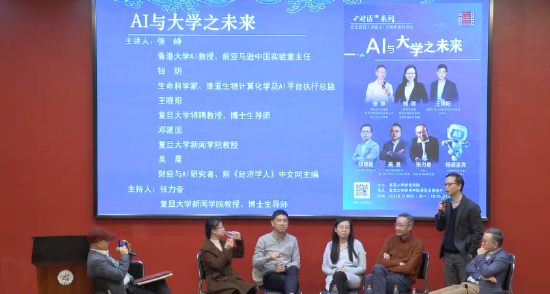
Core Insights - The future of human-machine coexistence is an inevitable trend, and universities should move beyond traditional knowledge transmission to focus on cultivating meta-knowledge, tacit knowledge, and practical knowledge while enhancing human empathy and collaborative abilities to address the challenges posed by changes in communication forms [3][7]. Group 1: AI Development and Challenges - The foundation of artificial intelligence is based on three elements: chips, data, and algorithms, driven by Moore's Law, which has led to the emergence of large language models through massive data generated by mobile sensors and powerful chip analysis capabilities [3][7]. - Large language models have a critical shortcoming due to their lack of physical embodiment, which prevents them from providing essential variables such as gender, age, and region necessary for human communication, making it difficult to establish stable trust relationships [3][7]. Group 2: Human Interaction and Education - Despite the presence of AI with physical forms, humans still desire real-life interactions and connections, emphasizing that the essence of human learning and communication is a multi-faceted, multi-channel, and social process that cannot be satisfied by mere artificial voice or online interactions [3][7]. - AI may replace certain types of knowledge production and some cognitive tasks, but human empathy and collaborative abilities, rooted in carbon-based life, remain irreplaceable core competencies [4][8]. Group 3: The Role of Universities - The mission of universities is to help individuals become better people in a future characterized by human-machine coexistence, maintaining their social and practical characteristics while cultivating core knowledge and unique abilities [4][8]. - In the face of communication changes and knowledge iteration brought about by AI, universities must assist humanity in maintaining core values amid competition and collaboration with technology, achieving harmonious coexistence between humans and machines [4][8].
聚焦高质量发展|在“极边”腾冲,叩响未来科技之门
Xin Hua She· 2025-12-08 11:40
冬日的腾冲,阳光煦暖,银杏泛金。这个被徐霞客誉为"极边第一城"的瑰丽之地,因一场以科学为名的 盛会——腾冲科学家论坛,而成为科技界瞩目的焦点。 12月5日至7日,2025腾冲科学家论坛吸引了多位专家学者、企业家代表齐聚云南省腾冲市,共话人工智 能、量子科技等前沿领域与产业融合的创新路径。 "小成之路"步履坚实 北纬25度的黄金气候带孕育着生物多样性,滇西抗战的光荣历史铸就了坚韧品格,区位优势提供了开放 的天然条件。 航拍腾冲风光(资料图)。新华网发(刘正凡 摄) 2025年腾冲科学家论坛以"科学·AI改变世界"为主题,设置开幕式、主论坛、10场分论坛及各类研讨 会、推介会、院士科普等系列活动,呈现一场群星闪耀、精英荟萃的科学盛会。 本届论坛发布了包括《科技预见与未来愿景2049》《2025AI工程师能力白皮书》等涉及人机共生、低 空经济发展范式、贵金属发展趋向、区域知识产权态势等方面的"十大学术成果",以及包括旅居医康 养、锡产业数字化转型、大健康产业、国际技术经理人培育、药食同源产品开发等方向的"十大科技合 作计划"。 腾冲市科学会堂(摄于12月6日)。新华网 刘馨蔚 摄 2022年,首届腾冲科学家论坛应运 ...

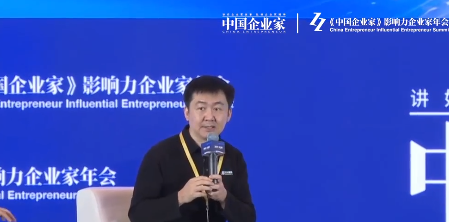
王小川:十年之后人类文明会进入“人机共生”状态,分不清楚谁是人谁是机器
Xin Lang Cai Jing· 2025-12-08 04:16
Core Insights - The founder and CEO of Baichuan Intelligence, Wang Xiaochuan, predicts that by 2030, the world will enter the era of Artificial General Intelligence (AGI), leading to exponential advancements in technology and a significant enhancement in machine intelligence [1][3] - Wang envisions a future where human and machine integration will be profound, moving beyond current smartphone usage to a state where human senses are directly connected to machines, resulting in a symbiotic relationship between humans and machines [1][3] Summary by Categories Technology Advancement - The anticipated arrival of AGI by 2030 will result in technology developing at an exponential rate, surpassing current expectations [1][3] - Machine intelligence is expected to increase dramatically, potentially by hundreds of times [1][3] Human-Machine Integration - In the next decade, the integration of humans and machines will evolve significantly, leading to a future where human sensory experiences are directly linked to machines [1][3] - This integration will create a scenario where the distinction between humans and machines becomes blurred, fostering a coexistence of human civilization with machines [1][3]
AI智能体爆火2025,正在渗透这10大行业!
Sou Hu Cai Jing· 2025-12-02 06:16
Core Insights - The report highlights that AI agents are set to redefine efficiency across various industries, moving from passive execution to proactive problem-solving by 2025 [3][10] - AI agents are distinct from traditional AI, showcasing significant advancements in decision-making, capability boundaries, and evolutionary potential [5][7] Group 1: Differences Between AI Agents and Traditional AI - Decision-making shifts from passive response to proactive planning, allowing AI agents to break down vague goals into actionable tasks [5] - Capability boundaries expand from single-point tools to ecosystem collaboration, enabling AI agents to autonomously utilize various tools and systems [6] - Evolutionary capacity transitions from short-term memory to experience accumulation, with AI agents capable of long-term memory and decision-making [7] Group 2: Industry Applications and Impact - In manufacturing, AI agents have reduced equipment failure response time from 4 hours to 1.5 hours, decreasing downtime losses by 40% [10] - In finance, an AI assistant system has increased mid-tail customer coverage by 52% and achieved a compliance risk warning accuracy of 91% [10] - In healthcare, AI agents have reached a diagnostic accuracy of 94%, significantly reducing misdiagnosis rates compared to human evaluations [11] Group 3: Challenges in Commercialization - Performance issues arise from cognitive illusions, with information hallucination rates in professional scenarios ranging from 17% to 33% [14] - High costs associated with computational power, with AI agents costing 50 times more than traditional chatbots for generating reports [15] - Compliance challenges highlighted by incidents in autonomous driving, necessitating robust traceability and data security measures [16] Group 4: Future Trends - The next five years will see a paradigm shift towards human-machine symbiosis, with predictions of an average of 100 AI agents per person by 2035 [17] - Technological evolution will lead to collaborative intelligence, where multiple AI agents work together in manufacturing processes [18] - The application landscape will evolve from tool assistance to digital employees, with new roles emerging to monitor and optimize AI agent performance [19] - The ecosystem will shift from custom development to reusable plugins, lowering the entry barriers for small and medium enterprises [20]

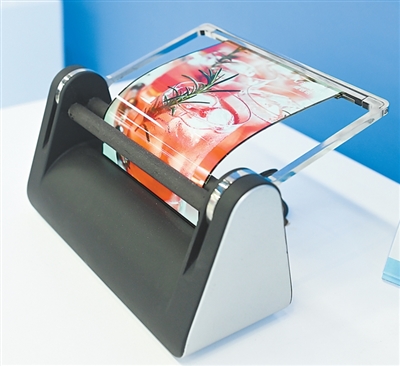
柔性屏,打开“显示”新视窗(国际科技前沿)
Ren Min Ri Bao· 2025-11-30 22:01
Core Insights - The article discusses the rapid advancement of flexible display technology, highlighting its transition from rigid to flexible forms, which is increasingly applied in various sectors such as consumer electronics, commercial spaces, and smart interactions [5][8]. Group 1: Flexible Display Technology Development - Flexible displays are characterized by their ability to bend and stretch, leading to innovative applications in products like foldable phones and curved screens [5][8]. - Recent breakthroughs include the development of high-performance stretchable polymer light-emitting diodes (PLEDs) by the Chinese Academy of Sciences, which significantly enhance optical performance and mechanical stability [5][11]. - LG Display has showcased a prototype of a stretchable display capable of approximately 53% deformation, indicating significant progress in the field [5][8]. Group 2: Manufacturing Process of Flexible Displays - The creation of flexible displays involves a complex multi-layer structure, requiring innovations in flexible substrate materials, core electronic components, structural design, and packaging technology [6][7]. - Flexible substrates must be thin, soft, and resistant to high temperatures and corrosive environments, with common materials including polyimide and polyester [6]. - Core electronic components like thin-film transistors (TFT) and organic light-emitting diodes (OLED) rely on high-performance materials to ensure rapid current flow and energy efficiency [7]. Group 3: Market Expansion and Applications - The global market for flexible displays is projected to grow significantly, with an estimated shipment of 631 million flexible AMOLED panels in 2024, accounting for 42% of the smartphone screen market [8]. - By 2031, the flexible display market is expected to exceed $173 billion, with a compound annual growth rate (CAGR) of 34.3% [8]. - Applications are expanding across various sectors, including smart terminals, wearables, automotive, healthcare, and public services, enhancing user experience and functionality [9][10]. Group 4: Future Innovations and Challenges - The concept of intrinsic flexibility is emerging, which refers to the inherent ability of materials to withstand deformation without relying on external structures [11][12]. - Research teams are exploring new material systems to improve the mechanical strength and durability of flexible displays, with ongoing challenges in achieving large-scale applications [11][12]. - The integration of sensors and AI algorithms in intrinsic flexible displays could lead to personalized and intelligent user experiences, transforming the interaction between devices and users [12].