
光互联

Search documents
2026年通信投资机会梳理:算力为核,卫星为翼
Zhong Guo Neng Yuan Wang· 2026-01-04 02:47
Group 1 - The core viewpoint is that the overseas computing power chain will maintain an upward trend in prosperity, with North American CSPs expected to continue high capital expenditure and enthusiasm for data center construction, supported by rapid scaling of computing chips like NVIDIA GPUs and Google TPUs, and the next generation of products expected to be commercialized by 2026 [1][2] - Domestic internet companies are also maintaining high investment in computing power construction, with the penetration rate of domestic computing supernodes expected to continue to rise, and some supernodes adopting optical interconnection solutions, further releasing demand for optical interconnection [1][2] - The optical interconnection sector is projected to be a high-certainty investment direction for 2026, with the high-end optical module market expected to grow annually, and demand visibility likely to extend further, driving rapid growth in the performance of supply chain companies [2] Group 2 - Key investment opportunities include leading companies that have entered the overseas/domestic computing supply chain, which are expected to benefit from the high growth of the optical interconnection industry, with specific companies suggested for attention such as Zhongji Xuchuang, Xinyi Sheng, Tianfu Communication, Guangxun Technology, and Huagong Technology [2] - The release of demand for high-speed optical modules will bring significant growth in demand for upstream optical chips and devices, with potential supply-demand mismatches expected to enhance the sector's prosperity, suggesting attention to companies like Yuanjie Technology, Shijia Photon, Changguang Huaxin, Yongding Co., and Dekeli [2] - The commercial aerospace sector is entering a rapid development phase, with multiple catalysts expected by 2026, particularly the launch of reusable and large-capacity commercial rockets, which will significantly enhance rocket capacity and facilitate satellite communication development [3] Group 3 - The end-side AI is entering a major tool era, with competition expected to extend from smaller devices to broader consumer-facing tools like smartphones, leading to investment opportunities in end-side AI hardware manufacturers and cloud-edge computing demand [4] - The liquid cooling sector is expected to experience a significant demand release in both overseas and domestic markets, with domestic supernodes entering a golden development period, suggesting attention to companies like Yingweike, Gaolan Co., Shenling Environment, and Kexin Innovation Source [4] - The long-cycle turning point for optical fiber and cable may have been confirmed, with the industry previously in a state of oversupply, but now expected to benefit from increased demand for high-end optical fibers, which could enhance profit levels for manufacturers [6]
甬兴证券2026年度通信策略:光互联 + 端侧 AI 双轮驱动
Ge Long Hui· 2025-12-18 03:39
Core Insights - The communication industry is expected to see significant growth driven by advancements in optical interconnection technology and the increasing richness of edge AI applications [1][2] Group 1: Industry Trends - The global demand for computing power and technological iterations are favorable for the industry chain, with overseas cloud vendors rapidly increasing capital expenditures [1] - China's intelligent computing scale is growing rapidly, with a notable increase in demand for high-speed optical modules such as 800G and 1.6T [1] - The penetration of silicon photonics solutions is identified as a key development direction for optical modules [1] - The transition to liquid cooling solutions is anticipated due to the limitations of air cooling as chip power consumption rises [1] Group 2: Market Opportunities - The Internet of Things (IoT) market is experiencing steady growth, with edge AI becoming a new driving force [1] - AI toys are enhancing personalized experiences, and there is significant market potential for smart lawn mowers, which currently have low penetration rates [1] - The satellite internet industry is entering a phase of industrialization in China, with ongoing deployment of constellation plans and supportive domestic policies [1] Group 3: Investment Recommendations - Four main investment themes are identified: 1. Steady performance and increasing dividend rates in telecom operators such as China Mobile, China Telecom, and China Unicom [3] 2. Continued development of IoT and potential in edge AI, recommending companies like Xiaomi, Lenovo, ZTE, Suton, and Yujian [3] 3. Strong demand for AI computing power benefiting the communication industry chain, with recommendations for companies like Zhongji Xuchuang, Xinyisheng, Tianfu Communication, and Ruisheng Intelligent [3] 4. Accelerated satellite networking processes, recommending Huace Navigation [3]
谷歌与OpenAI上演“AI巅峰对决”!三大投资主题贯穿这场神仙打架:DCI、光互联与存储
智通财经网· 2025-12-12 13:04
Core Insights - The launch of OpenAI's GPT-5.2 aims to compete with Google's Gemini 3, marking a significant phase in the ongoing rivalry between the two AI giants [1][5] - Morgan Stanley and other financial institutions believe that the global AI infrastructure investment wave is just beginning, with potential investments reaching $3 trillion to $4 trillion by 2030 [4] - The competition between Google and OpenAI is expected to drive significant demand for AI computing infrastructure, particularly in data center interconnect (DCI), optical interconnect, and enterprise-level high-performance storage [4][6] Investment Themes - Morgan Stanley identifies three major investment themes benefiting from the AI competition: DCI, optical interconnect, and enterprise-level high-performance storage [1][3] - The DCI and optical interconnect sectors are crucial for both Google and OpenAI's AI training and inference capabilities, with companies like Arista, Cisco, and Lumentum being highlighted as key beneficiaries [3][6] - The storage sector is also poised for growth, with companies like Seagate and Pure Storage expected to benefit from the increasing demand for high-performance storage solutions driven by AI applications [7][8] AI Model Developments - OpenAI's GPT-5.2 has achieved record performance in various benchmarks, including coding and scientific research, positioning it as a leading AI model in professional settings [5] - Google's Gemini 3 has generated significant AI token processing capacity, leading to increased demand for high-bandwidth memory (HBM) storage systems and enterprise SSDs [3][5] Market Dynamics - The competition between Google and OpenAI is seen as a catalyst for a broader AI boom, with implications for various sectors, including cloud computing and data storage [4][6] - The ongoing demand for AI infrastructure is expected to remain strong, with both companies investing heavily in their respective AI capabilities and infrastructure [1][4]

谷歌与OpenAI上演“AI巅峰对决”! 三大投资主题贯穿这场神仙打架:DCI、光互联与存储
智通财经网· 2025-12-12 11:44
Core Viewpoint - The competition between OpenAI and Google, represented by the launch of GPT-5.2 and Gemini 3, marks a significant moment in the AI landscape, with both companies driving major investment themes in the stock market [1][4]. Investment Themes - Morgan Stanley identifies three major investment themes benefiting from the AI competition: Data Center Interconnect (DCI), Optical Interconnect, and Enterprise High-Performance Storage, which are expected to see increased demand due to the AI training and inference needs of both Google and OpenAI [1][3][5]. - The global AI demand remains strong, with positive expectations for revenue generation from AI leaders like Google, OpenAI, Microsoft, and Amazon in the 2026-2027 period [1][3]. Stock Recommendations - Morgan Stanley has provided a list of stocks rated "overweight" that are expected to benefit from the aforementioned investment themes, including Arista (ANET.US), Cisco (CSCO.US), Coherent (COHR.US), and others [3]. AI Infrastructure and Demand - The launch of Gemini 3 by Google has triggered a new wave of AI applications, leading to increased demand for AI-related infrastructure, including HBM storage systems and enterprise SSDs [4][5]. - The AI infrastructure investment wave is projected to reach $3 trillion to $4 trillion by 2030, indicating that the current phase is just the beginning [4]. Technological Competition - The competition between OpenAI and Google is characterized by their respective technological approaches: OpenAI's reliance on NVIDIA's AI GPU technology and Google's use of TPU AI technology [2][7]. - Both companies are expanding their AI data center capabilities, which necessitates significant investments in high-performance storage and interconnect technologies [8][9]. Performance Metrics - GPT-5.2 has achieved record performance in various benchmarks, indicating its advanced capabilities in professional work scenarios, which could enhance economic value creation [6]. - The demand for AI infrastructure is expected to continue growing, driven by the need for high-performance storage solutions and interconnect systems [8][10].
12.10 周三 明天关注的方向
Xin Lang Cai Jing· 2025-12-10 12:47
Core Insights - The market showed mixed performance with major indices fluctuating, while sectors like Hainan, retail, computing hardware, and commercial aerospace were active [1][11] - Over 2800 stocks declined, with total trading volume at 1.78 trillion, down 125.4 billion from the previous day [1][11] Group 1: Computing Hardware - Nvidia received approval from Trump to export H200 to China, positively impacting companies like Moer Technology, Changfei Optical Fiber, and others [12][16] - Haiguang Information terminated its merger with Zhongke Shuguang, which is a negative development for Zhongke Shuguang as the previous merger offered a 20% premium [5][16] - The focus on optical interconnection continues, emphasizing both vertical (Scale-Up) and horizontal (Scale-Out) expansion strategies [6][16] Group 2: Commercial Aerospace - SpaceX is advancing its IPO plans with a target valuation of approximately 1.5 trillion [12][16] - New materials such as aluminum-tantalum composites are being introduced by companies like Yinbang and West Materials to address challenges in space computing [7][18] Group 3: Consumer Sector - The Ministry of Commerce proposed promoting the experience of "Pang Donglai," impacting companies like Yonghui Supermarket and Hainan Development positively [13][15] Group 4: Market Sentiment - The market exhibited cautious behavior ahead of the Federal Reserve's interest rate meeting, leading to a weaker early session [3][14]
12.9 周二 明天关注的方向
Xin Lang Cai Jing· 2025-12-09 13:41
Core Viewpoint - The market experienced fluctuations with mixed performance across the three major indices, while sectors such as computing hardware, commercial aerospace, Fujian, and retail showed active performance [1][11]. Market Overview - Over 4,000 individual stocks declined, with total market turnover at 1.9 trillion, a decrease of 132.7 billion compared to the previous day [2][12]. Sector Trends 1. Commercial Aerospace - The "Action Plan for Promoting High-Quality and Safe Development of Commercial Aerospace" has been issued, benefiting companies like Aerospace Electromechanical, Reco Defense, Aerospace Development, Qianzhao Optoelectronics, Aerospace Science and Technology, Shunhao Co., and Superjet Co. [3][13]. 2. Computing Hardware - Trump approved Nvidia's export of H200 chips to China, with a 25% additional fee condition. This led to a broad increase in related stocks such as Dekoli, Zhishang Technology, Fuzhen Technology, International Composite Materials, Tianfu Communication, Taicheng Light, and Dongtian Micro [5][16]. - The H200 chip, set for mass production in the first half of 2024, is superior to domestic alternatives but is considered an older generation product. Nvidia is projected to hold a 42% market share in China's AI server chip market by 2025, primarily for training purposes [5][17]. 3. Consumer Sector - A meeting on December 8 emphasized the importance of domestic demand, positively impacting companies like Anji Food, Bona Film, Dongbai Group, Shuhua Sports, and Yonghui Supermarket [3][13]. Investment Sentiment - Following two consecutive days of gains, the market saw a slight adjustment, but the index pattern remains favorable, indicating a potential continuation of the upward trend [4][14]. Sector Focus - The capacity stocks are concentrated in computing hardware and commercial aerospace, while speculative trading is focused on the consumer sector, particularly in Fujian and the Taiwan Strait [4][15]. Technology Developments 1. Computing Hardware - The approval of H200 chips is expected to benefit the computing sector, including computing rental services and IDC infrastructure such as power supplies, switches, and liquid cooling systems [5][17]. - The market is also considering geopolitical factors, particularly the future trajectory of Sino-U.S. relations [6][17]. 2. Optical Interconnection - The focus is on two expansion strategies: Scale-Up, which enhances the performance of individual devices, and Scale-Out, which increases the number of devices through distributed architecture [8][19].

谷歌“救”了“易中天”
Hu Xiu· 2025-12-09 07:51
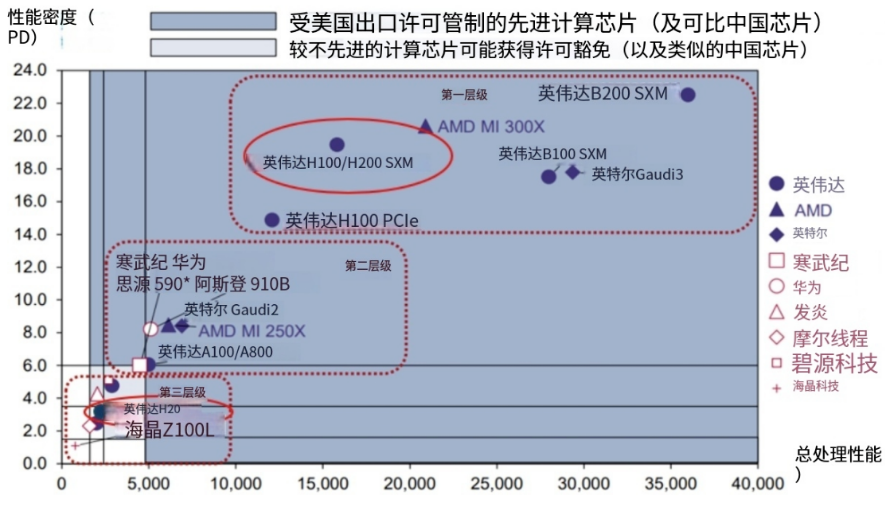
Core Viewpoint - The article discusses the recent surge in the A-share market related to AI and optical modules, driven by companies like Google and their TPU technology, which has positively impacted the valuation logic of optical module firms in China. Group 1: Market Dynamics - The A-share AI frenzy is focused on two main themes: chip manufacturing and connectivity, with companies like 中际旭创 (Inspur) and 天孚通信 (Tianfu Communication) leading the charge in optical modules [1][2] - 中际旭创, 天孚通信, and 新易盛 (NewEase) have market capitalizations of 633.3 billion, 184.2 billion, and 402.1 billion respectively as of December 8 [1] - The historical average PE ratio for the communication industry is around 15-20, raising concerns about the high valuations of optical module companies, which have seen PE ratios of 40-80 [1][2] Group 2: Google's Impact - Google's TPU technology is reshaping the AI computing landscape and is expected to drive demand for optical modules, which are essential for data transmission [2][3] - The introduction of TPU v7, which can integrate up to 9,216 chips, necessitates a significant increase in optical module deployment to maintain low latency and high bandwidth [6][10] - The demand for 1.6T optical modules is expected to rise due to Google's aggressive expansion plans, with projections indicating that 1.6T module shipments could exceed 25 million by 2026 [8][10] Group 3: Capital Expenditure Trends - Major cloud companies, including Alibaba, Tencent, and the "Big Four" in the U.S. (Google, Microsoft, Meta, Amazon), are significantly increasing their capital expenditures, which is a key indicator of optical module demand [12][14] - The total capital expenditure for the "Big Four" is projected to reach $230 billion in 2024, a 55% increase year-over-year, further supporting the growth of the optical module market [12][13] - Forecasts suggest that capital expenditures will continue to rise, with a projected 35% increase in 2026, indicating sustained demand for optical modules [15] Group 4: Company Performance and Valuation - 中际旭创 reported a Q3 revenue of 10.22 billion yuan, with a year-over-year growth of 56.83%, while 天孚通信 and 新易盛 showed lower-than-expected performance [22][23] - Despite mixed Q3 results, 中际旭创 is expected to receive a higher valuation due to its strong performance and the positive outlook driven by Google's TPU [24][25] - Analysts predict that 中际旭创's net profit will grow at a compound annual growth rate of 59% from 2025 to 2028, leading to a target price increase of 62% to 762 yuan [25][26]
Scale Up开启光互联新篇章
2025-12-08 00:41
Summary of Key Points from Conference Call Industry Overview - The optical chip core substrate demand is expected to surge, with an annual growth rate projected to reach 20 times by 2030 compared to 2026, driven by new technologies such as CDUP, NPO, OCS, and spatial optical fibers, which will enhance the performance and valuation of the optical communication industry [1][2][24] - The optical communication industry is currently experiencing rapid growth, particularly in overseas markets, with significant increases in production capacity and sales of optical modules, although delivery is constrained by a shortage of optical chips [2] Technological Advancements - Significant progress in high-speed interconnect technologies is noted, with NVIDIA's NVLink switch market expected to surpass Ethernet by 2027, and Google implementing ASIC and 3D network topologies through ICI technology [1][3][4] - The demand for high-speed copper cables is robust, with Corning reporting over 270% year-on-year revenue growth in FY26 Q2, driven by North American Hyper Scalers transitioning from 25G to 100G and potentially to 200G [3][11] Open Ecosystem and Industry Collaboration - The UA Link alliance is accelerating the industrialization of high-speed interconnects, with participation from major companies like AMD, Broadcom, Cisco, and Google, and the release of new Ultra switch chips by Broadcom to expedite commercialization [1][5] - Collaboration between network-side and computing-side companies is deepening, with Ruijie Networks and Broadcom working closely to launch FreeUP cabinet-level products starting in 2026 [1][8] Domestic Market Developments - Domestic SKOP industrialization is advancing rapidly, with Huawei establishing Scaler data center clusters and major internet companies like Alibaba, ByteDance, and Tencent implementing their Scap interconnect technology solutions, expected to enter mass production by 2026 [1][6][7] - Ruijie Networks is positioned to play a significant role in the future SKOP market, with an increasing share in internet data centers and expected growth driven by rising capital expenditure [1][7] Future Trends and Opportunities - The AI era is expected to significantly impact the optical interconnect market, with increasing bandwidth requirements leading to a surge in demand for optical modules, PCBs, and related equipment [15][16] - The optical interconnect industry is anticipated to enter a new phase starting in the second half of 2026, benefiting various sectors including traditional optical devices, chips, and the entire optical module supply chain [24] Innovations in Data Center Networking - Google is innovating its data center network architecture, planning to expand from 8,000 to 16,000 interconnected cards, utilizing high bandwidth to enhance performance [17][18] - Domestic companies like Huawei and Alibaba are also making strides in data center networking, with architectures that transition from copper to optical connections for improved efficiency [18][19] Global Competitive Landscape - Global giants like Broadcom are launching significant solutions for scale-up scenarios, including the Tomahawk Ultra chip, which is designed to capture the scale-out interconnect market [22] - Domestic module manufacturers are actively proposing solutions for scale-up scenarios, emphasizing the advantages of MPO technology for higher density interconnections [21] Conclusion - The optical communication and high-speed interconnect industries are poised for substantial growth driven by technological advancements, collaborative ecosystems, and increasing demand from AI and data center applications, presenting numerous investment opportunities and potential risks in the evolving landscape [1][24]
券商晨会精华:当前时点AI板块拥挤风险相对较低,长期依旧存在机会
Xin Lang Cai Jing· 2025-12-01 00:20
Market Overview - The Shanghai Composite Index fell by 1.67% in November, ending a six-month winning streak after reaching a ten-year high mid-month [1] - The ChiNext Index dropped by 4.23%, showing a pattern of "initial decline followed by recovery" [1] - Market hotspots in November were concentrated in the battery supply chain, Hainan, Fujian, and computing hardware sectors [1] Investment Strategies - Huatai Securities suggests positioning in high-probability sectors during the "spring excitement," focusing on balanced allocations between growth and cyclical sectors [2] - Key areas of interest include aviation equipment, AI-related energy storage, and power supply equipment, as well as chemicals and energy metals [2] - Financial sectors and high-value consumer goods, such as liquor and consumer building materials, are recommended as mid-term investment choices [2] AI Sector Insights - CICC indicates that the current risk of overcrowding in the AI sector is relatively low, with long-term opportunities still present [3] - The overcrowding level in the AI sector has decreased since the peak in late September, suggesting ongoing investment value [3] - Short-term market trends may favor value styles, with institutional investors likely adopting defensive strategies as year-end approaches [3] Optical Communication Opportunities - CITIC Securities highlights the significant growth potential in AI optical interconnection, driven by the need for high-performance, high-bandwidth, and low-latency networks [4] - The advantages of leading firms in the optical communication sector are becoming more pronounced due to increasing demands for R&D capabilities and new technology deployments [4] - The firm is optimistic about the development potential of domestic optical communication leaders [4]
江苏迈信林航空科技股份有限公司关于上海证券交易所对公司与关联方共同投资并筹划向关联方控制企业增资事项问询函的回复公告
Shang Hai Zheng Quan Bao· 2025-11-28 19:09
Core Viewpoint - Jiangsu Maxinlin Aviation Technology Co., Ltd. is responding to an inquiry from the Shanghai Stock Exchange regarding its joint investment with related parties and plans to increase capital in a controlled enterprise, Photon Computing [9][10]. Group 1: Investment Details - The company plans to invest between 201 million and 311 million yuan in the joint venture, holding a 99.5% stake through the partnership with Bai Bing, who holds 0.5% [9][10]. - The investment is positioned as a financial investment aimed at enhancing operational capital and expanding market share for Photon Computing [10][11]. Group 2: Financial Implications - The funding for this investment will primarily come from the company's own funds and bank loans, which may increase the company's liabilities and financial expenses [7][42]. - The company has set up mechanisms such as performance commitments and buyback clauses to mitigate risks associated with the investment [45]. Group 3: Market and Competitive Landscape - The industry is experiencing intensified competition, particularly in the field of supernodes, which are critical for computing power and technological competitiveness [3][21]. - Photon Computing is positioned to benefit from the growing demand for intelligent computing centers, but faces risks from potential policy changes and market dynamics [2][20]. Group 4: Operational Synergies - The investment is expected to create synergies between the company's existing aviation component business and Photon Computing's operations, enhancing overall competitiveness in the computing market [37][39]. - The company aims to leverage Photon Computing's technology in optical interconnects to improve its own computing service offerings [38][44]. Group 5: Risk Management - The company has outlined various risks associated with the investment, including market competition, product innovation, and talent retention, which could impact Photon Computing's performance [3][4][5]. - A thorough due diligence process is in place to ensure compliance and mitigate potential risks during the investment phase [18][29].
