
工业机器人

Search documents
机器人产业ETF(159551)涨超0.9%,机构称人形机器人商业化需突破成本与效率瓶颈
Mei Ri Jing Ji Xin Wen· 2025-12-24 07:33
Core Insights - The core viewpoint is that humanoid robots are primarily suited for handling and quality inspection tasks in industrial settings, with a critical commercial challenge being the return on investment (ROI) that needs to achieve a minimum two-year payback period. The price of robots must be reduced to the level of 100,000 yuan and efficiency must be improved to match human levels [1] Group 1: Market Demand and Projections - By 2035, the total demand for humanoid robots in China's industrial sectors, including automotive manufacturing, electronics manufacturing, and logistics warehousing, is expected to reach 484,000 units, representing a market space exceeding 48 billion yuan [1] Group 2: Technological Challenges - The development of embodied intelligence is lagging, with insufficient capabilities for handling complex, long-chain tasks. Improvements in generalization performance are necessary to expand applications to more processes. Additionally, fine manipulation capabilities need enhancement, particularly in the durability, flexibility, and force control of dexterous hands [1] Group 3: Complementary Roles of Robots - Humanoid robots and industrial robots have complementary roles; industrial robots focus on high-precision repetitive tasks at fixed stations, while humanoid robots exhibit flexibility, adapting to unstructured environments and small-batch, multi-category tasks [1] Group 4: Industry Players and Innovations - Companies like Tesla and Xpeng possess technological and situational advantages that facilitate the deployment of humanoid robots in industrial contexts, with the Walker series and Figure being notable examples [1] Group 5: Investment Opportunities - The robot industry ETF (159551) tracks the robot index (H30590), which focuses on companies involved in the research, manufacturing, and application of robots, covering areas such as industrial automation and service robots, aiming to reflect the technological innovation and overall development of the robot industry [1]

日本为何完全放弃人形机器人?
虎嗅APP· 2025-12-20 03:27
Core Viewpoint - Japan has largely abandoned the humanoid robot sector, focusing instead on industrial robots due to past failures and a lack of commercial viability in humanoid robotics [6][8][10]. Group 1: Humanoid Robots - Japan entered the humanoid robot market early but faced significant losses, leading to a strategic withdrawal from this sector [8][10]. - Notable humanoid robots like ASIMO and Pepper experienced development and production halts, with ASIMO priced at $2.5 million and Pepper at ¥198,000, resulting in low sales volumes [10][12]. - The Japanese market has shifted focus away from humanoid robots, emphasizing that there is no necessity for robots to resemble humans [12][18]. Group 2: Industrial Robots - Japan excels in industrial robotics, with companies like FANUC, Yaskawa, and Kawasaki holding significant market shares [27][28]. - The global industrial robot market is projected to account for approximately 71.4% of total revenue by 2024, indicating a strong demand for industrial robots [25]. - Japan's industrial robots are characterized by high reliability and long operational lifespans, often exceeding 20 years [39][40]. Group 3: Economic and Technological Factors - Japan's technological landscape lacks the maturity seen in the U.S. and China regarding AI and large models, which are crucial for advanced robotics [20][21]. - The country faces challenges in talent acquisition, particularly in AI and engineering, which hampers innovation in humanoid robotics [21][22]. - Japan's economic structure and risk aversion contribute to its cautious approach to new robotic technologies, preferring stability over rapid innovation [22][23]. Group 4: Market Dynamics - The demand for humanoid robots is currently limited, with most buyers being experimental or marketing-oriented rather than seeking mass production [17][19]. - Japan's industrial robots are designed for B2B applications, maintaining profitability and stability, contrasting with the more speculative nature of humanoid robotics [29][30]. - The Japanese robotics industry is largely self-sufficient, relying on domestic components, which enhances reliability and reduces dependency on imports [40][42].


中国能建:公司布局了工业机器人制造
Zheng Quan Ri Bao Wang· 2025-12-18 12:41
Core Viewpoint - The company, China Energy Engineering Corporation (China Energy), is actively developing industrial robot manufacturing, including solar panel cleaning and automatic laying robots, as well as intelligent equipment for hydropower construction [1] Group 1 - The company has successfully developed solar panel cleaning robots [1] - The company has also created automatic laying robots for solar panels [1] - In collaboration, the company has developed intelligent equipment for hydropower construction, such as integrated drilling and protection systems for inclined shafts [1]

中国能建:公司布局了工业机器人制造,目前已成功研制出光伏板清扫机器人、光伏板自动铺装机器人等
Mei Ri Jing Ji Xin Wen· 2025-12-18 07:45
Core Viewpoint - The company has developed industrial robots, including solar panel cleaning robots and automatic solar panel laying robots, indicating a strategic focus on automation in the renewable energy sector [1] Group 1: Company Developments - The company has successfully manufactured industrial robots for specific applications in the renewable energy industry [1] - Notable products include solar panel cleaning robots and automatic solar panel laying robots [1] - The company has also collaborated on intelligent equipment for hydropower construction, such as smart inclined shaft excavation drilling and protection integration [1]
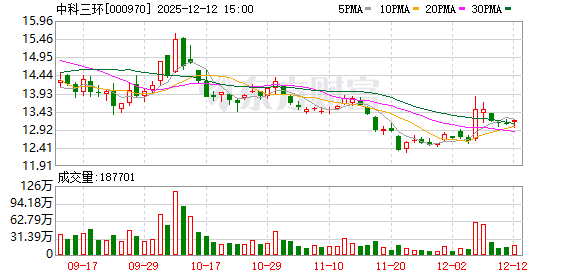
中科三环:目前公司产品主要用于汽车、工业机器人等领域
Zheng Quan Ri Bao· 2025-12-12 11:06
Group 1 - The company, Zhongke Sanhuan, primarily focuses on products used in various sectors including automotive (including new energy vehicles), consumer electronics, industrial robots, computers, energy-saving appliances, wind turbines, and industrial motors [2]

中科三环:目前公司产品主要用于汽车(包括新能源汽车)、消费类电子、工业机器人、计算机、节能家电等领域
Mei Ri Jing Ji Xin Wen· 2025-12-12 08:03
(文章来源:每日经济新闻) 中科三环(000970.SZ)12月12日在投资者互动平台表示,您好,目前公司产品主要用于汽车(包括新 能源汽车)、消费类电子、工业机器人、计算机、节能家电、风力发电机、工业电机等领域。谢谢! 每经AI快讯,有投资者在投资者互动平台提问:请问,公司产品是否供应机器人、无人机、新能源电 机等未来产业? ...
动力源:公司目前没有产品应用在家用或机器人领域
Mei Ri Jing Ji Xin Wen· 2025-12-11 08:37
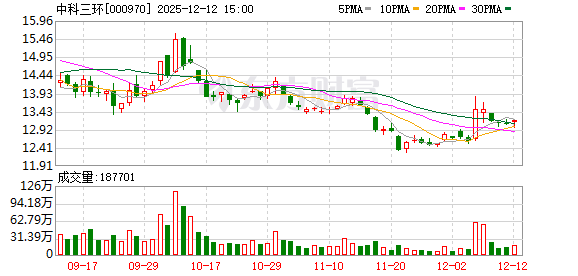
Core Viewpoint - The company, Dongliang (600405.SH), does not currently have products applicable to home or industrial robots, focusing instead on power electronics technology related products and services [1] Group 1: Company Focus - The company specializes in the research, development, manufacturing, and sales of power electronics technology products [1] - The company is concentrated on three main industries: data communication, green travel, and new energy vehicles, particularly in energy conversion and utilization [1] Group 2: Investor Interaction - An investor inquired about the company's involvement in supplying power products for home or industrial robots and any supply agreements with related enterprises [1] - The company expressed gratitude for the investor's interest but confirmed the absence of products in the robotics sector [1]

崧盛股份(301002.SZ):重庆精刚为公司的参股公司,其主要面向航天航空领域供应谐波减速器等相关部件
Ge Long Hui· 2025-12-10 07:26
Group 1 - The core viewpoint of the article is that Congsheng Co., Ltd. (301002.SZ) is making a strategic investment in Chongqing Jingang, a company that supplies harmonic reducers and related components primarily for the aerospace sector [1] - Chongqing Jingang's main clients include aerospace research institutes, the Aerospace Corporation, and several well-known private commercial aviation customers [1] - The company plans to increase its investment by 20 million yuan by October 2025 to assist in expanding the product line and capacity in the industrial sector, focusing on the development of harmonic reducers for industrial robots and rotary joint reducers for humanoid robots [1]
2025年全球及中国锂电池智能装备行业政策、产业链、市场规模、竞争格局及趋势研判:下游市场需求持续回暖,锂电池智能装备规模将增至260亿元[图]
Chan Ye Xin Xi Wang· 2025-12-10 01:30
Core Insights - The rapid development of the electric vehicle industry in China has significantly increased the demand for lithium battery intelligent equipment, with the market size growing from 27.5 billion yuan in 2020 to 72.2 billion yuan in 2022. However, a slowdown in downstream market demand is expected to reduce the market size to 20.2 billion yuan in 2024, before recovering to 26 billion yuan in 2025 due to increased production rates from leading battery companies [1][7]. Industry Overview - Lithium battery intelligent equipment integrates advanced technologies such as AI, IoT, big data, and automation to enhance the efficiency and digitalization of the entire lithium battery production process [2]. - The production process is divided into three stages: front-end (electrode preparation), mid-stage (cell assembly), and back-end (testing and packaging), with intelligent equipment corresponding to each critical stage [4]. Industry Policies - The Chinese government has implemented various policies to promote the transformation and high-quality development of the lithium battery intelligent equipment industry, including the "Action Plan for Promoting Large-Scale Equipment Updates" and the "High-Quality Development Action Plan for New Energy Storage Manufacturing" [2]. Market Dynamics - The global lithium battery intelligent equipment market grew from $6.524 billion in 2020 to $17.811 billion in 2022. However, it is projected to decline in 2023-2024 due to changes in terminal market demand. Recovery is expected in 2025, with the market size reaching $10.882 billion [5][6]. - In 2024, China is expected to account for 34.1% of the global market, with significant contributions from the Asia-Pacific region, Europe, and North America [5]. Application Segments - In 2024, the application of lithium battery intelligent equipment is primarily in the electric vehicle sector (68%), followed by consumer electronics (17%) and energy storage (13%) [7]. Competitive Landscape - The competitive landscape of the lithium battery intelligent equipment industry in China is characterized by a leading player, XianDao Intelligent, followed by strong competitors like YingHe Technology and HuaZi Technology. The market is also populated by numerous small and medium-sized enterprises [8][10]. - XianDao Intelligent holds a significant market share due to its comprehensive product line and strong R&D capabilities, while other companies focus on specific segments and maintain competitive advantages through technology and customer service [8]. Development Trends - Future trends in the lithium battery intelligent equipment industry include the evolution towards integrated "turnkey" solutions, deep integration with AI and industrial big data, and the adoption of flexible and modular designs to adapt to rapid technological changes and market fluctuations [11][12][13].





华菱线缆:公司在工业机器人和人形机器人领域均有布局
Zheng Quan Shi Bao Wang· 2025-12-09 13:32
Core Viewpoint - Hualing Cable (001208) is actively expanding its presence in the industrial and humanoid robot sectors, with significant revenue potential from related cable products [1] Group 1: Business Development - The company reported nearly 100 million in revenue from robot-related cables last year [1] - Hualing Cable's products are currently utilized in over 30 different scenarios, including cafes, kitchens, specialized ship cleaning, and deep-sea exploration [1] Group 2: Strategic Acquisitions - The company aims to enhance its capabilities by successfully acquiring a target company, which would enable integrated production of robot harness connectors [1] Group 3: Customer Resources - The target company has existing collaborations with several robot enterprises, providing a strong foundation for future partnerships [1] - Hualing Cable's controlling shareholder, Hunan Steel Group, has business collaborations with leading humanoid and industrial robot companies, which will support the company's marketing strategy through a collaborative approach [1]