
市场流动性

Search documents
央行开展8000亿元买断式逆回购操作 2月市场流动性有望保持平稳
Zhong Guo Jing Ying Bao· 2026-02-04 14:57
Core Viewpoint - The People's Bank of China (PBOC) is conducting a 800 billion yuan reverse repo operation to maintain ample liquidity in the banking system, marking the first increase in the three-month reverse repo in four months [1] Group 1: PBOC Actions - The PBOC will conduct a fixed-quantity, interest-rate tendering, multi-price bidding reverse repo operation of 800 billion yuan with a term of three months [1] - This operation will result in a net injection of 100 billion yuan after the maturity of 700 billion yuan in three-month reverse repos [1] - The move is aimed at ensuring reasonable liquidity in the banking system, especially before the Spring Festival [2] Group 2: Market Liquidity Outlook - Experts predict that February's market liquidity will remain stable despite various disturbances, supported by the PBOC's liquidity injections [3] - Factors influencing liquidity include government bond issuance, cash withdrawal demands before the Spring Festival, and tax payment pressures [3] - The overall expectation is for the market liquidity to remain ample and stable, with the DR007 rate likely to hover around the policy interest rate [3] Group 3: Future Monetary Policy - The likelihood of a reserve requirement ratio (RRR) cut has decreased due to the recent liquidity injections by the PBOC [2] - The PBOC is expected to continue using medium-term lending facilities (MLF) and reverse repos to inject liquidity into the market [2] - Future adjustments to monetary policy tools will be made dynamically based on changes in liquidity conditions to ensure a stable monetary environment for bond market operations and credit issuance [3]
高盛:伦敦白银市场的流动性状况依然偏紧,放大了双向的价格波动
Jin Rong Jie· 2026-02-04 03:56
Core Viewpoint - Goldman Sachs believes that silver has experienced a more significant adjustment compared to gold due to tighter liquidity conditions in the London market, which amplifies price volatility in both directions [1] Group 1: Market Conditions - The liquidity situation in the London market remains tight, contributing to increased price fluctuations for silver [1] - The tightening of liquidity in London adds an extra factor to extreme price behavior in the silver market [1] Group 2: Price Volatility - The volatility in the silver market is influenced by a similar bullish options structure as seen in gold [1]
去美元交易和市场流动性问题
2026-02-04 02:27
孙彬彬 财通证券分析师: 好的,尊敬的各位投资人,大家晚上好。今天是财通总量,给大家分享最新的观点。我是 财通证券孙彬彬,那么这个上周末,对吧,到这周初,这个全球市场,很大的一个波动, 市场在重新的审视一些逻辑,对吧?那我想很多逻辑线,那我这里面只谈两个,今天我想 主要谈两个问题。第二个,第一个是去年的问题,第二个是市场流动性的问题虽然说今天 的,昨天夜盘开始市场有很好的一个修复反弹,对吧?但我想这两个问题应该还是 2026 年大家会反复的探讨的问题,这也是全球市场自 2025 年以来交易的一些底层的一些逻辑 问题。 我们趁这个时间段再去回顾一下、探讨一下。那么首先要谈的是,去美元交易的底层逻辑 首先明确,去美元肯定没变。对吧?那我想这个应该是没有问题的。但这里面有一个细节 大家一定要注意,去美元和简单的落美元交易,这是两件事情。这是两件事情。或者说也 不能说完全是两件事,就是说这两件事情不能简单的说就是一件事情。我想这样表达可能 会更准确。就去美元。和弱美元,它不是一个简单的就是这么一个,同一件事情。美元, 我们看去年下半年以来,美元走到 95~100 之后,明显是震荡的格局。 对吧,顶蛮清晰的,100,这 ...
宏观脉冲,静待流动性修复:多晶硅周报-20260202
Chuang Yuan Qi Huo· 2026-02-02 06:19
Report Title - "Polysilicon Weekly Report: Macro Pulse, Awaiting Liquidity Restoration" [1] Report Industry Investment Rating - Not mentioned in the provided content Core Viewpoints - This week, macro disturbances have been greater than fundamental factors. The market volatility has increased significantly, and short-term liquidity has been constrained. On the fundamental side, upstream industrial silicon has advanced production cuts, but the production cuts in the polysilicon and silicon wafer segments are still falling short of expectations, leading to a continuous increase in inventory pressure. Although export rush has boosted external demand to some extent, domestic demand is in a seasonal off - peak and is expected to decline year - on - year, causing downstream enterprises to be extremely cautious in purchasing, which further amplifies the upstream inventory pressure. The profits of the entire industry are continuously declining, and the profit of the component segment has been further squeezed due to the rapid rise of silver prices. On the macro level, the election of Kevin Warsh as the new head of the Federal Reserve has led to differences in market expectations regarding whether the US will shrink its balance sheet, resulting in a significant short - term liquidity crisis event and increased market volatility [2] Summary by Directory 1. Key Data Overview - **Silicon powder price**: As of January 30, the 99 - silicon powder was quoted at 9,850 yuan/ton, with a daily and weekly increase of 0.0% and 0.5% respectively. The 553 silicon powder was also quoted at 9,850 yuan/ton, with the same daily and weekly changes [6] - **Trichlorosilane price**: As of January 30, it was 3,425 yuan/ton, with no daily or weekly changes [7] - **Polysilicon price**: The N - type granular silicon was quoted at 49 yuan/kg, with a daily decline of 1.0% and a weekly decline of 3.0%. The N - type re - feed material was quoted at 51.3 yuan/kg, with a daily decline of 2.3% and a weekly decline of 5.0%. The N - type silicon price index was 51.3 yuan/kg, with the same daily and weekly changes as the N - type re - feed material. The electronic - grade polysilicon was quoted at 28.15 US dollars/kg, with a daily increase of 0.0% and a weekly increase of 0.5%. The overseas photovoltaic - grade polysilicon was quoted at 16.05 US dollars/kg, with no daily or weekly changes [7] - **Polysilicon production**: As of January 30, the weekly production was 20,200 tons, with a weekly decline of 1.5% [8] - **Polysilicon inventory**: As of January 30, the domestic inventory was 333,000 tons, with a weekly increase of 0.9% [9] - **Silicon wafer price**: The N - type 182 silicon wafer (130μm) was quoted at 1.23 yuan/piece, with a daily increase of 0.0% and a weekly decline of 7.5%. The N - type 210 silicon wafer (130μm) was quoted at 1.53 yuan/piece, with a daily increase of 0.0% and a weekly decline of 6.1% [9] - **Silicon wafer production**: As of January 30, the weekly production was 11.75 GW, with a weekly increase of 8.2% [10] - **Silicon wafer inventory**: As of January 30, the inventory was 27.29 GW, with a weekly increase of 1.9% [11] - **Battery component price**: The single - crystal TOPcon:M10 was quoted at 0.44 yuan/watt, with a daily increase of 0.0% and a weekly increase of 6.0%. The single - crystal TOPcon:G12 was also quoted at 0.44 yuan/watt, with the same daily and weekly changes. Other battery component products also had different degrees of price changes [11][12] 2. Weekly Market Review 2.1 Spot Prices in the Industrial Chain - The report presents the price trends of silicon materials, silicon wafers, battery cells, and components through charts, sourced from SMM and Chuangyuan Research [15] 2.2 Prices of Other Upstream and Downstream Materials - The report shows the price trends of silicon powder, photovoltaic glass, silver paste, and photovoltaic frames through charts, sourced from SMM and Chuangyuan Research [17][19][20][21] 3. Key Data Tracking 3.1 Upstream and Downstream Data - The report shows the weekly production and inventory data of polysilicon, photovoltaic silicon wafers, photovoltaic cells, and photovoltaic components through charts, sourced from SMM and Chuangyuan Research [24][27][29][31] 3.2 Export and Industry Profit Levels - The report shows the export data of components and batteries (converted to polysilicon consumption) and the profit levels of the polysilicon, silicon wafer, battery, and component industries through charts, sourced from SMM and Chuangyuan Research [33][35][37] 3.5 Weekly Key Data - The report comprehensively lists various data of the industry, including price, production, inventory, etc., and provides daily, weekly, and monthly changes [38]
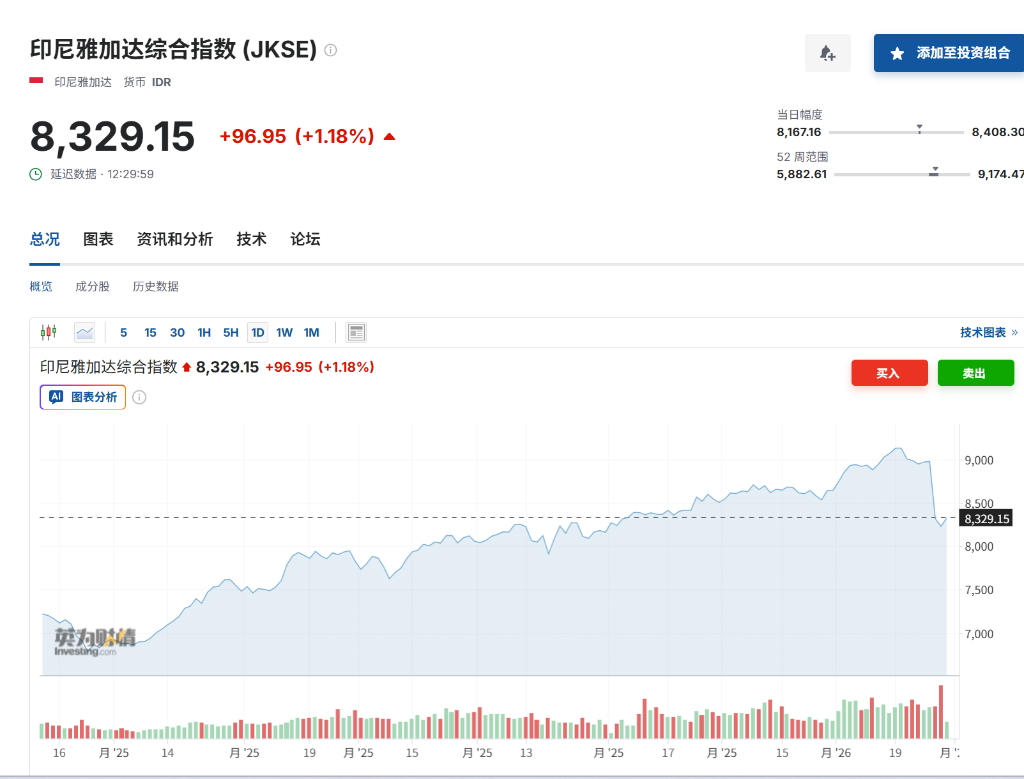
熔断!印尼股市再暴跌
证券时报· 2026-02-02 04:30
随后印尼证券交易所(IDX)宣布,首席执行官伊曼・拉赫曼(Iman Rachman)已正式辞职,此举旨在为近期市场剧烈波动承担责任。此前两个 交易日,印尼股市市值蒸发840亿美元,导火索为全球指数编制机构MSCI发布的潜在降级警告,市场恐慌情绪一度蔓延。 MSCI降级警告成 "导火索",直指透明度问题 此次市场动荡的直接诱因是 MSCI在1月24日(周二)发布的一份声明。该机构明确表示,因印尼股市存在 "根本性可投资性问题",正考虑将其 从 "新兴市场" 类别下调至"前沿市场"类别。MSCI在声明中指出,投资者普遍担忧印尼上市公司股权结构不透明,且存在可能影响价格正常形成 的协同交易行为,这些问题持续削弱市场的可投资性。 作为全球基金广泛参考的指数编制机构,MSCI的评级调整对国际资本流向具有重要影响。若印尼最终被降级,跟踪 MSCI 指数的基金可能被迫 系统性抛售印尼股票,进一步加剧市场压力。 CEO 辞职"担责",盼为市场恢复注入信心 在1月30日的新闻发布会上,伊曼・拉赫曼表示,辞职是为"近期市场状况" 承担责任,他在声明中提到:"我希望这是对印尼资本市场最有利的 决定,愿我的辞职能推动资本市场状况改善 ...


懒人财知道:1月30期货投资复盘总结
Xin Lang Cai Jing· 2026-01-30 09:26
Market Overview - The overall trend of bulk commodities is characterized by significant fluctuations, with domestic commodities experiencing a two-day rise followed by a morning pullback, while international markets (precious metals, crude oil) also show substantial volatility, indicating intense competition between bulls and bears without clear directional continuation [3][23]. Strongest/Weakest Sectors and Core Products - Strong sectors include precious metals, with Shanghai silver rising 8.32% to set a new historical high, and international gold showing a V-shaped reversal with over 10% intraday volatility [4][23]. - The non-ferrous metals sector, represented by Shanghai copper and LME copper, also performed well, with Shanghai copper increasing by 6.18% and LME copper by 4.73%, supported by a decline in Chilean copper production [4][23]. - The energy and chemical sector saw Shanghai crude oil rise by 6%, driven by cost increases and geopolitical tensions from military exercises in the Strait of Hormuz [4][23]. - Conversely, the photovoltaic raw material sector, particularly polysilicon, faced a downturn, with a 6.18% drop in the polysilicon 2605 contract due to high inventory and demand exhaustion [4][23]. Core Trading Strategies and Execution - The strategy emphasizes profit-taking and risk management, with previous long positions being closed to lock in gains, while maintaining a light long position in PVC2605 and focusing on the bearish trend of polysilicon [6][24]. - Previous long positions in fuel, plastics, and non-ferrous metals achieved significant profits, with Shanghai copper and silver exceeding 63% gains [27][30]. - The current strategy for PVC2605 involves a light long position with a maximum allocation of 10% of total equity, aiming for a first profit target of 4970-4980 points and a subsequent target of 5100-5150 points [28][30]. Global Market Context - Internationally, macroeconomic tensions are evident, with contrasting positions from Trump advocating for interest rate cuts and Powell maintaining high rates, leading to increased volatility in the dollar [25]. - Geopolitical risks are heightened due to military exercises planned by Iran, which are expected to boost demand for oil and precious metals as safe-haven assets [25]. - The market is experiencing significant fluctuations, with international precious metals showing intraday volatility exceeding 8% and Bitcoin dropping over 6% [25]. Domestic Market Dynamics - Regulatory bodies have issued warnings regarding increased market uncertainty ahead of the Spring Festival, urging investors to act rationally [26]. - Domestic commodities are influenced by both internal and external market dynamics, with Shanghai silver and copper leading gains while polysilicon faces downward pressure due to high inventory levels [26]. Future Considerations - The company plans to maintain a cautious approach, focusing on light positions and closely monitoring the stop-loss levels for PVC2605, while tracking the bearish trend in polysilicon for potential short opportunities [33][37]. - The strategy will prioritize high liquidity and clear trend products, avoiding low volatility items with unclear supply-demand dynamics [36].

印尼股市“血腥周”:多次崩盘、熔断、交易所CEO“辞职谢罪”
Hua Er Jie Jian Wen· 2026-01-30 06:13
Core Viewpoint - The resignation of Iman Rachman, President of the Indonesia Stock Exchange, is a response to the recent market turmoil triggered by MSCI's downgrade warning, which led to a significant drop in the Jakarta Composite Index and a loss of over $80 billion in market capitalization [1][4]. Group 1: Market Reaction - Following Rachman's resignation, the Indonesian stock market rose by 1.7%, with the cumulative decline over the previous two days narrowing to 6.5% [2]. - The Jakarta Composite Index experienced a total drop of 16% over two days, marking the most severe decline since the 1998 Asian financial crisis [4][5]. Group 2: MSCI Warning - MSCI's report highlighted "fundamental investability issues" regarding the transparency of equity structures in Indonesian companies, warning that failure to address these issues by May could lead to a downgrade from emerging market status to frontier market [4][5]. - The report raised concerns about low free float ratios of Indonesian stocks, which are largely controlled by a small number of wealthy individuals, leading to market manipulation risks [5]. Group 3: Regulatory Response - In response to the market collapse, the Financial Services Authority of Indonesia announced an increase in the free float requirement for listed companies to 15%, effective next month [6]. - The government is accelerating reforms aimed at enhancing governance, improving market liquidity, and attracting new investors to align the Indonesian stock exchange with global standards [6][7]. Group 4: Investor Sentiment - Investor confidence has been shaken, with concerns about the government's ability to meet MSCI's requirements and the potential for significant capital outflows [10][11]. - Despite the turmoil, officials maintain that the country's fundamentals remain strong, citing robust domestic demand and ongoing structural reforms as buffers against external shocks [11].
华泰期货流动性日报-20260130
Hua Tai Qi Huo· 2026-01-30 06:10
Report Summary 1. Investment Rating No investment rating information is provided in the report. 2. Core View The report presents the market liquidity situation on January 29, 2026, detailing the trading volume, holding amount, and trading - holding ratio of various sectors, including stock index, treasury bond, basic metal, precious metal, energy - chemical, agricultural product, and black building materials sectors, along with their changes compared to the previous trading day. 3. Summary by Directory 3.1 Market Liquidity Overview - On January 29, 2026, the stock index sector had a trading volume of 1071.417 billion yuan, a +22.39% change from the previous trading day; the holding amount was 1865.860 billion yuan, a +3.93% change; the trading - holding ratio was 57.34% [1]. - The treasury bond sector had a trading volume of 346.135 billion yuan, a +20.47% change; the holding amount was 876.678 billion yuan, a +2.26% change; the trading - holding ratio was 39.23% [1]. - The basic metal sector had a trading volume of 1384.210 billion yuan, a +14.59% change; the holding amount was 839.499 billion yuan, a +3.71% change; the trading - holding ratio was 162.85% [1]. - The precious metal sector had a trading volume of 1640.563 billion yuan, a - 7.46% change; the holding amount was 743.180 billion yuan, a +1.35% change; the trading - holding ratio was 238.08% [1]. - The energy - chemical sector had a trading volume of 669.654 billion yuan, a +4.95% change; the holding amount was 532.511 billion yuan, a +1.60% change; the trading - holding ratio was 111.36% [1]. - The agricultural product sector had a trading volume of 313.797 billion yuan, a +4.17% change; the holding amount was 653.433 billion yuan, a +0.73% change; the trading - holding ratio was 44.67% [1]. - The black building materials sector had a trading volume of 199.126 billion yuan, a +37.04% change; the holding amount was 316.419 billion yuan, a +0.23% change; the trading - holding ratio was 61.99% [2]. 3.2 Graphs and Data - There are multiple graphs showing various data such as the trading - holding ratio, trading volume change rate, holding volume, holding amount, and price change rate of each sector and its varieties, with data sources from Flush and Huatai Futures Research Institute [5][6]
宏观视角下的存款搬家与股市定价
2026-01-28 03:01
Summary of Conference Call Notes Industry Overview - The discussion focuses on the relationship between deposit migration and stock market pricing in China, highlighting the unique valuation system of the A-share market compared to international markets [1][3]. Key Points and Arguments 1. **Low Inflation Environment**: The current low inflation in China makes fixed-income assets attractive to residents, influencing their investment decisions [1][3]. 2. **Investment Willingness**: The willingness of residents to invest in stocks is a critical factor determining market liquidity and stock price movements, rather than merely the volume of maturing deposits [1][3][5]. 3. **Correlation Analysis**: Historical data from 2016 to 2025 shows a weak correlation between the volume of maturing deposits and stock price increases, indicating that focusing solely on deposit maturity does not effectively explain stock price fluctuations [3][18]. 4. **Net vs. New Funds**: New funds entering the market do not equate to net new funds, as the behavior of both buyers and sellers must be considered to assess the overall investment pool in stocks [4]. 5. **Predictive Indicators**: The growth rate of "resident investment funds" serves as a strong predictor for the performance of the Wind All A Index, emphasizing the importance of tracking residents' willingness to invest in risk assets [5][13]. 6. **Asset Composition**: Residents' investable assets include both existing liquid assets and current savings, with investment proportions influenced by income expectations [6][8]. 7. **Income Expectations**: Income expectations are crucial for assessing stock market investment willingness, with indicators such as CPI service prices and PMI employment data being useful for tracking these expectations [2][10][11]. 8. **Current Deposit Trends**: As of Q3 2025, residents show a high tendency to save, indicating a lack of significant appetite for risk assets, which could be improved by positive income expectations [8][15]. 9. **Insurance Funds**: Insurance funds have a high allocation to stocks, but their marginal contribution to the market is expected to decrease in 2026 due to already high stock allocation levels [9][16]. 10. **High Net Worth Individuals**: High net worth individuals maintain a balanced approach to stock investments, showing both buying and selling behaviors, reflecting cautious optimism [9][17]. 11. **Future Market Predictions**: If income expectations remain stable or improve in 2026, stock market inflows are likely to increase, positively impacting the Wind All A Index. Conversely, a decline in income expectations could limit market growth [15][19]. Other Important Insights - The relationship between housing prices and income expectations is significant, as changes in housing prices can influence residents' financial outlook and investment behavior [12]. - A comprehensive analysis of macroeconomic factors, including actual interest rates and international capital characteristics, is essential for accurately predicting future market trends [7][19].
策略周报(20260119-20260123)-20260126
Mai Gao Zheng Quan· 2026-01-26 11:50
Market Liquidity Overview - R007 increased from 1.5137% to 1.5360%, a rise of 2.23 basis points; DR007 rose from 1.4430% to 1.4935%, an increase of 5.05 basis points. The spread between R007 and DR007 narrowed by 2.82 basis points [9] - The net outflow of funds this week was 250.36 billion yuan, with net inflow decreasing by 167.59 billion yuan compared to last week. Fund supply was -184.25 billion yuan, while fund demand was 66.12 billion yuan [13] Industry Sector Liquidity Tracking - Most sectors in the CITIC first-level industry index saw gains, with the building materials sector leading at a weekly increase of 9.18%. Other sectors like petroleum and petrochemicals, and steel also experienced slight increases. The banking and telecommunications sectors led the declines, with decreases of 2.69% and 1.68% respectively [18] Style Sector Liquidity Tracking - Most style indices increased, with cyclical and growth styles leading at 4.64% and 1.81% respectively. The financial style was the only one to decline, down by 1.50%. Growth style accounted for 58.15% of the average daily trading volume, making it the most active sector [3]