投资组合多元化

Search documents
世界黄金协会:市场普遍预期黄金涨势将延续 但不确定性仍居高不下
智通财经网· 2025-12-05 13:20
Core Viewpoint - The World Gold Council reported that gold had an outstanding performance in 2025, achieving over 50 historical highs and a cumulative increase of over 60%, driven by geopolitical and economic uncertainties, a weakening dollar, and sustained upward momentum in gold prices [1][4][5]. Group 1: Factors Influencing Gold Prices - Geopolitical tensions and economic uncertainties have significantly contributed to gold's price increase, with the weakening dollar and declining U.S. Treasury yields being key drivers [5][7]. - The demand for gold from investors and central banks has increased as they seek asset diversification and stability amid market volatility [2][5]. - The contribution of geopolitical risks and a weaker dollar accounted for approximately 16 percentage points of gold's price increase, highlighting the impact of political and macroeconomic uncertainties since Trump's second term [7][10]. Group 2: Outlook for 2026 - The outlook for 2026 suggests that while the current trends in the gold market may continue, significant geopolitical factors and macroeconomic data divergence will maintain high levels of uncertainty [1][13]. - If economic growth slows and interest rates decline further, gold may experience moderate price increases; conversely, if geopolitical risks escalate leading to severe economic downturns, gold could see strong price surges [2][13]. - Central bank demand and gold recycling trends will be critical variables affecting market dynamics, with ongoing strong demand from central banks expected to continue supporting gold prices [14][18]. Group 3: Investment Dynamics - The role of gold as a core asset for portfolio diversification and stability remains crucial in a volatile market environment [2][24]. - Despite potential bearish scenarios, the current geopolitical dynamics suggest that investors are likely to maintain a certain level of gold allocation [24]. - The increasing trend of gold-backed loans, particularly in emerging markets like India, may provide additional support for gold prices, although economic slowdowns could lead to increased supply pressures [21][23].

机构:黄金2026年可能持续强劲涨势
Ge Long Hui· 2025-12-05 04:12
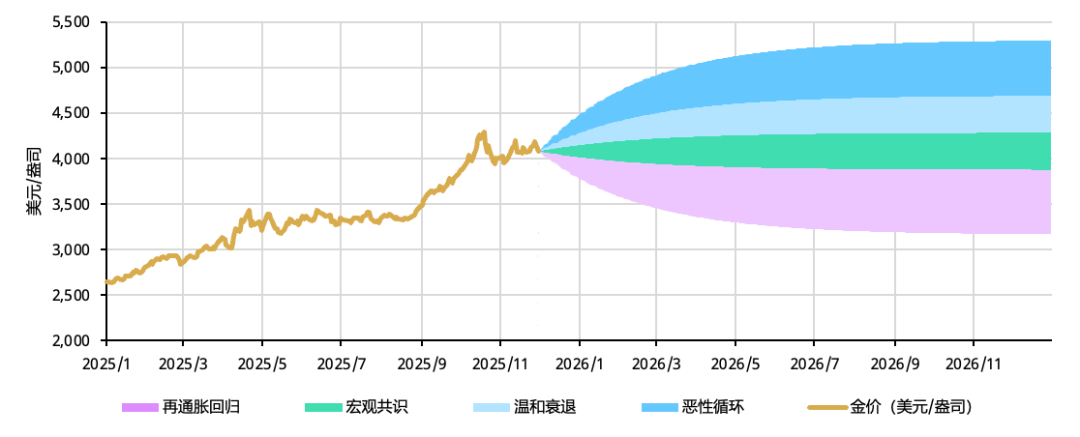
格隆汇12月5日|大华银行全球经济与市场研究团队在一份报告中称,黄金在2026年可能持续其强劲的 趋势性上涨行情。"黄金作为避险资产以实现投资组合多元化的理由依然充分,"大华银行写道。全球主 要交易所的黄金库存仍在强劲累积,同时黄金ETF的购买量也保持强劲。大华银行称,对美联储下周降 息的预期也是该贵金属的一个关键近期利好因素。大华银行维持对黄金的积极展望,并预测2026年第一 季度、第二季度、第三季度和第四季度的金价分别为每盎司4,300美元、4,400美元、4,500美元和4,600美 元。 ...
Worried Inflation Will Eat Away at Your Retirement Savings? These Smart Strategies Can Help Protect Your Nest Egg
Yahoo Finance· 2025-12-04 16:19
Core Insights - Inflation poses significant risks to purchasing power and retirement savings, necessitating strategic financial planning to mitigate its effects [5][19] Group 1: Understanding Inflation - Inflation is measured by the Consumer Price Index (CPI) and reported monthly, impacting savings and returns as typical savings accounts often fail to keep pace with inflation [3] - It reduces purchasing power, meaning that as prices rise, individuals can buy less with their savings, potentially delaying retirement [4][5] Group 2: Budgeting and Spending - Regularly reviewing and adjusting budgets is essential to stay on track with expenses, especially in the face of inflation [1][6] - Prioritizing needs over wants and tracking spending through various tools can help manage finances effectively [2] Group 3: Investment Strategies - Diversification across stocks, bonds, and alternative investments is crucial to spread inflationary risks [6][7] - A well-balanced stock portfolio can provide long-term growth potential, with the S&P 500 averaging over 10% annual returns [8] - Investing in dividend-paying companies can provide a steady income stream that helps keep pace with inflation [9] Group 4: Fixed-Income and Alternative Investments - Fixed-income assets offer safety and stability, with strategies like bond laddering allowing reinvestment at current interest rates during inflationary periods [11] - Real estate and commodities, such as gold, can serve as effective hedges against inflation, with real estate values and rental income typically rising during inflation [12][13] Group 5: Cash Management and Investment Adjustments - Holding too much cash can be detrimental as it may lose value; maintaining only a small emergency fund is advisable [14] - Regular adjustments to investment plans, similar to budgeting, are necessary to navigate market fluctuations effectively [18]
Silver's Bull Run Isn't Over Yet: ETFs to Play the Surge
ZACKS· 2025-12-01 17:21
Core Insights - Silver prices have surged significantly, gaining approximately 96.03% year to date and 13.6% in November, outperforming gold which has increased by 62.02% year to date [1][2] Supply and Demand Dynamics - Experts indicate that silver prices have reached record highs this year, with a tightening supply backdrop suggesting potential for further increases [2] - Industrial demand for silver is projected to rise, with an increase to 689.1 million ounces in 2024 from 644 million in 2023 [8] - Solar panel usage has significantly contributed to silver demand, accounting for 243.7 million ounces, which is over 158% higher than 94.4 million ounces in 2020 [9] Economic Factors - The U.S. Dollar Index (DXY) has decreased by 0.56% over the past five days and 8.52% year to date, which can enhance global demand for silver as it becomes more affordable for foreign buyers [4] - Anticipated interest rate cuts by the Federal Reserve, with an 87.6% probability for the December meeting, are expected to weaken the U.S. dollar, further supporting silver prices [5] Industrial Applications - Silver is essential in various industries, including medical equipment, electronics, and clean energy solutions, due to its unique properties [6][7] - The increasing industrial demand, combined with limited mined output, supports a bullish outlook for silver [8] Investment Opportunities - Several silver ETFs have shown strong performance, with iShares Silver Trust (SLV) gaining 59.17% year to date and Amplify Junior Silver Miners ETF (SILJ) increasing by 132.57% year to date [11][12][13]

守益控股(02227.HK)耗资100.3万新加坡元收购债券
Ge Long Hui· 2025-12-01 10:09
格隆汇12月1日丨守益控股(02227.HK)公告,于2025年12月1日,公司于公开市场以代价100.3万新加坡 元收购债券。集团收购债券乃作投资用途。集团的投资策略包括透过广泛多元化投资组合(包括但不限 于不同行业的股票、债券、基金、结构性产品及衍生工具),于可接受风险水平内为集团创造稳定回 报,以拓展收入来源并寻求可持续业务,从而为股东增值。收购事项让集团得以平衡及分散其投资组 合,并在可接受风险水平内为集团创造稳定回报。董事认为收购事项属公平合理,符合公司及股东的整 体利益。 ...
电动车补贴结束会影响钯金需求和价格吗?
Qi Huo Ri Bao Wang· 2025-11-26 02:23
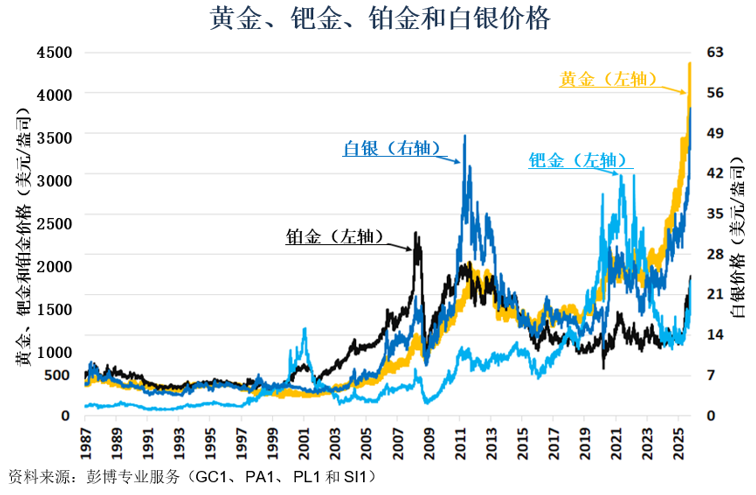
Core Insights - Palladium prices surged from $870 per ounce in early April 2025 to nearly $1,700 by October, marking an increase of over 95%, with a simultaneous rise in gold, silver, and platinum prices during the same period [1] - The global inflationary environment driving this surge is attributed to three main factors: significant budget deficits in multiple countries with limited control measures, core inflation rates exceeding target levels and trending upwards, and the easing of monetary policies by most central banks despite rising inflation [1] Price Correlation and Trends - Palladium typically shows a positive correlation with other precious metals, but this correlation is weaker compared to the relationships among gold and silver, which are primarily driven by jewelry demand [4] - The second strongest correlation among precious metals is between palladium and platinum, reflecting their applications in automotive catalytic converters, with palladium used in gasoline engines and platinum in diesel engines [4][8] Supply Dynamics - Palladium is rarely used in jewelry, with its primary application in the automotive industry, highlighting its price trend independence compared to other metals [10] - The supply of palladium is highly concentrated, particularly in Russia and South Africa, with overall global palladium production showing a declining trend since 2003 [15] - The demand for palladium surged due to stricter automotive emission laws and concerns over supply disruptions from Russia, leading to a parabolic price increase in the late 1990s [15] Market Shifts - Since 2021, palladium prices have returned to historical price ratio ranges relative to gold, silver, and platinum, coinciding with peak palladium usage per vehicle and a surge in electric vehicle sales [18] - In the U.S., electric vehicle sales are projected to account for 11.4% of total vehicle sales in 2024, while in China, the share is expected to approach 50% [20][18] Investment Considerations - Palladium presents research value as a potential diversification tool for investors looking to allocate precious metals, given its limited supply and the inability of central banks to print or digitally create such assets [23]
Gold price today, Friday, November 28: Gold rises with volatility amid outage
Yahoo Finance· 2025-11-24 12:36
Core Insights - Gold futures experienced volatility due to a trading outage, with prices surpassing $4,200 after being below $4,100 for most of November [1] - The outage resulted in wider bid-ask spreads, temporarily reaching $20 per ounce compared to the normal spread of around $1 [2] - As of Friday morning, gold futures were 4.3% higher than the previous Monday's open, with a one-year gain of 63.4% as of November 14 [3] Price Changes - Gold's price increased by 5.1% over the past week, 7.8% over the past month, and 60.9% over the past year [6] Investment Strategies - Experts recommend varying gold allocations based on investment goals, with suggestions ranging from 0% to 20% [5][11] - A 2% to 5% allocation is suggested for income-focused investors, while growth-oriented investors may consider 10% to 15% [6] - Historical data supports a 5% to 8% allocation, emphasizing gold's resilience during economic uncertainty [8] - A long-term allocation of 5% to 15% is recommended, particularly through gold mining companies [9] Expert Opinions - Some experts argue against gold investing, citing the trade-off between reduced volatility and potential long-term returns [5] - Others advocate for a higher allocation, emphasizing gold's role in wealth protection and inflation hedging [11]
Bill Gates Just Sold 2.4 Million Shares of Berkshire Hathaway -- Should Investors Panic?
The Motley Fool· 2025-11-24 06:05
Core Insights - The Gates Foundation Trust has sold a significant number of shares, including 2.4 million shares of Berkshire Hathaway, indicating potential concerns about market valuations and the need for portfolio diversification [1][4][7] Group 1: Berkshire Hathaway's Financial Position - Berkshire Hathaway currently holds over $380 billion in cash, representing more than one-third of its market capitalization of $1,087 billion, making it a relatively safe investment during market downturns [2][3] - The stock has a price-to-book ratio of around 1.6, which is higher than its historical range of 1.2 to 1.5 over the past decade, suggesting that it may be overvalued [7] Group 2: Gates Foundation Trust's Portfolio Strategy - After the recent sales, Berkshire remains the largest position in the Gates Foundation Trust's portfolio, accounting for 25% of total holdings, down from 30% [6][7] - The trust's decision to sell shares of Berkshire may reflect a strategy to achieve better diversification, as 12 out of 25 holdings experienced net selling last quarter, with no positions increased [4][5] Group 3: Market Sentiment and Future Implications - The selling activity by the Gates Foundation Trust mirrors Warren Buffett's own nervousness regarding current market valuations, as he has also refrained from share repurchases [8][9] - Despite the selling, the trust has been a net buyer in previous quarters, indicating that this action may not be a definitive bearish signal but rather a strategic adjustment [9]

美股AI泡沫论持续发酵,瑞银发声:“对冲利器”在中国!
Jin Shi Shu Ju· 2025-11-19 04:22
Group 1 - The core viewpoint is that Chinese AI stocks are becoming increasingly attractive for investors seeking portfolio diversification, especially in light of high valuations in U.S. tech stocks [2] - UBS's Jason Draho suggests that the Chinese tech sector offers a compelling alternative to balance U.S. tech holdings, as the correlation between the two markets is relatively low despite their apparent synchronized movements [2] - The differing driving factors behind Chinese and U.S. tech stocks, including domestic policies and technological differences, may allow for independent performance, potentially leading to diversification benefits [2] Group 2 - Chinese tech companies are valued at only one-third to half of their U.S. counterparts, making them competitive in the AI product space [3] - Despite lower absolute valuations, Chinese tech stocks are currently trading at a forward P/E ratio of 14, up from 11 a year ago, indicating they may be relatively high compared to their historical valuations [3] - Investment vehicles such as Invesco China Technology ETF (CQQQ) and iShares MSCI China Tech UCITS ETF (CTEC) have shown strong performance, with the Invesco ETF returning 38% year-to-date, outperforming the Nasdaq 100's 19% increase [3]

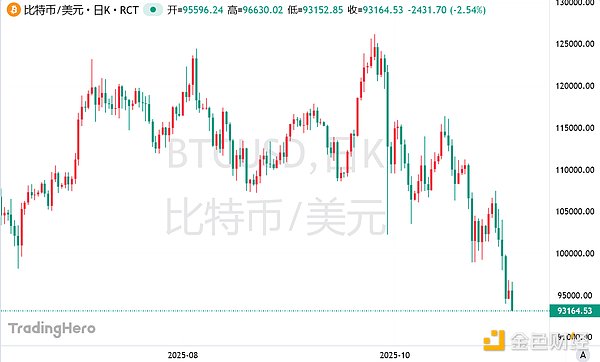
比特币年内涨幅尽数回吐 加密熊市持续深化
Jin Shi Shu Ju· 2025-11-17 01:30
过去一个月间,从交易所交易基金配置机构到企业财资部门,诸多大买家已悄然离场。这使市场失去了 资金流驱动的支撑力量——正是这股力量在今年早些时候将比特币推升至创纪录水平。 今年以来的大部分时间里,机构投资者一直是比特币合法性及其价格的核心支柱。彭博数据显示,ETF 阵营累计吸纳逾250亿美元资金,推动资产管理规模攀升至约1690亿美元。这些稳定的配置资金流帮助 重塑了该资产的定位,使其成为投资组合多元化工具——对冲通胀、货币贬值和政治动荡的避险选择。 但这个始终脆弱的叙事正在重新瓦解,使市场暴露于某种更隐蔽却同样具有破坏力的力量:资金撤离。 "这轮抛售是长期持有者获利了结、机构资金外流、宏观不确定性以及杠杆多头被清盘等多重因素叠加 所致。"链上分析平台Nansen高级研究分析师杰克·肯尼斯(Jake Kennis)分析道,"可以明确的是,市场 在经历长期盘整后暂时选择了向下突破。" 数字资产领域购买停滞的最鲜明例证之一,当属迈克尔·塞勒(Michael Saylor)的公司Strategy Inc.。这 家从软件企业转型为比特币储藏的机构,曾是企业财资配置加密资产的典范,如今其股价正徘徊于所持 比特币价值的平价 ...