
新能源化

Search documents
广汽领程6×4深刻诠释什么才是“好车”
Zhong Guo Qi Che Bao Wang· 2025-10-24 01:48
Core Viewpoint - The 2026 China Commercial Vehicle Product Testing event successfully held in Chongqing highlights the evolution and competitiveness of the Chinese commercial vehicle industry, showcasing the GAC Aion 6×4 pure electric tractor as a leading example of quality and reliability [2][9]. Group 1: Event Overview - The testing event has been held for nineteen years, becoming the most influential and market-leading activity in the domestic commercial vehicle sector [2]. - The event serves not only as a product competition but also as a collective reflection and declaration of progress within the industry [2]. Group 2: GAC Aion 6×4 Electric Tractor - The GAC Aion 6×4 pure electric tractor is designed with a customer-oriented approach, featuring modular integration and lightweight design, making it suitable for medium to short-distance transportation [4]. - It is equipped with a high-density battery with an energy density of 167Wh/kg, capable of fast charging and maintaining over 70% capacity after 4500 cycles, ensuring reliability under harsh conditions [4]. - The vehicle's dual motor system delivers a maximum continuous power of 330kW and a peak power of 460kW, with a maximum output torque of 21,268Nm, achieving industry-leading performance [4]. Group 3: Safety and Reliability Features - The vehicle employs high-strength steel materials and an integrated modular design, achieving a lightweight level that surpasses industry standards [6]. - It features a dual-circuit braking system and advanced safety technologies, including an ESC system that enhances steering response and stability [6]. - The vehicle has undergone rigorous durability testing, ensuring a longer lifespan and higher reliability [6]. Group 4: Industry Trends and Future Outlook - The commercial vehicle industry is accelerating its transition towards "intelligent and new energy" solutions, driven by the dual carbon goals and increasing digital technology integration [9]. - The testing event promotes excellent products and advanced technologies, guiding the industry towards safer, more efficient, greener, and smarter solutions [9]. - GAC Aion is committed to continuous innovation and collaboration across various sectors, including finance and energy, to provide comprehensive lifecycle value services to users [9].



中国商用EV在加速发展
36氪· 2025-10-17 13:35
Core Viewpoint - The rapid increase in sales of large new energy trucks in China is driven by the narrowing price gap between electric vehicles (EVs) and gasoline vehicles, as well as increased government subsidies for new energy vehicles [4][8][9]. Market Overview - In the first half of this year, sales of large new energy trucks in China reached 87,100 units, surpassing the total sales expected for the entire year of 2024 [4][8]. - The market share of new energy vehicles, including pure electric trucks, has risen to 20% [5]. Price Dynamics - The price of large pure electric trucks is approximately 470,000 yuan, while gasoline trucks are around 400,000 yuan. The price of electric trucks has decreased by about 40% compared to three years ago due to a 40% drop in battery costs [8][10]. Government Support - The Chinese government has increased subsidies for new energy vehicles, with a higher subsidy for replacing old trucks with new energy models compared to gasoline models [9][10]. - Starting in 2024, a new subsidy system will be implemented, expanding the range of eligible vehicle models by March 2025 [9]. Industry Growth - SANY Group's truck subsidiary reported a twofold increase in sales of large pure electric trucks, reaching 11,100 units in the first half of the year [7]. - XCMG's large new energy truck sales also increased by 60% year-on-year, totaling 12,900 units [5][8]. Charging Infrastructure - The establishment of more charging stations and the development of quick battery replacement mechanisms are crucial for the growth of electric trucks [11][13]. - Companies like Telai Electric have created rapid chargers that can provide 100 kilometers of range in just six minutes [11]. Battery Replacement Model - Shanghai Qiyuan Chip Power Technology aims to popularize battery replacement instead of charging, allowing for a battery swap in just five minutes [13]. - CATL plans to build 300 battery replacement stations this year to support the new energy commercial vehicle market [14].



2025中国汽车租赁行业现状与发展趋势报告
Sou Hu Cai Jing· 2025-10-10 16:25
Core Insights - The Chinese car rental industry is currently undergoing a digital transformation and refined operations phase, characterized by a "dumbbell" competitive structure led by major players like Shenzhou Car Rental and Ehi Car Rental, with regional brands and platform players participating [1][13] - The market size is projected to exceed 100 billion RMB by the end of 2024, reaching 142 billion RMB, and is expected to grow to 159 billion RMB in 2025, with a potential to surpass 200 billion RMB by 2028 driven by electrification and digitalization [1][14] - The core business models include short-term self-driving rentals (60%-70% of revenue), long-term rentals (30%-40% primarily for corporate clients), and financing leases [1][14] Industry Overview - The industry has evolved through three main phases: the exploratory phase (2000-2010), the capital-driven phase (2011-2018), and the current phase of digital transformation and refined operations (2019-present) [1][25][29] - The competitive landscape is dominated by two major players, with a significant presence of regional brands and platform-based operators, creating a concentrated market [1][13] Market Size and User Behavior - The market is expected to maintain steady growth over the next five years, supported by the recovery of domestic tourism and changes in public transportation preferences [1][14] - User demographics primarily consist of high-income individuals aged 25-40, concentrated in first- and second-tier cities, with over 90% of bookings made online [1][14] Industry Trends - Key trends include comprehensive electrification, deep digitalization and intelligence, diversification of business models, and market penetration into lower-tier cities [1][12][16] - The penetration rate of new energy vehicles (NEVs) is expected to reach nearly 20% by 2024 and exceed 50% by 2028, despite challenges such as high initial purchase costs [1][12][16] Challenges and Opportunities - The industry faces challenges such as low profitability, homogenized competition, and an imperfect credit system, but benefits from the upgrading of tourism consumption and increased corporate long-term rental outsourcing [1][16][34] - The future development of the industry will depend on the ability to navigate technological changes, accurately understand user needs, and establish efficient operational systems [1][16][34]

跨越星光让每一次运输都乐享其中
Zhong Guo Qi Che Bao Wang· 2025-10-10 06:43
Core Viewpoint - The Chinese commercial vehicle industry is accelerating its transformation towards "intelligent and new energy" in response to the "dual carbon" goals and the penetration of digital technologies, with increasing demands for energy efficiency, safety, and intelligent features from users [1][3]. Industry Trends - The commercial vehicle market is undergoing unprecedented changes driven by the "new four modernizations" in the automotive industry, focusing on technological innovation, product diversity, user experience optimization, and operational efficiency [3]. - The 2026 China Commercial Vehicle Product Testing event was launched in Chongqing, aiming to scientifically evaluate products and promote advanced technologies to guide the industry towards being "safer, more efficient, greener, and smarter" [1][3]. Product Features - The "KuaYue XingGuang" model has been recognized for its practical and comfortable design, featuring a "mechanical ark" design that combines geometric lines with futuristic lighting [5]. - It offers a leading cargo space of 8 cubic meters and a high loading rate of 41%, with flexible seating arrangements to balance passenger and cargo needs [6]. - The vehicle is equipped with advanced battery technology, providing a range of 305 to 470 km, and a fast charging capability that allows for 20% to 80% charge in just 18 minutes [8]. User Experience - The "KuaYue XingGuang" integrates intelligent driving assistance systems, enhancing the driving experience with features like adaptive cruise control and lane departure warnings, breaking the traditional perception that commercial vehicles prioritize utility over intelligence [8]. - The vehicle is positioned as a practical solution for entrepreneurs and families needing a multifunctional vehicle, focusing on real-world problem-solving rather than luxury [9].
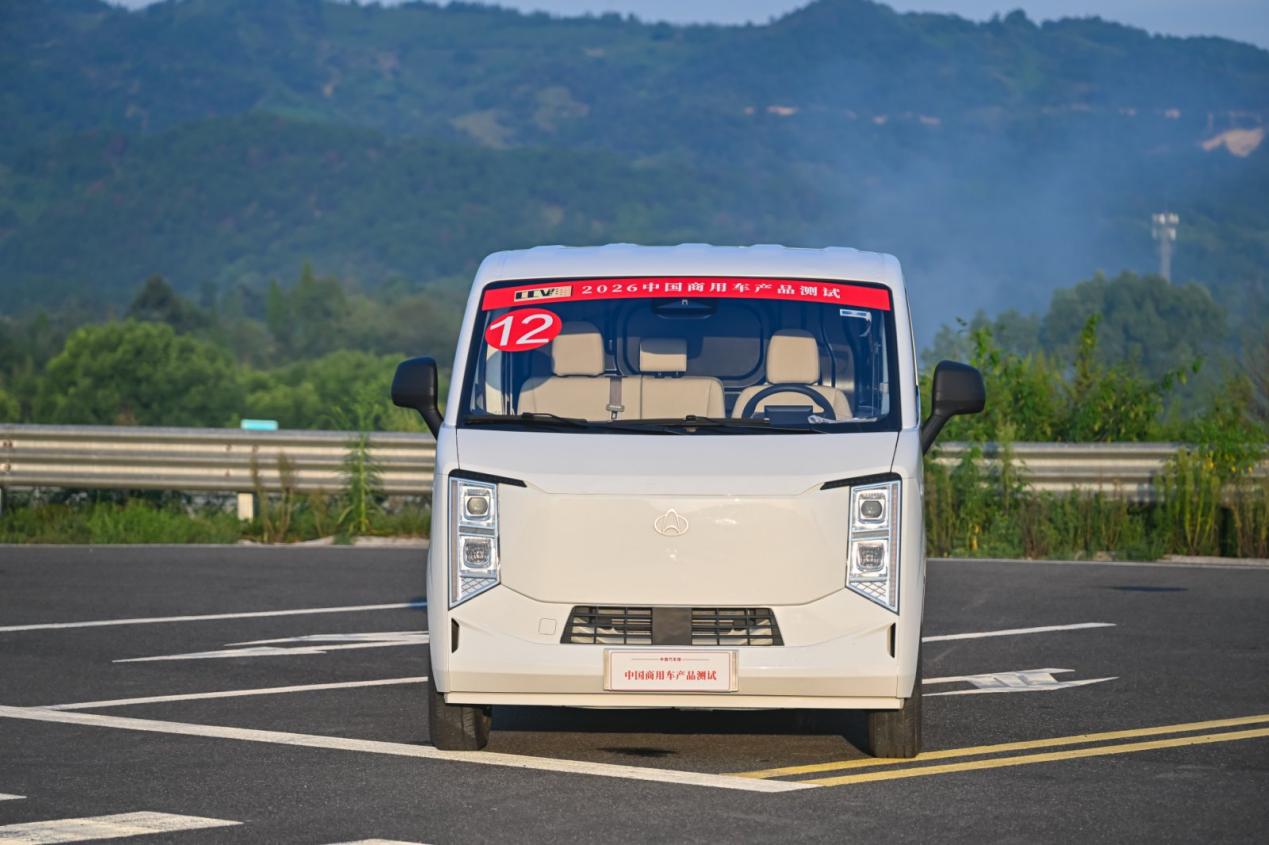
未来五年销量突破30万辆!长安跨越携“双星”重构用户价值
第一商用车网· 2025-10-10 03:44
Core Viewpoint - The launch of the new platform products "Xingta" and "KuaYue Xingguang" by Changan KuaYue aims to address the challenges faced by customers in the urban logistics and light commercial vehicle market, positioning these products as reliable partners for wealth creation [1][4]. Group 1: Industry Context - The Chinese automotive industry is rapidly transitioning towards electrification and intelligence, with Changan Automobile Group striving to become a world-class automotive group [4]. - Changan KuaYue plays a crucial role in expanding Changan's presence in the light commercial vehicle market [4]. Group 2: Sales Performance and Goals - From January to August 2025, Changan KuaYue achieved sales of 106,000 units, a year-on-year increase of 7.5%, with overseas sales growing by 19.1% and nearly 20% of sales coming from new energy vehicles [6]. - The ambitious targets set for 2030 include global sales exceeding 300,000 units, with new energy vehicles accounting for over 50% and overseas contributions reaching 25%, alongside revenue surpassing 20 billion yuan [6]. Group 3: Product Development and User-Centric Design - The development of the new vehicles is based on a user-centric approach, emphasizing the importance of understanding user needs and pain points [10]. - The design philosophy follows a logic where "scenarios define needs, needs define architecture, architecture defines software, and software defines systems" [10]. Group 4: Product Features and Specifications - "Xingta" is positioned as a "wide-body comfortable flagship light truck," offering various power options, including fuel and pure electric, with a range of 320 to 420 kilometers for electric models [12]. - Key advantages of "Xingta" include a 3.8-meter long cargo box, low energy consumption (18.5 kWh for electric and 9.3 L for fuel), and advanced safety features [14]. - "KuaYue Xingguang" is designed for urban logistics and passenger transport, featuring multiple configurations and a range of 300 to 470 kilometers [14][16]. Group 5: Market Positioning and Value Proposition - The pricing strategy for "Xingta" starts at 52,800 yuan for the fuel version and 88,800 yuan for the electric version, emphasizing high value for customers [14]. - "KuaYue Xingguang" offers a competitive starting price of 77,900 yuan, providing significant space and features for users [18]. - The core strategy of Changan KuaYue is to transition from merely selling vehicles to offering comprehensive wealth creation solutions for users, redefining the role of vehicles in their lives [19].

广汽掌舵人:传统车企构筑壁垒要“有矛有盾”
财富FORTUNE· 2025-09-30 13:27
Core Viewpoint - The automotive industry is currently undergoing a "four-phase overlap," including industrial transformation, rapid technological iteration, restructuring of management models, and reshaping of competitive landscape [2]. Group 1: Industry Outlook - The competition among domestic automotive brands is intense, with several brands failing in the past two years. There is ongoing discussion about which companies will survive [3]. - The chairman expresses optimism that in ten years, at least three to five Chinese companies will be among the top ten global automotive manufacturers, driven by successful investments in "green" and "smart" technologies [3]. - The future development model of the industry will focus on new energy, low carbon, and sustainability, where China is currently leading [3]. Group 2: New Capabilities Required - The capabilities required for car manufacturers have changed, emphasizing user insight, product definition, vehicle integration, smart technology, and marketing abilities [4]. - While the technical barriers to entry have lowered, new entrants must possess certain capabilities to succeed in the industry [4]. Group 3: Challenges and Risks - Traditional automakers face challenges from tech companies entering the automotive sector. To build core competitive advantages, companies need to innovate while ensuring quality and safety [4]. - There is a significant risk associated with neglecting safety in the pursuit of smart technology, which could lead to negative consequences for companies [4]. Group 4: Consumer Behavior - The automotive market has seen a clear division in consumer demographics, with some prioritizing practical functionality and others valuing emotional appeal. Overemphasis on emotional value could pose risks for manufacturers [4].

冯兴亚:十年后,至少有三家中国企业进入全球前十
Nan Fang Du Shi Bao· 2025-09-27 07:09
Core Viewpoint - The automotive industry is undergoing a profound transformation, with predictions that at least three of the top ten global automotive companies will be Chinese by 2033 [1][5]. Group 1: Industry Transformation - The global automotive industry is in a critical phase characterized by deep transformation, rapid technological iteration, restructuring of management processes, and adjustments in competitive landscape [2]. - Future competition will focus on three core dimensions leading to an "ecological confrontation": product value reconstruction, elevation of competitive entities, and transformation of value sources [4]. Group 2: Product and Market Dynamics - The focus of competition will shift from hardware specifications to "scenario-based intelligent experiences," with future vehicles envisioned as intelligent mobile spaces [4]. - The competitive landscape will evolve from individual car manufacturers to an ecosystem competition involving deep integration with top technology and energy companies [4]. Group 3: Economic Viability and Localization - The "Electricity Charm Index" introduced by GAC measures the cost-effectiveness of electricity compared to fuel, with Guangzhou's index at 17, indicating electricity costs only 1/17 of fuel costs, making electric vehicles economically attractive [5]. - The current opportunity in globalization is shifting from "complete vehicle exports" to "localized production," with GAC establishing five KD factories globally and planning to expand to ten [6]. Group 4: Technological and Competitive Challenges - Although the technical barriers to entering the automotive industry have lowered, it does not imply that manufacturing vehicles has become easier; unique advantages in user insight, product definition, and integration capabilities are still essential [7]. - GAC emphasizes core technology self-research, focusing on key capabilities such as the "three electric" systems, electronic architecture, and vehicle platform development to maintain competitive advantages [7]. Group 5: Consumer Behavior and Decision-Making - There is a noticeable differentiation in automotive consumer groups, with experienced users prioritizing functional value while emerging users seek emotional value, such as acceleration and technological appeal [8]. - Balancing functional value, safety, and emotional appeal presents a significant challenge for automotive companies in decision-making [8].
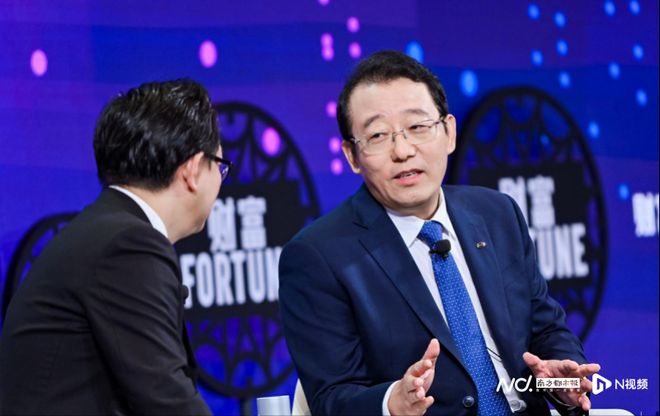
广汽集团冯兴亚:全球十大车企中未来将有3-5家中国企业
Bei Ke Cai Jing· 2025-09-26 09:18
Core Insights - The automotive industry is undergoing a significant transformation, with expectations that at least 3 to 5 Chinese companies will be among the top 10 global automakers in the next decade [1] - The future development model of the industry will focus on new energy and low-carbon growth, with China leading the way in green and low-carbon trends [1] - China is also at the forefront of automotive intelligence, positioning itself as a leader in this area [1] Industry Transformation - The automotive sector is currently in a critical phase characterized by four overlapping periods: deep transformation, rapid technological iteration, restructuring of management processes, and adjustment of competitive landscapes [2] - Future competition will revolve around three core dimensions, leading to an "ecological showdown": 1. Reconstruction of product value, shifting focus from hardware specifications to "scenario-based intelligent experiences" [2] 2. Elevation of competitive entities, moving from individual car manufacturers to competition across the entire industry chain ecosystem, necessitating deep partnerships with top technology and energy companies [2] 3. Transformation of value sources, with the core business model evolving from one-time hardware sales to a comprehensive lifecycle value extraction model that includes "hardware + software + services" [2] International Expansion - The company aims to enter 100 global markets by 2027 and export 500,000 vehicles annually, transitioning from "trade export" to "brand + ecosystem export" [3] - Currently, the company has established 5 KD (knock-down) assembly plants globally, with plans to expand to 10 by next year [3]
奇瑞上市大涨,带动港股汽车板块,港股通汽车ETF涨超2%
Xin Lang Cai Jing· 2025-09-26 02:49
Core Viewpoint - The Hong Kong stock market showed volatility on September 26, with the automotive sector performing well, driven by the successful IPO of Chery Automobile and significant milestones achieved by other new energy vehicle companies [3][5][6]. Group 1: Market Performance - The Hong Kong automotive ETF, 富国 (159239), rose over 2%, with component stocks like Xpeng Motors and Guofu Hydrogen Energy increasing by more than 5% [3]. - Chery Automobile's IPO raised a total of HKD 9.145 billion, marking it as the only successful vehicle company listing in the Hong Kong market this year [3][5]. Group 2: Company Milestones - Leap Motor announced the production of its one-millionth vehicle, becoming the second new energy vehicle company in China to reach this milestone, achieving it in just 343 days from the 500,000 mark [5]. - The rapid production increase reflects the company's strong capacity growth and market stimulation [5]. Group 3: Industry Trends - The automotive industry is accelerating towards electrification and intelligence, with significant growth potential and valuation attractiveness in the Hong Kong automotive sector [6]. - Domestic consumption stimulus policies are boosting demand across the industry chain, while long-term trends indicate rising electric vehicle penetration and advancements in smart driving technology [6]. Group 4: Investment Insights - The 港股通汽车ETF富国 (159239) tracks the Hang Seng Hong Kong Stock Connect Automotive Theme Index, providing investors with exposure to leading automotive companies in the sector [6]. - The current valuation of the Hong Kong automotive sector is at historical lows, with a clear trend of increased capital inflow, highlighting the sector's investment appeal [6].

广汽董事长冯兴亚: 未来全球十大车企将有中国3-5个席位
Shen Zhen Shang Bao· 2025-09-25 23:16
Core Insights - The chairman of GAC Group predicts that 3-5 Chinese companies will be among the top ten global automakers in the next decade, driven by the shift towards new energy, low-carbon, and green development [1][1][1] Industry Trends - The Chinese automotive industry is currently experiencing a "four-phase overlap": transformation, rapid iteration, restructuring of management models, and reshaping of competitive landscape [1][1][1] - The future of automobiles is expected to be characterized by intelligent mobility, with widespread adoption of autonomous driving technology [1][1][1] - Consumer preferences are diversifying, with some seeking driving enjoyment while others view cars as mere transportation tools, indicating a shift towards autonomous and self-driving vehicles [1][1][1] Competitive Landscape - The competition among automotive manufacturers is evolving from hardware-based competition to competition across the entire industry ecosystem [1][1][1] - The revenue model for the automotive industry is shifting from reliance solely on products and services to include hardware, software, services, and ecosystem as profit sources [1][1][1] - The automotive industry is facing unprecedented changes, marking a significant transformation not seen in a century [1][1][1]