新零售

Search documents
金牌厨柜家居科技股份有限公司2025年年度业绩预告
Shang Hai Zheng Quan Bao· 2026-01-29 19:25
Core Viewpoint - The company anticipates a significant decline in its 2025 annual performance, with net profit expected to drop by 85.95% to 89.96% compared to the previous year, primarily due to adverse market conditions and increased competition in the custom home furnishing industry [2][4]. Financial Performance Forecast - The company projects a net profit attributable to shareholders of between 20 million and 28 million yuan for 2025, a decrease of 17.13 million to 17.93 million yuan from the previous year [2][4]. - The expected net profit after deducting non-recurring gains and losses is forecasted to be between -26 million and -18.5 million yuan, representing a decline of 113.15% to 118.47% year-on-year [2][4]. - The anticipated operating revenue for 2025 is between 3.47472 billion and 3.266237 billion yuan, reflecting a year-on-year decrease of 0% to 6% [2][4]. Previous Year’s Financial Performance - In 2024, the net profit attributable to shareholders was 199.287 million yuan, with a net profit of 140.7357 million yuan after deducting non-recurring gains and losses [5][6][7]. Reasons for Performance Changes - The decline in performance is attributed to several factors, including a downturn in the real estate market, weak industry demand, and intensified price competition, leading to reduced operating revenue and a decline in gross profit margin [8][10]. - The company is investing in various strategic initiatives, including the establishment of new retail formats and overseas production bases, which are expected to impact short-term profitability but are aimed at strengthening long-term competitive advantages [10]. - Additional costs from the issuance of convertible bonds and increased depreciation from new production facilities are also contributing to the anticipated profit decline [10]. Fundraising and Project Updates - The company has completed the "Gold Medal Western IoT Intelligent Manufacturing Base Project" and plans to permanently supplement its working capital with surplus funds amounting to 73.9325 million yuan from the project [13][16][19]. - The decision to allocate surplus funds has been approved by the company's board and aligns with regulatory requirements, ensuring no adverse effects on the company's economic benefits or shareholder interests [20][21].

金牌家居(603180.SH):预计2025年归母净利润2000万元到2800万元,同比减少85.95%到89.96%
Ge Long Hui A P P· 2026-01-29 13:38
Core Viewpoint - The company, Jinpai Home (603180.SH), is expected to experience a significant decline in net profit and net profit excluding non-recurring gains in 2025, primarily due to adverse market conditions and strategic investments impacting short-term profitability [1][2]. Group 1: Financial Projections - The company anticipates a net profit attributable to shareholders of between 20 million to 28 million yuan for 2025, representing a year-on-year decrease of 85.95% to 89.96% [1]. - The expected net profit excluding non-recurring gains is projected to be between -26 million to -18.5 million yuan, indicating a year-on-year decline of 113.15% to 118.47% [1]. - The forecasted operating revenue for 2025 is estimated to be between 3.475 billion to 3.266 billion yuan, reflecting a year-on-year decrease of 0% to 6% [1]. Group 2: Reasons for Decline - The decline in profit is attributed to factors such as the downturn in the real estate market, weak industry demand, and intensified price competition, which have led to reduced operating revenue and a decline in gross margin [2]. - The company is investing in a multi-channel retail strategy, including the establishment of new retail formats and overseas production bases, which is expected to impact short-term profits but aims to strengthen long-term competitiveness [2]. - Additional costs from the issuance of convertible bonds, estimated at approximately 25 million yuan, and increased depreciation from new production facilities are also contributing to the temporary profit decline [2].
金牌家居:2025年全年净利润同比预减85.95%—89.96%
2 1 Shi Ji Jing Ji Bao Dao· 2026-01-29 11:13
Core Viewpoint - The company, Jinpai Home, anticipates a significant decline in net profit for the year 2025, projecting a net profit attributable to shareholders of between 20 million to 28 million yuan, representing a year-on-year decrease of 85.95% to 89.96% [1] Financial Performance - The expected net profit excluding non-recurring gains and losses for 2025 is projected to be between -26 million to -18.5 million yuan, indicating a year-on-year decrease of 113.15% to 118.47% [1] - The company forecasts total revenue for 2025 to be between 3,474.72 million to 3,266.23 million yuan, reflecting a year-on-year decrease of 0% to 6% [1] Industry Challenges - The company faces multiple pressures including a complex economic environment, a downturn in the real estate sector, and intensified competition in the custom home furnishing industry, which have adversely affected revenue and profit margins [1] Strategic Initiatives - The company is committed to a long-term optimistic strategy, focusing on the collaborative development of four key areas: new retail, home decoration, refined decoration, and overseas expansion [1] - Investments are being made in establishing a multi-channel retail network, including new retail window stores, home decoration material selection stores, shared large stores, and community stores [1] - The company is also developing overseas production bases, including a facility in Thailand and satellite factories in Dallas and Malaysia, to enhance its retail and engineering business [1] Technological Advancements - The company is iterating its first "Feiliu AI" home decoration design intelligence system, aiming to create a complete business loop from intelligent design to home decoration services [1] Cost Impacts - The issuance of convertible bonds in 2023 has incurred interest expenses of approximately 25 million yuan, and the depreciation from new production bases in Chengdu and overseas satellite factories has also impacted profits in the short term [1]
舍得酒业涨2.02%,成交额3.77亿元,主力资金净流入1613.73万元
Xin Lang Zheng Quan· 2026-01-29 05:06
Core Viewpoint - Shede Liquor's stock price has shown fluctuations, with a recent increase of 2.02% to 55.17 CNY per share, while the company faces a decline in revenue and profit year-on-year [1][2]. Group 1: Stock Performance - As of January 29, Shede Liquor's stock price increased by 2.02%, reaching 55.17 CNY per share, with a trading volume of 3.77 billion CNY and a turnover rate of 2.08%, resulting in a total market capitalization of 18.358 billion CNY [1]. - Year-to-date, Shede Liquor's stock has decreased by 1.62%, with a 1.34% increase over the last five trading days, a 3.21% decrease over the last 20 days, and a 10.13% decline over the last 60 days [1]. Group 2: Financial Performance - For the period from January to September 2025, Shede Liquor reported a revenue of 3.702 billion CNY, representing a year-on-year decrease of 17.00%, and a net profit attributable to shareholders of 472 million CNY, down 29.43% year-on-year [2]. - Since its A-share listing, Shede Liquor has distributed a total of 2.29 billion CNY in dividends, with 1.353 billion CNY distributed over the last three years [3]. Group 3: Shareholder Information - As of September 30, 2025, the number of shareholders for Shede Liquor was 114,400, a decrease of 11.81% from the previous period, while the average number of circulating shares per person increased by 13.39% to 2,908 shares [2]. - Among the top ten circulating shareholders, the second-largest is the China Securities White Wine Index A, holding 16.4538 million shares, unchanged from the previous period, while the fourth-largest, the Wine ETF, increased its holdings by 2.8963 million shares to 7.2649 million shares [3].

湾区消费新脉动:盒马双城开新店解锁“盒区房”
Sou Hu Cai Jing· 2026-01-28 08:14
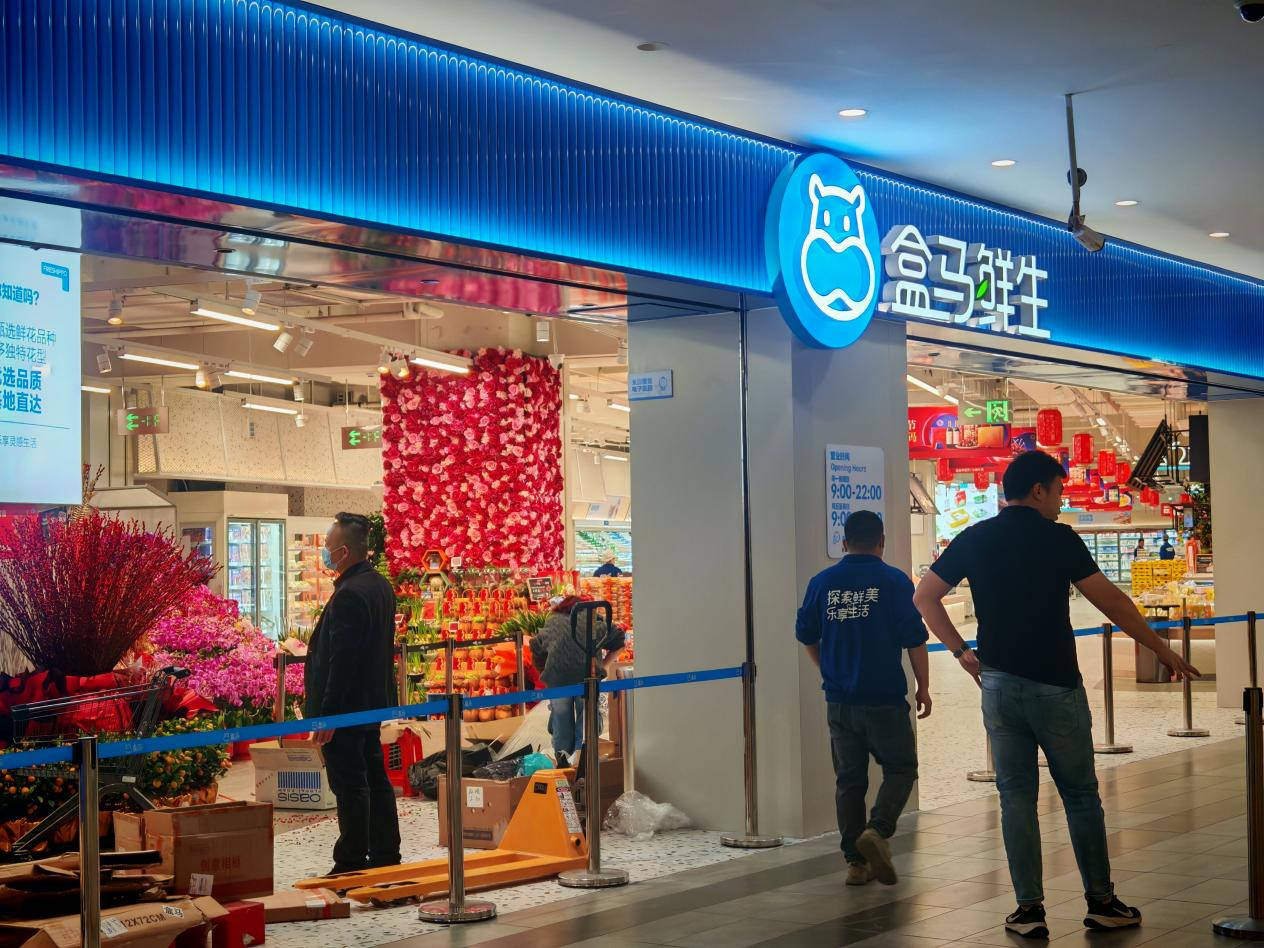
Core Insights - Hema is set to open two new stores in Guangdong, specifically in Guangzhou and Foshan, enhancing its presence in the region [1] - The new store in Guangzhou is strategically located near public transport, catering to a large population and active consumer market [1] - Hema aims to leverage its strengths in product variety and convenience to compete effectively in the market [3] Store Locations and Market Characteristics - The Guangzhou store is located at 1399 Airport Road, covering multiple residential areas and benefiting from the recent opening of metro lines [1] - The local population in Guangzhou's Baiyun District is approximately 3.7 million, with a significant number of migrant workers contributing to a vibrant consumer market [1] - The store will focus on three main product categories: baked goods, seafood, and ready-to-cook meals, targeting families and young professionals [5] Competitive Strategy and Expansion - Hema plans to utilize the brand effect of the shopping center to attract consumers from traditional markets in the vicinity [5] - The new store in Foshan's Beijiao area fills a market gap and is positioned near major companies, attracting high-quality talent and young families [5] - Hema has opened over 50 stores in the Greater Bay Area, establishing a dense network across key cities [5] Performance in Discount Retail - Hema's budget community supermarket brand "Chao He Suan NB" has shown strong performance, with new stores in Dongguan achieving top sales rankings shortly after opening [7] - The company's expansion in the Greater Bay Area reflects a dual approach of new retail and regional development, enhancing consumer capacity and spatial balance [7] - Hema's efforts are seen as a means to stimulate growth and balance in the market through innovative supply chain and industry collaboration [7]

惠发食品跌2.01%,成交额2857.49万元,主力资金净流入21.58万元
Xin Lang Zheng Quan· 2026-01-26 02:29
Group 1 - The core viewpoint of the news is that Huifa Food's stock has experienced fluctuations, with a recent decline of 2.01% and a total market value of 2.715 billion yuan [1] - As of January 26, the stock price is reported at 11.20 yuan per share, with a trading volume of 28.57 million yuan and a turnover rate of 1.05% [1] - The company has seen a year-to-date stock price increase of 0.72%, but a decline of 1.75% over the last five trading days and 4.52% over the last twenty days [2] Group 2 - Huifa Food, established on February 2, 2005, and listed on June 13, 2017, specializes in the research, production, and sales of frozen food products, including various types of prepared dishes [2] - The company's revenue composition includes supply chain (29.40%), meatballs (23.34%), fried products (16.95%), Chinese dishes (9.92%), sausages (9.59%), skewers (6.48%), other categories (3.53%), and catering (0.78%) [2] - As of November 10, the number of shareholders is reported at 25,900, with an average of 9,277 circulating shares per person [2] Group 3 - For the period from January to September 2025, Huifa Food reported a revenue of 1.064 billion yuan, representing a year-on-year decrease of 18.31%, and a net profit attributable to shareholders of -39.217 million yuan, down 38.85% year-on-year [2] - Since its A-share listing, Huifa Food has distributed a total of 73.8826 million yuan in dividends, with 4.8928 million yuan distributed over the last three years [3]

新老零售如何破局“人心争夺战”?
Xin Lang Cai Jing· 2026-01-25 20:20
Core Insights - The retail industry is experiencing a significant transformation characterized by the emergence of new retail brands and the struggles of traditional retail giants, highlighting a divide in the market [1][5][7] Group 1: New Retail Trends - New retail brands like "悦活里" and ALDI are rapidly expanding, focusing on local consumer preferences and offering unique products to attract customers [1][2] - ALDI's strategy includes a limited but high-quality product selection, catering to essential household needs, which has resulted in a 30% increase in customer traffic on opening day [1][2] - "悦活里" emphasizes low prices and customer satisfaction guarantees, such as refunds for unsatisfactory products, enhancing customer loyalty [2] Group 2: Traditional Retail Challenges - Traditional retailers like IKEA and Carrefour are facing significant challenges due to changing consumer habits and increased competition from online platforms and discount stores [5][6] - IKEA's closure of stores reflects the difficulties of maintaining large retail spaces in a market that increasingly favors smaller, more flexible formats [5] - Carrefour's exit from the Chinese market illustrates the struggle of traditional supermarkets to compete with e-commerce and community group buying models [6] Group 3: Consumer-Centric Strategies - New retail companies are shifting their focus from price to value, emphasizing emotional connections and quality in their offerings [2][8] - Companies like 盒马 are building localized supply chains to ensure freshness and cater to regional tastes, enhancing their competitive edge [2] - The transformation of retail spaces into community hubs, as seen with 永辉 and 苏果, aims to meet diverse consumer needs beyond mere shopping [4] Group 4: Market Dynamics - The retail landscape is moving towards a model where multiple formats coexist, each catering to different consumer segments and preferences [9] - The rise of new retail brands is a response to the evolving consumer demand for personalized experiences and quality products [9] - The ongoing changes in the retail sector reflect a broader trend of consumer empowerment, where businesses must adapt to meet the specific needs of their customers [9]

得利斯上海运营中心启用 加速品牌国际化
Zheng Quan Ri Bao Wang· 2026-01-25 13:32
Core Viewpoint - Shandong Delisi Food Co., Ltd. has officially launched its Shanghai operation center and flagship store, marking a new phase in its strategic layout in the East China market, aiming to enhance its national and international presence [1] Expansion into Southern Market - The establishment of the Shanghai center represents a strategic upgrade for Delisi, allowing deeper penetration into the southern market, where its operations have been relatively weak [2] - The total investment for the Shanghai operation center is approximately 93.06 million yuan, integrating R&D, marketing, and brand promotion functions, with a focus on innovation in both Chinese and Western prepared foods [2] - Industry experts suggest that strengthening R&D through the Shanghai center will enable Delisi to launch more innovative and differentiated products, catering to diverse consumer dietary needs [2] New Retail Business Development - The Shanghai center is also tasked with advancing the company's new retail business, leveraging Shanghai's mature e-commerce and new media ecosystem [3] - Delisi's new retail division is projected to exceed 100 million yuan in sales by 2025, with the center expected to enhance online channel operations and accelerate the integration of online and offline businesses [3] - The project reflects a shift from a traditional "sales-driven" model to an "operation and brand-driven" approach, enhancing market responsiveness and resource coordination [3] Acceleration of Internationalization - Concurrently, Delisi is making significant strides in its internationalization strategy, establishing key partnerships in multiple European countries, thereby creating a comprehensive sales network across Western, Southern, and Central Europe [4] - The Shanghai operation center is expected to facilitate Delisi's international business development, allowing for more efficient engagement with international channels and exploration of localized product strategies [4] - The overseas market is seen as a critical growth opportunity amid increasing domestic competition and profit pressures in the prepared food industry [4] Dual Strategy of Domestic and International Expansion - The dual strategy of "Shanghai landing + overseas expansion" aims to create a synergistic effect through the accumulation of capabilities in key domestic regions and proactive international market positioning [5] - This strategy is anticipated to elevate Delisi from a regional prepared food enterprise to a global food group, enhancing its competitive edge through a combination of technology, brand, and channel advantages [6]

2100亿,一个超级IPO要来了
凤凰网财经· 2026-01-25 12:01
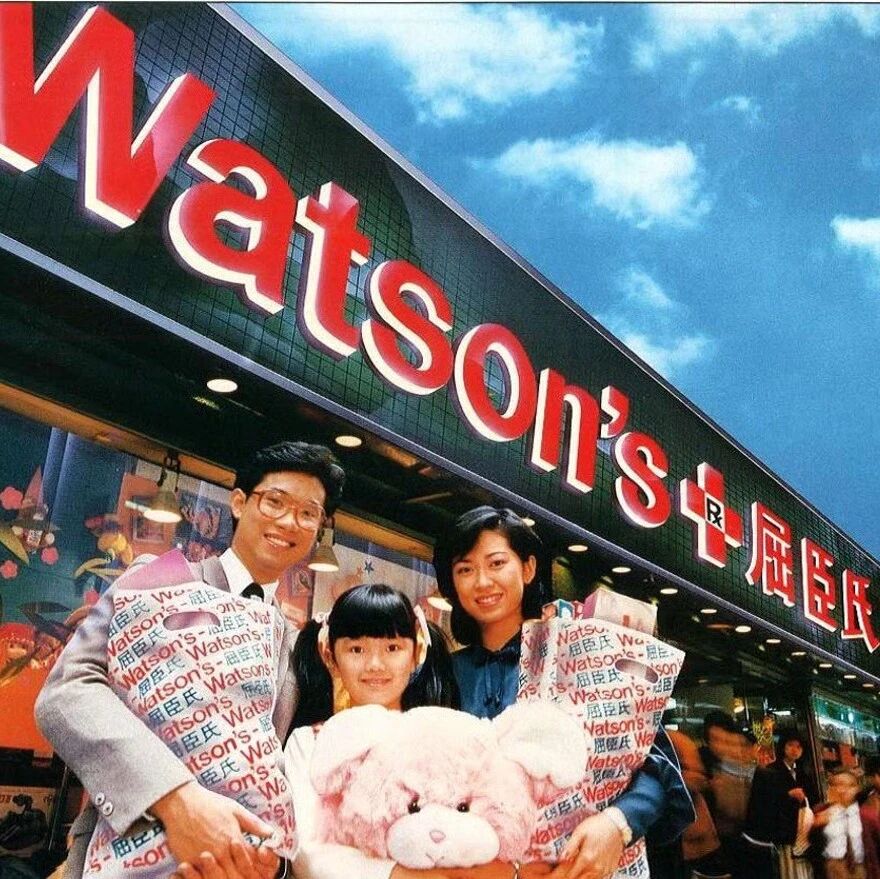
Core Viewpoint - The article discusses the high gross margins of the beauty and personal care sector compared to other fast-moving consumer goods (FMCG), highlighting the potential for investment in companies like Watsons, which is planning an IPO with a target valuation of approximately $30 billion [1][2]. Group 1: Market Overview - The beauty and personal care products generally maintain gross margins above 60%, with leading brands like Estée Lauder achieving a gross margin of 74% in their latest financial report [1]. - In the global FMCG market, food and beverages account for 55% of sales, while beauty and personal care hold about 20% market share, which could rise to 40% when including home care and over-the-counter health products [1]. Group 2: Watsons' IPO Plans - Watsons Group, a subsidiary of CK Hutchison Holdings, is preparing for an IPO, with reports indicating a target valuation of approximately $30 billion (around 208.8 billion RMB) [2]. - The company has engaged Goldman Sachs and UBS as underwriters for the IPO, which may take place in Hong Kong or London, with expectations for the listing to occur as early as the second quarter of this year [2]. Group 3: Historical Context and Strategic Moves - Watsons previously sought an IPO in 2013, claiming to be the largest beauty and personal care retailer in Asia and Europe, with over 10,500 stores and an EBITDA of $1.64 billion in 2012 [3]. - The company shifted its strategic focus from Europe to mainland China, where it saw significant revenue growth, contributing 24% of total revenue despite only having 13% of its stores in that market [4]. Group 4: Recent Performance and Challenges - By 2021, Watsons had expanded to 16,398 stores globally, but growth in mainland China slowed significantly, with a drop in store count and revenue in 2022 and 2023 [11]. - In 2023, Watsons reported a revenue of 16.453 billion HKD in mainland China, a decline of 6% year-on-year, marking the first negative growth in store count in nine years [11]. Group 5: Future Outlook and Investor Sentiment - The upcoming IPO is seen as a favorable exit opportunity for investors, with expectations of raising at least $2 billion and a potential valuation increase of 33% for Temasek's investment [16]. - The retail business of CK Hutchison, which includes Watsons, reported a revenue of 99 billion HKD in the first half of 2025, reflecting a 41% year-on-year growth, driven by strong performance in beauty and personal care sectors [15].
2100亿,一个超级IPO要来了
投中网· 2026-01-25 07:05
Core Viewpoint - The current moment may represent the best exit opportunity for investors in the past decade, particularly with the upcoming IPO of Watsons Group, which is expected to be valued at $30 billion (approximately 208.8 billion RMB) [4][19]. Group 1: Market Insights - In the fast-moving consumer goods (FMCG) sector, beauty and personal care products have the highest gross margins, typically exceeding 60%, compared to food and beverage products, which generally maintain margins of 30% to 40% [3]. - The beauty and personal care segment holds approximately 20% of the global FMCG market share, with the potential to rise to 40% when including home care and over-the-counter health products [3]. Group 2: Watsons Group IPO Details - Watsons Group is preparing for an IPO, having engaged Goldman Sachs and UBS as underwriters, with potential listings in Hong Kong and London [4]. - The IPO is anticipated to occur as early as the second quarter of this year, with a target valuation of $30 billion [4]. Group 3: Historical Context and Strategic Moves - Watsons previously sought an IPO in 2013, claiming to be the largest beauty and personal care retailer in Asia and Europe, with over 10,500 stores and an EBITDA of $1.64 billion in 2012 [6]. - In 2014, Watsons opted for strategic investment from Temasek, raising 44 billion HKD (approximately 39.2 billion RMB) for a 25% stake, which was seen as a premium investment [7][8]. Group 4: Recent Performance and Challenges - By 2021, Watsons had expanded to 16,398 stores globally, with 4,179 in mainland China, but faced a decline in growth rates, dropping from 17% in 2012 to 3% in 2019 [13]. - In 2023, Watsons reported a revenue of 16.453 billion HKD in China, a 6% decline year-on-year, marking the first negative growth in store numbers in nine years [13]. Group 5: Future Outlook and Strategic Adjustments - Watsons is planning to open approximately 3,800 new style stores globally by 2025, with an investment of $250 million, indicating a significant strategic shift [17]. - The retail business of the parent company, CK Hutchison, is showing signs of recovery, with a 41% year-on-year revenue increase in the first half of 2025, driven by strong growth in beauty and personal care sectors [18].