
生物医药创新

Search documents
安科生物: 2025年半年度报告
Zheng Quan Zhi Xing· 2025-08-21 11:10
Core Viewpoint - The report highlights the financial performance and strategic positioning of Anhui Anke Biotechnology Group Co., Ltd. during the first half of 2025, emphasizing the company's focus on innovation in the biopharmaceutical sector and its response to market demands and regulatory changes [1][3]. Financial Performance - The company reported a revenue of approximately 1.29 billion yuan, a decrease of 0.51% compared to the previous year [2][16]. - The net profit attributable to shareholders was approximately 366.5 million yuan, reflecting a decline of 11.92% year-on-year [2][16]. - The basic earnings per share decreased by 11.72% to 0.2191 yuan [2][16]. - Total assets at the end of the reporting period were approximately 4.92 billion yuan, down 4.14% from the previous year [2][16]. Industry Overview - The biopharmaceutical industry is recognized as a strategic emerging industry in China, with significant growth potential driven by technological advancements and an aging population [3][4]. - The global biopharmaceutical market is projected to reach 1.71 trillion USD by 2025, with China leading the growth at a compound annual growth rate (CAGR) of 14.5% [3][4]. - The industry is undergoing a transformation towards precision, intelligence, and innovation, supported by favorable government policies [3][4]. Company Positioning - The company is positioned as a national high-tech enterprise with strong independent innovation capabilities, having undertaken numerous national and provincial projects [3][4]. - It has achieved significant milestones, including the commercialization of the first domestic human interferon α2b and the launch of various innovative drugs [3][4]. - The company is actively expanding its product pipeline, focusing on monoclonal antibodies, bispecific antibodies, and innovative ADC drugs [3][4]. Business Segments - The main business includes the research, development, production, and sales of biopharmaceuticals, with a focus on gene-engineered drugs and biological diagnostic reagents [5][6]. - The company has successfully launched new products, such as the Acetate Atosiban injection, enhancing its competitive position in the assisted reproductive medicine market [5][6]. - The product portfolio includes human interferon α2b, human growth hormone, and various traditional Chinese medicine products, catering to a wide range of medical needs [5][6]. Strategic Initiatives - The company is committed to enhancing its core competitiveness by accelerating the R&D and commercialization of innovative drugs [5][6]. - It aims to strengthen collaborations with domestic and international research institutions and enterprises to drive technological innovation [5][6]. - The company is focused on optimizing its business structure and expanding market channels to improve operational efficiency and overall business growth [5][6].

【钛晨报】李强:加大高质量科技供给和政策支持,着力推动生物医药产业提质升级;中国一汽拟入股零跑汽车?双方回应;字节跳动辟谣:与芯原股份并无AI芯片相关合作
Tai Mei Ti A P P· 2025-08-20 23:32
Group 1: Biopharmaceutical Industry Development - The Chinese government emphasizes the need for high-quality technological supply and policy support to enhance the biopharmaceutical industry, focusing on innovation and the development of new drugs [2][3] - The government aims to accelerate the pace of research and development in biopharmaceuticals by concentrating on new targets, compounds, and mechanisms, while also fostering high-end talent in life sciences [2] - There is a significant market potential for innovative drugs in China, and the government encourages timely identification of high clinical value projects and supports enterprises in international cooperation [2][3] Group 2: Innovation and Collaboration - The government promotes a collaborative approach in the biopharmaceutical sector, advocating for integrated services that support the entire research and development chain [3] - Emphasis is placed on leveraging artificial intelligence to enhance various stages of drug development, clinical trials, and production processes [3] - The government encourages the modernization and industrialization of traditional Chinese medicine through the application of modern scientific theories and technologies [3] Group 3: Financial Performance of Companies - Baidu reported a total revenue of 32.7 billion yuan for Q2 2025, with a core net profit of 7.4 billion yuan, reflecting a 35% year-on-year increase [8] - Yonghui Supermarket experienced a revenue decline of 20.73% year-on-year, with a net loss of 241 million yuan in the first half of 2025 [11][12] - Muyuan Foods achieved a revenue of 76.46 billion yuan in the first half of 2025, marking a 34.46% increase, with a net profit of 10.53 billion yuan, up 1169.77% year-on-year [12] Group 4: Market Trends - China's ETF market has surpassed Japan, becoming the largest in Asia with an asset management scale of 681 billion USD as of July 2025 [22] - The Hong Kong IPO market saw a total fundraising amount of 109.4 billion HKD in the first half of 2025, leading the world and showing a 716% year-on-year increase [23]


近500只个股获机构超100次调研,专业投资者都在看什么?
天天基金网· 2025-08-11 11:51
Core Viewpoint - The article highlights the increasing enthusiasm of institutional investors in 2025, with nearly 500 stocks receiving over 100 research inquiries, indicating potential investment opportunities and risks in the market [4][5]. Group 1: Institutional Research Trends - As of August 8, 2025, a total of 493 companies were researched by over 100 institutions, with a total of 14,484 inquiries, marking an increase of nearly 20% compared to the second half of 2024 [5]. - Among 31 primary industries, 27 saw an increase in research inquiries from various institutions, with notable growth in sectors such as basic chemicals (+342), machinery (+247), computers (+227), and pharmaceuticals (+214) [6][7]. Group 2: Public Fund Research Movements - In 2025, public fund research inquiries increased slightly compared to the second half of 2024, with significant growth in sectors like machinery (+795), automobiles (+512), and basic chemicals (+393) [9][12]. - The sectors attracting attention include basic chemicals, machinery, and automobiles, benefiting from "anti-involution" policies, while technology and pharmaceuticals are core industries benefiting from AI and biomedicine innovations [11][15]. Group 3: Market Performance and Validation - The performance of sectors in 2025 shows a divergence, with high-research industries like basic chemicals, computers, and pharmaceuticals demonstrating resilience under favorable policies [17][19]. - The market performance validates institutional investment decisions, with sectors like pharmaceuticals benefiting from demographic trends and innovations, while the computer sector remains active due to AI commercialization [19][20]. Group 4: Strategic Insights - The article suggests a dual focus on "manufacturing + technology" as the main strategy, complemented by defensive positions in banking and "anti-involution" themes, reflecting a balanced investment approach [20].

维梧资本,落地首个中国加速器
投资界· 2025-08-11 08:27
Core Viewpoint - The establishment of the Vi vo Ac c e l e r a t or by Vi vo Ca pit a l aims to create a new paradigm for innovative drug development through global collaboration, leveraging China's advantages in preclinical and clinical stages to accelerate the growth of global biotech companies [2][4][12]. Group 1: Overview of Vi vo Ac c e l e r a t or - The Vi vo Ac c e l e r a t or is designed to support biotech companies in drug development by utilizing Vi vo's unique ecosystem resources to identify high-quality projects at various stages of drug development [2][4]. - Vi vo Ca pit a l has invested in over 430 companies globally over nearly 30 years, indicating a strong track record in the biotech sector [2][8]. Group 2: New Business Model - The traditional VIC model, which involves collaboration between venture capital (VC), intellectual property (IP), and contract research organizations (CRO), is facing challenges due to geopolitical risks and rising costs in drug development [4][12]. - The Vi vo Ac c e l e r a t or aims to address these challenges by leveraging China's market resources and efficiency to promote the rapid development of innovative and first-in-class drugs while ensuring IP protection [4][5]. Group 3: Operational Mechanism - The accelerator will select high-potential biotech projects globally, often from thousands of candidates, and provide them with necessary support, including IP strategy and clinical development consulting [5][6]. - Projects will be structured as independent companies to ensure clear IP ownership and mitigate the risk of IP leakage, with stakeholders holding equity in the new project companies [5][6]. Group 4: Market Trends and Opportunities - The Chinese biotech industry is experiencing a recovery, with a shift in focus towards truly innovative assets rather than me-too or me-better drugs, reflecting a significant change in the investment landscape [12][13]. - The proportion of assets from China in MNC business development transactions has increased from around 5% five years ago to over 30% in 2024, indicating growing international recognition of Chinese drug development capabilities [13][14]. Group 5: Future Challenges - Despite the advantages, the Chinese biotech sector still faces challenges such as knowledge iteration, talent shortages, and limitations in drug development tools and raw materials, necessitating ongoing efforts from the entire industry [14].

自信破局!中国医药的时代机遇来了
2 1 Shi Ji Jing Ji Bao Dao· 2025-08-08 02:24
Group 1 - The core viewpoint emphasizes that building cultural confidence is essential for achieving higher quality development in China's biopharmaceutical industry [1] - China is experiencing rapid development in the biopharmaceutical sector, transitioning from a technology follower to a competitor in various subfields, with some areas showing potential to lead the industry [1] - The transformation is marked by continuous scientific research achievements and steady improvements in clinical translation capabilities, indicating a significant shift in China's position in the global competitive landscape [1] Group 2 - Professor Chen Shuqing from Zhejiang University highlights that as the gap with leading levels narrows, cultural confidence becomes a key support for higher quality development [1] - The historical progress presents unprecedented development opportunities for Chinese youth in the biopharmaceutical field [1]

科创板第五套纳新!三年亏近14亿,手握破伤风新药的泰诺麦博谋上市
Bei Jing Shang Bao· 2025-08-04 12:08
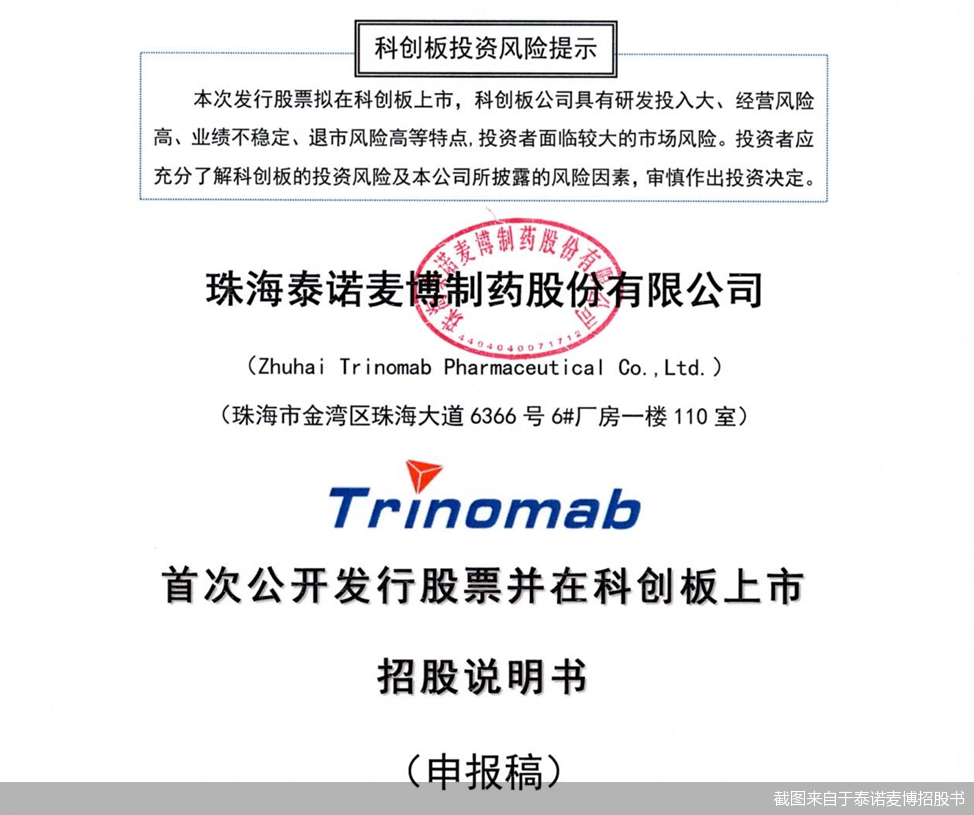
Core Viewpoint - The recent acceptance of Zhuhai Tainuo Maibo Pharmaceutical Co., Ltd.'s IPO application marks the first project under the reactivated fifth listing standard of the Sci-Tech Innovation Board after a two-year hiatus, indicating ongoing support for innovative pharmaceutical companies in the capital market [1][3][4] Company Overview - Tainuo Maibo, established in 2015, focuses on innovative biopharmaceuticals aimed at blood product alternatives, with its core product, Staitouta Monoclonal Antibody Injection (TNM002), recently approved for sale in China [3][4] - The company has developed a pipeline that includes another core product, TNM001, which is undergoing Phase III clinical trials and aims to be the first long-acting monoclonal antibody for RSV prevention in infants [3] Financial Performance - Tainuo Maibo plans to raise 1.5 billion yuan through its IPO, allocating funds for new drug research, antibody production facility expansion, and working capital [4] - The company reported a cumulative loss of approximately 1.39 billion yuan from 2022 to 2024, with a net profit of -177 million yuan in the first quarter of this year [10][11] Market Competition - The sales revenue for Staitouta Monoclonal Antibody Injection was only 169,300 yuan in March, facing competition from established products with lower prices and higher clinical awareness [7][8] - The company acknowledges the need for effective marketing to educate doctors and patients about the new treatment mechanism of its innovative product [7] Regulatory Environment - The acceptance of Tainuo Maibo's IPO application reflects a more rational view of the high-risk, high-investment nature of the biopharmaceutical industry by the capital market [4][5] - Regulatory focus will be on the company's core technology barriers, clinical value, and the efficiency of fund utilization, as well as the ability to demonstrate a clear path to profitability [11]
嘉实基金:连接耐心资本和健康未来激活生物医药创新引擎
Di Yi Cai Jing· 2025-07-30 05:28
Core Viewpoint - The article emphasizes the rapid development of new quality productivity in China, particularly in the biopharmaceutical sector, which is seen as a key driver for high-quality economic growth and investment opportunities [1][3]. Industry Overview - The biopharmaceutical industry is regarded as a "perpetual sunrise industry," driven by increasing rigid demand and breakthroughs in life sciences, making it a favored area for global capital investment [3]. - Innovations in gene editing, innovative drugs, and synthetic biology are propelling the biopharmaceutical sector, positioning it as a critical engine for China's new quality productivity and the construction of a healthy China [3][4]. Investment Landscape - The biopharmaceutical sector is characterized by high investment, long cycles, and strong specialization, presenting both opportunities and challenges for financial markets [3][4]. - As of December 31, 2024, the market value of Jiashi Fund's investments in the A-share biopharmaceutical sector reached 24.331 billion, ranking fourth among Jiashi's overall industry holdings and placing it in the top ten among all public funds in this sector [5]. Research and Development Focus - Jiashi Fund has established a dedicated investment and research team focused on the health industry, emphasizing the fundamental logic of industry development, which is driven by the stable demand for disease treatment and healthy living [4][6]. - The research team is structured to cover various sub-sectors within biopharmaceuticals, allowing for a comprehensive understanding of investment opportunities [7][8]. Product Matrix and Investment Strategy - Jiashi Fund is developing a diverse product matrix to connect patient capital with future health opportunities, focusing on both active and passive investment strategies in the biopharmaceutical sector [10][11]. - The fund has launched several ETFs targeting specific areas such as vaccine development and innovative drugs, aiming to meet varying investor needs in different market environments [12]. Future Outlook - The article suggests that the global pricing of world-class innovations in biopharmaceuticals may be just beginning, indicating a new cycle of value reassessment for China's biopharmaceutical industry [12][13].

瞭望 | 穿越生物医药创新“死亡之谷”
Xin Hua She· 2025-07-14 10:37
Core Viewpoint - The development of biopharmaceuticals faces significant challenges, with only about 10% of drugs surviving from research to market approval, necessitating the importance of pilot testing platforms to enhance innovation and reduce costs [1][3]. Group 1: Importance of Pilot Testing Platforms - Pilot testing platforms play a crucial role in improving the success rate of product launches by simulating actual production environments and addressing potential issues before large-scale manufacturing [2][3]. - The pilot testing platform in Taizhou Medical City has conducted over 80 batches of pilot process research and has achieved five approved innovative drugs and 48 authorized patents [2]. - The establishment of pilot testing platforms is essential for accelerating the transformation of scientific achievements into marketable products, acting as both an accelerator for research and a cost reducer [5][6]. Group 2: Cost Reduction and Efficiency - Companies utilizing pilot testing platforms have reported significant reductions in operational costs, with some reducing expenses from tens of millions to millions [5]. - The ability to conduct pilot testing in-house allows companies to source raw materials at a fraction of the cost, enhancing their competitive edge in the market [5][6]. - The pilot testing process can lead to exponential increases in the valuation of innovative drugs, as successful pilot studies can significantly enhance market potential [3][5]. Group 3: Challenges and Recommendations - There is a pressing need to expand the coverage of public pilot testing platforms to meet the diverse needs of biopharmaceutical innovation, as many companies struggle to find suitable facilities [8][9]. - The current pilot testing platforms often favor larger enterprises, leaving smaller companies at a disadvantage, highlighting the need for a more equitable distribution of resources [9][10]. - Experts recommend the establishment of digital pilot testing public service platforms and the creation of government-led funds to support the construction and operation of these platforms [10].
万泰生物举办资本市场专项调研会
Xin Hua Wang· 2025-07-10 07:25
Core Viewpoint - The company is focusing on its strengths in the vaccine and in vitro diagnostic fields, emphasizing its international strategic layout and future growth potential during a recent capital market research conference [2][3]. Group 1: Company Overview - The research conference attracted over 20 securities analysts from firms such as CITIC Securities and Guolian Minsheng Securities, highlighting significant interest in the company's developments [3]. - The general manager of the company, Jiang Zhiming, reviewed the company's 30-year development history and outlined its strategic layout, focusing on product advantages, innovative models, and international expansion [3]. Group 2: Market Opportunities - The HPV vaccine market in China shows significant potential, with a first-dose coverage rate of 27.43% among women aged 9-45, compared to 67% in Western countries, indicating a theoretical market of over 100 million people [4]. - The company plans to implement differentiated sales strategies based on regional demographics, consumer capabilities, and healthcare resource distribution to tap into this market [4]. Group 3: Innovation and Development - The company has established a comprehensive technical platform covering vaccines and in vitro diagnostics, focusing on products with broad market prospects and committing to increased innovation investment [5]. - The recent research conference served as an important opportunity for the company to enhance communication with the capital market, showcasing its core competitiveness and global strategy in the vaccine and in vitro diagnostic sectors [5].

实控人之子持续增持背后:千红制药业绩稳健增长,创新药迎重大突破
Quan Jing Wang· 2025-06-25 13:15
Core Viewpoint - The recent share acquisition by Wang Ke, a concerted actor of the actual controller of Qianhong Pharmaceutical, reflects confidence in the company's future development and long-term investment value [1][2]. Group 1: Shareholding Changes - Wang Ke has completed a share acquisition plan, increasing his holdings by 22 million shares, which corresponds to 1.72% of the company's total share capital [1][2]. - Following this acquisition, the combined shareholding of Wang Yao Fang and Wang Ke has risen to 26.63% [2]. - Zhao Gang, a significant shareholder and vice chairman, has reduced his holdings by 0.8117%, but this is not expected to negatively impact the company's operations [2]. Group 2: Company Performance - Qianhong Pharmaceutical is a leading player in the domestic biopharmaceutical sector, particularly in the heparin full industry chain, and has shown consistent high growth in performance [3][4]. - The company achieved a revenue of 1.526 billion yuan and a net profit of 356 million yuan in 2024, marking a year-on-year increase of 95.77% [4]. - In Q1 2025, the company maintained strong profit growth, with revenues of 451 million yuan and a net profit of 161 million yuan, reflecting a year-on-year increase of 54.62% [4]. Group 3: Innovation and R&D - The company is advancing multiple innovative drugs in various stages of clinical research, which is expected to enhance its core competitiveness and lay a foundation for future growth [5][6]. - As of the end of 2024, the company employed 188 R&D personnel, accounting for 19.20% of its total workforce, with R&D investment exceeding 150 million yuan, representing nearly 10% of total revenue [5][6]. - The company has made significant progress in biopharmaceutical innovation, with three innovative drugs entering Phase II clinical trials and several other projects underway [6].
