科技自主创新

Search documents
“十四五”期间高等教育累计向社会输送5500万人才——办好人民满意的教育
Ren Min Ri Bao· 2025-09-24 04:12
Core Insights - The "14th Five-Year Plan" period has seen significant progress in building a strong education system in China, focusing on moral education and integrating various educational approaches [1][2][3] Group 1: Education Quality and Accessibility - China has established the largest and high-quality education system, ensuring equal access to education for children [2] - By the end of 2024, 246 districts and counties are expected to achieve quality balanced education, with 2895 county-level administrative units already reaching basic balanced education [2] - The proportion of migrant children attending public and government-subsidized schools has increased to over 97%, up by 11.2 percentage points since the end of the 13th Five-Year Plan [2] Group 2: High School and Higher Education Development - The revitalization of county-level high schools is a key focus for ensuring equitable and quality basic education [3] - The gross enrollment rate for higher education has increased from 30% in 2012 to 60.8%, marking a significant advancement towards universal access [3] - A total of 123.5 million students from rural and impoverished areas have been admitted to key universities through targeted enrollment plans [3] Group 3: Contribution to Economic Development - During the "14th Five-Year Plan," higher education institutions have trained 55 million talents to support national innovation and modernization [4] - Over 75% of national natural science awards and more than 50% of national technological advancement awards have been attributed to universities [4] - A new ecosystem for technology transfer from universities has been established, with 28 public transformation platforms created, facilitating the transfer of over 4800 research outcomes [4] Group 4: Vocational Education and Skills Development - Vocational education contributes over 70% of the newly added high-quality skilled talents in modern industries [5] - China has built the world's largest vocational education system, with 9302 secondary vocational schools and 3400 million students enrolled [5] - In the past five years, 12,000 new vocational programs have been added, with 50% focused on engineering and technology [5] Group 5: Comprehensive Educational Reform - The "14th Five-Year Plan" coincides with the second round of "Double First-Class" construction, enhancing the development of universities and disciplines [6] - Significant reforms in graduate evaluation methods have been implemented, allowing for innovation achievements to be considered for degree applications [6] - The national digital education strategy has been fully implemented, with a smart education public service platform covering over 200 countries and regions [7]
75%以上的国家自然科学奖和技术发明奖来自高校
Zhong Guo Jing Ji Wang· 2025-09-23 15:03
Core Viewpoint - During the "14th Five-Year Plan" period, Chinese universities have significantly contributed to enhancing the national innovation system, integrating education, technology, and talent development to support modernization efforts [1][2]. Group 1: Achievements in Basic Research - Universities have played a crucial role in basic research, with over 75% of the National Natural Science Awards and Technology Invention Awards coming from universities, and more than 50% of the National Science and Technology Progress Awards also attributed to them [1]. - Major national projects, such as the "Xihe" solar exploration mission and the "Crust-1" deep Earth exploration, have seen significant contributions from universities [1]. Group 2: Technology Transfer and Transformation - A new ecosystem for technology transfer and transformation has been established, with the Jiangsu Regional Technology Transfer Center achieving substantial progress, including the creation of 28 public transformation platforms and the connection of over 4,800 university research outcomes, with nearly 180 successfully transformed [1]. - The Guangdong-Hong Kong-Macao Greater Bay Area Center is leveraging industrial, international, and financial advantages to accelerate the establishment of an international transfer and transformation center [1]. Group 3: Talent Development and Innovation - Initiatives have been launched to promote a positive interaction between independent technological innovation and talent cultivation, focusing on breakthroughs in fundamental and interdisciplinary subjects [1]. - The education sector aims to cultivate high-end talent through innovative research, thereby achieving further innovation through the development of skilled professionals [1][2].
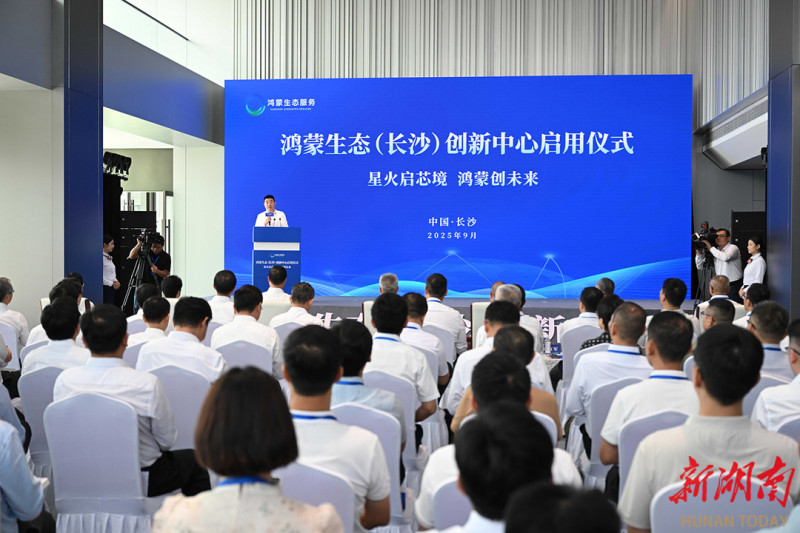
鸿蒙生态(长沙)创新中心启用 沈晓明毛伟明徐直军出席启用仪式
Chang Sha Wan Bao· 2025-09-16 01:42
Core Viewpoint - The inauguration of the Harmony Ecosystem (Changsha) Innovation Center marks a significant step in China's technological self-reliance and innovation, enhancing collaboration between Hunan province and Huawei [6][9]. Group 1: Inauguration Details - The Harmony Ecosystem (Changsha) Innovation Center was inaugurated on September 15, attended by key officials including Hunan's provincial leaders and Huawei's rotating chairman [1][3][5]. - This center is the fourth Harmony Ecosystem Innovation Center in China, following those in Shenzhen, Wuhan, and Chengdu, and is the first to focus on chip adaptation [9]. Group 2: Strategic Goals and Initiatives - The center aims to enhance platform capabilities, focusing on high-level technological self-reliance and innovation, and is aligned with Hunan's "4+4" science and technology innovation projects [6]. - It will promote the development of three major industrial clusters: smart terminals, the Harmony ecosystem, and audio-video industries, targeting a growth towards a trillion-yuan scale [6]. - The center will establish various platforms including a Spark Laboratory, training center, and R&D center, creating a comprehensive service system that integrates local resources and ecological partners [9]. Group 3: Policy and Support - Hunan province will provide top-tier policy support, service guarantees, and a favorable business environment to ensure the successful implementation of the Harmony ecosystem [6].

A股继续轮动,港股全面走强!
Sou Hu Cai Jing· 2025-09-12 04:55
Core Viewpoint - A-share market shows a mixed and volatile pattern with the Shanghai Composite Index breaking previous highs, while the Hong Kong market experiences a strong rally, driven by technology and cyclical sectors [1][2]. Major Index Performance - A-share indices display divergence, with the Shanghai Composite Index rising 0.24% to 3884.71 points, while the Shenzhen Component and ChiNext Index face pressure, with the latter down 0.52% to 3037.83 points [2]. - The Hong Kong market sees all major indices rise, with the Hang Seng Index up 1.53% to 26484.72 points and the Hang Seng Tech Index up 2.18% to 6016.97 points, reflecting strong market sentiment [2]. Industry Hotspots and Driving Logic - In the A-share market, cyclical sectors and policy beneficiaries are the main focus, with the metals sector leading gains due to rising industrial metal prices and improving profit expectations [3]. - The real estate sector also sees a rise of 2.16% due to favorable policies and expectations of sales recovery [3]. - In the Hong Kong market, technology and resource sectors are strong, driven by breakthroughs in self-developed chip technology and AI model training [3]. Underperforming Sectors and Driving Logic - The A-share technology growth sector experiences a high-level correction, with AI hardware stocks weakening and high valuation concerns emerging [4]. - In the Hong Kong market, defensive sectors show weakness, particularly local consumer stocks, as retail data falls short of expectations [4]. Investment Strategy Recommendations - The investment strategy should focus on "policy dividends + technological transformation + global pricing power," emphasizing long-term growth assets [5]. - In the A-share market, attention should be on sectors benefiting from technological innovation and cyclical recovery, particularly in semiconductors and industrial metals [5][6]. - For the Hong Kong market, a balanced allocation between technology growth and undervalued value stocks is recommended, focusing on AI applications and low-valuation financials [6].
基金研究:值市股仓
Hengtai Securities· 2025-09-02 10:21
Report Industry Investment Rating - Not provided in the given content Core Viewpoints of the Report - ETFs are becoming a "super hub" connecting the market and investors, and their development is a major trend. Analyzing the penetration of ETF holdings and trading helps understand the interaction between ETFs and corresponding stocks [1]. - The impact of ETFs on the equity market can be divided into four quadrants based on ETF持仓占比 and ETF成交占比, which reflect the holding and trading influence of ETFs on stocks respectively [2][10]. - ETFs show strong configuration and trading willingness in traditional industries such as banking, coal, and non - bank finance. Market preference may be shifting towards low - valuation, high - dividend sectors [2][3]. Summary by Relevant Catalogs I. ETF's Influence Mechanism on the Equity Market - The influence of ETFs on the equity market is divided into four scenarios according to the low/high of ETF持仓占比 and ETF成交占比: weak influence, stable ballast, high - active trader, and strong influence [2]. II. Industry Perspective - ETFs are actively traded and have a high持仓占比 in traditional industries like banking, coal, and non - bank finance. In August, the banking sector had a 20.55%成交占比 and 10.48%持仓占比; the coal sector had a 16.81%成交占比 and 11.11%持仓占比; the non - bank finance sector had an 11.60%成交占比 and 11.76%持仓占比 [2]. - From July to August, the trading activity and持仓占比 of ETFs in cyclical industries such as coal, banking, and petroleum and petrochemicals increased significantly, while those in technology - growth sectors like electronics and computers decreased, possibly due to market style switching [3]. III. Individual Stock Perspective - Among the top 30 stocks in terms of ETF持仓, ETFs have a high degree of pricing power as the ETF持仓占 their free - float market value exceeds 10%, and stock price fluctuations are highly correlated with ETF redemptions and position adjustments [11]. - The stocks with high ETF持仓 are concentrated in industries, mainly in the semiconductor industry chain, followed by the pharmaceutical and biological industry, and also include some new energy, artificial intelligence, and software stocks [12]. - The market capitalization of stocks heavily held by ETFs varies widely, covering large - cap giants and medium - sized growth companies. These stocks are mostly leading companies in niche industries and are favored by ETFs, especially those from the Science and Technology Innovation Board [13].



关键时刻,外资投行点火,“寒王”又登上热搜
Sou Hu Cai Jing· 2025-08-25 00:48
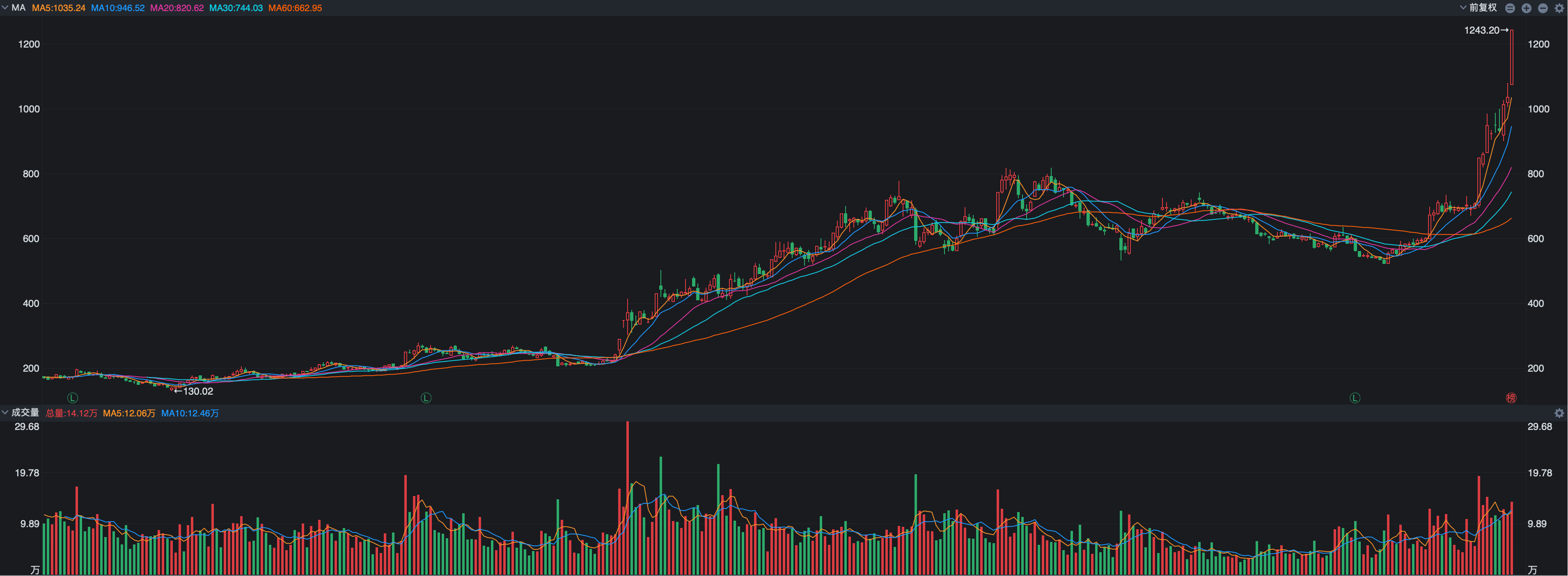
Group 1 - The core viewpoint of the news revolves around the significant increase in the target price for Cambrian Technology by Goldman Sachs, which has risen from 1223 yuan to 1835 yuan, indicating a potential upside of 50% from the previous target [1] - The market's interest in Goldman Sachs' predictions is heightened due to the previous accuracy of their forecast, as Cambrian's stock price nearly doubled after the initial target was set, moving from a range of 500 to 800 yuan to around 1243 yuan [1][2] - Cambrian's stock price is approaching that of Moutai, leading to mixed sentiments among investors, especially as some institutions have begun to reduce their positions, creating uncertainty about the stock's future performance [1][2] Group 2 - The surge in Cambrian's stock price has contributed to a broader market rally, pushing indices closer to 4000 points, and providing short-term opportunities for investors to re-enter the market [2] - There is a prevailing concern about the sustainability of the rally, particularly after Cambrian's stock reached 1200 yuan, raising questions about the remaining upside potential [2][3] - Historical precedents suggest that stocks surpassing Moutai's price often face volatility and may eventually decline, creating a conflict between the desire for continued growth and the caution derived from past experiences [3] Group 3 - Cambrian is viewed as a representation of technological innovation and domestic substitution, which is seen as a significant shift in the market, differentiating it from past instances of stock price surges [3] - The current market sentiment emphasizes the importance of confidence in domestic technological advancements, suggesting that the situation is fundamentally different from previous market behaviors [3]
公募机构:增量资金是A股“走牛”关键动力
Zheng Quan Ri Bao Zhi Sheng· 2025-08-18 16:14
Core Viewpoint - The A-share market is experiencing a strong upward trend, with total market capitalization surpassing 100 trillion yuan, indicating a historical high and potential for a more resilient and sustainable "slow bull" phase driven by multiple favorable factors [1][5]. Group 1: Market Performance - On August 18, the three major A-share indices continued their strong performance, with the Shanghai Composite Index closing at 3728.03 points, up 0.85%, the Shenzhen Component Index at 11835.57 points, up 1.73%, and the ChiNext Index at 2606.20 points, up 2.84% [2]. - The total market turnover has exceeded 2 trillion yuan for four consecutive trading days, with sectors such as communication equipment, software, and cultural media leading the gains [2]. Group 2: Capital Inflow - The increase in market activity is attributed to heightened market enthusiasm and a positive capital flow effect, which is driving indices steadily upward [3]. - Continuous profit-making effects are attracting external capital into the market, further boosting market sentiment and risk appetite. Institutional funds, particularly from insurance and private equity, are identified as key incremental capital sources [4]. - Recent financial data shows that M1 and M2 growth rates have exceeded expectations, indicating that resident deposits are being activated and flowing into the equity market [4]. Group 3: Future Market Outlook - Multiple public fund institutions believe that various factors are likely to drive the A-share market's continued positive trend, supported by policy backing, liquidity easing expectations, and ongoing industrial upgrades [5]. - The short-term stock market is expected to maintain upward momentum, with no significant signs of capital diversion observed [5]. - The combination of domestic policy easing and expectations of overseas interest rate cuts is expected to enhance market risk appetite, with a clear upward trend in the medium term [5]. Group 4: Sector Focus - There is a consensus among public fund institutions to focus on sectors such as technology, large finance, military, and "anti-involution" as key investment directions [6]. - The brokerage and technology sectors are viewed positively, with expectations of improved performance due to increased trading volume and rapid developments in AI, innovative pharmaceuticals, and robotics [7]. - A balanced investment approach is recommended to navigate market volatility and sector rotation, with particular attention to AI applications and advanced semiconductor processes, which align with national policy directions and offer reasonable valuation levels [7].
人生第一堂HarmonyOS公开课开讲,十大鸿蒙生态伙伴体验区惊喜连连
Sou Hu Cai Jing· 2025-08-17 18:39
Core Insights - The event showcased Huawei's HarmonyOS ecosystem, emphasizing its innovative features and user-friendly interactions for young students [1][3][9] Group 1: Event Overview - 200 students participated in an immersive experience at Huawei's research base, exploring the HarmonyOS ecosystem [1] - The event included interactive exhibits from ten ecosystem partners, enhancing the overall experience with unique functionalities [3] Group 2: Innovative Features - Students engaged with features like "tap to share" and seamless content transfer across devices, highlighting the convenience and intelligence of the HarmonyOS [3] - The Bilibili HarmonyOS version demonstrated innovative split-screen design, allowing users to watch videos while controlling playback simultaneously [3] Group 3: Practical Applications - The Didi HarmonyOS version featured real-time vehicle information on the lock screen and simplified trip sharing [5] - The Qunar travel app showcased voice command capabilities for booking train tickets, streamlining the user experience [5] Group 4: Educational Aspects - The event included talks from industry leaders and Huawei experts, providing valuable insights into technology development and career paths [7] - Over 400 universities are involved in HarmonyOS talent cultivation, with more than 6,100 companies participating in innovation training camps [7] Group 5: Support Initiatives - Huawei launched the "Star Plan," investing 100 million yuan to support campus developers, offering incentives for application development [8] - The plan provides financial rewards for successful app submissions, encouraging student participation in the HarmonyOS ecosystem [8] Group 6: Youth Engagement - The enthusiasm of the younger generation for the HarmonyOS ecosystem is translating into active participation in both usage and development [8] - The event served as a practical classroom for showcasing China's technological self-innovation, fostering a connection between youth and technology [9]

京津冀高校青年共上“同向共行的大思政课”
Zhong Guo Qing Nian Bao· 2025-08-14 22:37
Group 1 - The event "So Close, So Beautiful, Weekend in Hebei" involved over 200 young teachers and students from Beijing, Tianjin, and Hebei, focusing on cultural exchange and understanding the close ties among the three regions [1][3] - Participants engaged in immersive experiences, such as watching the red-themed performance "Shijiazhuang 1947," which helped them connect with historical revolutionary spirit [1][2] - The event included visits to significant historical sites like the Xibaipo Memorial and a lesson on ideological education, emphasizing the importance of unity and collective effort in regional development [2][3] Group 2 - The activities highlighted the transformation of North Zhuang Village from poverty to revitalization, showcasing the power of unity and hard work [2] - Students expressed their aspirations to contribute to urban development and technological innovation, inspired by the collaborative opportunities presented by the Beijing-Tianjin-Hebei integration [2][3] - The event served as a platform for deepening friendships, exchanging ideas, and exploring cooperation among youth from the three regions, with plans for future collaborative initiatives [3]
市场沸腾!沪指创近4年新高,A股年内涨幅前十个股都有谁?
Hua Xia Shi Bao· 2025-08-13 07:02
Core Viewpoint - The A-share market has shown robust vitality since 2025, driven by multiple factors, including policy changes, technological innovation, and increased liquidity, leading to significant investor interest and market performance [2][3][6]. Market Performance - On August 12, the A-share market indices reached new highs, with the Shanghai Composite Index hitting 3665.92 points, marking a 0.5% increase, while the ChiNext Index rose by 1.24% to 2409.40 points [4]. - The two financing and margin trading balances exceeded 2 trillion yuan for the first time in ten years, indicating a recovery in market confidence [6]. Sector Highlights - The semiconductor sector experienced a strong surge, with companies like Cambrian Technology reaching a record high of 848.88 yuan per share, pushing its market capitalization above 350 billion yuan [4]. - Other semiconductor stocks also saw significant gains, with Shanghai Hejing rising by 20% and Shengke Communication increasing by 19.27% [4]. Structural Dynamics - Despite the overall index gains, there was a notable structural divergence in the market, with over 3,000 stocks declining compared to around 2,000 that rose on August 12 [5]. - The North Exchange market showed weaker performance, with the North 50 Index declining by 0.62% [5]. Investor Sentiment - Social media discussions around the stock market have surged, reflecting increased investor engagement and interest in market dynamics, particularly regarding the semiconductor sector [6][7]. - The demand for professional financial analysis content has risen, indicating a growing interest among retail investors for informed investment decisions [7]. Notable Stocks - As of August 12, over 1,000 listed companies in the A-share market have seen their stock prices rise by more than 50% this year, with nearly 270 companies doubling their stock prices [9][10]. - The top ten performing stocks this year include companies like Upwind New Materials and *ST Yushun, showcasing significant market opportunities [10]. Future Outlook - Analysts express a positive outlook for the A-share market, anticipating that monetary policy effects and fiscal stimulus will support corporate profit growth and attract foreign investment [10]. - The A-share market is transitioning from a follower to a value creator in the global emerging markets, particularly in sectors like photovoltaics and new energy vehicles [10].