
经济刺激计划

Search documents
就在今天!美国投票结果出炉,9月20日,特朗普收到噩耗,他要支付351亿巨款
Sou Hu Cai Jing· 2025-09-20 16:33
Group 1 - The Republican Party is showing signs of internal anxiety as they modify rules to confirm 48 positions, including key departments like Defense and Energy, indicating a lack of unified support for President Trump's agenda [1] - Trump's influence over the Federal Reserve is limited, as evidenced by the recent 25 basis point rate cut, which did not meet his expectations of at least 50 basis points [1] - The struggle for control over the federal government is evident, with Trump's ability to influence the Federal Reserve being significantly constrained [1] Group 2 - The $35.1 billion agricultural subsidy, which helped Trump gain support from agricultural states during the last election, is now under threat due to rising national debt and budget deficits [3] - The Democratic-controlled House is particularly cautious about agricultural subsidies, which are seen as driven by electoral considerations, complicating Trump's ability to fulfill his promises [3] - Farmers' support for Trump is wavering, and failure to deliver on subsidies could lead to a loss of backing from this crucial voter base [3] Group 3 - Trump's strategy to encourage the EU to purchase more U.S. soybeans is facing resistance, as European officials are wary of being drawn into a trade conflict with China [4] - The EU's economic ties with China complicate Trump's push for increased purchases, as any tariffs on Chinese goods could disrupt their supply chains [4] - The "America First" policy is leading to international isolation, reducing the effectiveness of domestic economic strategies [4] Group 4 - The combination of a narrow victory in Senate confirmations, the pressure of agricultural subsidies, fiscal constraints, and international isolation presents a significant challenge for Trump's administration [7] - The current situation reflects structural pressures rather than short-term political struggles, indicating a critical test for Trump's governance [7]

剩余 260亿泰铢刺激资金将转入泰国中央预算
Shang Wu Bu Wang Zhan· 2025-08-27 15:39
Core Points - The Thai cabinet has approved the transfer of 26 billion THB to the central budget for emergency or necessary expenditures, following the return of some stimulus funds to the government [1] - The central budget for emergency or urgent reserve projects in the fiscal year 2025 is set at 96.6 billion THB, which will increase to 123 billion THB after the transfer of the 26 billion THB stimulus funds [1] - The government has previously allocated a total of 157 billion THB for economic stimulus, with part of the funds being reallocated from the remaining balance of the digital wallet cash distribution plan to boost the economy affected by trade disruptions [1] Economic Stimulus Plan - The first phase of the stimulus plan includes investments in 481 projects totaling 115 billion THB [1] - The second phase amounts to 18.4 billion THB, aimed at supporting a competitiveness enhancement fund of 10 billion THB, with the remaining funds allocated to a student loan fund [1] - The cabinet meeting acknowledged progress in implementing the economic stimulus plan within the budget framework, with a total of 8,431 expenditure projects approved to stimulate the economy, amounting to a total budget of 110 billion THB [1]
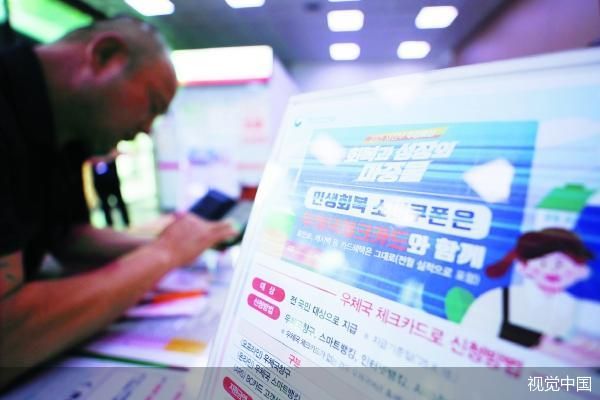
韩政府启动“惠民消费券”申请
Bei Jing Shang Bao· 2025-07-23 16:08
Group 1 - The South Korean government has launched its first large-scale economic stimulus initiative, the "Welfare Consumption Voucher," aimed at boosting grassroots consumption and revitalizing local economies [2][3] - The consumption vouchers are available to all South Korean citizens, with amounts varying based on individual economic status and residence, ranging from 150,000 KRW to 450,000 KRW per person [2] - The application period for the vouchers will last until September 12, with distribution methods including credit cards, debit cards, prepaid cards, and local love gift certificates [2] Group 2 - The usage of the consumption vouchers is strictly limited to small merchants with annual sales not exceeding 3 billion KRW, and cannot be used in large supermarkets, department stores, duty-free shops, e-commerce platforms, or entertainment and gambling sectors [3] - Major financial institutions and retail chains in South Korea have quickly responded to the voucher launch, initiating promotional activities and incentives to encourage usage, including a lottery with a total prize of 2.5 billion KRW [3] - Local governments are expressing concerns over the financial burden of the consumption voucher program, with Gyeonggi Province reporting a tax revenue decrease of 81.6 billion KRW from January to May, while needing to allocate 180 billion KRW for the voucher budget [3]
印尼出招提振暑期消费
Ren Min Ri Bao· 2025-07-21 22:11
Group 1 - The Indonesian government has launched an economic stimulus plan totaling 24.44 trillion Indonesian Rupiah (approximately 1.07 billion USD) aimed at boosting consumption and promoting economic growth during the summer holiday period [1][2] - The stimulus plan includes five main policies focusing on transportation, social assistance, wage subsidies, and toll fee reductions, with specific measures such as 30% discounts on train tickets and half-price boat tickets [1][2] - The government has allocated 11.93 trillion Indonesian Rupiah for social assistance, providing monthly basic food subsidy cards to 18.3 million low-income households and wage subsidies for workers earning below 3.5 million Indonesian Rupiah [1][2] Group 2 - This is the third economic stimulus plan introduced by the Indonesian government this year, responding to challenges such as slowing economic growth, weak consumption, and increasing employment pressure [2] - Indonesia's GDP growth for the first quarter of 2025 is reported at 4.87%, the lowest in over three years, prompting the central bank to lower its economic growth forecast by 0.1 percentage points [2] - The government aims to encourage local tourism development and public entertainment activities to stimulate travel and consumption, emphasizing the need for coordination among ministries to ensure effective implementation of the stimulus measures [2]
每日机构分析:7月8日
Xin Hua Cai Jing· 2025-07-08 08:36
Group 1: New Zealand and Australia Economic Outlook - Westpac Bank expects the Reserve Bank of New Zealand to keep the official cash rate unchanged in July, adopting a wait-and-see approach for future rate adjustments [1] - The Reserve Bank of New Zealand may allow the market to interpret potential rate changes and will decide based on economic data released before the August monetary policy statement [1] - The Reserve Bank of New Zealand might indicate that economic activity in Q1 2025 could exceed expectations, although subsequent indicators show a slowdown in economic momentum [1] - The Reserve Bank of Australia did not cut rates in July as widely anticipated, but future rate cuts remain a possibility, contingent on upcoming inflation data [2] - The Reserve Bank of Australia stated that inflation risks have become more balanced, suggesting that while there is no immediate pressure to cut rates, it may be delayed rather than canceled [2] Group 2: Japan's Economic Challenges - Mizuho Securities analysts suggest that the Bank of Japan should maintain its current policy amid external uncertainties, particularly regarding U.S. tariffs [3] - The potential for a 25% tariff on Japanese imports by the U.S. starting August 1 adds uncertainty and could negatively impact Japan's exports and overall economic performance [3] - Mitsubishi UFJ Securities economists believe that U.S. tariffs will challenge Japan's economy, especially in exports and capital investment, prompting the government to consider broader economic stimulus measures [3] - Japan's central bank plans to slow the pace of its bond purchase reduction starting April 2026, considering market stability and participant feedback [3] Group 3: Singapore's Economic Performance - DBS Group economists indicate that Singapore's economy may avoid technical recession in Q2 2025 due to early shipments by export companies, which temporarily supported actual export growth [4] - While short-term export data appears strong due to early deliveries, long-term challenges loom for Singapore's export sectors, particularly electronics and biopharmaceutical manufacturing, due to potential U.S. tariff measures [4]
印尼推出经济刺激计划改善预期
Jing Ji Ri Bao· 2025-06-26 22:06
Core Viewpoint - The Indonesian government has announced a summer economic stimulus plan worth 24.44 trillion Indonesian Rupiah (approximately 1.53 billion USD) aimed at boosting consumer spending to achieve a near 5% economic growth target by Q2 2025, in response to a slowdown in economic growth and various external pressures [1][2]. Economic Context - Indonesia's economy grew by 4.87% year-on-year in Q1 2023, marking the lowest growth rate in over three years, influenced by global trade tensions, uncertainties from U.S. tariffs, and weak domestic demand [1]. - The threat of up to 32% tariffs from the U.S. has created significant uncertainty for Indonesian exports, negatively impacting market confidence [1]. - From January to April 2023, foreign capital outflows from the Indonesian stock market reached 50.72 trillion Indonesian Rupiah (approximately 3 billion USD), with the bond market experiencing outflows of over 6.11 trillion Indonesian Rupiah (approximately 375 million USD) [1]. Stimulus Measures - The stimulus plan includes various measures such as: - 20% discount on toll fees for 110 million drivers and 30% discount on train tickets for 2.8 million passengers [2]. - 50% electricity bill discount for 79.3 million households to alleviate living costs and increase disposable income [2]. - Expansion of social assistance to 18.3 million households, providing additional monthly subsidies and free rice [2]. - Wage subsidies for low-income workers earning below 3.5 million Indonesian Rupiah (approximately 215 USD) [2]. Funding Sources - The funding for the stimulus plan will come from public-private partnerships for toll and unemployment insurance discounts, while the remaining funds will be allocated from the government budget [3]. Market Reactions - Mixed reactions from the market and experts, with some questioning the transfer of costs to the private sector, while others view the plan positively as a means to boost market confidence and address economic slowdown [3]. - Analysts believe that despite the challenges, the government's proactive approach could lead to a rebound in economic growth in Q2 2025 [3]. Long-term Challenges - Long-term sustainable development of the Indonesian economy faces challenges such as global trade dynamics, commodity price fluctuations, and structural domestic issues [4]. - Experts suggest that the government should implement structural reforms alongside short-term stimulus measures to enhance economic competitiveness and resilience [4].
东南亚多国出台经济提振政策,试图减轻本国经济受美关税影响
Huan Qiu Shi Bao· 2025-06-12 22:32
Core Viewpoint - Southeast Asian countries, including Indonesia and Thailand, are implementing large-scale economic stimulus plans to mitigate the impact of high U.S. tariffs on their economies [1][2]. Group 1: Indonesia's Economic Stimulus - Indonesia has announced a summer economic stimulus plan worth 24.44 trillion Indonesian rupiah (approximately $1.5 billion) aimed at boosting consumption and economic growth during the school holiday period [2]. - The Indonesian economy is facing challenges, with a GDP growth of only 4.87% year-on-year in the first quarter, the weakest since Q3 2021 [2]. - The Indonesian government expects the economic growth rate to stabilize around 5% in the second quarter, supported by fiscal measures [2]. Group 2: Thailand's Economic Response - Thailand's government has approved an economic stimulus plan with a budget of 157 billion Thai baht, focusing on community economy, tourism, agriculture, infrastructure, and low-interest loans for small businesses [3]. - The Thai economy is also under pressure from weak domestic demand and high household debt, alongside external challenges such as ongoing trade wars [3]. Group 3: Regional Economic Outlook - The region is experiencing a downward revision of GDP growth forecasts due to the impact of U.S. tariffs, with Thailand's growth forecast lowered from 3%-3.5% to 1.8% by the World Bank and IMF [4]. - Malaysia's central bank has indicated that economic growth may fall below the previously predicted range of 4.5%-5.5% due to the adverse effects of U.S. tariffs [4]. - The Philippines reported a first-quarter GDP growth of 5.4%, below the government's target of 6%-8% [4]. Group 4: Central Bank Actions - Central banks in Southeast Asia are responding to economic pressures, with the Philippines expected to lower interest rates by 25 basis points due to reduced inflation and uncertainties from U.S. tariffs [5]. - Malaysia is also anticipated to cut interest rates for the first time since May 2023, while providing additional loan guarantees for SMEs affected by U.S. tariffs [5]. - Vietnam is considering extending a VAT reduction measure to support economic growth, which may lead to significant tax revenue losses in the coming years [5]. Group 5: Concerns Over Stimulus Measures - Experts express concerns that excessive fiscal and monetary stimulus could have adverse effects, such as widening the income gap and increasing household debt levels [6][7]. - In Thailand, the cancellation of a digital wallet plan has led to public disappointment, highlighting the potential political ramifications of economic policy changes [7]. - Vietnam's extension of VAT reductions raises concerns about future tax revenue losses, with projected losses of approximately 39.5 trillion Vietnamese dong in the second half of 2025 and 82.2 trillion in 2026 [7].
受多重因素影响,印尼推出约15亿美元“夏季经济刺激计划”
Huan Qiu Shi Bao· 2025-06-04 23:01
Group 1 - Indonesia's government has launched an economic stimulus plan worth 24.44 trillion Indonesian rupiah (approximately $1.5 billion) aimed at boosting consumption and economic growth during the school holiday period from June to July [1] - The stimulus plan includes five key policies: transportation discounts, social assistance, wage subsidies, and toll road incentives, with the goal of maintaining a 5% economic growth rate in the second quarter [1] - Economic challenges are evident, with GDP growth projected at 4.87% in Q1 2025, down from 5.04% in Q4 2023 and 5.02% in Q4 2024, alongside rising unemployment and declining consumer purchasing power [2] Group 2 - The summer economic stimulus plan has sparked discussions domestically, reflecting the government's confidence in achieving the 5% growth target, and emphasizing a long-term strategy to expand domestic demand as a growth engine [3] - The plan aims to enhance the overall investment attractiveness of the Southeast Asian region, showcasing economic resilience, consumer vitality, and industrial upgrades [3] - However, the plan faces challenges due to poor inter-departmental coordination, with several relevant departments unaware of the policy, potentially undermining its effectiveness [3]
印尼拟于6月推出经济刺激计划以提振消费
news flash· 2025-05-24 06:39
Group 1 - Indonesia plans to announce an economic stimulus package on June 5 to boost economic activity and consumer purchasing power, aiming for a GDP growth rate of around 5% this quarter [1] - The stimulus measures are designed to stimulate economic growth by increasing consumption, as stated by the Minister of Economic Coordination, Airlangga Hartarto [1] - The first quarter GDP growth rate for Indonesia was 4.87%, marking the lowest level in over three years, prompting the central bank to lower its growth forecast for 2025 from 4.7%-5.5% to 4.6%-5.4% [1] Group 2 - The Ministry of Finance is still calculating the scale of the stimulus plan, which aims to promote economic growth in the second and third quarters [1]
泰国推出1570亿泰铢的经济刺激计划
Zhong Guo Xin Wen Wang· 2025-05-20 13:55
Economic Stimulus Plan Overview - Thailand's cabinet approved an economic stimulus plan with a budget of 157 billion THB (approximately 34.1 billion RMB) aimed at boosting community economy, tourism, agriculture, and infrastructure development [1] - The plan is part of the fiscal year 2025 budget and primarily funded by the central emergency fund [1] Infrastructure Development - Investment in water infrastructure includes flood prevention during rainy seasons, water storage during dry seasons, and improvements to water supply systems for communities and agricultural areas [1] - Transportation investments focus on resolving traffic bottlenecks, enhancing travel and freight safety, addressing railway and road crossing issues, and upgrading parking areas [1] Tourism Enhancement - The plan includes upgrading tourist attractions, sports facilities, and essential amenities such as restrooms and accommodations [1] - It aims to improve tourist convenience systems and enhance safety measures in major tourist cities, including the installation of CCTV [1] Production Efficiency and Export Promotion - The initiative seeks to enhance production efficiency and promote Thai product exports by supporting farmers and SMEs in adopting advanced technologies and adjusting planting areas [2] - Financial support and credit will be provided to exporters, along with the development of digital infrastructure [2] Community Economic Development - The plan emphasizes the development of grassroots economies and increasing educational investments to cultivate talent [3]