美国债务危机

Search documents
中方连开3枪,抛257亿美债,封杀美芯片,马斯克:美基本没救了
Sou Hu Cai Jing· 2025-09-20 03:58
Group 1 - Elon Musk's controversial statement about the bleak future of the United States has sparked widespread discussion, highlighting concerns over internal governance and external competition [1][10] - Musk's experience with the Trump administration's efficiency reform plan revealed deep-rooted issues within the U.S. bureaucratic system, leading to increased government spending instead of the anticipated savings [2][4] - The U.S. leadership's lack of attention to the growing debt crisis was exposed when Musk faced backlash for opposing infrastructure legislation that could exacerbate national debt [4][10] Group 2 - China has significantly reduced its holdings of U.S. Treasury bonds, cutting $25.7 billion and bringing the total to approximately $700 billion, the lowest level since 2009, reflecting concerns over U.S. debt sustainability [5] - Chinese tech companies are diversifying their chip procurement strategies to reduce reliance on U.S. technology, driven by unpredictable U.S. export control policies [7] - China has shifted its agricultural imports, particularly soybeans, from the U.S. to Brazil due to competitive pricing and the impact of tariffs imposed during the Trump administration [9]

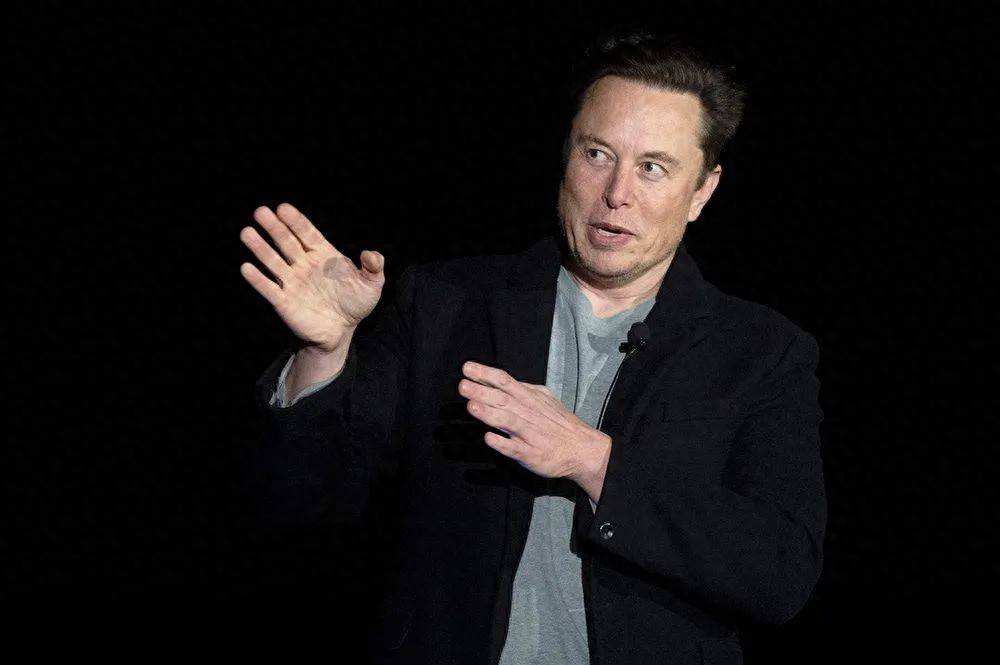
还剩7750亿元,中国加速清理美债,马斯克警告:美元或将一文不值
Sou Hu Cai Jing· 2025-09-15 10:49
Group 1 - China has been strategically reducing its holdings of US Treasury bonds since 2016, with a record sell-off of $188 billion in that year to stabilize its financial market and mitigate risks from dollar fluctuations [2][10][17] - By 2022, China's holdings fell below $1 trillion, and as of early 2024, it further decreased to $775 billion after consecutive monthly reductions [4][10][19] - In contrast, Japan has been increasing its US Treasury bond holdings, reaching $1.1679 trillion, which has led to a depreciation of the yen and increased economic pressures domestically [6][8][21] Group 2 - The US national debt is projected to exceed $34 trillion in 2024, with interest payments nearing $1 trillion, raising concerns about fiscal sustainability [12][14] - The debt-to-GDP ratio is expected to reach 124.3% in 2024, marking a historical high, while the federal deficit for 2025 is estimated at $1.9 trillion [12][14] - Elon Musk has publicly warned about the risks of the growing US debt, suggesting that it could undermine the value of the dollar and lead to a potential economic crisis [12][14][23] Group 3 - The US Treasury bond market is facing challenges as foreign holdings, particularly from China and Japan, are declining, which complicates the situation for potential buyers [19][23] - The Federal Reserve's high interest rates are attracting global capital back to the US, but this has adverse effects on other economies, particularly Japan, which is struggling with rising import costs and inflation [6][8][10] - China's approach to diversifying its foreign exchange reserves away from US Treasury bonds has been seen as a prudent strategy, allowing it to maintain economic stability while navigating global financial pressures [10][19][23]
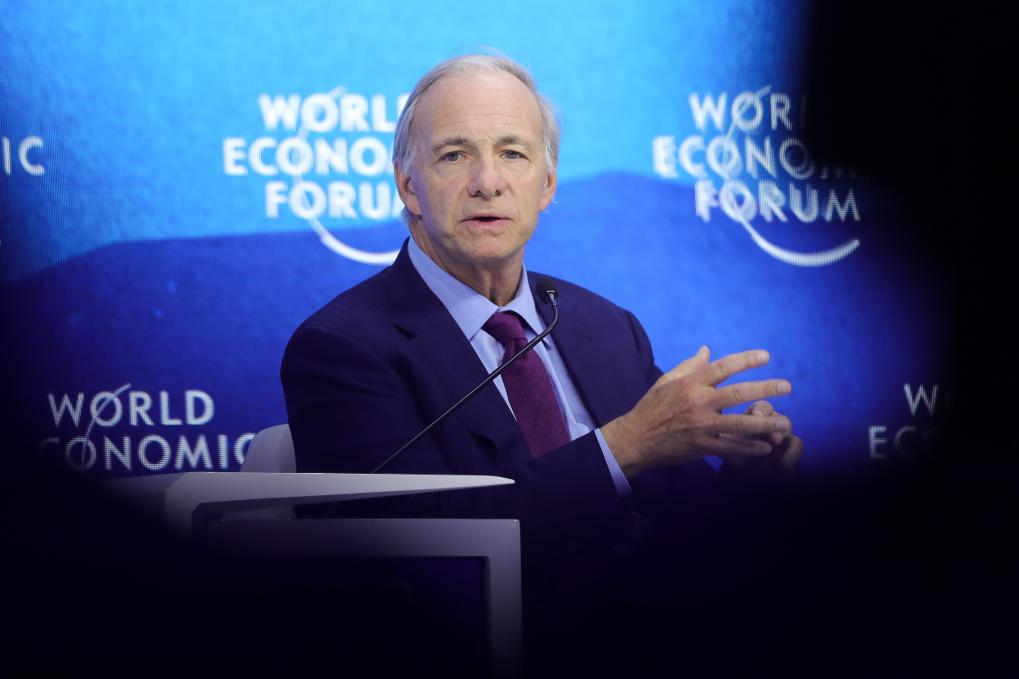
美债危机真的要来了?达利欧罕见警告:三年左右
Di Yi Cai Jing· 2025-09-04 13:34
Group 1: U.S. Debt Situation - The U.S. may face a debt crisis in approximately three years due to excessive spending over the years [1][3] - Current government debt servicing costs are around $1 trillion annually, with total debt rollover needs at about $9 trillion, squeezing other expenditures [3] - The federal government is projected to spend about $7 trillion next year while generating only $5 trillion in revenue, necessitating the issuance of $2 trillion in new debt [3] Group 2: Federal Reserve Independence - Concerns are rising regarding the independence of the Federal Reserve following political pressures, including threats to dismiss its chairman [4] - If the Federal Reserve is perceived as politically weakened, it could lead to a decline in the value of U.S. debt and the dollar [4] - The Fed faces a tough choice between allowing interest rates to rise, which could trigger a debt default crisis, or printing money to buy debt, both of which could harm the dollar [4] Group 3: Investment Trends - International investors are reducing their holdings in U.S. debt due to geopolitical concerns and are shifting towards gold [5] - The rise in gold and cryptocurrency prices is attributed to the deteriorating debt situation of the dollar and other reserve currencies, threatening their attractiveness as stores of wealth [6] - An increase in the supply of dollars or a decrease in demand could make cryptocurrencies an appealing alternative currency [7] Group 4: Government Intervention in Industries - The U.S. government's intervention in key industries, such as the recent agreement with Intel, is seen as an early sign of national capitalism [8] - The widening gap between wealth and values is contributing to the rise of populism, creating irreconcilable divisions that cannot be resolved through democratic processes [8] - The current geopolitical context suggests that the nation that wins the technology and economic war will also win more significant geopolitical and potentially military conflicts [8]
百利好早盘分析:独立性遭挑战 黄金气势如虹
Sou Hu Cai Jing· 2025-09-03 01:46
Group 1: Gold Market - Trump's dismissal of Fed Governor Cook raises concerns about the independence of the Federal Reserve, potentially undermining public trust in the institution [2] - The ISM Manufacturing PMI for August recorded at 48.7, below the expected 49, indicating a continued contraction in the manufacturing sector for six consecutive months [2] - Concerns over the Fed's independence are benefiting gold prices, which have seen a strong upward trend, surpassing $3,500 [2] Group 2: Oil Market - Bridgewater founder Dalio warns of an impending debt crisis in the U.S. due to excessive spending, with total U.S. debt reaching $37.3 trillion and interest payments exceeding $1 trillion [4] - The price of Russian Urals crude oil is $3-4 cheaper than Brent, making it more attractive for India despite a temporary reduction in imports [4] - Oil prices have been fluctuating between $62 and $65 since mid-August, with a recent short-term breakout above $65 [5] Group 3: Copper Market - Copper prices experienced a significant drop at the end of July but have since stabilized between $4.32 and $4.50, recently breaking above the $4.50 resistance level [7] Group 4: Nikkei 225 - The Nikkei 225 index is showing a weak downward trend, with strong support around the 41,800 level; a breakout above 42,400 could signal a return to an upward trend [8]

达利欧:特朗普正带领美国滑向1930年代
Hu Xiu· 2025-09-02 13:19
Group 1: Return of 1930s Political Model - Current political and social conditions in the U.S. are compared to the global situation of the 1930s-1940s, characterized by wealth disparity, value gap, and a collapse of trust, leading to more extreme policies [4] - Trump's intervention in the private sector, such as acquiring a 10% stake in Intel, is seen as a manifestation of "strong authoritarian leadership" driven by a desire to control financial and economic situations [4] - Wall Street investors are increasingly concerned about Trump's policies but remain silent due to fear of retaliation [4][5] Group 2: Threats to Federal Reserve Independence - Dalio warns that the independence of the Federal Reserve is under threat, particularly after Trump's public dismissal of a Fed official [6][7] - A politicized central bank could undermine confidence in the Fed's ability to protect the value of the currency, making dollar-denominated debt assets less attractive [8] - International investors are shifting from U.S. Treasuries to gold, reflecting concerns about the stability of the dollar system [9] Group 3: Impending Debt Crisis - Dalio predicts that the U.S. will face a debt crisis in about three years, driven by a significant fiscal imbalance where annual spending is approximately $7 trillion against $5 trillion in revenue [11] - Investors are questioning whether U.S. Treasuries remain a good store of wealth, as debt demand may not keep pace with supply [12] - The Fed faces a difficult choice: allow interest rates to rise and risk a debt default crisis, or print money to buy debt that others are unwilling to purchase, both of which could harm the dollar [12]
达利欧:特朗普正带领美国滑向1930年代,整个华尔街却因恐惧陷入沉默
美股IPO· 2025-09-02 07:41
Core Viewpoint - Ray Dalio warns that the U.S. is being pushed towards a governance model reminiscent of the 1930s due to Trump's strong intervention in the private sector, leading to fears among Wall Street investors about potential retaliation for criticism [1][3][4] Group 1: Political and Economic Context - Dalio compares the current political and social climate in the U.S. to the global situation of the 1930s and 1940s, highlighting issues such as wealth disparity, value gap, and a collapse of trust driving the adoption of more extreme policies [4][5] - The intervention by the Trump administration in the private sector, particularly the acquisition of a 10% stake in Intel, exemplifies a desire for strong authoritarian leadership and control over financial and economic situations [3][4] Group 2: Wall Street's Response - Despite growing concerns among Wall Street investors regarding Trump's policies, few prominent financial figures openly criticize the president due to fears of retaliation [5][6] - Dalio emphasizes that his statements are merely a description of the causal relationships driving the current situation, highlighting the political pressure faced by the financial community [5] Group 3: Federal Reserve Independence - Dalio expresses concerns about the independence of the Federal Reserve, particularly following Trump's actions to dismiss a Fed governor, which could undermine public confidence in the Fed's ability to maintain currency value [6] - The political pressure on the Fed may lead to a loss of attractiveness for dollar-denominated debt assets, prompting international investors to shift towards gold [6] Group 4: Debt Crisis Prediction - Dalio predicts that the U.S. will face a debt crisis within approximately three years, driven by a significant fiscal imbalance where annual expenditures of about $7 trillion exceed revenues of $5 trillion [7][8] - Investors are beginning to question whether U.S. Treasury bonds remain a reliable store of wealth, as debt demand is unlikely to keep pace with supply [8] - The Federal Reserve faces a difficult choice between allowing interest rates to rise, risking a debt default crisis, or printing money to purchase unwanted debt, both of which could harm the dollar [8]
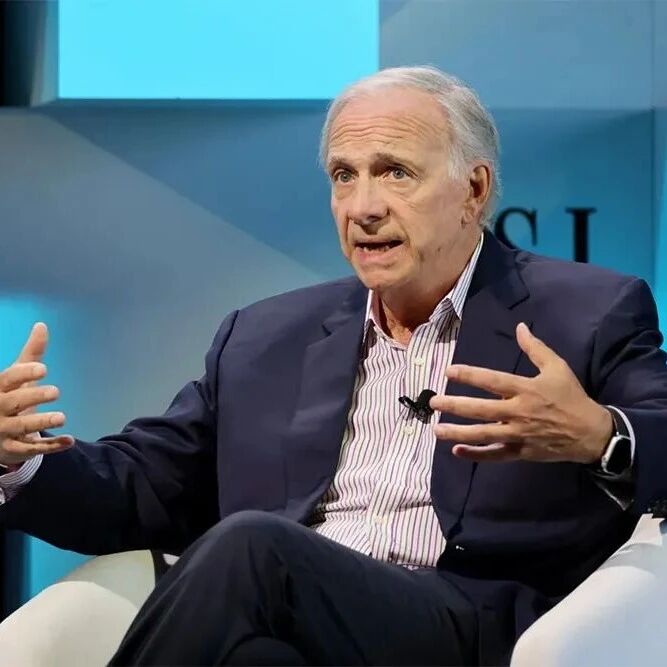
桥水基金达利欧:美国债务心脏病三年内发作,美联储要么允许利率上升,引发债务违约危机,要么印钞票,购买别人不会买的债务!资金正从美债流向黄金
Sou Hu Cai Jing· 2025-09-02 07:34
Group 1 - Ray Dalio, founder of Bridgewater Associates, believes that years of massive deficits and unsustainable debt growth have pushed the U.S. economy to the brink of a debt crisis, with a new budget proposal likely leading to significant overspending that could trigger a debt crisis in about three years, with a margin of one or two years [1] - Dalio points out that the widening wealth gap, value system divide, and collapse of trust have led to more extreme U.S. policies, drawing parallels to the political and social situations of the 1930s and 1940s globally [3] - He warns that the imbalance in the U.S. budget will necessitate large-scale issuance of new debt, but demand for this debt is unlikely to keep pace with supply, leading to skepticism about U.S. fiscal credibility [3] Group 2 - Dalio states that the weakened political center will undermine confidence in the Federal Reserve's ability to defend the value of the currency, reducing the attractiveness of holding dollar-denominated debt assets [3] - He highlights that international investors have begun shifting funds from U.S. Treasury bonds to gold, indicating a loss of confidence in U.S. debt [3] - The Federal Reserve faces a tough choice: either allow interest rates to rise, which could trigger a debt default crisis, or print money to buy debt that no one else wants, both of which would harm the dollar [3]

美国:拿什么拯救,无上限的债务!
Sou Hu Cai Jing· 2025-08-22 02:45
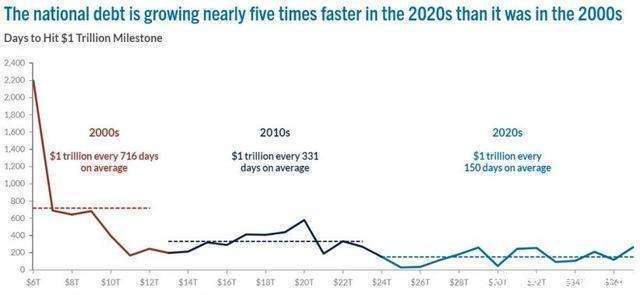
Group 1 - The U.S. national debt has surpassed $37 trillion, averaging $107,700 per person, indicating a normalization of high debt levels in the U.S. economy [1] - Since 2010, the speed of U.S. debt accumulation has accelerated significantly, with the national debt increasing by $1 trillion almost every six months since 2020 [3] - The "Big and Beautiful Act," signed by Trump, has paradoxically increased the debt burden rather than reducing it, with projections indicating a $3.4 trillion increase in the deficit over the next decade [6][8] Group 2 - Interest payments on the national debt have reached $879.9 billion for the fiscal year 2024, accounting for 13% of total federal spending, the highest proportion in 25 years [6] - The rising interest rates, resulting from aggressive Fed rate hikes, have significantly increased the burden of U.S. debt, with the average interest rate on federal debt doubling from 1.556% in January 2022 to 3.352% by July 2023 [10][11] - Trump is pressuring Fed Chair Powell to lower interest rates to alleviate the government's debt burden, highlighting the urgency of the fiscal situation [10][11] Group 3 - A fundamental solution to the debt crisis requires controlling the fiscal deficit and balancing the budget, rather than relying on short-term measures like interest rate adjustments [13] - The U.S. is facing a potential economic crisis if effective measures are not taken to manage the growing debt and deficit [8][14]
没能让中国妥协,36万亿的美债填不上,特朗普扭头就要准备“解决”掉债主
Sou Hu Cai Jing· 2025-08-20 16:52
Group 1 - The total U.S. national debt has surpassed $36 trillion, becoming the largest debt accumulation in world history, with increasing fiscal deficits making it difficult for the Trump administration to effectively address the economic crisis [3][4] - Public debt exceeds $28 trillion, with internal government debt over $7 trillion, and interest payments projected to reach $921 billion in 2024, accounting for 17% of the federal budget [4] - The debt-to-GDP ratio is expected to rise from 94% to 117%, indicating a persistent and worsening debt crisis that remains unresolved despite various policy efforts [4] Group 2 - Trump's tariff policies aimed at reducing trade deficits with China have not yielded the expected results, leading to a global economic ripple effect [5] - The trade war initiated by Trump, particularly against high-tech products, has prompted China to diversify its supply chains and retaliate with tariffs on U.S. agricultural and industrial goods [5][6] - Despite the ongoing trade conflict, Trump announced the removal of some tariffs in May 2025 to alleviate pressure on domestic businesses, yet the trade war remains at an impasse [6] Group 3 - The Federal Reserve, holding over $7.5 trillion in U.S. debt, is viewed by Trump as a significant adversary, with his attempts to reduce the Fed's holdings facing substantial political resistance [7] - Trump's public criticism of the Fed and its policies has not led to any significant changes, leaving the debt issue unresolved [7] Group 4 - China is adopting a long-term strategy to counter U.S. pressure, focusing on self-sufficiency and reducing reliance on foreign markets through domestic market development and innovation [8] - During the trade war, China has not rushed to compromise but instead has increased exports to other markets, effectively managing external pressures on its economy [8] Group 5 - The U.S. debt crisis poses a significant risk to its global economic standing, with Trump's strategies failing to produce the desired outcomes and potentially exacerbating the situation [9] - China's rise is reshaping the global economic landscape, as it continues to innovate and strengthen its competitive position despite U.S. trade pressures [9][10] Group 6 - The ongoing U.S.-China economic rivalry will be a key driver of global economic dynamics, with Trump's unilateral approaches proving ineffective in addressing fundamental issues [10] - The future trajectory of the global economy will be influenced by the strategic, technological, and trade-related competition between the two nations [10]
37万亿!美国国债史上最高位,特朗普还发钱搞通胀?不怕美国破产
Sou Hu Cai Jing· 2025-08-15 19:24
Group 1: U.S. National Debt Situation - The U.S. national debt has reached a record high of $37 trillion, marking a significant increase from $36 trillion in November 2023, with an average daily increase of approximately $37 billion [1][2] - Interest payments on the $37 trillion debt are projected to be $1.44 trillion annually, which is 2.3 times the U.S. military budget for 2024 [1] Group 2: Economic Policies and Risks - The Trump administration's proposed cash subsidy plan, distributing $500 to each American household totaling $200 billion, raises concerns about exacerbating the national debt crisis [2][3] - The combination of previous tariff policies and the new cash stimulus could lead to a short-term inflation spike, potentially reaching 3.5% in 2025, creating a vicious cycle of cash distribution, inflation, interest rate hikes, and worsening debt [2][3] Group 3: Fiscal Health Indicators - The U.S. debt-to-GDP ratio stands at 135%, significantly exceeding the typical corporate warning threshold of 60% [7] - The projected fiscal deficit rate for 2025 is 5.8%, nearing levels seen before the Greek debt crisis [8] Group 4: Global Economic Implications - The U.S. faces a dilemma with the Federal Reserve's interest rate policies, where maintaining high rates to combat inflation increases debt servicing costs, while lowering rates could trigger asset bubbles [9] - The ongoing trend of "de-dollarization" is evident, with central bank digital currencies (CBDCs) accounting for 12% of global trade settlements by 2025, indicating cracks in the dollar's dominance [9][11] Group 5: Future Outlook - The U.S. is at a critical juncture, with the national debt surpassing $37 trillion signaling potential restructuring of the global credit system [11] - The challenge lies in balancing short-term political gains with long-term economic health, as reliance on debt expansion and monetary easing could lead to severe liquidity issues in the future [11]