能源强国

Search documents
能源强国建设“大家谈”︱建设能源强国支撑经济社会发展全面绿色转型
国家能源局· 2026-01-17 10:33
Core Viewpoint - The article emphasizes the importance of building an energy powerhouse as a strategic foundation for achieving socialist modernization and carbon neutrality goals in China, highlighting the energy sector's critical role in national security and economic development [3][4]. Group 1: Building an Energy Powerhouse - Building an energy powerhouse is essential for achieving carbon peak and carbon neutrality goals, with a focus on increasing electrification and green electricity supply [4]. - The energy sector is a significant contributor to GDP, with the clean energy industry accounting for over 10% of GDP, necessitating a robust industrial and supply chain [4]. - The transition to a new energy system is crucial for the comprehensive green transformation of the economy and society, driven by the third energy revolution and advancements in artificial intelligence [4]. Group 2: New Energy System as a Driving Force - A new energy system is vital for ensuring national energy security, given China's resource endowment of "rich coal, poor oil, and little gas," and the high dependence on oil and gas imports [5]. - China has significant potential for wind and solar energy, with exploitable capacities exceeding 100 billion kilowatts and 400 billion kilowatts, respectively, which can meet future electricity demands [5]. - The cost of renewable energy has significantly decreased, with onshore wind power costs dropping over 60% and solar power costs falling by 80% in the past decade, making renewables more economically viable than coal [5]. Group 3: Climate Change Response - The new energy system is a necessary response to climate change, with China's commitment to reducing greenhouse gas emissions by 7%-10% from peak levels by 2035 [6]. - The energy sector accounts for over 80% of national carbon emissions, with the power industry being the main battlefield for carbon reduction efforts [6]. Group 4: Development Pathways for Energy Powerhouse - The 14th Five-Year Plan is a critical period for accelerating the construction of a new energy system, focusing on reforms, technological innovation, green consumption, and overall exports [8]. - Recommendations include deepening electricity market reforms, enhancing technological innovation in the energy sector, and promoting green low-carbon consumption models [9][10].


国家能源局:深入开展电力安全生产专项治理行动
Zheng Quan Shi Bao Wang· 2026-01-16 13:14
Core Viewpoint - The National Energy Administration emphasizes the importance of enhancing electricity safety and security in the context of building a strong energy nation by 2026 [1] Group 1: Strategic Goals - The goal for 2026 is to anchor the construction of a strong energy nation, focusing on high-quality implementation of the "14th Five-Year" electricity safety production plan [1] - The meeting highlights the need to improve the intrinsic safety level of electricity [1] Group 2: Action Plans - There will be a deepened special governance action for electricity safety production [1] - The meeting calls for strengthening the electricity emergency response system [1] - Accelerating the cultivation of new quality productivity in electricity safety is a priority [1] Group 3: Regulatory Focus - The meeting stresses the importance of implementing key tasks in electricity safety regulation [1] - High-level electricity safety is deemed essential for ensuring economic high-quality development [1] Group 4: Year-End Preparations - Specific arrangements for electricity safety production work at the end of the year and the beginning of the next year were discussed [1]
中国石油天然气集团董事长戴厚良:大力推动国内油气勘探开发和增储上产 加快推动页岩油气革命
Ge Long Hui A P P· 2026-01-16 04:24
Core Viewpoint - China National Petroleum Corporation (CNPC) aims to complete the Tarim 1.2 million tons/year ethylene project by 2026, emphasizing domestic equipment localization and green production methods [1] Group 1: Project Development - The Tarim ethylene project will achieve over 98% localization of equipment, with significant advancements in fully electric drives and the first domestic production of major equipment [1] - The project will utilize a "blue hydrogen to blue ammonia + carbon dioxide to urea" model for green production, aiming to create a zero-carbon petrochemical park [1] Group 2: Energy Security and Supply - CNPC is committed to being a "pillar" for energy supply security, focusing on domestic oil and gas exploration and production to ensure national energy security [1] - The company plans to deepen international energy cooperation and enhance overseas energy production and supply bases, improving trade security and cross-border energy channels [1] Group 3: Industry Transformation - CNPC is accelerating the restructuring and upgrading of refining and chemical sectors, optimizing product and industrial structures to enhance the supply of high-quality energy and chemical products [1] - The company aims to play a key role in building a strong energy nation and ensuring the stability of the oil and gas industry supply chain [1]

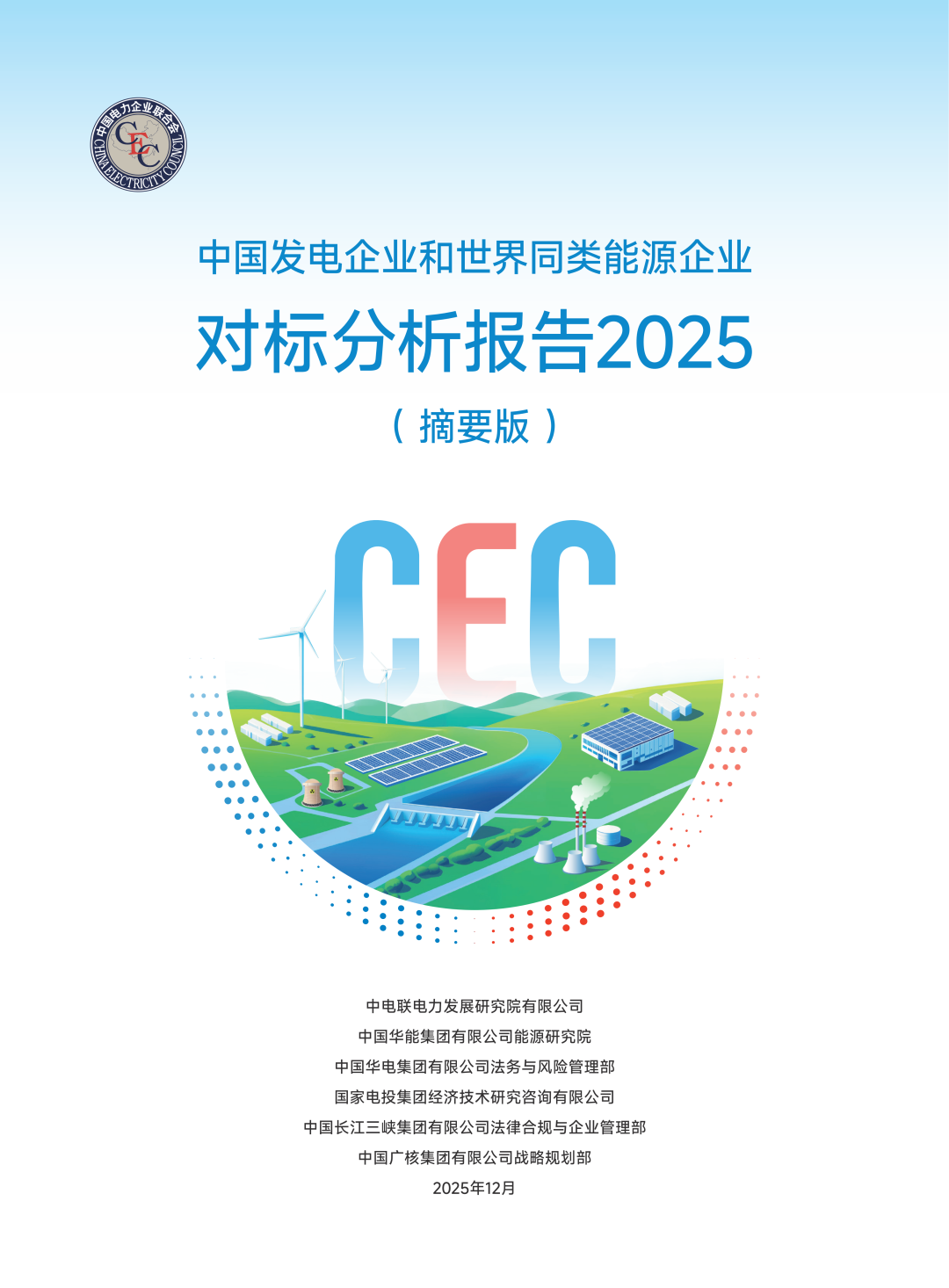
中国发电企业和世界同类能源企业对标分析报告2025(摘要版)
Zhong Guo Dian Li Bao· 2026-01-15 00:29
Core Insights - The report titled "2025 Benchmark Analysis of Chinese Power Generation Enterprises and Global Energy Companies" aims to provide insights for Chinese power companies to accelerate their development into world-class energy enterprises [3][5]. Group 1: Benchmarking Framework - The report utilizes a benchmarking indicator system that includes four dimensions: product excellence, brand prestige, innovation leadership, and modern governance, comprising 18 quantitative indicators [7][8]. - A total of 24 representative companies, 12 from China and 12 from abroad, are selected for benchmarking [9]. Group 2: Performance Overview - By the end of 2024, the benchmark companies achieved a total installed capacity of 2.68 billion kilowatts and generated 9.08 trillion kilowatt-hours of electricity, representing a year-on-year growth of 7.8% and 4.0% respectively [12]. - The EBITDA of benchmark companies was approximately $312.6 billion, with operating revenue reaching about $964.4 billion, reflecting a year-on-year increase of 9.0% and 5.8% respectively [13]. Group 3: Comparative Analysis - Domestic benchmark companies have a significant advantage in installed capacity, with a total of 1.86 billion kilowatts, which is 2.3 times that of foreign counterparts [32]. - The proportion of non-fossil energy installed capacity for domestic companies reached 56.8%, surpassing foreign companies by 7.8 percentage points [32]. Group 4: Key Findings - Eight companies, including EDF, State Energy Group, China Three Gorges, and China Huaneng, ranked in the top tier based on comprehensive scores across various indicators [18]. - The report highlights that while domestic companies are expanding their production capabilities, foreign companies are experiencing challenges in integrating renewable energy into existing grids [30][76]. Group 5: Future Outlook - The report identifies key development themes for Chinese power companies in 2026, emphasizing the need for energy security and modernization [6][76]. - It also notes that the growth in electricity demand is expected to boost the global nuclear power industry, with countries like France and the U.S. advancing their nuclear power strategies [79].






报告称,“新能源入市”“煤电改造升级”等入选2026年中国发电企业发展关键词
Zhong Guo Xin Wen Wang· 2026-01-14 06:26
Core Insights - The report identifies key development themes for Chinese power generation companies in 2026, including energy security, integration of new energy sources, coal power upgrades, and the application of "Artificial Intelligence+" [1] Group 1: Development Trends - Chinese power generation companies will enhance their electricity security capabilities and promote a multi-energy approach, including wind, solar, hydro, and nuclear power, to solidify a clean electricity supply base [1] - The report emphasizes the need to improve the green development capacity of the electricity sector and increase the system's adjustment capabilities to support an annual addition of over 200 million kilowatts of new energy [1] - The report aims to establish a world-class enterprise by setting 18 benchmarking indicators across dimensions such as product excellence and innovation leadership, analyzing 24 representative energy companies [1] Group 2: Comparative Analysis - By the end of 2024, domestic benchmark companies will have a power generation capacity of 1.86 billion kilowatts, which is 2.3 times that of foreign benchmark companies [2] - The proportion of non-fossil energy installed capacity in domestic benchmark companies has increased by 3.8 percentage points to 54.3%, surpassing foreign counterparts by 1.8 percentage points [2] - Profit levels and cash flows for both domestic and foreign benchmark companies have shown positive trends [2]
首席经济学家共议“十五五”开局,现代化产业体系如何筑基与突围
Di Yi Cai Jing· 2026-01-12 10:17
Core Viewpoint - The construction of a modern industrial system in China is a key topic amid rising external uncertainties and internal transformation pressures, focusing on efficiency, safety, and long-term competitiveness [1] Group 1: Industry Direction - The modern industrial system is composed of traditional industries, emerging industries, future industries, services, and infrastructure, rather than being solely focused on emerging sectors [2][3] - Traditional industries contribute approximately 80% of employment and value-added in China's manufacturing and related services, serving as the foundation for industrial chain competitiveness [2] - The energy sector is emphasized as a core component of the modern industrial system, particularly in the context of building a new energy power system [2] Group 2: Policy Guidance - The collaborative approach of fiscal, monetary, and industrial policies is undergoing significant changes, shifting from administrative-led support to more market-oriented methods [7] - National investment through industrial and guiding funds aims to leverage social capital and promote technological breakthroughs and industrial upgrades, focusing on long-term impacts rather than short-term returns [7] - Monetary policy is transitioning from broad easing to structural support, with the central bank utilizing capital market tools to support innovation sectors [7] Group 3: Future Industry Focus - The chemical industry is viewed positively for its global competitiveness and reasonable valuation, representing traditional industry upgrades [8] - Energy storage and hydrogen energy are identified as strategically important in the new power system and energy transition [8] - AI applications, particularly in humanoid robots and L3 autonomous driving, are entering an accelerated implementation phase, with continuous application scenarios being crucial for long-term industry growth [9]
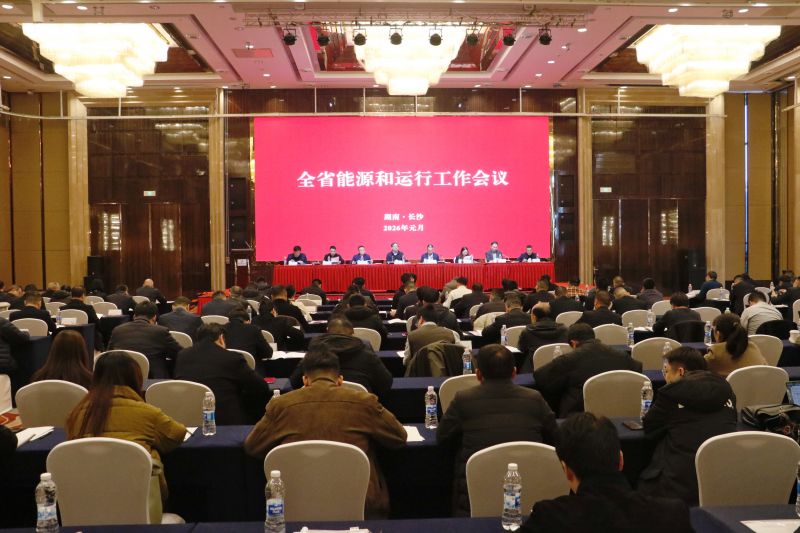
湖南召开2026年能源和运行工作会议
Zhong Guo Fa Zhan Wang· 2026-01-12 02:46
Core Viewpoint - The Hunan 2026 Energy and Operation Work Conference emphasized the importance of high-quality energy development and outlined key tasks for the upcoming year, aiming to align with national energy strategies and ensure sustainable growth in the energy sector [1][4]. Summary by Sections Achievements in 2025 - The energy system in Hunan has made significant progress in 2025, completing all 18 target tasks set in the 14th Five-Year Plan, including the successful operation of major projects like ultra-high voltage and coal power plants [3]. - Energy supply capabilities have been notably enhanced, achieving zero power outages and ensuring stable supply of coal, oil, and gas for three consecutive years [3]. - The province has made strides in green and low-carbon transitions, with an expanding scale of renewable energy installations and improved energy storage facilities [3]. Key Focus Areas for 2026 - The conference outlined seven key areas of focus for 2026, including the high-quality implementation of the 15th Five-Year Energy Plan, which aims to establish a comprehensive provincial energy planning system [5]. - A total of 24 major energy projects are set to be advanced, with an annual investment target of 45.2 billion yuan, including significant expansions in power generation capacity [6]. Energy Infrastructure and Green Transition - The plan includes upgrading energy infrastructure, with expectations to add 2.32 million kilowatts of thermal power capacity and enhance energy networks [6]. - The promotion of renewable energy and clean coal utilization is prioritized, with initiatives to develop a reserve of new energy projects and expand public charging infrastructure [6][7]. Reform and Innovation - The conference stressed the need for deepening energy system reforms, including the introduction of quality low-cost energy resources and the establishment of a robust electricity market [7]. - There is a focus on cultivating energy industry clusters, particularly in electric equipment and renewable energy sectors, to enhance local manufacturing capabilities [7]. Energy Supply and Safety Measures - Ensuring energy supply during peak winter demand is critical, with measures to enhance safety protocols and emergency preparedness [8]. - The energy system is tasked with maintaining a reliable supply chain for electricity, coal, and natural gas, especially during extreme weather conditions [8]. Workforce Development - Strengthening the capabilities of the energy workforce is essential, with an emphasis on enhancing professional skills and fostering a culture of integrity and accountability [8].

湖南召开2026年能源和运行工作会议 围绕“十五五”良好开局部署七大重点工作
Zhong Guo Fa Zhan Wang· 2026-01-08 10:39
Core Insights - The meeting emphasized the importance of high-quality energy development in Hunan for the year 2026, aligning with national goals and strategies for energy reform and security [1][4]. Summary by Sections Achievements in 2025 - Hunan's energy system successfully completed all 18 targets of the 14th Five-Year Plan, with significant projects like ultra-high voltage and large-scale coal power plants coming online [3]. - The province enhanced its energy supply capacity, achieving zero power outages and ensuring stable supply of coal, oil, and gas for three consecutive years [3]. - Major projects such as the "Ningdian Ruyin" initiative transformed the energy supply-demand landscape [3]. - Progress in green and low-carbon transitions was noted, with an increase in renewable energy installations and improvements in energy storage and charging networks [3]. - Technological innovations led to multiple first-of-their-kind equipment being recognized nationally, and the province's R&D platforms ranked highly in evaluations [3]. - Ongoing reforms in the energy sector resulted in reduced energy costs and improved competitiveness [3]. Key Focus Areas for 2026 - The meeting outlined seven key priorities for 2026, including the development of a high-quality energy plan and the implementation of a provincial "1+5" energy planning system [5]. - A total of 24 major energy projects are set to be advanced, with an investment target of 45.2 billion yuan, including significant expansions in coal and renewable energy capacities [5]. - The province aims to accelerate the green and low-carbon transition by developing renewable energy and enhancing clean coal utilization [6]. - Reforms in the energy market will continue, focusing on price mechanisms and the introduction of high-quality energy resources [6]. - The energy industry cluster will be strengthened, promoting local manufacturing and innovation in sectors like hydrogen energy and renewable equipment [6]. - Measures for energy supply security during peak winter demand will be reinforced, including risk management and emergency preparedness [7]. - The development of the energy workforce will be prioritized, focusing on enhancing skills and collaboration within the energy system [7].
中国石油集团董事长戴厚良会见河北副省长赵辰昕:全力保供天然气
Guan Cha Zhe Wang· 2026-01-08 07:16
Core Viewpoint - China National Petroleum Corporation (CNPC) is committed to implementing the important speeches made by President Xi Jinping during his visit to Hebei and Xiong'an New Area, focusing on national strategic goals and enhancing business development in Hebei [1] Group 1: Company Initiatives - CNPC Chairman Dai Houliang expressed gratitude to the Hebei provincial government for its long-term support of CNPC's operations in the region [1] - The company aims to ensure natural gas supply and contribute to the construction of an energy powerhouse while promoting high-quality economic and social development in Hebei [1] Group 2: Government Collaboration - Hebei Vice Governor Zhao Chenxin emphasized the province's commitment to strengthening communication and cooperation with CNPC to meet public gas demand [1] - Both parties aim to consolidate existing cooperation and achieve mutually beneficial development [1]
能源强国建设“大家谈”︱以高质量国际合作助推能源强国建设
国家能源局· 2026-01-07 11:03
Core Viewpoint - China is transitioning from an energy power to an energy strong nation, characterized by global influence in energy production, consumption, technology, and governance, ensuring energy security through a resilient supply system and autonomous technology [2]. Group 1: Understanding Energy Strong Nation - The development drivers differ between energy powers and energy strong nations, with the former relying on resource and capital investment, while the latter focuses on technological breakthroughs and institutional reforms [3]. - Energy strong nations have comprehensive control over the entire energy supply chain, unlike energy powers that depend on external sources for key materials and equipment [3]. - The perception of energy differs; energy strong nations view it as a growth engine for the economy, capable of exporting high-value clean energy technologies and solutions [3]. - International influence varies, with energy strong nations actively shaping market standards and pricing power, unlike energy powers that are often passive participants [3]. Group 2: Foundations and Advantages for Building an Energy Strong Nation - The current period is optimal for China to advance from an energy power to an energy strong nation, supported by a robust energy production capacity and a self-sufficient energy supply rate above 80% [4]. - The global energy supply-demand landscape is undergoing significant changes, with geopolitical factors and climate change reshaping energy security priorities [4][5]. Group 3: Recommendations for High-Quality International Cooperation - Promote integrated international cooperation in energy and industry, exporting successful domestic models like "zero-carbon parks" to regions with strong industrialization demands [6]. - Leverage green finance and carbon markets to accelerate the internationalization of Chinese technical standards and rules, establishing mutual recognition mechanisms for carbon reduction and green electricity [7]. - Build a localized production cooperation ecosystem to mitigate geopolitical risks, encouraging enterprises to establish production capacities in key markets [8]. - Collaborate on digital energy infrastructure, integrating energy systems with digital capabilities to enhance competitiveness in global markets [8]. - Reshape global energy security perspectives by leveraging the strengths of an energy strong nation, transitioning to a model that emphasizes integrated energy system solutions [9].