自动驾驶汽车

Search documents
港股通汽车ETF(159323)连续7日“吸金”,为何资金开始布局港股汽车板块?
Mei Ri Jing Ji Xin Wen· 2025-06-05 03:09
Group 1 - The Hong Kong stock market saw a positive trend with the Hang Seng Technology Index rising over 1.5%, driven by stocks like Alibaba, which experienced a nearly 3% increase [1] - The Hong Kong Stock Connect automotive ETF (159323) faced a slight pullback, with major holdings such as Li Auto, Leapmotor, BYD, and Geely experiencing declines, while XPeng Motors saw a rise of over 1% [1] - Morgan Stanley's recent report highlights a shift in the Chinese automotive market from electric vehicles to autonomous driving as a new growth opportunity, emphasizing the increasing importance of AI in this transition [1] Group 2 - The report indicates that China's initiatives in AI for Advanced Driver Assistance Systems (ADAS) and robotics may enhance the competitiveness of automotive manufacturers [2] - The penetration rate of L2/L2+ level driving assistance systems in China is currently at 14% and is expected to grow rapidly, potentially reaching 40% within two years [2] - The Hong Kong Stock Connect automotive ETF (159323) has attracted a net inflow of 37.2 million yuan over the past seven trading days, reflecting investor interest in the automotive sector, particularly in companies with a competitive edge in intelligent driving [2]
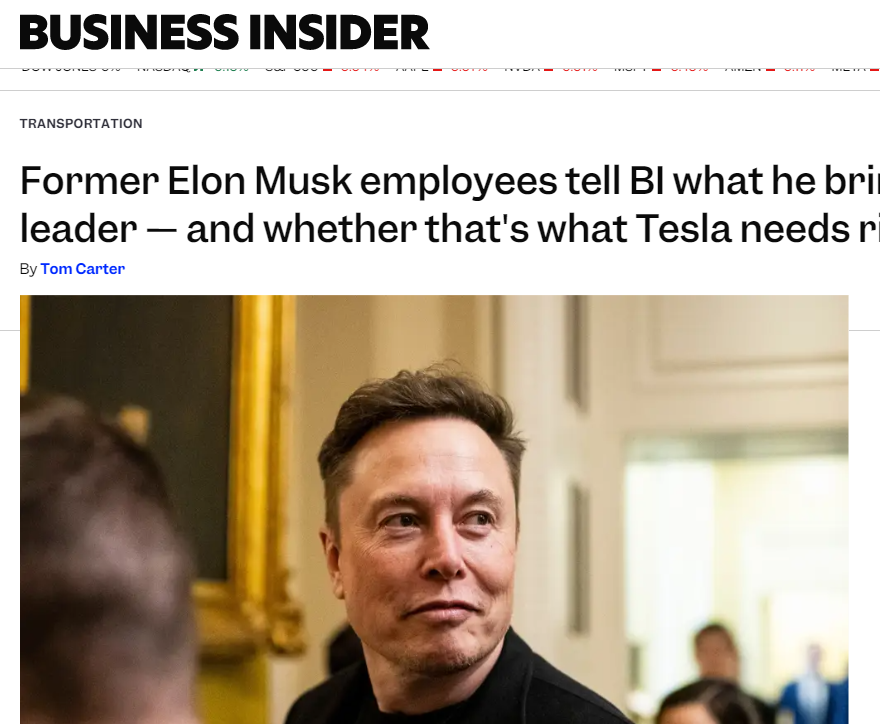
马斯克承诺再掌特斯拉五年,是变革者还是干扰者?
Huan Qiu Wang· 2025-05-23 03:45
Group 1 - Elon Musk has committed to leading Tesla for the next five years, stating he will only stop operating if he dies, which has garnered positive reactions from investors and led to a rise in Tesla's stock price [1] - Musk's influence on Tesla is significant, with a flat management structure allowing him to act as the company's product manager, directing product development and execution [4] - Tesla is currently facing challenges such as declining sales, increased competition from rivals like BYD, and the upcoming launch of a critical robotaxi service [4][6] Group 2 - Analysts note that since the launch of the Cybertruck in 2023, Tesla has not introduced new models, and the sales of the Cybertruck have been disappointing [4] - There are concerns that Musk may be losing interest in producing conventional market-driven products, preferring more bold and unconventional approaches [5] - Internal perspectives suggest uncertainty about Musk's overall benefit to Tesla, with some employees feeling he can be both beneficial and disruptive at times [6]


自动驾驶的大赢家!Uber 的增长之路为何才刚刚起步
美股研究社· 2025-05-12 10:48
Core Viewpoint - Uber has transformed from a company with low profitability and weak unit economics to a profitable entity with a strong growth trajectory, making it an attractive investment opportunity with a valuation of approximately $83 per share [3]. Business Overview - Uber, founded in 2009, has expanded its services to include online food delivery, retail, package delivery, and freight, operating in over 15,000 cities with 171 million monthly active users and an annual order volume of $180 billion [2]. Financial Performance - In 2023, Uber achieved profitability and has been steadily increasing its profit margins while growing revenue at a rate of 20% annually, which has helped it capture market share and innovate its services [3]. Competitive Advantage - Uber's dual-platform model for ride-hailing and delivery creates a significant competitive edge, allowing drivers to maximize their income potential through multiple revenue streams [4]. - The interoperability of Uber's services enhances user experience and loyalty, with multi-product consumers spending 3.4 times more than single-product consumers [5]. Operational Efficiency - Uber's scale and user liquidity contribute to operational efficiencies, allowing the company to share economic benefits with drivers and customers, thus improving profitability [6]. - The company has a lower commission rate compared to competitors like Lyft, which positions it favorably in terms of value creation for drivers and passengers [6]. Cost Management - Uber is implementing technology initiatives to reduce insurance costs, which are significant for ride-hailing and delivery platforms, thereby improving gross margins [7]. - The introduction of the Uber One subscription service has led to increased customer loyalty and transaction frequency, with subscribers spending three times more than non-subscribers [8]. Advertising Revenue - Uber's advertising business, launched in 2022, is expected to enhance profitability, with a projected revenue run rate of $1.5 billion and a gross margin of at least 70% [9]. Autonomous Vehicles (AV) Impact - The rise of autonomous vehicles presents both a threat and an opportunity for Uber, as it may face competition from AV operators but also has the expertise in fleet management that is crucial for AV commercialization [10][11]. - Uber's extensive user base provides a significant market for AV operators, ensuring fleet utilization and maximizing revenue potential [12]. Market Valuation - Compared to global competitors, Uber's stock appears undervalued, with a price-to-free cash flow ratio that is 30% lower than its peers for 2025, suggesting strong growth prospects and a dominant market position [15].


Uber 第一季度财报揭示了市场仍未理解的事情
美股研究社· 2025-05-08 10:32
作者丨 Julia Ostian 编译 | 华尔街大事件 Uber ( NYSE: UBER )的 2025年第一季度业绩报告 在市场引发强烈反应,其股价在盘前交易 中下跌逾4%。 Uber 公布的 营收为 115.3 亿美元,略低于 116.2 亿美元的市场预期。但坏消息也仅此而已。其 他方面都好于预期。每股收益为 0.83 美元,超出预期 60% 以上。调整后息税折旧摊销前利润 (EBITDA) 达到创纪录的 19 亿美元(同比增长 35%),自由现金流超过 23 亿美元。Uber 的净 现金也首次转为正值,从一年前的负 11 亿美元转为正值 4.01 亿美元。 此外,首席执行官达拉·科斯罗萨西强调,公司不满足于"良好",而是追求"卓越",并指出本季度 业绩表现强劲,包括新品发布、合作伙伴关系拓展以及创纪录的利润率。团队并未对收入未达预 期的情况辩解,而是强调了持续的出行增长、高用户参与度以及强劲的国际扩张。首席财务官普 拉尚特·马亨德拉-拉贾(Prashant Mahendra-Rajah)明确阐述了公司的优先事项:在不牺牲自动 驾驶汽车、外送和全球市场增长投资的情况下,推动利润率的可持续增长。 除其他 ...

Uber只是值得买入
美股研究社· 2025-05-06 11:59
Core Viewpoint - Uber experienced significant growth in Q4 2024, with total bookings increasing by 18% year-over-year to $44.19 billion, driven by a healthy rise in Monthly Active Platform Consumers (MAPC) and order frequency [1][2]. Financial Performance - Total bookings reached $44.19 billion in Q4 2024, up 18% from $37.58 billion in Q4 2023 [2]. - MAPC increased to 171 million, a 14% year-over-year growth from 150 million [2]. - Revenue rose by 20% to $11.96 billion, compared to $9.94 billion in the same quarter last year [2]. - Free cash flow surged by 122% to $1.7 billion, up from $768 million [2]. - Adjusted EBITDA grew by 44% to $1.84 billion [2]. Management Insights - CEO Dara Khosrowshahi highlighted record demand in the ride-hailing and delivery sectors, exceeding expectations for total bookings, adjusted EBITDA, and free cash flow [3]. - CFO Prashanth Mahendra-Rajah projected a 14.6% year-over-year revenue growth for Q1 2025, estimating revenue at $11.61 billion [3][4]. Future Outlook - For Q1 2025, total bookings are expected to range between $42 billion and $43.5 billion, reflecting a year-over-year growth of 11.4% to 15.4% [4]. - Adjusted EBITDA is anticipated to grow by 30% to 37%, reaching between $1.79 billion and $1.89 billion [4]. - Analysts remain optimistic about Uber's stock, with 30 out of 33 analysts rating it as a "buy" [9]. Analyst Sentiment - Despite a 40% increase in Uber's stock price, the expected 5-year compound annual growth rate has decreased from approximately 25% to about 17% [11]. - The consensus target price for Uber is between $80 and $110, with an average expectation of $90.20, indicating a potential upside of around 5% from current levels [11].

美国芯片工程师,需求激增
半导体行业观察· 2025-04-29 01:11
如果您希望可以时常见面,欢迎标星收藏哦~ 来源:内容 编译自 IEEE ,谢谢。 在人工智能快速发展、 《芯片法案》提供的联邦政府资金以及私营部门数十亿美元投资的推动 下,美国半导体行业正在蓬勃发展。今年早些时候,英伟达宣布计划在亚利桑那州和德克萨斯州投 资高达5000 亿美元建设人工智能芯片工厂。台湾半导体制造公司 ( TSMC ) 承诺投入1000 亿美元 扩大其在亚利桑那州的业务。这些努力加起来预计将创造超过 10 万个新就业岗位,体现了美国重 建国内制造业基础的更广泛战略。但要实现这一雄心壮志,该行业需要新一代技术熟练的工程师。 据四所大学称,美国一些电气工程专业的半导体课程招生人数正在上升。芯片工程曾被认为是一个 小众领域,如今却吸引了渴望研究人工智能、自动驾驶汽车、可再生能源和5G网络等尖端技术的 学生。大学官员表示,学生们越来越认识到半导体是重要的基础设施和一条充满希望的职业道路。 半导体行业协会估计,美国芯片行业的就业岗位将增长33%,从2023年的34.5万个增至2030年的 46万个。但由于缺乏合格的候选人,其中6.7万个职位可能空缺,这将使芯片制造商面临产能受限 的风险。增加招生人数或许 ...


特斯拉销量又跌39%,除了讨厌马斯克,还有这些原因
汽车商业评论· 2025-03-27 15:42
早在首席执行官埃隆·马斯克真正涉足美国政坛之前,特斯拉的销售就已经开始放缓。 如今,他在特朗普政府中扮演着重要角色,并将他的政治活动推向全球,使得特斯拉的处境更加艰 难。 编 译 / 周 洲 设 计 / s h e l l y 来 源 / 路透社,彭博社 继1月特斯拉在欧洲销量同比跌了45%之后,2月又跌了39%。 特斯拉在2025 年开局不利,因其政治两极分化的CEO开始拆散美国政府机构,并攻击欧洲各地的 政治人物。 此外,特斯拉还暂停了四家装配厂的生产,开始生产重新设计的 Model Y。这是其最受欢迎的车 型,但焕新似乎并没有起到特别显著的作用。 马斯克表示,他在经营企业的同时还要处理华盛顿的工作,"这非常困难"。 尽管特斯拉高管表示,今年将在十多年来首次出现年度汽车销售下滑后有恢复性增长,但一些分析 师预计它的销量将进一步下滑。 欧洲市场连续下滑 2 月份,特斯拉欧洲销量和市场份额再次双双下滑。 欧洲汽车制造商协会 (ACEA) 3月26日公布的数据显示,随着竞争加剧和欧洲经济放缓阻碍汽车总 销量,截止到目前,特斯拉今年在欧洲的汽车销量同比减少了42.6%。 2 月份,特斯拉占据了欧洲市场1.8%和纯 ...
充电站被烧、展厅被枪击、车主被羞辱……对于特斯拉,马斯克越来越“有毒”
凤凰网财经· 2025-03-09 13:42
以下文章来源于华尔街见闻 ,作者张雅琦 华尔街见闻 . 华尔街见闻App是中国领先的金融信息和商业资讯提供商,为用户甄选国内和全球重要资讯,7*24小时全年不间断。 来源|华尔街见闻 作者|张雅琦 自马斯克加入特朗普政府担任高级顾问以来,特斯拉正面临前所未有的舆论危机。 从充电站被纵火,到展厅遭枪击,再到车主因马斯克的政治立场而感到羞辱……一系列事件将这家电动汽车巨头推向风口浪尖。 资本市场的质疑声浪同步升级: 摩根大通将特斯拉目标股价大幅下调至135美元,对应估值缩水至4000亿美元水平;瑞银的分析师也表示,特斯拉 的估值"继续让我们感到困惑",该公司在自动驾驶汽车或人形机器人方面面临着巨大的风险。 尽管特斯拉在1月30日的财报电话会上描绘了宏伟蓝图——计划2025年上半年推出定价低于Model 3/Y的"平价车型",并承诺6月在奥斯汀启动完全 无人监管的自动驾驶商业化运营,但这些承诺的兑现能力遭受越来越多的质疑。 Ludicrous一书的作者Edward Niedermeyer认为,特斯拉的业务已经达到顶峰,而机器人出租车和机器人等新业务的前景仍然遥远。 特斯拉投资者 担心的是,马斯克是否已经将这个顶峰变 ...
充电站被烧、展厅被枪击、车主被羞辱……对于特斯拉,马斯克越来越“有毒”
华尔街见闻· 2025-03-09 12:39
Core Viewpoint - Tesla is facing an unprecedented public relations crisis, exacerbated by a series of violent incidents and growing skepticism from the capital markets regarding its future prospects and valuation [1][2][3]. Group 1: Public Relations Crisis - Since Elon Musk joined the Trump administration, Tesla has been at the center of controversy, with incidents such as arson at charging stations and shootings at showrooms [2][4][5]. - A report highlighted multiple violent events targeting Tesla facilities, including arson at charging stations and gunfire at showrooms, indicating a troubling trend of violence against the company [6][7][9][10]. - Protests against Musk's political stance have also emerged, both in the U.S. and Europe, reflecting a growing discontent that translates into actual violence against Tesla [11][13]. Group 2: Market Reaction and Valuation Concerns - Tesla's stock price has dropped over 30% this year, and nearly one-third since Trump took office, raising concerns about its valuation [3][15]. - Analysts from JPMorgan have significantly lowered Tesla's target stock price to $135, suggesting a valuation drop to around $400 billion, while UBS analysts express confusion over Tesla's valuation amidst risks in autonomous driving and robotics [2][16]. - Despite a current valuation of approximately $847 billion, analysts are questioning Tesla's market position, especially as expectations for its 2025 earnings have decreased by 70% since 2022 [15][16]. Group 3: Sales and Consumer Sentiment - In Germany, Tesla's sales plummeted by 76% in February, while overall electric vehicle registrations increased by 31%, indicating a shift in consumer preference potentially linked to Musk's political affiliations [14]. - In the U.S., consumer sentiment towards Tesla has significantly declined since Musk's acquisition of Twitter, with the percentage of new car buyers considering Tesla dropping from 22% to under 8% by the end of 2024 [14]. - In China, Tesla's sales fell by 49% year-on-year in February, marking the lowest level since August 2022, as political affiliations influence consumer choices [15]. Group 4: Future Prospects - Tesla plans to launch a more affordable model priced below $30,000 in the first half of 2025, which could be crucial for its future growth [17]. - The company is also set to introduce a paid, fully autonomous driving service in Austin, Texas, in June, although skepticism remains about the viability of its new business ventures [19].

模拟芯片,也能3D集成了
半导体行业观察· 2025-03-06 01:28
Core Viewpoint - The global semiconductor market for analog integrated circuits (ICs) is projected to reach $85 billion this year, with a compound annual growth rate (CAGR) of 10%, driven by advancements in artificial intelligence, IoT, and autonomous vehicles [1][2]. Group 1: Market Dynamics - The demand for analog ICs is increasing due to their ability to process continuous signals, essential for interacting with the physical environment [1]. - Companies like OKI and Nisshinbo Micro Devices are collaborating to develop thin-film analog ICs that can be vertically stacked, promoting miniaturization and cost reduction [1][3]. Group 2: Technology Development - The development of thin-film 3D analog ICs utilizes OKI's crystal film bonding (CFB) process, allowing for the separation and bonding of functional film layers [3]. - CFB technology enables thinner chips (5 to 10 micrometers) compared to traditional methods, which typically result in thicker chips (tens to hundreds of micrometers) [3]. Group 3: Signal Integrity and Performance - Signal interference and noise are challenges due to the thinness of stacked analog ICs, which is addressed by Nisshinbo's proprietary shielding technology [4][5]. - Shielding is strategically applied to critical areas to minimize signal interference without compromising circuit functionality [5]. Group 4: Chiplet Integration Advantages - The thin-film 3D analog ICs can facilitate the integration of analog and digital ICs, allowing for modular ICs that can create more complex devices [7]. - Smaller chips can be optimized for specific functions, reducing costs and space requirements, while improving manufacturing yield [7]. Group 5: Future Outlook - OKI and Nisshinbo are optimistic about overcoming manufacturing challenges and plan to commercialize their new methods, aiming for mass production by 2026 [9].