Workflow
贸易谈判
icon
Search documents
期货市场交易指引:2025年10月31日-20251031
Chang Jiang Qi Huo· 2025-10-31 02:04
Report Industry Investment Ratings - **Macro - Finance**: Long - term bullish on stock indices, recommend buying on dips; neutral on government bonds, suggest holding a wait - and - see attitude [1][5] - **Black Building Materials**: Neutral on coking coal and rebar, suggest range trading; bearish on glass, recommend selling call options [1][7][8] - **Non - ferrous Metals**: Bullish on copper at low prices, suggest holding small long positions cautiously without chasing highs; neutral on aluminum, suggest taking profit on long positions when favorable factors are realized; neutral on nickel, suggest waiting and watching or shorting on rallies; neutral on tin, suggest range trading; neutral on gold and silver, suggest range trading [1][9][10][11][14][16][18] - **Energy and Chemicals**: Neutral on PVC, caustic soda, styrene, rubber, urea, and methanol, suggest range trading; bearish on soda ash 01 contract, recommend a short - selling strategy; neutral on polyolefins, suggest a bearish - biased range trading strategy [1][19][21][22][24][25][27][28][29][30] - **Cotton and Textile Industry Chain**: Neutral on cotton and cotton yarn, suggest a bullish - biased range trading strategy; neutral on PTA, suggest range trading; neutral on apples, suggest a bullish - biased range trading strategy; neutral on jujubes, suggest range trading [1][34][35][36] - **Agriculture and Animal Husbandry**: Bearish on pigs, recommend shorting on rallies; bearish on eggs, recommend shorting on rallies; bearish on corn, suggest a bearish - biased range trading strategy; bullish on soybean meal at low prices, suggest holding long positions; neutral on oils and fats, suggest a high - level adjustment strategy with a focus on the spread between soybean oil and palm oil [1][38][40][42][44][46][52] Core Views - The positive results of the Sino - US talks and the positive stance of the 15th Five - Year Plan suggest that subsequent policies are worth looking forward to, and stock indices may fluctuate with a bullish bias [5] - The Sino - US talks, policy announcements, and market sentiment lead to a complex situation for government bonds, which are expected to fluctuate [5][6] - In the black building materials sector, the short - term supply shortage of coking coal and the low valuation of rebar support their prices, while the fundamentals of glass are deteriorating [7][8] - For non - ferrous metals, factors such as supply shortages, policy expectations, and seasonal changes affect the prices of copper, aluminum, nickel, tin, gold, and silver, with different trading strategies recommended for each [9][10][11][14][16][18] - In the energy and chemicals sector, factors like cost, supply, demand, and macro - policies influence the prices of various products, and most are expected to fluctuate [19][20][21][22][24][25][27][28][29] - In the cotton and textile industry chain, the supply - demand situation and market sentiment affect the prices of cotton, PTA, apples, and jujubes, with different trends expected [34][35][36] - In the agriculture and animal husbandry sector, factors such as supply, demand, and seasonality affect the prices of pigs, eggs, corn, soybean meal, and oils and fats, and corresponding trading strategies are provided [38][40][42][44][46][52] Summary by Directory Macro - Finance - **Stock Indices**: The Sino - US talks achieved positive results, and the 15th Five - Year Plan has a positive stance. Stock indices may fluctuate with a bullish bias. It is recommended to buy on dips in the long term [5] - **Government Bonds**: Affected by multiple factors such as Sino - US talks, policy announcements, and market sentiment, government bonds are expected to fluctuate [5][6] Black Building Materials - **Coking Coal**: The market has a strong bullish sentiment, and prices are on an upward trend. The short - term supply shortage supports the price [7] - **Rebar**: The price is at a relatively low valuation, and the demand has rebounded while the inventory is decreasing. It is recommended to buy on dips for the RB2601 contract [7] - **Glass**: The fundamental situation is deteriorating, and it is recommended to sell call options for the 01 contract [8] Non - ferrous Metals - **Copper**: The supply shortage and positive policy expectations support the price, but the high price suppresses demand. It is recommended to hold small long positions at low prices without chasing highs [9][10] - **Aluminum**: The production capacity and inventory situation are complex, and it is recommended to take profit on long positions when favorable factors are realized [11] - **Nickel**: The new RKAB policy brings uncertainty, and the long - term supply is expected to be in surplus. It is recommended to wait and watch or short on rallies [14] - **Tin**: The supply is expected to improve, and the downstream demand is weak. It is recommended to conduct range trading [15][16] - **Gold and Silver**: Affected by factors such as US economic data and interest rate cut expectations, they are expected to fluctuate in the short term and have support in the medium term. It is recommended to conduct range trading [16][18] Energy and Chemicals - **PVC**: The supply is high, the demand is weak, and the export sustainability is uncertain. It is expected to fluctuate in the range of 4600 - 4800 for the 01 contract [19][20] - **Caustic Soda**: Affected by factors such as alumina production and inventory, it is expected to fluctuate weakly, with the 01 contract paying attention to the pressure at 2400 [21][22] - **Styrene**: The cost and supply - demand situation lead to an expected range - bound movement between 6300 - 6700 [23][24] - **Rubber**: The high raw material price suppresses demand, and it is expected to fluctuate around 15000 [24][25] - **Urea**: The supply decreases slightly, the demand increases, and the inventory situation is complex. The 01 contract is expected to fluctuate in the range of 1600 - 1700 [25][26] - **Methanol**: The supply is tight in some areas, the downstream demand is weak, and the port inventory is under pressure. The 01 contract is expected to fluctuate between 2230 - 2330 [27][28] - **Polyolefins**: The supply has an increasing expectation, the demand improvement is slow, and it is expected to fluctuate weakly. The PE and PP contracts should pay attention to the support at 7000 and 6600 respectively [28][29] - **Soda Ash**: The supply is in surplus, and it is recommended to adopt a short - selling strategy for the 01 contract [30][32] Cotton and Textile Industry Chain - **Cotton and Cotton Yarn**: The supply - demand situation improves, and it is expected to fluctuate with a bullish bias [34] - **PTA**: The oil price and supply - demand situation lead to a low - level range - bound movement between 4400 - 4700 [34][35] - **Apples**: The quality decline and cost increase support the price, and it is expected to fluctuate with a bullish bias [35] - **Jujubes**: The price is stable, and it is recommended to pay attention to the price change after the new season's centralized listing [36][37] Agriculture and Animal Husbandry - **Pigs**: The supply is loose in the medium term, and it is recommended to adopt a bearish strategy for the 01, 03, and 05 contracts, and be cautious about bottom - fishing for the 07 and 09 contracts [38][39][40] - **Eggs**: The short - term demand is weak, and the long - term supply pressure is still large. It is recommended to short on rallies for the 12 contract and wait and watch for the 01 contract [40][41] - **Corn**: The new crop's listing pressure is large, and it is recommended to short on rallies for the 01 contract and pay attention to the 3 - 5 positive spread [42][44] - **Soybean Meal**: The cost increase drives the price up, and it is recommended to hold long positions for the M2601 contract and pay attention to the basis trading [44][45][46] - **Oils and Fats**: The short - term trend is under pressure, but there is support below. It is recommended to pay attention to the support levels of the 01 contracts of soybean oil, palm oil, and rapeseed oil and the spread between soybean oil and palm oil [46][47][52]
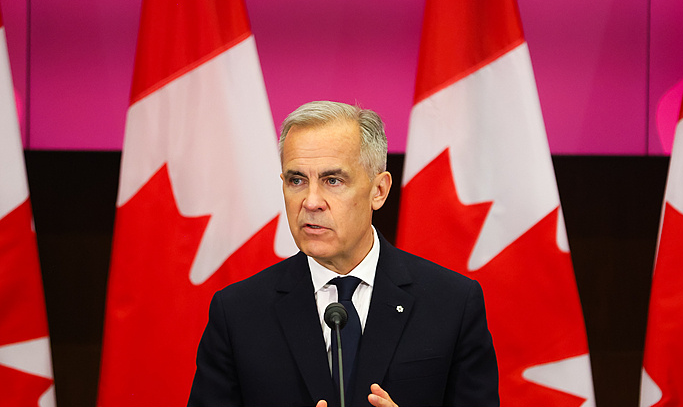
特朗普:与加拿大总理卡尼进行了一次“非常愉快的交谈”
Huan Qiu Shi Bao· 2025-10-30 22:40
美国"政治新闻网"称,加拿大驻美大使、首席谈判代表希尔曼在渥太华表示,贸易谈判"在被突然叫停 前已进入成形阶段",虽然仍存在分歧,但"那几周取得的进展,比很长一段时间以来都要多"。希尔曼 称,特朗普在其第二任期内更倾向于自行决策,使贸易谈判难以预测。 同时,美国参议院29日以50票对46票通过一项决议,废除特朗普对加征收的关税,4名共和党议员倒戈 支持民主党。彭博社称,这凸显了共和党内部在关税问题上的分歧,这还是参议院今年第二次公开反对 特朗普对加征收关税。不过,该决议只是一次公开谴责,它仍需众议院通过并由总统签署才可生效,这 也显示出国会对白宫在贸易路线上的不满。分析认为,随着节日购物季临近,美国国内对高关税(引发 的物价压力)愈发担忧。 此外,美加官员摩擦仍在持续。CBC称,美国驻加拿大大使胡克斯特拉27日在渥太华的加美商业理事会 活动上,似乎因不满安大略省的广告,对安大略省贸易代表帕特森爆粗口。安大略省省长福特认 为,"这种行为绝对不可接受,不符合外交官身份"。胡克斯特拉此前还试图淡化特朗普关于"加拿大将 成为美国第51个州"的说法,称这只是昵称。 【环球时报驻美国特约记者 李致】美国总统特朗普30日表 ...
In China Truce on Tariffs and Rare Earths, National Security Controls Are Bargaining Chip
Nytimes· 2025-10-30 21:07
Group 1 - Analysts suggest that Beijing achieved a significant victory in trade negotiations by persuading the U.S. to retract a national security measure that was not previously part of the discussions [1]
美国拟将阿根廷输美牛肉配额翻四番至8万吨
Shang Wu Bu Wang Zhan· 2025-10-30 14:54
Core Viewpoint - The U.S. government is considering increasing the beef import quota from Argentina to 80,000 tons, a significant increase from the current quota of 20,000 tons, as part of ongoing trade negotiations between the two countries [1] Group 1: Trade Negotiations - The potential increase in the beef import quota is part of broader trade negotiations between the U.S. and Argentina, with results expected to be announced soon [1] - Currently, the import quota for Argentine beef is set at 20,000 tons, with a 10% tariff on imports within this quota and a 36.4% tariff on imports exceeding this quota [1] Group 2: Export Data - In 2024, Argentina is projected to export 33,697.8 tons of beef to the U.S., generating an export value of $18.843 million [1] Group 3: U.S. Agricultural Initiatives - The U.S. Department of Agriculture (USDA) has launched a plan to promote beef production, which includes facilitating grazing for ranchers on federal land, increasing agricultural insurance subsidies, and significantly reducing operational costs for small meat processing plants [1] - The USDA's plan does not mention any adjustments to the Argentine beef import quota [1]
特朗普大获全胜?中美刚谈完,巴西、印度传来大好消息,有望达成协议!卢拉:与美国之间没有冲突
Sou Hu Cai Jing· 2025-10-30 11:01
Core Insights - Trump's diplomatic strategy appears to be entering a new phase, focusing on Brazil and India after reaching a substantial framework agreement with China [1][3] - The recent U.S.-China framework agreement, which includes a halt on additional tariffs, is seen as a significant diplomatic victory for Trump [3][8] - Trump's approach has shifted from confrontation to cooperation, aiming to maximize U.S. interests through strategic negotiations with key global players [3][6] U.S.-China Relations - The U.S. has decided not to impose a 100% tariff, marking a pivotal moment in U.S.-China trade relations [3] - The focus on rare earths and soybeans highlights the interdependence between the U.S. and China, particularly in agriculture and high-tech sectors [3][6] - The agreement signifies a strategic adjustment in Trump's economic policy, moving towards a more conciliatory approach [3][8] U.S.-Brazil Relations - Brazil's trade relationship with the U.S. has been strained due to a 50% tariff on Brazilian products, impacting key exports like beef and coffee [5][6] - Brazilian President Lula's statement about quickly reaching an agreement with the U.S. reflects the urgency of improving Brazil's economic situation [5] - Trump's willingness to pause tariffs and engage in bilateral talks indicates a strategic shift to strengthen ties with Brazil, recognizing its geopolitical significance [5][6] U.S.-India Relations - India faces significant trade challenges, including a 50% tariff imposed by the U.S., particularly affecting its energy imports from Russia [6] - Indian private refiners are shifting away from Russian oil, which could enhance U.S.-India trade relations [6] - The importance of maintaining a strong partnership with the U.S. is critical for India's economic development and international standing [6][8] Overall Diplomatic Strategy - Trump's strategy involves a systematic approach to negotiations, starting with China and then addressing other countries like Brazil and India [6][8] - The success of these diplomatic efforts will depend on the ability to establish and maintain U.S. dominance in the global economy [8] - The potential agreements with Brazil and India could reshape global trade dynamics and prompt other nations to adjust their strategies in response to U.S. pressure [8]
秦洪看盘|交易筹码止盈,短线回落整固
Sou Hu Cai Jing· 2025-10-30 10:27
Market Overview - The A-share market maintained a strong oscillation pattern in the morning but saw major indices decline after noon, with the Shanghai Composite Index breaking below the 4000-point mark [2] - Despite the decline, trading volume in the Shanghai and Shenzhen markets increased, indicating strong support at lower levels [2] - The Hang Seng Index in Hong Kong showed signs of recovery after the A-share market closed, suggesting sustained investment confidence in Chinese assets [2][5] Short-term Trading Catalysts - Three clear short-term trading catalysts were identified: 1. Trade negotiations have shown signs of resolution, leading to profit-taking among investors [2] 2. The Federal Reserve's stance on interest rate cuts has become clearer, with indications that a new round of cuts is not imminent, prompting profit-taking [2] 3. Third-quarter earnings reports are becoming clearer, particularly for key companies, leading to increased profit-taking [2] Sector Performance - AI hardware sector stocks, particularly in the CPO field, experienced weak performance, indicating that momentum investors began to sell off [3] - The innovative drug sector also faced downward pressure as the narrative around sustained Fed rate cuts weakened, leading to increased selling pressure [3] - Despite the pressure on certain sectors, insurance and lithium battery stocks remained strong, helping to maintain index strength [3] New Narratives and Future Outlook - The Shanghai Composite Index's drop below 4000 points highlights its significance as a psychological barrier, suggesting ongoing tug-of-war between bulls and bears [4] - The Hang Seng Index's recovery and significant inflow of southbound capital (over 12 billion HKD) indicate strong attractiveness of Chinese assets [5] - Emerging narratives, such as the U.S. "G2" relationship and China's new energy system initiatives, are expected to provide new catalysts for growth in related sectors [5] - Despite some underperformance in the AI sector, improvements in resource, chemical, and food and beverage sectors suggest a solid foundation for the A-share market [5]
美豆出口前景持乐观态度 短期豆粕盘面表现偏强
Jin Tou Wang· 2025-10-30 06:03
News Summary Core Viewpoint - Analysts expect U.S. soybean meal export net sales for the 2025/26 marketing year to range between 50,000 to 500,000 tons by the week ending October 23, 2025 [1] Group 1: Market Data - On October 29, the total soybean meal transaction volume at major oil mills nationwide was 53,500 tons, a decrease of 59,900 tons from the previous trading day, with spot transactions also at 53,500 tons [1] - As of October 26, the EU's soybean meal import volume reached 5.68 million tons, a year-on-year decrease of 3.6% [1] Group 2: Institutional Perspectives - Guodu Futures notes that the soybean import volume from May to September this year exceeded historical levels, leading to high domestic soybean inventory, which is pressuring spot prices. The expected import volume for the fourth quarter remains ample, contributing to this pressure. Despite the high inventory, the cost support for soybean meal limits downward movement, with uncertainties regarding U.S. soybean imports being a key factor for short-term market fluctuations [2] - Zhengxin Futures indicates that preliminary agreements from U.S.-China-Malaysia talks have led to a strong performance in U.S. soybeans. Domestic soybean procurement for the near term is nearly complete, with sufficient inventory. The market is awaiting specific measures from upcoming high-level talks, with short-term soybean meal prices expected to follow U.S. soybean trends while maintaining a bottoming pattern in the medium to long term. The recommendation is to remain cautious for now [3]
黄金td命悬静待中美会晤定方向
Jin Tou Wang· 2025-10-30 03:04
Group 1 - The core viewpoint of the news is the recent trade agreement between the United States and South Korea, which involves significant investments and tariff adjustments [2] - South Korea will invest $150 billion in shipbuilding and will make a phased cash investment of $200 billion as part of a total investment of $350 billion in the U.S. [2] - The U.S. will maintain a 15% comprehensive tariff on South Korea, while reducing auto tariffs to 15% and granting South Korea most-favored-nation status on drug tariffs [2] Group 2 - The current trading range for gold T+D is between 890-940 yuan per gram, with a key resistance level at 1000 yuan per gram [3] - If gold prices break above 1000 yuan per gram, they may rise to 1010 yuan; conversely, if they fall below 890 yuan per gram, further declines are expected [3] - The gold T+D market is currently experiencing a short-term oscillating trend, with recent prices around 897.86 yuan per gram, reflecting a decline of 0.71% [1]
中国跟美国买大豆价格比巴西贵出不少,恢复进口或许只是筹码
Sou Hu Cai Jing· 2025-10-29 07:00
Core Insights - Recent negotiations between China and the U.S. on trade issues have shown positive progress, particularly regarding soybean imports [1][3] - There is no official agreement yet on the specifics of resuming soybean imports, but indications suggest that China may restart purchases from the U.S. [3][4] Soybean Import Dynamics - China has historically been the largest importer of soybeans, with annual imports exceeding 100 million tons [3] - Due to tariffs imposed by the U.S., the cost of importing soybeans from the U.S. has significantly increased, leading to a reduction in imports, with a complete halt expected by September 2025 [4][7] - The U.S. soybean farmers have been adversely affected by the loss of the Chinese market, with a significant portion of their production reliant on exports [4][5] Current Import Statistics - From January to September 2023, China imported 86.18 million tons of soybeans, a 5.3% increase year-on-year, with 74% of these imports coming from Brazil [9] - The price of Brazilian soybeans has risen, with prices at the Port of Paranaguá increasing from 130.83 BRL (approximately $22.94) in February to 138.77 BRL (approximately $25.67) in October, marking a 6% increase [9][10] Price Comparison - In 2023, the cost of soybeans imported from Brazil was approximately 4,129.4 CNY per ton, while from the U.S. it was about 4,478.3 CNY per ton, indicating a price difference of around 8.5% [11] - Despite the price increase of Brazilian soybeans, they remain cheaper than U.S. soybeans due to lower transportation costs [11] Future Outlook - Brazil's soybean production is expected to reach 170 million tons in 2025, which could meet China's demand [11] - Chinese importers have paused purchases of Brazilian soybeans for December and January, possibly to maintain leverage in negotiations with the U.S. [11]
期货市场交易指引:2025年10月29日-20251029
Chang Jiang Qi Huo· 2025-10-29 02:18
Report Industry Investment Ratings - **Macro Finance**: Bullish on the medium to long term for stock indices, hold a wait - and - see attitude for treasury bonds [1][5] - **Black Building Materials**: Range trading for coking coal and rebar, sell call options for glass [1][7][8] - **Non - ferrous Metals**: Cautiously hold long positions on dips for copper, buy on dips after a pullback for aluminum, wait and see or short on rallies for nickel, range trading for tin, gold, and silver [1][10][11][12][16][17][18][19] - **Energy and Chemicals**: PVC, caustic soda, styrene, rubber, urea, methanol to oscillate; wide - range oscillation for polyolefins; bearish on the 01 contract of soda ash [1][20][22][23][24][25][26][27][28][29][30][31][32][33][34] - **Cotton Textile Industry Chain**: Oscillate with a slight upward bias for cotton and cotton yarn, apples; oscillate for PTA, red dates [1][35][36][37][38] - **Agriculture and Animal Husbandry**: Short on rallies for pigs and eggs; wide - range oscillation for corn; range oscillation for soybean meal; oscillate with a slight upward bias for oils [1][39][40][41][42][43][44][45][46][47][48][49][50][51][52] Core Views - The market is influenced by multiple factors such as macro - policies, supply - demand fundamentals, and international trade situations. Different sectors show diverse trends and investment opportunities. For example, in the non - ferrous metals sector, copper has supply - side disturbances and long - term demand prospects, while in the energy and chemicals sector, PVC has weak supply - demand fundamentals but is affected by cost and policy factors [10][11][20][21] Summary by Directory Macro Finance - **Stock Indices**: Oscillate with a medium - to - long - term bullish outlook. The market has more declining stocks, and the trading volume has shrunk. Positive factors such as the 15th Five - Year Plan and Fed rate - cut expectations may support the upward movement [5] - **Treasury Bonds**: Oscillate. Treasury futures have rebounded, and factors like the 15th Five - Year Plan and central bank policies may support the upward movement [5] Black Building Materials - **Double Coking**: Oscillate. The market has a strong bullish sentiment, and the price increase is driven by the rise in coking coal prices [7] - **Rebar**: Oscillate. The price is at a low static valuation, and with the improvement of market sentiment and the positive factors from the 15th Five - Year Plan, it is advisable to go long on dips for the RB2601 contract [7] - **Glass**: Sell call options. The fundamental situation has deteriorated, and the price is expected to be more likely to fall than rise. Consider selling call options or using the covered call option strategy [8][9] Non - ferrous Metals - **Copper**: High - level oscillation. Concerns about supply shortages and optimistic trade prospects drive the price up. Supply - side disturbances and positive macro - factors support the price, but high prices suppress downstream demand [10][11] - **Aluminum**: Neutral, high - level oscillation. The price is affected by factors such as production capacity changes, demand, and international trade. It is advisable to take profit on long positions on rallies after positive factors are realized [12] - **Nickel**: Neutral, oscillate. The change in Indonesia's RKAB policy may affect the supply of nickel ore. In the medium - to - long - term, there is an oversupply, so it is recommended to wait and see or short on rallies [16] - **Tin**: Neutral, oscillate. The supply of tin ore is expected to improve, and the downstream consumption is weak. It is recommended for range trading [17][18] - **Silver and Gold**: Neutral, oscillate. Affected by US economic data, Fed rate - cut expectations, and geopolitical factors, they are in a short - term adjustment state, and it is recommended for range trading [18][19] Energy and Chemicals - **PVC**: Neutral, oscillate. The supply is high, the demand is weak, and the export sustainability is in doubt. It is expected to oscillate, and attention should be paid to policy and cost factors [20][21] - **Caustic Soda**: Neutral, oscillate weakly. The supply will increase in the future, and the demand is mixed. It is recommended to pay attention to the 2450 level pressure [22][23] - **Styrene**: Neutral, oscillate. The cost - profit situation is complex, and the supply - demand is expected to be weak. It is expected to oscillate [24][25] - **Rubber**: Neutral, oscillate. The cost is supported, and the inventory has decreased. It is expected to oscillate, and attention should be paid to the 15000 level support [25][26] - **Urea**: Neutral, oscillate. The supply decreases, the demand increases, and the inventory situation is complex. The price is expected to move up in the short - term [26][27] - **Methanol**: Neutral, oscillate. The supply is tight in some areas, the demand is weak, and the inventory pressure is high. It is expected to oscillate [28][29] - **Polyolefins**: Neutral, weakly oscillate. The cost is supported, the supply pressure is high, and the demand improvement is slow. It is recommended to short on rallies [29][30] - **Soda Ash**: Bearish on the 01 contract. The supply is excessive, and the demand is lackluster. It is recommended to maintain a bearish position [31][32][33][34] Cotton Textile Industry Chain - **Cotton and Cotton Yarn**: Neutral, oscillate with a slight upward bias. The global cotton supply - demand situation is favorable, and the price of seed cotton is high. It is expected to oscillate with a slight upward bias [35] - **PTA**: Low - level oscillation. The oil price is weak, the supply - demand is in a state of inventory accumulation, and the price is at a low level [35][36] - **Apples**: Neutral, oscillate with a slight upward bias. The storage situation in the late - Fuji apple producing areas is stable, and the quality decline may lead to an increase in the delivery cost [36] - **Red Dates**: Neutral, oscillate. The price in the producing areas is stable, and attention should be paid to the price change after the new - season centralized listing [37][38] Agriculture and Animal Husbandry - **Pigs**: Bearish on the medium - term. The supply is loose, and the price is under pressure. It is recommended to hold short positions and pay attention to the arbitrage strategy [39][40] - **Eggs**: Bearish on the medium - term. The demand is weak, and the supply pressure is large. It is recommended to short on rallies for the 12 - contract and wait and see for the 01 - contract [41][42] - **Corn**: Weakly oscillate. The new - crop supply is sufficient, and the demand is weak. It is advisable to short on rallies for the 01 - contract and pay attention to the 3 - 5 positive spread arbitrage [43][44][45] - **Soybean Meal**: Low - level rebound. The cost is supported by the purchase of US soybeans. It is recommended to take profit on rallies and hold long positions on dips [46][47] - **Oils**: Palm oil is weak, soybean oil is strong, and high - level adjustment. The palm oil is under pressure from inventory accumulation, while the soybean oil and rapeseed oil have their own positive factors. It is recommended to go long on dips and pay attention to the spread arbitrage strategy [47][48][49][50][51][52]