电动化

Search documents
电摩销量疲软 爱玛推出零际品牌求破局
Jing Ji Guan Cha Wang· 2025-10-31 05:22
Core Viewpoint - SCOOX, a new electric motorcycle brand, aims to redefine high-end electric motorcycles with its first model, the "陆地飞艇" X7, set to launch in Q1 2026 and currently available for pre-order [2][3] Product Overview - The X7 features a futuristic design and advanced technology, including a Bosch motor with a rated power of 3kW and peak power of 8kW, achieving speeds over 90 km/h and 0-50 km/h acceleration in just 2.4 seconds [2] - The motorcycle is equipped with a range of smart features such as facial recognition, mobile connectivity, navigation, remote location tracking, and OTA upgrades, along with safety features like collision warnings and adjustable seating [2] Company Background - SCOOX is incubated by Aima Technology Group, which aims to leverage its supply chain and R&D foundation to penetrate the high-end electric motorcycle market [3] - Aima Technology, established in 1999 and listed in 2021, faced declining sales and profitability due to market saturation and stricter regulations, leading to a revenue of 21.036 billion yuan in 2023, with a growth rate dropping to 1.12% [3] Market Context - Competitors in the high-end electric motorcycle sector, such as Niu Technologies and Ninebot, have shown better performance, with Niu achieving a sales volume of 920,000 units and revenue of 2.388 billion yuan in 2024, reflecting a 24% year-on-year growth [4] - The industry is shifting towards high-end products, with traditional brands like Aima and Yadea struggling against price wars in the electric bicycle market [4] Strategic Plans - SCOOX plans to establish an independent factory in Chongqing and open delivery experience centers in 50 major cities across China by mid-2026 [6] - The brand also has international expansion plans, utilizing Aima's existing overseas channels to enter markets like Southeast Asia [6]



博雷顿董事长陈方明将在高工锂电15周年年会做主题演讲
高工锂电· 2025-10-31 03:53
Core Viewpoint - The electric mining truck sector is rapidly evolving, driven by the need for zero-carbon transformation and cost reduction in traditional mining operations [2][3]. Industry Overview - The 2025 High-Performance Lithium Battery Annual Conference will take place from November 18-20, 2025, in Shenzhen, focusing on the electric mining truck market [1][6]. - The electric mining truck segment is expected to see significant growth, with a projected sales increase of over 70% in 2024 and a penetration rate exceeding 13% [3]. Company Insights - Boleton, recognized as a leader in electric mining truck manufacturing and the first "zero-carbon mining robot" stock, offers products such as electric loaders and wide-body dump trucks [4]. - Boleton has partnered with leading battery companies like CATL and JuWan Technology to address the challenges of high-capacity battery technology, launching a 700kWh electric mining truck [9]. Technological Solutions - To tackle the challenges of energy supply in remote mining areas, Boleton has collaborated with Huawei to propose a "networked microgrid + electric mining truck + autonomous driving" solution [12]. - This solution aims to establish a stable energy output in weak or non-existent grid environments, facilitating efficient transportation operations through electric mining trucks [12]. Market Expansion - Boleton is expanding its market presence internationally, having implemented four solar-storage projects in Africa, resulting in a 30%-50% reduction in customer operation and maintenance costs [14].

2025东京车展格局生变
3 6 Ke· 2025-10-31 00:14
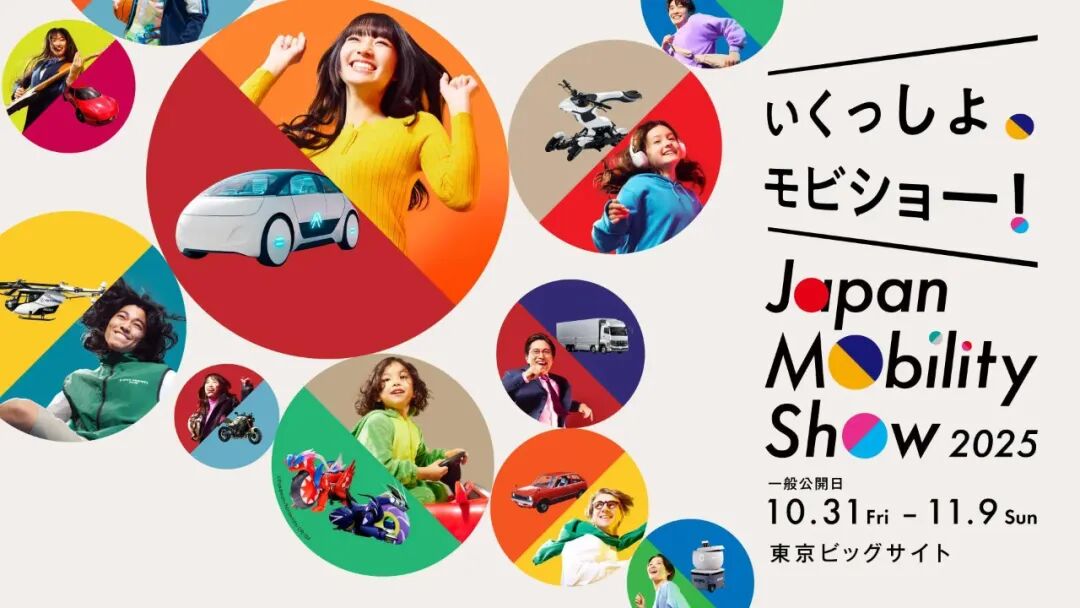
Core Insights - The 2025 Japan Mobility Show serves as a significant platform for Japanese automakers to assert their dominance and communicate strategic signals to the global capital market [1] Group 1: Event Overview - The 2025 Tokyo Motor Show is being held at the Tokyo International Exhibition Center, featuring major Japanese brands such as Toyota, Honda, Nissan, Mitsubishi, Suzuki, and Subaru, while international brands are notably sparse [3] - BYD, as the only Chinese automaker present, launched a new pure electric K-Car model, attracting considerable attention from Japanese companies [3][4] Group 2: BYD's Strategy - BYD's participation emphasizes its commitment to building a comprehensive ecosystem of both passenger and commercial vehicles in Japan, with a focus on hybrid and pure electric models [4] - The company plans to introduce 7 to 8 models of pure electric and hybrid vehicles in Japan by 2027, having already established 66 sales points in the country [5] Group 3: Japanese Automakers' Focus - Japanese automakers are showcasing a strategy that emphasizes small and precise electric vehicles, contrasting with the larger, more comprehensive models favored by Chinese brands [9][11] - Toyota's display features innovative designs, while Honda and Nissan are focusing on compact and electric models, indicating a shift in their product strategies [11][12] Group 4: Market Dynamics - The Tokyo Motor Show reflects a divergence in strategic focus between Japanese and Chinese automakers, with Japanese brands still not fully prioritizing electrification as a central strategy [12]

一场东京车展,看清日系车所有底牌
汽车商业评论· 2025-10-30 23:08
Core Viewpoint - The Japan Mobility Show 2025 showcases a stark contrast between Japanese automakers, who present ambitious electric vehicle (EV) strategies, and international brands, which appear less innovative and engaged in the current automotive transformation [5][6][9]. Group 1: Japanese Automakers' Strategies - Honda introduced two cost-effective electric concept cars, aiming for a full electric lineup by 2040, with the 0 Alpha targeting the Japanese and Indian markets [12][15]. - Toyota's Corolla concept car breaks traditional perceptions, offering hybrid, electric, and gasoline options, reflecting its "multi-path strategy" to adapt to diverse global energy conditions [19][22]. - Toyota plans to elevate its Century model to an independent luxury brand, with a new coupe version enhancing its prestigious image [25][29]. Group 2: International Brands' Participation - The participation of international brands like BMW and Mercedes-Benz was limited, lacking significant innovations compared to their Japanese counterparts [7][8]. - Subaru unveiled two STI concept cars, focusing on performance, while Nissan aims to revitalize its brand with the new Elgrand MPV, featuring a hybrid e-Power system [34][41]. Group 3: Future Mobility Concepts - The show emphasizes a broader vision of mobility, with Lexus presenting a solar-powered catamaran and a compact electric vehicle designed for urban environments [47][52]. - Honda showcased its ambitions beyond traditional vehicles, including a rocket for space exploration and an advanced electric wheelchair [60][64]. - Mazda's X-Coupe concept car highlights innovative fuel technology using microalgae, despite current efficiency challenges [67][70].


伯特利 | 2025Q3:业绩超预期 智能电动齐驱【民生汽车 崔琰团队】
汽车琰究· 2025-10-30 14:35
Core Viewpoint - The company reported strong financial performance for the first three quarters of 2025, with significant revenue and profit growth driven by increased sales from key customers and operational efficiency improvements [2][3]. Financial Performance - For the first three quarters of 2025, the company achieved revenue of 8.36 billion yuan, a year-on-year increase of 27.0%, and a net profit attributable to shareholders of 890 million yuan, up 14.6% year-on-year [2]. - In Q3 2025, revenue reached 3.19 billion yuan, reflecting a year-on-year growth of 22.5% and a quarter-on-quarter increase of 26.4% [3]. - The gross profit margin for Q3 2025 was 20.5%, a decrease of 1.0 percentage points year-on-year but an increase of 1.3 percentage points quarter-on-quarter [3]. Business Segments - The company is actively expanding its product offerings in intelligent and electric vehicle technologies, becoming a leading supplier in the line control braking system and the first in China to achieve mass production of EPB (Electronic Parking Brake) [4]. - The company has 109 ongoing research projects in line control systems and plans to expand production capacity significantly to alleviate bottlenecks [4]. Market Position and Strategy - The company has established a production base in Mexico, with plans for further global expansion, including a new base in Morocco [4]. - The company is also advancing in the robotics sector, collaborating with Zhejiang Jianzhuang Transmission to develop components for humanoid robots [5]. Future Projections - Revenue projections for 2025-2027 are 12.875 billion yuan, 16.441 billion yuan, and 20.831 billion yuan, respectively, with net profits expected to reach 1.508 billion yuan, 1.867 billion yuan, and 2.314 billion yuan [6][7]. - The company is expected to maintain a price-to-earnings (PE) ratio of 20, 16, and 13 for the years 2025, 2026, and 2027, respectively [6][7].


柳工(000528):25Q3业绩点评:国内外土方机械周期向上,减值计提后有望轻装上阵
Changjiang Securities· 2025-10-30 13:40
Investment Rating - The investment rating for the company is "Buy" and is maintained [8]. Core Views - The company reported a revenue of 25.76 billion yuan for the first three quarters of 2025, representing a year-on-year increase of 12.71%. The net profit attributable to shareholders was 1.458 billion yuan, up 10.37% year-on-year. In Q3 2025, revenue reached 7.579 billion yuan, with a year-on-year growth of 11.52%. However, the net profit attributable to shareholders decreased by 32.47% year-on-year to 228 million yuan [2][5]. - The domestic earthmoving machinery market continues to grow, with the company expected to maintain a steady increase in market share. The international business is also performing well, with emerging markets being a major driver. The outlook for both domestic and international earthmoving machinery industries is positive, with expectations of continued rapid growth [2][12]. - The company's profitability is expected to improve due to better gross margins in domestic electric products, ongoing structural optimization, and cost control measures. The company is anticipated to return to a high growth trajectory following impairment provisions [12][12]. Summary by Sections Financial Performance - For Q1-Q3 2025, the company achieved a revenue of 25.76 billion yuan, a year-on-year increase of 12.71%, and a net profit of 1.458 billion yuan, up 10.37%. In Q3 2025, revenue was 7.579 billion yuan, with a year-on-year growth of 11.52%, while net profit decreased by 32.47% to 228 million yuan [5][12]. - The company’s gross margin slightly declined in Q3 2025, primarily due to intense competition in the domestic electric product market. However, recent price increases for domestic electric products are expected to improve gross margins moving forward [12]. Market Outlook - The domestic earthmoving machinery market is on an upward cycle, with the company benefiting as a leading manufacturer. The domestic excavator and loader sales increased by 18% and 17% year-on-year, respectively, indicating a robust market environment [12]. - The international business is also showing positive trends, with a 21.2% year-on-year increase in China's engineering machinery exports in Q3 2025. Emerging markets such as Africa and Central Asia are expected to drive growth [12]. Future Projections - The company is projected to achieve net profits of 1.653 billion yuan and 2.224 billion yuan in 2025 and 2026, respectively, with corresponding price-to-earnings ratios of 15 times and 11 times [12].

上汽集团2025年第三季单季度净利同比大涨644.9%
Zheng Quan Shi Bao Wang· 2025-10-30 10:59
Core Insights - SAIC Motor Corporation reported significant growth in Q3 2025, with vehicle sales reaching 1.141 million units, a year-on-year increase of 38.7% [1] - The company's total revenue for Q3 was 169.4 billion yuan, up 16.2% year-on-year, while net profit attributable to shareholders surged to 2.08 billion yuan, reflecting a remarkable growth of 644.9% [1] Group 1: Sales Performance - In the first three quarters of 2025, SAIC sold 3.193 million vehicles, marking a 20.5% increase year-on-year, with retail sales reaching 3.378 million units [1] - The company's self-owned brand sales reached 2.044 million units from January to September, a 29.2% increase, accounting for 64% of total sales, up 4.3 percentage points from the previous year [2] - SAIC's new energy vehicle sales totaled 1.083 million units in the same period, a 44.8% increase, with September sales alone hitting a record high of 190,000 units [2] Group 2: Financial Performance - For the first three quarters, SAIC's total revenue was 468.99 billion yuan, reflecting a 9.0% year-on-year growth, while net profit attributable to shareholders reached 8.1 billion yuan, up 17.3% [1] - The company's net profit after deducting non-recurring items was 7.12 billion yuan, a staggering increase of 578.6% [1] - Operating cash flow for the period was 31.94 billion yuan, representing a 70.9% increase year-on-year [1] Group 3: Technological Innovation - SAIC has invested over 150 billion yuan in electric and intelligent technologies, resulting in nearly 26,000 effective patents across various platforms [2] - The company is accelerating the mass production of several industry-leading technologies, including semi-solid batteries and comprehensive intelligent vehicle solutions [2] Group 4: Market Expansion - SAIC's overseas sales reached 765,000 units in the first nine months, a 3.5% increase, with new energy vehicles accounting for 215,000 units, a growth of 69.7% [2] - The MG brand has achieved over 220,000 deliveries in the European market, maintaining double-digit growth [2] Group 5: New Product Launches - Recent launches of key electric models such as the new generation IM LS6 and MG4 have contributed to SAIC's continued sales growth [3]

伯特利(603596):系列点评十一:2025Q3业绩超预期,智能电动齐驱
Minsheng Securities· 2025-10-30 09:07
Investment Rating - The report maintains a "Recommended" rating for the company [4][6]. Core Insights - The company reported a revenue of 8.36 billion yuan for the first three quarters of 2025, representing a year-on-year increase of 27.0%. The net profit attributable to shareholders was 890 million yuan, up 14.6% year-on-year [1][2]. - In Q3 2025, the revenue reached 3.19 billion yuan, showing a year-on-year growth of 22.5% and a quarter-on-quarter increase of 26.4%. The net profit attributable to shareholders for Q3 was 370 million yuan, up 15.2% year-on-year and 46.4% quarter-on-quarter [2][3]. - The company is actively expanding its product lines in smart and electric vehicle technologies, with significant growth in its core customer sales, particularly from Chery and Geely [2][3]. Revenue and Profitability - The company’s revenue for Q3 2025 was 3.19 billion yuan, with a gross margin of 20.5%, a decrease of 1.0 percentage points year-on-year but an increase of 1.3 percentage points quarter-on-quarter. The net profit margin was 11.7%, down 0.6 percentage points year-on-year but up 1.7 percentage points quarter-on-quarter [2][3]. - The company’s operating efficiency and revenue growth contributed to the increase in net profit [2][3]. Strategic Developments - The company is a leader in line control chassis technology and is advancing its robotics business, including partnerships for developing components for humanoid robots [3][4]. - The company has established a production base in Mexico and plans to expand to Morocco, enhancing its global footprint [3][4]. Financial Forecast - The projected revenues for 2025, 2026, and 2027 are 12.88 billion yuan, 16.44 billion yuan, and 20.83 billion yuan, respectively, with corresponding net profits of 1.51 billion yuan, 1.87 billion yuan, and 2.31 billion yuan [5][10]. - The earnings per share (EPS) are expected to be 2.49 yuan in 2025, 3.08 yuan in 2026, and 3.81 yuan in 2027, with price-to-earnings (PE) ratios of 20, 16, and 13, respectively [5][10].
上汽集团三季度净利飙升644.9%
Jing Ji Guan Cha Wang· 2025-10-30 07:14
Core Viewpoint - SAIC Motor Corporation reported significant growth in its Q3 2025 financial results, driven by the expansion of its self-owned brands and new energy vehicle (NEV) business [1] Financial Performance - In Q3, the company achieved total revenue of 169.4 billion yuan, representing a year-on-year increase of 16.2% [1] - The net profit attributable to shareholders reached 2.08 billion yuan, a substantial increase of 644.9% year-on-year [1] - For the first three quarters, total revenue amounted to 468.99 billion yuan, up 9.0% year-on-year, while net profit attributable to shareholders was 8.1 billion yuan, reflecting a 17.3% increase [1] - The net cash flow from operating activities was 31.94 billion yuan, showing a significant growth of 70.9% year-on-year [1] Sales Performance - From January to September, the sales volume of self-owned brands reached 2.044 million units, marking a year-on-year growth of 29.2% [1] - Sales of new energy vehicles totaled 1.083 million units, which is a year-on-year increase of 44.8% [1] - Cumulative sales in overseas markets reached 765,000 units, with new energy vehicle exports accounting for 215,000 units, a remarkable growth of 69.7% year-on-year [1] Future Outlook - The company plans to continue increasing investments in intelligence and electrification, focusing on accelerating the mass production of core technologies such as semi-solid batteries and "Star Super Range Extender" [1]
全速推进智能化、多元化,日产中国以“何”焕新?
Xin Lang Cai Jing· 2025-10-30 05:13
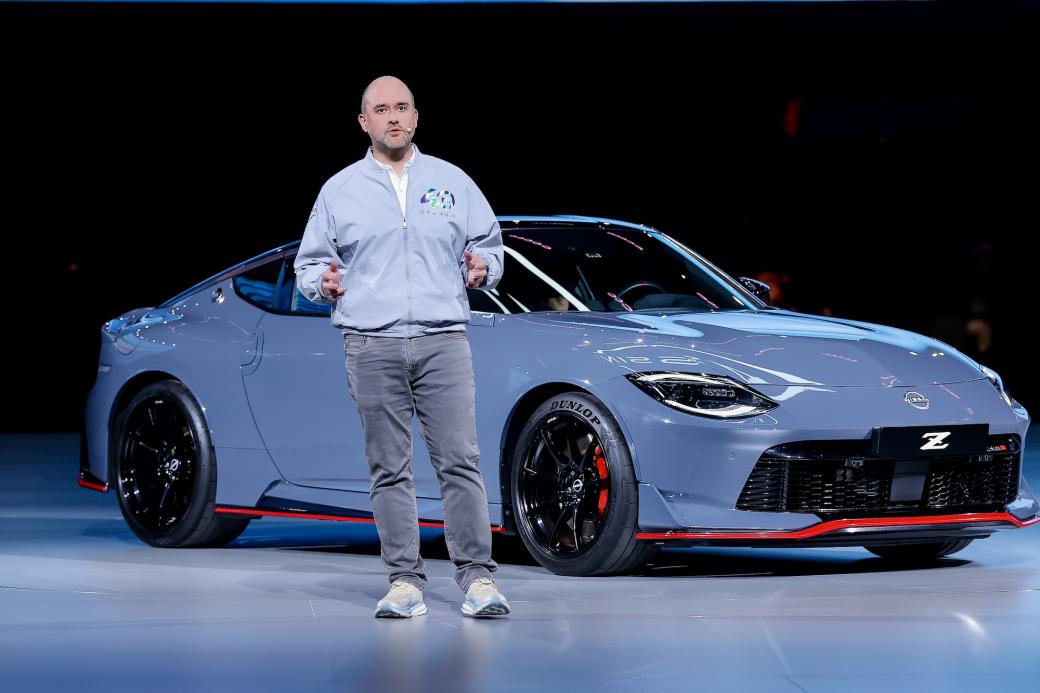
Core Insights - Nissan is undergoing a significant transformation in China, emphasizing localization, intelligence, and diversification in product innovation as it celebrates its 40th anniversary in the market [1][9] - The company aims to address the evolving demands of Chinese consumers by creating vehicles that serve as comfortable and intelligent "mobile living spaces" [2][5] - Nissan's new brand proposition "Excitement by NI" will guide its strategy in optimizing consumer experiences across product layout, technological innovation, and communication [2][5] Product Innovation - Nissan has launched the N6, its first global plug-in hybrid sedan, featuring a minimalist design and a unique sunlit gold color, reflecting an understanding of Chinese consumer aesthetics [4][5] - The N7, built on Nissan's self-developed Tianyan architecture, redefines the standards for family electric vehicles with advanced safety and comfort features [4][5] - The Tianlai Hongmeng cockpit, the world's first fuel vehicle equipped with Huawei's HarmonyOS, combines Nissan's comfort with Huawei's leading technology to attract urban consumers [5][6] Market Strategy - Nissan is adopting a dual strategy of offering both fuel and new energy vehicles, with plans to launch 10 new electric models by summer 2027, including 9 under the Nissan brand [5][6] - The company is also introducing the performance model Z NISMO to the Chinese market, aiming to revive its passion and performance heritage [6][8] - Nissan's commitment to quality is evident in its rigorous testing and quality assurance processes, ensuring reliability and durability in its products [8][9] Local Innovation - Nissan's strategic transformation is centered on a "Glocal" approach, with the Chinese market playing a pivotal role in driving global automotive trends [9][11] - The Chinese team has been granted greater autonomy in decision-making, leading to faster product development cycles, as demonstrated by the N7's rapid interior design completion [11][13] - The company emphasizes a user-centric approach, engaging with thousands of car owners annually to ensure products meet local needs and preferences [8][9]