智能制造

Search documents
南财快评|从十万亿度电看中国经济“新能量”
2 1 Shi Ji Jing Ji Bao Dao· 2026-01-19 12:12
Core Insights - In 2025, China's total electricity consumption is projected to reach 10,368.2 billion kilowatt-hours, marking a 5% year-on-year increase, and this is the first time any country has surpassed the 10 trillion kilowatt-hours threshold [1][4] - This milestone reflects a significant transformation in China's economic structure, shifting from high energy consumption to high efficiency, indicating a transition towards high-quality development [1][4] Group 1: Electricity Consumption and Economic Transition - The increase in electricity consumption serves as a "thermometer" for high-quality development, indicating not just total consumption but also the optimization of industrial structure [2] - The proportion of electricity used by manufacturing is decreasing, while the shares for high-tech manufacturing, modern services, and residential consumption are rising, showcasing a shift from factor-driven growth to innovation-driven growth [1][2] - The rise of digital economy, smart manufacturing, and green energy sectors is enhancing the output efficiency per unit of electricity consumed, adding high-tech and high-quality value to electricity consumption [1][2] Group 2: Clean Energy and Sustainability - As electricity consumption surpasses 10 trillion kilowatt-hours, the share of clean energy generation has exceeded one-third, with wind and solar power installations leading globally [3] - This shift not only reduces carbon intensity but also injects sustainable momentum into economic growth, highlighting the synergy between economic growth and environmental protection [3] - The development of carbon trading markets, improved energy efficiency standards, and breakthroughs in energy storage technology will position electricity as a crucial link between economic growth and carbon neutrality goals [3] Group 3: Smart Energy Management - The application of big data and artificial intelligence in electricity data analysis transforms it into a valuable resource that can be collected, analyzed, and utilized in real-time [3] - Technologies such as smart grids, demand response, and virtual power plants enhance the flexibility and efficiency of electricity supply, allowing for dynamic adjustments based on actual economic needs [3] - This intelligent energy management approach not only reduces energy waste but also enhances the overall resilience of economic operations, aligning with the principles of high-quality development [3]
南京银行合作伙伴江苏悦达纺织成功入选全球“灯塔工厂”
Jin Rong Jie· 2026-01-19 11:23
Group 1 - The World Economic Forum (WEF) recently announced a new batch of "Lighthouse Factories," with only 23 companies globally selected, including Jiangsu Yueda Textile Group Co., Ltd., which is the first in the cotton textile industry to receive this honor [1] - Since 2014, Nanjing Bank has provided comprehensive financial services to Yueda Textile, focusing on traditional credit, order financing, and fund management, supporting its intelligent production line upgrades and green low-carbon system construction [1] - The "Lighthouse Factory" designation is recognized as representing the highest level of global smart manufacturing, and Yueda Textile's selection highlights its strong capabilities in this field, marking a significant breakthrough for China's cotton textile industry in the global Industry 4.0 process [1]

亿纬获评全球首个圆柱电池灯塔工厂!
起点锂电· 2026-01-19 10:56
Core Insights - EVE Energy's Jingmen base has been awarded the world's first cylindrical battery lighthouse factory certification, showcasing advanced technology integration and over 40 smart solutions [2] - The lighthouse factory concept, selected by the World Economic Forum and McKinsey, represents the highest standards in global smart manufacturing and digitalization [2] - EVE Energy has achieved a 15% reduction in the carbon footprint of its products through renewable energy use, recycling materials, and energy-saving technology upgrades [3] Group 1: Technological Advancements - The lighthouse factory utilizes a combination of physical simulation and AI process models, reducing R&D experimental iterations by 75% and significantly shortening the time from R&D to mass production [2] - Automation in key production processes has reached 100%, with unmanned material delivery and an intelligent scheduling system that analyzes global orders in seconds, balancing capacity and materials automatically [2] - The factory has established China's first 300ppm high-speed production line, capable of producing 300 cylindrical battery cells per minute with a first-pass yield rate exceeding 97% [2] Group 2: Quality Control and Safety - An AI vision system achieves a detection efficiency of 0.3 seconds per cell, ensuring 100% inspection and strict quality control with zero missed judgments [2] - The factory promotes human-machine collaboration, transforming production line personnel into algorithm "conductors" [3] - Monitoring of factory operations is enhanced through smart sensors and drones, with AI models providing real-time risk alerts to ensure zero accidents in production [3] Group 3: Industry Impact - EVE Energy's lighthouse factory exemplifies a feasible path to achieving breakthroughs in manufacturing efficiency and green performance through cutting-edge technologies [3] - The company is positioned to play a more critical role in the global energy transition, contributing Chinese wisdom and solutions to the world [3]



沈阳机床:公司致力于针对不同客户的需求,提供模块化、可配置的智能制造整体解决方案
Zheng Quan Ri Bao Wang· 2026-01-19 09:45
Core Viewpoint - Shenyang Machine Tool (000410) has achieved significant advancements in its digital transformation, enhancing overall efficiency and product quality through the implementation of a smart production environment [1] Group 1: Smart Manufacturing Capabilities - The company has developed a new type of upgraded workshop that features a dust-free, low-noise, and bright intelligent production environment [1] - High-end CNC machine tools equipped with "brains" and "eyes" can operate continuously even in a "dark" state, showcasing the company's technological innovation [1] Group 2: Focus on Modular Solutions - The "dark factory" and flexible automation production line solutions are key products and services that the company aims to develop and promote in the current and future market [1] - The company is committed to providing modular and configurable smart manufacturing solutions tailored to different customer needs, helping clients reduce costs, increase efficiency, improve quality, and achieve flexible production [1]

北方民族大学学子在中国大学生智能装备创新设计大赛全国总决赛中荣获多项奖励
Xin Lang Cai Jing· 2026-01-19 08:57
转自:北方民族大学 近日,中国大学生智能装备创新设计大赛全国总决赛在天津大学成功举办。北方民族大学机电工程学院 组织3支队伍参加总决赛,荣获一等奖2项、二等奖1项,充分展现了学校新工科人才培养和智能装备创 新实践的丰硕成果。 本次大赛是聚焦智能制造前沿技术的全国性赛事,由中国机械工程学会主办。大赛采用"区域选拔赛、 全国预选赛、全国总决赛"三级赛制,自7月启动以来,吸引全国众多高校参赛,共收到作品1613件,经 多轮严格筛选,最终243支队伍晋级线下全国总决赛。 机电工程学院组织师生按照大赛要求扎实开展项目申报、路径规划、实物制作、产品打磨、细节完善等 工作。朱德馨、卜令昕、张春涛等老师定期召开组会,推进项目进展。参赛学生王纪鹏、金欣悦、龙江 恒、龚国虹、樊率超、闫树炳积极备战,采用"作品展示在线答辩"的形式展示设计方案。在答辩现场同 学们从创新性、实用性、工程应用价值及团队协作等多维度对参赛作品进行汇报,评审专家对北方民族 大学设计作品的实用性和工程应用价值表示了高度赞赏,认为其紧密结合产业需求,具有较为广阔的市 场转化前景。 创新创业学院也高度重视本次大赛,与机电工程学院一起积极组建精干师资、遴选优秀学生 ...
伟星股份(002003) - 2026年1月16日投资者关系活动记录表
2026-01-19 08:54
Industry Outlook - The company has a cautious outlook on the industry's recovery due to the current international trade environment and consumer sentiment, despite a slight improvement in orders for winter apparel in Q4 2025 [2] - The company remains optimistic about its long-term development prospects, focusing on enhancing brand influence and product competitiveness in the apparel accessories sector [2] Price Competition - The apparel accessories market is highly competitive, with price being one of several factors considered by mid-to-high-end brand clients, who prioritize product development capabilities, delivery times, and service quality [2] Raw Material Costs - Recent increases in metal raw material prices, such as copper, have impacted the company's costs; however, the company employs a cost-plus pricing model to manage these fluctuations [3] - The company is actively pursuing new materials and processes to meet customer demands [3] Customer Growth - Historical data indicates that growth primarily comes from existing customers, as establishing new brand partnerships typically requires years of effort [4] - The company aims to deepen relationships with current clients while also expanding its customer base to ensure stable long-term growth [4] Competitive Advantages - The company differentiates itself from competitors like YKK and Xunxing through its "product + service" approach, emphasizing quality products and comprehensive service [6] - It has developed strong competitive advantages in product diversity, fashionability, and innovation, which are increasingly demanded by downstream apparel brands [6] Overseas Operations - The company's overseas factories in Bangladesh and Vietnam are performing well, with the Vietnam facility showing significant growth since its launch in H1 2024 [7] - Future plans include enhancing global manufacturing capabilities through technological upgrades and strategic production layouts [7] Production and Manufacturing - The typical production cycle ranges from 3 to 15 days, influenced by capacity utilization and specific customer orders [8] - Smart manufacturing is a core strategy, with ongoing investments aimed at achieving global leadership in digital transformation and manufacturing efficiency [9] Financial Performance - The company reported a foreign exchange loss of CNY 22.86 million in the first three quarters of 2025, which is a minor impact on overall profits [10] - Sales expenses are expected to rise as the company continues its direct sales model and global expansion, although the sales expense ratio is anticipated to remain stable [11] Dividend Policy - The company adheres to a sustainable development philosophy, considering annual profits, future needs, and shareholder interests when formulating its profit distribution plan [12]

智能工厂发展报告
中国信通院· 2026-01-19 08:26
Investment Rating - The report does not explicitly provide an investment rating for the industry Core Insights - The report highlights the significant progress in the development of smart factories in China, with over 15 leading smart factories, more than 500 excellent smart factories, and over 35,000 basic smart factories established, indicating a robust growth trend in the sector [9][10] - The evolution of smart factories is characterized by five core directions: expansion of factory construction, innovation in R&D design paradigms, upgrading of production capabilities, optimization of production management, and advancement in operational management [10][41] - The report emphasizes the need for the manufacturing industry to transition from quantity-driven growth to quality-driven improvements, addressing the challenges posed by global economic slowdowns and changing market demands [17][18] Summary by Sections Overall Trends - The report identifies four main drivers for the transformation of smart factories: industrial upgrades, changing market demands, technological advancements, and international cooperation [17][19] - It outlines a future vision for smart factories that includes the integration of AI across all manufacturing processes, leading to autonomous decision-making and enhanced collaboration within the manufacturing ecosystem [20][41] Industry Practices - The report describes a four-tiered system for cultivating smart factories, which includes basic, advanced, excellent, and leading levels, aimed at promoting digital transformation in manufacturing [41][42] - It notes that over 90% of manufacturing sectors are now covered by smart factory initiatives, with a focus on enhancing traditional industries and empowering consumer-driven sectors [50][49] Regional Development - The report discusses the regional disparities in smart factory development, with eastern regions leading and central regions making breakthroughs, highlighting the importance of localized strategies [12][49] Technology and Industry - The report emphasizes the need for a deep integration of technology and manufacturing systems, advocating for a shift towards a more resilient and intelligent industrial foundation [12][53] Future Outlook - The report envisions a next-generation smart manufacturing landscape characterized by autonomous manufacturing, ecological collaboration, and a focus on sustainability [12][41]
新益昌荣膺“第二十四届深圳企业创新纪录”等四项大奖
Zheng Quan Shi Bao Wang· 2026-01-19 07:58
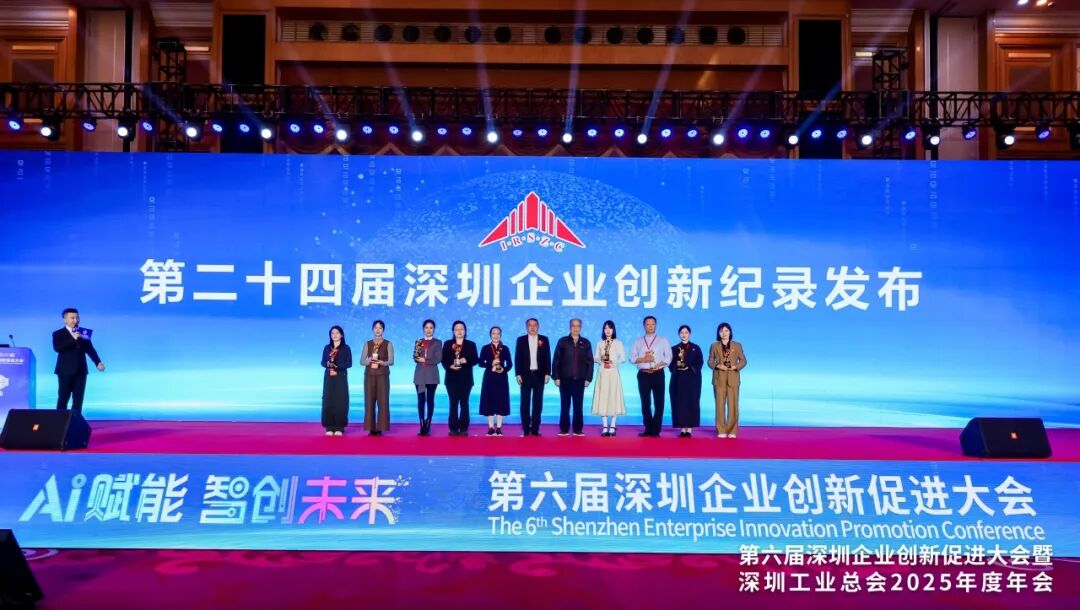
近日,第六届深圳企业创新促进大会在深圳隆重举行。深圳新益昌科技股份有限公司(股票简称:新益昌,股票代码:688383.SH)凭借技术突破与创新 实践,一举斩获"第二十四届深圳企业创新纪录"、"机械与高端装备行业创新项目奖"、"自主创新标杆企业"和"创新突出贡献人物"四项大奖,成为本次评 选中的亮眼赢家! 未来,公司将继续深化核心技术迭代,在高端装备领域持续发力,提升企业核心竞争力,为推动深圳及中国智能制造高质量发展积极贡献自身力量。 (CIS) "深圳企业创新纪录"由深圳工业总会联合多方权威机构开展,是衡量深圳企业创新能力的重要行业标杆,新益昌的四项创新成果从191个入围项目中脱颖 而出,充分体现了行业对其创新实力的高度认可。 新益昌"mini-LED高速固晶机的研发"获得第二十四届深圳企业创新(中国)纪录奖。 图片来源:公司官微 图片来源:公司官微 ...

海信AI重构制造 定义用户价值新范式
Jing Ji Wang· 2026-01-19 07:28
Group 1 - Hisense has been recognized as the first company in the global television industry to receive the "Lighthouse Factory" title from the World Economic Forum, showcasing its digital transformation through a user-centered and AI-driven manufacturing model [1] - The company utilizes big data technology and its proprietary user demand recognition system to gain deep insights into user needs, significantly reducing the time to incorporate user feedback into product development by 62% [1][2] - Hisense aims to enhance dynamic picture smoothness and color stability in its products, successfully applying these improvements in the new E8S series of RGB-Mini LED televisions, thereby increasing product competitiveness [1] Group 2 - In the R&D phase, Hisense has implemented an intelligent platform based on large language models (LLM), which has shortened the software development cycle by 31% and improved R&D efficiency by 27% [2] - The company has developed a digital process design model that utilizes over 100,000 pieces of process data, allowing for the automatic generation of comprehensive process plans in just 5 minutes, enhancing efficiency by 75% [2] - Hisense has established three lighthouse factories, four zero-carbon factories, and 17 national-level green factories, emphasizing its commitment to smart, green, and advanced manufacturing [3]

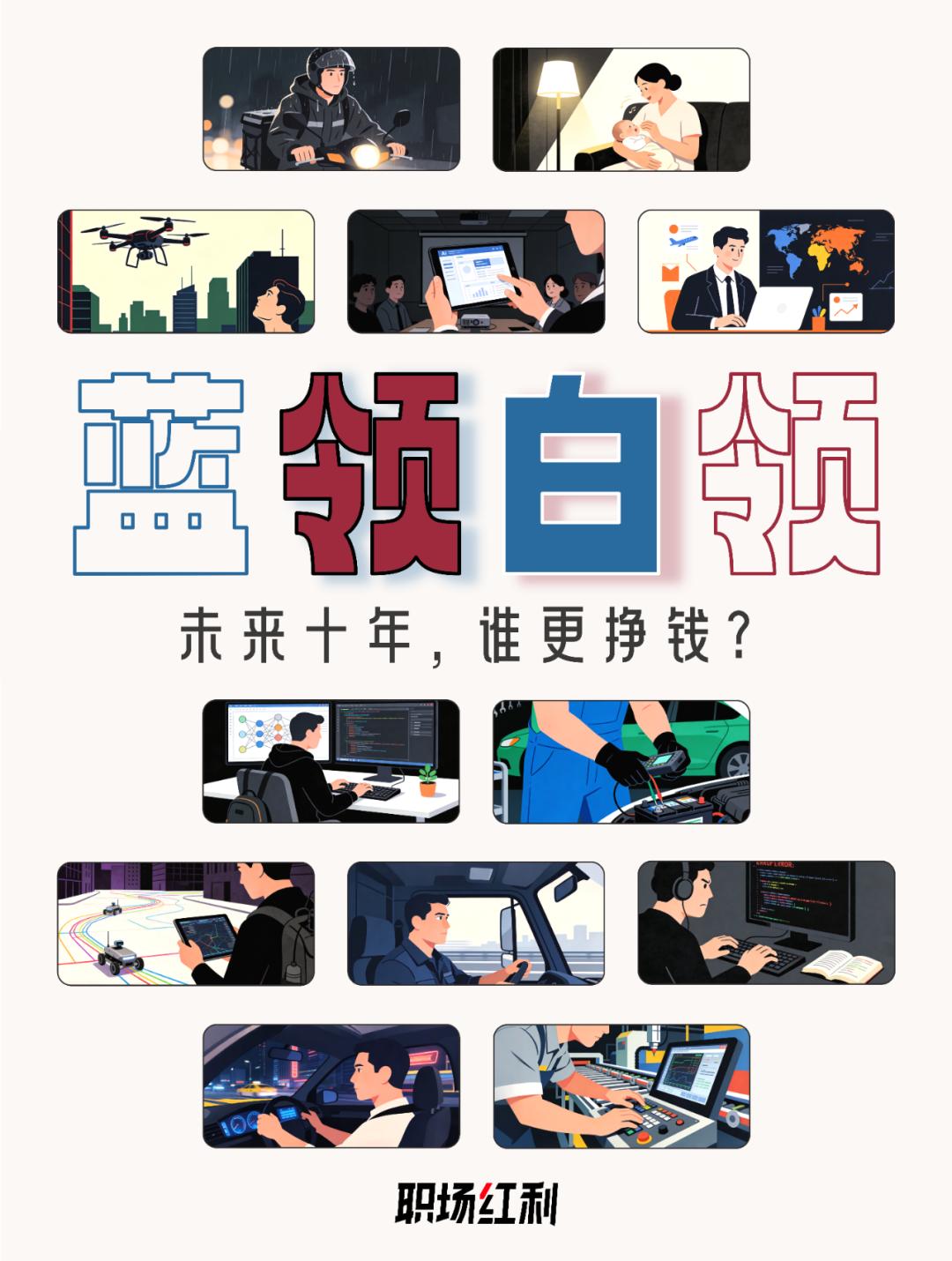
为何你曾经“看不上”的职业,现在涨薪变快了?|职场红利研报
3 6 Ke· 2026-01-19 06:47
Core Insights - The article discusses the evolving job market in China, highlighting the increasing competitiveness of blue-collar jobs compared to white-collar positions, particularly in the context of AI advancements and the integration of vocational education with traditional education [6][84] - It emphasizes the emergence of "new blue-collar" workers as a significant part of the middle-income group, with skilled manual workers expected to have better job security and income returns than typical clerical roles [6][84] Group 1: Blue-Collar Job Trends - The average monthly salary for blue-collar workers in 2024 is projected to be 6,150 yuan, with an annual growth rate of 7.2% over the past 11 years, significantly outpacing the 2.8% growth rate of white-collar workers [84] - The demand for skilled labor in sectors like home care, automotive repair, and drone operation is increasing, with specific roles such as maternity nurses and drone pilots seeing substantial salary growth and job openings [21][28][31] - The home care industry faces a labor shortage of 20 million workers, with maternity nurses being particularly in demand, as their average salary has increased by 4.24% in 2024, compared to a 1.77% increase in the overall blue-collar sector [21][18] Group 2: White-Collar Job Trends - The AI industry is experiencing a significant increase in job openings, with AI product manager positions seeing a 178% increase in demand, reflecting the sector's rapid growth [51] - Software engineers are also benefiting from a robust job market, with average monthly salaries around 20,000 yuan and a projected annual growth rate of 10%-15% in job openings [72][69] - Cross-border e-commerce roles are emerging as high-potential positions, with average monthly salaries reaching 17,000 yuan, driven by the shift from traditional B2B to DTC models [77][74] Group 3: Future Trends - The integration of AI tools into traditional workflows is becoming essential for white-collar workers to maintain job security in a rapidly changing market [84] - The demand for skilled workers in the manufacturing and service sectors is expected to continue growing, particularly in high-end equipment and new energy vehicles, with assembly engineers seeing a 67% increase in demand by 2025 [80][83] - The low-altitude economy, including drone operations, is being recognized as a strategic emerging industry, with significant growth expected in the coming years [28][31]