第三代半导体

Search documents
第三代半导体从“突围”奔向“成链”
Nan Jing Ri Bao· 2025-06-09 02:10
Core Viewpoint - Jiangsu ChaoXin Semiconductor Co., Ltd. won the gold medal at the 50th Geneva International Invention Exhibition for its self-developed silicon carbide (SiC) crystal growth technology, marking it as the first company in the SiC industry to achieve this honor [1][2]. Company Summary - ChaoXin Semiconductor is recognized as one of the only three companies globally and the only one in China to master the HTCVD innovative technology, capable of mass-producing silicon carbide substrate wafers [3]. - The company has developed a complete set of proprietary processes covering equipment, powder materials, crystal growth, wafer processing, and testing, overcoming several key technical challenges in the SiC long crystal technology field [2][3]. - The founder and CEO, Liu Xinyu, emphasizes the importance of independent innovation and the establishment of a robust industrial ecosystem in Nanjing, which is recognized as a national innovation highland for third-generation semiconductors [4]. Industry Summary - The third-generation semiconductor materials, represented by silicon carbide, are considered the cornerstone of future electronic industries, offering significant advantages over previous generations, such as high temperature and voltage resistance, and the ability to handle large currents [1]. - The global semiconductor industry is undergoing a critical upgrade, with wide applications in sectors like electric vehicles, photovoltaics, rail transportation, and smart grids [1]. - Nanjing's Jiangbei New District is developing a comprehensive industrial ecosystem that covers the entire supply chain from substrate to application, positioning itself as a significant player in the third-generation semiconductor industry [3][4].
国内规模最大碳化硅半导体基地投产
Zhong Guo Hua Gong Bao· 2025-06-04 03:17
Group 1 - Changfei Advanced Semiconductor (Wuhan) Co., Ltd. has officially launched the first batch of silicon carbide wafers at its Wuhan base, which is the largest silicon carbide semiconductor base in China, contributing 30% of the domestic silicon carbide wafer production capacity [1] - Silicon carbide is a semiconductor material that can operate stably under high voltage and high temperature, making it increasingly popular in the electric vehicle industry as charging voltages and vehicle range continue to increase [1] - The Wuhan base is expected to produce 360,000 six-inch silicon carbide wafers annually, supplying the "heart" for 1.44 million electric vehicles each year, potentially breaking international monopolies and filling the gap in high-end silicon carbide device manufacturing in Hubei Province [1] Group 2 - The base has already established extensive collaborations with leading global automotive companies, with a silicon carbide chip set to undergo vehicle testing next month, and nearly 10 models currently in validation, with mass production and delivery expected in the coming months [2] - As the first hundred-billion-level semiconductor project in Hubei Donghu Science City, the Changfei Advanced Wuhan base began construction in September 2023 and achieved production readiness in just 18 months, attracting over 20 supporting enterprises across the entire third-generation semiconductor supply chain [2] - Wuhan has identified compound semiconductors as one of its six major future industry directions, planning to introduce and cultivate 100 upstream and downstream enterprises within three years, aiming to transform Wuhan Optics Valley into a "world lighthouse" in the field of compound semiconductors [2]
吴江将实施三年倍增计划
Su Zhou Ri Bao· 2025-06-04 00:19
Group 1 - The core focus of Wujiang is to achieve the "356" goal of new industrialization, emphasizing high-end textiles, new materials, new generation information technology, digital economy, new energy, and green low-carbon initiatives [1] - Wujiang aims to strengthen its four trillion-level industrial advantages and seize new opportunities in third-generation semiconductors, artificial intelligence, and low-altitude manufacturing [1] - The region has established a collaborative innovation ecosystem involving leading enterprises, research institutions, and various innovation entities, resulting in the formation of several task-oriented innovation alliances and benchmark incubators [1] Group 2 - Wujiang has cultivated 12 manufacturing champions and 77 national specialized and innovative "little giant" enterprises, leading the city in these categories [1] - The government plans to enhance the cultivation of technology-leading enterprises, unicorns, gazelles, and high-tech enterprises, aiming to exceed 15 national manufacturing champions and 100 specialized "little giant" enterprises [1] - Investment in research and experimental development is projected to exceed 11 billion yuan, with industrial technological transformation investments surpassing 18 billion yuan [1] Group 3 - To promote the deep integration of "hard manufacturing" and "soft manufacturing," Wujiang will implement a three-year plan to double modern service industries, focusing on R&D design, technology finance, information technology services, and certification [2] - The development of the Suzhou Bay Central Business District is a priority, aiming to transform manufacturing advantages into service industry strengths [2] - Wujiang seeks to create a high-quality development cluster for modern service industries [2]
5月第4期:小微盘占优:估值与盈利周观察
Tai Ping Yang Zheng Quan· 2025-06-03 14:45
Group 1 - The report indicates a market differentiation with micro-cap stocks outperforming, while the ChiNext index and cyclical stocks lag behind [3][10] - The valuation of broad market indices shows divergence, with micro-cap stocks, the CSI 2000, and stable stocks performing the best, while the ChiNext index, cyclical stocks, and the CSI 300 performed the weakest [3][10] - The report highlights that the industries with relatively cheap valuations include food and beverage, agriculture, forestry, animal husbandry, and public utilities [39][28] Group 2 - The report notes that the pharmaceutical, environmental protection, and national defense industries had the highest gains last week, while the automotive, electric equipment, and non-ferrous metals sectors performed the weakest [12][35] - Relative valuations show a decline in the ChiNext index compared to the CSI 300 in terms of PE and PB ratios [17][26] - The report states that the overall valuation of major indices is above the 50% historical percentile, with the ChiNext index at a low valuation compared to the past year [26][28] Group 3 - The report identifies that the current valuation of major industries is mixed, with non-bank financials, non-ferrous metals, telecommunications, electronics, agriculture, and home appliances at near one-year lows [35][39] - The report emphasizes that the current valuation levels of materials, equipment manufacturing, industrial services, transportation, consumption, and technology are all below the 50% historical percentile [28][39] - The report highlights that the current valuation of the environmental protection sector is at a high historical percentile, indicating strong performance expectations [39][50] Group 4 - The report mentions that the earnings expectations across various industries are nearly flat, with the largest upward adjustment in the environmental sector and the largest downward adjustment in electric equipment [50][50] - The report indicates that popular concepts such as cultivated diamonds, third-generation semiconductors, 6G, and robotics are at historically high valuation percentiles over the past three years [47][48]
异动盘点0603|光大控股此前投资稳定币巨头,狂飙21%;汽车股回暖、医药股走强;BioNTech获91亿天价并购
贝塔投资智库· 2025-06-03 04:00
Group 1: Stock Movements and Market Reactions - JunDa Co., Ltd. (02865) fell by 12.69% due to weak fundamentals, expected shareholder sell-off, and cash flow concerns [1] - Rongchang Biopharmaceutical (09995) rose by 4.61% after ASCO announced positive data for RC108 combined with vorinostat, enhancing its commercialization prospects [1] - Datang Gold (08299) increased by 7.27% as it partnered with Wuxi to develop AI mining applications, benefiting from gold's safe-haven demand [1] - Kanglong Chemical (03759) gained 4.35% by investing in a biopharmaceutical fund, strengthening its investment ecosystem [1] - Automotive stocks surged following a significant increase in May's new energy vehicle sales, with Li Auto (2015) rising nearly 6% and Great Wall Motors (2333) up over 3% [1] - Gold stocks led the market as COMEX gold prices returned to $3,400, with Goldman Sachs predicting $4,200, driven by geopolitical tensions [1] Group 2: Company-Specific Developments - Changfei Optical Fiber (06869) rose by 8.34% as its Wuhan base began mass production of 6-inch silicon carbide wafers, achieving a 97% yield rate [2] - China Shipbuilding Defense (00317) increased by 7.58% after securing the highest global new orders from January to April, with Q1 net profit up 1,099% [2] - Hengrui Medicine (00013) rose by 5.09% as SACHI III phase data met expectations, opening up market space for MET amplification lung cancer treatment [2] - Lepu Medical Technology (02157) gained 5.76% following positive ASCO data for its ADC drug MRG003, boosting approval expectations for nasopharyngeal carcinoma [2] - Aidi Kang Holdings (09860) increased by 5.2% after acquiring Suzhou Yuande Youqin to enhance blood disease diagnostics [2] - NetDragon (00777) rose by 5.82% due to its collaboration with Thailand on an AI education platform, attracting investor interest [2] Group 3: Notable Market Trends - China Everbright Holdings (00165) surged over 21% following the enactment of Hong Kong's stablecoin regulations, with Circle's IPO expectations boosting related equity valuations [3] - iFlytek Medical (02506) rose by 6.62% as its medical AI model demonstrated superior accuracy, supported by favorable policies [3] - MicroPort NeuroTech (02172) increased by 9.59% as it initiated clinical research on brain-machine interfaces, benefiting from policy incentives [3] - Longpan Technology (02465) rose by 14.9% after its subsidiary signed a $7.1 billion contract with Yiwei Lithium Energy for lithium iron phosphate [4] - Hansoh Pharmaceutical (03692) gained 3.85% after reaching a global licensing agreement with Regeneron, receiving an $80 million upfront payment [4] Group 4: U.S. Market Highlights - Steel and aluminum stocks surged over 10%-28% as Trump proposed increasing steel tariffs to 50%, benefiting domestic companies [5] - Blueprint Medicines (BPMC.US) rose by 26% following Sanofi's $9.1 billion acquisition, enhancing its rare disease pipeline [5] - BioNTech (BNTX.US) increased by 18% due to a collaboration with Bristol-Myers Squibb, securing a $1.5 billion upfront payment [5] - Applied Digital (APLD.US) surged by 48.46% after signing a $7 billion AI data center lease, validating its business model [5] - Tempus AI (TEM.US) rose by 15% as it launched an AI medical innovation plan, attracting investor interest [7]


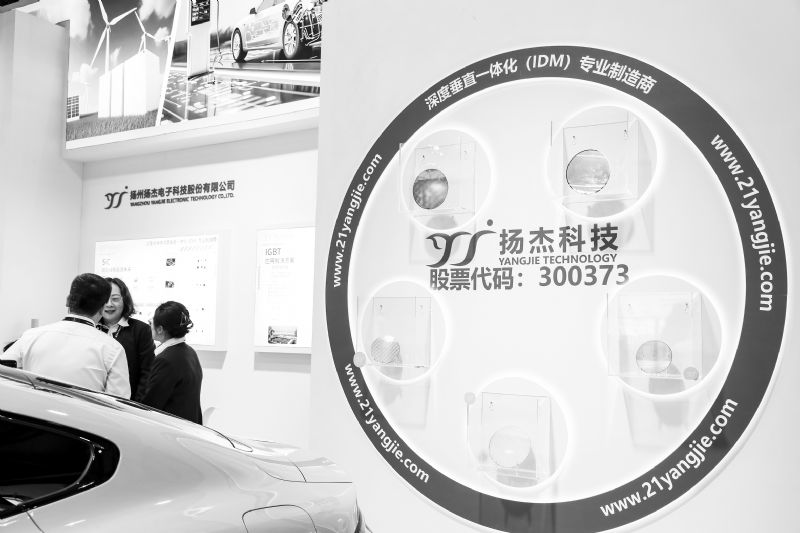
扬杰科技外销营收增12.3%迈向国际化 推员工持股计划力争2027年营收100亿
Chang Jiang Shang Bao· 2025-06-02 22:34
Core Viewpoint - Yangjie Technology aims to climb into the mid-to-high-end manufacturing sector, setting ambitious performance targets for 2027, including a revenue goal of no less than 10 billion yuan and a net profit target of no less than 1.5 billion yuan [2][4][6] Group 1: Financial Performance and Goals - In 2024, Yangjie Technology achieved a revenue of 6.033 billion yuan, representing a year-on-year growth of 11.53%, and a net profit of 1.002 billion yuan, up 8.50% year-on-year [7] - The company’s 2027 performance targets are designed to enhance competitiveness and motivate employees, reflecting the company's ongoing market share expansion and industry competitiveness [7][6] Group 2: International Expansion and Market Position - Yangjie Technology is gradually moving towards group and international operations, with overseas sales revenue reaching 1.364 billion yuan in 2024, a year-on-year increase of 12.28%, accounting for 22.61% of total revenue [3][11] - The company has established a localized R&D, manufacturing, and sales network across multiple countries, including 5 R&D centers and 15 wafer and packaging factories [8][10] Group 3: Employee Stock Ownership Plan - The employee stock ownership plan includes up to 500 participants, including key executives and core business personnel, with performance targets tied to the company's 2027 revenue and profit goals [4][6] Group 4: Research and Development Investment - Yangjie Technology has consistently increased its R&D investment, with expenditures of 293 million yuan, 356 million yuan, and 423 million yuan from 2022 to 2024, reflecting year-on-year growth rates of 21.03%, 21.57%, and 19% respectively [12] - The company holds a total of 655 intellectual property rights, including 114 invention patents, indicating a strong focus on innovation [12]

电动车省电续航的隐藏王牌
2 1 Shi Ji Jing Ji Bao Dao· 2025-06-02 06:38
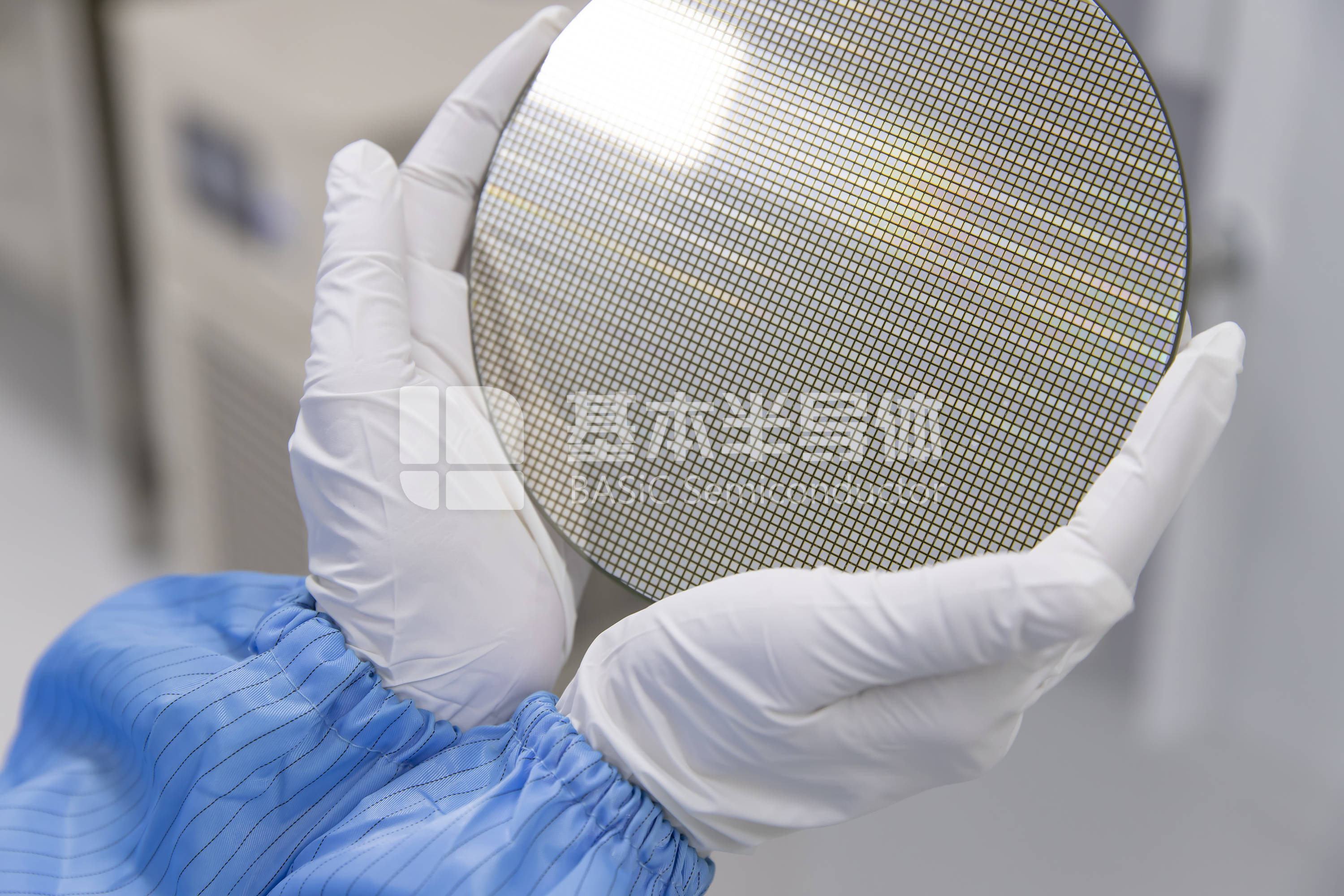
21世纪经济报道记者骆轶琪广州报道 让电动车充电更快、跑得更远的秘密,居然就藏在这个黄色的"圆盘"里? 前不久,小米创始人雷军发布了旗下首款SUV车型YU7,全系搭载800V碳化硅高压平台。上汽通用五 菱也展示了采用碳化硅功率模块的电控。 以及,同等性能下的碳化硅器件,尺寸大概只有硅器件的1/10,那么可以让电驱动系统的重量和体积进 一步被释放出来。 那么综合以上,让重量减轻、损耗减少,即便在恶劣环境中也能维持比较好的续航水平,这让碳化硅逐 渐成为新能源车的好伙伴。 从最开始只有特斯拉愿意用,到今天越来越多国产车型,甚至连造出多款"国民神车"的五菱都在采用碳 化硅制作出来的产品。为什么这几年碳化硅经历了这样的大起大落?碳化硅对新能源车来说到底意味着 什么? 碳化硅也被称为第三代半导体,这种材料有耐高温、耐高压的特性。在同样一种功率器件中,采用碳化 硅材料会比采用硅材料体积更小、实现更高的运行效率。 我们来举几个具体的例子。 目前碳化硅最多是被用在新能源车的主驱逆变器上,它怎么来发挥作用呢? 动力电池储存的是直流电,但电机需要的是交流电,所以在电池包和电机中间,需要一个把直流电变成 交流电的逆变器。这个转换过程 ...

中国SiC碳化硅功率半导体产业“结硬寨,打呆仗”的破局之路
Sou Hu Cai Jing· 2025-06-01 12:45
Core Viewpoint - The development of China's SiC (Silicon Carbide) power semiconductor industry reflects a common path for Chinese semiconductor companies, focusing on IDM (Integrated Device Manufacturer) models to break through barriers, leveraging cost advantages to capture market share, and using capital endurance to gain technological time windows. Despite short-term pains such as losses and price wars, the long-term value is evident as the penetration of SiC in the renewable energy sector continues to rise, positioning leading Chinese SiC companies to dominate the global industry chain restructuring [1][24]. Group 1: Industry Milestones - The strategic adaptation of the Hong Kong Stock Exchange's Chapter 18C rules facilitates the listing of specialized technology companies, easing profitability requirements and emphasizing technological barriers and commercialization potential. Chinese SiC companies have achieved full-scale production across the entire SiC IDM value chain [6]. - Revenue for Chinese SiC power semiconductor companies is projected to grow significantly, with a CAGR of 59.9% from 2022 to 2024, while R&D investment exceeds 30% of revenue, indicating a focus on capacity expansion despite initial losses [8]. - The gross margin for Chinese SiC companies is improving, with the loss rate narrowing from -48.6% in 2022 to -9.7% in 2024, reflecting initial scale effects and cost optimization in automotive-grade modules [8]. Group 2: Capacity and Market Penetration - The capacity utilization rates for Chinese SiC packaging plants are low, with only 52.6% in Wuxi and 45.2% in Shenzhen, yet companies plan to invest 620 million yuan to expand facilities, highlighting a competitive logic of "capacity first" to seize automotive orders [9]. - Chinese SiC companies hold 163 patents and 122 applications, with core products certified for automotive standards, achieving reliability benchmarks comparable to international standards [17]. - The IDM model adopted by Chinese SiC companies integrates design, manufacturing, and testing, reducing supply chain risks and accelerating product iteration, with significant design wins across multiple automotive models [18]. Group 3: Downstream Drivers and Domestic Substitution - The global demand for SiC is heavily driven by the electric vehicle sector, which accounts for 70% of the market, with Chinese companies leveraging cost advantages to capture market share from foreign competitors [19]. - The share of Chinese SiC power modules is expected to increase significantly, especially in the context of market restructuring following the bankruptcy of Wolfspeed, allowing local manufacturers to fill mid-range market gaps [19]. Group 4: Future Trends - The capital-driven technological iteration is evident in the ongoing R&D and expansion of 8-inch wafer production, reflecting market expectations for a technological turning point [21]. - Leading Chinese SiC companies are evolving from single-device offerings to integrated solutions that include modules, driver ICs, and simulation services, thereby lowering design barriers for customers [22]. - To address tariff barriers, Chinese companies are establishing localized supply chains through acquisitions in Europe and setting up manufacturing centers in Southeast Asia, creating a "localized + globalized" supply chain strategy [23].
英国飞行出租车完成首飞;韩国批准SpaceX在韩提供卫星通信服务丨智能制造日报
创业邦· 2025-05-31 03:29
Group 1 - The UK has successfully conducted its first air taxi flight with the VX4 prototype electric aircraft, capable of carrying one pilot and four passengers, with a range of 160 kilometers and a speed of 240 kilometers per hour. The government aims to make air taxis a reality by 2028 [1] - Zhengzhou Airport Economic Comprehensive Experimental Zone has launched its first regular low-altitude logistics test flight, marking a significant step in exploring the low-altitude economy. The test flight utilized the Fengyu Ark 20 drone, achieving a fourfold improvement in delivery speed compared to traditional land transport [1] - South Korea has approved three agreements for foreign low-orbit satellite communication operators, including SpaceX and OneWeb, to provide satellite communication services in the country [1] Group 2 - Arrow Yuan Technology has successfully conducted the first sea recovery verification test of its rocket, becoming the first company in China to achieve a breakthrough in liquid oxygen-methane and stainless steel sea soft landing recovery technology [1] - The largest silicon carbide wafer factory in China has commenced production in Wuhan, contributing 30% of the domestic silicon carbide wafer capacity. This facility, with an investment exceeding 20 billion yuan, aims to address the chip shortage in the new energy sector and is expected to meet the manufacturing needs of 1.44 million electric vehicles [1]
探访富士康郑州工厂:iPhone产线和工人都在向智能升级;天问二号任务发射圆满成功丨智能制造日报
创业邦· 2025-05-30 03:34
Group 1 - Samsung SDI and LGES will establish lithium iron phosphate (LFP) battery production lines in the U.S. for electric vehicles, with a joint factory in Indiana set to introduce LFP production by 2027, previously focused on high-nickel ternary lithium batteries [1] - Foxconn's Zhengzhou factory has implemented significant automation upgrades for iPhone production, achieving over 100% efficiency improvement through modular design and real-time monitoring systems [2] - The Tianwen-2 mission successfully launched to explore and sample asteroid 2016HO3, marking a significant step in China's planetary exploration efforts [3] - The largest silicon carbide wafer factory in Wuhan has commenced production, expected to contribute 30% of China's silicon carbide wafer capacity, addressing the semiconductor shortage in the new energy sector [4] - DJI has acquired land in Shenzhen for 2.287 billion yuan to develop a global headquarters for smart aviation systems, with a construction timeline of 2.5 years to start and 6 years to complete [5]