绿色经济

Search documents
2025年福建省莆田市新质生产力发展研判:以链式集群构建产业生态,莆田新质生产力加速集聚[图]
Chan Ye Xin Xi Wang· 2025-06-27 01:12
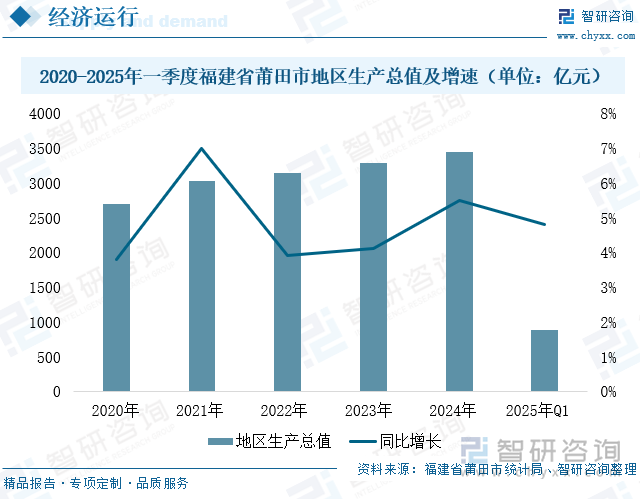
Core Viewpoint - Putian City is focusing on building a "three main, three new" modern industrial system, emphasizing advanced manufacturing, modern services, and characteristic modern agriculture, while nurturing four new driving forces: digital economy, marine economy, green economy, and cultural tourism economy [1][13]. Group 1: New Quality Productive Forces Overview - New Quality Productive Forces, introduced by President Xi Jinping, emphasize innovation as the main driving force, moving away from traditional economic growth models, characterized by high technology, efficiency, and quality [2][3]. - This concept is crucial for promoting high-quality economic development and constructing a modern industrial system [3]. Group 2: Economic Performance of Putian City - Putian City aims for a GDP of 344.27 billion yuan in 2024, with a year-on-year growth of 5.5%, and an optimized industrial structure of 4.4:46.8:48.8 [4]. - The secondary industry contributes significantly to economic growth, while the tertiary industry, driven by cultural tourism and digital empowerment, plays a key role in stabilizing growth [4]. Group 3: Industrial Development Strategy - The city is implementing a strategy of "industrial strength and innovation empowerment," focusing on new materials, intelligent manufacturing, and renewable energy to enhance industrial quality and efficiency [6][21]. - In 2024, the total industrial added value is expected to reach 140.93 billion yuan, with a growth rate of 5.9%, highlighting the acceleration of new quality productive forces [6]. Group 4: Modern Industrial System - Putian is constructing a modern industrial system characterized by advanced manufacturing, modern services, and characteristic agriculture, with a focus on upgrading traditional industries and developing new emerging industries [1][13]. - The "3+5+N" industrial layout aims to create a competitive advanced manufacturing base and a demonstration area for modern industrial integration [1][13]. Group 5: Policy Framework for New Quality Productive Forces - Putian City has introduced various policies to support high-tech industry development, new infrastructure construction, and green high-quality development, forming a comprehensive policy matrix [10][11]. - The government emphasizes the importance of innovation, talent cultivation, and infrastructure improvement to foster new quality productive forces [10][11]. Group 6: Trends in New Quality Productive Forces - Traditional industries are rapidly transitioning to intelligent and digital models, while emerging industries like new functional materials and renewable energy are experiencing significant growth [21][22]. - The city is focusing on industrial collaboration and integration, enhancing the synergy between upstream and downstream industries [23]. - Innovation-driven and green development strategies are being prioritized, with efforts to optimize the innovation ecosystem and promote sustainable practices [24].

运河关注|东盟“黄金签证”开闸:助力贸易文旅等多领域深入合作
Sou Hu Cai Jing· 2025-06-26 10:42
Core Viewpoint - The cooperation between China and ASEAN countries is deepening amidst a turbulent international environment, with significant growth in trade and initiatives to enhance bilateral relations [4][10]. Trade Growth - From January to May this year, the total trade value between China and ASEAN reached 3.02 trillion yuan, an increase of 9.1%, accounting for 16.8% of China's total foreign trade [4]. - Exports to ASEAN amounted to 1.9 trillion yuan, growing by 13.5%, while imports from ASEAN were 1.12 trillion yuan, increasing by 2.3% [4]. Visa Initiatives - China has introduced the "ASEAN Visa" for business personnel and their families from ASEAN countries, allowing for multiple entries over five years with a maximum stay of 180 days [4][9]. - This initiative aims to facilitate personnel movement and deepen cooperation between China and ASEAN [4]. Tourism Development - Guangxi is enhancing its border tourism and cross-border tourism cooperation, leveraging the 75th anniversary of China-Vietnam diplomatic relations [5][7]. - The cross-border tourism cooperation zone at Detian Waterfall has seen significant visitor exchanges, with 17,144 Chinese tourists visiting Vietnam and 8,341 Vietnamese tourists visiting China as of mid-May [8]. Economic Cooperation - The establishment of the China-ASEAN Free Trade Area and the Belt and Road Initiative is optimizing trade policies and infrastructure, creating favorable conditions for deeper cooperation [10]. - The fruit trade between China and ASEAN is highlighted as a key area of growth, with increasing trade volumes and expanding market shares for both sides [10][11]. Future Prospects - The upgraded version of the China-ASEAN Free Trade Area is expected to enhance trade efficiency and boost cross-border e-commerce transactions, potentially exceeding 1.2 trillion USD by 2026 [11].

美国关税背景下中日经贸发展契机展望|宏观经济
清华金融评论· 2025-06-25 10:30
Core Viewpoint - The article discusses the ongoing trade tensions between the US and China, highlighting the impact of high tariffs on consumer goods and the potential for Japanese companies to explore opportunities in the US market while mitigating risks by diversifying their supply chains [1][4]. Summary by Sections US-China Trade Relations - Despite recent agreements to lower tariffs, the current rates remain significantly higher than before the Trump administration, with the US imposing tariffs as high as 145% on Chinese goods, temporarily reduced to 30% under a 90-day agreement [2][4]. - The actual tariff rate for the US on Chinese goods is approximately 51.3%, while China's effective tariff rate on US goods is around 37.5%, indicating a mutual escalation of tariffs that negatively impacts both economies [4][5]. Impact on the US Economy - The high tariffs have led to shortages of consumer goods in the US, contributing to rising prices and empty shelves, while US exports have decreased significantly, with a reported 30% drop in export volumes at the Port of Los Angeles [5][6]. - The temporary nature of the tariff suspension creates uncertainty for businesses, particularly small and medium enterprises, which struggle to plan for the future amid fluctuating trade policies [5][6]. Japan's Trade Dynamics - Japan's trade has been affected by global economic cycles, with exports experiencing fluctuations due to the pandemic and geopolitical tensions, leading to a trade deficit in recent months [9][10]. - Japan's export structure is heavily reliant on high-value products such as automobiles and semiconductors, while its imports are primarily raw materials and energy, making it vulnerable to global price changes [9][10]. Japan-US Trade Negotiations - The US has imposed a 10% base tariff on all Japanese goods, with specific tariffs of 25% on automobiles and parts, which are critical to Japan's economy [14][15]. - Japan is actively seeking the removal of these tariffs, emphasizing the importance of the automotive sector in its export economy, which constituted 28.3% of total exports to the US in 2024 [14][15]. Recent Trends and Challenges - Japan's exports to the US have seen a decline, with a 1.8% drop reported in April 2025, marking the first decrease in four months, primarily driven by reduced automobile exports [17]. - The strengthening of the yen and the depreciation of the dollar have further complicated Japan's export competitiveness, contributing to the trade imbalance [17][12].
2025年中国包装行业应用市场分析:食品包装绿色化推动特种纸包装产量
Qian Zhan Wang· 2025-06-25 05:21
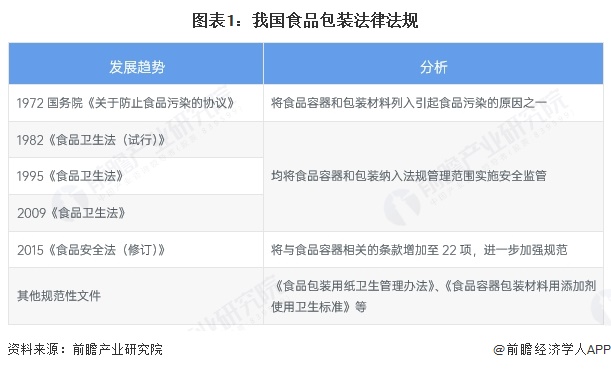
Core Insights - The article highlights the maturity of China's food packaging regulatory framework, emphasizing the importance of food-grade packaging standards and the high entry barriers in the industry [1][4] - It discusses the growth in profits for China's food industry, with a total profit of 643.17 billion yuan in 2024, marking a 5.2% increase from the previous year [6][8] - The article notes the significant increase in the production of specialty paper for food packaging, driven by the global push for green economy and plastic reduction policies [7][8] Regulatory Framework - China's food packaging regulatory system is well-established, with approximately 500 relevant laws and standards aimed at ensuring food safety [1] - The market access system for food packaging includes production licensing, mandatory inspection, market access marking, and supervision [4][5] - The regulations cover a wide range of materials used in food packaging, including plastics, paper, metals, and more [5] Industry Performance - In 2024, 43,163 large-scale food industry enterprises achieved a total profit of 643.17 billion yuan, with a growth rate of 5.2%, which is 8.5 percentage points higher than the overall industrial growth [6][8] - The food manufacturing sector saw a profit increase of 6.3%, while the beverage and refined tea manufacturing sector grew by 7.1% [6] Market Trends - The production of specialty paper for food packaging has been on the rise, with an estimated output of 2.868 million tons in 2024, up from 1.612 million tons in 2018 [8] - The article outlines future trends in food packaging, focusing on green and eco-friendly materials, smart technology integration, and personalized designs [9]
丹麦议长:丹麦与中国应继续深化绿色转型合作
news flash· 2025-06-24 02:43
Core Viewpoint - Denmark and China are actively promoting green economic development and should deepen cooperation in areas such as green transition in the future [1] Group 1: Bilateral Cooperation - Over the past 75 years since the establishment of diplomatic relations, Denmark and China have increasingly deepened cooperation across various fields [1] - The two countries have close collaboration in wind power generation, battery technology, and new energy vehicles [1]
一周要闻·阿联酋&卡塔尔|阿联酋外贸与FDI流入持续增长/上交所举办卡塔尔金融中心投资合作培训
3 6 Ke· 2025-06-23 12:21
Group 1: WeRide, Uber, and RTA Collaboration - WeRide, Uber, and Dubai's Roads and Transport Authority (RTA) signed a cooperation agreement to deploy commercial Robotaxi services in Dubai, with the service expected to launch on the Uber platform within the year [2] - The initial phase will involve commercial operations with safety personnel and pure unmanned testing, aiming for fully unmanned commercial operations by Q1 2026 [2] Group 2: UAE Non-Oil Trade Growth - The UAE's non-oil foreign trade reached a record 835 billion dirhams (approximately 1.6 trillion yuan) in Q1 2025, marking an 18.6% year-on-year increase [2] - The UAE aims to solidify its position as a reliable trade partner and global trade hub, with projections indicating non-oil trade could reach 3.5 trillion dirhams by the end of 2025 [2] Group 3: UAE Economic Ratings and Investments - Standard & Poor's assigned the UAE an "AA" foreign and local currency rating with a stable outlook, reflecting strong fiscal and external conditions [3] - The UAE is projected to see a continued rise in oil and gas production, supporting robust economic growth in 2025-2026 [3] - The UAE ranked as the tenth largest destination for foreign direct investment globally, with inflows expected to reach 167 billion dirhams (approximately 45 billion USD) in 2024, a 48% increase from the previous year [3] Group 4: Renewable Energy Initiatives - The Dubai Electricity and Water Authority (DEWA) is promoting clean energy cooperation through a series of roadshows in China, focusing on solar and energy storage technologies [4] - DEWA's commitment to the Dubai 2050 Clean Energy Strategy and the Dubai 2050 Net Zero Carbon Emissions Strategy aims to position Dubai as a global center for sustainable development and green economy [4] Group 5: Infrastructure and Economic Development - Abu Dhabi's Infrastructure Summit 2025 focused on urban infrastructure development, smart city construction, and sustainable economic discussions, attracting around 2,500 representatives [7] - The electric vehicle charging volume in Dubai increased by 23.6% year-on-year in Q1 2025, with the total number of electric vehicles reaching 39,000, a 5.41% increase from the previous year [7] Group 6: International Collaborations and Investments - The First Abu Dhabi Bank (FAB) became the first local direct participant in the Cross-Border Interbank Payment System (CIPS) in the MENA region, enhancing its capabilities in providing efficient RMB payment solutions [3] - A delegation from Shenzhen's Qianhai Management Bureau visited Dubai's IFZA Free Zone, signing a memorandum of cooperation to strengthen bilateral relations and explore economic collaboration [5]

共筑中国-中亚命运共同体——《弘扬“中国-中亚精神”:区域合作的成就、机遇与展望》智库报告解析
Xin Hua She· 2025-06-22 14:01
Core Viewpoint - The "China-Central Asia Spirit" emphasizes mutual respect, trust, benefit, and assistance, aiming for high-quality development and common modernization among China and Central Asian countries [1][2]. Economic Cooperation - The trade volume between China and Central Asian countries is projected to reach $94.8 billion in 2024, an increase of $5.4 billion from the previous year and over a hundredfold growth from the initial $460 million at the time of diplomatic relations [2][6]. - The establishment of a million-ton agricultural trade park in Kazakhstan by Aijiu Group exemplifies the deepening economic ties, with products like honey and ice cream being exported to China [2][3]. Infrastructure Development - Significant infrastructure projects, such as the China-Europe cross-Caspian express and the China-Kyrgyzstan-Uzbekistan railway, have enhanced connectivity, transforming Central Asian countries from "landlocked" to "land-linked" [3][4]. - The opening of new transportation routes has facilitated smoother trade and travel between China and Central Asia, bolstering economic cooperation [3]. Cultural Exchange - Cultural dialogues between China and Central Asian nations have intensified, with increased cooperation in tourism, healthcare, and cultural exchanges, contributing to a stronger regional community [3][9]. - Chinese films and cultural events have gained popularity in Central Asia, enhancing mutual understanding and cultural ties [3][9]. Security Cooperation - China and Central Asian countries are collaborating on security initiatives to combat traditional and non-traditional threats, establishing a robust security framework for regional stability [4][9]. - The establishment of various cooperative mechanisms, such as the China-Central Asia Public Security Ministers' meeting, reflects a commitment to maintaining peace and security in the region [4][9]. Opportunities for Future Cooperation - The report highlights the potential for cooperation in green and digital sectors, with Central Asia's rich renewable resources aligning with China's investment and technology capabilities [6][7]. - The geographical position of Central Asia as a crossroads between Europe and Asia enhances its economic resilience and international influence through improved infrastructure and logistics [7][8]. Conclusion - The "China-Central Asia Spirit" serves as a guiding principle for fostering deeper ties and achieving shared prosperity, with a focus on mutual support and collaborative development [8][10].
2025年中国五大蓬勃发展的消费经济体报告
Sou Hu Cai Jing· 2025-06-22 07:40
Group 1: Core Insights - The report outlines a strong innovation vitality in China's consumer market by 2025, highlighting five emerging economic sectors that are reshaping lifestyles [1] - The transformation in consumer behavior is driven by technological innovation and evolving demands, leading to a shift from product purchasing to experiential consumption [7] Group 2: Pet Economy - The pet market in China is projected to reach $47.4 billion by 2024, with a compound annual growth rate of approximately 20.9% from 2019 to 2024 [2] - The pet food market is expected to reach $12.9 billion, with a significant trend towards premium products, as over 40% of monthly spending is below $68 [2][21] - The rise of pet ownership in lower-tier cities is noted, while stricter regulations in tier-1 cities have led to a slight decline in pet ownership there [2][19] Group 3: Green Economy - 50% of consumers prioritize sustainable products, with 39% influenced by brands' environmental initiatives [3] - The penetration rate of new energy vehicles has reached 31.6%, indicating a shift towards low-carbon lifestyles [3] - Companies are adopting new business models, with over 80% of the express delivery industry using green packaging [3] Group 4: Sports and Health - The sports market is rebounding, with a notable increase in orders for sports facilities on platforms like Douyin, growing over 68% [4] - The penetration rate of wearable fitness devices has reached 62%, with an average daily usage time of over 45 minutes for fitness apps [4] - The number of participants in urban marathons has increased by 25% annually, reflecting a growing trend in fitness and health management [4] Group 5: Smart Home - The penetration rate of smart home devices exceeds 60% in first-tier cities, with smart appliances expected to account for 50% of the overall home appliance market by 2024 [5] - The popularity of cleaning appliances like robotic vacuums has reached 37.3%, driven by the demand for convenience [5] - Smart home systems are evolving from luxury items to mainstream products, with over 30% of newly renovated homes incorporating interconnected devices [5] Group 6: Personal Finance - 58% of respondents expect annual investment returns below 5%, indicating a conservative approach to personal finance [6] - The proportion of short-term fixed-income products in bank wealth management exceeds 60%, with a 35% increase in money market fund subscriptions [6] - The use of mobile banking for investment has surpassed 80%, reflecting a shift towards digital financial management [6]
人与青山两不负:美丽中国这堂“大课”该怎么上
Zhong Guo Qing Nian Bao· 2025-06-22 02:59
Core Viewpoint - The article discusses the importance of integrating ecological civilization education into university curricula, emphasizing the need for students to understand the concept of "harmonious coexistence between humans and nature" as part of China's modernization process [1][3]. Group 1: Importance of Ecological Education - Ecological civilization education is crucial for university students, who are seen as the driving force behind social development and ecological protection [3][4]. - The integration of digital media allows students to connect with ecological issues more closely, but there remains a cognitive gap between grand ecological narratives and individual actions [3][4]. Group 2: Methods of Teaching Ecological Civilization - The education should focus on translating grand narratives into relatable concepts, such as illustrating how clean energy reduces carbon emissions [3][4]. - Personalizing ecological values is essential, making students realize that ecological literacy is a core competency for modern citizens [4][5]. Group 3: Practical Engagement - Universities should create a green campus atmosphere and encourage students to participate in carbon footprint calculations to understand the ecological impact of their choices [5][6]. - Engaging students in real-world ecological practices, such as volunteering in areas that embody the "green mountains and clear waters" philosophy, enhances their understanding of ecological issues [5][6]. Group 4: Challenges in Ecological Education - Current ecological education often suffers from homogenization and superficiality, leading to a lack of depth in understanding ecological concepts [9][12]. - There are challenges in integrating ecological education into the entire educational process, including the need for a coherent curriculum and addressing regional disparities in educational resources [12][13]. Group 5: Future Directions - The article suggests that ecological education should leverage new technologies, such as artificial intelligence, to enhance teaching methods and resource sharing [13][14]. - A focus on experiential learning in natural settings can deepen students' understanding of their role in ecological preservation and responsibility [10][11].

中美收入差距真相:美国狂借37万亿,中国钱花哪了
Sou Hu Cai Jing· 2025-06-22 02:20
Group 1 - The article highlights the contrasting fiscal situations of the United States and China, emphasizing that while the U.S. reported a revenue of $1.17 trillion, it is heavily burdened by a $37 trillion debt, leading to daily interest payments of $3 billion [1][5][9] - In contrast, China reported a revenue of 6.02 trillion RMB (approximately $830 billion), with a slight decrease in tax revenue but a significant increase in non-tax revenue by 8.8%, driven by state-owned enterprise dividends and asset management [1][7][8] - The article points out that the U.S. relies on debt and inflation to maintain its economic facade, while China is investing in high-end manufacturing and green energy, indicating a more sustainable growth model [9][10] Group 2 - The U.S. fiscal situation is characterized by a deficit of $596.6 billion for the quarter, with major expenditures on social security, healthcare, and defense, consuming 58% of the budget [5][6] - China's revenue from high-end manufacturing sectors, such as the C919 aircraft and drone exports, has seen significant tax revenue increases, indicating a robust industrial growth [7][8] - The article suggests that while the U.S. is facing a financial crisis akin to living on credit, China is focusing on technological innovation and sustainable development, positioning itself for long-term success [9][10]