人工智能

Search documents
中芯国际发布2025年年报
半导体行业观察· 2026-03-26 12:02
Core Viewpoint - SMIC emphasizes that 2025 will be a breakthrough year for the company as it celebrates its 25th anniversary, focusing on deepening reforms and promoting high-quality development [1] Group 1: Financial Performance - In 2025, SMIC achieved a sales revenue of $9.327 billion, representing a year-on-year growth of 16.2%, solidifying its position as the second-largest pure-play foundry globally [4] - The capacity utilization rate increased to 93.5%, up by 8 percentage points year-on-year, while the gross margin rose to 21%, an increase of 3 percentage points [4] - The company maintained a high R&D investment of $774 million, accounting for 8.3% of sales revenue, to enhance its technological innovation system [7] Group 2: Market Trends and Strategic Focus - The smartphone market is expected to grow steadily, driven by U.S. tariff policies, geopolitical factors, and the recovery of emerging markets, while the personal computer market is entering a replacement cycle [6] - The demand for foundry services is increasingly returning to domestic sources, driven by the localization of the supply chain [6] - SMIC is focusing on high-end chip manufacturing to meet the growing demand in local mid-to-high-end sectors, particularly in AI, data centers, and automotive applications [7] Group 3: Technological Advancements and R&D Projects - SMIC is advancing multiple R&D projects, including a 28nm ultra-low leakage platform and a 65nm RF SOI process, aimed at enhancing performance and expanding market applications [10] - The company is committed to continuous innovation and collaboration within the industry, establishing an advanced packaging research institute to support high-quality development [7] - SMIC's R&D team consists of experienced professionals, enabling the company to provide a wide range of foundry services across various technology platforms [8] Group 4: Talent Development and Corporate Culture - SMIC is focused on building a strong talent pool and enhancing corporate culture, emphasizing the importance of human resources in the competitive semiconductor industry [11] - The company is actively recruiting recent graduates and experienced professionals while implementing diverse compensation strategies to retain talent [11] - SMIC is committed to corporate social responsibility, promoting green and sustainable development while fostering a caring corporate environment [11] Group 5: Future Outlook - SMIC views 2026 as a strategic opportunity period, aiming to strengthen its market position and achieve further breakthroughs in its global operations [11] - The company anticipates continued growth driven by the return of the supply chain to domestic sources and the demand for storage chips in AI applications [12] - SMIC projects that its sales revenue growth will exceed the average of comparable peers, with capital expenditures remaining stable compared to 2025 [12]



MEITUAN(03690) - 2025 Q4 - Earnings Call Transcript
2026-03-26 12:02
Financial Data and Key Metrics Changes - In Q4 2025, total revenue was RMB 92.1 billion, an increase of 4.1% year-over-year [17] - Cost of revenue ratio increased by 11.6 percentage points to 33.8%, driven by higher consumer incentives, rider incentives, and increased overseas operational costs [17] - Selling and marketing expenses ratio rose by 14.8 percentage points to 34.4%, due to increased investment in promotion and user incentives [17] - R&D expenses ratio increased to 7.6%, reflecting higher investment in AI [17] - Total segment operating loss narrowed to RMB 14.7 billion, with adjusted net loss at RMB 15.1 billion [18] - Cash and cash equivalents totaled RMB 166.8 billion as of December 31, 2025, with operating cash outflow narrowing to RMB 6.6 billion [18] Business Line Data and Key Metrics Changes - Core local commerce segment revenue was RMB 64.8 billion in Q4, down 1.1% year-over-year, but order volume and GTV showed healthy growth [19] - Food delivery average order value (AOV) saw a significant year-over-year drop, impacting commission revenue growth [21] - New initiatives segment revenue reached RMB 27.3 billion, up 18.9% year-over-year, driven by KeeTa and grocery retail expansion [22] Market Data and Key Metrics Changes - Multiple consumption categories, including medicine, leisure, and fitness, maintained double-digit growth in order volume and GTV [19] - KeeTa achieved positive unit economics in Hong Kong and continued to grow in Saudi Arabia, with plans to expand into Qatar, Kuwait, U.A.E., and Brazil [11][12] Company Strategy and Development Direction - The company aims to enhance its local service platform through AI integration and a comprehensive membership program [4][5] - Focus on sustainable ecosystem development and empowering small and medium-sized merchants [10] - Strategic investments in grocery retail and international expansion, particularly through the acquisition of Dingdong [56] Management's Comments on Operating Environment and Future Outlook - Management acknowledged intense competition and regulatory scrutiny in the food delivery market, emphasizing a focus on quality growth and operational efficiency [41][44] - The company remains committed to leveraging AI to enhance user experience and operational capabilities [13][31] - Confidence in the long-term growth potential of core local commerce and grocery retail sectors [16][57] Other Important Information - The company upgraded its Meituan membership program, enhancing user engagement and transaction frequency [9] - Significant investments in AI technology, with the launch of AI assistants Xiao Mei and Xiao Tuan to improve consumer interaction [14][32] Q&A Session Summary Question: AI competition and future development - Management views AI as a strategic opportunity to enhance product offerings and is committed to developing in-house models while leveraging third-party technologies [27][31] Question: Impact of regulatory investigations on strategy - Management is actively cooperating with regulatory investigations and is focused on quality growth while defending market leadership [41][44] Question: Competitive landscape and strategy against Douyin's subsidies - Management acknowledges increased competition but emphasizes a long-term focus on sustainable development and operational efficiency [46][48] Question: Acquisition of Dingdong and its synergies - The acquisition aims to enhance grocery retail capabilities and improve service quality in East China [55][56] Question: Updates on KeeTa's international strategy - KeeTa will focus on current markets, with expectations for profitability in Saudi Arabia and continued investment in Brazil [63][66]

移卡(09923) - 2025 H2 - 电话会议演示
2026-03-26 12:00
2025 Full Year Investor Presentation M a r 2 0 2 6 1 Legal Disclaimer 2 • This document has been prepared by YEAHKA LIMITED (the "Company" or "us") for a limited number of recipients and for information purposes only and not for public dissemination. You and your directors, officers, employees, agents and affiliates must hold this document and any oral information provided in connection with this document in strict confidence and may not communicate, reproduce, distribute or disclose it to any other person, ...
重庆市委书记会见宇树科技王兴兴
证券时报· 2026-03-26 11:58
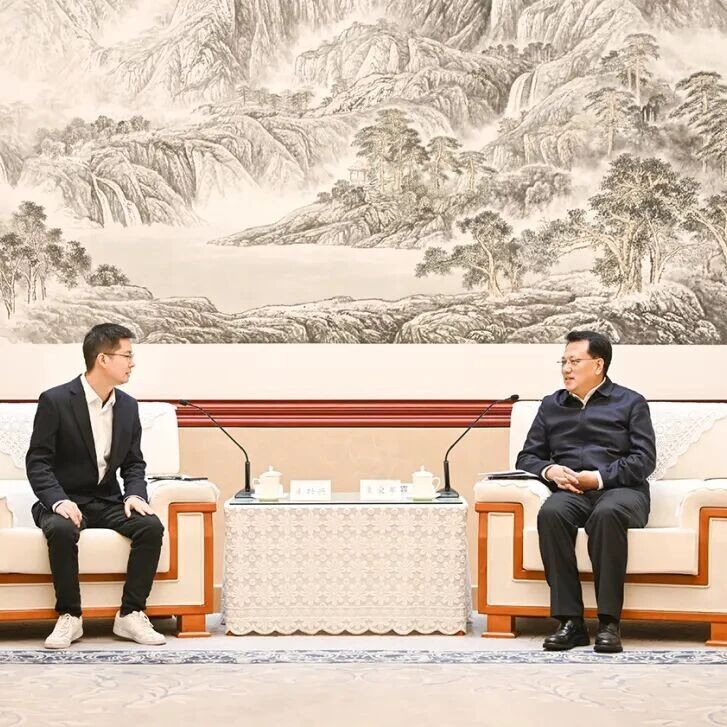
Core Viewpoint - The meeting between Chongqing Municipal Secretary Yuan Jiajun and Yushu Technology's founder Wang Xingxing highlights the collaboration potential in artificial intelligence and robotics, emphasizing Chongqing's strategic advantages for industrial development and innovation [4][5]. Group 1: Meeting Highlights - Yuan Jiajun welcomed Wang Xingxing and his team, expressing gratitude for Yushu Technology's support in Chongqing's economic and social development [4]. - Yuan emphasized Chongqing's advantages, including its location, industrial foundation, and talent resources, which align well with Yushu Technology's development needs [5]. - The meeting aimed to deepen cooperation in artificial intelligence applications across various sectors, including industrial manufacturing and public services [4][5]. Group 2: Yushu Technology's Developments - Yushu Technology is a leading global company in high-performance general-purpose robotics, focusing on humanoid and quadruped robots [5]. - The company has seen significant revenue growth, with projected revenues of 1.23 billion yuan in 2022, 1.59 billion yuan in 2023, and 3.92 billion yuan in 2024, reaching 11.67 billion yuan in the first nine months of 2025 [6]. - The company plans to go public on the Science and Technology Innovation Board, aiming to raise 4.202 billion yuan for various projects, including research and development of intelligent robots [6].
中韩科技创新合作论坛之走进神州控股
Xin Lang Cai Jing· 2026-03-26 11:57
Core Insights - The event showcased the technological strength and open attitude of the company as a leader in China's digital transformation, laying a solid foundation for future deep cooperation with Korean enterprises in artificial intelligence and smart supply chain sectors [2][4] Group 1: Event Overview - On March 25, a delegation of 13 prominent Korean technology companies visited the company's headquarters in Beijing as part of the 2026 Zhongguancun Forum Sino-Korean Technology Innovation Cooperation Forum [1][2] - The delegation was led by the company's Chief Technology Officer Zhang Hupo and Brand Marketing Head Wang Xinnan, who introduced the company's innovations and practical achievements in the AI + supply chain field [1][2] Group 2: Digital China Innovation Center Visit - The delegation first visited the Digital China Innovation Center, where they gained a comprehensive understanding of the company's leading-edge explorations in digital technology, aimed at enhancing government digital governance efficiency and helping enterprises reduce costs and increase efficiency [1][2] - The company's "Data x AI" core strategy aligns closely with the technological development directions of the Korean representatives, generating significant interest among them [1][2] Group 3: Discussion on Industry Collaboration - During the discussions, topics included not only cutting-edge technologies like artificial intelligence but also specific applications in supply chain software systems, warehousing logistics intelligence, and cross-border trade [3] - The company is pushing for a transition in supply chain operations from traditional models to data-driven autonomous decision-making by deeply embedding AI technology into core processes such as orders, warehousing, and transportation [3] - Both parties agreed that through technological exchanges and resource complementarity, they could effectively enhance cross-border logistics efficiency and optimize the intelligence level of various supply chain segments [3]
中国太保(02601) - 海外监管公告 - 中国太保2025年年度业绩发佈
2026-03-26 11:49
香港交易及結算所有限公司及香港聯合交易所有限公司對本公告的內 容 概 不 負 責,對 其 準 確 性 或 完 整 性 亦 不 發 表 任 何 聲 明,並 明 確 表 示,概 不對因本公告全部或任何部分內容而產生或因倚賴該等內容而引致的 任 何 損 失 承 擔 任 何 責 任。 中國太平洋保險(集團)股份有限公司 CHINA PACIFIC INSURANCE (GROUP) CO., LTD. (於中華人民共和國註冊成立的股份有限公司) (股份代號:02601) 海外監管公告 本 公 告 乃 依 據《香 港 聯 合 交 易 所 有 限 公 司 證 券 上 市 規 則》第13.10B條的披 露 義 務 而 作 出。 茲 載 列 該 公 告 如 下,僅 供 參 考。 承董事會命 中 國 太 平 洋 保 險(集 團)股 份 有 限 公 司 傅 帆 董事長 香 港,2026年3月27日 於 本 公 告 日 期,本 公 司 執 行 董 事 為 傅 帆 先 生 和 趙 永 剛 先 生;非 執 行 董 事 為 黃 迪 南 先 生、路 巧 玲 女 士、王 他 竽 先 生、王 昱 華 女 士、陳 然 先 生、周 東 輝先生和J ...
法国伯恩斯坦:《科技的未来:太空科技——全球机遇研究报告》
欧米伽未来研究所2025· 2026-03-26 11:41
Core Viewpoint - The report by Bernstein emphasizes that the space economy has transitioned from a distant ambition to a tangible investment theme, driven by renewed demand in communication, earth observation, and defense, with governments opening doors to commercialization [2][3]. Group 1: Market Size and Growth - The global space economy is currently estimated at approximately $615 billion, with 78% driven by the private sector. Bernstein predicts that this market will exceed $1 trillion annually within the next decade due to the rise of private markets and terminal applications [3]. Group 2: Value Chain Breakdown - The space technology ecosystem consists of three main pillars: upstream (hardware infrastructure), midstream/downstream (economic entities), and frontier/exploration (option layer). Over 70% of the value in the space economy is concentrated in satellites and downstream services like communication and navigation [5][6]. - The downstream sector, particularly navigation and positioning (GNSS), is a massive market valued at $307 billion, while communication and internet services represent the largest revenue pool [6]. Group 3: Investment Dynamics - The space economy is structured into five levels: raw materials and components, subsystems and hardware manufacturing, system integration (satellites and launch vehicles), ground operations, and high-margin downstream applications and data services. The future space tech giants may resemble software and digital infrastructure companies rather than traditional aerospace firms [7][9]. Group 4: Drivers of Change - Four core drivers have transformed the space economy: 1. A cost revolution, with launch costs dropping from $54,500 per kilogram to around $1,500 due to reusable rockets like SpaceX's Falcon 9, and further reductions expected with the Starship program [9][10]. 2. Enhanced computing power and data tradability, with AI enabling the extraction of actionable intelligence from satellite data, shifting the industry focus from hardware to software and data [9][10]. 3. A shift in orbital focus from geostationary to low Earth orbit (LEO), democratizing access to space technology [10]. 4. Increased involvement of sovereign nations, which have transitioned from being sole operators to key customers and regulators in the space sector [10]. Group 5: Geopolitical Landscape and Asian Momentum - The space race has evolved, with Asian countries like China and India emerging as significant players. China holds the second-largest market share in the global space economy, while India's space economy is valued at $10-15 billion, with ambitions to reach $50 billion by 2030 [13][14]. - The report highlights that defense and sovereign contracts are crucial growth drivers, with global military space spending exceeding $60 billion [14][15]. Group 6: Investment Guidance - Bernstein identifies four key factors for space companies to succeed: 1. Compounding growth of data assets, creating a competitive moat that is hard for new entrants to replicate [17]. 2. Deep integration into business processes, raising customer switching costs [17]. 3. Favorable cost structures allowing participants in regions like India to serve large markets profitably [17]. 4. Visibility of government orders, providing certainty despite the risks of over-reliance on government revenue [18]. - Vertical integration is becoming a prominent trend, with companies across the globe pursuing strategies that span the entire value chain [18].

市场成交额跌破2万亿
Tebon Securities· 2026-03-26 11:06
Market Analysis - The A-share market experienced a downturn with total trading volume falling below 2 trillion yuan for the first time in March, indicating a decrease in market activity and increased investor caution [2][5][7] - The Shanghai Composite Index closed at 3889.08 points, down 1.09%, while the Shenzhen Component and ChiNext Index also saw declines of 1.41% and 1.34% respectively, reflecting a broad market pullback [2][5] - Defensive sectors such as coal, oil and banking showed slight gains, while financial and technology sectors faced significant declines, indicating a shift in market sentiment towards safer investments [5][7] Bond Market - The government bond futures market saw a comprehensive increase, with the 30-year bond futures rising by 0.22% and the 10-year bond futures increasing by 0.08%, suggesting strong demand for long-term bonds [11] - The central bank continued its liquidity support by conducting a net injection of 2110 billion yuan through reverse repos, maintaining a stable and accommodative funding environment [11] Commodity Market - The commodity index rose by 0.20%, with energy and chemical products showing notable strength, particularly methanol which surged by 4.74% [9][15] - Geopolitical tensions, particularly in the Middle East, are expected to keep commodity prices volatile, with energy products likely to experience price support due to ongoing conflicts [15] Trading Hotspots - Key sectors to watch include artificial intelligence, commercial aerospace, nuclear fusion, and consumer goods, driven by policy support and technological advancements [12][14] - The financial sector remains sensitive to trading volume fluctuations in the A-share market, while precious metals are influenced by central bank policies and geopolitical risks [12][14] Summary of Core Thoughts - The market is currently facing profit-taking pressures after recent gains, compounded by geopolitical uncertainties that heighten market volatility [14] - The bond market is expected to maintain a strong and stable outlook due to ongoing liquidity support from the central bank [14] - Commodity markets are likely to experience high volatility, particularly in energy and chemical sectors, influenced by geopolitical developments [14]
CPU,再度爆火
半导体芯闻· 2026-03-26 10:51
Core Viewpoint - The rise of AI is driving a renewed demand for CPUs, which were previously overshadowed by GPUs, marking a significant shift in the semiconductor industry [1][2][3]. Group 1: CPU Demand and Market Dynamics - Arm's CEO, Rene Haas, highlighted that the rapid development of AI requires an increasing number of CPUs, stating, "you need more and more CPUs, a massive amount of CPUs" [1]. - The emergence of agentic AI has sparked a surge in CPU demand, prompting major chip manufacturers to quickly adapt and seize opportunities [2]. - Deloitte's semiconductor expert noted that the industry is rebalancing towards CPUs, which have always been part of AI architecture but are now experiencing explosive growth in demand [2]. Group 2: Arm's Strategic Shift - Arm has transitioned from licensing CPU architectures to designing and selling its own chips, directly competing with partners like Nvidia and Qualcomm [2][3]. - The newly launched chip is claimed to be "the most energy-efficient CPU for agentic AI," achieving twice the efficiency of competing processors [2]. - Arm anticipates significant financial growth from this shift, projecting a fivefold increase in revenue to approximately $25 billion over the next five years, exceeding analyst expectations by about one-third [3]. Group 3: Partnerships and Market Potential - Meta has become a primary partner and initial customer for Arm's new chip, alongside other clients such as OpenAI and SAP, indicating strong market interest [3]. - The overall potential market for data center CPUs is expected to grow to around $100 billion annually within five years [5]. - Meta's infrastructure head emphasized the need for vast amounts of chips to support their ambitious goal of providing personal superintelligence to billions [5]. Group 4: Industry Consensus on Computational Needs - OpenAI's VP noted a shift from reliance on single or few processors to a focus on "overall system performance," underscoring the critical role of CPUs in AI development [5]. - The consensus in the industry is that the demand for computational power has outstripped the supply capabilities, highlighting the urgency for more CPUs [5].
AI越进化,教育越要守住“打基础”
经济观察报· 2026-03-26 10:49
Core Viewpoint - The article emphasizes the importance of maintaining foundational skills in education despite the rise of AI, arguing that these skills are essential for human autonomy and critical thinking in the future [1][6]. Group 1: Impact of AI on Education - The rapid advancement of AI has led to significant changes in society, with various interactive AI applications becoming integral to daily life within a short period [2]. - There is a pressing need for educational reform, as traditional methods of rote learning may become obsolete, and core competencies should be prioritized over mere academic performance [2]. Group 2: Importance of Foundational Skills - Basic skills such as writing, arithmetic, and reading are irreplaceable, as they form the basis for critical thinking and self-expression [4][5]. - Writing is not just about producing text; it is a process that helps organize thoughts and develop logical reasoning, which is crucial for effective communication [4]. - Arithmetic training fosters a disciplined thought process, emphasizing that the goal is not just to perform calculations but to cultivate a rigorous mindset [4]. Group 3: The Role of Reading and Memory - While AI can provide answers, the ability to ask meaningful questions relies on a solid knowledge framework, which is built through reading [5]. - Deep reading is essential for maintaining cognitive engagement and combating mental inertia, highlighting the need for traditional reading practices in an AI-driven world [5]. Group 4: Balancing Change and Tradition - The article advocates for a balanced approach to educational reform, where foundational skills are preserved while adapting to new technologies [6][7]. - Embracing new methods does not mean discarding the old; rather, foundational skills are necessary for developing higher-order thinking skills like creativity and critical analysis [6][7].