
全国统一大市场

Search documents
金元证券资讯晨报-20251222
Jinyuan Securities· 2025-12-22 05:23
Core Insights - The report highlights the performance of major stock indices, indicating a mixed trend across different markets with notable movements in the US and Asia [6][13]. - The report emphasizes the growth in the aviation cargo sector in China, driven by international market demand, with a year-on-year increase of 13.6% in cargo and mail transport volume [16]. - The report discusses significant developments in the technology sector, including Samsung's launch of the first 2nm process smartphone application processor, which is expected to enhance performance significantly [19]. International Market Overview - The report notes that the Dow Jones Industrial Average increased by 0.38% to 48,134.89 points, while the S&P 500 rose by 0.88% to 6,834.50 points, and the Nasdaq Composite gained 1.31% to 23,307.62 points [13]. - European markets showed slight gains, with the DAX30 up by 0.37% and the FTSE 100 up by 0.61% [13]. - In the Asia-Pacific region, the Hang Seng Index rose by 0.75%, while the Nikkei 225 increased by 1.03% [13]. Domestic News - The report mentions the implementation of a "zero tariff" policy for imported vehicles in Hainan, aimed at businesses in transportation and tourism, marking a significant regulatory change [14]. - The establishment of the first L3-level autonomous driving license plate in Chongqing signifies a major advancement in China's autonomous vehicle regulations [15]. - The Central Economic Work Conference emphasizes the importance of innovation-driven growth and the establishment of a unified national market, addressing issues of competition and pricing in various industries [17][18]. Company-Specific Developments - The report indicates that Chinese concept stocks mostly rose, with the Nasdaq China Golden Dragon Index increasing by 0.86% [19]. - Key company announcements include the approval of an IPO for a semiconductor company by a subsidiary of Shengfeng Cement and the clinical trial approval for a new depression treatment by a subsidiary of Jiankangyuan [19]. - McDonald's has achieved full coverage in China's provincial administrative regions with the opening of its first store in Qinghai, reflecting its expansion strategy [19].
别再“内卷”了,中国经济要通关
Sou Hu Cai Jing· 2025-12-22 03:08
Core Viewpoint - The article emphasizes the need for a unified national market in China to eliminate internal competition and regulatory barriers, which hinder economic growth and innovation [6][7]. Group 1: Market Challenges - Companies are experiencing pressure on profits, reduced R&D investment, and declining confidence due to the phenomenon of "low-price competition," which is attributed to inconsistent regulations and standards across regions [6]. - The current market environment leads to a focus on price competition rather than quality and innovation, resulting in overall industry harm [6]. Group 2: Proposed Solutions - The establishment of a unified national market aims to address these hidden barriers by replacing vague "implicit rules" with clear "explicit rules," facilitating the movement of resources and providing better market visibility for companies [6]. - Key measures include strengthening fair competition reviews, improving factor pricing mechanisms, standardizing investment attraction practices, and addressing "involutionary" competition [6]. Group 3: Future Outlook - The unified national market is viewed as a starting point rather than an endpoint, where rules will take precedence over prices, leading to natural innovation and restored economic confidence [7][8].


扩内需为何排在八项重点任务之首?
Jing Ji Wang· 2025-12-22 02:55
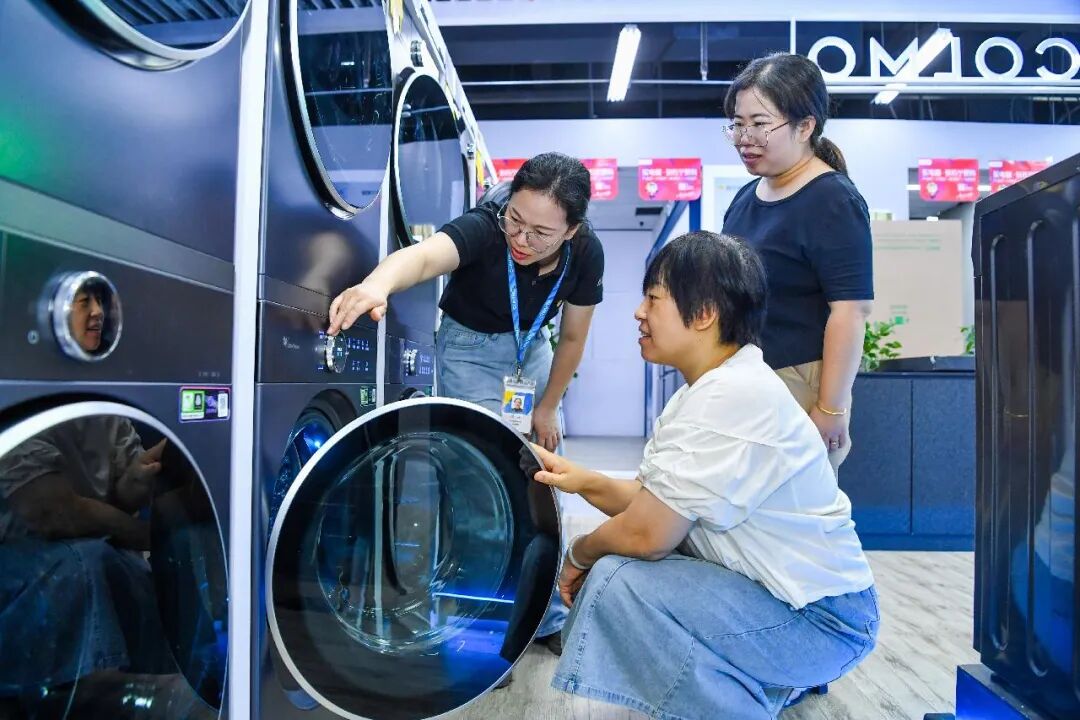
党的十八大以来,我国不断提升国内供给质量水平,持续释放消费和投资需求,内需对经济发展的支撑作用明显增强,是拉动我国经济增长的主动力 和稳定锚。2013—2024年,我国经济保持了年均6.1%的增长,内需对经济增长的平均贡献率达93.1%,其中最终消费支出和资本形成总额的平均贡献率分 别为55%和38.1%,消费的基础作用和投资的关键作用进一步发挥。 今年前三季度,最终消费支出对经济增长贡献率达53.5%,比上年全年提升9个百分点,继续发挥经济增长主引擎作用。 我国消费向新而行,新能源汽车销量连续10年全球第一。服务性消费占居民人均消费支出的比重从2013年的39.7%提高到2024年的46.1%。投资向优 发力,高技术产业投资持续多年快速增长,2018—2024年年均增长12.1%。 当前,世界百年未有之大变局加速演进,必须坚定实施扩大内需战略,以内需的稳定发展对冲外需的不确定性。 要准确把握国内市场发展规律,充分发挥内需对经济发展的支撑作用。统筹稳就业、稳企业、稳市场、稳预期,进一步做强国内大循环,有效应对外 部冲击挑战,推动我国经济平稳健康可持续发展。 中央经济工作会议着眼于确保"十五五"开好局、起好步, ...
中原期货晨会纪要-20251222
Zhong Yuan Qi Huo· 2025-12-22 02:34
1. Report Industry Investment Rating No relevant content provided. 2. Core Views of the Report - This week, the global market enters the "Christmas mode", with stock markets in the US, Europe, and Hong Kong closed on Christmas Day. Key economic data from China, the US, and the UK will be released, and the selection of the Fed Chairman is highly anticipated. Gold and crude oil trends are in focus. Huawei and Leapmotor will hold product and anniversary press conferences respectively [7]. - The "zero - tariff" imported car policy in the Hainan Free Trade Port has been officially implemented, but it only applies to enterprises engaged in transportation and tourism in Hainan [7]. - The first L3 - level autonomous driving license in China was issued in Chongqing, marking that China may become the first country to scale - release L3 - level autonomous driving [7]. - The Central Economic Work Conference emphasizes innovation - driven development and the construction of a unified national market. The National Market Regulatory Administration has issued a compliance guide for the automotive industry's price behavior [8]. - As of the end of the first half of the year, the total trust asset scale of the Chinese trust industry exceeded 30 trillion yuan, ranking third in the asset management market [8]. - Bohai Oilfield's cumulative oil and gas equivalent production in 2025 exceeded 40 million tons, setting a new record [9]. - Fed's Harker tends to keep interest rates stable before spring and opposes recent rate cuts due to inflation concerns [9]. 3. Summary by Relevant Catalogs 3.1 Chemicals | Commodity | Price on 2025/12/22 (8:00) | Price on 2025/12/21 (15:00) | Change | Change Rate | |---|---|---|---|---| | Coking Coal | 1,104.00 | 1,108.00 | -4.0 | -0.361% | | Coke | 1,735.50 | 1,597.50 | 138.0 | 8.638% | | Natural Rubber | 15,170.00 | 15,190.00 | -20.0 | -0.132% | | 20 - grade Rubber | 12,330.00 | 12,360.00 | -30.0 | -0.243% | | Plastic | 6,320.00 | 6,320.00 | 0 | 0% | | Polypropylene PP | 6,208.00 | 6,213.00 | -5.0 | -0.080% | | PTA | 4,980.00 | 4,882.00 | 98.0 | 2.007% | | PVC | 4,594.00 | 4,652.00 | -58.0 | -1.247% | | Asphalt | 2,940.00 | 2,909.00 | 31.0 | 1.066% | | Methanol | 2,167.00 | 2,148.00 | 19.0 | 0.885% | | Ethylene Glycol | 3,746.00 | 3,738.00 | 8.0 | 0.214% | | Styrene | 6,443.00 | 6,402.00 | 41.0 | 0.640% | | Glass | 1,039.00 | 1,041.00 | -2.0 | -0.192% | | Crude Oil | 431.90 | 426.60 | 5.30 | 1.242% | | Fuel Oil | 2,415.00 | 2,390.00 | 25.0 | 1.046% | | Soda Ash | 1,174.00 | 1,176.00 | -2.0 | -0.170% | | Pulp | 5,610.00 | 5,506.00 | 104.0 | 1.889% | | LPG | 4,092.00 | 4,099.00 | -7.0 | -0.171% | | Caustic Soda | 2,164.00 | 2,164.00 | 0 | 0% | | ЬХ | 7,222.00 | 7,070.00 | 152.0 | 2.150% | [4] 3.2 Agricultural Products | Commodity | Price on 2025/12/22 (8:00) | Price on 2025/12/21 (15:00) | Change | Change Rate | |---|---|---|---|---| | Yellow Soybean No.1 | 4,090.00 | 4,052.00 | 38.0 | 0.938% | | Yellow Soybean No.2 | 3,674.00 | 3,676.00 | -2.0 | -0.054% | | Bean Meal | 2,738.00 | 2,735.00 | 3.0 | 0.110% | | Rapeseed Meal | 2,322.00 | 2,323.00 | -1.0 | -0.043% | | Egg | 7,718.00 | 7,712.00 | 6.0 | 0.078% | | Rapeseed Oil | 8,717.00 | 8,744.00 | -27.0 | -0.309% | | Palm Oil | 8,276.00 | 8,292.00 | -16.0 | -0.193% | | White Sugar | 5,109.00 | 5,088.00 | 21.0 | 0.413% | | Yellow Corn | 2,200.00 | 2,192.00 | 8.0 | 0.365% | | Corn Starch | 2,502.00 | 2,502.00 | 0 | 0% | | Cotton No.1 | 14,050.00 | 14,015.00 | 35.0 | 0.250% | | Cotton Yarn | 20,150.00 | 20,050.00 | 100.0 | 0.499% | [4] 3.3 Morning Meeting Views on Major Varieties 3.3.1 Agricultural Products - **Sugar**: On December 19, the sugar futures closed at 5088 yuan/ton, showing a weak trend. Supply pressure is the core driver. It is recommended to maintain a bearish view, paying attention to the price around the cost line. Resistance is at 5100 - 5110 yuan/ton [11]. - **Corn**: On December 19, the corn futures closed at 2192 yuan/ton, with prices oscillating at the bottom. Supply pressure is emerging, while demand is divided. It is advisable to wait and see, focusing on the support at 2180 yuan/ton and the resistance at 2200 yuan/ton [11]. - **Pigs**: The national average price of live pigs increased slightly. The futures market is in a weak - reality and improving - expectation situation. There are weak rebound opportunities, and it is advisable to use the calendar - spread reverse arbitrage strategy [12]. - **Eggs**: The spot price in Hebei was stable with a slight decline. The market is bearish, and it is recommended to hold the calendar - spread reverse arbitrage [12]. - **Cotton**: On December 19, the cotton futures closed at 14015 yuan/ton, showing a strong - oscillating trend. Supply pressure is short - term, and demand is expected to improve. It is recommended to build long positions at dips near the new support level of 13900 - 13950 yuan/ton [13]. 3.3.2 Energy and Chemicals - **Urea**: The spot market price is stable. Supply has decreased due to environmental protection, and demand support from compound fertilizer enterprises has weakened. The UR2605 contract is expected to operate in the range of 1650 - 1750 yuan/ton [13]. - **Caustic Soda**: The short - term supply - demand pattern is stable, and the price is in a weak - stable adjustment. There is a short - term short - covering rebound [13]. - **Coking Coal**: The production capacity utilization rate has increased, and supply is relatively loose. Steel mills' maintenance has weakened the replenishment demand for coking coal and coke, which are expected to be in a weak - oscillating state [13]. - **Log**: The futures price is in a weak state. Supply is decreasing, but demand is weak. It is recommended to wait and see or try short positions at high prices [14]. - **Pulp**: The market presents a situation of strong expectations and weak reality. The price is high, and there is a risk of a high - level correction. It is necessary to be cautious when chasing long positions [14]. - **Double - offset Paper**: The price is in a weak - oscillating state. Supply is excessive, and demand is weak. It is recommended to consider short positions at high prices near 3980 yuan/ton [14]. 3.3.3 Non - ferrous Metals - **Copper and Aluminum**: The market sentiment has cooled, and prices are adjusting at high levels. Pay attention to macro risks [15]. - **Alumina**: The supply - demand pattern is in surplus, and there is a short - term short - covering rebound [15]. - **Rebar and Hot - rolled Coil**: The fundamental pressure is not significant, and prices are expected to oscillate in the range of 3000 - 3200 yuan/ton for rebar and 3200 - 3350 yuan/ton for hot - rolled coil [15]. - **Ferroalloys**: The supply - demand drive for ferroalloys at the end of the year is weak. Prices follow the trend of the black - series market, and it is not advisable to chase high prices [15]. - **Lithium Carbonate**: The futures price has broken through the 110,000 - yuan mark. Supply may increase, but demand from the energy - storage sector is strong. It is recommended to be cautiously bullish [15]. 3.3.4 Options and Finance - **Stock Index Options**: On December 19, the three major A - share indices rose. Trend investors can focus on the strength - weakness arbitrage opportunities among varieties, and volatility investors can sell straddles to short volatility [20]. - **Stock Index**: On December 19, the three major indices closed higher. It is expected that the index will oscillate in a range at the end of the year. It is advisable to buy on dips and take profits on rallies, keeping a flexible position [22][23].
全国首个大宗商品资源配置枢纽的浙江答卷
Qi Huo Ri Bao Wang· 2025-12-22 02:29
Core Insights - The Zhejiang International Bulk Commodity Trading Center has transitioned from a single oil and gas trading platform to a multi-category bulk commodity trading platform, marking a significant milestone in its first year of operation [1][2] Group 1: Platform Integration - The bulk commodity resource allocation hub aims to integrate the entire supply chain functions of bulk commodities, enhancing global resource allocation efficiency [2] - The platform has expanded its offerings from oil and gas to include steel, non-ferrous metals, rubber, and coal through equity integration with existing trading markets [2] - The chairman of Zhejiang Dazong emphasized that the integration is not merely a physical addition but aims to create synergistic effects, fostering an open and shared trading ecosystem [2] Group 2: Trading Performance - As of December 9, the trading volume of Zhejiang Dazong exceeded 420 billion yuan, with over 100 million tons traded [2] - The self-developed "ZME Easy Trading" system has covered 22 energy and chemical products, achieving a cumulative trading scale of 49 billion yuan, thereby enhancing resource integration and service efficiency [2] Group 3: Supervision Mechanism - Given the lack of mature construction experience, Zhejiang Dazong has developed a regular supervision mechanism to mitigate risks associated with integration, institutional innovation, and fund usage [3] - A closed-loop management mechanism has been established to ensure compliance and smooth operation of the platform, focusing on problem discovery, rectification, and tracking [3] Group 4: Pricing Power - The hub aims to establish pricing influence in the international bulk commodity market, moving from reliance on Singapore's pricing to developing its own pricing benchmarks [4] - New pricing products have been launched, including the "Zhou Shan Low Sulfur Fuel Oil Tax-Free Bunker Supply Seller Quotation," which is based on domestic futures prices [4] - The platform has implemented an intelligent supervision model to ensure full-process visibility and has developed risk warning models to identify potential issues [4] Group 5: Alliance Building - The establishment of the China (Zhejiang) Free Trade Zone Bulk Commodity Resource Allocation Hub Full Industry Chain Alliance aims to enhance cooperation among industry players and improve resource allocation efficiency [6] - The alliance focuses on various supply chain aspects, facilitating information sharing and business connections among member units [6] - The development trajectory of Zhejiang Dazong reflects a strategic path to enhance platform capabilities in alignment with national strategies [6]
连平:推动内外循环深度融合
Sou Hu Cai Jing· 2025-12-22 01:52
Core Viewpoint - The Chinese economy is at a historical juncture as it transitions from the "14th Five-Year Plan" to the "15th Five-Year Plan," facing both opportunities and challenges in the macroeconomic environment. The focus for 2026 is on balancing short-term recovery with long-term transformation, emphasizing sustainable consumption growth and the integration of "internal circulation" and "high-level opening up" strategies [1][3]. Group 1: Economic Environment and Policy Direction - The global economy is still searching for a recovery rhythm amid fluctuations, while China's economy shows resilience due to policy synergy [1]. - The Central Economic Work Conference has set the tone for 2026 as "seeking progress while maintaining stability, improving quality and efficiency" [1]. - The importance of balancing short-term recovery with long-term transformation is highlighted, particularly in achieving sustainable consumption growth [1]. Group 2: Internal and External Circulation - The integration of internal and external circulation is crucial for China's economic development, especially in light of global trade restructuring and the spillover effects of major economies' policies [3]. - The Central Economic Work Conference emphasizes the need to coordinate domestic and international situations and to maintain openness while promoting win-win cooperation in multiple fields [3]. - The urgency of stabilizing foreign trade and foreign investment is underscored, given the moderate slowdown of the global economy and the challenges posed by geopolitical risks [3]. Group 3: Strategic Focus for 2026 - Key areas of focus for the upcoming year include actively expanding autonomous opening up, enhancing the quality and efficiency of foreign trade, and expanding bilateral investment cooperation [4]. - Achieving synergy between internal circulation and external opening requires policy guidance and improved market mechanisms [4]. - The establishment of 22 pilot free trade zones is seen as a vital node for promoting the flow of domestic and foreign factors and goods, facilitating the integration of internal and external circulation [4].

中国多领域深入“反内卷” 为平台企业价格竞争划定红线
Di Yi Cai Jing· 2025-12-21 23:48
为推动平台经济健康发展、规范价格竞争秩序,互联网平台"反内卷"迈出重要一步。 国家发改委、市场监管总局、国家网信办近日联合发布《互联网平台价格行为规则》(下称《行为规 则》),规范平台价格行为,保护消费者和经营者合法权益。 第一财经记者注意到,除了平台企业,近期光伏、汽车、动力电池等多个领域"反内卷"都取得了积极进 展,且在持续"深入"。比如,光伏行业酝酿已久的"多晶硅产能整合收购平台"正式落地;磷酸铁锂正极 材料生产厂家集体提价;《汽车行业价格行为合规指南(征求意见稿)》正向社会公开征求意见。 日前闭幕的中央经济工作会议在部署"坚持改革攻坚,增强高质量发展动力活力"任务时明确,制定全国 统一大市场建设条例,深入整治"内卷式"竞争。 全国政协经济委员会办公室的张金杰在《求是》撰文表示,从根本上摆脱内卷,必须将竞争层次从"价 格战"转向"价值战"。要强化企业科技创新主体地位,推动产业链创新链深度融合,支持"专精特新"企 业发展。因地制宜发展新质生产力,积极培育未来产业,开拓经济增长新赛道,为企业创造更广阔的发 展蓝海。 平台不得对价格进行不合理限制 价格行为是平台经营活动中的关键行为,也是平台经济常态化监管的重 ...
2025很不平凡丨河南经济交出一份“韧性答卷”
He Nan Ri Bao· 2025-12-21 23:48
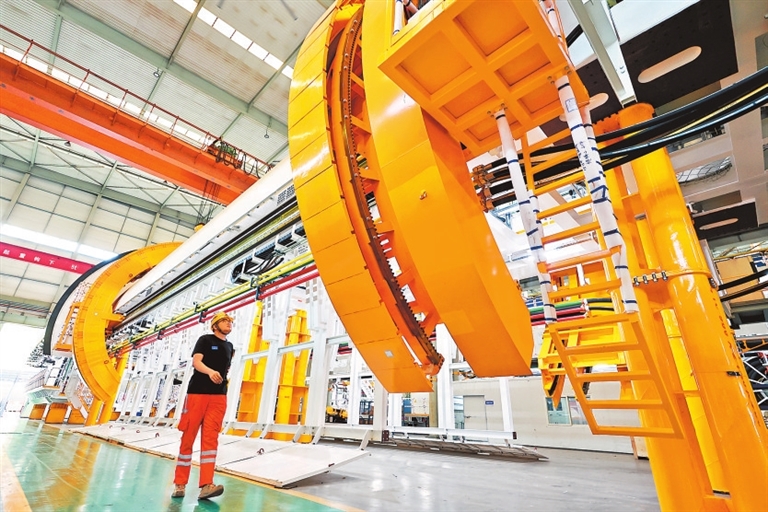
夏邑县太平镇太平庄村安河农场,村民在直播出售土鸡蛋。苗育才 摄 郑州新郑国际机场密织的"空中丝路",架起了中原融入世界的一座座"空中桥梁"。 资料图片 徐聪 摄 国道209控制性工程——三门峡青龙涧河特大桥正加紧建设。孙猛 摄 2025年进入"倒计时"。站在"十四五"收官、"十五五"开局这一重要时间节点,2025年河南经济"答卷"备受关 注。 2025年的河南经济发展有何亮点?面临哪些机遇与挑战?下一步发展的新动能蕴含在何处?回望2025年,我 们走得颇为不易,但却步步生花,可以说,河南经济交出了一份"韧性答卷"。 一 虽然全年经济数据暂未公布,但回望来时路,河南经济发展的成绩,写在每一次产业的增速中,写在每一个 拼搏的足迹中。 郑州市经开区中铁工程装备集团有限公司盾构总装车间,一台台即将出口的大型盾构机正在组装。资料图片 记者 聂冬晗 摄 信阳港·淮滨中心港区,起重机在装运集装箱。 王长江 摄 开封清明上河园的精彩表演引人注目。 资料图片 王铮 袁航 摄 2月底3月初,短短一周时间,比亚迪董事长兼总裁王传福、富士康科技集团董事长兼总经理刘扬伟等相继赴 郑,与河南的合作不断加深。今年前2个月,河南汽车产量22 ...


顶层设计标明能源行业奋进方向
中国能源报· 2025-12-21 23:33
Core Viewpoint - The article emphasizes the robust development of China's energy industry as it transitions into the "15th Five-Year Plan," highlighting the commitment to energy security, green transformation, and technological self-reliance [2][5]. Group 1: Energy Security and Supply - In 2025, China's energy sector achieved significant milestones in energy security, marking the best year since the "14th Five-Year Plan," with stable coal production and effective responses to peak electricity demands [3]. - Oil and gas production reached historical highs, with crude oil output at approximately 215 million tons and natural gas production exceeding 260 billion cubic meters, marking a continuous increase for nine years [3]. - Coal production surpassed 4.8 billion tons, with imports around 470 million tons, maintaining a reasonable supply margin and enhancing supply elasticity [3]. Group 2: Mechanism Innovation and Quality Development - The establishment of a cross-departmental collaboration system for energy monitoring and emergency response has transformed the management of energy resources, moving away from isolated operations [4]. - The renewable energy sector saw significant advancements, with major projects in wind and solar energy, including the completion of the first batch of wind and solar bases and the acceleration of hydropower and nuclear projects [4]. - The increase in non-fossil energy consumption and improvements in energy self-sufficiency and system regulation capabilities were highlighted as significant breakthroughs [4]. Group 3: Green Transformation and Technological Integration - The energy sector's development direction for the "15th Five-Year Plan" focuses on enhancing energy security while promoting a green and low-carbon transition [5]. - Innovative projects, such as a large-scale photovoltaic project in Shanxi and a solar thermal project in Gansu, exemplify the integration of renewable energy sources with storage systems and intelligent management platforms [5][6]. - The establishment of a virtual power plant platform in the Guangdong-Hong Kong-Macao Greater Bay Area aggregates over 5,000 adjustable load resources, enhancing grid flexibility and efficiency [6]. Group 4: Market Reform and Unified Energy Market - The energy industry is actively transforming reform momentum into high-quality development, with a focus on building a unified national market and enhancing resource allocation efficiency [8]. - The introduction of a unified electricity market framework aims to eliminate regional barriers and facilitate fair trading of electricity across the country [8][9]. - The need for a flexible adjustment mechanism in the electricity system is emphasized, particularly in response to the increasing share of variable renewable energy sources [9][10].
赵一德在省委工作务虚会暨市(区)委书记座谈会上强调着眼全国大局 找准主攻方向 凝聚奋斗合力以高质量发展新成效确保“十五五”良好开局
Shan Xi Ri Bao· 2025-12-21 23:15
赵一德在听取大家发言后指出,今年以来,在以习近平同志为核心的党中央坚强领导下,全省上下 以深化开展"三个年"活动、聚力打好"八场硬仗"为抓手,以中央巡视、中央审计、中央生态环境保护督 察等发现和反馈问题整改为动力,推动各项工作取得新的进展,"十四五"规划即将圆满收官。明年 是"十五五"开局之年,要进一步把思想和行动统一到党中央对形势的科学判断和决策部署上来,坚持稳 中求进、提质增效,完整准确全面贯彻新发展理念,以积极务实的目标导向谋准谋实明年工作,着力稳 就业、稳企业、稳市场、稳预期,持续推动经济实现质的有效提升和量的合理增长,切实维护社会大局 和谐稳定。 赵一德强调,要统筹促消费和扩投资,以优化"两新"政策实施撬动商品消费升级、服务消费挖潜, 以加强重大项目谋划储备和激发民间投资活力促进投资止跌回稳,更好发挥内需拉动经济增长主动力作 用。要深化全面改革全域开放全链创新,在融入和服务全国统一大市场建设中纵深推进经济体制改革, 紧抓外事外贸外资外经外宣联动扩大高水平开放,聚焦培育新质生产力一体抓好科技创新、产业创新和 金融服务,加快塑造发展新动能新优势。要围绕缩小"三大差距",全面实施"双极带动、多点支撑、三 ...