
贸易保护主义

Search documents
美方已丧失谈判主动权
Zhong Guo Xin Wen Wang· 2025-10-21 03:59
Core Viewpoint - The recent export control measures on rare earths by China have raised concerns among U.S. politicians, who claim these actions will significantly impact various industries globally, including semiconductors and artificial intelligence, while China asserts that these measures are not targeted at specific countries and are aimed at preventing illegal use of rare earths [1][3][4]. Group 1: China's Position - China has communicated its policy objectives regarding the new export controls to relevant countries, including the U.S., to reduce misunderstandings [3]. - The export control measures are designed to prevent rare earths from being used for large-scale weapons and are not a ban on exports [3][4]. - China maintains that it has the right to decide how to sell its rare earths, given that it produces over 90% of high-performance rare earth magnets globally [3][4]. Group 2: U.S. Response and Criticism - U.S. officials have accused China of "long-arm jurisdiction," but this perspective is seen as a misinterpretation of China's legitimate trade regulations [4][5]. - The U.S. has been expanding its own security boundaries, implementing export restrictions on semiconductors and AI, which raises questions about the consistency and rationale behind its actions [5][6]. - The U.S. has faced criticism for its approach to trade negotiations, which is perceived as coercive rather than collaborative [8]. Group 3: Future Implications - The tension surrounding these export controls highlights a shift in trade negotiation dynamics, suggesting that the U.S. may not hold the upper hand in future discussions [6]. - Both China and the U.S. have agreed to engage in new rounds of economic talks, indicating a potential for dialogue despite existing tensions [7].


全球市场一夜变天,A股迎来关键周!三大利空全透视
Sou Hu Cai Jing· 2025-10-21 02:52
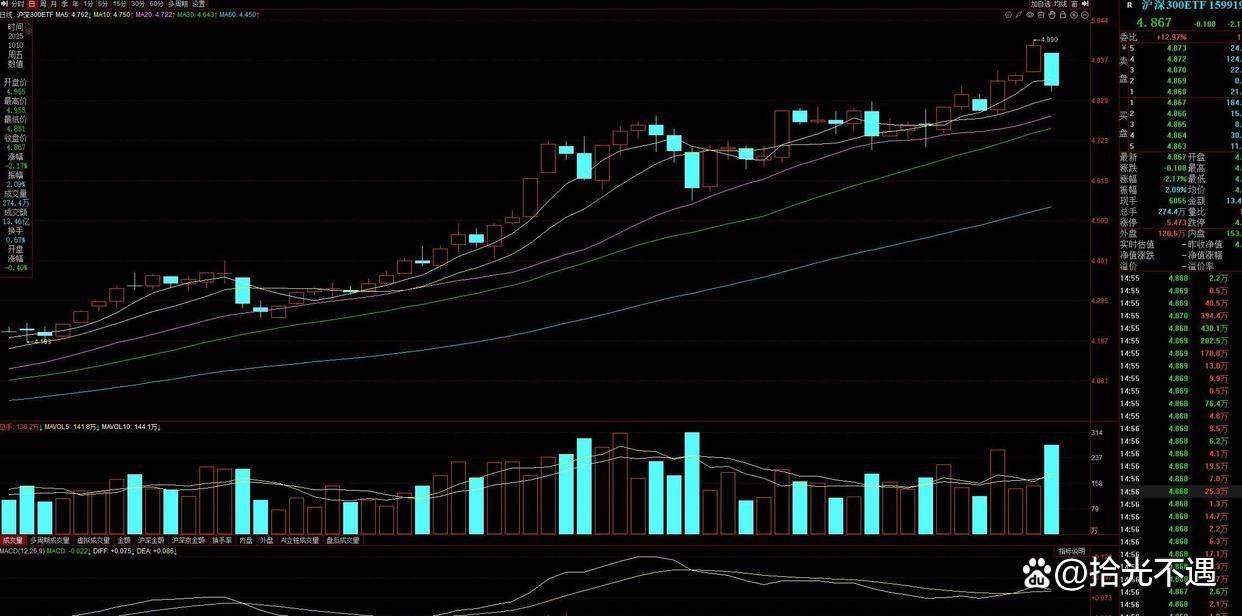
Group 1 - The expectation for interest rate cuts by the Federal Reserve has diminished, leading to reduced foreign capital inflow into A-shares as the attractiveness of the dollar remains high [3] - The geopolitical conflicts, particularly the ongoing Russia-Ukraine conflict and the recent Israel-Palestine tensions, are impacting A-share industries, especially those reliant on energy and agricultural commodities [4] - Domestic and external demand pressures are evident, with commodity markets showing signs of weakness and trade protectionism affecting export-oriented sectors, particularly electronics and light industry [5] Group 2 - The A-share market is experiencing a critical week, with the potential for continued volatility depending on the persistence of these three major negative factors and the response of policies [5]
美方不要总是以己度人
Zhong Guo Xin Wen Wang· 2025-10-21 01:59
Core Viewpoint - The recent Chinese export control measures on rare earths have raised concerns among U.S. politicians, who claim these actions will significantly impact various global industries, including semiconductors and artificial intelligence, and are seen as an attempt to seize control of global supply chains [1][4]. Group 1: Chinese Export Control Measures - China has clarified that the new export control measures are not aimed at specific countries and that compliant applications for civilian use will be approved [3][4]. - The measures are intended to enhance the export control system to prevent illegal flows of rare earths to inappropriate uses, such as weapons of mass destruction [3][6]. - China's position as the largest producer of rare earths, supplying over 90% of high-performance rare earth magnets globally, underscores its significant role in the supply chain [4][6]. Group 2: U.S. Response and Perception - The U.S. Trade Representative claimed that the U.S. was not informed prior to the implementation of these measures, framing them as a broad threat to global supply chains [1][5]. - There is a recurring narrative in the U.S. that portrays China's legitimate trade measures as creating uncertainty or manipulating supply chains, despite the reality of dependency on Chinese rare earths [4][5]. - The U.S. has been expanding its definition of national security, imposing export restrictions on China in sectors like semiconductors and AI, which raises questions about the legitimacy of its actions [6][7]. Group 3: Dialogue and Negotiation - Both China and the U.S. have agreed to engage in new rounds of economic negotiations, emphasizing that effective dialogue should not be based on pressure or threats [7][8]. - The underlying tension stems from the realization that the U.S. may not hold the negotiating power it once assumed, highlighting a shift in trade dynamics [7].
IMF世界经济研究处处长:全球加速适应新贸易格局,警惕扩张性财政政策外溢效应
Di Yi Cai Jing· 2025-10-20 11:30
Core Insights - Despite escalating trade protectionism, the global economy is expected to show resilience in 2025, supported by factors such as preemptive consumer spending and investment, as well as a weaker dollar [1][7][9] - The IMF warns that while expansionary fiscal policies in major developed economies may boost short-term growth, high debt levels and rising financing costs pose medium to long-term risks [1][10][11] Trade Tensions and Global Adaptation - The IMF emphasizes the need for constructive solutions to trade disputes, advocating for an open and fair competitive environment [3] - Since the onset of the trade war, global businesses and investors have been adapting to ongoing trade policy uncertainties, with trade flows shifting towards third countries [4][5] - Current high tariffs are nearly universal, complicating corporate decision-making beyond just tariffs [5][6] Transmission of Tariff Effects - The IMF notes that the impact of trade protectionism on economic activity and prices has been limited so far, with effective tariff rates around 18%, lower than previously estimated [7][8] - A weaker dollar has helped mitigate the impact of tariffs, supporting global trade flows and easing inflationary pressures in emerging markets [7][8] - As the initial effects of preemptive consumer behavior fade, cost pressures may eventually be passed on to consumers, leading to persistent inflation rather than a one-time shock [8] Spillover Effects of Expansionary Fiscal Policies - Expansionary fiscal policies in major economies are observed to boost economic activity in the short term, partially offsetting the negative impacts of tariffs [9][10] - High levels of sovereign debt and rising borrowing costs are eroding policy space and could lead to cross-border spillover effects [10][11] - Changes in financial markets, including the rise of stablecoins, may introduce new systemic risks and cross-border implications [11] Impact of Government Shutdown on Monetary Policy - The IMF is closely monitoring the economic impact of the recent U.S. government shutdown, which may have short-term negative effects but typically gets compensated later [12][13]

专访|IMF世界经济研究处处长:全球加速适应新贸易格局,警惕扩张性财政政策外溢效应
Di Yi Cai Jing· 2025-10-20 10:28
Core Insights - High levels of debt and rising financing costs are eroding policy space and may lead to cross-border spillover risks [1][10] - Despite escalating trade protectionism, the global economy is expected to show resilience in 2025, supported by factors such as preemptive consumption and investment by businesses and households, as well as a weaker dollar [1][7] - Expansionary fiscal policies in major developed economies may boost short-term economic growth but increase medium- to long-term risks due to high debt levels and rising financing costs [1][9] Trade Tensions and Global Adaptation - The IMF is closely monitoring trade tensions, emphasizing the need for constructive solutions to maintain an open and fair competitive environment [3] - Global businesses and investors are adapting to ongoing trade policy uncertainties, with trade flows shifting towards third countries as a response to U.S.-China trade dynamics [4][5] - The current high tariff environment is nearly universal, complicating corporate decision-making beyond just tariffs [5][6] Impact of Tariffs - The impact of trade protectionism on economic activity and prices has been limited so far, with effective U.S. tariff rates around 18%, lower than previous estimates [7][8] - A weaker dollar has supported global trade flows and eased inflationary pressures in emerging markets, allowing for more accommodative monetary policies [7][8] - As the initial effects of preemptive consumption fade, cost pressures may eventually be passed on to consumers, leading to persistent inflation rather than a one-time shock [8] Spillover Effects of Fiscal Policies - Expansionary fiscal policies in major economies are observed to have short-term positive effects on economic activity, partially offsetting the negative impacts of tariffs [9][11] - High sovereign debt levels are raising concerns about public finance sustainability, leading to increased borrowing costs and potential cross-border impacts [11] - The rapid rise of stablecoins may introduce new vulnerabilities in cross-border finance, potentially leading to systemic risks [11] Government Shutdown and Monetary Policy - The IMF is monitoring the economic impact of the recent U.S. government shutdown, which historically has had limited long-term effects [12][13] - The Federal Reserve has various methods to assess economic conditions and will base its policy decisions on available information [13][14]

特朗朗普关税埋雷,数万亿美元成本压垮企业,损失超1.2万亿美元
Sou Hu Cai Jing· 2025-10-20 08:56
Core Insights - The "reciprocal tariff" policy promoted by the Trump administration is significantly increasing costs for the U.S. economy, with global companies expected to incur an additional loss of $1.2 trillion this year, of which $592 billion will be directly passed on to American consumers [1][11]. Group 1: Economic Impact - The S&P Global report indicates that the tariff policy has led to a contraction in corporate profit margins by 0.64%, resulting in a profit gap of $907 billion [3]. - Retail giants like Walmart and Amazon are particularly affected, having to pass on two-thirds of their profit losses to consumers [3]. - Small public companies and private equity-backed firms are expected to bear an additional cost of $278 billion, with the S&P warning that the $1.2 trillion cost is merely a lower limit [5]. Group 2: Consumer Effects - Consumers are facing a significant reduction in purchasing power, with the situation described as "spending more but getting less" due to rising costs and declining output [5]. - Low-income households are disproportionately affected, losing an average of $2,600 annually due to tariffs, which far exceeds any tax relief they may receive [8]. - High-income families, on the other hand, are less impacted and continue to spend on luxury goods, highlighting a growing disparity in economic pressure among different income groups [8]. Group 3: Manufacturing and Employment - A survey indicates that 65% of companies believe that the cost of building factories in the U.S. is currently more than double, with 57% explicitly refusing to relocate production back to the U.S. [9]. - Labor shortages and outdated infrastructure are major barriers to manufacturing return, with 81% of interested companies preferring to use robots over hiring workers [9]. - Trade retaliation from partners, including increased tariffs from China and the EU, exacerbates the challenges faced by U.S. companies [9]. Group 4: Policy Repercussions - The Trump administration has quietly exempted several products from tariffs, likely in preparation for potential legal challenges, creating uncertainty for businesses [11]. - The long-promised benefits of the tariff policy have yet to materialize, with supply chain relocation plans hindered and ongoing trade retaliation measures [11]. - The overall trade protectionism experiment is revealing its detrimental effects, raising urgent questions about balancing trade benefits with the cost of living for citizens [11].
IMF发布最新世界经济展望报告 预计全球经济增速温和放缓
Jing Ji Ri Bao· 2025-10-20 01:19
Core Insights - The International Monetary Fund (IMF) reports a resilient start to the global economy in the first half of the year, but signs of moderate slowdown are emerging as supporting factors fade [1][2] - The report highlights significant uncertainty in the development prospects of industries like artificial intelligence, which may struggle to drive global economic growth [1] Economic Performance - Global economic activities were strong in the first half of the year, with inflation levels in the US and Asian economies being well-controlled [1] - The resilience observed is attributed to short-term factors such as preemptive imports and inventory management in response to US tariff policies, rather than a robust economic foundation [1] - Global economic growth is projected to decline from 3.6% at the end of 2024 to 2.6% at the end of this year, with forecasts of 3.2% in 2025 and 3.1% in 2026 [1][2] Inflation and Trade - Inflation rates are expected to decrease, with global inflation projected at 4.2% in 2025 and 3.7% in 2026, while US inflation is anticipated to remain above target [2] - Global trade volume is expected to grow at an average rate of 2.9% in 2025, significantly lower than the 3.5% growth rate in 2024, with ongoing trade fragmentation limiting trade revenues [2] Downside Risks - Persistent policy uncertainty is expected to suppress consumption and investment, while trade protectionism and restrictive immigration policies will negatively impact economic growth [3] - The report warns that the volatility in the artificial intelligence sector could lead to significant declines in tech stock prices, affecting overall market stability [3] Policy Recommendations - Policymakers are advised to establish clear and transparent trade policies to reduce uncertainty and support investment, while modernizing trade rules to adapt to the digital age [4] - Fiscal sustainability and debt management remain priorities, with recommendations for balanced mid-term fiscal plans [4] - Structural reforms are essential to enhance growth prospects, including promoting labor mobility and investing in digitalization [4]

全球经济增速温和放缓
Jing Ji Ri Bao· 2025-10-20 01:05
Core Insights - The International Monetary Fund (IMF) reports a resilient start to the global economy in the first half of the year, but signs of moderate slowdown are emerging as supporting factors fade [1][2] - The report highlights significant uncertainty in the development of industries like artificial intelligence, which may struggle to drive global economic growth [1] Economic Performance - Global economic activities were strong in the first half of the year, with inflation levels in the US and Asian economies well-controlled [1] - The resilience observed was primarily due to short-term factors, such as preemptive imports and inventory management in response to US tariff policies, rather than a robust economic foundation [1] - Global economic growth is projected to decline from 3.6% at the end of 2024 to 2.6% by the end of this year, with forecasts of 3.2% in 2025 and 3.1% in 2026 [1][2] Inflation and Trade - Inflation rates are expected to decrease, with global inflation projected at 4.2% in 2025 and 3.7% in 2026, while US inflation is anticipated to remain above target [2] - Global trade volume is expected to grow at an average rate of 2.9% in 2025, significantly lower than the 3.5% growth rate in 2024, with ongoing trade fragmentation limiting trade revenues [2] Risks and Challenges - The report identifies persistent downward risks to the global economy, including policy uncertainty, rising protectionism, and restrictive immigration policies impacting labor supply [3] - The potential volatility in the artificial intelligence sector poses risks to economic growth and could lead to significant declines in tech stock prices, affecting market sentiment and macroeconomic stability [3] Policy Recommendations - Policymakers are urged to establish clear, transparent trade policies to reduce uncertainty and support investment, while modernizing trade rules to adapt to the digital age [4] - Fiscal sustainability and the rebuilding of fiscal buffers are prioritized, with recommendations for balanced mid-term fiscal consolidation plans [4] - Structural reforms are essential to enhance resilience and growth prospects, focusing on labor mobility, digital investment, and institutional strengthening [4]
IMF发布最新世界经济展望报告预计——全球经济增速温和放缓
Jing Ji Ri Bao· 2025-10-19 22:52
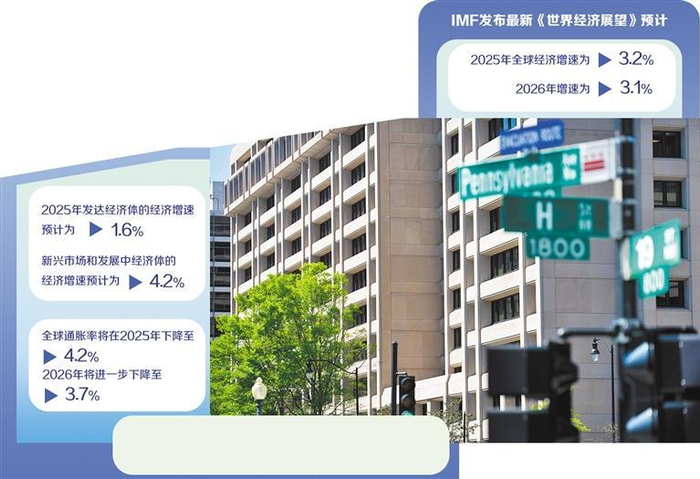
Core Insights - The International Monetary Fund (IMF) reports a resilient start to the global economy in the first half of the year, but signs of moderate slowdown are emerging as supporting factors fade [1][2] - The report highlights significant uncertainty in the development prospects of industries like artificial intelligence, which may struggle to drive global economic growth [1] Economic Performance - Global economic activities were strong in the first half of the year, with inflation levels in the US and Asian economies well-controlled [1] - The resilience observed is attributed to short-term factors such as preemptive imports and inventory management in response to US tariff policies, rather than a robust economic foundation [1] - Global economic growth is projected to decline from 3.6% at the end of 2024 to 2.6% at the end of this year, with forecasts of 3.2% in 2025 and 3.1% in 2026 [1][2] Inflation and Trade - Inflation rates are expected to decrease, with global inflation projected at 4.2% in 2025 and 3.7% in 2026, while US inflation is anticipated to remain above target [2] - Global trade volume is expected to grow at an average rate of 2.9% in 2025, significantly lower than the 3.5% growth rate in 2024, with ongoing trade fragmentation limiting trade revenues [2] Risks and Challenges - The report identifies persistent downward risks to the global economy, including policy uncertainty, rising protectionism, and restrictive immigration policies impacting labor supply [2][5] - The potential volatility in the artificial intelligence sector poses risks to economic growth and could lead to significant declines in tech stock prices, affecting market sentiment [5] - The report emphasizes the need for clear and transparent trade policies to reduce uncertainty and support investment, while modernizing trade rules to adapt to the digital age [5][6] Policy Recommendations - The IMF suggests rebuilding fiscal buffers and ensuring debt sustainability as priority actions, advocating for balanced fiscal consolidation plans [6] - Monetary policy should aim to balance price stability and growth risks, with structural reforms needed to enhance resilience and growth prospects [6] - For low-income countries, mobilizing domestic resources is crucial as external aid diminishes, and scenario planning can help ensure timely and effective responses to economic challenges [6]
IMF发布最新世界经济展望报告预计—— 全球经济增速温和放缓
Jing Ji Ri Bao· 2025-10-19 22:08
Core Insights - The International Monetary Fund (IMF) report indicates that while the global economy showed resilience in the first half of the year, it is now experiencing signs of moderate slowdown, which is expected to persist long-term [1][2] - The report highlights that the initial strong economic activity was driven by short-term factors, and as these dissipate, global economic data is showing weakness [1][3] Economic Performance - In the first half of the year, global economic activities were robust, with inflation levels in the US and Asian economies being well-controlled [1] - The global economic growth rate is projected to decline from 3.6% at the end of 2024 to 2.6% at the end of this year, with forecasts of 3.2% in 2025 and 3.1% in 2026 [1][2] Risks and Challenges - The report identifies ongoing downward risks to the global economy, including policy uncertainty, rising protectionism, and restrictive immigration policies, which could negatively impact consumption and investment [3] - The potential volatility in the artificial intelligence sector poses a risk to economic growth, with possible repercussions for technology stocks and overall financial market stability [3] Policy Recommendations - Policymakers are urged to establish clear and transparent trade policies to reduce uncertainty and support investment, while modernizing trade rules to adapt to the digital age [4] - The report emphasizes the importance of fiscal sustainability and suggests that countries should implement structural reforms to enhance resilience and growth prospects [4]