情绪消费

Search documents
商贸零售行业周报:7月社零同比+3.7%,老铺黄金官宣产品调价计划-20250817
KAIYUAN SECURITIES· 2025-08-17 12:13
Investment Rating - The industry investment rating is "Positive" (maintained) [1] Core Views - The retail sector shows steady recovery with a year-on-year increase of 4.8% in total retail sales from January to July 2025, and a 3.7% increase in July alone [5][25] - Online channels continue to grow, while offline growth rates are marginally slowing down; specific categories like gold and jewelry, as well as cosmetics, show significant improvement [5][30] - The report emphasizes the importance of consumer sentiment and suggests focusing on high-growth segments such as gold jewelry and domestic beauty brands [8][34] Summary by Sections Retail Market Overview - The retail index closed at 2214.55 points, up 0.44% for the week, underperforming the Shanghai Composite Index which rose by 0.86% [7][16] - The commercial property management sector saw the highest increase this week, while the jewelry sector has led the gains since the beginning of 2025 with a 30.19% increase [20][22] Retail Sales Data - In July 2025, retail sales reached 38,780 billion yuan, with a year-on-year growth of 3.7% [25] - Online retail sales for the first seven months of 2025 reached 86,835 billion yuan, growing by 9.2% year-on-year, with physical goods online sales at 70,790 billion yuan, up 6.3% [27][28] Key Investment Themes - **Gold and Jewelry**: Focus on brands with differentiated product offerings and consumer insights, recommending companies like Laopuhuangjin and Chaohongji [8][34] - **Cosmetics**: Highlighting the rise of domestic brands and the need for innovation in product offerings, with recommendations for brands like Maogeping and Pola [8][35] - **Offline Retail**: Emphasizing the transformation of retail enterprises to adapt to changing consumer behaviors, recommending companies like Yonghui Supermarket and Aiyingshi [8][34] - **Medical Aesthetics**: Suggesting investment in companies with differentiated product lines, recommending Aimeike and Kedi-B [8][36] Company Performance Highlights - Laopuhuangjin reported a revenue of 85.06 billion yuan in 2024, with a net profit increase of 253.9% [40] - Maogeping achieved a revenue of 38.85 billion yuan in FY2024, with a growth of 34.6% [36] - Yonghui Supermarket's revenue for Q1 2025 was 174.79 billion yuan, reflecting a decline of 19.3% [36]





英媒:“丑东西”成中国电商新赛道
Huan Qiu Wang Zi Xun· 2025-08-15 22:48
Core Insights - The exhibition titled "The Time of Ugly Has Arrived" showcases bizarre and unconventional products sold online in China, organized by e-commerce giant Taobao [1] - The event, held from July 29 to August 15, attracted over 3,000 visitors daily, indicating strong consumer interest [1] - Since the inception of the "ugly product" competition in 2020, related sales have exceeded 100 million yuan, with industry growth rates estimated to be in the double or triple digits [1] Industry Trends - Young Chinese consumers are driving the popularity of these unconventional products as they seek to express individuality and find affordable luxury items, a trend referred to as "emotional consumption" [1] - The phenomenon of emotional consumption is increasingly recognized as a "blue ocean" market in China, indicating a growing acceptance and demand for such products [1] - The success of quirky products, such as the cute yet odd toy "Labubu," exemplifies this trend, sparking a global buying frenzy [1] Consumer Perspectives - The exhibition prompted visitors to reflect on the definition of beauty, with some viewing these "ugly products" as a unique form of creativity and beauty [2] - A visitor noted that "ugliness can be another form of beauty," highlighting the creative potential embedded in these unconventional items [2]

商贸零售行业点评报告:7月社零同比+3.7%,金银珠宝和化妆品环比改善
KAIYUAN SECURITIES· 2025-08-15 10:41
Investment Rating - The industry investment rating is "Overweight" [8] Core Viewpoints - The report indicates that social retail sales maintained steady growth, with a year-on-year increase of 3.7% in July, supported by national subsidies [3][4] - Essential categories like grain, oil, and food showed stronger resilience, while discretionary categories such as gold and jewelry, and cosmetics saw improved performance [4] - Online retail channels continued to grow, with a 9.2% year-on-year increase in online retail sales from January to July 2025, while offline retail growth showed signs of marginal slowdown [5] Summary by Sections Social Retail Sales - The total retail sales of consumer goods from January to July 2025 reached 28,423.8 billion yuan, with July sales at 3,878 billion yuan, reflecting a year-on-year growth of 4.8% and 3.7% respectively [3] - Urban and rural retail sales increased by 4.8% and 4.7% year-on-year [3] Price Factors - The overall Consumer Price Index (CPI) remained stable, with food CPI down by 1.6% year-on-year [4] - Retail sales in various categories showed different growth rates, with essential goods like grain and oil up by 8.6% year-on-year, while discretionary items like cosmetics and jewelry saw increases of 4.5% and 8.2% respectively [4] Online vs Offline Channels - Online retail sales reached 86,835 billion yuan from January to July 2025, with physical goods online sales at 70,790 billion yuan, accounting for 24.9% of total retail sales [5] - Offline retail growth rates for supermarkets, convenience stores, and department stores showed a slight decline compared to the previous month [5] Investment Recommendations - The report suggests focusing on high-quality companies in sectors aligned with "emotional consumption," particularly in gold jewelry, offline retail, cosmetics, and medical aesthetics [6] - Specific recommendations include brands like Lao Pu Gold and Chao Hong Ji in gold jewelry, and companies like Mao Ge Ping and Pechoin in cosmetics [6]
被大疆正面硬刚的Insta360,拿什么笑下去?
Hu Xiu· 2025-08-15 02:46
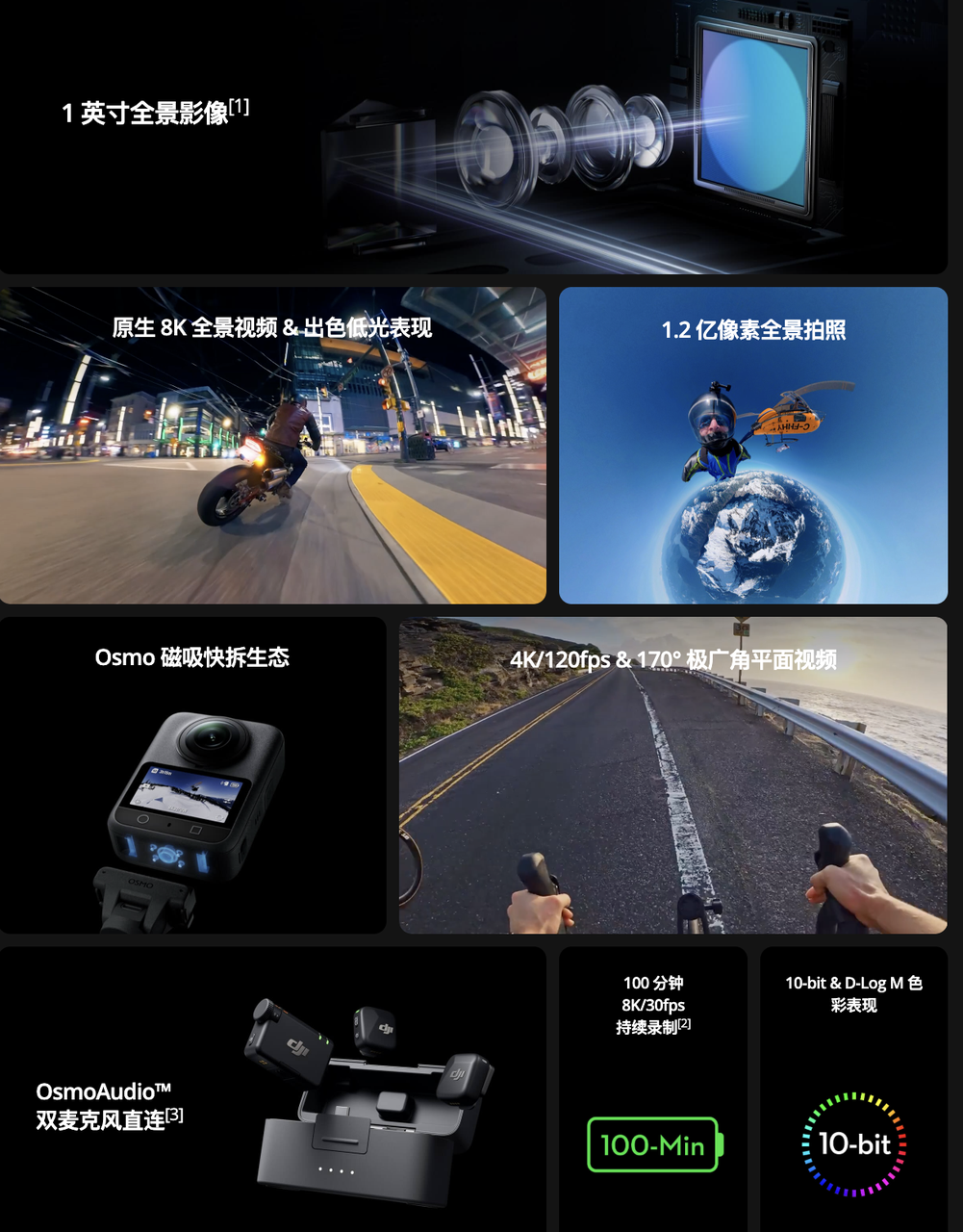
Group 1 - DJI launched the Osmo 360, entering the 360-degree camera market dominated by Insta360 [1][2] - Osmo 360 sold out within an hour of its release, indicating strong demand and competition in the market [2][4] - The introduction of Osmo 360 has prompted Insta360 to lower the price of its latest model, Insta360 X5, by 500 yuan, narrowing the price gap to under 300 yuan [2][4] Group 2 - Insta360 has successfully leveraged social media to create viral content, enhancing brand visibility and user engagement [10][12] - The rise of short video platforms has significantly increased the demand for unique and portable imaging devices like Insta360 [13][14] - The outdoor activity market has expanded, driving the demand for action cameras, with the outdoor equipment market growing from 67.5 billion yuan in 2019 to 87.2 billion yuan in 2023 [17][22] Group 3 - Insta360's market share reached 67% in the global 360-degree camera market as of 2023, showcasing its strong position [25] - The company has focused on making its products user-friendly, allowing consumers to easily create and share content [26][27] - Insta360's marketing strategy relies on user-generated content and social media engagement rather than traditional advertising [28][45] Group 4 - Insta360's revenue for 2024 is projected at 5.574 billion yuan, with a compound annual growth rate of 65.25% over the past three years [47] - The global 360-degree camera market is expected to grow from 13.814 billion dollars in 2023 to 81.335 billion dollars by 2030, with a compound annual growth rate of 28.8% [47] - The company plans to invest in R&D and expand its product offerings to maintain its competitive edge [49][50] Group 5 - Insta360 faces ongoing legal challenges from GoPro regarding patent infringements, which could impact its operations in the U.S. market [51][52] - The company is expanding its global presence, particularly in North America, where it has seen significant website traffic [50] - The focus on enhancing user experience through offline retail and workshops has proven effective in converting interest into sales [43][44]



“花式”冰淇淋满足中国消费市场多元需求
Xin Hua Wang· 2025-08-14 15:22
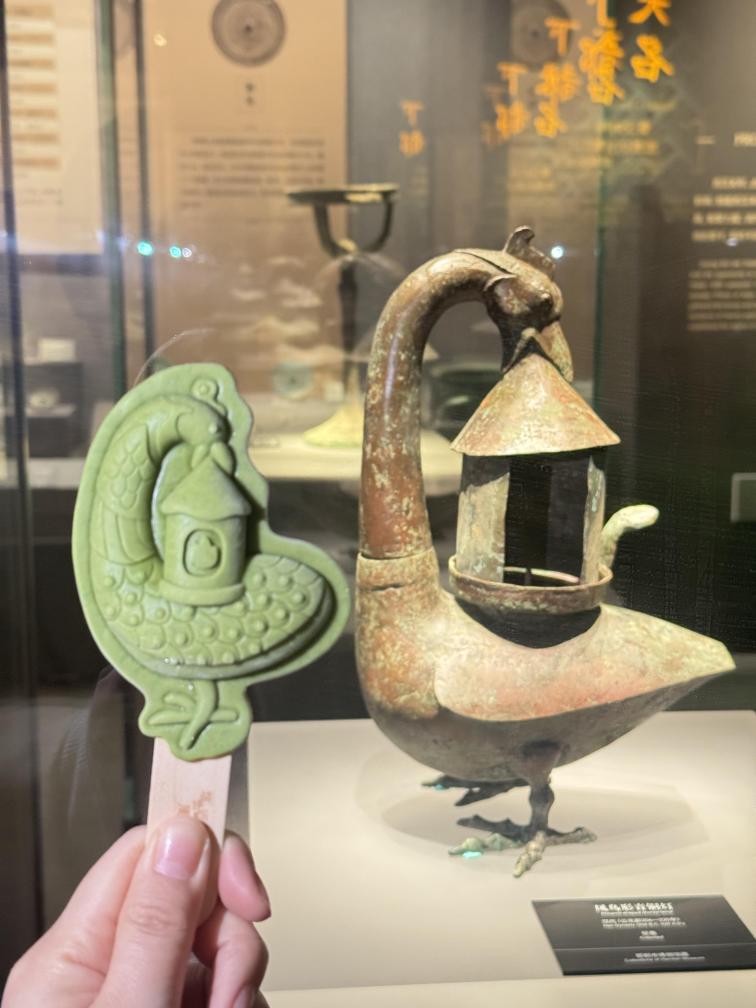
Core Insights - The ice cream market in China is experiencing a surge in popularity, driven by diverse consumer preferences and innovative product offerings [3][4][6] - The trend of "emotional consumption" is influencing young consumers, who prioritize the social and emotional value of ice cream products [4][6] - Health consciousness among consumers is leading to increased demand for high-quality, low-sugar, and low-fat ice cream options [7] Market Trends - The emergence of creative ice cream products, such as cultural-themed ice creams inspired by local heritage, is attracting tourists and enhancing the consumer experience [3][4] - Social media platforms like Xiaohongshu are playing a significant role in promoting visually appealing ice cream, with consumers sharing their experiences and preferences [3][4] Consumer Preferences - A survey indicated that 46.31% of consumers prioritize taste when purchasing ice cream, while over 30% focus on health and ingredient transparency [7] - Young consumers are increasingly discerning, favoring ice creams with clean ingredient lists and high-quality components [6][7] Industry Innovations - Traditional ice cream brands are innovating by introducing new flavors and healthier options, while new brands are emerging with a focus on handmade, fresh ice cream [7] - Companies like Luomanlin are expanding rapidly, with over 500 stores nationwide, emphasizing the importance of both visual appeal and taste in driving repeat purchases [7] Pricing and Value Perception - The rising costs of handmade ice cream may not deter consumers if they perceive a strong value proposition in terms of quality and innovation [7] - Consumers are willing to pay a premium for high-quality ice cream, provided the product meets their expectations for taste and health [7]
中泰资管天团 | 郑日:情绪强烈且易逝,如何理解新消费和情绪消费
中泰证券资管· 2025-08-14 11:33
Core Viewpoint - The article discusses the rise of "emotional consumption" as a significant trend in the capital market, particularly among younger consumers who prioritize emotional value alongside practicality and cost-effectiveness [1][4]. Group 1: Emotional Consumption Overview - Emotional consumption, also known as emotional spending, emphasizes the importance of emotional satisfaction in purchasing behavior, particularly among young people and singles [6]. - The trend of emotional consumption is linked to societal changes, such as Japan's aging population and declining marriage and birth rates, leading to a more individualized approach to consumption [6]. Group 2: Economic Context and Trends - Economic slowdowns often lead to a shift in consumer demand from functional to emotional value, as seen in historical contexts in both Japan and the U.S. [9]. - In Japan, post-bubble economic adjustments led to the growth of various sectors, including discount stores, pet economy, and virtual idol markets, highlighting the resilience of emotional consumption [9][10]. Group 3: Long-term Emotional Needs - Core emotional needs persist over time, but the forms of products and services evolve, requiring businesses to transform fleeting emotional sparks into lasting customer loyalty [13]. - Factors influencing the lifecycle of emotional consumption products include addictive design, social currency attributes, and cultural symbolism [14]. Group 4: Avoiding Homogenization - Emotional consumption products risk homogenization due to the ease of replicating emotional experiences through existing cultural symbols and marketing strategies [16]. - To maintain competitive advantage, companies must build an unreplicable emotional value chain and develop barriers through emotional technology, cultural integration, and dynamic social ecosystems [16].

茅台7000元新酒受热捧!普遍报价翻倍
Zheng Quan Shi Bao Wang· 2025-08-12 13:52
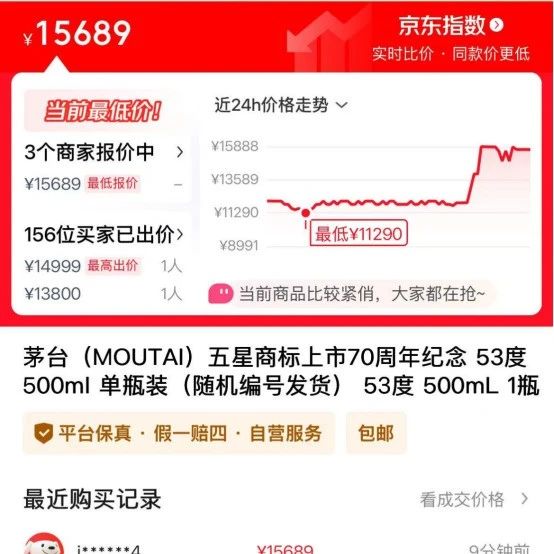
Core Insights - The new Guizhou Moutai wine, priced at 7000 yuan per bottle, has seen its market price nearly double shortly after its release, with secondary market prices reaching around 14000 yuan per bottle [1][2] - The product, commemorating the 70th anniversary of the "Five-Star" trademark, sold out in just 2 minutes, generating approximately 1.79 billion yuan in direct sales revenue [2][3] - The unique "one bottle, one code" concept adds a personalized touch to the product, aligning with Moutai's exploration of emotional consumption [1][4] Pricing and Market Response - After the launch, the secondary market prices surged, with many platforms listing prices around 15000 yuan per bottle, and some even reaching 34999 yuan per bottle [1][3] - The lowest recorded price on JD.com was 11290 yuan per bottle within 24 hours, but it has since increased to over 15000 yuan [3] Product Identity and Marketing Strategy - The limited edition consists of 25568 bottles, symbolizing the 70 years of the "Five-Star" trademark, with each bottle featuring a unique identity code [3] - The emphasis on "emotional value" in marketing aligns with current consumer trends, where emotional consumption is becoming a significant driver of market growth [5][6] Industry Trends - Emotional consumption is increasingly recognized as a key trend, with consumers valuing emotional connections and experiences over mere product utility [6] - The rise of emotional consumption is reflected in various industries, including collectibles and luxury goods, indicating a shift in consumer preferences towards products that offer emotional satisfaction [6]

不起眼的芦苇秆,年卖百亿!揭秘临湘“鱼漂霸主”背后的财富密码
新消费智库· 2025-08-12 13:04
Core Viewpoint - The article discusses the transformation of the fishing float industry in Lingxiang, Hunan, which has evolved from a small-scale craft to a billion-dollar industry, capturing over 80% of the national market share through innovation and understanding consumer emotions [5][14][37]. Industry Development - The fishing float industry in Lingxiang has a rich history, with its roots tracing back to ancient times, and has become a significant economic driver for the region [10][11]. - The industry has transitioned from small workshop production to industrialized manufacturing, with over 3,100 float enterprises and five companies generating over 100 million yuan in revenue [14][12]. - The production value of Lingxiang floats surged from 3 billion yuan in 2021 to 8.5 billion yuan in 2024, with a target of reaching 10 billion yuan by 2025 [14]. Consumer Behavior - The rise of fishing as a popular leisure activity has led to increased demand for high-quality fishing floats, with consumers willing to invest significantly in specialized equipment [11][37]. - Emotional consumption plays a crucial role, as fishing enthusiasts seek not just functional tools but also products that enhance their experience and status within the fishing community [37]. Material and Technological Innovation - Lingxiang float manufacturers have embraced material innovation, utilizing advanced materials like nano and carbon fiber to enhance performance, sensitivity, and durability [22][24][25]. - The introduction of 3D printing technology allows for personalized float designs, catering to individual consumer preferences [27]. Market Strategy and Ecosystem - The industry has developed a multi-faceted ecosystem that includes product sales, live streaming, exhibitions, and fishing competitions, significantly enhancing brand visibility and consumer engagement [33][34]. - The establishment of a fishing float cultural festival and competitions has attracted tourists and participants, further boosting the local economy [35]. Conclusion - The success of the Lingxiang float industry illustrates a deep understanding of consumer emotions and market dynamics, transforming a simple fishing tool into a complex product that resonates with users on multiple levels [37].

茅台7000元新酒受热捧!普遍报价翻倍→
Zheng Quan Shi Bao· 2025-08-12 12:18
Core Insights - The new product from Guizhou Moutai, priced at 7000 yuan per bottle, has seen its market price nearly double shortly after launch, with second-hand market prices reaching around 14000 yuan per bottle [2][4] - The product, commemorating the 70th anniversary of the "Five-Star" trademark, sold out within 2 minutes, generating approximately 1.79 billion yuan in direct sales revenue [4] - The unique "one bottle, one code" concept adds a personalized touch to the product, aligning with the company's exploration of emotional consumption [2][10] Product Launch and Market Response - Guizhou Moutai launched the "Guizhou Moutai (Five-Star Trademark 70th Anniversary Commemorative)" on August 8, with a limited release of 25,568 bottles [4][10] - The product's market response exceeded expectations, with prices on platforms like JD.com reaching around 15000 yuan per bottle, and some listings as high as 34999 yuan [4][8] - The lowest price recorded on JD.com within 24 hours was 11290 yuan per bottle, which later increased to over 15000 yuan [8] Emotional Consumption Trend - The product's strategy emphasizes "unique date coding," which aligns with Moutai's recent focus on emotional value in consumer products [12] - Emotional consumption is identified as a significant trend, with companies needing to address consumer demands for emotional value [12][13] - The rise of emotional consumption is linked to changing consumer preferences, moving from survival-based consumption to enjoyment and spiritual consumption [13]
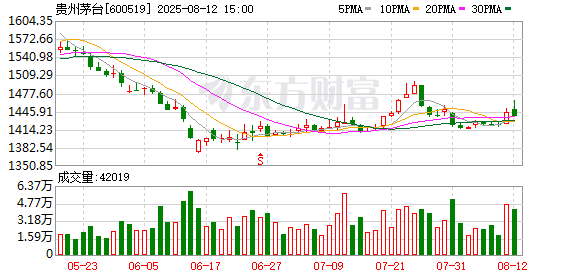
茅台7000元新酒受热捧!普遍报价翻倍→
证券时报· 2025-08-12 12:10
Core Viewpoint - The recent launch of the "Guizhou Moutai (70th Anniversary of the Five-Star Trademark)" has seen a significant surge in secondary market prices, indicating strong consumer demand and potential speculative risks in the market [1][3][4]. Group 1: Product Launch and Market Response - Guizhou Moutai released a limited edition product priced at 7000 yuan per bottle, with a total of 25,568 bottles available [3]. - The product sold out within 2 minutes, generating approximately 179 million yuan in direct sales revenue for Guizhou Moutai [3]. - Following the launch, secondary market prices quickly rose, with listings on platforms like JD.com reaching around 15,000 yuan per bottle, and some sellers even pricing it at 34,999 yuan [1][4][7]. Group 2: Unique Product Features - The product features a unique "one bottle, one code" concept, with each bottle having a distinct identity code corresponding to the 70 years of the brand's history [9]. - This personalized aspect, referred to as "birthday Moutai," appeals to consumers looking for emotional connections with the product [9][11]. Group 3: Emotional Consumption Trend - The launch aligns with the growing trend of emotional consumption, where consumers seek products that provide emotional value and connection rather than just utility [12][13]. - Guizhou Moutai's strategy emphasizes the importance of emotional value in consumer purchasing decisions, reflecting a shift from survival-based consumption to enjoyment and spiritual fulfillment [12][13].