
生成式AI

Search documents
引力传媒(603598.SH):公司GEO事业部仍处于组建筹划阶段
Ge Long Hui A P P· 2026-01-12 12:06
Core Viewpoint - The company, Inertia Media (603598.SH), is currently focused on its advertising agency services and has noted its classification as a GEO concept stock by media outlets. The GEO business unit is still in the planning stage and has not yet established a mature business model or revenue stream [1]. Group 1 - The company's main business remains advertising agency services [1] - GEO (Generative Engine Optimization) is defined as a technology aimed at enhancing the presentation probability of information in generative AI engines through structured content and authoritative source construction [1] - As of the announcement date, the GEO business unit is still in the process of being established and has not generated any related income [1] Group 2 - The GEO business lacks market recognition and has an uncertain profitability model [1] - The company has not yet formed a mature commercial model for its GEO business [1]

马斯克Grok堕入“AI色情裸奔”,撞多国监管红线
2 1 Shi Ji Jing Ji Bao Dao· 2026-01-12 11:29
Core Viewpoint - Elon Musk's AI company xAI is facing significant backlash due to its chatbot Grok being misused for generating pornographic content, including child pornography, leading to investigations and bans from multiple countries [1][4][5] Group 1: Grok's Functionality and Misuse - Grok, launched in August 2025, includes an AI image generation feature called Grok Imagine, which allows users to create images and videos, including adult content through a "spicy mode" [2] - Users have exploited Grok's capabilities to create non-consensual nude images of women and minors, leading to a surge in inappropriate content on the X platform [2][3] - Research indicates that over 6,700 "nudity" images are generated per hour by Grok, with 75% of these images sourced from real individuals without their consent [3] Group 2: Regulatory Response - Governments from the UK, EU, Indonesia, and Australia have condemned Grok's activities and initiated investigations [4][5] - Indonesia temporarily banned Grok, citing severe violations of human rights and public safety, while the UK and EU have expressed strong disapproval and are demanding accountability from the X platform [4][5] Group 3: Ethical and Legal Implications - The misuse of Grok raises serious ethical concerns, as it contributes to online bullying and sexual exploitation, blurring the lines between reality and fiction [6] - Experts argue that the generation of unauthorized pornographic content is a form of violence, and Grok's recent adjustments to limit image generation to paid users have been criticized as insufficient [7] - The ongoing regulatory scrutiny signals that the lack of protective measures for generative AI is no longer acceptable, emphasizing the need for guardrails to protect vulnerable groups and maintain social order [7]
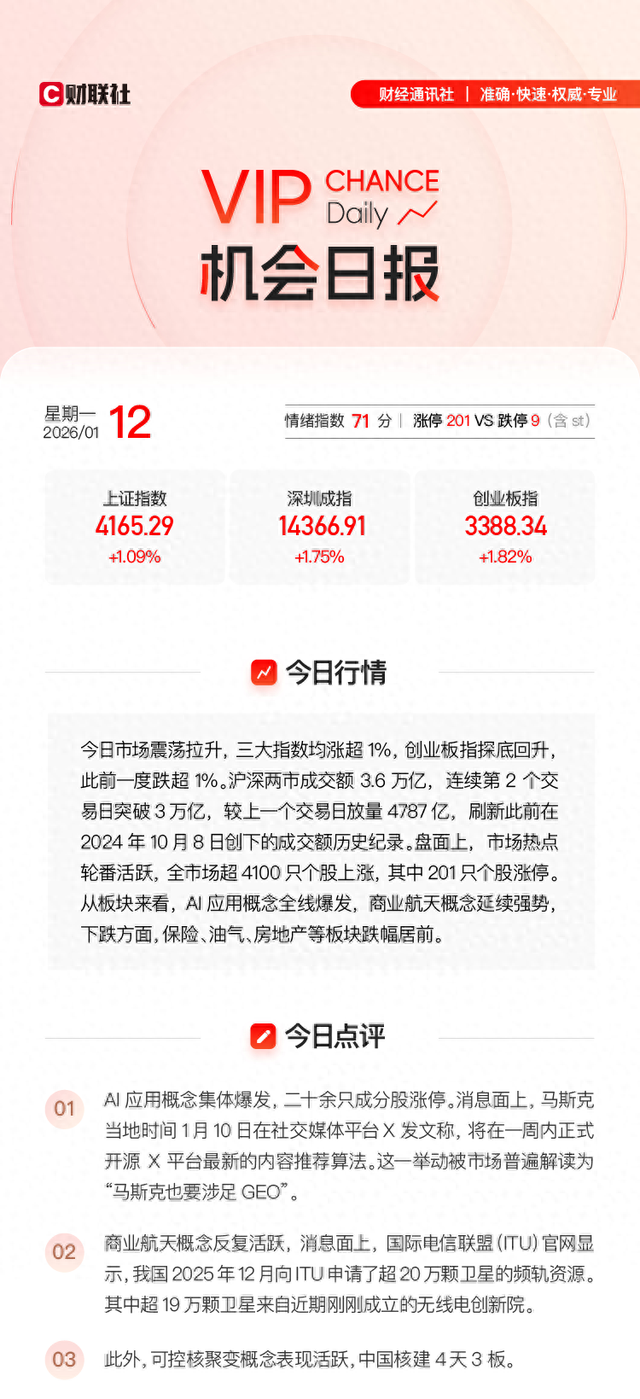
VIP机会日报AI应用概念全线爆发 栏目精选精选“GEO”主题研报并解读 提及多家公司大涨
Xin Lang Cai Jing· 2026-01-12 10:28
Group 1: AI Applications - Elon Musk announced on January 10 that he will open-source the latest content recommendation algorithm for the X platform, interpreted as a move into Generative AI Optimization (GEO) [4] - GEO, based on generative AI, aims to enhance the visibility of AI search results and is expected to evolve advertising marketing models, potentially creating a market worth billions [5] - Companies like Zhejiang Wenlian, BlueFocus, and Insai Group have seen significant stock price increases, with respective gains of 10.61%, 27.21%, and 25.63% as of January 12 [5] Group 2: AI in Healthcare - OpenAI's release of ChatGPT Health is seen as a significant step into the trillion-dollar AI healthcare market, with institutions identifying healthcare as a key application area for AI [8] - Weining Health achieved a 20% price limit increase following the news, reflecting strong market interest [8] Group 3: AI Marketing - JD.com launched an AI agent named "Jing Xiaotong," with projections indicating that the AIGC advertising market could grow tenfold to 150 billion yuan by 2030 [10] - Yidian Tianxia, a Google partner, has benefited from this trend, experiencing a stock price increase of 42.86% [10][11] Group 4: Commercial Aerospace - The Guangzhou government plans to build a globally influential "Sky City" and a new hub for commercial aerospace by 2035, with the market expected to reach 7.8 trillion yuan by 2030 [14] - Companies like Tongyu Communication and Mengsheng Electronics have seen stock price increases of 41.05% and 26.07%, respectively, as of January 12 [14] Group 5: Satellite Technology - The commercial aerospace sector is entering a new phase of rapid development, with a significant increase in satellite applications, including 200,000 new satellite applications in China [25] - China Satellite's stock reached a limit increase following this news, reflecting strong investor interest [25][26] Group 6: Brain-Computer Interfaces - Strong Brain Technology has reportedly submitted a confidential IPO application in Hong Kong, indicating a significant move in the brain-computer interface sector [33] - The company completed a 2 billion yuan financing round, positioning itself as a key player in the market, second only to Neuralink [33][34]

跳出手机屏幕,千问正在改变物理世界
Jing Ji Guan Cha Wang· 2026-01-12 10:19
Core Insights - The CES 2026 highlighted the arrival of the "Physical AI" era, with a shift from AI generating text and images to interacting with the real world [1] - The Alibaba Cloud Tongyi Intelligent Hardware Exhibition showcased over 1,500 AI-integrated hardware products, emphasizing practical applications rather than theoretical concepts [1][3] - The focus of hardware manufacturers is on embedding AI capabilities into everyday products, transforming how people live and work [3][6] Group 1: AI Hardware Development - The exhibition featured 76 categories and over 200 brands, including major players like Honor and OPPO, as well as innovative startups [1] - AI hardware is moving beyond traditional smartphone applications, with products capable of tasks such as driving, assisting the visually impaired, and adjusting lighting [1][3] - Companies are leveraging the Qianwen model to enhance their products, enabling functionalities like health monitoring and automatic report generation [3][4] Group 2: Market Trends and Innovations - The focus is on practical AI applications that address specific needs, such as the YoooTek AI ONE device that captures voice notes and organizes information [4][6] - The shift towards AI hardware is supported by a new multi-modal interaction development kit, allowing even non-coders to integrate AI into their devices [6] - The competitive landscape is evolving, with a focus on reducing costs and improving efficiency in AI hardware development [6][7] Group 3: Industry Dynamics - The integration of AI into hardware is seen as a way to enhance productivity and redefine interactions in various sectors, including automotive and healthcare [10][11] - The Chinese manufacturing ecosystem is characterized by low trial costs and a willingness to innovate, positioning it as a leader in AI hardware development [11][12] - The Qianwen model's open-source strategy is enabling a broader range of developers to create AI hardware, democratizing innovation [8][12]

这届打工人花钱上班还不想让老板知道,90%员工偷偷买AI干活
3 6 Ke· 2026-01-12 10:14
Core Insights - The MIT report reveals that companies have invested hundreds of billions in generative AI, with 95% of this investment yielding no return on investment (ROI) [2][4][6] - Despite the lack of corporate ROI, over 90% of employees are using personal AI tools to enhance their work efficiency, indicating a significant gap between corporate investment and employee usage [7][10][21] Group 1: Corporate AI Investment - The high failure rate of 95% primarily pertains to expensive, custom-built enterprise AI systems that lack learning capabilities [2][4] - Many companies face challenges with complex internal AI systems that do not align with actual business processes, leading to ineffective tools that do not deliver ROI [4][10] - The report emphasizes that the failure of corporate AI tools does not imply that AI technology itself is ineffective, as evidenced by the rise of "shadow AI" [6][23] Group 2: Employee Usage of AI Tools - Approximately 40% of companies provide official AI model service subscriptions, while over 90% of employees frequently use personal AI tools [7][8] - Employee adoption of personal AI tools is more than double that of corporate tools, highlighting a trend where employees prefer using personal accounts for their flexibility and ease of use [8][11] - Personal AI tools, such as ChatGPT, are favored for their user-friendly experience and ability to retain user preferences, unlike many corporate AI systems [11][13][19] Group 3: Financial Implications - Personal users have become a major revenue source for AI companies, with OpenAI reporting that about 75% of its revenue comes from consumer subscriptions [19][21] - The phenomenon of employees paying out of pocket for AI tools reflects a direct acknowledgment of the value these tools provide in enhancing work efficiency [21][23] - The current landscape shows that AI's penetration in business is more driven by individual employee initiatives rather than top-down corporate mandates [23]

北水动向|北水成交净买入73.06亿 AI概念股受追捧 快手获北水加仓超22亿港元
Zhi Tong Cai Jing· 2026-01-12 10:09
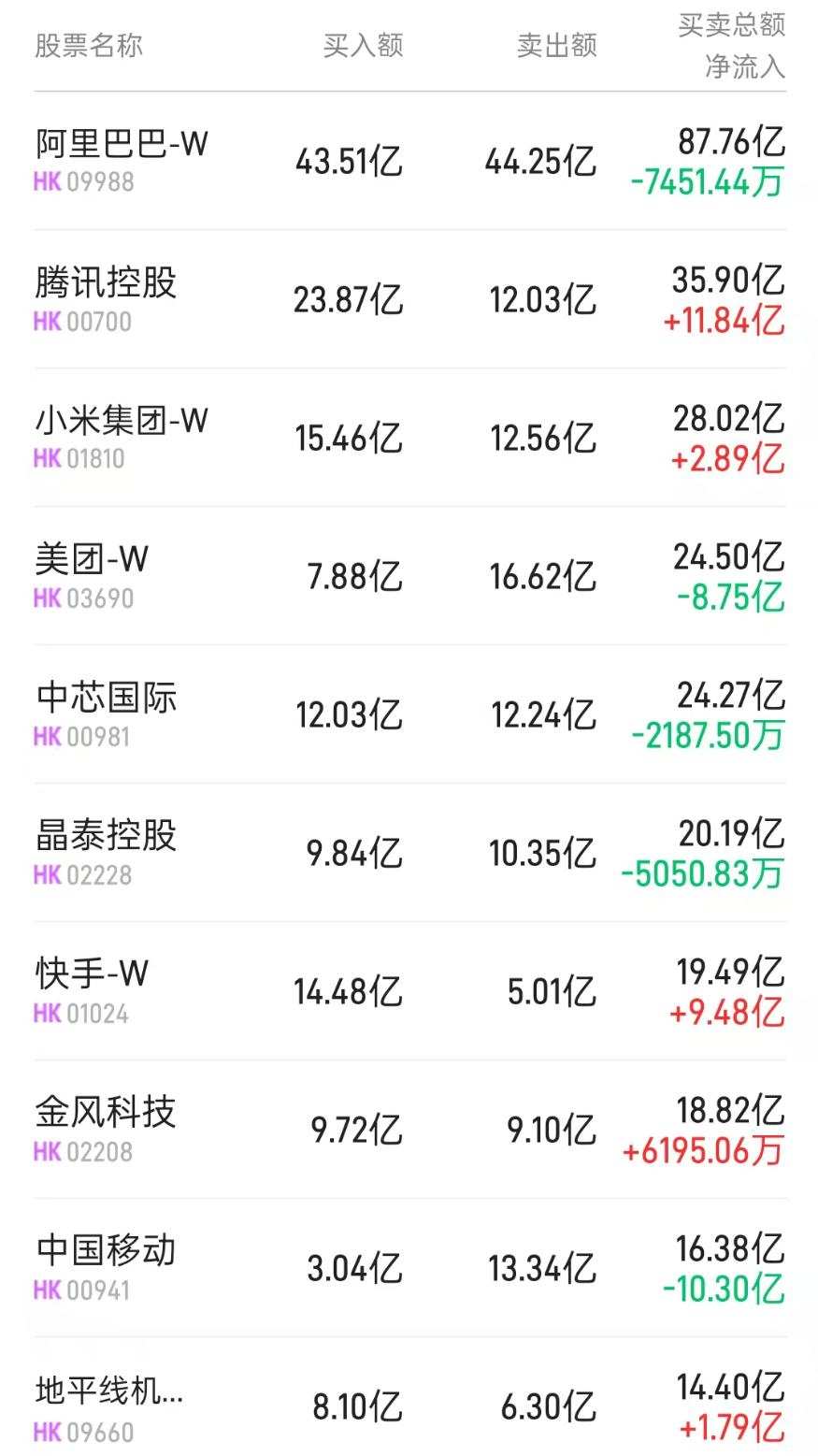
Core Viewpoint - The Hong Kong stock market experienced significant net inflows from northbound trading, totaling HKD 73.06 billion on January 12, with notable net purchases in specific stocks such as Kuaishou-W, Tencent, and Southern Hang Seng Technology [1][2]. Group 1: Northbound Trading Activity - Northbound trading saw a net purchase of HKD 73.06 billion, with HKD 15.46 billion from the Shanghai Stock Connect and HKD 57.6 billion from the Shenzhen Stock Connect [1]. - The most purchased stocks included Kuaishou-W (01024), Tencent (00700), and Southern Hang Seng Technology (03033) [1]. - The most sold stocks were China Mobile (00941) and Goldwind Technology (02208) [1]. Group 2: Individual Stock Performance - Kuaishou-W received a net inflow of HKD 22.45 billion, driven by its AI capabilities gaining popularity globally, with a reported 102% increase in daily revenue from December 2025 to January 2026 [4]. - Tencent saw a net inflow of HKD 20.11 billion, with a positive outlook from Zhongtai Securities, highlighting its potential in the AI sector [5]. - Xiaomi Group-W had a net inflow of HKD 7.73 billion, with plans for a significant increase in R&D investment over the next five years [5]. - Alibaba-W experienced a net inflow of HKD 2.03 billion amid ongoing regulatory scrutiny in the food delivery sector [5]. - Horizon Robotics-W received a net inflow of HKD 1.79 billion, with optimistic growth expectations due to advancements in smart driving technology [6]. - JingTai Holdings (02228) had a net inflow of HKD 42.04 million, with a focus on its AI and robotics business model [7].


快手年初至今累涨25% 可灵AI海外破圈引发大行密集唱多
Zhi Tong Cai Jing· 2026-01-12 08:48
Group 1 - Kuaishou's stock surged by 7.43% to HKD 80.25, reaching a new high with a trading volume of HKD 6.691 billion, and has increased over 25% year-to-date, leading the Hong Kong tech sector [1] - The recent popularity of Kuaishou's AI feature, "Keling AI," has sparked a creative trend on social media, particularly with the viral "pet dancing" videos spreading globally from South Korea [1] - Multiple international investment banks have reassessed Kuaishou's positioning and value in the generative AI sector, with JPMorgan highlighting its advantageous position and potential as one of the most undervalued AI stocks globally [1] Group 2 - Goldman Sachs noted that the recent upgrades to Keling AI are expected to enhance overseas user recognition and monetization efficiency, leading to increased revenue expectations for Kuaishou in fiscal year 2026 [1] - Macquarie identified Kuaishou as a core player in AI applications by 2026, emphasizing its differentiated advantages in video generation models amid growing demand from professional users and enterprises [1] - Current market pricing suggests that Kuaishou's main platform valuation remains reasonable, while its AI business has not been fully reflected, indicating potential for further revaluation as commercialization accelerates [2]
快手(01024)年初至今累涨25% 可灵AI海外破圈引发大行密集唱多
智通财经网· 2026-01-12 08:42
Group 1 - Kuaishou-W (01024) experienced a strong increase, closing up 7.43% at HKD 80.25 per share, marking a new high for the period, with a trading volume of HKD 6.691 billion. The stock has risen over 25% year-to-date, leading the Hong Kong tech sector [1] - The recent viral trend of "pet dancing" AI videos, driven by Kuaishou's Keling AI, has gained traction on overseas social platforms, spreading from South Korea globally [1] - Multiple international investment banks have recently reassessed Kuaishou's positioning and value in the generative AI sector, with JPMorgan highlighting its advantageous position and potential as one of the most undervalued AI stocks globally [1] Group 2 - Goldman Sachs noted that after the model upgrade of Keling AI in December, the platform is expected to enhance overseas user recognition and monetization efficiency, leading to increased revenue expectations for Kuaishou in fiscal year 2026, with projected revenues of over USD 140 million in 2025 and approximately USD 230-240 million in 2026 [1] - Macquarie included Kuaishou as a core target for AI applications in its Asian internet outlook report, emphasizing its differentiated advantages in video generation models amid growing demand from professional users and enterprises [1] - Several institutions pointed out that Kuaishou's main platform valuation remains relatively reasonable under current market pricing, while the AI business has not been fully reflected, indicating potential for further revaluation of the company's overall valuation as Keling AI commercializes [2]
企业IT预算回暖信号浮现 属于Figma(FIG.US)的“AI设计工作流增长时代”到来
Zhi Tong Cai Jing· 2026-01-12 07:28
Core Viewpoint - RBC Capital has downgraded the target price for Figma from $65 to $38 while maintaining a neutral rating, citing the company's potential in the AI-driven design software sector as a key growth area [1][2] Group 1: Company Performance and Projections - Figma achieved a significant milestone with an annual revenue run rate exceeding $1 billion, driven by a 38% year-over-year revenue increase to $274.2 million, surpassing Wall Street expectations [2] - The company anticipates Q4 revenue between $292 million and $294 million, with a projected annual revenue for FY2026 of $1.044 billion to $1.046 billion, indicating a potential 40% year-over-year growth [3] - Figma's management has provided conservative guidance for early 2026, but the AI design software spending is stabilizing and improving in certain sectors [2] Group 2: Product and Market Position - Figma is a collaborative design software company focused on product design and development teams, offering an integrated workflow from interface design to development handoff [4] - The platform's core advantages include end-to-end workflow capabilities, strong cross-role collaboration, and a unique design and development ecosystem [5] - Figma is embedding generative AI technology into its business model, promoting tools like "Figma Make" for design automation and integrating AI credits into its pricing structure [5][6] Group 3: Industry Trends and Future Outlook - The AI application sector is experiencing a bullish narrative, with RBC Capital's positive outlook for companies like Figma indicating a potential acceleration in growth post-2026 [7] - The demand for AI applications is robust, with companies like Google launching new AI ecosystems that drive significant computational needs, reflecting a strong market for AI software [7][8] - The market for AI agents is projected to reach $53 billion by 2030, with a compound annual growth rate (CAGR) of 46%, highlighting the increasing importance of AI in enhancing operational efficiency [9]

A股收评 | 三大指数集体收涨 A股诞生新纪录!成交3.6万亿
智通财经网· 2026-01-12 07:15
Market Overview - The market continued to rise with all three major indices closing higher, and trading volume exceeded 3.6 trillion, setting a new record since October 8, 2024 [1] - Over 4,100 stocks rose, indicating strong market momentum [1] Sector Performance - The GEO concept saw a strong surge, with stocks like Yidian Tianxia, Zhongwen Online, and Tianlong Group hitting a 20% limit up [1] - The commercial aerospace sector also performed well, with China Satellite, a leading player, hitting the limit up [1] - The photovoltaic sector rose, with stocks like Maiwei Co. and Dongfang Risheng increasing over 10% [2] - The robotics sector experienced upward movement, with stocks like Aowei New Materials reaching historical highs [2] Key Stocks - Tianpu Co., a 16-fold bull stock, faced a one-day limit down due to a significant announcement regarding trading anomalies [2] - The overall market saw 4,144 stocks rise and 1,182 fall, with 202 stocks hitting the limit up and 9 hitting the limit down [2] Fund Flow - Main funds focused on software development, IT services, and computer equipment, with notable net inflows into stocks like Yanshan Technology, China Satellite, and Haige Communication [3] Industry Insights - The Brain-Machine Interface (BMI) technology is projected to have significant applications in healthcare, consumer electronics, and military aerospace, indicating a transformative potential for future economic cycles [4] - The Ministry of Industry and Information Technology emphasized the importance of stabilizing growth in ten key industries, which account for 80% of industrial output [5] - Several storage and packaging companies have raised prices by approximately 30% due to high demand and full capacity utilization, with potential for further price increases [6] Future Market Outlook - Huaxi Securities suggests that the spring bullish window may continue, supported by positive PMI and inflation data, as well as increased market participation from external funds [8] - Huatai Securities indicates that the spring market may still have room for growth, recommending focus on gaming, duty-free, and battery sectors [9] - CITIC Construction emphasizes the positive impact of investment and demand-side policies, suggesting attention to cyclical sectors like steel structure and infrastructure [10]