绿色发展

Search documents
三位外媒记者讲述在中国的所见所闻——亲身感受中国式现代化的生动实践
Ren Min Ri Bao· 2026-01-07 01:56
实现现代化是世界各国的普遍追求。从脱贫攻坚到绿色发展,从科技创新到发展新质生产力、挖掘经济 新增长点,中国在自身高质量发展的同时,为其他国家发展提供机遇。不少外国媒体记者来中国工作、 生活或参观访问,亲身感受中国式现代化的生动实践。近日,3名外媒记者接受本报记者采访,讲述他 们在华所见所闻所感。 西班牙记者费尔南多·莫拉莱斯—— "在这里,始终坚持一切为了人民、一切依靠人民" 在位于北京的中国共产党历史展览馆全景影院里,西班牙《全球世界》记者费尔南多·莫拉莱斯被沉浸 式展现长征场景的影片深深震撼。"我仿佛置身于这一伟大的历史进程中。"莫拉莱斯说,"中国从来没 有忘记自己从哪里来。在这里,始终坚持一切为了人民、一切依靠人民。" 过去一年,莫拉莱斯先后走访北京、杭州、重庆等城市。在北京,比亚迪体验店的一款新能源车不仅能 自动泊车、原地转向,还具备应急浮水功能;在杭州,科技园区里人工智能的最新成果从实验室走向日 常应用;在重庆,依山而建的洪崖洞在夜晚霓虹耀眼……莫拉莱斯说:"随便哪个场景发到社交媒体 上,都会成为引发热议的话题,但对于中国人来说却是生活的日常。" 莫拉莱斯认为,着眼长远的制度设计、高效的执行,让中国 ...
大江奔涌楚天阔 荆楚大地绿意浓
Ren Min Wang· 2026-01-07 01:28
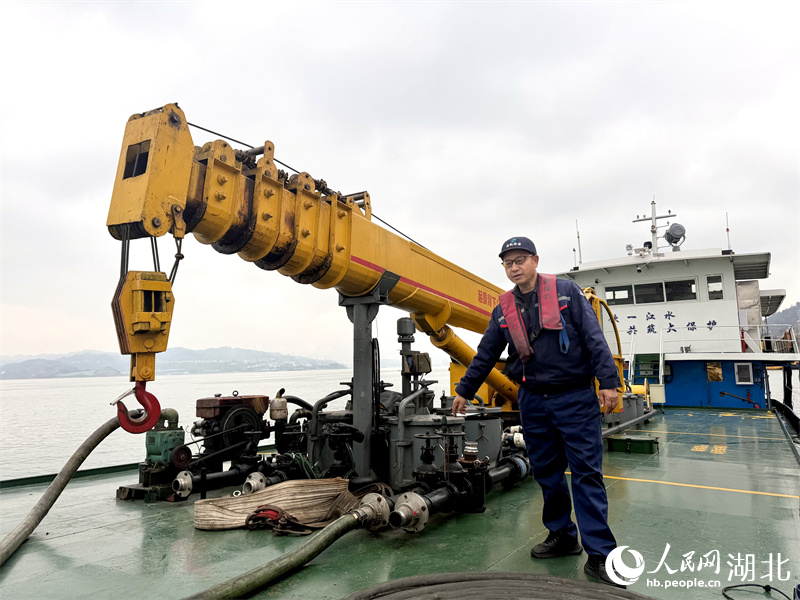
Group 1 - The core viewpoint emphasizes the transformation of Hubei province, particularly in the Yangtze River region, focusing on ecological protection and green development while balancing economic growth [1][10] - The "净小宜" system was launched in November 2019 to manage ship waste disposal effectively, leading to significant improvements in water quality in the Yangtze River section of Yichang [2][4] - The transition of the Xingfa Group from a traditional chemical industry to a leader in new energy and materials showcases the successful shift towards high-end, green development [6][7] Group 2 - The establishment of the Hubei Three Gorges Laboratory in December 2021 aims to integrate innovation resources and address key technological challenges in industrial development [7] - Hubei has created a market for ecological values, pricing clean air and quality water, contributing to the national carbon market's stability and growth [7] - The transformation of urban and rural areas in Hubei, such as the development of parks and ecological corridors, enhances the quality of life for residents and promotes environmental sustainability [8][10]


亲身感受中国式现代化的生动实践
Ren Min Ri Bao· 2026-01-07 00:37
在位于北京的中国共产党历史展览馆全景影院里,西班牙《全球世界》记者费尔南多·莫拉莱斯被沉浸 式展现长征场景的影片深深震撼。"我仿佛置身于这一伟大的历史进程中。"莫拉莱斯说,"中国从来没 有忘记自己从哪里来。在这里,始终坚持一切为了人民、一切依靠人民。" 西班牙记者费尔南多·莫拉莱斯—— "在这里,始终坚持一切为了人民、一切依靠人民" 实现现代化是世界各国的普遍追求。从脱贫攻坚到绿色发展,从科技创新到发展新质生产力、挖掘经济 新增长点,中国在自身高质量发展的同时,为其他国家发展提供机遇。不少外国媒体记者来中国工作、 生活或参观访问,亲身感受中国式现代化的生动实践。近日,3名外媒记者接受人民日报记者采访,讲 述他们在华所见所闻所感。 更让泽尔贝托印象深刻的,是中国在数字经济和科技赋能上的探索。他注意到,电商为农产品打开销 路,乡村旅游与文化创意结合,越来越多的青年回到了家乡。"在中国,扶贫不仅是提高收入,还包括 过去一年,莫拉莱斯先后走访北京、杭州、重庆等城市。在北京,比亚迪体验店的一款新能源车不仅能 自动泊车、原地转向,还具备应急浮水功能;在杭州,科技园区里人工智能的最新成果从实验室走向日 常应用;在重庆,依山 ...
大处着眼、小处着手,微改革让环保治理更精准
Zhong Guo Huan Jing Bao· 2026-01-07 00:35
Core Insights - The article emphasizes the importance of grassroots reform and innovation in addressing specific local needs and enhancing ecological protection efforts [1][2] Group 1: Micro-Reforms - Micro-reforms focus on addressing specific, tangible issues rather than overhauling existing systems, leading to significant improvements in efficiency and service delivery [1][2] - Examples of micro-reforms include simplifying pollution permits to a "loose-leaf" format, integrating inspection efforts across multiple departments, and implementing "embedded case reviews" to streamline enforcement [1][2] Group 2: Benefits of Micro-Reforms - Micro-reforms effectively reduce long-standing friction costs with minimal institutional investment, such as using QR codes for waste tracking and incentivizing community participation in waste sorting [2] - They serve as essential "adapters" and "lubricants" for the implementation of top-level policies, allowing for localized adaptations that meet diverse regional needs [2] - These reforms enhance public engagement and satisfaction by making environmental protection more tangible and actionable for residents and businesses [2] Group 3: Continuous Improvement - The article advocates for a dual approach to reform, encouraging both broad perspectives and detailed local practices to foster a more robust ecological protection network [3] - It highlights the need for a governance attitude focused on continuous improvement and patience, recognizing that small, incremental changes can lead to significant advancements in environmental governance [2][3]
江苏全面完成“十四五”国家考核生态环境指标
Xin Hua Ri Bao· 2026-01-07 00:25
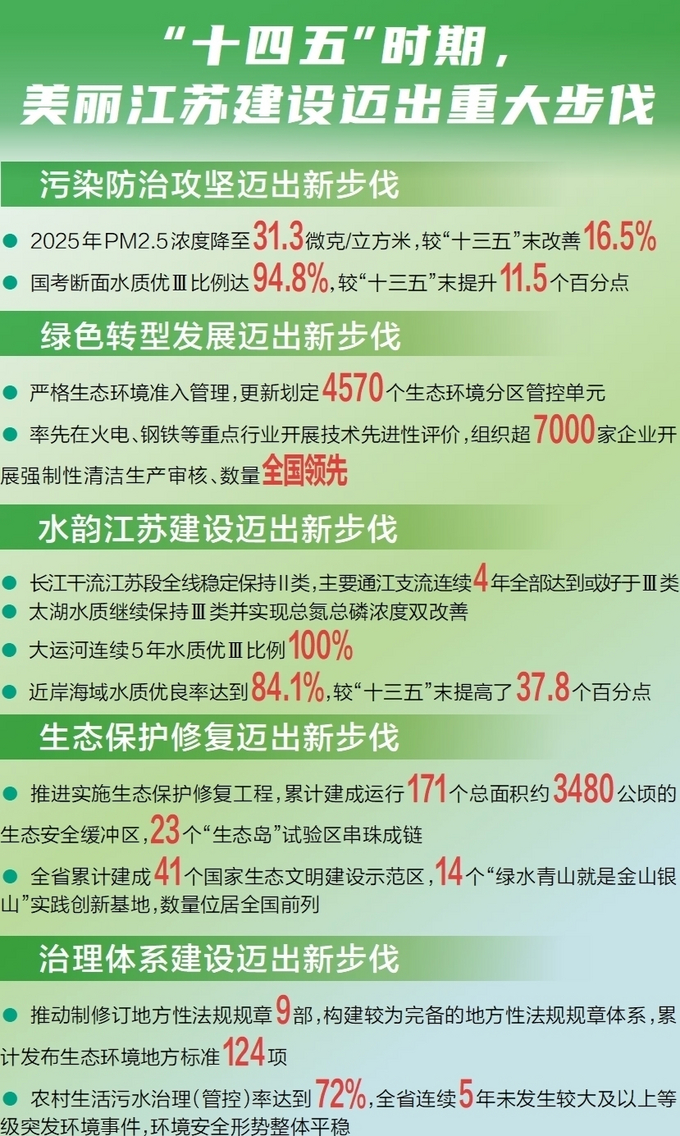
Core Viewpoint - The article highlights significant progress in ecological and environmental protection, as well as green transformation development in Jiangsu during the "14th Five-Year Plan" period, showcasing achievements in pollution prevention, ecological restoration, and sustainable development. Group 1: Ecological and Environmental Protection - Jiangsu has established 4,570 ecological environment control units and conducted mandatory clean production audits for over 7,000 enterprises, leading the nation in these efforts [1][5] - The province has built 171 ecological safety buffer zones covering approximately 3,480 hectares and created 23 experimental "ecological islands" [2] - The PM2.5 concentration is projected to decrease to 31.3 micrograms per cubic meter by 2025, improving by 16.5% compared to the end of the "13th Five-Year Plan" [3][6] - The proportion of national monitoring sections with water quality rated as Class III or better has reached 94.8%, an increase of 11.5 percentage points from the end of the "13th Five-Year Plan" [3][6] Group 2: Water Quality Improvement - The water quality of the Yangtze River in Jiangsu has consistently maintained Class II standards, with all major tributaries achieving or exceeding Class III standards for four consecutive years [4] - The water quality of Taihu Lake remains at Class III, with improvements in total nitrogen and phosphorus concentrations [4] - The coastal waters have achieved an excellent water quality rate of 84.1%, a significant increase of 37.8 percentage points compared to the end of the "13th Five-Year Plan" [4] Group 3: Green Transformation and Economic Development - Jiangsu's energy consumption intensity is expected to decrease by over 14.0% during the "14th Five-Year Plan," exceeding national targets [9] - High-tech industries now account for 51.8% of the province's industrial output, an increase of 5.3 percentage points over five years [10] - The installed capacity of renewable energy sources, including solar and wind power, has increased by 421.7% and 55.5%, respectively, since the end of 2020 [10] - The province has created 439 national-level green factories and 51 green industrial parks, ranking among the best in the country [10] Group 4: Agricultural Green Development - By 2024, the use of chemical fertilizers and pesticides is expected to decrease by 5.9% and 8.5%, respectively, compared to 2020 [11] - The comprehensive utilization rate of livestock manure and crop straw is projected to reach 95% by 2025 [11] - Jiangsu has implemented standardized pond transformations covering 1.8 million acres to promote ecological health in aquaculture [11] Group 5: Integration of Ecology and Economy - Jiangsu has integrated ecological protection into the entire economic and social development process, promoting high-quality industries and sustainable practices [12] - The province has streamlined environmental assessment processes to support over 1,600 major projects, enhancing the "green" and "gold" content of development [12][13] - Financial support for environmental projects has exceeded 10 billion yuan through various green financing initiatives [13]
江苏“十四五”期间全省生态环境逐年改善
Xin Hua Ri Bao· 2026-01-07 00:16
Core Viewpoint - The news highlights the significant improvements in ecological environment and water quality in Jiangsu Province, alongside the development of tourism and green projects, indicating a successful balance between economic growth and environmental protection [1][2][3][6][7]. Group 1: Ecological Improvements - By 2025, Jiangsu's national examination sections with Grade III water quality reached 94.8%, an increase of 1.0 percentage points year-on-year, maintaining a trend of annual improvement during the 14th Five-Year Plan [1]. - The PM2.5 concentration in Jiangsu was reported at 31.3 micrograms per cubic meter by the end of 2025, showing a 3.1% improvement, with good air quality days reaching 81.6% [1]. - Jiangsu has achieved a historic transformation in its ecological environment, moving from severe degradation to significant improvement during the 14th Five-Year Plan, while also crossing three trillion yuan GDP milestones [1]. Group 2: Water Quality Management - The "Taihu Light" ecological dredging platform, set to be operational in 2025, will clear 8,000 cubic meters of sediment daily, ensuring that treated water meets Grade III surface water standards before being discharged into Taihu Lake [2]. - Jiangsu has implemented a classification system for industrial and domestic wastewater, leading to significant improvements in water quality across major rivers and lakes, with the Yangtze River's main stream achieving Grade II quality for eight consecutive years [2]. Group 3: Air Quality and Emission Control - Jiangsu has shifted its focus from traditional pollutants to volatile organic compounds (VOCs), with nearly 300 coal-fired units undergoing deep denitrification by 2025, covering about 90% of the province's coal-fired capacity [3]. - The province has initiated the "Green Island" project to promote proactive VOCs emission reduction strategies, enhancing the overall ecological system quality [3]. Group 4: Environmental Approval Processes - Jiangsu has optimized its environmental impact assessment (EIA) processes, reducing approval times from 30 days to under 5 minutes in some cases, thereby facilitating faster project initiation [4][5]. - The province has launched initiatives to support 3,000 major projects through streamlined EIA processes, enhancing the efficiency of environmental governance [5]. Group 5: Green Development Initiatives - Jiangsu is advancing low-carbon transitions in various sectors, with two regions recognized as national-level zero-carbon parks by December 2025, showcasing the province's commitment to sustainable development [6]. - The province has conducted carbon audits for 515 key enterprises in major industries, achieving a 100% compliance rate for annual carbon market obligations [6]. Group 6: Institutional Support for Environmental Goals - Jiangsu has established a comprehensive ecological environment infrastructure plan, with 2,386 key projects enhancing environmental capabilities [7]. - The province has introduced various regulations and guidelines to protect biodiversity and improve marine environmental quality, laying a solid legal foundation for ecological development [7].
贵阳高新区一企业入选 2025年度中国消费名品
Xin Lang Cai Jing· 2026-01-06 21:35
Group 1 - The core viewpoint of the article highlights that Daziran Technology Co., Ltd. from Guiyang High-tech Zone has been included in the 2025 China Consumer Brand List, marking a significant breakthrough in brand development for the region [1] - The "China Consumer Brand" selection process evaluates products based on innovation, market competition, brand influence, and cultural empowerment, recognizing Daziran's comprehensive strength in these areas [1] - Daziran Technology focuses on the research and manufacturing of health sleep and eco-friendly home products, adhering to a development philosophy of "green, healthy, and intelligent" [1] Group 2 - Daziran's "Daziran" brand ecological spine protection mattress has a market share of nearly 60% in the domestic plant fiber mattress sector, with production and sales leading the industry [1] - The company has also led the drafting of the national standard for "soft furniture coconut fiber elastic mattresses," contributing to environmental sustainability by replacing springs and sponges in various applications [1] - Guiyang High-tech Zone aims to continue nurturing specialized and innovative enterprises, optimizing the business environment, and enhancing technological innovation support to foster collaborative development in the consumer goods industry [2]
重庆如何让生态“颜值”转化为绿色“产值”?
Xin Lang Cai Jing· 2026-01-06 19:29
Core Insights - Chongqing has successfully implemented the "Small Micro Wetland +" model, integrating ecological functions with economic and social benefits, showcasing a new approach to wetland protection and restoration [1][3][4] Group 1: Ecological and Economic Impact - The Dazhu Yaho Wetland in Chongqing has cultivated over 200 space lotus flowers and more than 2,000 plant species, attracting 30,000 visitors annually and creating over 9,000 jobs, exemplifying the "Small Micro Wetland + Ecological Industry" model [1] - The Yangjiawan small micro wetland has improved water quality from inferior V to IV class standards through the integration of artificial wetlands and wastewater treatment, supplying approximately 190,000 cubic meters of water to local enterprises in 2024, generating around 100,000 yuan in dividends for local farmers and collective economic organizations [2] - The successful restoration of the small micro wetland in Guan Village has led to an increase of nearly 10 bird species and attracted over 5,000 tourists in 2024, generating ecological tourism benefits exceeding 500,000 yuan and creating over 50 jobs [3] Group 2: Community and Tourism Development - The Limin Ancient Village has developed unique tourism projects such as "Encountering Limin" and "Flowering Limin," receiving over 150,000 visitors since 2025 and generating approximately 4 million yuan in total revenue, enhancing local income through agricultural tourism and hands-on experiences [4] - The integration of small micro wetlands with local economies has fostered a model where ecological beauty, rural prosperity, and community wealth are organically unified, demonstrating the practical application of the concept that "green mountains and clear waters are as valuable as mountains of gold and silver" [2][3]
广东推进绿色制造,以高品质生态环境支撑高质量发展
2 1 Shi Ji Jing Ji Bao Dao· 2026-01-06 16:57
Group 1 - The core viewpoint of the article highlights Guangdong's achievements in ecological construction during the "14th Five-Year Plan" period, emphasizing the role of high-quality ecological environment in supporting high-quality economic development [1] - Guangdong occupies approximately 2% of the national land area while contributing about 10.5% to the national economic output, showcasing the importance of green development [1] - The city of Huizhou is used as an example of regional development, focusing on creating a favorable environment for the petrochemical energy new materials and electronic information industries [1] Group 2 - In green manufacturing, Guangdong supports the development of emerging industries, such as the new energy vehicle sector, which is projected to produce over 3.6 million units in 2024, accounting for one-quarter of the national output [2] - A new policy will be introduced in October 2025 to provide financial subsidies for the replacement of old non-operating heavy trucks, expected to eliminate 28,200 old vehicles and update 5,200 new energy trucks, stimulating consumption by approximately 3 billion yuan [2] - The ecological environment department in Foshan is assisting local ceramic manufacturers in achieving green development through technological and product innovation [2] Group 3 - Guangdong is actively developing green finance and has established a financial project library to support green development [3] - The province is working on establishing carbon footprint accounting standards and databases to facilitate enterprises' international green initiatives [3] - The establishment of the Guangdong-Hong Kong-Macao Ecological Environment Science Center aims to enhance technological support for the environmental protection service industry, which is leading nationally [3]
主播说联播丨长江经济带十年,“清新”之变!
Yang Shi Xin Wen Ke Hu Duan· 2026-01-06 14:13
Core Insights - The Yangtze River Economic Belt has seen a significant improvement in water quality, with the proportion of good water quality rising from 67% to 96.5% over the past decade, alongside a more than doubling of regional GDP [1][3] - The strategic direction of "promoting major protection and not major development" has been emphasized since a meeting chaired by President Xi Jinping in January 2016, leading to a consensus on prioritizing ecological restoration [3][4] Environmental Developments - The Yangtze River has maintained a Class II water quality for six consecutive years, with the cleanup of 1,361 illegal docks and the near elimination of black and odorous water bodies in cities along the river [3] - The ecological environment has transformed from being severely polluted to a state where "the water is clear and fish are jumping" [3] Economic Developments - The economic development of the Yangtze River Economic Belt has shifted from extensive growth to innovation-driven growth, with the establishment of international innovation centers in Shanghai and regional centers in Wuhan and Chengdu-Chongqing [3] - A total of 41 national advanced manufacturing clusters and 30 strategic emerging industry clusters have been cultivated, highlighting the emergence of innovative companies such as DeepSeek and Yushu Technology [3] Strategic Direction - The "14th Five-Year Plan" suggests the continuous advancement of the Yangtze River Economic Belt, reinforcing the commitment to the strategy of "promoting major protection and not major development" [4]